Lightening up pub food at home comes down to four levers: the cooking method, the sauce, the coating and the portion size. Swap the fryer for a hot oven or an air fryer, rebuild creamy sauces on Greek yogurt, use wholegrain coatings instead of refined flour, and let vinegar and lemon do the work salt was doing. Do those four things consistently and a takeaway favorite lands in the same flavor neighborhood with a lot less fat and salt.
None of this is diet food, and nobody at the table needs to be told about it. Most of it also takes the same amount of time as ordering in, which is the part people find hardest to believe.
Table of Contents
- What You Need to Lighten Up Pub Food at Home
- Step-by-Step
- Choose Lighter Starting Points
- Build Flavor Without Heavy Sauces
- Make Swaps That Change the Texture and Nutrition
- Control Portions While Keeping the Table Social
- Cook Proteins Safely and Keep Them Tender
- Finish Plates with Fresh, High-Impact Sides
- Plan a Lighter Game-Day Spread for a Crowd
- Common Mistakes
- Frequently Asked Questions
- Can I make pub food healthier without giving up the flavors I like?
- What are the easiest swaps for fried pub food?
- How can I reduce calories in creamy pub sauces at home?
- What should I serve instead of heavy side dishes at a game-day party?
- How do I keep a lighter meal satisfying when I am eating with a group?
- How should I store and reheat leftover pub-style food safely?
What You Need to Lighten Up Pub Food at Home
The ingredient list is short and mostly comes from a normal shop run. The equipment matters less than the oven being properly hot and the pan being big enough to keep everything in a single layer.
- A heavy rimmed sheet pan that holds heat and takes a hot oven without warping. This is the single most useful piece of kit for roasted chips.
- A wire cooling rack so air circulates under food. Food sitting in its own moisture is the reason homemade chips go soft.
- A probe thermometer. Cheap, and the difference between tender chicken and dry chicken.
- An air fryer if you own one. Genuinely good for wings and small batches, less good for a crowd, because you cook in small rounds.
- Two shallow bowls and a flour dredger for coating fish or chicken without tearing the surface.
- Greek yogurt, malt vinegar, lemon, capers, fresh dill and parsley as the sauce and seasoning base.
- Whole wheat flour, panko or stale sourdough for crumbs, and a little cornstarch for coating and crisp surfaces.
- Lean mince, chicken breast or thigh, and white fish plus roast vegetables that hold their shape.
Wholegrain mustard rather than mayonnaise, a squeeze bottle for vinegar, and a big green salad in the fridge are worth adding to the list. They cost nothing and they are the difference between bland and sharp.
Step-by-Step
Work through these seven steps in order and the results compound. Skipping ahead to the swaps without fixing the cooking method is the mistake that makes people give up.
Choose Lighter Starting Points
Start from anything grilled, roasted or raw rather than anything battered, and the rest of the work gets much easier. A deep-fried starter sets the tone for the table and puts the fryer back in play for everything after it.
- Grilled or pan-seared chicken, sausages finished in the oven, steak, white fish cooked on a hot grill.
- Roasted vegetables as the main side rather than chips: cauliflower, peppers, broccoli, zucchini, mushrooms.
- Cold platters: cheese with fruit and crackers, antipasti, a big salad with a strong vinegar dressing.
- Vegetable dips with crudites instead of onion rings, battered mushrooms or mozzarella sticks.
- Baked wraps and jacket potatoes with a filling instead of loaded fries.
A useful rule: if the dish would arrive covered in batter or breadcrumbs, ask what it looks like without them. For onion rings, roasted onion wedges with oil and smoked paprika; for battered mozzarella, roasted peppers with a crumb of feta; for a fry-up, a plate of grilled things.
Build Flavor Without Heavy Sauces
Acidity, herbs and a yogurt base do the work that mayonnaise, butter and extra salt were doing. This is the swap people report is easiest and least noticeable, particularly in a burger.
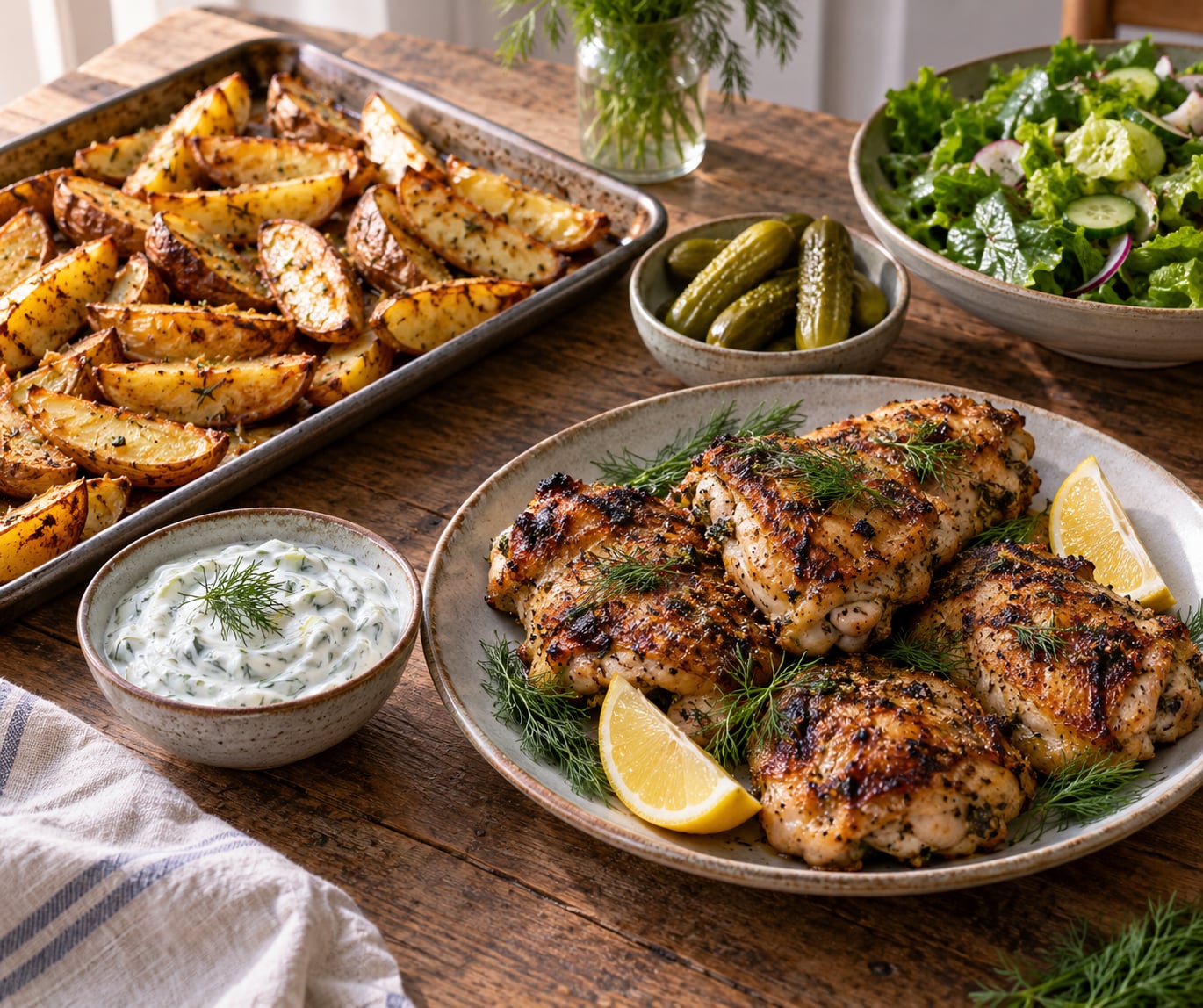
- Yogurt tartar: Greek yogurt with lemon zest, chopped dill, a teaspoon of capers and a spoon of caper brine. It tastes like tartar, not like yogurt, because of the brine.
- Ranch: yogurt with buttermilk powder or a splash of lemon, dried dill, chives, garlic powder and a little mustard.
- Blue cheese dressing: yogurt with a small amount of crumbled blue, cracked pepper and a spoon of vinegar. Too much blue and it turns grainy.
- BBQ: simmer vinegar, a little brown sugar or molasses, smoked paprika and Worcestershire until it coats a spoon. Acid-forward barbecue sauce is not the same as a jar of the sweet stuff.
- For hot food: put the vinegar, mustard or a spoon of yogurt on the plate instead of mixing it in. Yogurt splits if it hits a hot pan, so it works cold only.
If a dish tastes flat after you cut the salt, it almost always needs acid rather than more salt. Malt vinegar on chips, a squeeze of lemon on fried fish, pickles alongside anything salty, and a lemon wedge on the board for the whole table all do work that sodium was doing.
Make Swaps That Change the Texture and Nutrition
Change what the food is coated in and what starch it sits on, and you add fiber while removing a layer of refined flour. Keep the coating where you can, because coating is most of the eating pleasure.
- Bun: a wholegrain bun, toasted on the cut face with a little oil, not butter.
- Fish coating: panko, wholegrain breadcrumbs, or stale sourdough blitzed in a food processor with a spoon of flour. All three hold more crunch than plain white flour.
- Potatoes: leave the skins on for fiber, cut thick, and rough up the cut faces so oil grabs them.
- Onion rings: roasted onion wedges with oil and smoked paprika instead of battered rings.
- Battered starters: roasted cauliflower with a little crumb and a drizzle of yogurt sauce.
- Mince: use a lean blend and add an egg or a spoon of breadcrumbs, because lean mince has nothing to bind it and will fall apart on the grill.
- Cheese: weigh it. One thin slice of mature cheddar is around 25 grams; a hand-grated pile is often three times that.
Switching to a wholegrain bun does not make a burger healthy on its own. It changes one ingredient. The sauce, the patty fat and the portion still decide the plate, and readers who focus on the halo miss that.
Control Portions While Keeping the Table Social
Serve components on platters and let people build, instead of plating oversized servings in front of them. A sharing board looks generous, and generous is what pub food is supposed to feel like.
- Put the protein, the sauce and the sides out separately so people take what they actually want.
- Offer fewer dishes, made better. Five components eaten by everybody beats nine plates of leftovers.
- Put out two fried or rich items maximum, and make the rest grilled, roasted or raw. Keep one genuinely indulgent thing and nobody thinks you have given up on pub night.
- Watch the loaded fries board. It is the easiest thing on the menu to turn into an entire day of eating for one person.
A useful serving trick: put the fries in a wide, shallow dish rather than a bowl. Same amount of food, but it takes up more visible space and people take less of it.
Cook Proteins Safely and Keep Them Tender
Grilling, baking and sauteing give you the browning and the texture of pub food without a fryer full of oil. Cook to a safe internal temperature and then stop, because overcooking is what makes lean lighter meat taste bad.
- Poultry and chicken: 165 F (74 C) in the thickest part. Most home chicken is overcooked past this point for no reason.
- Ground meat and burgers: 160 F (71 C). Check with a thermometer, not by pressing the surface.
- Whole cuts and fish: 145 F (63 C), then rest three minutes so the juices settle.
Other habits that keep lean protein edible: double or triple the patties so they cook fast, avoid pressing them with a spatula, and let chicken thighs do the work instead of breast when you want it forgiving. For wings, a dry brine of salt and a little sugar for a few hours in the fridge, then a thin coating of cornstarch, gives you crisp skin in the oven. Crowd the basket and that crispness disappears, so cook in single layers and accept two rounds.
Finish Plates with Fresh, High-Impact Sides
Add volume, color, acid and crunch with fresh things, because fiber and water are what make a lighter plate feel finished rather than sparse. A lightened plate with no side looks like a diet plate, and it gets the reputation of one.
- Slaw: cabbage with a dressing of vinegar, mustard, a spoon of yogurt and a little sugar. Acid does the work, not mayo.
- Mushy peas: peas simmered down with a little onion and mint, put back on the fish and chips plate. Adding a vegetable back is the easiest single win on the whole menu.
- Pickles and pickled onions: cheap, sharp, and they blunt the salt of everything else.
- Roasted vegetables: carrots, parsnips, peppers and broccoli, roasted rather than fried, dressed with olive oil and lemon after cooking.
- A big green salad with a proper vinegar dressing, on the table as a default.
- Fruit with the cheese board, and fresh herbs scattered over anything at the last second.
This is where the balance comes from. A grilled main with no vegetable side reads as a diet choice; the same main with slaw, pickles and roasted peppers reads as a meal.
Plan a Lighter Game-Day Spread for a Crowd
Use one vegetable-rich appetizer, one grilled or roasted main, one substantial side, one lighter dessert and drinks that do not overwhelm the food. That is the whole formula, and it scales without thinking about it.
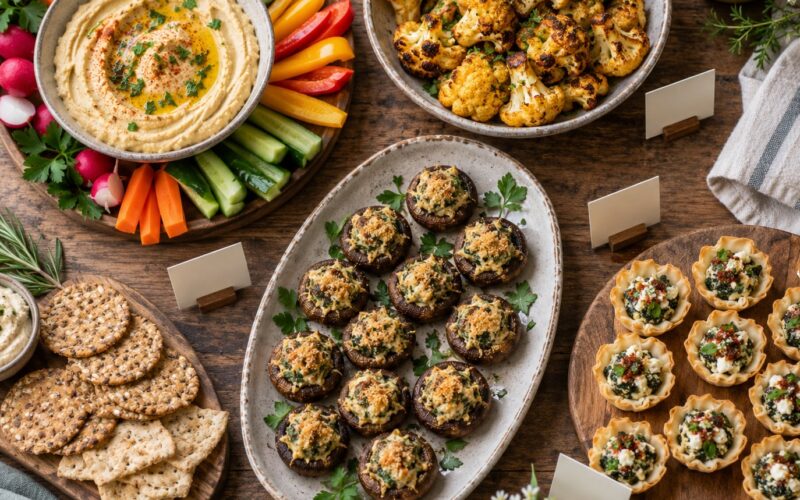
- Appetizer: a big platter of crudites, olives and a yogurt-based dip, or roasted wings with a vinegar glaze.
- Main: grilled chicken, sausages and peppers, or a burger table where people build their own.
- Side: a tray of roasted chips, a slaw, and a green salad. Two sides is plenty for eight to ten people.
- Dessert: fruit with a crumb topping, or a lighter crumble, rather than fried dough.
- Drinks: sparkling water with lemon and a low-alcohol beer or a pint of lighter lager alongside, so nobody is drinking full-strength through a lighter meal.
For ten to twenty people, do the make-ahead work the other way round. Dress the slaw and the sauces the day before, because vinegar dressing holds for days and wilting is the only thing that ruins it. Roast the vegetables earlier and hold them in a low oven, uncovered, so they steam less. Parboil the potatoes earlier and roast them at the last minute for the crunch. Cook the wings in two batches rather than one crowded batch. And keep the components separate until people sit down, so nothing goes soggy waiting.
Common Mistakes
- Treating it as restriction. The fix is to keep one properly indulgent item on the menu. People who keep something they love on the table are far less likely to order takeaway afterwards, and nobody is trying to convert a table of six.
- Cutting salt first and deciding the food is bland. Salt is not the only seasoning. Add vinegar, lemon, pickles, caper brine and mustard before reaching for the shaker again.
- Removing all the fat. Olive oil, a yolk, a knob of butter and a drizzle of cream are what make food taste finished. Cutting fat to zero produces something nobody wants twice. Cut volume and add good fat instead.
- Serving oversized plates. A dish that looks generous on a platter is easy; the same portion on a dinner plate reads as too much. Serve family style and let the second helpings happen naturally.
- Assuming a wholegrain coating fixed the meal. The creamy sauce on a plate is often a bigger calorie contribution than the coating. Mix yours in a bowl so you can see how much goes on.
- Crowding the pan or the air fryer basket. Steam, not crisp. Two trays of half the amount beat one overloaded tray.
- Skipping food safety while trying to be clever. Cool food within two hours, keep it in the fridge for up to three to four days, and reheat to 165 F (74 C) before serving.
One hosting note that matters more than any recipe here: do not announce what you have done. Lightened food works because it looks and tastes like pub food, and saying so out loud turns a normal Friday into a discussion about diets. Put the components out, let people fill their own plates, and keep the one indulgent item on the table where everyone can see it.
Frequently Asked Questions
Can I make pub food healthier without giving up the flavors I like?
Yes, because most of the work is done by method and sauce rather than by removing flavor. Oven-roasted chips, yogurt-based tartar sauce, malt vinegar instead of extra salt and wholegrain coatings all change the nutrition without changing what the plate tastes like. The honest limit is crisp fried coating and deep-fried chips, which no swap fully replicates.
What are the easiest swaps for fried pub food?
The three that work for almost anything are trading deep frying for a hot oven or air fryer, replacing refined flour with panko, wholegrain breadcrumbs or blitzed stale sourdough, and rebuilding mayonnaise-based sauces on Greek yogurt with lemon and herbs. Together these usually account for most of the difference between a takeaway portion and a lighter home version.
How can I reduce calories in creamy pub sauces at home?
Use Greek yogurt as the base and cut it with something acidic rather than cream. Add lemon zest, caper brine, vinegar, mustard or herbs for flavor, and mix it in a separate bowl so you control how much lands on the plate. Yogurt only works on cold dips and cold plates, since it splits when it hits a hot pan.
What should I serve instead of heavy side dishes at a game-day party?
Go for volume and acid rather than calories. A vinegar-dressed slaw, a green salad, roasted vegetables dressed with olive oil and lemon, pickles and roasted potato wedges all add bulk, color and crunch. Keep the fried item on the menu as one shared plate rather than the individual portion, and the table still feels generous.
How do I keep a lighter meal satisfying when I am eating with a group?
Serving style does most of this work. Put the components out on platters so people build their own plates, offer two indulgent items rather than making everything rich, and make sure there is a vegetable and a starch on every plate. Nobody notices a shared platter of grilled food being lighter, but they do notice a large plated serving of it.
How should I store and reheat leftover pub-style food safely?
Cool food within two hours, move it into the fridge and eat it within three to four days. Reheat until steaming hot throughout, which means 165 F (74 C) for cooked food, and reheat only the portion you need rather than the whole tray. Roast vegetables and fried coating reheat better in a hot oven than a microwave, since the microwave steams them.
If you only change one thing this week, make it the sauce. Greek yogurt with lemon, capers and dill in place of mayonnaise is the swap that takes the least time, saves the most, and nobody notices. After that, take the chips out of the fryer and let vinegar do what extra salt used to.