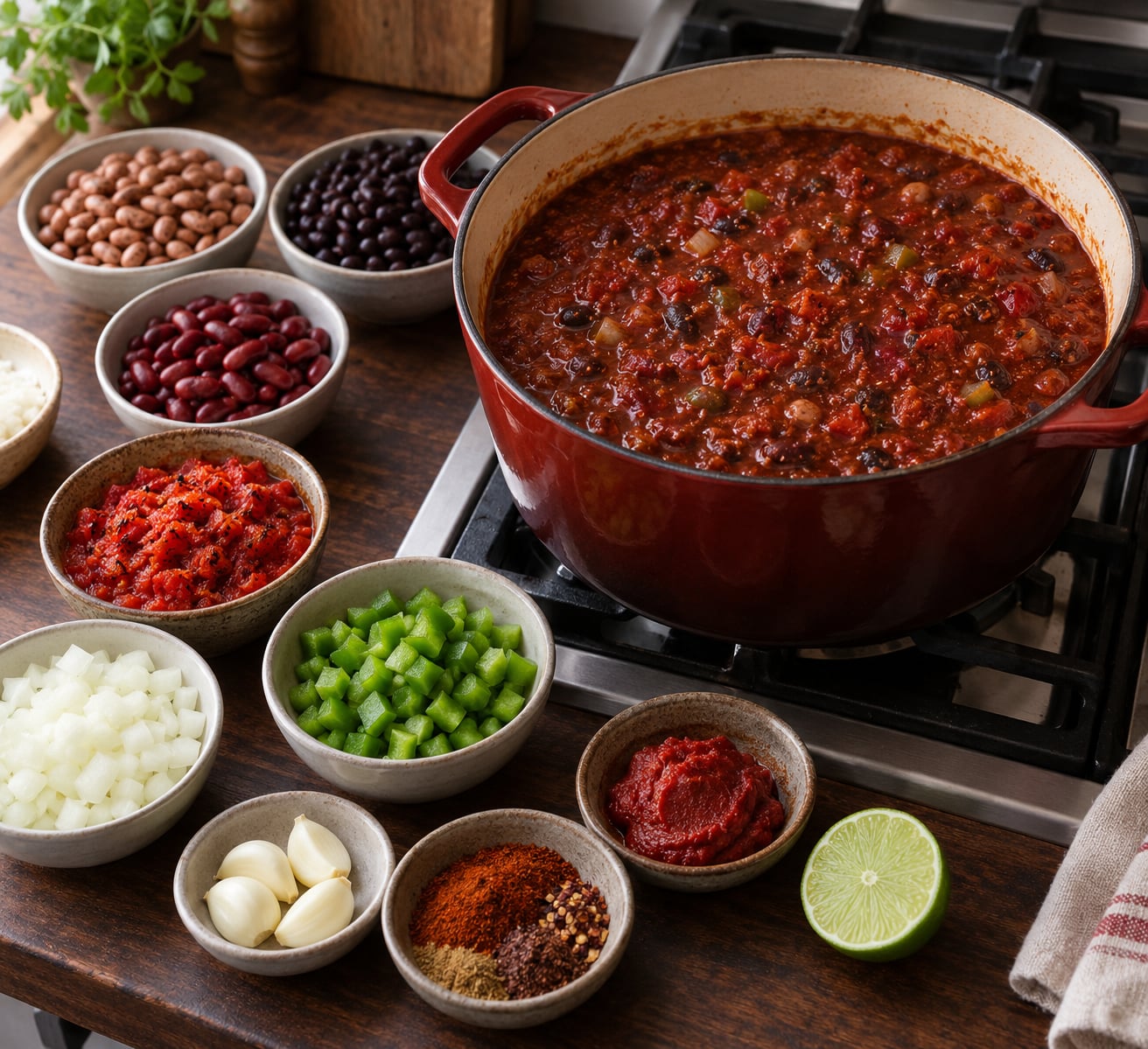
Meatless chili tastes rich when you brown the vegetables hard before anything wet goes in the pot, toast the spices in fat for a full minute, and let the finished chili reduce uncovered until it coats a spoon. Skip those three things and you get a thin, one-note bean stew no matter how many spices you throw at it.
The whole method takes about an hour, most of it hands-off. It works for vegan chili and vegetarian chili alike, and the leftovers are better on day two.
Table of Contents
- What You Need
- Step-by-Step
- Prepare the vegetables and aromatics
- Brown the vegetables so your meatless chili tastes rich
- Toast the spices and tomato paste
- Add the tomatoes, beans and broth
- Simmer until thick and deeply flavored
- Finish and serve
- Common Mistakes: Why Meatless Chili Tastes Bland or Thin
- The chili tastes thin, even after simmering
- It tastes flat no matter how much salt you add
- The spices taste dusty or raw
- The beans turned to mush
- It is hotter than you wanted
- Frequently Asked Questions
- Can I make meatless chili taste as rich as beef chili?
- What is the secret ingredient that makes vegetarian chili taste better?
- When should I add cocoa powder to chili?
- How do I thicken a thin vegetarian chili?
- Do I need to cook vegetarian chili longer than a meat version?
- Can I use vegetable broth instead of water?
- Conclusion
What You Need
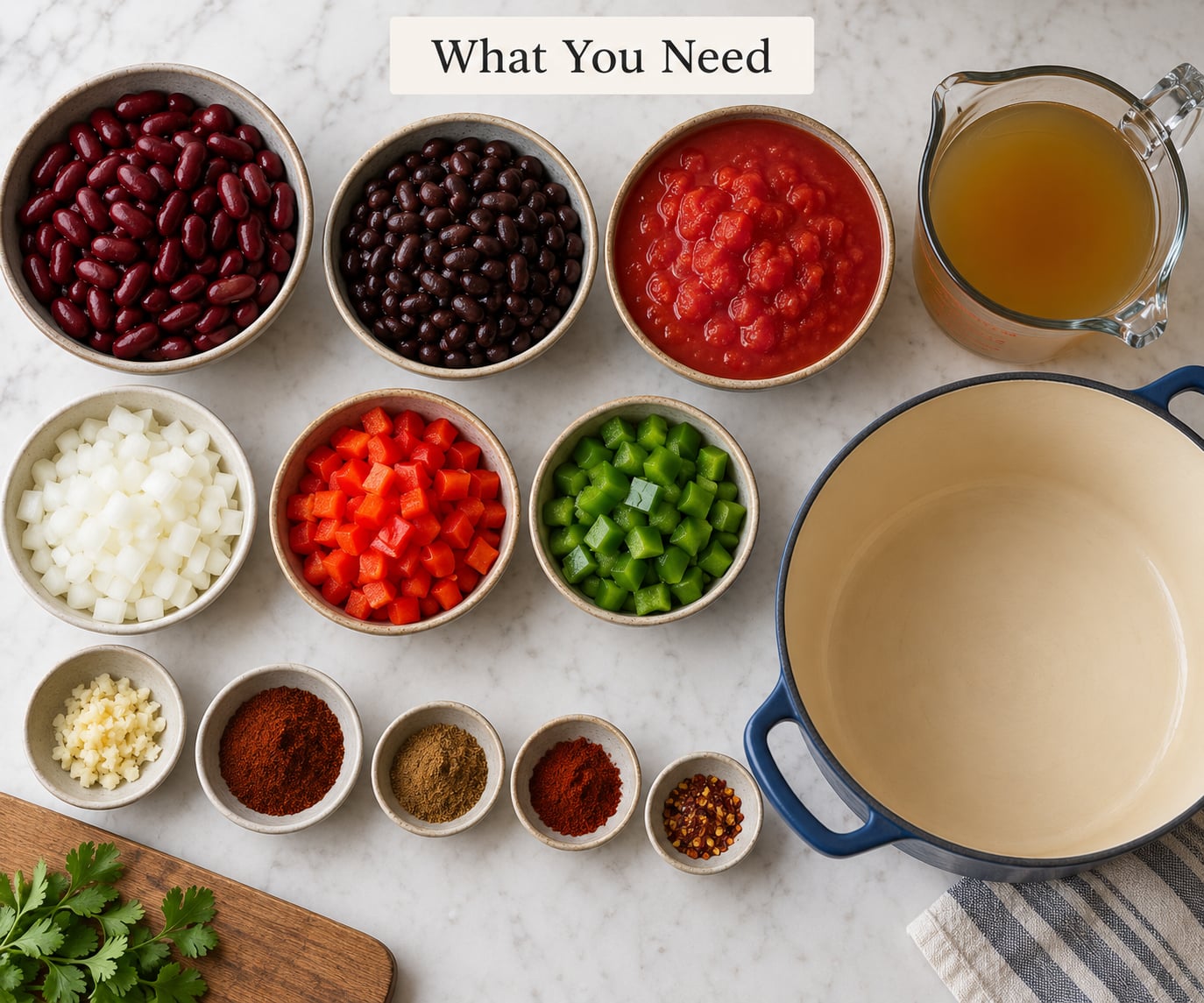
Nothing here is exotic, and every item earns its place. Build the pot in this order:
- 2 tablespoons oil for the pan, plus another tablespoon for finishing. Olive oil gives a fruity note, avocado oil is neutral, coconut oil adds a faint sweetness. Butter works too if you are not keeping it vegan.
- 1 large yellow onion, 2 bell peppers, 4 garlic cloves — diced small. Peppers add sweetness and body, not just heat.
- 8 ounces chopped cremini mushrooms — optional, but they are the single biggest fix for chili that tastes thin.
- 2 tablespoons chili powder, 1 tablespoon cumin, 2 teaspoons smoked paprika, 1 teaspoon dried oregano
- 2 tablespoons tomato paste, 2 cans (about 28 ounces total) fire-roasted crushed tomatoes
- 3 cans (about 42 ounces) beans: pinto, kidney and black, rinsed
- 3 cups vegetable broth
- 1 tablespoon soy sauce or tamari, 1 chopped chipotle in adobo, 1 bay leaf, 1 teaspoon unsweetened cocoa powder
- Salt, lime juice, and whatever you plan to spoon on top
Use a Dutch oven or a pot at least 8 inches deep. A shallow skillet simmers down too fast, and you want gentle bubbling, not a hard boil.
Step-by-Step
Prepare the vegetables and aromatics
Dice the onion and both peppers into roughly quarter-inch pieces, and mince the garlic finely. Uniform size is what keeps the texture honest: pieces that cook at different rates leave you with soft mush next to raw crunch.
Pat the chopped vegetables dry with a towel before they hit the pan. Extra surface water is the main reason chili turns watery, because it steams the vegetables instead of browning them and keeps the released moisture in the pot.
Brown the vegetables so your meatless chili tastes rich
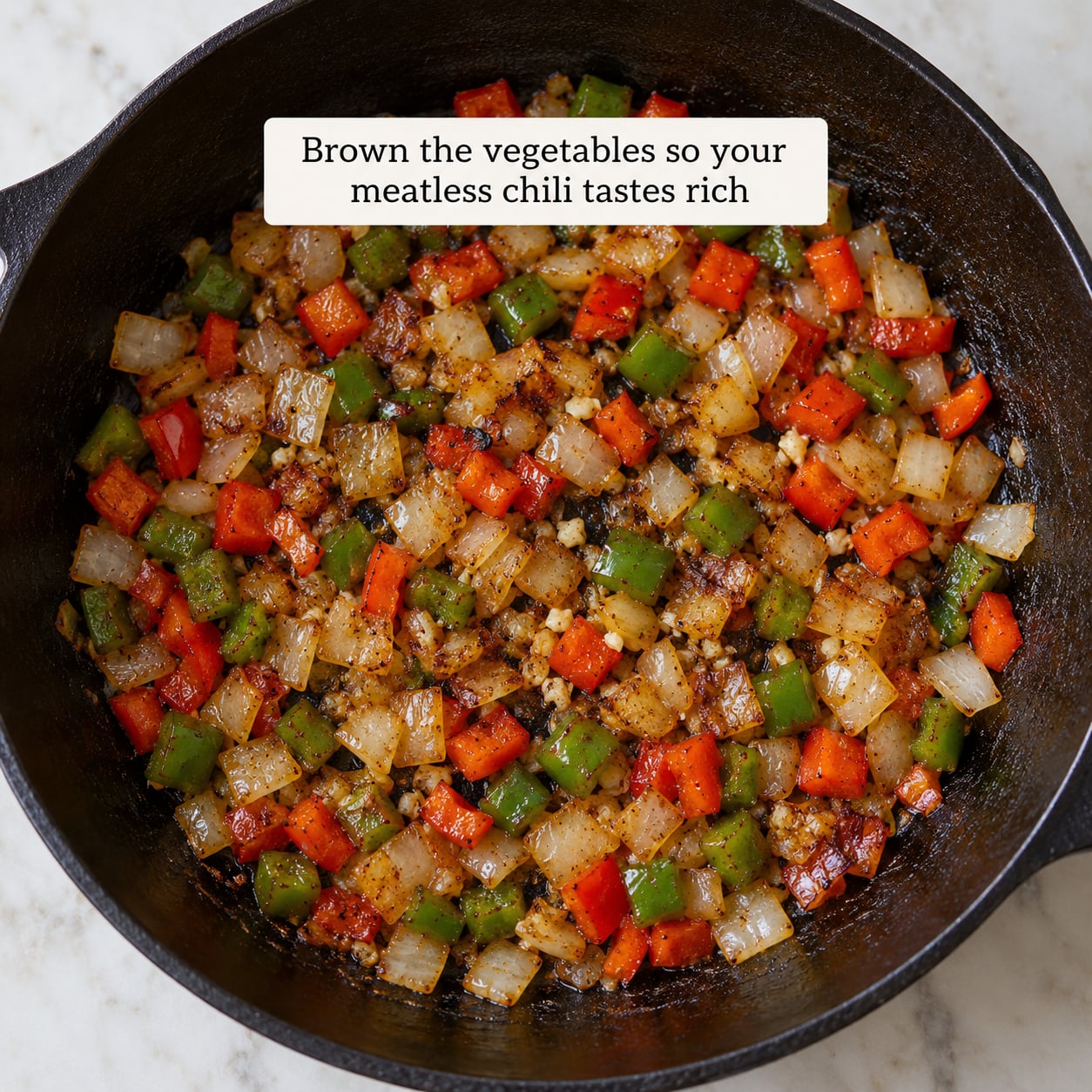
Heat the oil in your pot over medium-high until it shimmers. Add the onion and peppers in a single layer and leave them alone for 2 to 3 minutes before stirring. You are looking for browned patches on the edges, translucent onion, and a smell that is more than raw vegetable.
That browning is the Maillard reaction, the same high-heat chemistry that gives seared beef its savor. Add the mushrooms and cook them another 3 to 4 minutes until they collapse and turn dark at the edges, then stir in the garlic for 30 seconds.
If your pot looks greasy, leave it. That film is flavor you want in the final chili.
Toast the spices and tomato paste
Lower the heat to medium and add the chili powder, cumin, smoked paprika and oregano directly into the browned vegetables. Stir constantly for 45 to 60 seconds, until the spices darken slightly and the pot smells toasted rather than dusty.
Ground spices contain fat-soluble aromatic compounds. Stirring them into hot oil releases those compounds; dumping them into watery liquid just floats them around and they never cook.
Now add the tomato paste and mash it into the mixture, cooking it another 1 to 2 minutes until it turns brick red and starts sticking a little to the bottom of the pot. That caramelization is what you want. The soy sauce, chipotle and cocoa go in now too, along with the bay leaf.
Add the tomatoes, beans and broth
Pour in the fire-roasted tomatoes and stir until everything is the same color, about 1 minute. Add the broth, then the beans.
Hold back roughly one cup of each bean and mash it in a bowl with a fork before it goes into the pot. The mashed beans dissolve into the liquid and thicken it naturally, while the whole beans you add later keep some bite.
Fire-roasted tomatoes bring a charred, low-sweetness depth that plain crushed tomatoes cannot. Add them last in the order of flavor impact: paste first, broth second, fire-roasted tomatoes third.
Simmer until thick and deeply flavored
Bring the pot to a boil, then drop the heat until it barely bubbles and cover it. Simmer for 30 to 45 minutes, stirring every 10 minutes so nothing catches.
For the last 10 minutes, take the lid off. That reduction is where flavor concentrates, and it is the step that separates thick chili from soup.
You are looking for a consistency that clings to the spoon and leaves a clean trail across the surface when you drag it. Beans should be tender but not collapsing.
If it is too thin, simmer uncovered for another 10 to 15 minutes. If it is too dry and starting to scorch, stir in a half cup of hot broth and drop the heat. Never fix thin chili with flour, and skip cornstarch unless you have to — it turns the sauce glossy and starchy.
Finish and serve
Taste it and add salt in small amounts until the chili tastes complete rather than just salty. Then taste again for acid. A squeeze of lime juice or a teaspoon of red wine vinegar cuts the fat and makes everything underneath it louder.
Stir in a tablespoon of olive oil at the end. It coats the surface of the beans and carries the aroma of the spices that long simmering has driven off.
Serve it with contrast: cilantro and scallions, cubed avocado, pickled red onions, shredded cheese or vegan sour cream, crisp crushed tortilla chips, sour cream and hot sauce on the side. Warm the bowls first if you have them — a cold bowl makes even good chili taste flat.
Refrigerate leftovers within 2 hours and use them within 3 to 4 days. Reheat on the stove over medium-low with a splash of broth, stirring until hot all the way through; a microwave reheats unevenly and leaves the beans tough.
Common Mistakes: Why Meatless Chili Tastes Bland or Thin
Almost every disappointing pot of vegetarian chili comes down to one of these.
The chili tastes thin, even after simmering
You did not reduce long enough, or you did not mash enough beans. Simmer uncovered for 15 extra minutes, or mash a cup of beans and stir them back in. Thickening with a slurry of masa harina mixed with water also works if you want body without bean flavor.
It tastes flat no matter how much salt you add
Flat chili is usually missing acid or umami, not salt. Add a tablespoon of soy sauce, a spoon of tomato paste, or both, then finish with lime juice. Rest a minute and taste again before reaching for the salt cellar.
The spices taste dusty or raw
You added them after the liquid. Bloom the spices in hot fat with the browned vegetables for 45 to 60 seconds before anything wet goes in. If you already made the chili, stir in a teaspoon of each ground spice and simmer ten minutes, which re-cooks them.
The beans turned to mush
A long simmer does that. Add most of the beans only for the last 20 to 30 minutes of cook time and stir gently. Red lentils are the exception — they break down on purpose and thicken the pot all on their own, which is why they show up so often in vegan chili.
Rinsing canned beans matters too. The liquid in the can carries starch that turns the pot gluey, and it carries a starchy tinned flavor.
It is hotter than you wanted
Chili heat is not something you can cook away once it is in. Cut it with dairy, with a spoonful of sour cream in each bowl, or add an extra cup of broth and more beans. If the heat comes from a single chipotle in adobo, add that one earlier next time and cut the chili powder.
One more note on fat: do not skim the oil off the top of the pot before serving. People ask about this constantly, and the fat is the carrier for the flavor compounds that make chili taste rich. Stir it back in.
Frequently Asked Questions
Can I make meatless chili taste as rich as beef chili?
Yes, but not by following a beef recipe with the meat removed. Beef contributes browning, rendered fat and gelatin from collagen, so you replace each one deliberately: brown the vegetables and mushrooms hard, bloom spices in oil, stir in tomato paste until it caramelizes, and reduce the pot uncovered. Add soy sauce or miso for glutamate and finish with lime juice for brightness.
What is the secret ingredient that makes vegetarian chili taste better?
Umami, and tomato paste is the easiest source of it. Two tablespoons cooked into the browned vegetables give depth that plain crushed tomatoes cannot. Soy sauce, miso paste, chopped mushrooms, a chipotle in adobo and a teaspoon of unsweetened cocoa all stack on top of that. Use two or three, not all five, or the pot turns muddy.
When should I add cocoa powder to chili?
Add it with the other concentrated flavors, right after you toast the spices and before the liquid goes in. About one teaspoon of unsweetened cocoa adds a dark, bitter depth that reads as slow-cooked. It will not make the chili taste like chocolate dessert, and a tablespoon or more is where it turns sweet and strange.
How do I thicken a thin vegetarian chili?
Mash about one cup of the cooked beans with a fork and stir them back in, then simmer the pot uncovered for 10 to 15 more minutes. That fixes most cases because the mashed beans dissolve into the liquid. Hold back whole beans from the start so the finished chili still has some bite. A cornstarch slurry works in a pinch but turns the sauce glossy.
Do I need to cook vegetarian chili longer than a meat version?
Not usually. Give it 30 to 45 minutes of gentle simmering and take the lid off for the final 10 minutes to reduce the liquid. Longer is not automatically better, because beans start breaking down after about an hour and the pot can scorch. Chili made a day ahead tastes deeper, so many cooks find the extra time useful.
Can I use vegetable broth instead of water?
Yes, and it is worth the swap. Broth carries its own savory compounds and salt, which water does not, and it costs nothing extra to make from vegetable trim. If you use a canned broth, add it with restraint since it is already salty, then season at the very end instead of salting as you go.
Conclusion
Start at the stove, not the spice rack: give the onions, peppers and mushrooms real browning before anything liquid goes in, then toast the chili powder in that fat for a full minute. Those two minutes do more for how to make meatless chili that tastes rich than any ingredient you can add at the end.
Then serve it with sharp, cold, crunchy toppings against that warm pot, and keep the leftovers for tomorrow.