How to make veggie burgers with real texture comes down to three levers: take the moisture out on purpose, add a binder that actually sticks, and give the patty something to crunch on. Get those right and a plant-based patty sears to a deep brown crust, bends without snapping, and holds together all the way to the bun. The whole method takes about 45 minutes, and the technique is simple enough that you will not need a food processor or a ring mold to get there.
Most mushy veggie burgers fail for one of two reasons, and they are not the same problem. A patty that falls apart is too wet or too loosely bound, while a patty that turns to mush in the middle is usually a base that released water during cooking.
Fixing one does not fix the other, which is why so many cooks end up recipe-hopping through ten versions and hitting the same wall every time.
People ask for the meaty texture version of this constantly. In a r/cookingforbeginners thread about giving a veggie burger a meaty bite, the answers that recur are roasted mushrooms, chopped walnuts, and TVP rehydrated and squeezed dry. Cooks on Cooking StackExchange land on the same ingredients for the same reason. The recipe below is the version that follows those leads.
Table of Contents
- What You Need
- Step-by-Step: How to Make Veggie Burgers With Real Texture
- 1. Cook the Ingredients That Add Bite
- 2. Mash the Main Base Until Mostly Smooth
- 3. Add the Binder and Seasonings
- 4. Rest the Mixture Before Shaping
- 5. Shape Firm but Not Dense Patties
- 6. Sear, Then Finish Gently
- Cooking Methods Compared
- Binders and Bases: What to Pair
- Common Mistakes That Ruish Veggie Burger Texture
- Frequently Asked Questions
- What is the best binder for veggie burgers that hold together?
- How do I stop veggie burgers from falling apart on the grill?
- What makes a veggie burger taste chewy instead of mushy?
- Should I pre-cook the vegetables before making veggie burgers?
- Can I freeze veggie burger patties before cooking them?
- How do I get a crispy crust without burning the burger?
- Conclusion
What You Need
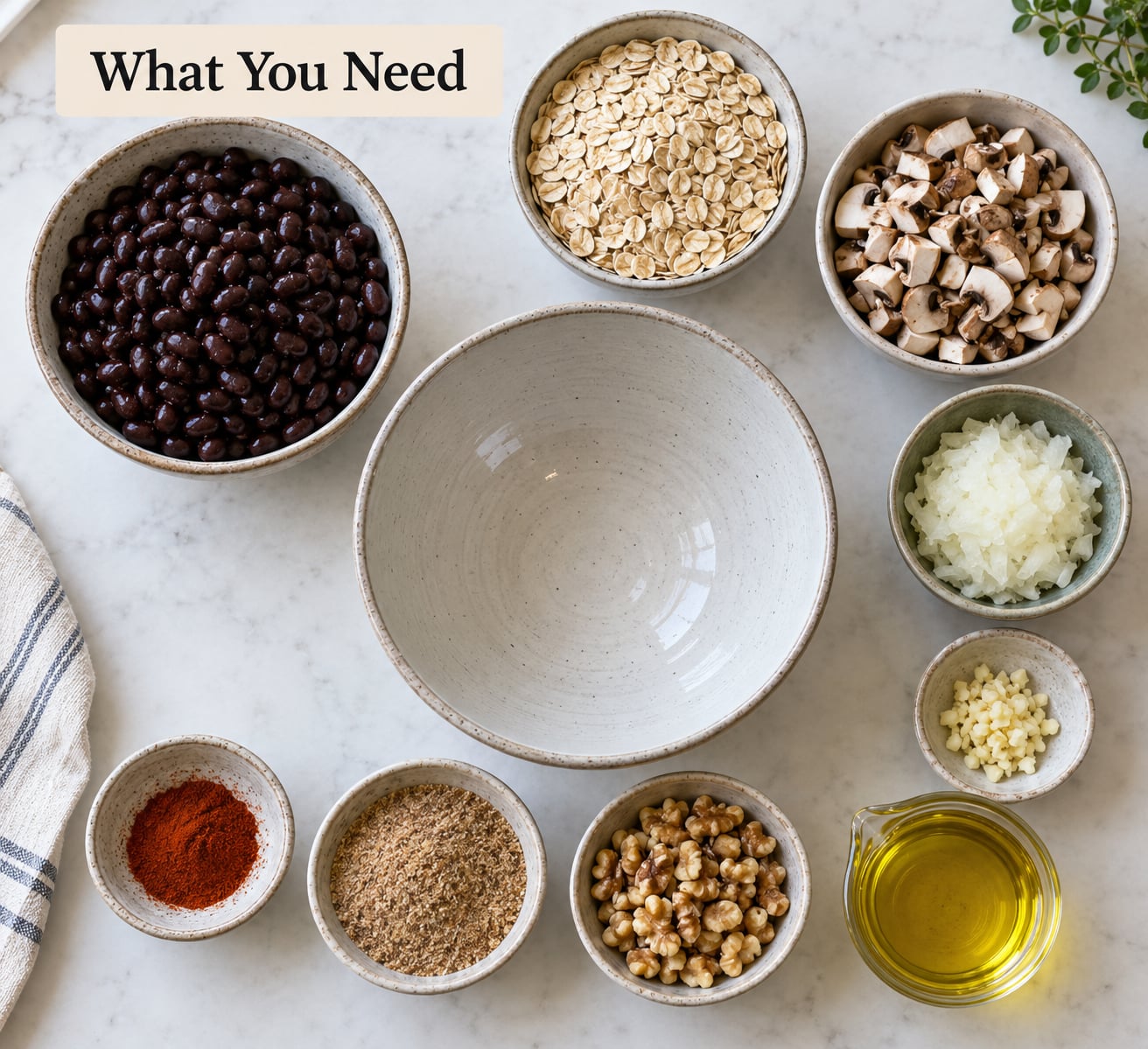
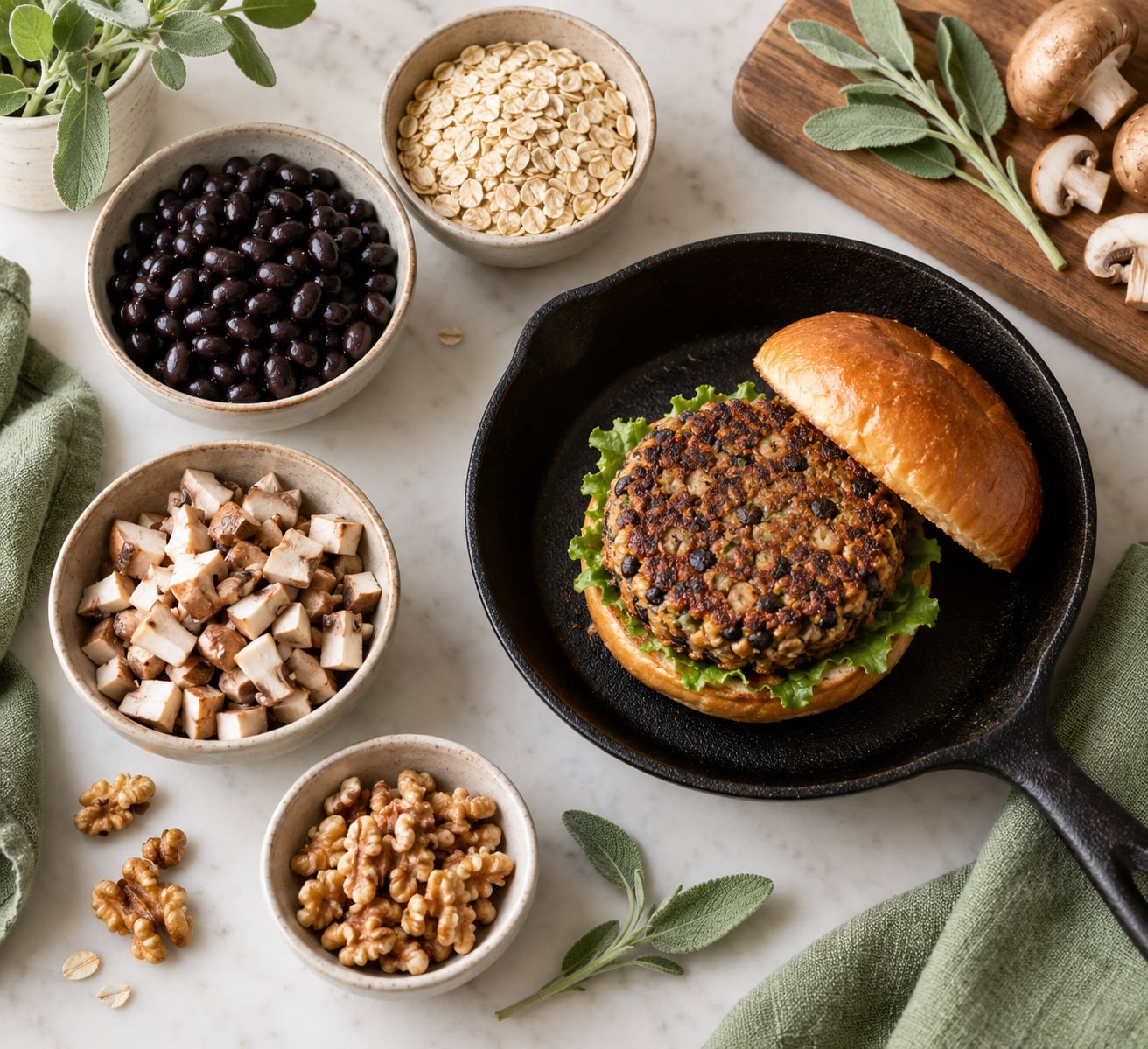
A great plant-based patty has five jobs to do, and every ingredient in a good burger fills one of them. The main body is beans, lentils, grains, mushrooms or tofu. Umami comes from mushrooms, white miso, soy sauce, tomato paste or nutritional yeast. Texture, the nugget you feel with your teeth, comes from toasted nuts, seeds, coarse grains or finely diced raw vegetables. Binding holds the patty together. A secondary filler such as panko, oat flour or breadcrumbs absorbs moisture that would otherwise make the mix wet.
Here is the base recipe we use for four firm, flavorful patties. It is a black bean and mushroom burger, because that combination hits all five jobs without needing a trip to a specialty store.
- 2 cups cooked black beans, dried on a baking sheet first for better structure
- 1/2 cup finely chopped shiitake or cremini mushrooms, sauteed and cooled
- 1/2 cup cooked brown rice or quinoa, cooled while still slightly sticky
- 1/3 cup rolled oats, pulsed or roughly chopped
- 1 flax egg (1 Tbsp ground flaxseed plus 3 Tbsp warm water), gelled for 10 minutes
- 1 Tbsp white miso, which binds and seasons in one move
- 1/3 cup chopped toasted walnuts or panko breadcrumbs if you need a nut-free patty
- 1/4 cup grated onion, squeezed dry in a towel
- 2 garlic cloves, minced
- 1 tsp smoked paprika, 1/2 tsp chipotle in adobo, 1 tsp soy sauce, 2 tsp nutritional yeast, 1/2 tsp salt and black pepper
- 2 Tbsp neutral oil per burger for cooking, because a plant patty cannot baste itself in rendered fat
The tools are ordinary. A skillet with a heavy bottom, a baking sheet for drying the beans, a fork for mashing, and a flat spatula thin enough to slide under a patty. A ring mold helps you get equal thickness, but a ruler and a flat-bottomed glass do the same job.
Here is the short version of how the parts fit together. Mushrooms and rice supply the chew, beans supply the body, miso and flax do the holding, oats and nuts absorb what is left. Change one role at a time when you experiment, because swapping two at once makes it impossible to tell which change fixed the patty or broke it.
Step-by-Step: How to Make Veggie Burgers With Real Texture
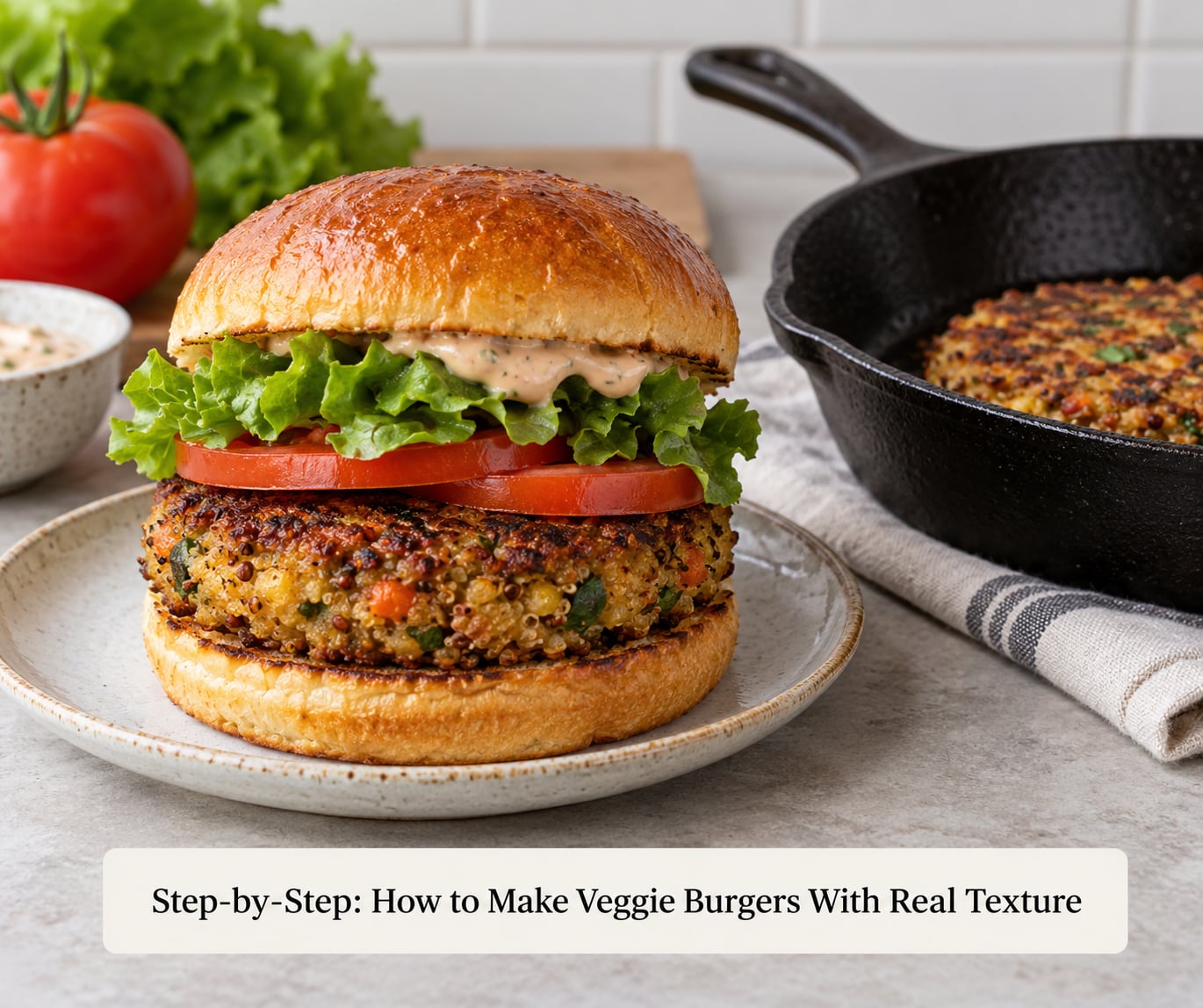
1. Cook the Ingredients That Add Bite
Sauté the mushrooms and onion first, in the oil you are going to cook in. Give them 5 to 7 minutes until the pan looks dry and the edges have gone golden. That dry pan moment is the point, since water released by raw vegetables is what makes a patty steam instead of sear.
Garlic goes in for the last minute so it does not burn, then everything hits a towel-lined plate to cool and drain. Warm mushrooms poured straight into the mix make the patty weep during cooking, so cool them first. The grated onion gets a squeeze in a clean kitchen towel until your hands are damp, which takes out more water than most people expect.
2. Mash the Main Base Until Mostly Smooth
Mash about two-thirds of the beans with a fork and leave the rest whole. This is the step people get wrong in both directions. A full puree gives you a paste-like, uniform bite that reads as batter, while leaving every bean intact gives you a patty that crumbles when you press it.
Two-thirds smooth is the balance that cooks have landed on in forum threads about mushy veggie burgers, where whole beans are the usual culprit. Aim for a texture closer to coarse cookie dough than hummus. Food processors work, but pulse rather than blend, and stop before the mix turns glossy, because that gloss means the cell walls have been destroyed and the patty will spread in the pan.
3. Add the Binder and Seasonings
Whisk the flax egg and let it sit for about 10 minutes until it thickens to a loose gel, then fold it through the mix with the miso, oats, rice, cooled mushrooms, nuts and seasonings. Mix with your hands and stop the moment everything looks evenly coated. Overmixing develops a gluey, bouncy chew that people describe as rubbery.
Miso is the most useful ingredient in the bowl because it binds with its sticky fermented solids and seasons with salt and depth at the same time. If your patties are still loose after this, the answer is more binder, not more mixing. If they are dense and dry, you went too far.
4. Rest the Mixture Before Shaping
Cover the bowl and chill it for 30 minutes, up to two hours. The flax gel hydrates fully, the oats swell, and the mix firms up enough to shape cleanly. Most recipe writers tell you to chill shaped patties, and that advice is backwards: formed patties sitting in the fridge pick up condensation and turn fragile at the edges.
Chill the whole mix, shape it, then cook the patties within the hour. If you must prep ahead, form the patties after chilling and freeze them, keeping the layers between patties so they do not stick together.
5. Shape Firm but Not Dense Patties
Portion about 1/3 cup of mix per patty, roughly the size of a deck of cards, and press between two sheets of parchment until you get 1/4 to 1/3 inch thick. That thickness is the single most useful number in this whole guide. Thinner than a quarter inch and the patty dries out before the center is hot, thickens into a frisbee that breaks in the bun, and has almost no interior to taste.
Press firmly enough that the patty holds together when you pick it up with a spatula, but do not compact it until it feels like a brick. Dense patties need longer cooking and end up tasting of nothing but the binder. A quick test: press a finger into the raw patty and it should dent and slowly push back, not crack or stay compressed.
6. Sear, Then Finish Gently
Heat a heavy skillet over medium-high and add about 2 Tbsp oil per burger. A plant patty has no fat to render, so oil is not optional here. Lay the patties down and press for 10 seconds to help them make full contact, then leave them alone for 3 to 4 minutes without moving them.
You want the crust to release on its own when it is ready. If it sticks, it means the pan is not hot enough or the patties were damp on the surface. Flip once with a thin spatula or two forks, cook the second side for 2 to 3 minutes, check the center with an instant-read thermometer in the thickest part. If your mix contains egg, cook to 160°F (71°C). Purely plant mixes need only a hot center and a browned crust.
Rest the patty on a wire rack for a minute, not a paper towel, so the bottom does not steam itself soft. Then build. Toast the bun, add a spread that contains moisture, and stack lettuce or tomato underneath rather than on top so the sauce does not slide the patty out of the bun on the first bite.
Cooking Methods Compared
| Method | Heat | Time | Result |
|---|---|---|---|
| Cast iron skillet | Medium-high, 2 Tbsp oil per patty | 3 to 4 min per side | Deepest crust, most restaurant-like bite |
| Grill | Medium-high, oiled grates, lid closed | 4 to 5 min per side | Smoke and grill marks, watch for flare-ups |
| Oven | 425°F, sheet pan brushed with oil | 18 to 22 min, flipped once | Even cooking, decent crust if the pan is hot |
| Air fryer | 400°F, light spray | 10 to 12 min, flipped at 6 | Crisp edges with almost no oil needed |
| Smash burger | Very hot skillet, thin mix | 60 to 90 seconds per side | Lacy, crackly edges and maximum crispness |
The smash method is the freshest technique in this space and it works better on plant patties than most people expect. Use a thinner mix with less oats, a hot preheated pan and a heavy press, and you get shards of caramelized crust that no oven approach produces. It is also the least forgiving method, so make a test patty before committing all four.
Binders and Bases: What to Pair
Here is the binder list with the ratios that actually work per cup of cooked base. The ratio matters more than the brand of ingredient, because every base carries a different amount of water.
| Binder | Ratio per cup of base | Flavor effect | Vegan |
|---|---|---|---|
| Flax egg | 1 flax egg (1 Tbsp ground flaxseed, 3 Tbsp water) | Neutral, gives a clean set | Yes |
| White miso | 1 Tbsp | Salty and savory, does two jobs | Yes |
| Panko breadcrumbs | 1/3 to 1/2 cup | Very crisp, light color | Yes |
| Oat flour | 1/4 to 1/3 cup | Mild, slightly nutty | Yes |
| Arrowroot or tapioca starch | 2 Tbsp plus 2 Tbsp water | Neutral, helps a wet mix set crisper | Yes |
| Egg | 1 per 2 cups of base | Richest binding, needs no gelling time | No |
| Ground chia | 1 Tbsp plus 2 Tbsp water | Neutral, thickens fast | Yes |
For gluten-free patties, oats need to be certified gluten-free or replaced with buckwheat or arrowroot. For nut-free patties, swap walnuts for sunflower seeds, pumpkin seeds, or panko, and use tamari instead of soy sauce for a soy-free version. Sunflower and pumpkin seeds toast well and keep a decent crunch after baking, which matters more than most guides admit.
The base decides the rest of the recipe more than people expect.
| Base | Texture result | Moisture risk | Best binder pairing |
|---|---|---|---|
| Black beans | Meaty and firm when dried first | High, needs drying | Flax egg plus panko |
| Lentils | Soft, holds well, mild | Medium, drain well | Miso plus oats |
| Chickpeas | Creamy with crunch if rough chopped | Medium | Miso plus breadcrumbs |
| Mushrooms | Best chew and umami of any base | Very high, roast or saute first | Miso plus flax egg |
| Tofu | Clean bite, needs pressing | Very high, press 30 min under weight | Cornstarch plus oat flour |
| Quinoa or brown rice | Grainy bite, binds on its own if sticky | Low, use hot rice | Miso, and little else |
| TVP | Most meat-like, needs rehydration control | High if over-soaked | Miso plus flax egg |
One warning about TVP: it densifies as it bakes, which is why patties made with it can turn into bricks on a second reheating. Soak it in just enough hot vegetable broth to cover, let it sit, then squeeze it in a towel hard before it goes into the mix.
Common Mistakes That Ruish Veggie Burger Texture
The patty falls apart when you flip it. The mix is too wet or the binder is too light. Squeeze the grated vegetables, add another tablespoon of binder, chill the mix again, and press the patty firmly before it hits the pan. Also check your pan temperature, since a cold pan makes the patty release moisture onto the surface and glue itself down.
The middle turns to mush. The base released water during cooking. Dry your beans on a baking sheet at 350°F for 15 to 20 minutes until they look slightly crunchy, and cook your vegetables until the pan is dry before they go into the mix. Wet ingredients in, steam out, mushy center.
The burger tastes raw or vegetable-cake-ish. Season more aggressively than feels polite and add a layer of umami that is not just salt. White miso, a tablespoon of soy sauce, tomato paste, and a pinch of nutritional yeast all stack. Chipotle in adobo adds both smoke and a chunk of texture, and a meaty flavor usually needs fat, so a spoonful of tahini or avocado in the mix does more than any extra spice.
The patty is dense and chewy like rubber. Too much binder or too much mixing. Overworked flax and oat flour develop a gluten-like chew. Mix until combined, use your hands, and stop.
It dries out before it cooks through. It is too thin or the heat is too high. Keep patties at a quarter inch or thicker, cook over medium rather than medium-high if the pan is thin, and cover the skillet for the last two minutes to steam the interior through.
It tastes bland after stacking. Assembly is half the experience. A dry toasted bun, a tangy spread, and toppings that go underneath the patty rather than over it make an enormous difference, and a thin smear of mustard or pickles cuts the perceived fat of a rich patty.
Freezing ruins the texture. Freeze patties after the mix is chilled and shaped, on a tray first, then in a bag with parchment between layers. Thaw in the fridge overnight, and cook them straight from chilled with a little extra oil. Never refreeze a cooked patty, because the second bake dries the interior out.
Frequently Asked Questions
What is the best binder for veggie burgers that hold together?
The best binder depends on the base, but flax egg is the safest default: 1 Tbsp ground flaxseed mixed with 3 Tbsp warm water, gelled for 10 minutes, works per cup of cooked beans or grains. White miso at 1 Tbsp per cup adds binding and savory depth at once. Panko or oat flour at a third to half cup per cup of base gives the crisper exterior and soaks up stray moisture.
How do I stop veggie burgers from falling apart on the grill?
Dry your ingredients, chill the whole mix for 30 minutes before shaping, and press each patty firmly to a quarter inch thick. On the grill, make sure the grates are oiled and hot, close the lid so the patty cooks in steam rather than drying out, and flip once with two forks. Cooking in batches rather than crowding the grate also stops the burgers from steaming each other wet.
What makes a veggie burger taste chewy instead of mushy?
Chew comes from ingredient contrast: roasted or sauteed mushrooms, chopped toasted walnuts or sunflower seeds, coarsely chopped beans rather than a puree, and sticky cooked rice. Mushy texture comes from water released during cooking and from over-processing the mix. Dry your base at 350u0026deg;F for 15 to 20 minutes, cook out every vegetable until the pan looks dry, and leave a third of the beans whole when you mash.
Should I pre-cook the vegetables before making veggie burgers?
Yes for anything watery. Mushrooms, onions, peppers, zucchini and shredded cabbage release water in the pan and steam instead of searing, which is what a mushy center really is. Saute them until the pan is dry and they have picked up color, then let them cool on a towel-lined plate before they go into the mix. Warm vegetables melting into the binder are a common reason patties fall apart.
Can I freeze veggie burger patties before cooking them?
Yes. Chill the mix first, shape the patties, lay them on a tray until frozen, then bag them with parchment between layers and freeze for up to three months. Thaw overnight in the fridge and cook from chilled with a little extra oil, cooking one side longer since the patty starts cold. Avoid freezing a cooked patty, because reheating it a second time dries the interior.
How do I get a crispy crust without burning the burger?
Use enough oil and moderate heat. A plant patty has no rendered fat, so add about 2 Tbsp of neutral oil per burger to a medium-high skillet and cook 3 to 4 minutes per side without moving the patty. Let it rest on a wire rack instead of a paper towel so the base does not steam soft. If it burns before the center is hot, your pan is too hot, not the patty too thick.
Conclusion
Start with the four things that fix most failures: dry every vegetable until the pan looks dry, mash only two-thirds of the base so some bite survives, chill the whole mix for 30 minutes before you shape anything, and press the patties firm at a quarter inch or thicker. Then cook them in about 2 Tbsp of oil per burger and leave them alone long enough to actually brown.
That sequence is the whole answer to how to make veggie burgers with real texture. Change one variable at a time from there, and the recipe stays yours. 2026 kitchen trends move fast, but a patty that is dry, bound and browned is going to outlast whatever is trending this season.