To offer gluten-free options at a party without guesswork, ask guests how strict their needs are, pick dishes that are naturally gluten-free or carry a certified gluten-free label, cook those dishes first with their own utensils and cutting boards, then label every platter and give it its own serving spoon. It takes about twenty extra minutes of planning, not a second kitchen.
The reason it matters is that celiac disease is not a preference. A trace amount of flour dust on a serving spoon can put someone in a hospital bathroom for the rest of the night, and that risk changes what a good host does in the kitchen. Beyond Celiac and Gluten.org both frame the same rule simply: if there is any doubt about a dish, do not serve it.
Most of the work happens before guests arrive. Ask, plan, prep, label, serve. Here is how to do each part, plus the mistakes that cause problems at almost every party.
Table of Contents
- What You Need Before the Party
- A clear answer on each guest’s needs
- A second set of tools
- Labels, plus the packaging
- A menu that leans on whole foods
- Paper plates, cups and utensils
- How to Offer Gluten-Free Options at a Party: Step by Step
- Ask About Dietary Needs When Guests RSVP
- Build a Menu With Naturally Gluten-Free Foods
- Keep Gluten-Free Food Separate During Preparation
- Label the Buffet So Guests Can Eat With Confidence
- Serve Small Batches and Refill as Needed
- Common Mistakes
- Frequently Asked Questions
- What foods are usually gluten free for a party?
- Can I make one dish for both gluten-free and non-gluten-free guests?
- How do I prevent cross-contact when serving gluten-free food?
- Should gluten-free food be labeled separately at a party?
- What should I do if I am hosting a guest with celiac disease?
- Are foods labeled gluten free automatically safe for people with celiac disease?
- Conclusion
What You Need Before the Party
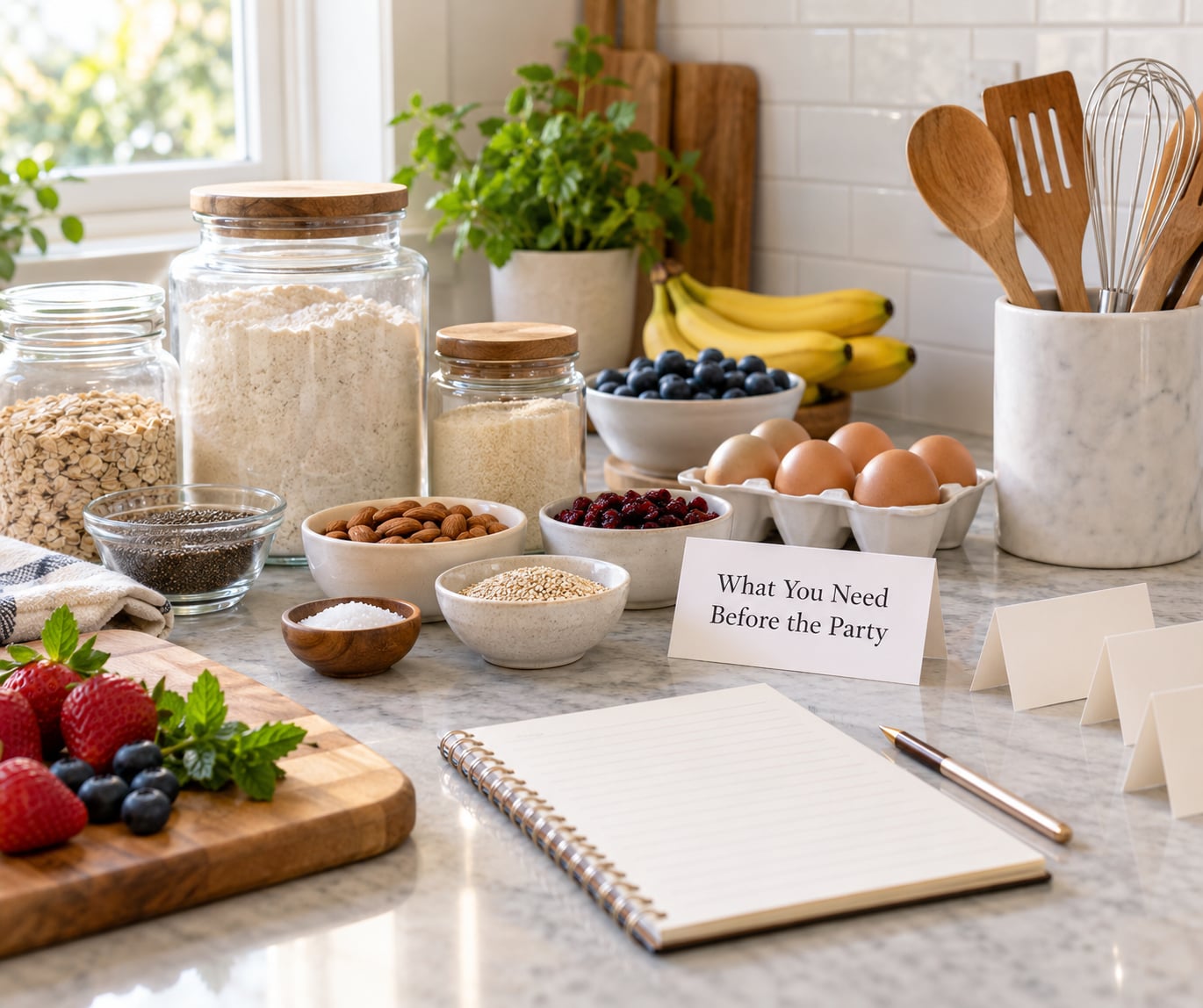
You need five things, and none of them require a dedicated kitchen: a clear answer on each guest’s needs, a short list of naturally gluten-free dishes, one certified gluten-free item or two as a backup, a second set of tools, and something to write on.
A clear answer on each guest’s needs
Write down who needs what. Celiac disease, a wheat allergy, non-celiac gluten sensitivity and a personal preference are four different situations, and the first one is a medical requirement.
A second set of tools
A separate knife, cutting board, wooden spoon, tongs and a pan you reserve for gluten-free cooking. Cheap color-coded sets exist for this reason. Wash and dry them before the day so you are not improvising at 4pm.
Labels, plus the packaging
Small card stock, masking tape on folded tent cards, even sticky notes on toothpicks work. Keep the original package next to any store-bought item so a skeptical guest can read the ingredient list themselves rather than taking your word for it.
A menu that leans on whole foods
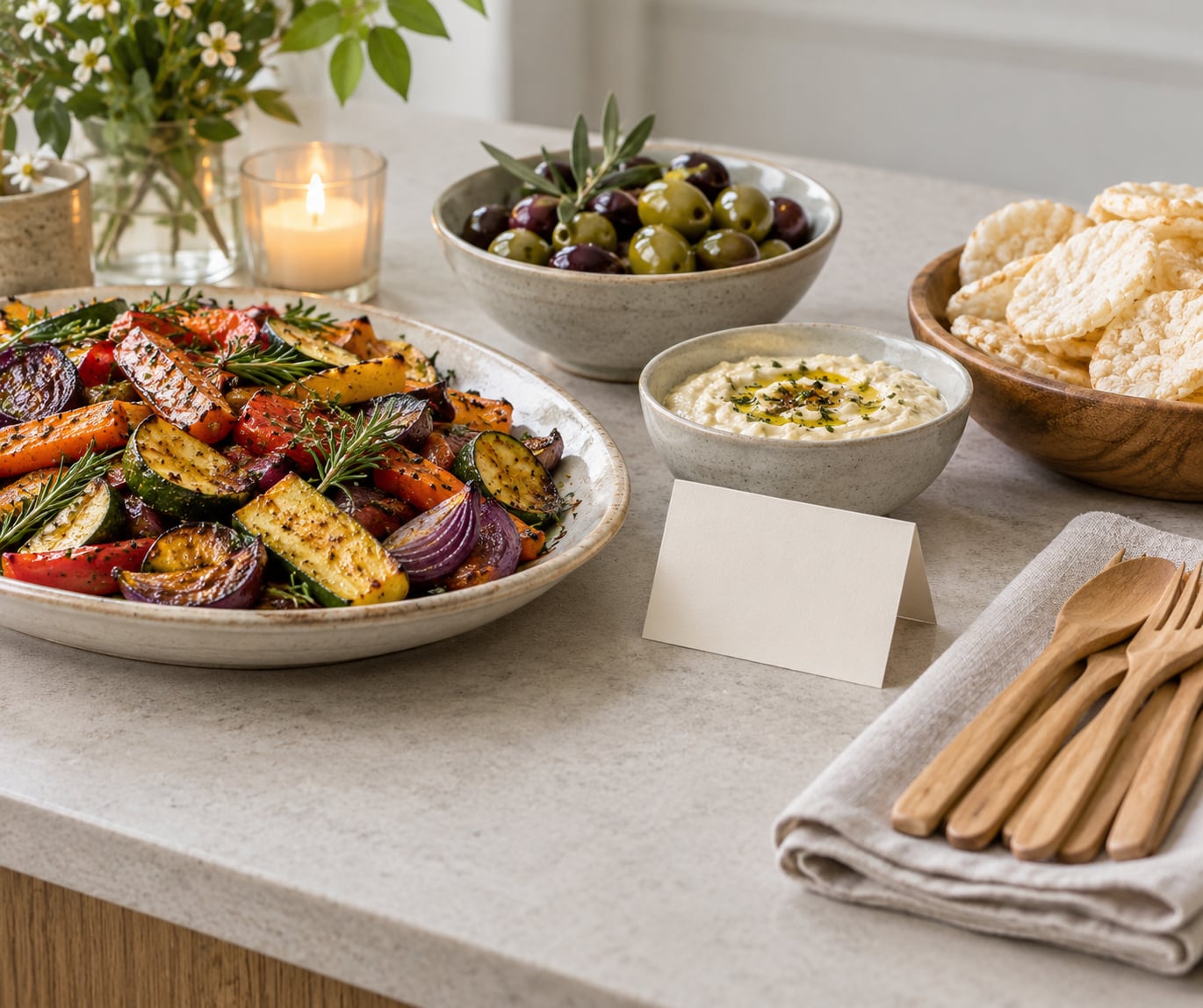
Roasted vegetables, grilled meats, rice, potatoes, salads, fruit, cheese and dips are naturally gluten-free and need no special sourcing. Build the menu around those, then add a certified item or two for texture and for guests who want a packaged snack.
Paper plates, cups and utensils
This one gets skipped and it costs almost nothing. Disposables remove the shared-spoon problem entirely: nobody passes a utensil that touched a wheat cracker to your friend. Beyond Celiac’s rule of thumb is sound — own utensils, own sauce bowl.
How to Offer Gluten-Free Options at a Party: Step by Step
Ask About Dietary Needs When Guests RSVP
Ask early and ask plainly: “Does anyone need to avoid gluten, and is that a medical requirement or a preference?” That one sentence tells you whether you need a careful plan or a decent plate of chips.
Do not make a guest explain their diagnosis to get a meal. Host on r/glutenfree have described the exact awkwardness: a person who wants to attend but does not want to be the one asking whether the dip is safe. Asking for everyone, up front, solves it.
Two details worth capturing. First, whether the guest also avoids other allergens or follows a different diet, since a party menu often has to satisfy several restrictions at once. Second, whether they would rather bring their own dish. Some people would; letting them is cheaper for you and safer for them.
Build a Menu With Naturally Gluten-Free Foods
Start with foods that never contained gluten and you have removed almost every sourcing problem: meats, seafood, eggs, rice, potatoes, corn, vegetables, fruit, cheese, nuts, olive oil, butter, herbs and spices.
Hidden gluten is where well-meaning menus go wrong. Check soy sauce and tamari (use certified gluten-free tamari), salad dressings, marinades, gravy, thickening mixes, breadcrumbs, croutons, some rice blends, oats (look for certified gluten-free oats) and cooking spray. A marinade is the classic offender because nobody reads it.
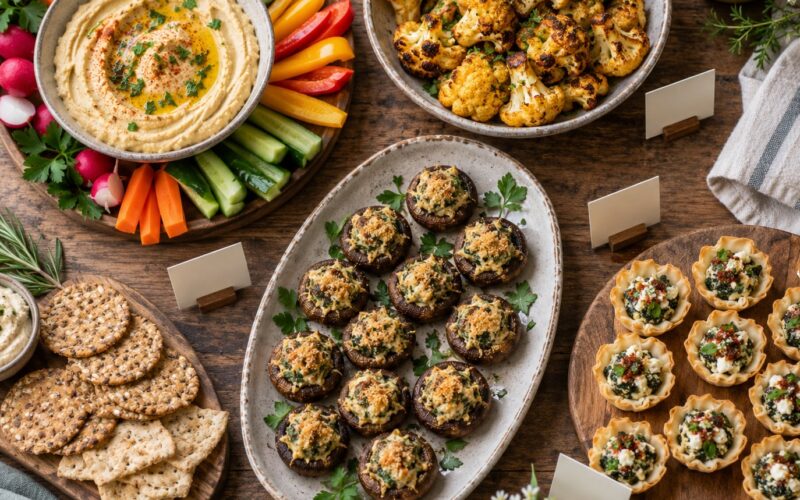
For appetizers, skewers are hard to argue with: caprese with tomato, basil and mozzarella, chicken satay with a nut or coconut sauce, bacon-wrapped dates, shrimp with lemon, or a dip served with rice crackers. Veggies with hummus, olives, pickles and deviled eggs cover the table without a stove.
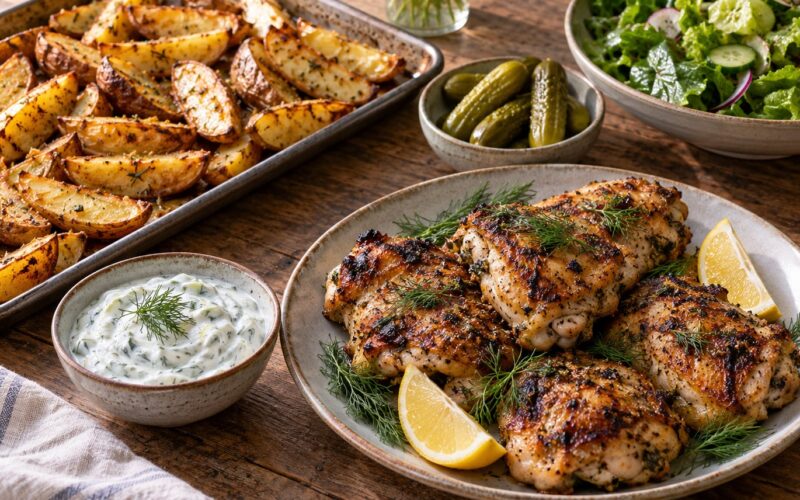
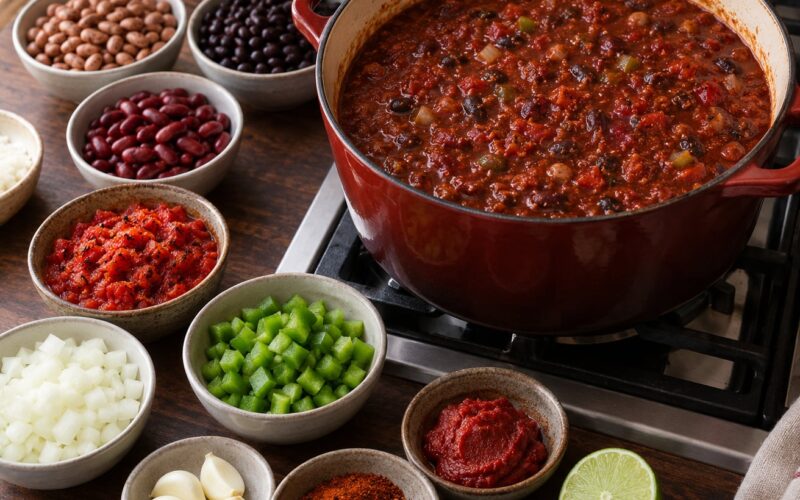
Mains need almost nothing special. Slow-cooker pulled pork and chicken thighs, sheet-pan salmon, roast chicken legs, chili, tacos with corn tortillas and a salad bowl are all naturally gluten-free and all improve when made a day ahead.
For drinks, keep it simple: wine, hard cider, rum, vodka, gin and tequila are generally gluten-free, and sangria made with wine and fruit is too. Beer is the trap, since most beer is brewed from barley malt and does contain gluten. Stock a certified gluten-free beer and mention it by name. Watch the modifiers too, because soy sauce in a savory cocktail and beer used as a mixer will ruin both.
Keep Gluten-Free Food Separate During Preparation
Prepare the gluten-free food first, before you open the flour. This one habit prevents most cross-contact, because flour dust in a kitchen takes hours to settle.
Wipe down counters and the stovetop before you start, then use your reserved tools for anything gluten-free. Do not share a cutting board, a toaster, a fryer or a deep fryer oil. A shared toaster is the one people miss, and crumbs in a toaster slot sit there for months.
Cover finished dishes and move them away from the gluten zone. Beyond Celiac suggests color-coding your supplies, which sounds fussy until the afternoon you have four dishes going at once and need to know instantly which pot is safe. Once, if there is any doubt about a dish, do not serve it — say so out loud rather than hoping.
Label the Buffet So Guests Can Eat With Confidence
Label every platter, not just the safe ones, because a blank dish sends guests guessing and the guessing is what makes them nervous. A written card naming the dish plus a simple gluten-free marker works well.
Be honest about the setup rather than vague. If the gluten-free tray came out of your kitchen while flour was out, say the kitchen is shared but the dish was cooked and handled separately. A guest can make their own decision with accurate information; they cannot with a cheerful “don’t worry, it’s fine.”
Keep the packaging beside any packaged dip so people can read the label. Give each dish its own serving utensil, and if you want the spread to feel easy rather than clinical, set the gluten-free dishes at one end with their own spoons rather than scattered through the line.
Serve Small Batches and Refill as Needed
Small bowls that you refill from a covered source in the kitchen keep food fresh and keep the gluten-free dishes physically separate from crumbs and used utensils. Refilling beats leaving one big tray sitting out all night.
Get the timing right for safety too. Keep hot food at 140°F or above, cook poultry to 165°F, ground meat to 160°F, and whole cuts and fish to 145°F. Cook the gluten-free items first, finish them, cover them, and refrigerate or keep them hot while you cook the rest.
Plan a few make-ahead dishes so you are not cooking a separate meal at the last minute. Chili, pulled pork, roasted vegetables and casseroles are better on day two anyway, and the night before is when you should clean, label and set up the serving area.
Common Mistakes
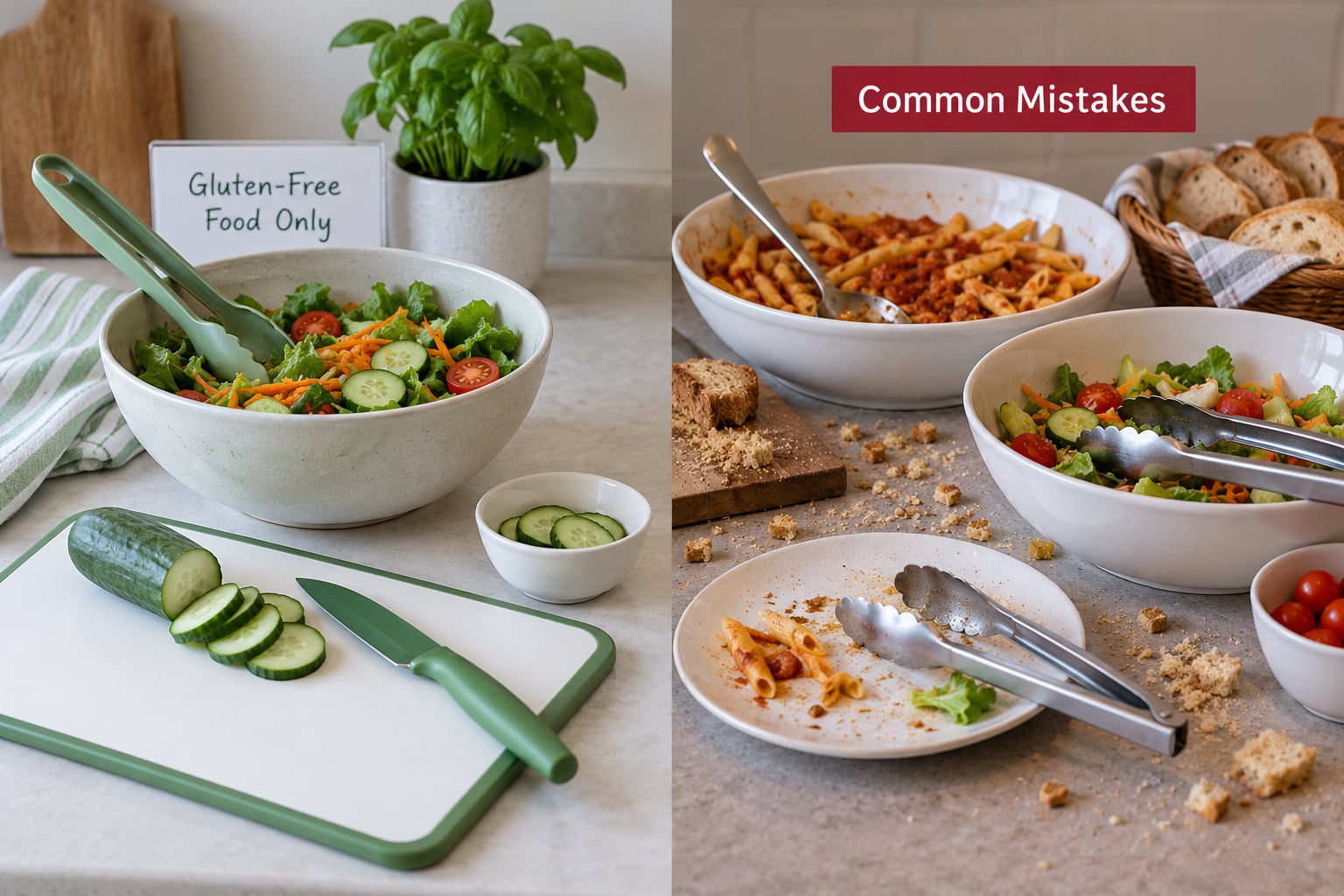
Most party gluten-free mishaps come down to a small number of assumptions. Here is what goes wrong and what to do instead.
Assuming a whole grain is always safe. Rice, corn and quinoa are naturally gluten-free, but the packaging and the processing line may not be. This is why certified gluten-free rice crackers sit on a party table next to regular ones without any doubt attached.
Using one toaster or fryer for everything. A shared fryer is a dedicated gluten environment. Make the gluten-free items in a clean pan first and keep them away from the fryer.
Labeling vaguely. “The salads are gluten free” is not much help when three salads are on the table. Name each dish and mark it individually.
Cooking gluten-free food last. By then the kitchen is covered in flour dust and the surface you cleaned an hour ago is dirty again. Cook it first.
Failing to mention a shared kitchen. Guests deserve the facts about your setup. Hosts who state it plainly get more trust than hosts who stay quiet about it.
Forgetting drinks and hidden gluten. Beer, soy sauce, salad dressing, marinades, gravy and croutons are the six things that turn an apparently safe dish into an unsafe one.
Leaving leftovers in a shared container. Use separate containers, separate lids and separate utensils for any gluten-free food you send home with guests, so the fridge does not undo your careful work at the stove.
Frequently Asked Questions
What foods are usually gluten free for a party?
Meats, seafood, eggs, rice, potatoes, corn, vegetables, fruit, cheese, nuts, olive oil, butter and plain herbs and spices never contained gluten, which makes them the easiest base for a party menu. Watch the additions: soy sauce, salad dressings, marinades, gravy, breadcrumbs, croutons and blended rice mixes are common sources of hidden gluten. Check certified gluten-free labels when you are buying packaged dips, crackers or chips.
Can I make one dish for both gluten-free and non-gluten-free guests?
Usually yes, and it is the easier option. A sheet pan of chicken and vegetables, chili, tacos on corn tortillas, a rice salad or deviled eggs works for the whole table with no separate cooking and no awkward labeling. The dishes that cannot be shared are the ones where gluten is the structure: bread, pasta, battered foods, crackers and anything dusted in flour. Cook those separately and label them.
How do I prevent cross-contact when serving gluten-free food?
Cook gluten-free dishes first, before any flour or crumb is in the kitchen. Use your own knife, cutting board, utensils and pan, cover finished dishes and move them away from the gluten zone. Skip shared toasters, shared fryers and shared cutting boards entirely, and give each platter its own serving spoon at the buffet. Wiping counters down before you start, rather than after, does more good than anything else.
Should gluten-free food be labeled separately at a party?
Yes, label every dish rather than only the gluten-free ones. A blank platter leaves guests guessing, and guessing is what makes a celiac guest hover over the table instead of eating. A simple card with the dish name and a gluten-free marker takes under a minute per dish. Keep the original packaging beside anything store-bought so anyone can read the ingredient list and decide for themselves.
What should I do if I am hosting a guest with celiac disease?
Ask how strict their needs are before you plan, then build the menu around naturally gluten-free whole foods and add a certified gluten-free product or two. Cook their food first, use separate tools and surfaces, keep it covered and away from the gluten zone, label it clearly and tell them honestly whether your kitchen is shared. Beyond Celiac’s guidance is blunt: if you have any doubt about a dish, do not serve it.
Are foods labeled gluten free automatically safe for people with celiac disease?
A certified gluten-free label is a strong signal, since certified products must test below 20 parts per million, but it is not a promise that the item was prepared in a dedicated kitchen. Uncertified gluten-free and naturally gluten-free are looser terms that some people with celiac disease avoid entirely. People who react severely tend to look for certification and for preparation details, so tell them how a dish was made rather than relying on the label alone.
Conclusion
Start with the four things that matter most: ask about dietary needs when guests reply, choose dishes that are clearly gluten-free rather than possibly so, cook them first with separate tools and surfaces, and describe your setup honestly so nobody has to guess. Put paper plates and per-dish serving utensils out with the labels, stock a certified gluten-free beer next to the wine, and your gluten-free guests can eat the same meal as everyone else instead of hovering by the kitchen door.
If a guest reacts to even a trace amount of gluten, their doctor or a registered dietitian is the right person for their specific needs. For hosting questions like these, the general rules above have not changed in years.