Learning how to make vegetarian appetizers for a mixed crowd is less about cooking fancier food and more about planning a spread nobody can pick apart. Offer two or three familiar flavors, make at least one dish substantial enough to beat a handful of chips, and put every label where guests can read it without picking up a plate. Most of the work happens a day or two before, when the oven and the fridge are doing the heavy lifting for you.
The failure mode I see most often is the sad veggie tray. A platter of raw carrots and cucumber next to a bowl of dip gets picked over politely, and the vegetarians at your party end up eating crackers while everyone else fills up on the meat board. Add something warm, something indulgent, and something with a real filling, and the same food disappears from both camps.
Budget roughly 90 minutes of active work spread over two days, plus 30 minutes on the day of the party for finishing and arranging. The difficulty is low, mostly because everything on this menu scales by doubling a recipe rather than by learning a new technique.
Table of Contents
- What You Need
- How to Make Vegetarian Appetizers for a Mixed Crowd
- Plan a Balanced Appetizer Menu
- Choose Options That Match Common Dietary Needs
- Prepare One Component Ahead
- Finish the Appetizers Close to Serving
- Set Up a Clear, Crowdf-Friendly Serving Station
- Keep Everything Safe and at the Best Texture
- Common Mistakes
- Tips for Feeding Both Vegetarians and Meat-Eaters
- Frequently Asked Questions
- What are the best vegetarian appetizers for a mixed crowd?
- How many vegetarian appetizers should I prepare for a party?
- Can I make vegetarian appetizers ahead of time?
- What vegetarian appetizers can be served warm or at room temperature?
- How should I keep vegetarian appetizers safe and fresh?
- Conclusion
What You Need
Gather these before you shop, and choosing the menu takes about ten minutes instead of an hour of browsing recipes.
- Two to three flavor families. Pick a creamy dip, a roasted or crispy vegetable bite, and one baked pastry or stuffed item. Familiar seasonings beat adventurous ones for a crowd.
- Substantial and light options. At least one dish with protein or fat in it, and one that is fresh and cool.
- Separate sauces and dips. Keep dressing and dips in their own bowls so a guest can dip a bite without wetting the rest of the platter.
- Two sheet pans, one large bowl, and a food thermometer. The thermometer is for the hot holding dish and for reheating anything you cooked the day before.
- Shallow storage containers with lids. Deep hot containers cool slowly in the middle, which is exactly where you do not want that.
- Small signs or index cards and a marker. Plain paper or plain cards work; printed labels peel off in cold condensation.
- Two or three sets of serving utensils. One dedicated set for every vegetarian dish keeps the strict-dieta guest from wondering.
- Written notes on dietary needs. Text the host or co-host before shopping: vegan, gluten-free, nut-free, dairy-free, no onion or garlic, anything genuinely serious.
How to Make Vegetarian Appetizers for a Mixed Crowd
The whole system comes down to four decisions: balance the menu, match the diets you actually have, do one component ahead, and finish crisp things late. Everything else is detail.
Plan a Balanced Appetizer Menu
A balanced menu mixes textures and temperatures, not just recipes. Aim for one creamy, one crisp or roasted, and one substantial baked or stuffed item, then add a raw or chilled option if you have the hands for it.
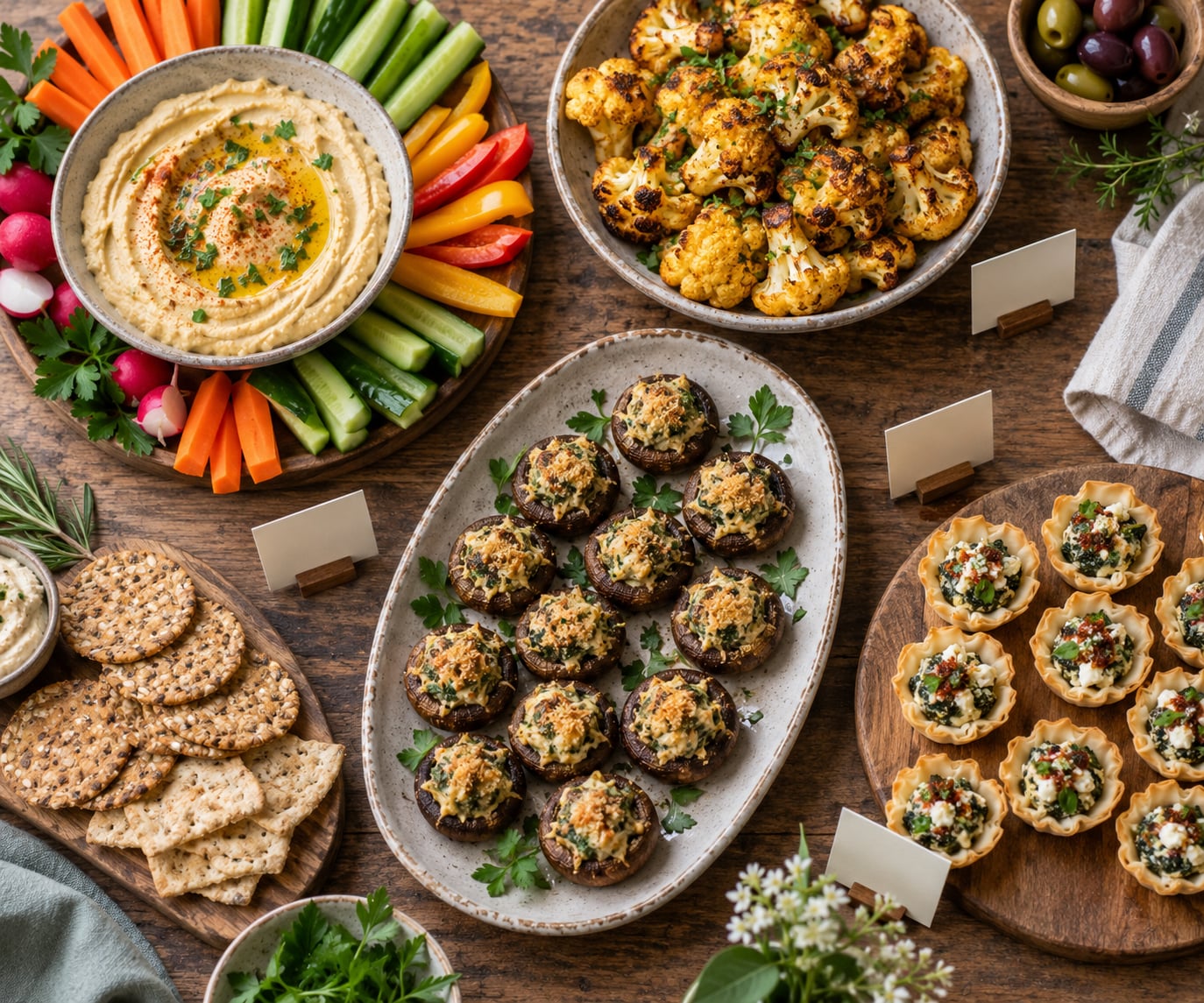
Buffalo-style cauliflower bites cover the spicy and roasted slot. They get crisp in an air fryer or a hot oven, and meat eaters reach for them because they taste like wings. Spinach-artichoke dip with store-bought stuffed mushrooms fills the creamy and substantial slots together, and both can sit at room temperature for an hour without sulking. A cucumber and apple platter with a sharp vinaigrette handles the fresh, non-dairy side of the table.
Skip anything that requires a plate, a knife, or two hands. If a guest cannot eat it while standing and talking, they will not eat it at all.
Choose Options That Match Common Dietary Needs
Vegetarian, vegan, gluten-free, nut-free and dairy-free are five different labels, and one dish rarely covers all of them. Decide which ones you need first, then choose the menu, not the other way around.
- Vegetarian rules out meat, poultry, fish, and gelatin. Stock bouillon, Worcestershire sauce, some pasta sauces, and Caesar dressing all sneak meat in, so check labels.
- Vegan also rules out dairy, eggs, and honey. Serve the creamy dip with a second, dairy-free option so nobody has to ask.
- Gluten-free bites need a vehicle that is not wheat-based. Rice crackers, quinoa crisps, and mini phyllo-style cups made from rice or corn wrappers all work. Check that soy sauce and spice blends are gluten-free too.
- Nut-free is the one that ruins the most menus, because dukka, pesto, and many crackers carry nuts or seeds. If a guest is nut-free, tell them plainly what is in the room rather than guessing.
- Dairy-free usually just means swapping cheese for something else, or putting cheese in a bowl on the side.
Cross-contact matters more than purity claims. If someone in the room has a serious allergy, use a separate pan, separate utensils, and separate tongs, and say so out loud once when people arrive. Hosts who cook for mixed groups repeat the same point: guests who avoid an ingredient for medical reasons relax the moment they know the host thought about it.
Prepare One Component Ahead
Pick the single most time-consuming element and finish it a day or two early. Roasted vegetables, a blended bean dip, browned mushrooms, and simple pan sauces all reheat or assemble beautifully.
Here is what done looks like. A tray of cauliflower at 425°F for 25 minutes comes out deep brown at the edges, with the smallest florets slightly shriveled, and smells toasted rather than steamed. A bean dip blended smooth should hold a soft peak when you lift the spoon, taste round and seasoned, and skin over slightly within 20 minutes at room temperature. Mushrooms are ready when the edges have collapsed and the pan juices have reduced to a dark glaze that coats the back of a spoon.
Cool anything you are refrigerating in a shallow container, uncovered for the first hour so steam escapes, then lid it. Label it with the date and the dish name. Most cooked vegetable dishes keep three to four days refrigerated; dips and raw vegetables keep three to five.
That same roasted tray is also your entire next-day lunch, so cook one more than you think you need. A sheet pan of cauliflower or roasted sweet potato does not care how you dress it later.
Finish the Appetizers Close to Serving
Crisp food dies in a closed container, so the last steps happen on the day, as close to serving as you can manage.
- Warming-tray nachos: layer chips, roasted peppers, black beans, and cheese on a lined sheet pan, then run it under the broiler for 4 to 6 minutes until the cheese is bubbling and the edges of the chips are browned. Ten minutes of cooking, and they go straight out to the table.
- Air-fried cauliflower: 400°F for 12 to 15 minutes, shaking the basket twice. Finished when the coating is sand-colored, crisp at the edges, and the stem end yields to a knife with no resistance.
- Toasted flatbread bites: a few minutes under the broiler until the cheese spots and the crust is stiff. Watch them, because they go from perfect to bitter fast.
The cue is always color and sound. Golden and crackling means done. Pale and quiet means give it more time.
Set Up a Clear, Crowdf-Friendly Serving Station
Where you put the food decides whether guests eat it. Spread the dishes out instead of stacking them in the center of a table, because the middle dish gets picked last and the first one gets emptied first.
Keep hot and cold apart and use different surfaces. Put the warm tray on a folded towel near a power outlet, and park the cold platters at the opposite end of the room so a guest is not juggling a hot plate and a cold one. Vary the heights: a bowl of dip raised on an inverted mug or a cake stand sits above the flat platters and reads as deliberate.
Give every dish its own serving spoon, tong, or fork. If a vegetarian item shares a utensil with a meat dish, the whole spread stops being useful to the people it was meant to serve. Labels go at eye level, not flat on the table, written large enough to read from standing height: VEGETARIAN, VEGAN, GLUTEN-FREE, CONTAINS NUTS. Small toothpick flags work if you have them, but plain cards on toothpicks stuck in a foam block are easier to write at midnight.
Toothpicks for everything handheld, small forks for anything with toppings, and a stack of cocktail napkins. Skip the toothpicks for creamy dips and put the dip in a bowl deep enough that a small plate is useful.
Keep Everything Safe and at the Best Texture
Two hours is the number most people get wrong. Perishable food should not sit at room temperature for more than two hours, and one hour is the limit when the room is above 90°F, which happens on a patio in July and a packed holiday house in December.
Keep cold dips and cut vegetables on ice trays or over ice-filled bowls, aiming to hold them at 40°F or below, and keep your hot dish at 140°F or above. If you have no hot box, small batches on a warming tray work better than one deep dish, since a big pan holds heat longer at the edges than in the middle.
Store extra food in shallow containers, refrigerate it within two hours, and eat it within three to four days. Reheat it to 165°F and check with a thermometer rather than eyeballing it. When you pull those containers from the fridge, the crisp items go back into a hot oven or air fryer rather than the microwave, which softens the coating and dries the interior.
Put out small replenishment batches instead of topping up the big bowl. Fresh food sitting on a platter for an hour never looks or tastes the way it did when you set it down, and a swap takes ten seconds.
Common Mistakes
Almost every disappointing vegetarian spread comes down to one of these, and each one has a straightforward fix.
- Serving only raw vegetables. A veggie tray reads as an obligation, not a dish. Fix: roast or air-fry half of the vegetables and serve both.
- Choosing recipes with six or more steps. You will run out of hands before the oven is preheated. Fix: cap every recipe at four steps, and no more than two of them on the day of.
- Overlooking hidden meat ingredients. Bouillon, Worcestershire, some pestos, and a lot of packaged French dressing are the usual offenders. Fix: read labels at the shop, not at home.
- Labeling food inaccurately. Calling something vegetarian when it was cooked in bacon fat, or gluten-free when the crackers are wheat, loses a guest’s trust permanently. Fix: label the smallest claim that is fully true, and say nothing rather than guess.
- Crowding the table. Twenty dishes in one spot means the back nine go untouched. Fix: use every surface you have, including the counter and a sideboard, and vary the heights.
- Letting crisp food sit too long. Airtight containers and early plating turn crunchy bites into pillows. Fix: hold the crunchy item out of the fridge, cook the last batch in small waves, and never seal a finished batch until everyone has eaten.
- Not planning a substantial option. Four light dips fill nobody up. Fix: make one dish with real staying power, like stuffed mushrooms, mini quiche bites, or a warm layered dip with chips alongside it.
Tips for Feeding Both Vegetarians and Meat-Eaters
The dish that closes the gap is usually the one that looks generous, so build the menu around indulgence rather than restraint. A melty, cheesy, saucy bite gets picked up by everyone at the table, and the person who happens to eat vegetarian usually takes two.
- Toast nuts or cheese on top, on the side. Toasted almonds or crumbled feta turn a plain roasted vegetable into a centerpiece, and they land in their own bowl so vegan guests add them or skip them.
- Serve add-in sauces separately. Pickled onions, toasted seeds, crumbled bacon bits, extra chili crisp, or chopped herbs in small bowls let one base dish feed several diets at once.
- Lean on familiar seasonings. Buffalo sauce, taco seasoning, ranch powder, smoked paprika, curry powder, and garlic-lemon are the seasonings that disappear fastest because nobody has to guess.
- Include a filling option. Beans, lentils, mushrooms, and spinach give satiety. Guests who eat vegetarian but are hungry are the hardest critics of a party menu.
- Use vegetables as the vessel. Baby potatoes, cucumber rounds, apple and pear slices, and small square cheese slices work as dip vehicles, and home cooks mention them often as a swap for crackers. They also add fiber and a second flavor.
- Lean on frozen shortcuts. Vegetable nests, falafel, and frozen vegetable bites cook in minutes and hold up on a buffet tray. The freezer is a legitimate strategy, not a compromise.
- Start with one substantial dish. If you only have energy for one thing, make it count: something warm, filling, and familiar beats six trays of cold dips.
Frequently Asked Questions
What are the best vegetarian appetizers for a mixed crowd?
A dip spread plus one hot, substantial dish wins every time. Think hummus or spinach-artichoke dip with crackers and raw vegetables, plus something like buffalo cauliflower bites, stuffed mushrooms, or mini quiche bites for the warm slot. Familiar seasonings like buffalo, taco, and ranch pull in guests who did not plan to eat vegetarian food.
How many vegetarian appetizers should I prepare for a party?
Plan on 8 to 12 small bites per person at a cocktail party where guests are grazing for two or three hours, about 6 per person at a dinner party where a meal follows, and 4 to 6 per person at a buffet or potluck with other food on the table. Multiply by your full guest count, then add 10 percent as a buffer, because dips run out first.
Can I make vegetarian appetizers ahead of time?
Yes, and most of this menu is better for it. Blended dips, roasted vegetables, stuffed mushrooms, and baked pastry bites can be assembled a day or two ahead and stored refrigerated. Only crisp items like chips, fried bites, and toasted flatbread should be finished on the day, since steam and trapped air destroy the texture.
What vegetarian appetizers can be served warm or at room temperature?
Most of them. Dips with vegetables, bean spreads, cheese balls, caprese skewers, and stuffed mushrooms all sit out for an hour without any problem, as long as dairy and cut vegetables stay at or below 40°F on an ice tray. Hot items like nachos, roasted cauliflower, and baked pastry bites hold at 140°F or above on a warming tray.
How should I keep vegetarian appetizers safe and fresh?
Chill cold dips and cut produce below 40°F using ice trays or ice-filled bowls, and keep hot dishes at 140°F or above. Follow the two-hour rule: perishable food should not sit at room temperature longer than two hours, or one hour in a space above 90°F. Refrigerate leftovers within two hours in shallow containers and eat them within three to four days.
Conclusion
Start with three things, in this order. Choose a balanced menu of one creamy, one crispy, and one substantial dish, plus a raw option if you can. Confirm dietary needs with your guests before you shop, so the labels are accurate. Then cook one make-ahead component a day early, which is usually the difference between a calm host and a host working the oven while guests arrive.
The rest is arrangement: hot on one side, cold on the other, labels at eye level, a separate utensil for every vegetarian dish, and crisp food finished last. Once you learn how to make vegetarian appetizers for a mixed crowd that way, nobody at the table has to think about what they are allowed to eat.