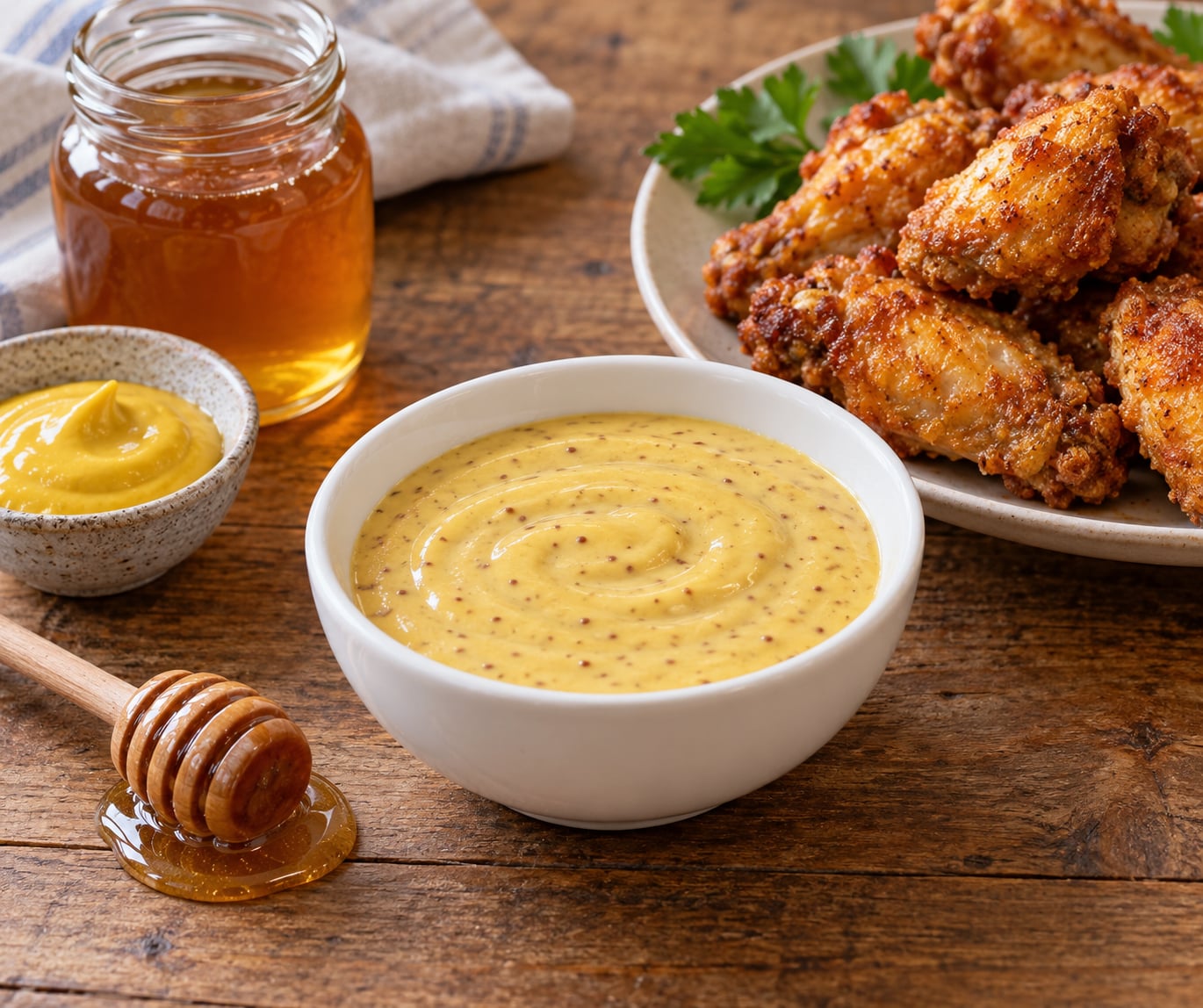
To make honey mustard dipping sauce, whisk together mayonnaise, honey, both yellow and Dijon mustard, and a squeeze of lemon juice. Five ingredients, about two minutes of work, no cooking. The mayonnaise is what makes it cling to a wing instead of sliding off into the plate.
Most bottled honey mustard disappoints because they lean sweet and thin. Restaurants use a heavier hand with the mustard and a hit of acid, which is exactly what you can copy at home with a spoon and a bowl.
Here is how to make honey mustard dipping sauce that tastes like the pub version, plus how to thicken it, thin it, spice it up, and store it.
Table of Contents
- What You Need
- Step-by-Step: How to Make Honey Mustard Dipping Sauce
- Step 1: Mix the Mustard and Tang
- Step 2: Whisk in the Honey and Seasonings
- Step 3: Adjust the Thickness and Chill
- Common Mistakes and Tips for the Best Results
- Frequently Asked Questions
- Can I make honey mustard dipping sauce with just honey and mustard?
- Is there a difference between honey mustard and honey mustard dipping sauce?
- What are the ingredients in 3 ingredient honey mustard?
- How do I fix honey mustard sauce that is too thin or too sweet?
- How long does homemade honey mustard dipping sauce last in the fridge?
- Conclusion
What You Need
Five ingredients get you a cup of sauce. Every one of them earns its spot, so I would not skip around the list without knowing what you are changing.
- 1/2 cup mayonnaise (about 115 g). The emulsifying base that holds everything together and gives the sauce body. Whole egg mayonnaise works best because it is more acidic and stays stable longer.
- 2 tablespoons honey (about 42 g). Raw honey tastes brighter and less syrupy than the grocery blend.
- 1 tablespoon yellow mustard (about 20 g). This is the mild, acidic base and it supplies the bright yellow color.
- 1 tablespoon Dijon mustard (about 15 g). Sharper and slightly spicy, it is what stops the sauce tasting like plain sweetness.
- 1 teaspoon lemon juice or apple cider vinegar. The acid that keeps the sauce from cloying.
Salt, black pepper, smoked paprika, and a pinch of cayenne are all optional, and I add a small pinch of salt and a few grinds of pepper almost every time.
If you want a sharper result, bump the Dijon to two tablespoons. For a milder, kid-friendly version, use only yellow mustard and leave out the cayenne. For a dairy-free version, swap the mayonnaise for Greek yogurt or a thick olive oil and mustard blend.
Step-by-Step: How to Make Honey Mustard Dipping Sauce
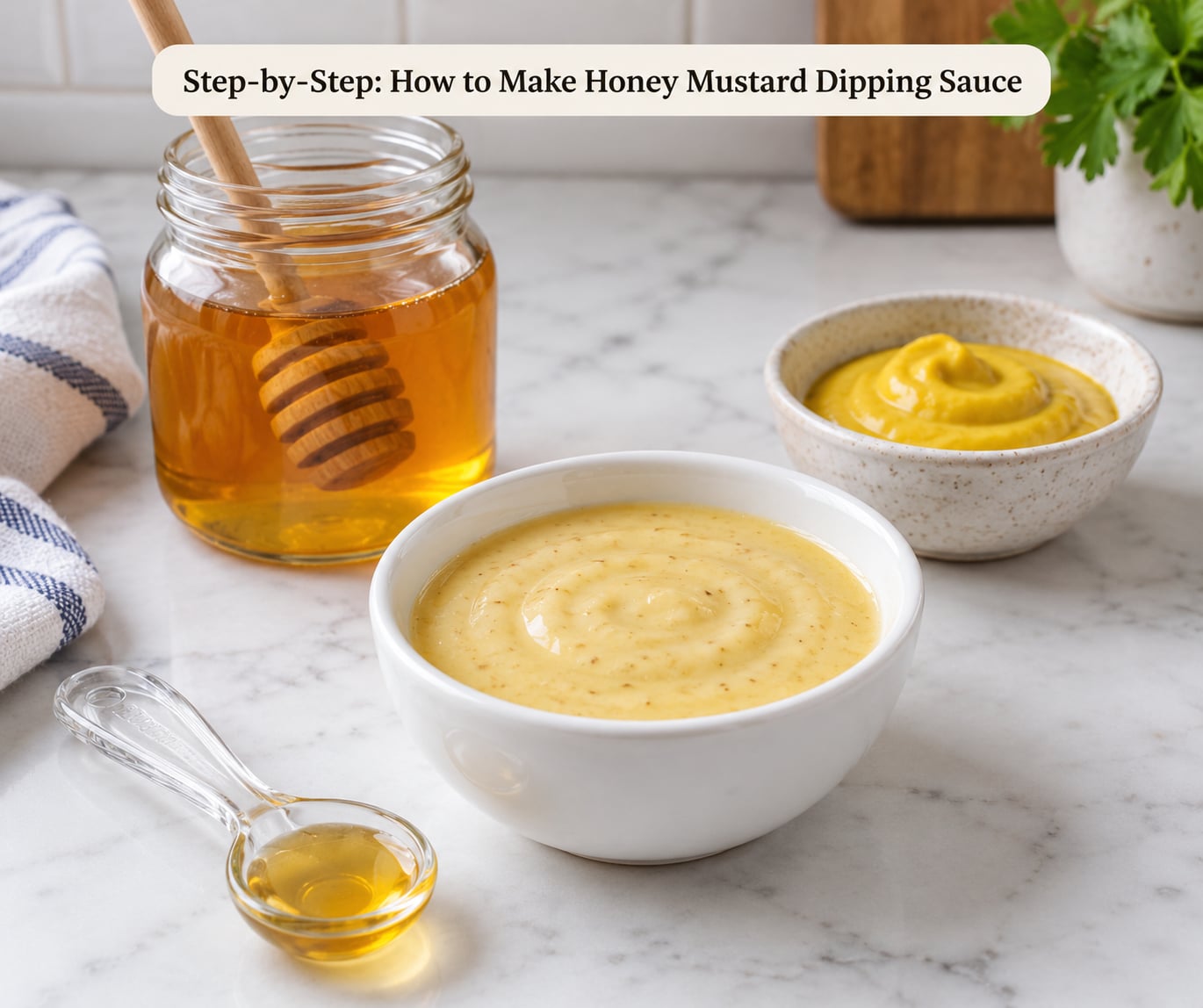
Step 1: Mix the Mustard and Tang
Put the yellow mustard, the Dijon, and the lemon juice in a small bowl first. Stir them together until you have a smooth, bright yellow paste with no streaks of mustard left.
Doing this before the honey goes in matters more than it sounds. If you dump everything into the bowl at once, the honey coats the mustard and stays grainy. Work the mustard into the acid first and you get an emulsion that stays glossy and even.
Step 2: Whisk in the Honey and Seasonings
Add the honey and the mayonnaise, then whisk briskly until the mixture turns uniform and glossy. Add the salt, pepper, and any paprika or cayenne now, and whisk again.
You know it worked when the sauce coats the back of the spoon in a thin ribbon and holds its shape for a second before sliding off. If it looks streaky, keep whisking; if it looks loose, it needs another tablespoon of mayonnaise rather than more mixing.
Real honey can make the sauce taste a little flat until the mustard settles. Taste it, then decide whether it needs more acid before it needs more sweetness.
Step 3: Adjust the Thickness and Chill
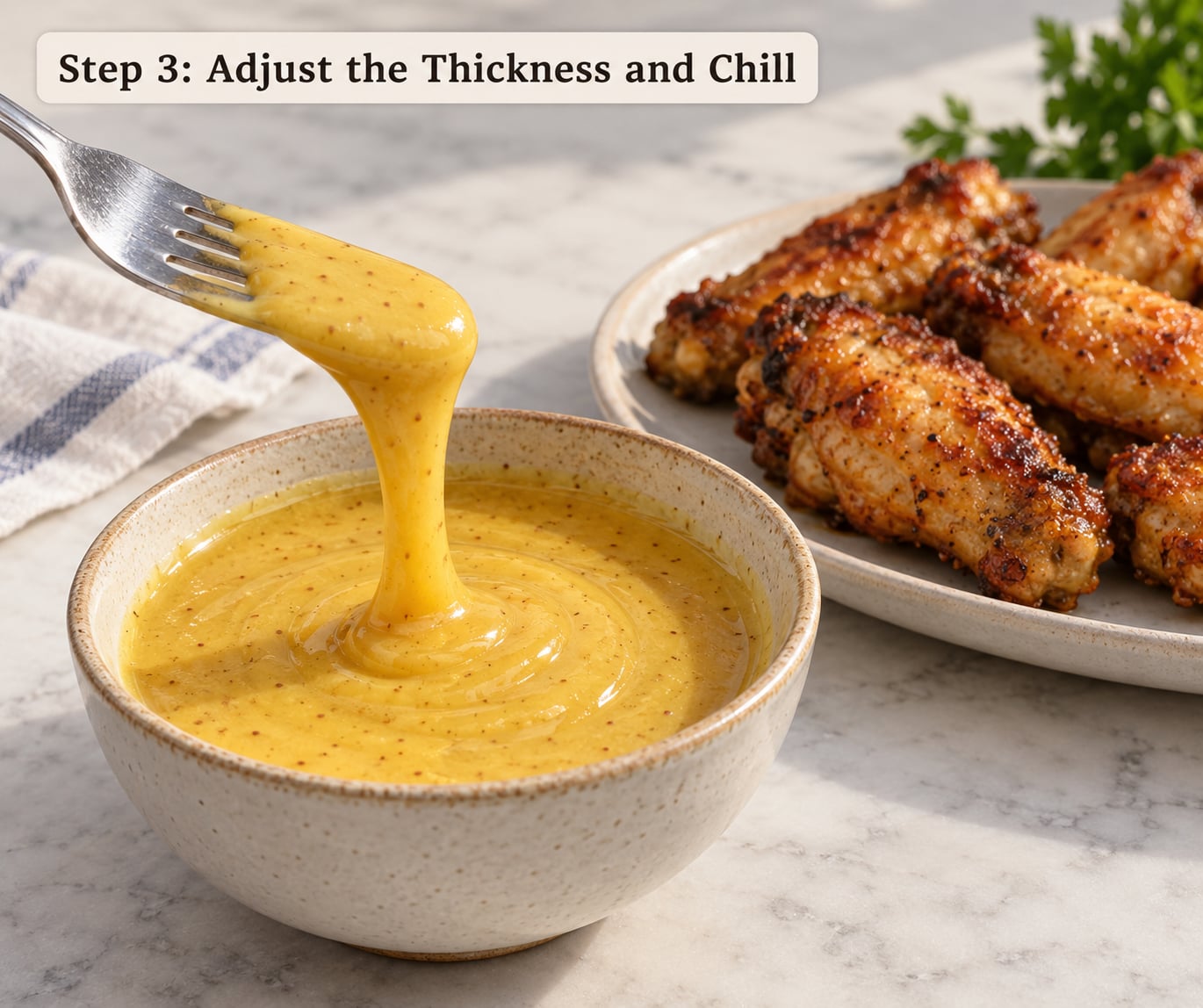
Dipping sauce should be thick enough to cling to food. Too loose? Stir in another tablespoon of mayonnaise. Too stiff to spread on a sandwich? Beat in a teaspoon of lemon juice, or a splash of water if you want to thin it for a dressing.
Cover it and refrigerate for at least 30 minutes. That rest lets the mustard mellow and the flavors marry, and the sauce firms up slightly as it chills. Taste it cold before serving, because cold dulls sweetness and sharpens the tang, which is why a sauce that tastes perfect at room temperature can taste too sweet straight from the fridge.
Common Mistakes and Tips for the Best Results
The sauce is too sweet. This is the most common complaint with bottled honey mustard, and it is easy to fix at home. Add another tablespoon of mustard rather than more honey, and a squeeze of lemon juice. The sweet-to-tang ratio is the whole ball game.
The sauce is too thin to cling. Most likely you used too little mayonnaise or too much liquid acid. Stir in a tablespoon or two of mayo and chill again for 20 minutes. A thicker sauce also helps if you are serving fried food, since a thin sauce just pools at the bottom of the plate.
The sauce is lumpy or grainy. The honey hit the mayo before it had anything to emulsify into. Whisk the mustard and lemon juice together first next time, and add the honey in a thin stream while whisking.
The sauce tastes bitter. That is usually mustard that sat too long after mixing. Freshly whisked honey mustard tastes bright and sharp; a sauce that has been sitting overnight can turn aggressively bitter as the mustard compounds continue to develop. Whisk it again and taste before serving.
The sauce has separated. Give it a hard stir and it comes right back together. If it separates badly, that is a sign of thin mayo or too much liquid, and it will happen again next batch.
Mustard choice matters. Yellow mustard is mild, acidic, and cheap, and it carries the color. Dijon brings a clean peppery heat. Whole grain mustard adds texture and a bit of bite, which works nicely with roasted or smoked meat. Using both is the move that gets you the closest to a restaurant sauce.
Serve it cold, with pub food. This sauce pairs best with cold or room temperature dips: chicken tenders, wings, popcorn chicken, fish fingers, schnitzel, fries, onion rings, pretzels, and raw vegetables. It also works as a drizzle over roasted vegetables, a spread on a turkey or ham sandwich, a burger topper, a salad dressing thinned with a little water, or a glaze brushed onto meat in the last few minutes of grilling.
Store it properly. Transfer to an airtight container and keep it refrigerated. It keeps about five days in the fridge, the same window you would give a homemade mayo-based salad dressing. Do not freeze it: the honey and mayonnaise texture does not come back the same way after thawing. If it smells off or the surface has darkened, throw it out.
Make it the day before for a party. It firms in the fridge and the flavors get better overnight, so stirring it right before serving is the only step you need on game day.
Frequently Asked Questions
Can I make honey mustard dipping sauce with just honey and mustard?
Yes, and it works well for a thinner drizzle-style sauce. Stir together two parts honey to one part yellow mustard, then loosen with a splash of apple cider vinegar or olive oil. The result separates more easily than a mayonnaise version, so whisk it again before each use. For a dip that clings to wings, the mayonnaise base is worth keeping.
Is there a difference between honey mustard and honey mustard dipping sauce?
Not in the ingredients. Both start with honey, mustard, and an acid. The difference is consistency: a dressing-style honey mustard is thinner and meant to pour or drizzle, while a dipping sauce is thickened with mayonnaise so it stays on a wing or a fry. Any honey mustard recipe can become a dipping sauce by adding more mayonnaise.
What are the ingredients in 3 ingredient honey mustard?
The three ingredient base is honey, mustard, and mayonnaise. Half a cup of mayo, two tablespoons of honey, and two tablespoons of yellow mustard gives you a creamy sauce in about a minute. Add a teaspoon of lemon juice and a pinch of salt if you want more tang, and you have moved into five ingredient territory.
How do I fix honey mustard sauce that is too thin or too sweet?
If it is too thin, stir in another tablespoon of mayonnaise and chill it for twenty minutes before testing again. If it is too sweet, add mustard rather than honey: a tablespoon of yellow mustard plus a squeeze of lemon will pull the sweetness back without making it bitter. Taste cold, since chilling sharpens the tang.
How long does homemade honey mustard dipping sauce last in the fridge?
About five days in an airtight container, which matches other homemade mayonnaise based dressings. Keep it cold the whole time, and use a clean spoon so you are not introducing bacteria from the dip bowl. Do not freeze it, because the honey and mayonnaise separate when thawed. If the surface darkens or it smells sour, discard it.
Conclusion
The step that makes the biggest difference comes first: combine both mustards with the lemon juice before the honey goes anywhere near the bowl. That small bit of patience gives you a smooth emulsion instead of a grainy one, and it is the reason a two-minute sauce tastes like the pub version.
After that, it is all adjustment. Thick it with mayonnaise, sharpen it with mustard and acid, and taste it cold before it goes out with the wings.