Learning how to make homemade BBQ sauce takes about 15 minutes of prep and 20 to 30 minutes of simmering, and all you need is a saucepan, a wooden spoon and around ten pantry ingredients you probably already have. The whole thing is a balance of sweet, acid, salt and smoke, and once you understand that balance you can adjust the recipe forever without looking at another one.
A finished batch keeps in the refrigerator for up to two weeks in an airtight jar, and about three months in the freezer, so one Sunday cook covers a good stretch of game days. Below is the method I actually use, plus the fixes for the three problems that come up every time: sauce that is too sweet, sauce that runs off the meat, and sauce that tastes sharp right off the stove.
Table of Contents
- What You Need for Homemade BBQ Sauce
- The base recipe
- Optional tools that make it easier
- Step-by-Step
- Step 1: Make the Flavor Base
- Step 2: Simmer the Sauce
- Step 3: Blend for Your Preferred Texture
- Step 4: Finish and Cool the Sauce
- The ratio framework, so you can scale it
- Common Mistakes
- Tips for Serving and Variations
- Frequently Asked Questions
- Can I make homemade BBQ sauce without molasses?
- How long should I simmer homemade BBQ sauce?
- Should I blend barbecue sauce to make it smooth?
- How can I make my BBQ sauce thicker?
- How long does homemade BBQ sauce keep in the refrigerator?
- Can I use this BBQ sauce on burgers, wings, and grilled chicken?
- Conclusion
What You Need for Homemade BBQ Sauce
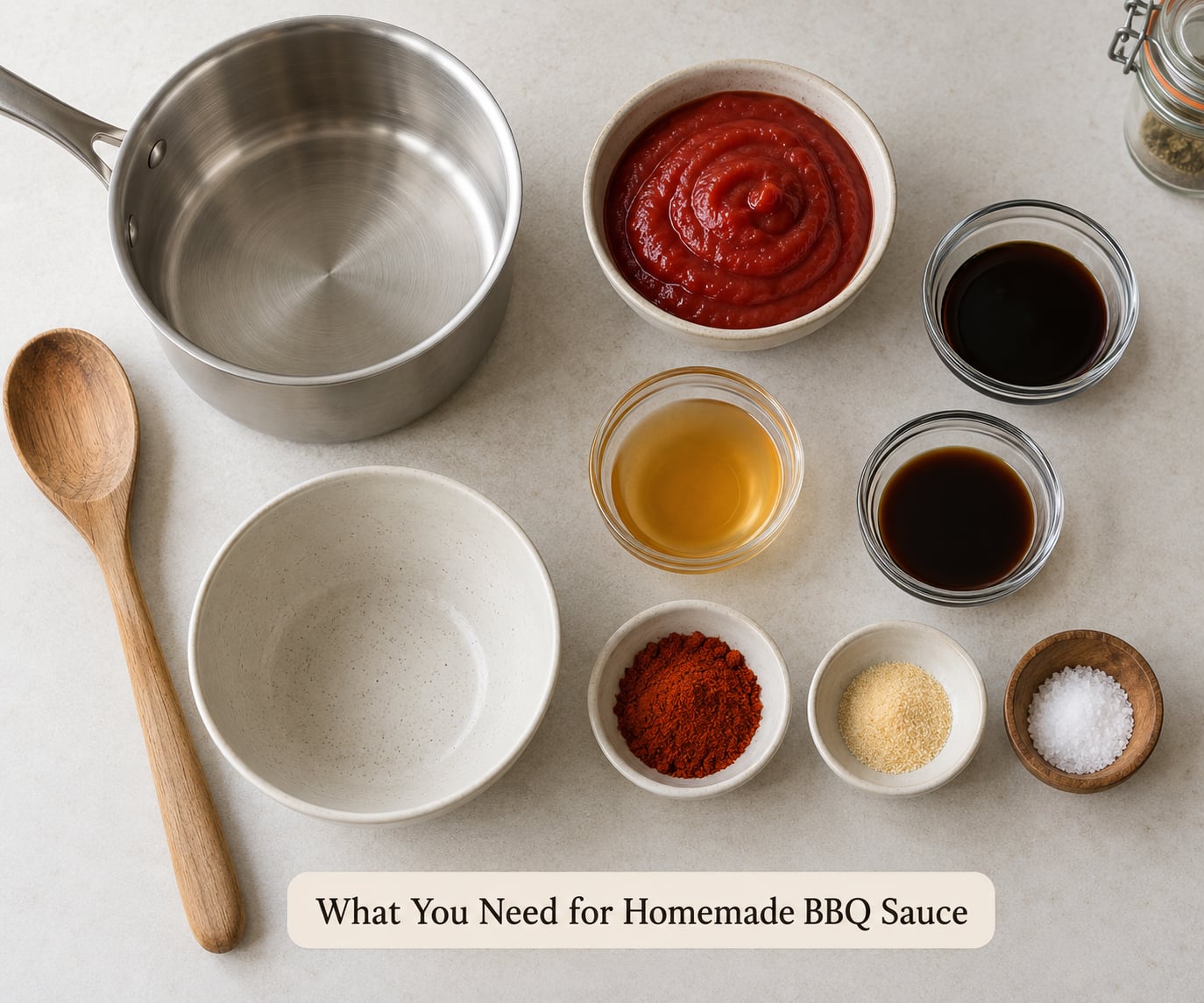
None of this needs to be exotic. The only real requirement is a saucepan with at least a cup of headroom, because the sauce bubbles up as it reduces and a full pot will spit onto your stovetop.
The base recipe
| Ingredient | US measure | Metric | What it does |
|---|---|---|---|
| Ketchup | 1 1/2 cups | 355 ml | The body and the color; also the emulsifier that keeps the sauce from splitting |
| Apple cider vinegar | 1/2 cup | 120 ml | The sharp edge that cuts the sugar, straight down the middle |
| Unsulfured molasses | 1/3 cup | 80 ml | Dark, almost bitter depth that keeps the sauce from tasting like candy |
| Worcestershire sauce | 2 Tbsp | 30 ml | Salty umami, the anchor everything else leans on |
| Yellow mustard | 1 Tbsp | 15 ml | A little extra acid and a mild bite, plus it thickens as it cooks |
| Water | 1/4 cup | 60 ml | Gives the reduction room to work instead of scorching on the bottom |
| Smoked paprika | 2 tsp | 6 g | The smoke flavor, without a drop of liquid smoke |
| Garlic powder | 1 tsp | 3 g | Background savoriness |
| Onion powder | 1 tsp | 3 g | Sweet sharpness that reads as onion once it cooks down |
| Black pepper | 1/2 tsp | 1 g | Warmth and a little bite |
| Cayenne pepper | 1/4 tsp | 1 g | Optional heat, easy to leave out |
| Salt | 1 tsp, added at the end | 6 g | Ketchup and Worcestershire are already salty, so taste before you add it |
That yields roughly 2 1/2 cups of finished sauce. If you want more smoke, double the smoked paprika rather than reaching for liquid smoke, which is the move most people regret later.
Optional tools that make it easier
- An immersion blender for a smooth, restaurant-style texture in about 20 seconds in the pot.
- A fine mesh strainer if you want a silky sauce with no bits at all.
- A jar funnel for filling mason jars without a mess down the side of the jar.
- An ice cube tray for freezing single gluing doses instead of one big block.
Step-by-Step
Step 1: Make the Flavor Base
Pour everything except the salt into the saucepan: ketchup, vinegar, molasses, Worcestershire, mustard, water and the spices. Whisk it well, or beat it with the wooden spoon for a full minute, until the molasses has fully dissolved into the liquid.
That minute of mixing matters more than it looks. Molasses is thick and sticky, and if it sits in a layer on the bottom it will scorch before it dissolves. Once the mixture is uniform and glossy, you are ready to heat it.
If you are skipping molasses, replace it cup for cup with brown sugar and add 2 extra Tbsp of vinegar, since you lose some of the acidity that comes with it. Honey or maple syrup work the same way, just a little lighter in flavor.
Step 2: Simmer the Sauce
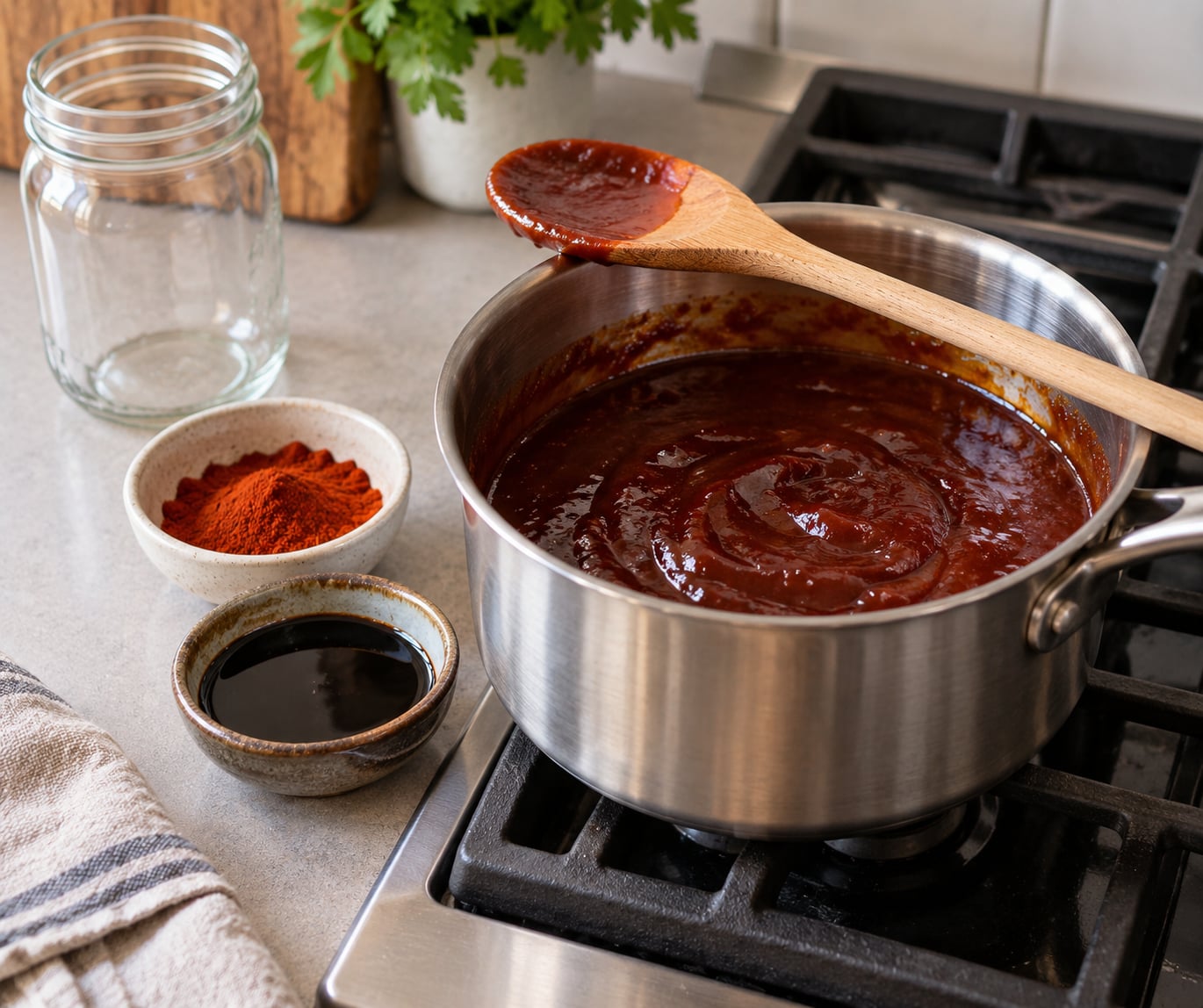
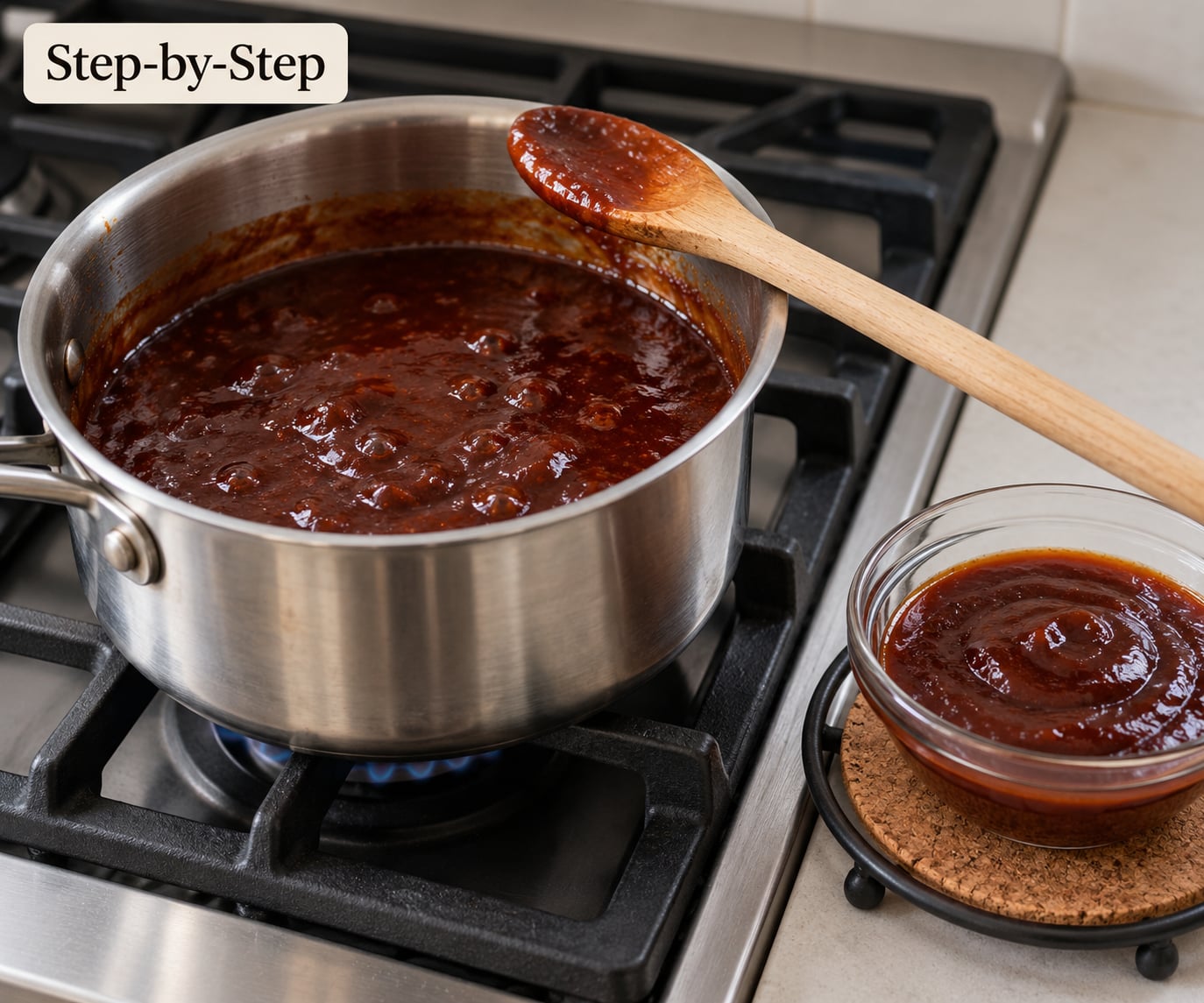
Bring the pot to a rolling boil over medium-high heat, stirring constantly so nothing catches on the bottom. Once it is boiling, turn the heat down to its lowest setting and simmer uncovered.
Give it 20 to 30 minutes, stirring every few minutes. You want a lazy bubble, not a boil, and you want the kind of reduction where the sauce darkens, the smell shifts from raw vinegar to cooked tomato, and a spoon drawn through the bottom leaves a clean trail that closes in a second or two.
That trail is the doneness test. If the sauce runs back together instantly, keep going. If it holds a thin line for a few seconds, it is close. If it coats the back of the spoon in a glossy film, pull it off the heat.
Do not skip the boil-then-simmer part. The boil is what blends the raw, powdery edge off the spices, and the simmer is what lets the water go so the sugar can do its thickening job.
Step 3: Blend for Your Preferred Texture
Rustic is the default and it is honestly great: leave the sauce as it is and you get a bit of extra body from the tomato solids. It works beautifully on ribs, brisket and pulled pork where a little texture is invisible.
Smooth is the choice for burgers, chicken wings and sandwiches, where a smooth film coats the bun instead of sliding off it. Blend it right in the pot with an immersion blender, or transfer it to a blender in small batches so you do not lose half of it out the vent.
Strained is the option if you want a pouring sauce, the kind you drizzle over a platter of grilled chicken. Push it through a fine mesh strainer while it is still warm. It takes extra time and you will lose a little volume, but the result is glossy and clean.
Step 4: Finish and Cool the Sauce
Turn off the heat, taste it on a spoon, and only now decide about the salt. Hot sauce tastes sweeter and saltier than cold sauce, so a spoonful right off the stove is misleading in both directions. If it needs salt, add it now and stir until it dissolves.
Taste again the next day if you can wait. This is the step almost everyone skips, and it is a real one: the sauce will taste noticeably vinegary and hot straight off the stove, then mellow noticeably once it has sat in the fridge, sometimes overnight.
Let it cool to room temperature in the pot before you jar it. Warm sauce in a sealed mason jar traps steam, goes watery in the jar, and pushes the lid up on the counter.
Store the finished sauce in the refrigerator for up to two weeks in an airtight container or mason jar, leaving about half an inch of headspace. For longer storage, freeze it flat in a bag or in an ice cube tray for up to three months, and thaw it overnight in the fridge rather than on the counter.
A word on canning: a tomato-based sauce is low acid, which is exactly the category that carries botulism risk, so water-bath canning homemade sauce is not something to improvise. Use a tested recipe from the National Center for Home Food Preservation or a jar manufacturer’s current guide, use vinegar labeled at 5 percent acidity, and follow the stated processing times exactly.
The ratio framework, so you can scale it
Once you have made the batch a couple of times, the numbers stop mattering and the ratio starts to. This is the same sauce in three sizes, measured before the water goes in.
| Batch | Ketchup | Apple cider vinegar | Molasses | Worcestershire | Spice blend |
|---|---|---|---|---|---|
| 1x, about 2 1/2 cups | 1 1/2 cups | 1/2 cup | 1/3 cup | 2 Tbsp | 4 1/2 tsp total |
| 2x, about 5 cups | 3 cups | 1 cup | 2/3 cup | 1/4 cup | 3 tsp smoked paprika, 2 tsp garlic, 2 tsp onion, 1 tsp pepper |
| 4x, about 10 cups | 6 cups | 2 cups | 1 1/3 cups | 1/2 cup | 6 tsp smoked paprika, 4 tsp garlic, 4 tsp onion, 2 tsp pepper |
The vinegar-to-sweet ratio is the dial that matters. Roughly 1 part vinegar to 3 parts ketchup is the balanced middle, and going sharper than that starts tasting like a dressing. Cooking for 20 to 30 minutes softens the acid, so if you want real sharpness, add the vinegar at the end instead of at the start.
Larger batches need a little more patience, not a bigger flame. A quadruple batch in a normal home saucepan will take closer to 45 minutes to reduce, and it needs stirring more often, because the bottom of the pot holds heat longer and scorches sooner.
Common Mistakes
The sauce is too sweet. This is the most common complaint by a wide margin, and the fix is acid, not more time. Stir in an extra tablespoon of apple cider vinegar per cup of sauce and taste. It often takes two or three rounds, and it is always better to add in small doses. Lemon juice works too, about 2 teaspoon per cup, but it is sharper and fades faster in storage.
The sauce is too thin and won’t cling. Simmer it longer, uncovered, for another 10 to 15 minutes. The thickening comes from water leaving, not from more ingredients. Stir more often as it thickens, because the sugar at the bottom will catch quickly once the volume drops.
The sauce is too thick. It will happen if you walked away from the pot. Loosen it with a splash of water or a little extra vinegar, a tablespoon at a time, and warm it over low heat until the consistency is back.
It tastes sharp and vinegary right off the heat. This one is not a mistake, it is chemistry. Vinegar is volatile and reads louder in a hot sauce than a cold one. Pour it into a jar, wait an hour, and taste it again. Most people find the mellowed version is exactly the version they wanted.
It scorched on the bottom. You had the heat too high or too little water. Scrape out anything that has turned bitter, because it will not come out of the finished sauce, then finish the batch with a splash of water to loosen it.
It tastes raw, like spiced ketchup. The boil step was skipped or too short. Bring it back to a full boil for two minutes, then simmer ten more. The raw edge usually comes from paprika and onion powder that never got hot enough to bloom.
It got watery in the jar. It was stored warm. Steam condensed inside the sealed jar and diluted the sauce. Cool it fully on the counter first, then refrigerate, and leave headspace when you fill.
It is too salty. You cannot easily take salt back out, so dilute it. Add an equal amount of unsalted sauce or a splash of vinegar, or double the batch and let the extra volume carry the salt.
Tips for Serving and Variations
Give the sauce a full day in the fridge before a big cook if you can. The flavors meld and it is the single cheapest upgrade available to you.
- Pulled pork and ribs: the base recipe as written, brushed on in the last 30 minutes of cooking. A thinner, more vinegar-forward version is closer to what you want here.
- Chicken wings: smooth texture works best, and a little extra cayenne or a teaspoon of hot sauce goes a long way. Toss the wings in the sauce off the heat so the sugar does not burn.
- Burgers and sandwiches: blend it smooth. A thin layer on a bun behaves much better than a chunky one, especially on a smash burger.
- Meatloaf and meatballs: use it as a glaze in the last 10 minutes, or loosen a little sauce with water and spoon it over while baking.
- Baked beans: a quarter cup stirred into a pot of beans turns a side dish into the thing everyone goes back to.
- BBQ chicken pizza: a thin coat under shredded chicken, with a little extra brushed on after the bake.
Whichever food you are pairing it with, cook it to a safe internal temperature: 165 degrees Fahrenheit for poultry, 160 for ground meat, and 145 for whole cuts of beef, pork and fish. The sauce goes on at the end, not at the start, so the sugar does not scorch.
No-molasses version. Swap the molasses for brown sugar and add 2 extra Tbsp of vinegar per cup. This is the most common substitution people ask for and it works well.
No-ketchup, Carolina vinegar style. Skip the ketchup entirely and start with 1 cup apple cider vinegar, 1/2 cup ketchup-style tomato sauce, 3/4 cup water, 1/2 cup brown sugar, 2 Tbsp hot sauce, 2 tsp salt and 1 tsp red pepper flakes. Simmer 25 to 30 minutes. This thinner, hotter sauce is a mop for pulled pork rather than a glaze, and it holds up to a long cook without burning.
St. Louis style. Same base, but push the yellow mustard to 3 Tbsp and add 2 teaspoons of dry mustard. The mustard does the thickening and the sharpness instead of the sugar.
More heat. Add 1 to 2 teaspoons of cayenne, or a tablespoon of sriracha or any hot sauce you like. Add it at the end and taste before you double it.
Less sugar, overall. Cut the molasses by a third and add an extra tablespoon of vinegar. You lose some of the glaze, so expect a thinner sauce and let it reduce a few minutes longer.
Cooking ahead for a party. Make it two or three days early, because a sauce that has rested is a better sauce. Scale to roughly a third of a cup per person if it is a main condiment, or a fifth if it is one of several dishes.
Frequently Asked Questions
Can I make homemade BBQ sauce without molasses?
Yes, and most people actually prefer it. Replace the molasses cup for cup with light or dark brown sugar, then add 2 extra tablespoons of apple cider vinegar to replace the acidity the molasses brought. Honey and maple syrup also work in the same quantity, though the result is lighter and less deep. Skip the salt at first and season at the end.
How long should I simmer homemade BBQ sauce?
Simmer it uncovered for 20 to 30 minutes after you bring it to a full boil. The sauce is ready when a spoon drawn through the bottom leaves a thin trail that takes a second or two to close, and when the back of the spoon holds a glossy coating. Larger batches need longer, closer to 45 minutes for a quadruple.
Should I blend barbecue sauce to make it smooth?
Only if you want it smooth. A rustic, textured sauce is better on ribs, brisket and pulled pork, where the body disappears. Blending suits burgers, wings and sandwiches, because a smooth film stays on the bun instead of running off it. You can blend in the pot with an immersion blender or in small batches in a countertop blender, and straining gives the cleanest pouring version.
How can I make my BBQ sauce thicker?
Simmer it longer with the lid off and stir more frequently as it thickens. Thickening is water leaving the pot, not an ingredient doing the work, so no amount of extra flour or starch is needed. About 10 to 15 more minutes fixes a sauce that runs off the meat. If you overcook it instead, loosen it with a splash of water or vinegar, a tablespoon at a time.
How long does homemade BBQ sauce keep in the refrigerator?
Up to two weeks in an airtight container or mason jar with a little headspace, stored in the door or a cool shelf. Cool the sauce completely at room temperature before you seal the jar, because warm sauce traps steam and thins out. In the freezer it keeps about three months, either flat in a bag or in single gluing doses in an ice cube tray.
Can I use this BBQ sauce on burgers, wings, and grilled chicken?
That is exactly what it is built for. Smooth it for burgers so it will not slide off, use it as a dip for wings with extra cayenne, and brush it onto grilled chicken in the last few minutes so the sugar does not scorch. It also works on ribs, meatloaf, meatballs, baked beans and as a spread on a chopped pork sandwich.
Conclusion
Start with the balance: 1 1/2 cups of ketchup to 1/2 cup of apple cider vinegar and 1/3 cup of molasses, then treat the simmer as the part that decides the texture. Whisking everything together before any heat goes on, boiling it once, and then letting it simmer uncovered for 20 to 30 minutes is the whole trick.
Do not skip the full cool-down before you jar it, and give the sauce a taste the next day before you decide it needs more vinegar. Updated for 2026, this is the version I make for every cook-off and every backyard Saturday, and it has never once needed rescuing.