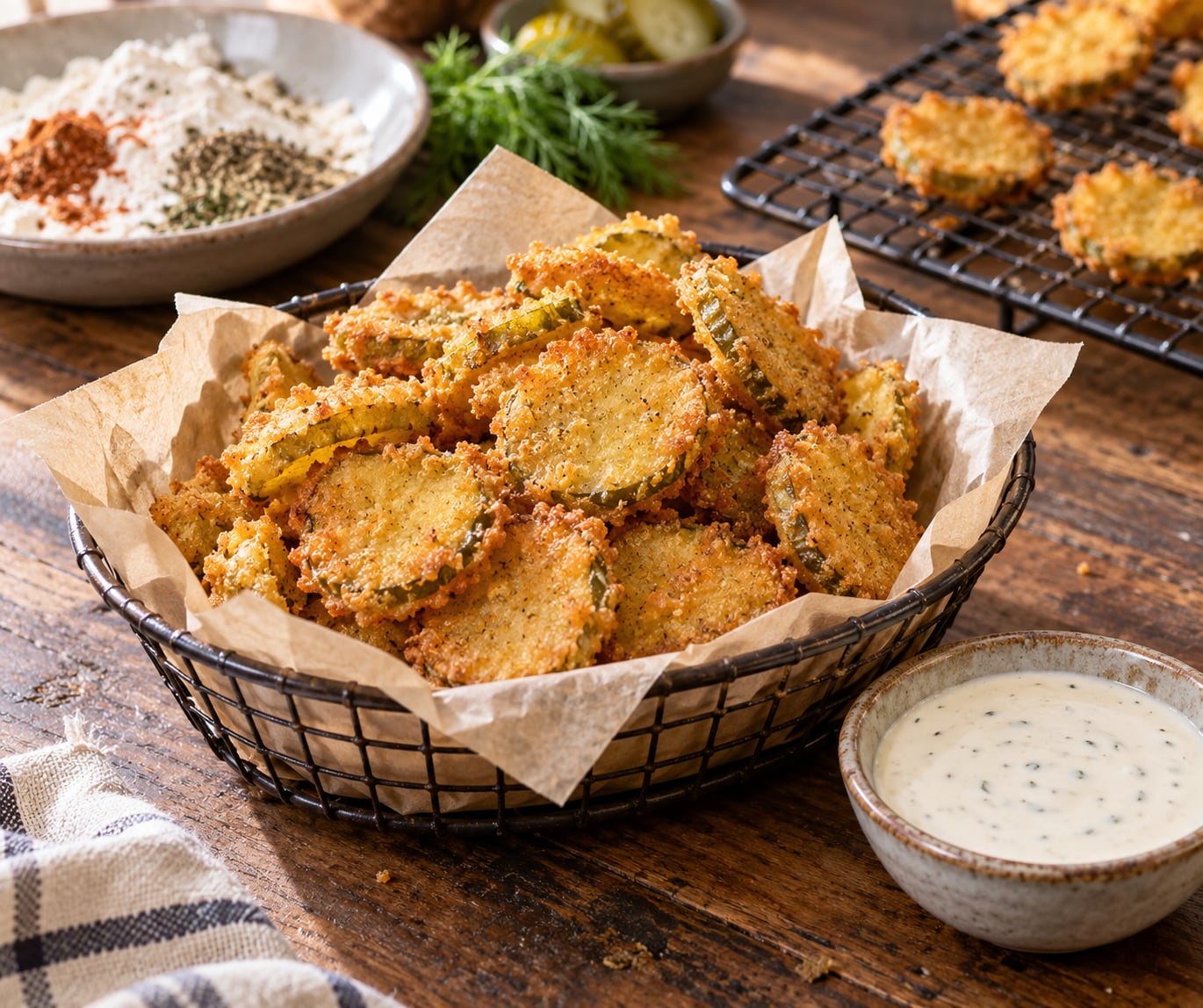
Fried pickles are dill pickle slices or spears coated in seasoned flour, dipped in buttermilk and egg, then fried at 375°F until the crust is golden and the pickle inside is still snappy. Knowing how to make fried pickles at home comes down to two things: bone-dry pickles and steady oil temperature. Get those right and you get a crunch that lasts all game day; get them wrong and you get a soggy, greasy handful. Prep takes 15 minutes, frying takes about 10, and it is a beginner-level cook.
Table of Contents
- What You Need
- Step-by-Step: How to Make Fried Pickles
- Step 1: Prepare the Pickles
- Step 2: Set Up the Coating
- Step 3: Fry Until Golden
- Step 4: Drain and Season
- Step 5: Make Them Oven-Fried or Air-Fried
- Common Mistakes
- Frequently Asked Questions
- What kind of pickles are best for frying?
- Can I make fried pickles without deep-frying?
- Why are my fried pickles soggy?
- How do I keep the breading from falling off?
- What sauce goes best with fried pickles?
- Can fried pickles be made ahead?
- Conclusion
What You Need
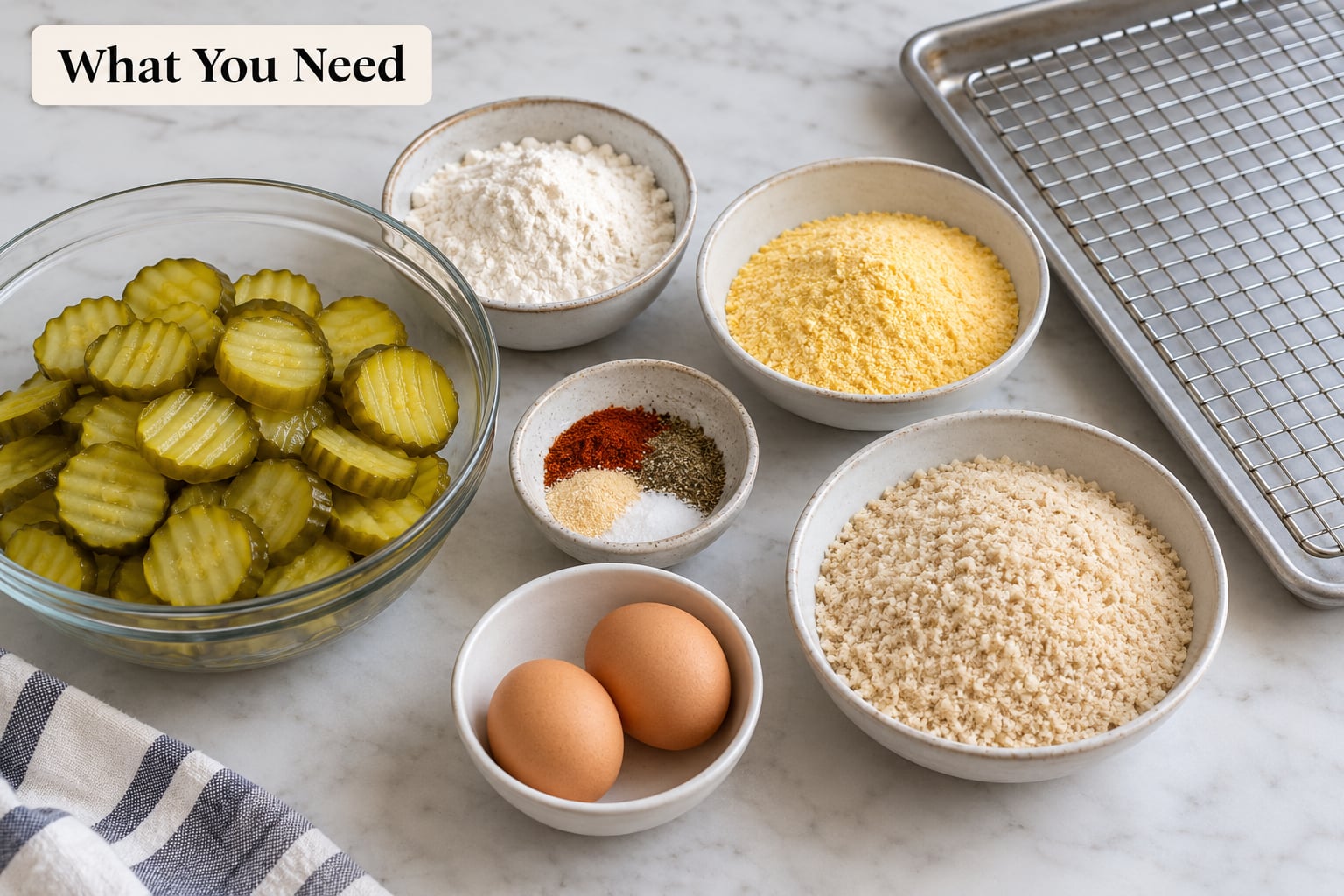
You can build this with pantry staples plus one jar of dill pickles. A 16 oz jar of chips yields roughly four servings as an appetizer.
- Dill pickle chips or spears — 32 to 40 slices. Chips are the safer bet; spears drink oil and go heavy. See the note below.
- All-purpose flour — 1 cup, plus extra for dredging.
- Cornstarch — 2 tablespoons. This is the single best crunch booster you can add.
- Buttermilk — 1/2 cup. No buttermilk? Whisk 1/2 cup milk with 1 teaspoon lemon juice or vinegar and let it sit 5 minutes.
- Large egg — 1, beaten.
- Seasonings — 1 teaspoon each salt, paprika, garlic powder, black pepper, and 1/4 teaspoon cayenne if you want heat. Creole seasoning works in place of the paprika, garlic powder and pepper.
- Frying oil — about 2 inches deep in a heavy pot. Peanut oil is the most recommended fat for pickles because it barely flavors the crust.
Equipment matters more than most recipes admit. You want a deep fry thermometer (guessing is the top reason people get soggy pickles), a heavy-bottomed pot or Dutch oven, a spider strainer or slotted spoon, a wire rack set over a sheet pan, and paper towels. A wire rack beats laying everything on towels, because the underside stays crisp instead of steaming against paper.
Deep frying gives the crunchiest shell with a hot, craggy crust. Oven baking and air frying use a fraction of the oil and cut cleanup to almost nothing, at the cost of a slightly softer coating. Air frying wins on speed and cleanup; the oven wins on batch size. Both work, and Step 5 covers them.
Step-by-Step: How to Make Fried Pickles
Step 1: Prepare the Pickles
Drain the jar and lay the slices on a towel or paper towels. Pat them dry on both sides, then press gently to wick out brine from the edges — that surface moisture is the single biggest cause of soggy pickles, because it turns to steam inside the crust and softens it before it can crisp.
For chips, aim for slices about 1/8 inch thick. Thicker slices fry heavy and turn mushy in the middle, which is the second most common complaint after sogginess. If your chips are extra thick, slice them thinner rather than cooking them longer.
Spears work but need more attention: halve them lengthwise so the interior is thinner, and let them drain on a rack for 10 minutes. If you are torn, do chips first — they cook faster, brown more evenly and hold their shape.
Step 2: Set Up the Coating
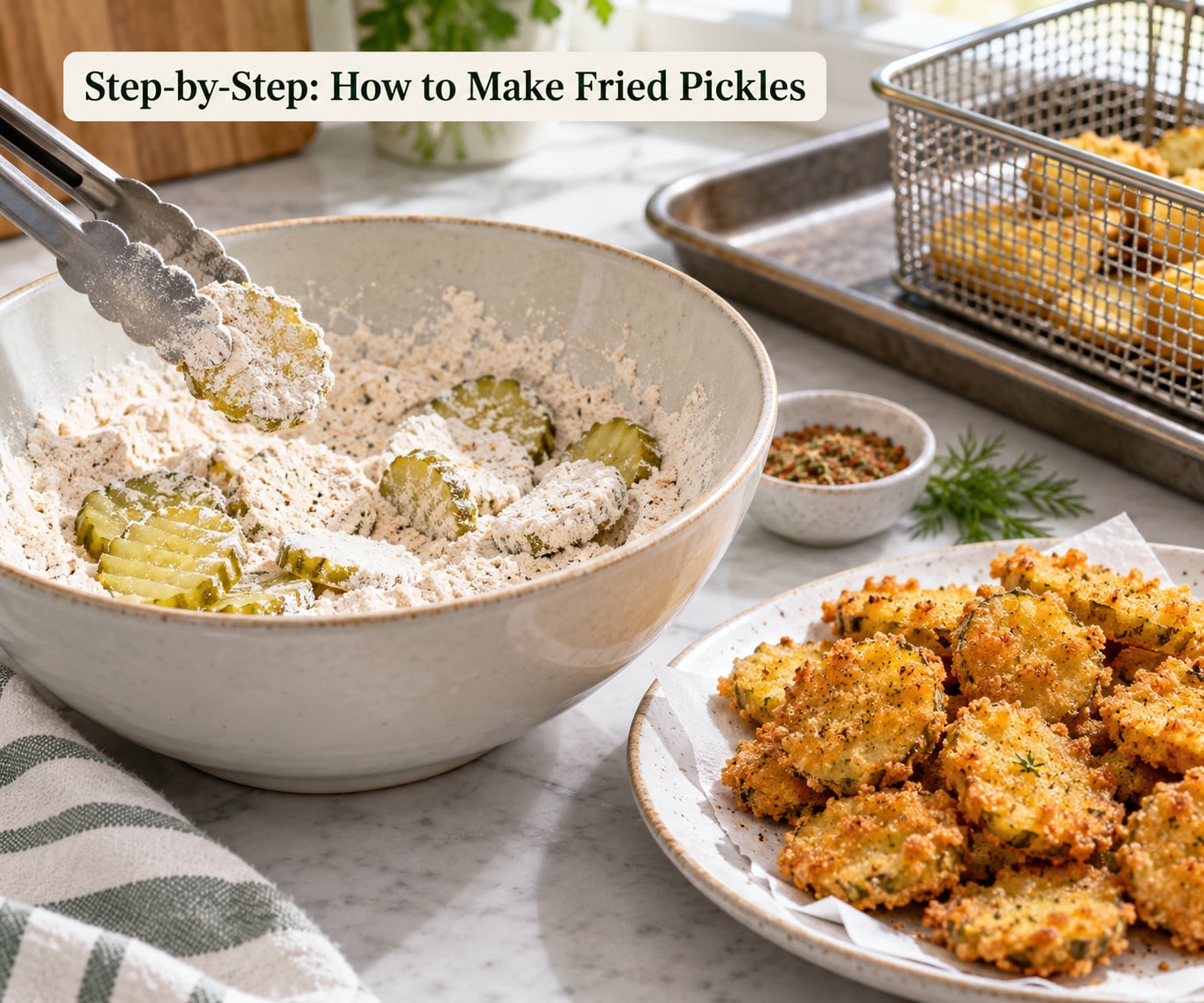
Set three shallow bowls in a row, left to right. First bowl: the flour, cornstarch and all your seasonings mixed together. Second bowl: buttermilk whisked with the beaten egg. Third bowl: a clean wire rack or a second flour bowl for double-dredging.
Dredge in this order — dry flour first, then wet, then dry again. Flour gives the wet layer something to grip, the egg and buttermilk glue the flour to the pickle, and the second flour coat adds the craggy bits that crackle under a bite.
For heavier crunch, add 1/4 cup cornmeal to the flour blend for a grittier, Cajun-leaning crust. Panko breadcrumbs are the other option, and they stay crisp a little longer, but they brown fast — start checking a minute early.
Step 3: Fry Until Golden
Heat the oil to 350°F and let it drop to 375°F once your pickles go in. That small temperature drop is normal and expected. If your oil is already 375°F before the food lands, nudge it down or pull the pot off the heat briefly.
Fry in small batches — six to ten pieces at a time. A crowded pot drops the oil temperature fast, and cool oil soaks the coating instead of sealing it, which is exactly how greasy pickles happen.
Cook 2 to 4 minutes, flipping once at the halfway mark, until the crust is deep golden brown. Thin chips usually finish in under two minutes. If the crust browns before the surface bubbles lively, your oil was too hot; raise the heat a touch for the next batch.
Lower the basket slowly and away from you, and keep splatter down by dropping the pickles away from the nearest oil surface rather than straight down. Long sleeves, closed-toe shoes, and a metal spider instead of plastic tongs.
Step 4: Drain and Season
Lift pickles out with the spider and set them on the wire rack, not on a pile of paper towels. While they are still hot and audibly crackling, hit them with a pinch of flaky salt or a light dust of the leftover seasoning blend.
Serve them within a few minutes. Fried pickles lose their crunch fast in a bowl, and they lose almost all of it if they sit covered — steam collects under the lid and softens the crust within about ten minutes.
Ranch is the expected dip. Comeback sauce, which is a sweet-cassy mustard-forward sauce with a chili kick, is the pub favorite and worth keeping a jar of. Barbecue sauce, honey mustard, buffalo with bleu cheese, and a squeeze of lemon all work.
Step 5: Make Them Oven-Fried or Air-Fried
For the oven, heat to 450°F. Set a wire rack over a sheet pan, coat the pickles with a generous spray of oil, and bake 10 to 12 minutes, flipping once. The rack is the important part — pickles sitting straight on the pan never crisp underneath.
For the air fryer, go 400°F. Lightly spray the pickles, lay them in a single layer with space between each piece, and air fry 8 to 10 minutes for chips or 12 to 15 for halved spears, shaking the basket halfway.
Do not crowd the basket. If a batch does not fit with an inch of space, cook it in two rounds. Overlapping pickles steam each other and come out limp, and the ones touching the grate can stick.
Common Mistakes
My fried pickles are soggy. Nearly always one of four things: the pickles were wet going in, the oil was under 350°F, the pan was crowded, or they sat too long before eating. Fix the pickle first — pat them dry twice — and check your thermometer.
The breading slides right off. Your pickles were still wet, or you only dipped once. Dry flour, then wet, then dry again, and press each layer on with your fingertips so it adheres rather than dusts.
They came out pale and greasy. Oil temperature was low. When oil is cool the crust soaks oil instead of sealing, and it never gets past pale gold. Reheat the oil to 350°F between batches instead of adding cold food to lukewarm oil.
They splatter everywhere. Water on the pickles meets hot oil and spits. Dry them properly, lower each pickle gently into the far side of the pot, and turn the heat down slightly if you are working in a small kitchen.
They are greasy or limp sitting on the table. Drain on a wire rack over a sheet pan instead of paper towels, and never stack them. A single layer cools fast and keeps the underside from steaming.
Frequently Asked Questions
What kind of pickles are best for frying?
Dill pickle chips about 1/8 inch thick give the most consistent result, because they cook fast, brown evenly and hold their shape. Hamburger dill chips work well too. If you use spears, halve them lengthwise and drain them on a rack for 10 minutes first. Avoid sweet pickles and very thin slicks, which brown before the inside heats through.
Can I make fried pickles without deep-frying?
Yes, and the results are genuinely good. Air fry pickle slices at 400°F for 8 to 10 minutes, or bake at 450°F on a wire rack for 10 to 12 minutes, flipping once. Lightly spray them with oil first. You will get a lighter, slightly softer crust than deep frying, and almost no cleanup.
Why are my fried pickles soggy?
Sogginess comes from moisture on the pickles, oil below 350°F, or a crowded pan. Pat the slices dry on both sides and press out brine before coating, keep the oil between 350°F and 375°F, and fry six to ten pieces at a time. Serving them within a few minutes of draining also matters, since trapped steam softens the crust.
How do I keep the breading from falling off?
Use the three-bowl station: seasoned flour, then buttermilk and egg, then seasoned flour again. Flour needs to go on first so the wet layer has something to grip, and press each layer on with your fingertips. Even the driest pickle benefits from a second flour coat, which is where the crackly bits come from.
What sauce goes best with fried pickles?
Ranch is the default and the pub standard is comeback sauce, a sweet mustard dressing with a chili kick that cuts the richness. Barbecue sauce, honey mustard, and buffalo with bleu cheese all work well. For a lighter option, a squeeze of lemon and a sprinkle of the leftover seasoning blend need no sauce at all.
Can fried pickles be made ahead?
You can prep ahead: slice and dry the pickles, mix the flour blend, and store each part separately in the fridge for up to a day. Keep them raw, not dredged, since a coated pickle goes soft in the fridge. Fully fried pickles can be reheated in a 400°F oven or air fryer for 5 minutes, though they will never be quite as crisp as fresh.
Conclusion
Start with pickle chips patted bone dry, work through the flour-buttermilk-flour dredge, and hold your oil between 350°F and 375°F in small batches. Those three habits fix nearly every soggy, greasy, breading-falls-off problem, and they are the whole trick to how to make fried pickles taste like the pub version.