To dry brine a steak, salt it with about half a teaspoon of coarse kosher salt per pound, set it uncovered on a wire rack in the refrigerator for 12 to 24 hours, then cook it straight from the fridge without rinsing. Total hands-on time is five minutes; the rest is waiting.
That method seasons a thick steak all the way to the center instead of just the outside, keeps more juice in the meat, and leaves the surface dry enough to actually brown. It costs almost nothing and works on any cut thick enough to hold a crust.
Most home cooks get it roughly right. The two problems I see most: they guess the salt amount instead of measuring it, and they leave the steak sitting in a bowl where the moisture pools underneath. Fix those two things and the results change.
Table of Contents
- What You Need
- Step-by-Step: How to Dry Brine a Steak
- 1. Choose the Steak and Measure the Seasoning
- 2. Dry the Steak and Season All Sides
- 3. Refrigerate the Steak Uncovered
- 4. Check the Texture and Temper Before Cooking
- 5. Cook the Steak for a Crisp Crust
- Common Mistakes
- Frequently Asked Questions
- How long should you dry brine a steak?
- Is 48 hours too long for a dry brine?
- Do you need a wire rack to dry brine steak?
- Should I rinse the steak after dry brining?
- How much kosher salt do I use per pound for a dry brine?
- Does the steak need to come to room temperature before cooking after a dry brine?
- Conclusion
What You Need
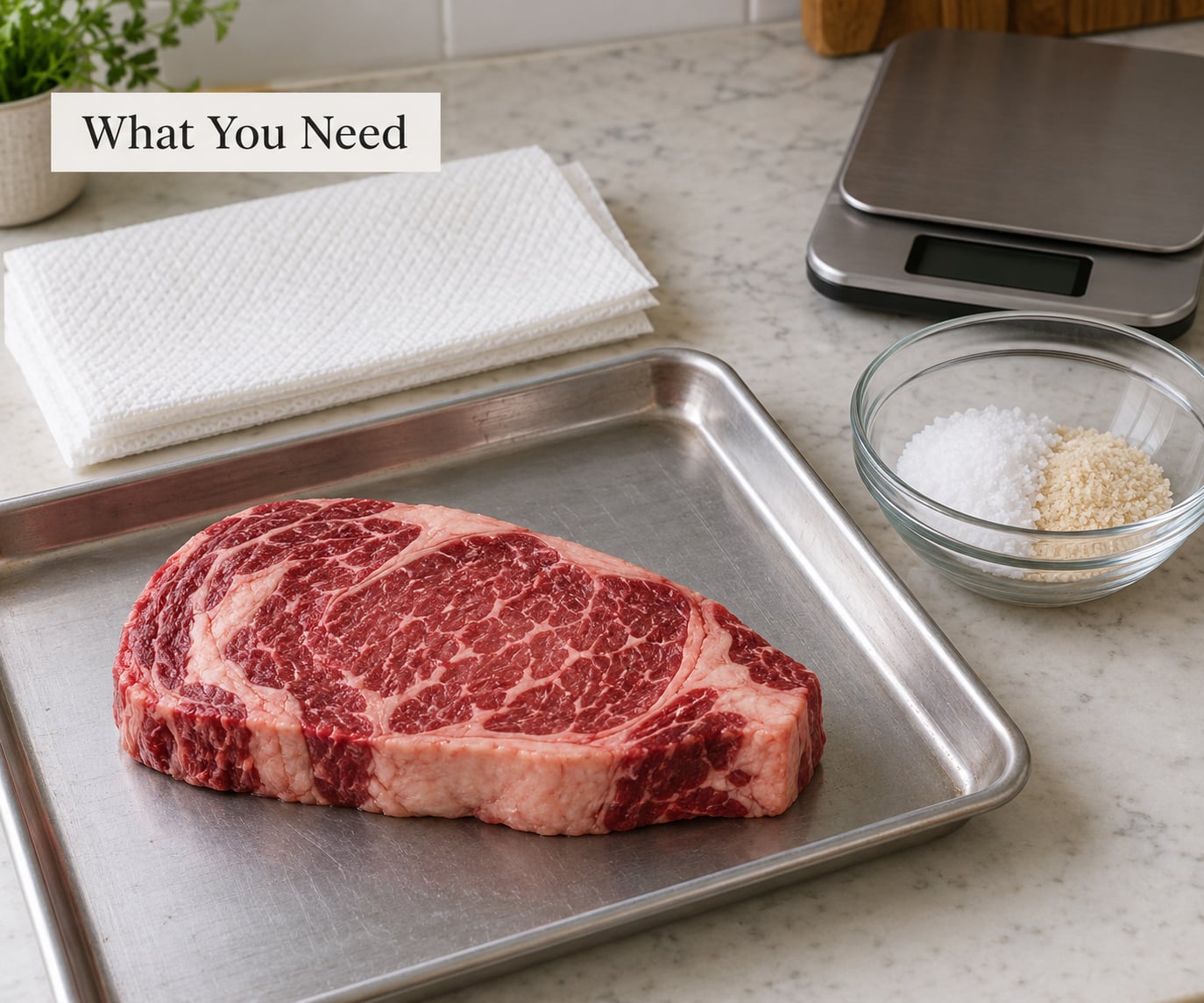
A dry brine is seasoning, not soaking. You coat the meat in salt, sometimes with sugar and spices, and let it sit in the refrigerator uncovered. Nothing is added except salt. A wet brine submerges the steak in salty water, and a marinade adds oil, acid and aromatics, neither of which penetrates the meat.
- A steak at least 1 inch thick. Ribeye, NY strip, top sirloin and tenderloin all work. Thin steaks under three-quarters inch do not have time to take the seasoning, and the salt crust can make them taste like salt with a steak in the middle.
- Coarse kosher salt. Diamond Crystal or Morton kosher. The flakes dissolve slowly enough to stay on the surface long enough to work.
- Granulated sugar, optional. A teaspoon per pound balances the salt and speeds up browning. Skip it on very marbled beef if you want the pure beef flavor.
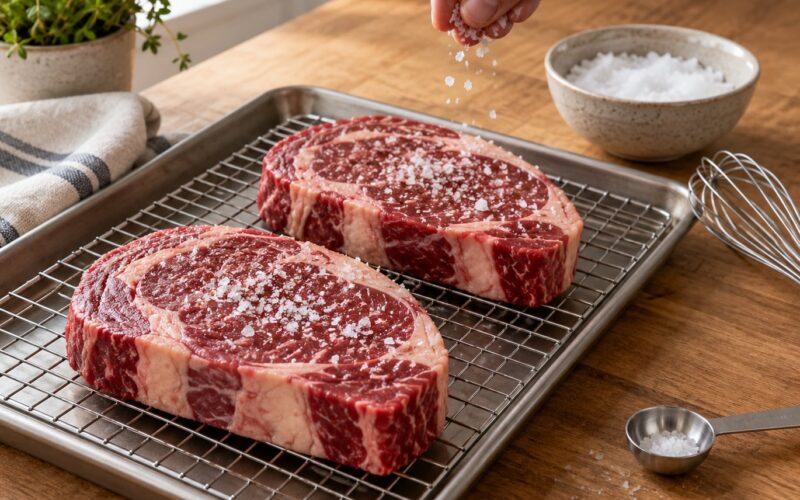
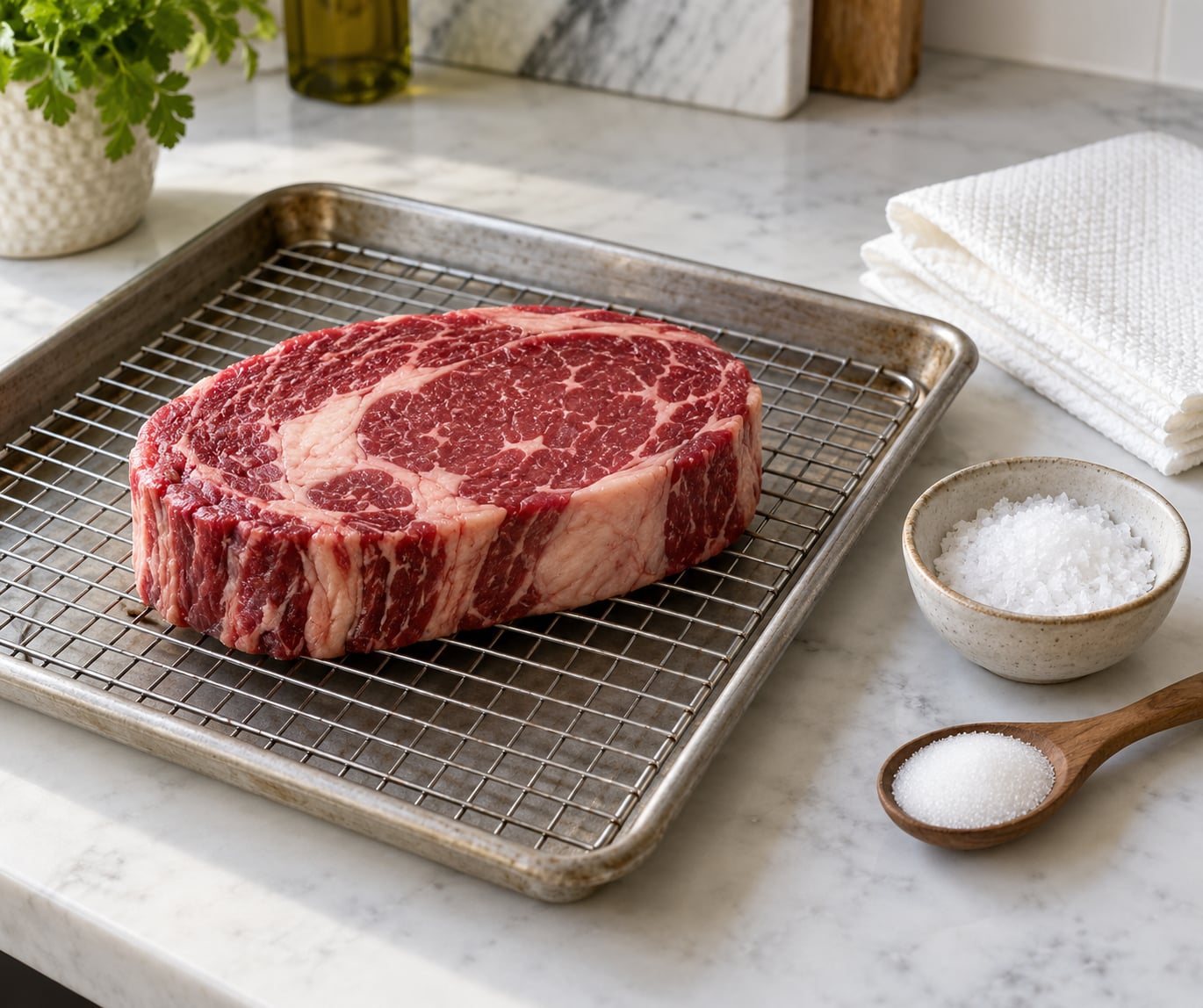
- A wire rack and a rimmed baking sheet. The rack holds the meat above the pan; the rim catches the drip so it doesn’t sit in a puddle.
- Paper towels. For the initial pat-dry.
- An instant-read thermometer. Guessing doneness is how a dry brined steak gets overcooked.
- Black pepper or garlic powder, optional. Add these during the last hour of brining, not at the start, because spices added too early turn bitter in the fridge.
Salt types are not interchangeable. Diamond Crystal kosher flakes are lighter and less dense, so a teaspoon weighs about 3 grams. Morton kosher is roughly twice as dense at about 6 grams per teaspoon. Table salt is finer and packs tighter, so a given spoonful carries more salt by weight. If you only have table salt, use about a quarter of what the recipe calls for, and know that you are losing the slow-dissolving advantage that makes the crust work.
Do you need a wire rack? No. A cooling rack works the same way. So does a rimmed sheet pan with the steak set on four wine corks, a plate propped at an angle in a cooler, or a plate on the bottom shelf of a turned-off oven with the oven door cracked open. What you cannot use is a bowl, a sealed container, plastic wrap, or a plate with a rim, because each of those traps moisture against the meat and you lose the dry surface that produces the crust.
Step-by-Step: How to Dry Brine a Steak
1. Choose the Steak and Measure the Seasoning
Weigh the steak before you season it. A 1.5 inch ribeye at 14 ounces takes roughly a teaspoon of Diamond Crystal, or about 1.5 teaspoons of Morton kosher. Write the weight on the tray if you brine more than one steak, because once they are salted together the math is gone.
Start at half a teaspoon of coarse kosher salt per pound for a standard home brine, and adjust by cut. Add a little for a thick ribeye you are confident about. Subtract for a tenderloin or a very marbled piece, which already tastes seasoned before any salt touches it. A heavily marbled ribeye salted the same as a lean sirloin is the single most common over-salting complaint from home cooks.
Sugar is dosed the same way, roughly a teaspoon per pound, mixed in with the salt. Its job is flavor balance and a faster crust. It is not required.
2. Dry the Steak and Season All Sides
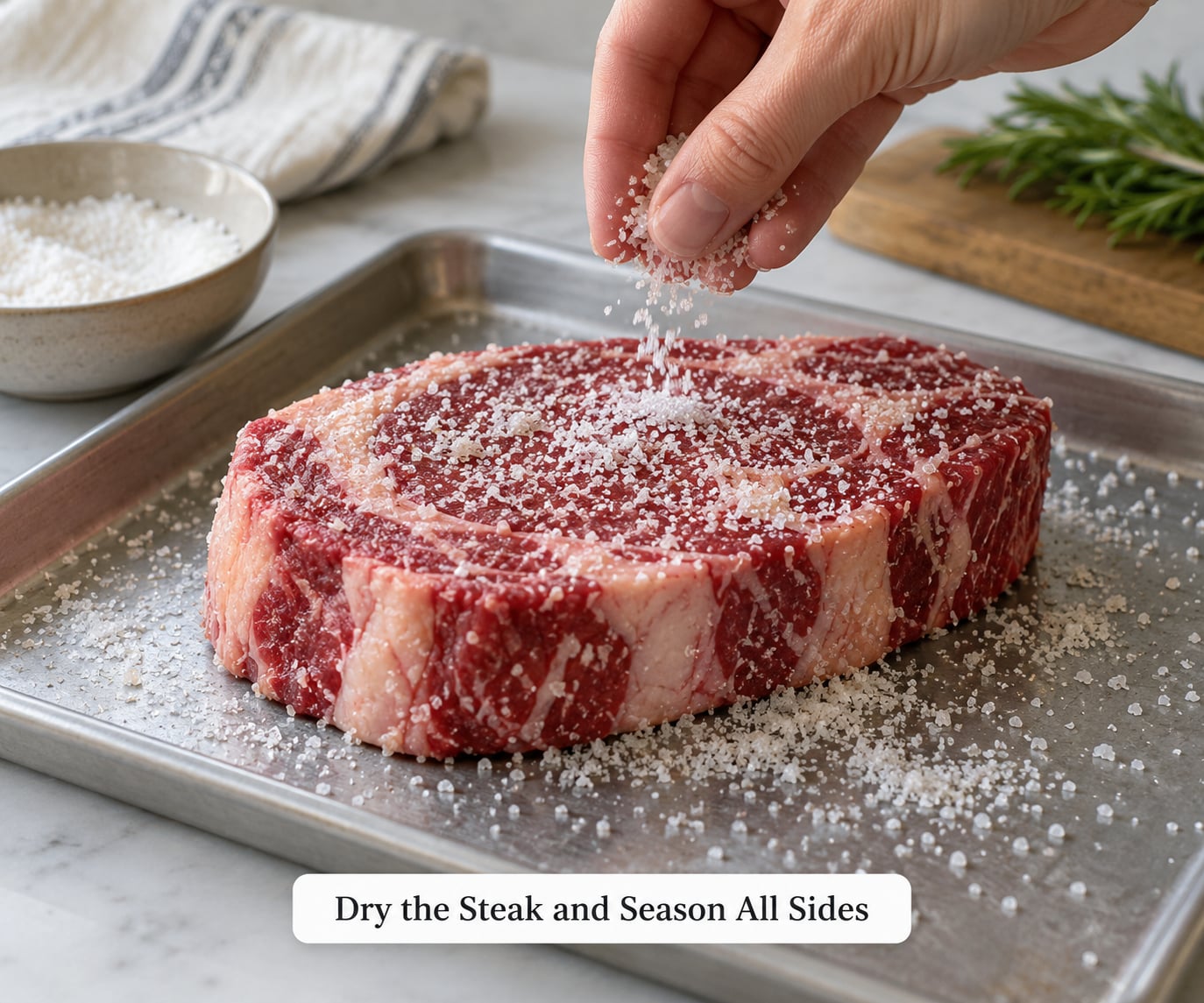
Pat the steak dry with paper towels, both sides and the edges. This takes thirty seconds and it matters more than people expect, because any surface water you leave behind has to evaporate before searing, and a thin film of water keeps a pan at 200°F instead of 400°F.
Then season the whole surface, all four sides, working the salt in with your fingertips rather than pressing it on. You want an even layer, not patches. Sprinkle from 8 to 10 inches up so the flakes fall instead of bouncing off the fat cap, which is where most seasoning ends up if you shake it from right above the meat.
Seasoning one side is the most common shortcut and it never works. The top face gets buried in peppery crust while the bottom, which sits against the hot pan, stays nearly bare. If you are brining two steaks, stack them face to face while the salt is damp, press gently, then pull them apart after a few minutes. It is an old trick and it works.
3. Refrigerate the Steak Uncovered
Set the steak on the rack over the rimmed sheet and put it in the refrigerator uncovered. This is the step people skip, and it is the reason a dry brine produces a dry surface.
Salt begins pulling moisture to the surface of the meat by osmosis within minutes of contact. That moisture dissolves the salt into a concentrated brine on the exterior, and the dissolved salt then diffuses back inward. If the steak is sitting in a puddle, the moisture you just drew out never gets reabsorbed, and you have salted the outside of a wet steak.
Uncovered, the surface moisture evaporates slowly in moving fridge air while the salt travels in. Timing by thickness and result:
| Time in the fridge | Best for | What you get |
|---|---|---|
| 45 to 60 minutes | Any steak, same-night cooking | Slight seasoning, minimal crust improvement |
| 4 to 6 hours | Steaks 1 to 1.5 inches thick | Noticeably better seasoning and browning; the practical sweet spot many cooks prefer |
| 12 to 24 hours | Thick cuts, ribeye, strip, tenderloin | Deep seasoning, well-dried surface, firm browned crust |
| 48 hours | Thick, very lean cuts only | Seasoned to the center, but the surface can start to look dull and dry |
| 72 hours or more | Rarely worth it on steak | Salt flavor flattens, surface dries and dulls, lean cuts lose moisture |
On the salty end, home cooks on Reddit r/steak and r/culinary report pulling brines at 30 hours and finding the ribeye too salty to eat as-is, then finishing with a light rinse or using the leftovers in a hash. Treat 24 hours as your ceiling for a fatty ribeye and 48 hours as the hard limit for anything else. There is a real difference between a well seasoned steak and a salty one, and the second one is easy to reach.
Keep the steak on the middle or lower shelf so nothing drips onto it, and keep it at or below 40°F. Store dry brined steak like any other raw meat: on the bottom shelf or in a sealed bin so raw juices cannot contact food meant to be eaten raw, and cook within a day or two. If the surface of the fridge panel is wet to the touch at 24 hours, move the pan to a different spot.
4. Check the Texture and Temper Before Cooking
A properly brined steak feels tacky on the surface, like the salt has formed a thin film and the meat itself has tightened up. That texture is the sign to cook it. If it feels slimy or smells sour, discard it.
You do not need to bring a dry brined steak to room temperature. Sitting it out for 20 to 30 minutes takes the chill off a thick cut without letting the outer layer sit in the danger zone long enough to matter, and a cooler surface gives you a better crust. Many cooks skip the warm-up entirely and sear straight from the fridge, which is fine as long as you allow extra cooking time to reach your target temperature.
Whatever you do, take the steak out of the refrigerator 20 to 30 minutes before cooking rather than two hours. Two hours on the counter warms only the outer inch on a thick steak while the center stays cold, which is the worst of both outcomes.
5. Cook the Steak for a Crisp Crust
Do not rinse the steak, and do not wipe off the salt. Rinsing reverses the diffusion you spent 12 hours setting up and leaves a damp surface that steams instead of browns. If you are nervous about saltiness, taste the small flake that fell onto the pan; that tells you more than a rinse ever will.
Get the pan or grill genuinely hot. For a cast iron skillet, five minutes over a burner until it smokes faintly. Lay the steak away from you and leave it alone for 3 to 4 minutes, depending on thickness. The single biggest cause of a grey, stuck steak is moving it during the sear, and the second is a pan that was not hot enough.
The Maillard reaction, which produces browning and its deeper flavors, starts in earnest around 280°F on the surface. Dry surface plus high heat plus patience is how you get there. You do not need to baste.
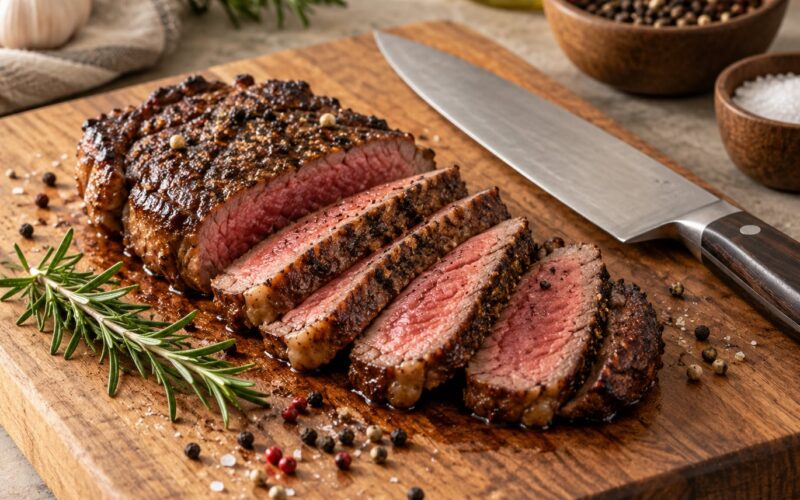
Finish with a thermometer, not a timer. The USDA minimum safe internal temperature for whole cuts of beef is 145°F with a three minute rest, but most people cooking a ribeye stop well short of that. Pull a thin steak at 125°F for rare, 130 to 135°F for medium rare, 140°F for medium, and 145°F for medium well, then rest it 5 to 10 minutes before slicing. Thickness sets the timing, so a 2 inch ribeye and a 1 inch strip are never on the same clock.
Two methods pair well with a dry brine. A reverse sear suits thick cuts: bring the steak slowly to 115°F in the oven or on indirect grill heat, rest it, then sear hard for 90 seconds a side. Sous vide plus a torch or a screaming hot pan does the same thing with even more control, and the salt in the brine seasons through the whole bag rather than the outer two centimeters.
Common Mistakes
These are the errors that turn a good dry brine into a disappointing steak, each with the fix.
- Guessing the salt instead of weighing. A one-teaspoon pile on a 12 ounce steak is close to a wet brine’s worth of salt in a concentrated spot. Weigh the steak, measure the salt, write the weight on the tray with a Sharpie.
- Salting 15 minutes before cooking. Salt pulls moisture out immediately but the meat needs at least 40 minutes to reabsorb it. A short window gives you a wet, salty exterior and no interior seasoning. This is the worst outcome in the whole process.
- Using a bowl or covering the steak. Both trap the moisture the salt drew out. A wire rack over a rimmed sheet, uncovered, is the entire point.
- Brining past 24 hours on marbled beef. A 30 hour ribeye brine is the most reported home-kitchen failure. Fatty cuts carry flavor already; lean cuts tolerate longer.
- Seasoning one side. The face against the pan ends up bare. Press two salted steaks face to face for a few minutes, then separate them.
- Searing a wet steak. Pat it dry again right before it hits the pan, even after a 24 hour brine. A tacky film is fine; a bead of liquid is not.
- Rinsing the salt off. You undo 24 hours of diffusion and dry the surface in one motion. Leave it on.
- Adding pepper at the start. Whole peppercorns and garlic turn bitter over long fridge times. Add them for the final hour, or season after cooking.
One more worth naming: moving the steak while it sears, or stacking it when the pan is full. Both drop the pan temperature and steam the surface instead of browning it.
Frequently Asked Questions
How long should you dry brine a steak?
Twelve to 24 hours in the refrigerator is the window that most people mean when they say overnight. Four to six hours already gives you noticeably deeper seasoning and a drier surface, and 45 minutes gives you very little. Treat 24 hours as the ceiling for a fatty ribeye and 48 hours as the limit for leaner cuts like sirloin or tenderloin, because past that the surface dulls and the salt flavor starts to flatten the beef.
Is 48 hours too long for a dry brine?
For most steaks, yes. Forty-eight hours works on a thick, lean cut, but a marbled ribeye or a strip steak left that long usually tastes overtly salty in the center. Salt keeps moving inward with no endpoint, and after two days the seasoning no longer reads as seasoning. If you have already gone 48 hours, cook the steak and taste a small slice from the thickest part before committing to serving it.
Do you need a wire rack to dry brine steak?
No, but you need something that holds the steak above the pan with air moving around it. A cooling rack, four corks in a rimmed sheet, or a plate propped inside a cooler all work. A bowl, a sealed container, or a plate with a raised rim does not, because the moisture the salt draws out collects underneath and keeps the surface wet. The rack is a means to air circulation, not an ingredient.
Should I rinse the steak after dry brining?
Do not rinse it. The salt has drawn moisture out of the meat, dissolved on the surface, and diffused back inward over those hours. Rinsing washes off that concentrated layer and leaves the surface damp, which steams instead of browning. If you are worried it is too salty, taste one of the salt flakes that fell into the pan, or wait to add any extra salt until after cooking.
How much kosher salt do I use per pound for a dry brine?
About half a teaspoon of coarse kosher salt per pound is the standard home starting point, which is roughly 3 grams for Diamond Crystal and 6 grams for Morton kosher. Use less on a heavily marbled ribeye and a touch more on a thick lean sirloin. If you use table salt instead, cut the amount to about a quarter teaspoon per pound, because fine salt packs denser and dissolves too fast to leave a crust.
Does the steak need to come to room temperature before cooking after a dry brine?
No. Cook it straight from the refrigerator, or let it sit out for 20 to 30 minutes to take the chill off a thick cut. A cold surface sears better, and the salt has already done the seasoning work the warm-up is usually meant to help with. Two hours on the counter is the version to avoid: it warms the outer inch while the center stays cold, so you get a grey crust around a cold middle.
Conclusion
Start by weighing the steak. Half a teaspoon of coarse kosher salt per pound, patted dry and seasoned on every side, sitting uncovered on a rack over a rimmed sheet for 12 to 24 hours, then cooked from the fridge without rinsing. That is the whole method, and it takes about five minutes of work for a steak that tastes seasoned to the middle and browns like restaurant food.