Here is how to make peppercorn sauce for steak without a restaurant: a ten-minute pan sauce built on the drippings already in your steak pan. Toast coarsely crushed peppercorns, soften a shallot, deglaze with brandy, then finish with heavy cream. Ten minutes of work, roughly 1.5 cups of sauce, enough for four steaks.
The version most people are chasing, the one at a steakhouse on a Friday night, is not complicated. It is a fast reduction with a lot of flavor concentrated into very little liquid. The part that trips people up is not the recipe, it is heat control: cream that boils turns grainy, peppercorns that cook too long turn bitter, and both mistakes are hard to walk back.
So here are the timings, the visual cues, and the recovery moves for when something goes sideways.
Table of Contents
- What You Need
- Step-by-Step: How to Make Peppercorn Sauce for Steak
- Make the Peppercorn Sauce for Steak
- Finish and Serve the Sauce
- Common Mistakes
- Frequently Asked Questions
- Do you have to use brandy in peppercorn sauce?
- How do I stop the cream from splitting?
- Can I make peppercorn sauce ahead of time?
- Should the sauce be made in the same pan as the steak?
- Can you make peppercorn sauce without cream?
- How thick should peppercorn sauce be before pouring it on steak?
- Conclusion
What You Need
Everything happens in one small pan with a lid nearby, and you need nothing exotic. Measure the peppercorns whole if you can, pre-ground pepper loses most of its aroma in the jar.
- 1 tbsp butter or a slick of pan oil
- 1 small shallot, finely minced
- 1 to 2 tbsp whole peppercorns, coarsely crushed
- 1/3 cup brandy or cognac
- 3/4 cup beef stock
- 1 tsp Worcestershire sauce
- 1/2 cup heavy cream
- A pinch of salt, added at the end
For crushing peppercorns without a mortar and pestle, roll a heavy rolling pin over them on a cutting board, or pulse them in a spice grinder for two seconds and stop. You want pieces, not powder.
Black, green and pink peppercorns all work, and they are genuinely different rather than interchangeable:
| Peppercorn | Flavor | Best use |
|---|---|---|
| Black | Piney, sharp, highest heat | The classic steakhouse version, and what most recipes assume |
| Green | Milder, floral, briny tang | Filet mignon and tender cuts, where pepper should not overpower |
| Pink | Soft, fruity, lowest heat | Sauces for delicate fish or a finishing sprinkle on top |
If you are skipping alcohol, replace the brandy with an extra third cup of beef stock plus a teaspoon of Worcestershire, or with apple juice reduced to syrupy. Bourbon, whiskey, dry sherry and dry white wine all substitute one for one and each leaves a different note behind.
Step-by-Step: How to Make Peppercorn Sauce for Steak
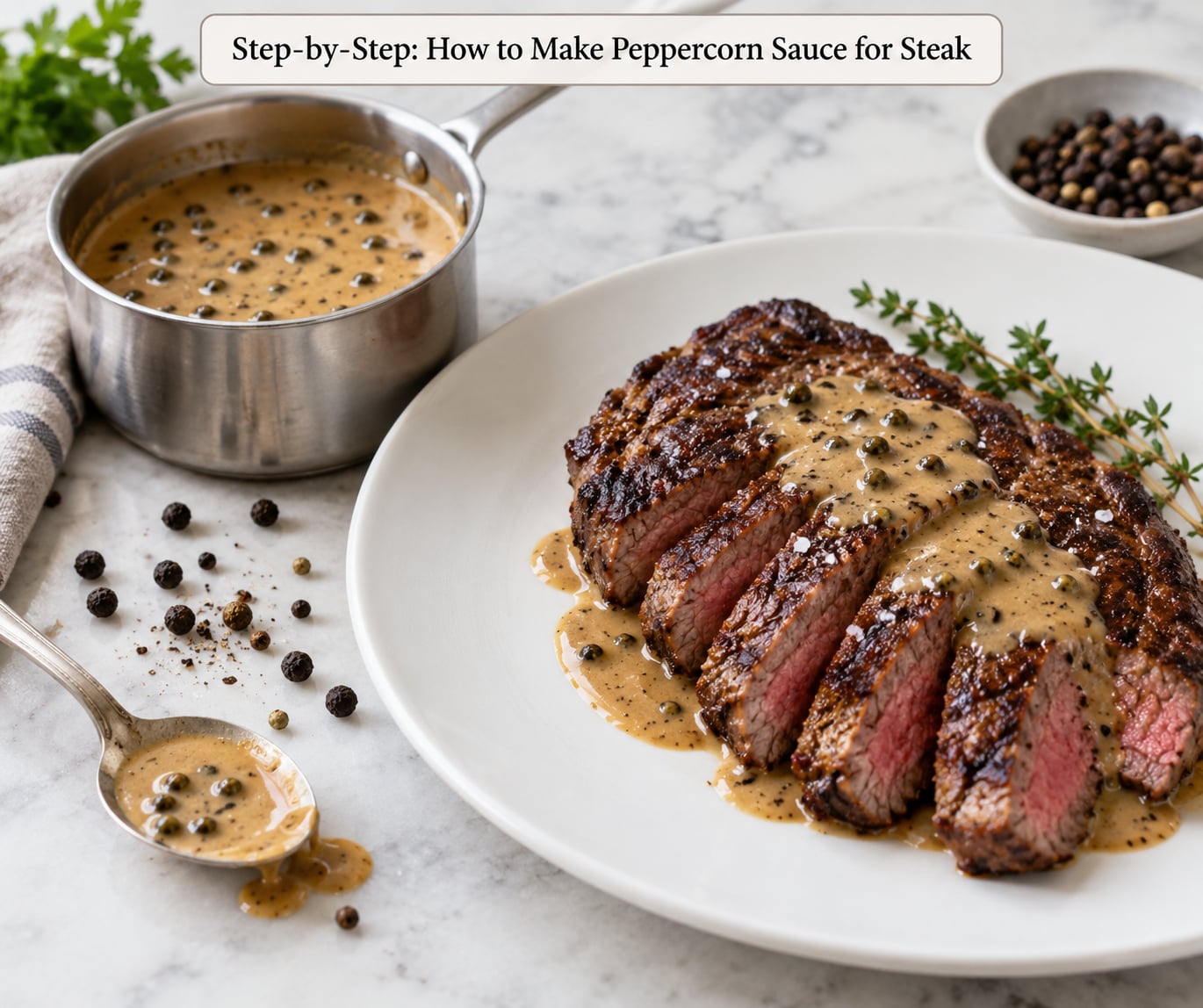
Pull the steak out of the pan the moment it hits your target temperature, and start the sauce right there while the meat rests. That is the whole timing trick: a ten-minute sauce lines up perfectly with a ten-minute rest, so nothing sits waiting and dries out in a warm oven.
Make the Peppercorn Sauce for Steak
Step 1: Toast and crush. Put the crushed peppercorns in a dry small pan over medium heat and toast for about 30 seconds, stirring constantly, until they smell floral and nutty. Pull them off the heat the second they darken. This step is where people go wrong, and the fix is simple: take them out early, because they keep toasting from residual heat.
Step 2: Soften the aromatics. Add the butter to the same pan over medium-low heat. Cook the minced shallot for 2 to 3 minutes until soft and translucent, not colored. Scrape in whatever browned bits are stuck to the pan from the steak. That fond is the most steakhouse-flavored ingredient in the whole recipe and it costs nothing.
Step 3: Deglaze. Pour in the brandy and stand back, because it can flare up. Let it bubble for about 30 seconds to a minute, scraping the bottom of the pan as it cooks, until the sharp alcohol smell softens. Add the beef stock and Worcestershire, then simmer until the liquid drops by about half. You should see the shallot and pepper suspended in a syrupy reduction, not a thin broth.
Step 4: Temper the cream. Take the pan off the heat. Whisk the cream in a slow stream while the pan is still warm but no longer hot. Then set it back over the lowest heat and let it barely move, barely bubble, for 2 to 3 minutes. This is the step that separates a silky sauce from a broken one.
Finish and Serve the Sauce
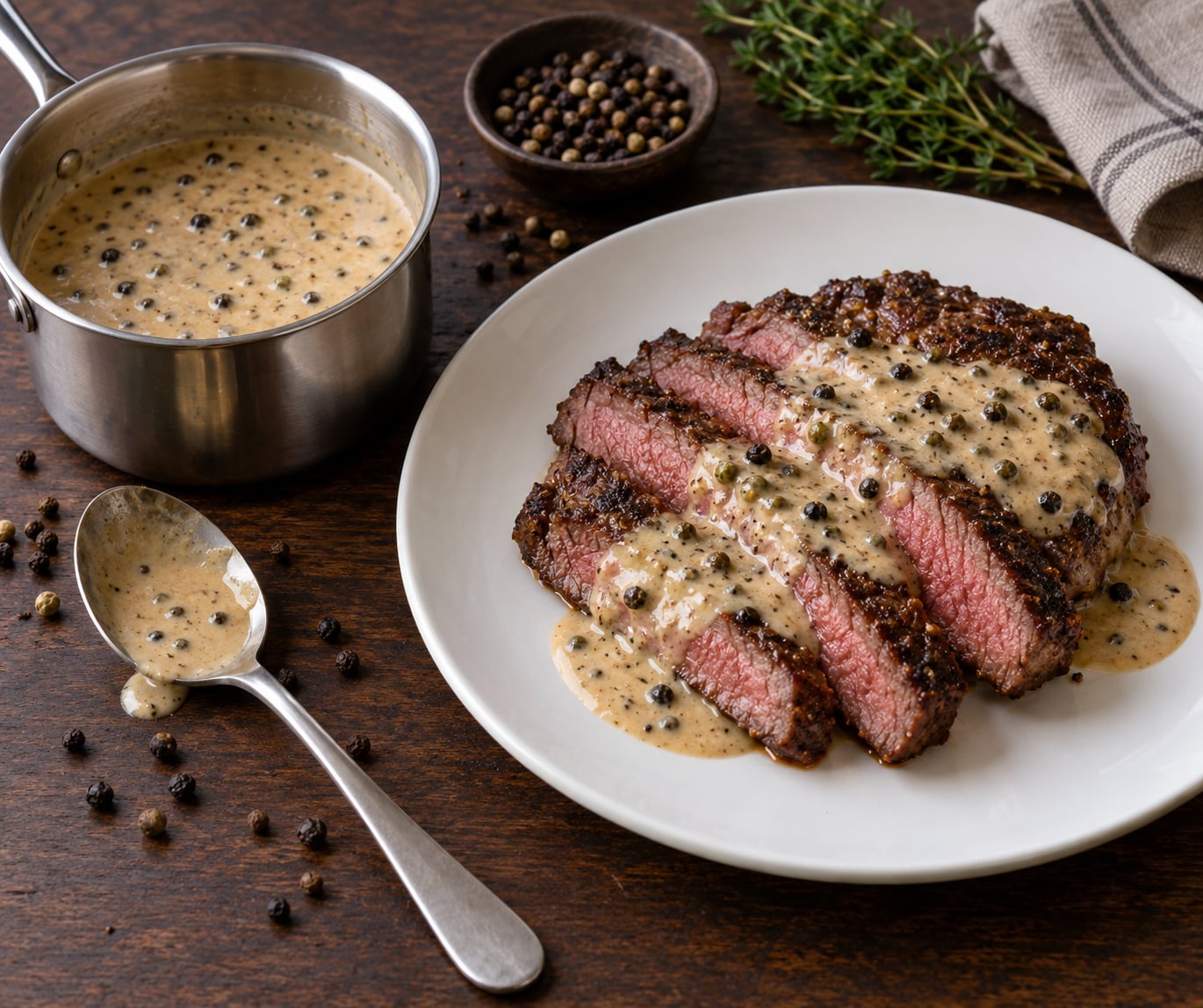
Step 5: Season and check the thickness. Taste, then add salt. Peppercorns are not salted, so a heavy-handed pinch early is the single most common reason a homemade version tastes flat. It should coat the back of a spoon and fall off in a slow ribbon, not run like milk and not sit in a mound.
Spoon it over the steak right before slicing, or serve it in a small bowl alongside for people who like to control the amount. Hold it over the lowest heat for up to 10 minutes if you need to, but never let it come to a boil.
It works just as well over roasted potatoes, asparagus, pork chops or grilled chicken, which makes it a useful thing to have in your back pocket for a weeknight.
Common Mistakes
Most disappointing peppercorn sauce comes down to one of five things, and all of them are recoverable or preventable.
The sauce turned grainy. The cream boiled, or you added cold cream to a screaming-hot pan. Take it off the heat immediately and whisk hard. If it does not come back within a minute or two, strain it through a fine sieve into a clean bowl and finish with a fresh splash of cream off the heat. It will not be quite as thick, but it will be smooth and still tastes right.
The sauce is too thin. You did not reduce far enough before the cream went in. Put it back on medium-low and simmer for two or three minutes at a time, stirring, until the spoon test passes. Do not add more cream to thicken it, that only thins it further.
The sauce is too thick. Common on the second reheating, and equally easy to fix. Whisk in a tablespoon of warm beef stock at a time until it loosens back to a ribbon.
The peppercorns are bitter. They were toasted too long or over too high a heat. You cannot soften bitterness once it is there, so the only remedy is to pick out the darkest pieces and dilute the sauce with a little more stock.
Everything scorched. The sauce was left over medium heat while you talked to somebody at the table. Keep it on the lowest setting and stir every couple of minutes.
One habit worth building: make the sauce no more than 10 minutes before serving. It thickens as it sits, it skins over as it sits, and it is at its best the moment it comes off the heat.
Frequently Asked Questions
Do you have to use brandy in peppercorn sauce?
No. Brandy adds warmth and a little fruit, but plenty of versions skip it. Use bourbon, whiskey, dry sherry or dry white wine for a similar depth, or replace it entirely with an extra third cup of beef stock plus a teaspoon of Worcestershire. Apple juice reduced to a syrup works too, and it leaves the sauce noticeably sweeter.
How do I stop the cream from splitting?
Never let cream boil, and never pour cold cream into a hot pan. Take the sauce off the heat, whisk the cream in slowly, then return it to the lowest heat to barely simmer for two to three minutes. If it has already split, whisk hard off the heat; if it does not recover, strain it through a fine sieve and finish with fresh cream.
Can I make peppercorn sauce ahead of time?
Yes, though it is best made the same day. Refrigerate it in an airtight container for up to three days. Reheat gently in a small pan over low heat, stirring constantly and never letting it boil, and expect to loosen it with a tablespoon of warm stock at a time. It thickens in the fridge, so judge the consistency after reheating, not before.
Should the sauce be made in the same pan as the steak?
Yes, if you can. The browned fond on the bottom of the pan is where the deepest flavor sits, and loosening it with brandy is most of what makes a homemade sauce taste restaurant-made. If you sear on a grill, work in a small separate pan and add a couple of tablespoons of hot beef stock, or keep the juices the steak rests on.
Can you make peppercorn sauce without cream?
You can, and the French version, sauce au poivre, is exactly that: shallot, peppercorns, cognac and stock reduced until dark and glossy, no dairy at all. Reduce it further than a cream sauce, until it coats a spoon, and keep in mind it thickens considerably as it cools on the plate. It is sharper and more wine-forward than the steakhouse version.
How thick should peppercorn sauce be before pouring it on steak?
Thick enough to coat the back of a spoon and fall off in a slow ribbon. If it runs flat off the spoon like milk, reduce it another two or three minutes. If it sits in a thick mound, whisk in warm beef stock a tablespoon at a time. Remember it continues to thicken as it sits, so aim slightly looser than you think you want.
Conclusion
If you remember one thing about how to make peppercorn sauce for steak, make it this: crush whole peppercorns and toast them for about 30 seconds, then take them off the heat. That single step separates a sauce with real aroma from one that tastes mostly of cream.
From there, keep the heat gentle, add the cream off the boil, and salt at the very end. Ten minutes in the same pan as your steak gives you a glossy, peppery sauce that coats the meat instead of pooling beside it.
Cook your steak to 145°F for a medium-rare result, rest it while the sauce finishes, then pour. For food safety, cook whole cuts of beef to at least 145°F internally with a three-minute rest, and refrigerate any leftover sauce within two hours.