To season a steak before grilling, pat the surface dry, coat it in a thin layer of high smoke point oil, then shower it with coarse kosher salt and freshly ground black pepper from about 12 inches above. Let it sit 15 to 20 minutes at room temperature, or dry brine it in the fridge for up to a day. The whole job takes five minutes plus waiting.
That is genuinely all it takes. Most disappointing steaks I have cooked over the years were under seasoned on the surface, salted with the wrong salt, or put on the grill while still wet and steaming. None of those failures have anything to do with complicated technique.
Below is the process I use, step by step, along with the timing decisions people argue about most. Pick your cut, decide how long to wait, and then season it the same way every time until you learn where your own preferences sit.
Table of Contents
- What You Need
- How to Season a Steak Before Grilling
- How to Season a Steak Before Grilling by Cut and Thickness
- Pat the Steak Dry Before Seasoning
- Salt the Steak at the Right Time
- Build a Balanced Steak Rub
- Coat the Steak With Oil and Seasoning
- Let the Steak Rest Before Grilling
- Grill the Seasoned Steak Over High Heat
- Common Mistakes
- Tips for Extra Flavor
- Frequently Asked Questions
- Do you salt a steak before grilling?
- How much seasoning should I use on one steak?
- Should I use olive oil before grilling steak?
- Can I season steak the night before grilling it?
- What grill temperature is best for a seasoned steak?
- Conclusion
What You Need
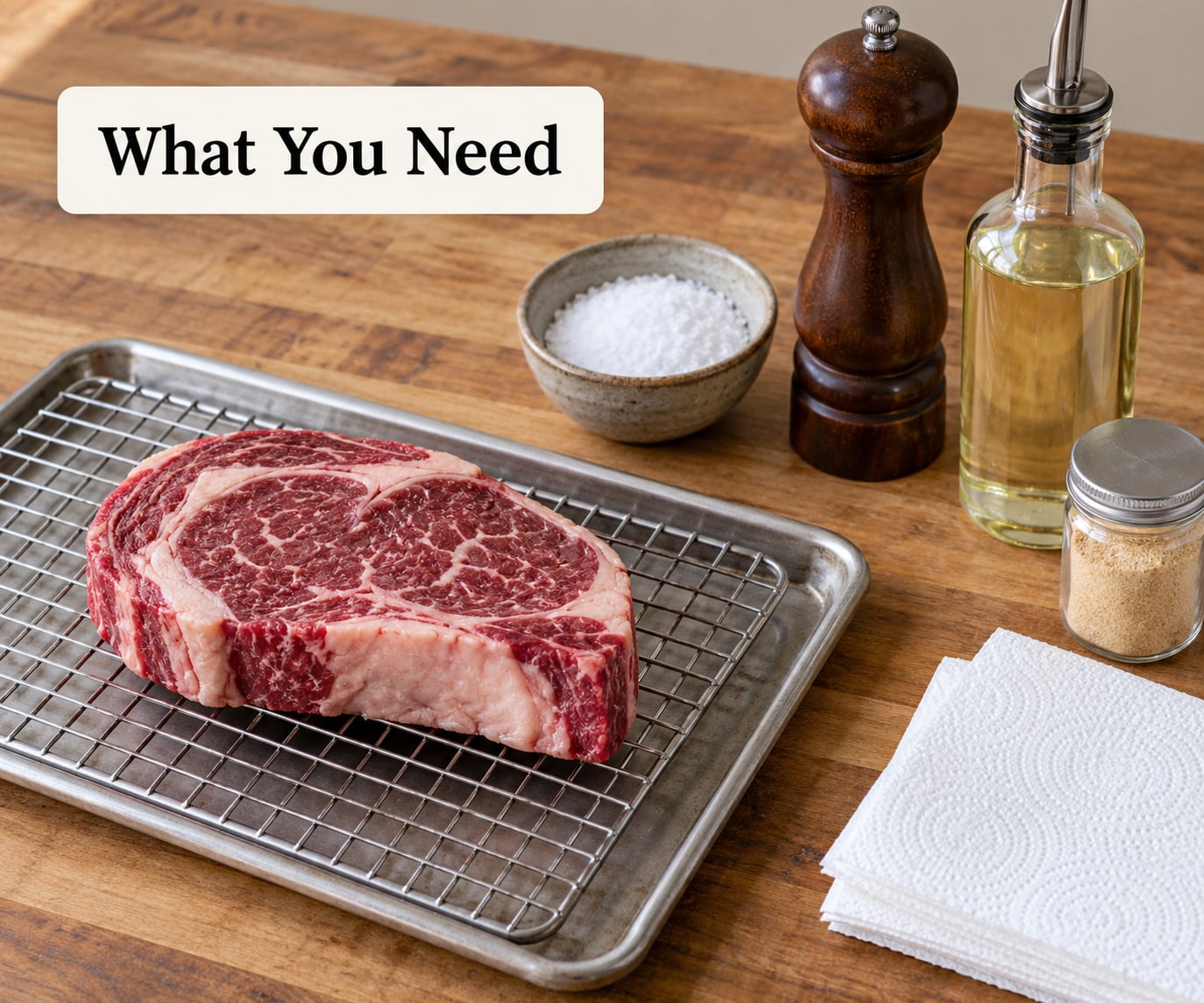
Keep the shopping list short. Everything on it is either essential or a small upgrade you can skip the first time.
- The steak. Any cut works, though ribeye, New York strip, sirloin and flank each want slightly different handling.
- Coarse kosher salt. Diamond Crystal or Morton. Not iodized table salt, and not a grinder fine enough that you cannot see individual crystals.
- Freshly ground black pepper. A grinder, not the pre-ground bottle on the shelf. Peppercorn blends are fine.
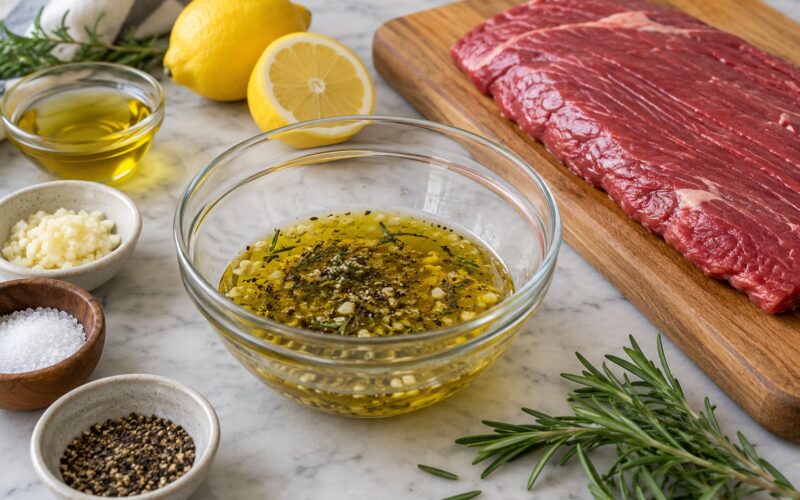
- A high smoke point oil. Avocado, canola, grapeseed or vegetable oil. This is the binder that makes seasoning stick.
- Paper towels. A cheap step that decides whether you get a crust or a steamed, grey steak.
- A sharp knife and a cutting board for trimming, and a wire rack if you plan to dry brine.
- A salt cellar or fine mesh sieve for even coverage. A slotted spoon breaks up clumps and gives you control.
Optional extras, in rough order of usefulness: garlic powder, smoked paprika, onion powder, chipotle powder, and a compound butter to melt over the steak at the end. That is the whole shelf.
How to Season a Steak Before Grilling
Four things decide whether seasoning a steak works: the cut and its thickness, how dry the surface is, how long before the grill you salt, and how hot the grill is when the steak lands. Get those right and salt plus pepper is genuinely enough.
How to Season a Steak Before Grilling by Cut and Thickness
Thickness matters more than cut name, because it decides how long the surface sits over heat and how much seasoning it takes to taste like more than a salty crust.
| Cut | Typical thickness | Seasoning approach |
|---|---|---|
| Ribeye, porterhouse | 1.25 to 2 inches | Season generously. Fat cap holds seasoning well and there is enough surface to spare. |
| New York strip | 1 to 1.5 inches | Full seasoning. Watch the fat cap, which chars faster than lean muscle. |
| Sirloin | 0.75 to 1.25 inches | Generous but slightly lighter than a ribeye. Top sirloin handles more. |
| Filet mignon | 1.5 to 2 inches | Light hand. No crust needed on such a lean cut, so keep salt to a visible even layer and skip heavy pepper. |
| Flank, skirt, hanger | 0.5 to 0.75 inch | Season right before grilling. Thin cuts cook in minutes and salting ahead turns them into salt sticks. |
People on r/grilling generally season the thick cuts more aggressively and go lighter on flank and skirt, and I agree with them. Dry-aged beef also wants a lighter touch, since it has already given up moisture during aging. Wet-aged beef is the opposite: it can take more salt.
Pat the Steak Dry Before Seasoning
This is the step beginners skip and I used to skip. Blot both sides firmly with paper towels until the surface feels tacky rather than damp.
Moisture is the enemy of browning. A wet steak hits the grill and its surface energy goes into turning water into steam instead of into the Maillard reaction, which is the chemistry that makes beef taste like beef. You end up with a grey, boiled-looking exterior no amount of seasoning will rescue.
After a long dry brine, blot the steak again right before it goes on the grill. Salt pulls a surprising amount of water to the surface over 24 hours, and that surface needs to be dry or the sticking starts.
Salt the Steak at the Right Time
Salt early. That is the single change that makes home grilled steak taste different, and it comes down to chemistry: salt applied ahead of time has time to diffuse a short distance into the meat, so the seasoning seasons the steak rather than sitting on it as a crust.
Use roughly 1 teaspoon of coarse kosher salt per pound of beef, per side. On a 1.5 pound ribeye that is about 1.5 teaspoons per side. Fine salt is roughly twice as dense by volume, which is why people who use table salt at the same volume reliably over-salt themselves.
| Timing | What you get |
|---|---|
| 15 to 20 minutes at room temperature | Enough for a seasoned crust with barely any penetration. The safe weekend default. |
| 40 to 60 minutes at room temperature | Noticeably deeper seasoning. Steakhouse-style. |
| 4 to 12 hours, uncovered in the fridge | A real dry brine. Drier surface, stronger crust, deeper seasoning. |
| 24 to 48 hours, uncovered in the fridge | The full dry brine serious cooks use. Past 48 hours the surface starts to look cured and grey, and the texture turns tacky and papery in a bad way. |
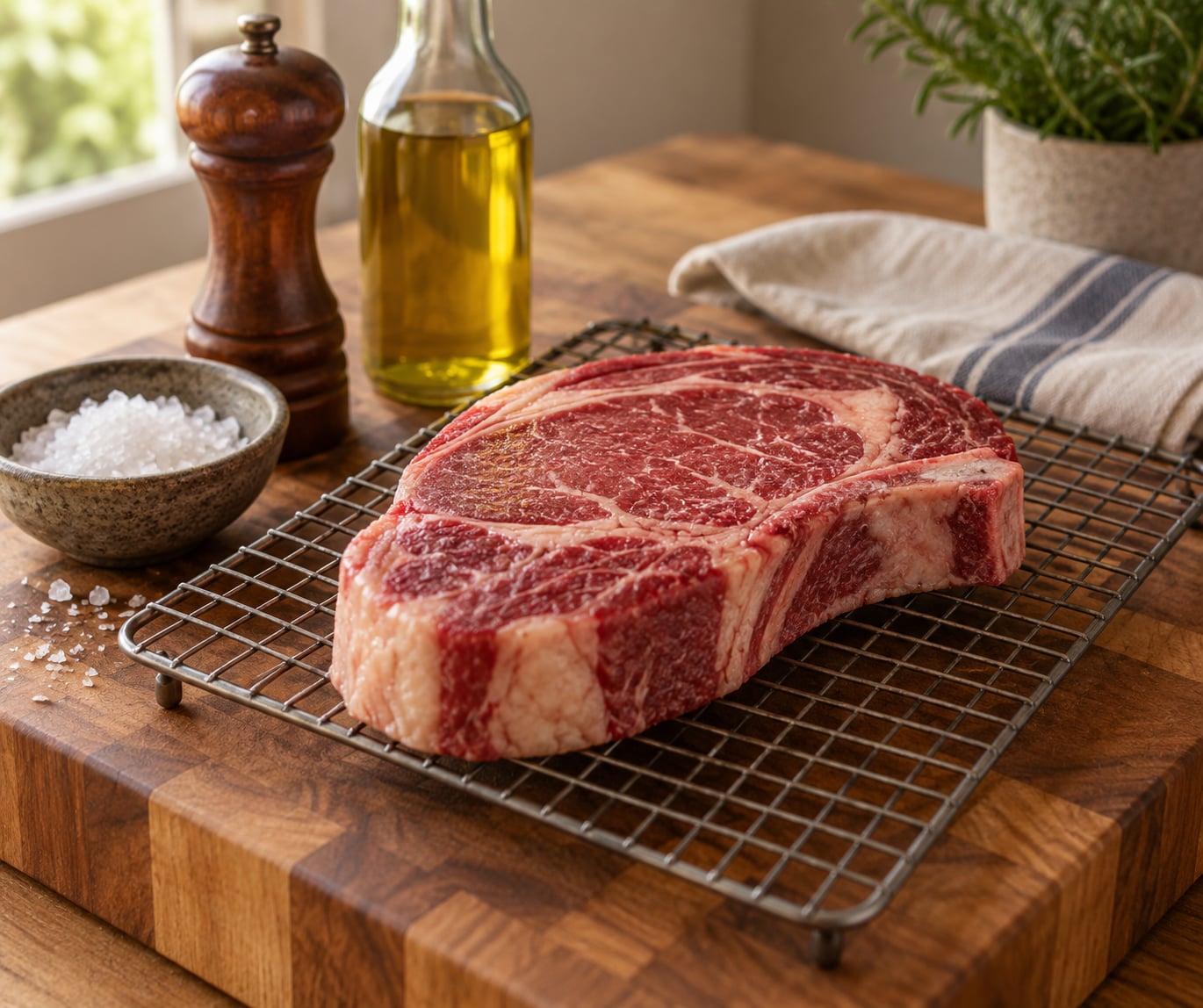
For a fridge brine, leave the steak uncovered on a wire rack set inside a rimmed baking sheet. Plastic wrap traps condensation and softens the crust you were trying to build. Salt at 40 minutes is enough for most nights, and two hours is fine too, so any of these answers to “is 2 hours enough” is yes.
Food safety is straightforward here: a salted steak can sit at room temperature for the 40 minutes most guides recommend, but anything past about an hour belongs in the fridge. Salting does not make meat unsafe.
Build a Balanced Steak Rub
Start with a two-to-one ratio: two parts coarse kosher salt to one part freshly ground black pepper, by weight. That is enough for almost every steak a home cook will grill.
Then add selectively, not all at once. Garlic powder, onion powder and smoked paprika each work in small amounts because they turn bitter when heavy. Chipotle powder brings smoke and a little heat. Skip brown sugar unless you are deliberately building a sweet rub, since sugar burns before the steak is done and turns the crust acrid.
A good next step past salt and pepper is a compound butter you spoon on after grilling, which keeps the rub simple and puts the extra flavor where you taste it.
Coat the Steak With Oil and Seasoning
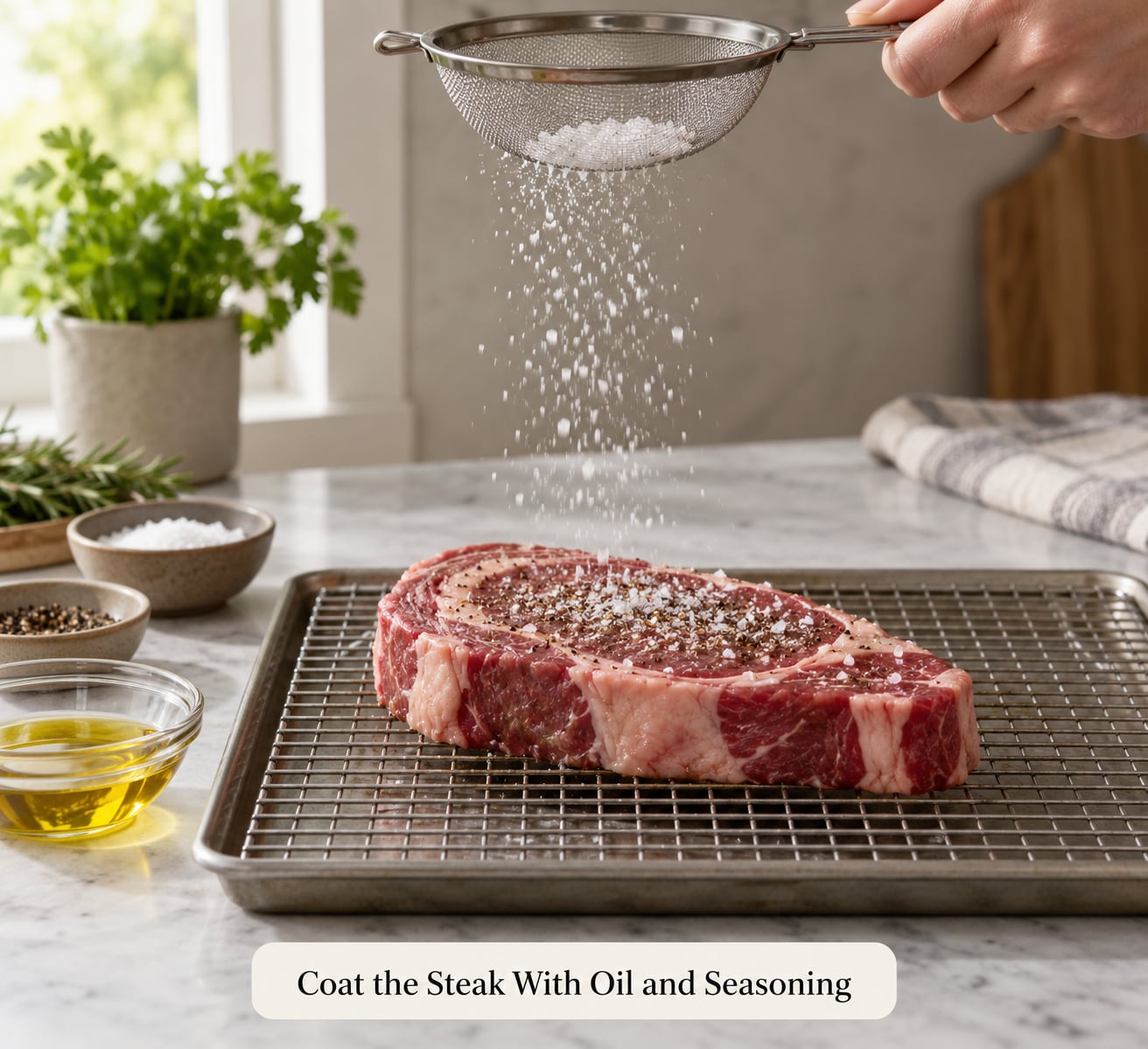
Drizzle a thin coat of oil over both sides and rub it in with your hands. Just enough that the surface looks damp and glossy, not slick. This binder is what gives you the seasoning height technique from the viral video era.
Hold the salt about 12 inches above the steak and shake it like a snowstorm. You are after a visible, even layer you can faintly see across the whole surface, including the edges. Seasoning from above with your arm moving gives even coverage without clumps, which is exactly what happens when you sprinkle from six inches away.
Then press it in gently with your fingertips so the crystals make contact with the meat, and add the pepper on top just before grilling. Press, do not scrub, and shake off any heavy clumps that fall toward the coals.
Let the Steak Rest Before Grilling
Seasoned steak needs a short rest before heat, and this is where flavor distributes rather than sitting in one dry patch. 15 to 20 minutes at room temperature is the standard answer for seasoning a steak before grilling.
Do not leave it out for two hours for the sake of seasoning. That is a food safety problem and a texture problem, and neither is worth it. If you are seasoning more than an hour ahead, the fridge is the right place, uncovered, on the rack.
Pulling the steak out of the fridge also takes the chill off, which cooks more evenly. Thirty to forty-five minutes is enough for most home grills.
Grill the Seasoned Steak Over High Heat
Seasoning is where flavor starts, but heat finishes it. Preheat the grill fully, hard, for 10 to 15 minutes. You want the grates clean and smoking, with a two-zone fire so you can move the steak away from direct heat when it needs to coast.
Place the steak away from you so the fat cap faces away, and let it sit untouched. Moving it early is the most common reason people think seasoning failed, because the crust tears every time they flip. Flip once when the first side is crusted and releases on its own, roughly 3 to 5 minutes for a thick steak depending on your grill.
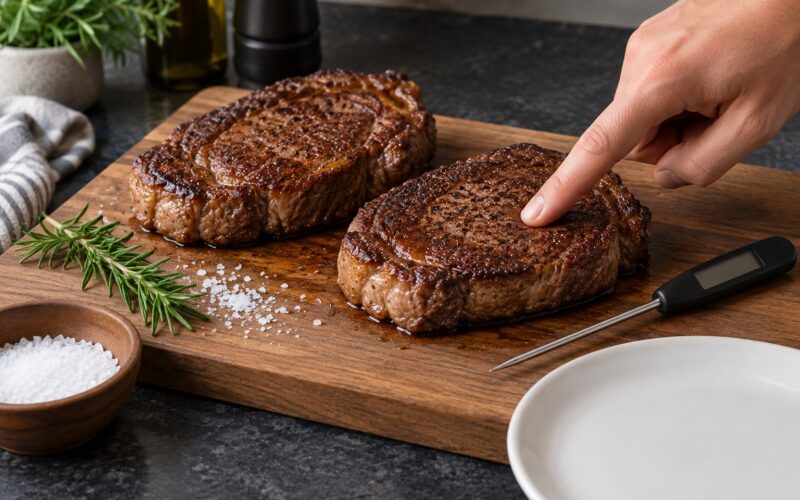
Check doneness with an instant-read thermometer in the thickest part rather than cutting into it. Pull for whole cuts at 145°F for rare-plus and rest 5 to 10 minutes for carryover cooking. For ground beef cook to 160°F, and for poultry 165°F.
Common Mistakes
Most bad steaks are a mistake in one of these six places.
Salting five minutes before the grill. The salt has no time to move, so you get seasoning on the outside and nothing inside. Fix: 15 to 20 minutes minimum, 40 minutes if you can plan ahead.
Using iodized table salt at coarse-salt volume. Fine salt packs roughly twice the salt per tablespoon, so the same scoop makes the steak noticeably salty. Fix: switch to coarse kosher salt, or cut your table salt volume roughly in half.
Seasoning a wet surface. Seasoning will not adhere, and the steak steams instead of searing. Fix: blot with paper towels until tacky before the oil goes on.
Adding pepper hours ahead. This is the worry that comes up constantly on r/cookingforbeginners, and it is fair. Black pepper’s aroma comes from volatile oils that burn off or turn acrid over long heat. Fix: add the pepper just before grilling, and use a coarser grind so individual pieces survive the heat.
Seasoning a thin steak hours ahead. A flank steak salted 24 hours ahead tastes like jerky, because the salt reaches the center of a thin cut. Fix: thin cuts get seasoned right before they hit the grill; thick cuts get the long brine.
Moving the steak constantly. Every move tears the forming crust. This is also the most common cause of sticking, which people misread as a seasoning problem when it is really a grate-and-oil problem. Fix: leave it alone for the first 3 minutes, and oil the grates rather than relying on seasoning to prevent sticking.
Tips for Extra Flavor
Once salt, pepper and a good sear are dialed in, the upgrades are cheap and quick.
Finish with flaky salt after grilling, not before. A pinch of Maldon or another flaked salt on a hot steak reads as brighter and less harsh than the same salt going on raw. A small amount of finishing salt does more than doubling the pre-grill seasoning.
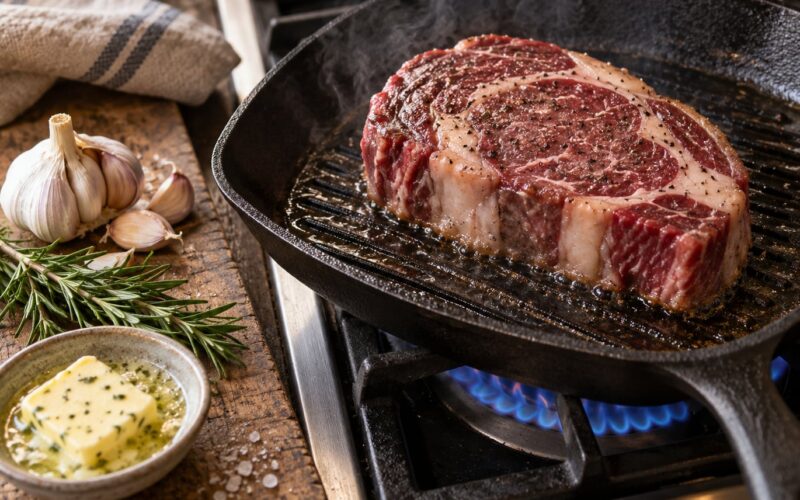
Baste with compound butter near the end. Soften butter with minced garlic, a little chopped rosemary and cracked pepper, then spoon it over the steak once it has rested a couple of minutes. It is the single biggest upgrade for the least effort.
Add fresh herbs off the heat, not on. Basil, cilantro and parsley lose their character within seconds over direct flame, so scatter them over the plate.
Dry brine properly and skip the rub entirely. If your steak tastes flat, the answer is usually more time with salt, not more spices. On r/steak the most common serious-hobbyist pattern is salt during a 24 to 48 hour fridge dry brine, then fresh cracked pepper and a homemade chili powder right before grilling.
Cook thick steaks to carryover temperature. Pull about 5°F below your target and let the residual heat finish the job, which also gives the seasoning time to settle with the juices.
Keep raw steak under 40°F for no more than 2 hours, or 1 hour above 90°F outdoor temperatures, and always clean your board and tongs after handling it raw.
Knowing when to stop matters too. If salt, pepper, a hot grill and a proper rest are already working, extra rubs mostly bury the beef flavor you paid for.
Frequently Asked Questions
Do you salt a steak before grilling?
Yes, and salt it earlier than most people think. Apply coarse kosher salt about 15 to 20 minutes before grilling for a seasoned crust, or 40 to 60 minutes ahead for seasoning that reaches deeper into the meat. You can also dry brine it uncovered in the fridge for 4 to 48 hours. Salt applied right before the grill sits on the surface as a crust rather than seasoning the meat itself.
How much seasoning should I use on one steak?
Use about 1 teaspoon of coarse kosher salt per pound of beef, per side, plus the same volume of coarse ground black pepper. A 1.5 pound ribeye needs roughly 1.5 teaspoons of salt on each side. The layer should be visible and even, with no bare patches. If you use fine table salt instead, use about half as much, since fine salt packs roughly twice as tightly per teaspoon.
Should I use olive oil before grilling steak?
Regular extra virgin olive oil is not the best choice, because it has a relatively low smoke point and can taste bitter once it gets hot. Use a high smoke point oil such as avocado, canola, grapeseed or vegetable oil. A thin coat on both sides acts as a binder so the salt and pepper adhere evenly, and it helps the surface brown rather than steam. If you love the flavor of olive oil, brush it on after grilling instead.
Can I season steak the night before grilling it?
Yes, and that is exactly what a dry brine is. Salt the steak, leave it uncovered on a wire rack inside a rimmed baking sheet, and refrigerate it for 4 to 24 hours for deep seasoning and a drier surface that sears better. Do not cover it in plastic, since trapped condensation softens the crust. Beyond 48 hours the surface turns grey, tacky and papery, which is too far for a good crust.
What grill temperature is best for a seasoned steak?
Get the grill fully hot before the steak goes on. Preheat for 10 to 15 minutes until the grates are clean and smoking, and set up a two-zone fire so you have direct heat for searing and indirect heat for finishing. A thick ribeye usually wants 3 to 5 minutes per side over direct heat, then moved off the heat to coast. Seasoning can only do so much if the surface never gets hot enough to brown properly.
Conclusion
Start by patting the steak dry, coating it in a thin layer of high smoke point oil, and seasoning it evenly with coarse kosher salt and fresh black pepper from about 12 inches above. Give it 15 to 20 minutes before the grill, or up to a day in the fridge on an uncovered rack.
Technique beats a complicated rub every time. Get the surface dry, the salt right and the timing generous, and the steak does the rest.