To make a juicy Lucy stuffed burger, you seal a slice of American cheese between two thin beef patties so it melts into a molten pocket in the center instead of sliding off a cold bun. The whole thing takes about 35 minutes from the fridge to the plate, and only 15 of those minutes need you standing at the counter.
What makes a burger a Juicy Lucy is not the topping. It is the seal. Two thin patties pressed together around cheese, edges pinched and smoothed until no cracks remain, so the cheese ends up trapped in the middle like a little pocket of molten goodness. Everything else is just heat and timing.
The burger comes from Minneapolis, Minnesota, and two bars there still argue about who invented it. Matt’s Bar and the 5-8 Club both claim the original, and both have been serving a version of it since the 1950s. You will also see it written as a Jucy Lucy, or just called a cheese stuffed burger, depending on who is printing the menu.
Most of the disappointment happens before the pan ever heats up. Let’s fix that first.
Table of Contents
- What You Need
- How to Make a Juicy Lucy Stuffed Burger: Step by Step
- Step 1: Make the Filling
- Step 2: Form the Burger
- Step 3: Chill and Sear
- Step 4: Check the Temperature
- Step 5: Rest and Serve Your Juicy Lucy Stuffed Burger
- Common Mistakes and How to Fix Them
- Frequently Asked Questions
- What is a Lucy stuffed burger?
- What should I stuff a Lucy burger with?
- How do I keep a Lucy stuffed burger from opening?
- What temperature should a Lucy stuffed burger reach?
- Can I cook a Lucy stuffed burger in a skillet or on a grill?
- Can I freeze a Lucy stuffed burger before cooking?
- Conclusion
What You Need
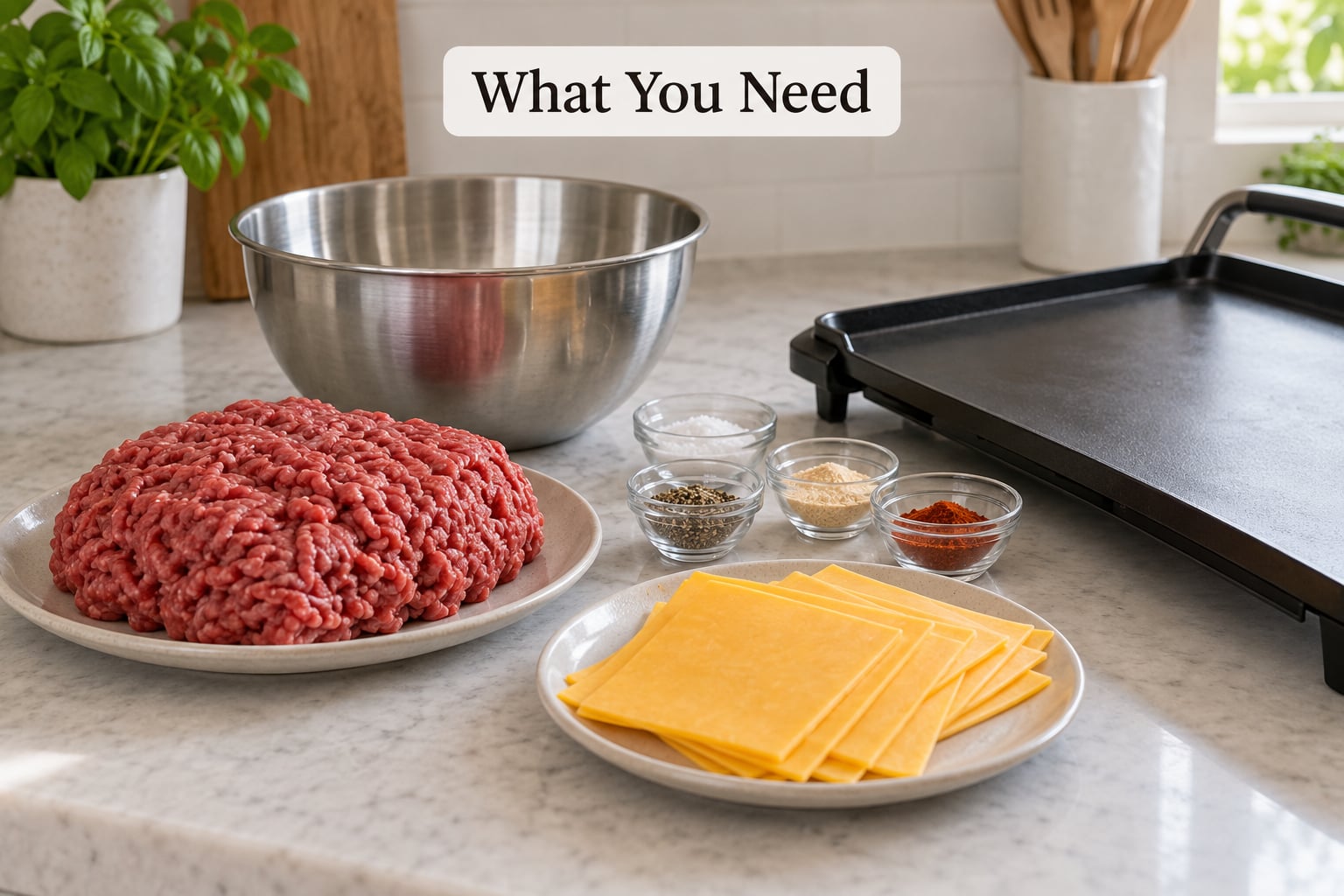
This list covers two burgers. The two places you can really go wrong are the beef and the cheese quantity, so those get the most attention below.
- 1 lb (450 g) ground chuck or ground beef, 80/20 or 85/15 fat
- 4 quartered slices of American cheese, or 2 full slices (one per burger)
- 1 tsp (5 ml) Worcestershire sauce
- 1/2 tsp (3 g) garlic powder
- 1 tsp (6 g) kosher salt, plus more for the patties
- 1/2 tsp (1 g) freshly cracked black pepper
- 1 tbsp (15 ml) neutral oil, such as canola or avocado
- 4 sturdy hamburger buns, dill pickles, grilled onions, salt and pepper for serving
On the beef: readers in burger forums are far more confident when you give them a number, and the number that keeps coming up is 80/20 or 85/15. Eighty percent lean still has enough fat to stay moist through the sear and to give the patty structural integrity when you flip it. Leaner beef cooks dry and cracks along the seam, which is exactly how the cheese gets out.
Go with ground chuck when you can find it, since it carries more flavor than a lean blend. If your grocery store only sells 90/10, buy a fattier cut and let the butcher grind it, or work in a small amount of bacon grease. Just do not use extra-lean.
On the cheese: the traditional answer is American, and the reason is melt behavior rather than taste. Processed American cheese melts evenly at burger temperature and stays liquid instead of breaking into oily strings. Two full slices, which is four quarters, is the amount most people land on per burger. Adding extra cheese is the single most common mistake I see people make, and it guarantees a split patty.
Cheddar works, provolone works well, and pepper jack adds heat. Shredded cheese is the weakest option because the strands cool the center unevenly and pull out in strings rather than pooling. If you use shredded, measure it and pack it into a tight disc rather than sprinkling it loose.
Seasoning stays light on the beef and gets finished on top. Worcestershire and garlic powder inside the patty, salt and pepper on the crust. Anything more inside and the filling competes with the cheese.
How to Make a Juicy Lucy Stuffed Burger: Step by Step
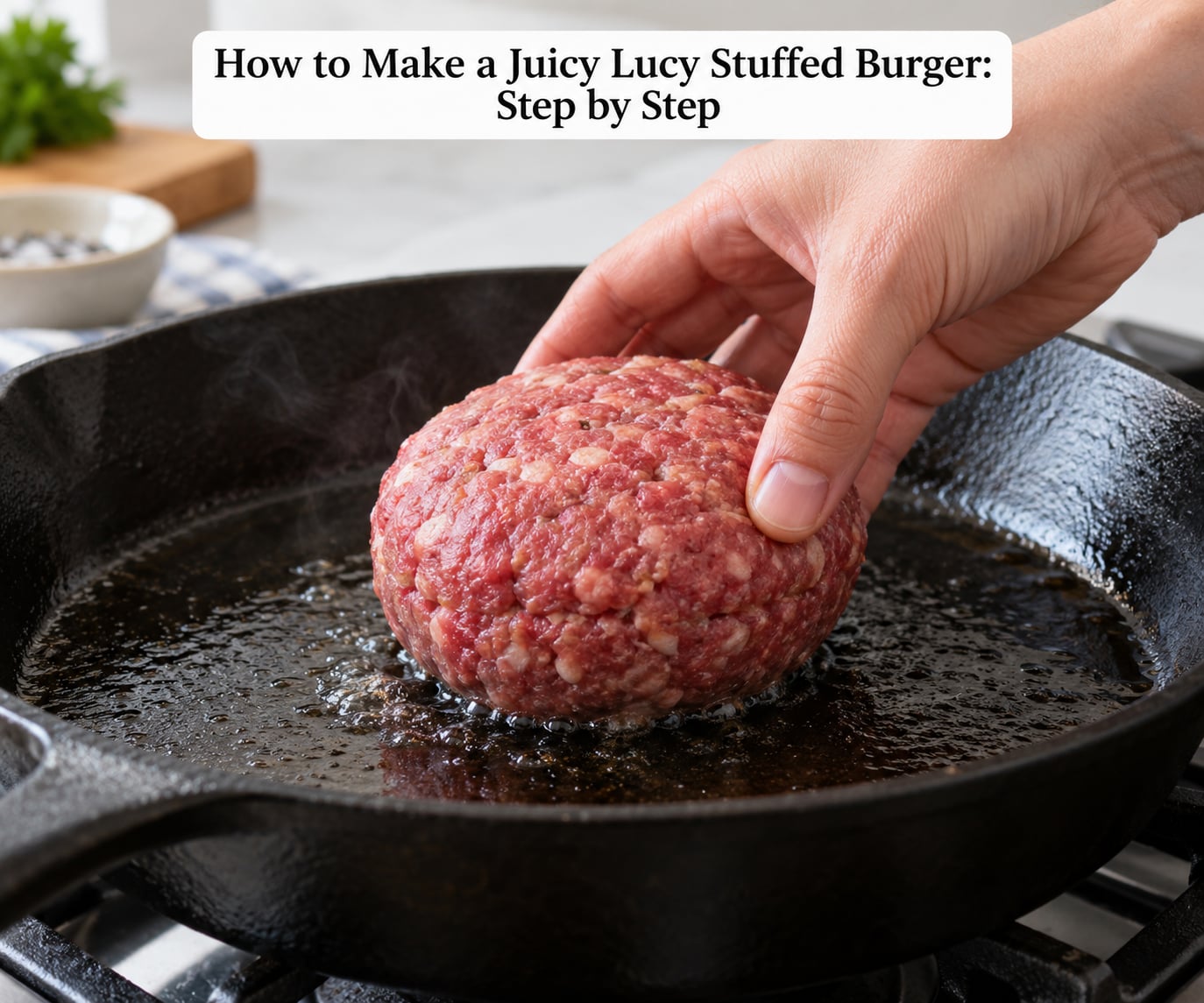
Work in this order and the method takes about 20 minutes of active time. The two places to slow down are sealing the edge and judging the heat.
Step 1: Make the Filling
Put the beef in a bowl with the Worcestershire sauce, garlic powder, 1 teaspoon of salt, and the pepper. Mix with your fingertips until the seasoning is evenly distributed, then stop. Overworked beef turns pasty and dense, and it loses the loose texture you want in a burger.
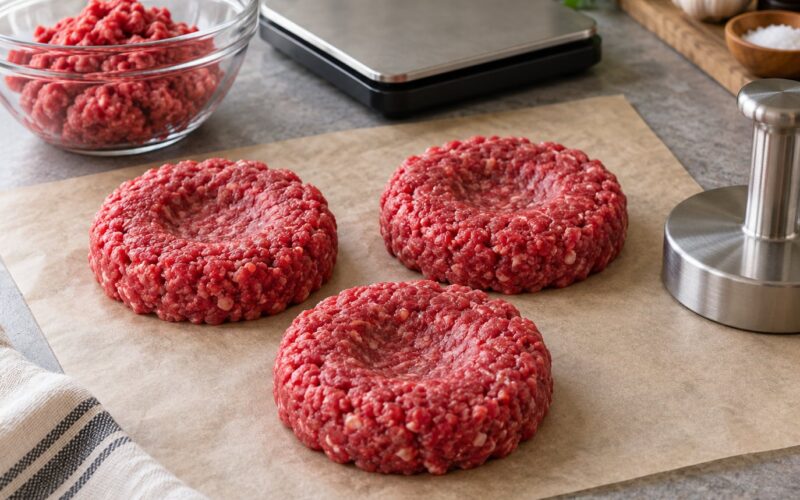
Split the seasoned beef into two equal portions and shape each into a ball. Pat each ball into a disc about 4 1/2 inches (11 cm) wide and a third of an inch (1 cm) thick. That disc is your outer layer.
Now make the filling disc noticeably smaller, roughly 3 inches (7.5 cm) across. Squeeze it tight so it holds together. This size difference is the whole trick: it leaves a half-inch border of plain beef all the way around, which becomes your seal. If the filling disc is the same width as the patty, you have nowhere to pinch.
Step 2: Form the Burger
Lay a quartered American slice flat in the center of each beef disc. Stack the two quarters slightly offset so the corners are not all sitting in the same spot, which reduces the chance of a corner poking through.
Set a second thin beef layer over the top. Divide the remaining beef in half and press a portion into a disc a little wider than the filling and thinner than the bottom, then drape it over the cheese. Pat it into place with an open palm so it covers the cheese all the way to the edge of the filling.
Now seal. Pinch the border between thumb and forefinger all the way around the patty, working in small increments, then run your fingertips along the seam twice to close any cracks. Cracks are where the cheese goes, so look at the edge from the side and fix anything you can see into.
Finally, reshape. Cup your hands and gently press the sealed patty into a round about 4 inches (10 cm) wide and a half inch (1.25 cm) thick, the same shape and thickness as a plain hamburger. It should look unremarkable. That is the sign the seal is good.
Step 3: Chill and Sear
Chill the formed burgers for 15 minutes in the refrigerator. Cold beef firms up, which means the seam holds when it hits heat, and it also shortens the cooking time slightly.
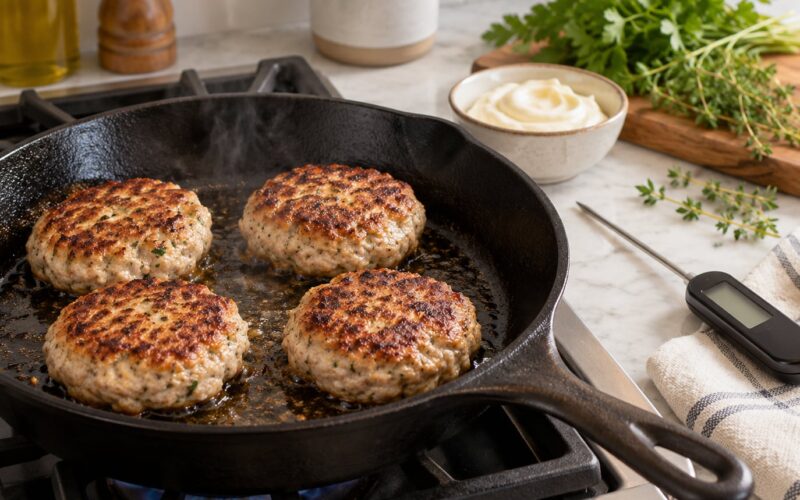
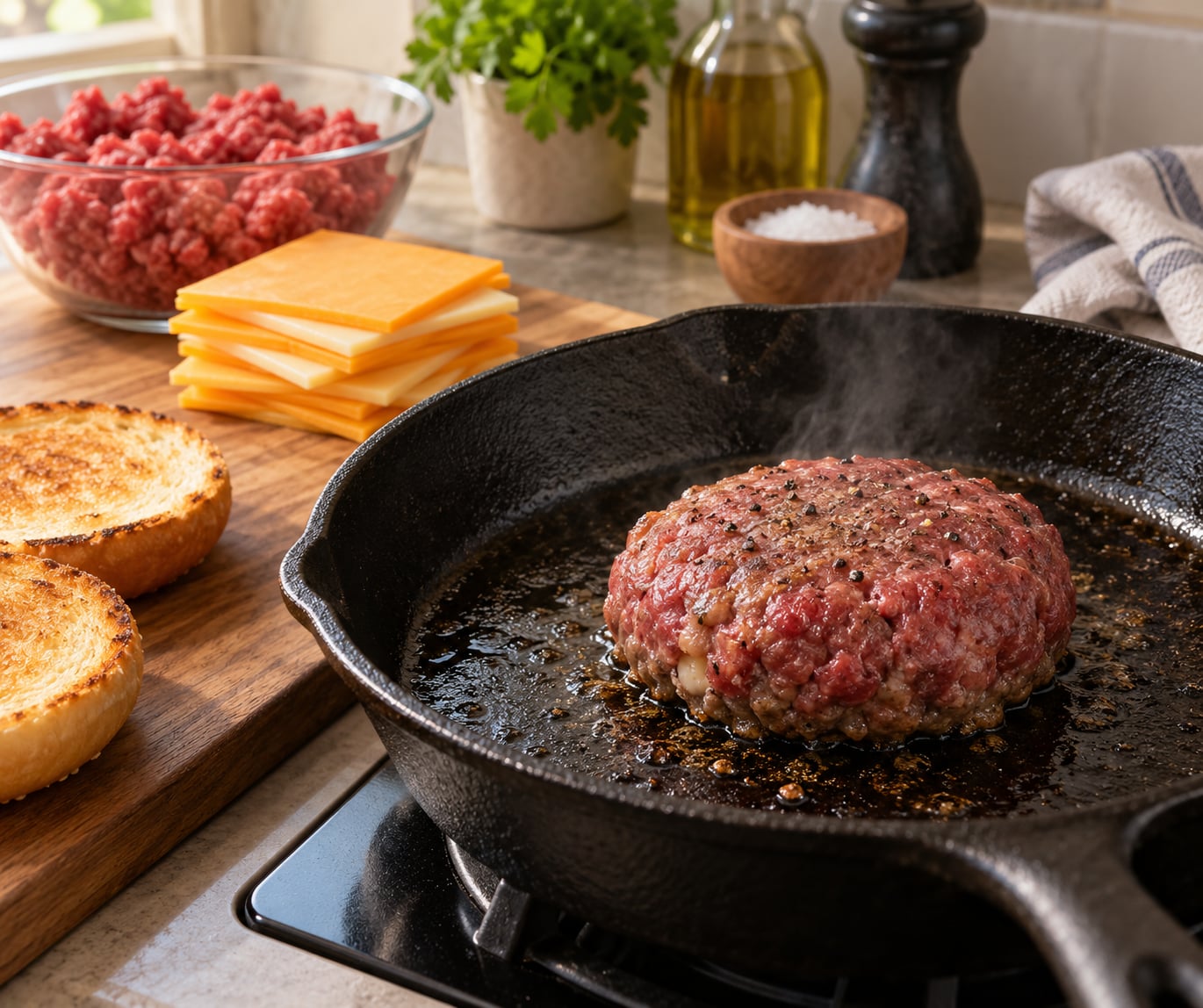
Heat a cast iron skillet over medium-high heat and add the oil. The oil should shimmer before you add the burger. Lay the patty down and leave it alone. Cook undisturbed for 3 to 4 minutes, until the underside is deeply browned and releases from the pan without scraping.
Flip once and cook another 3 to 4 minutes based on the thickness. Resist pressing it with a spatula. Pressing squeezes the juices and the molten cheese toward the seam, and plenty of cooks have watched a perfect burger fall apart because they wanted to speed things up.
Other methods work too. Here are the timings that hold up:
- Grill: medium-high direct heat, 3 to 4 minutes per side with the lid closed for the second side.
- Oven: 400F (205C), sear 2 minutes per side in the skillet first, then 8 to 10 minutes in the oven on a rack.
- Air fryer: 375F (190C), 11 to 13 minutes total, flipping at the 6 minute mark. Leave the seam pressed flat so the basket does not pry it open.
- Pellet smoker: 225F (110C) with a clean, hot cast iron grate, 30 to 40 minutes, lid closed. Cooks it through without the aggressive sear, so the crust is lighter.
Step 4: Check the Temperature
Ground beef is safe to eat at an internal temperature of 160F (71C). Here is the catch with a stuffed patty: pushing the probe into the center drives it straight through the cheese pocket, so aim at the thickest part of the beef along the side, not the middle.
If you have no thermometer, you have other signals. The juices running clear rather than pink, a firm springy feel when you press the patty, and cheese that has gone fully molten and slightly thickened when you rest it are the cues experienced cooks use. Cut one open and check the color if you are unsure; nobody is grading the exam.
Take the burger off the heat a couple degrees early. A stuffed patty is thick enough that carryover cooking finishes the center while it rests.
Step 5: Rest and Serve Your Juicy Lucy Stuffed Burger
Rest the burger on a board for 5 minutes. The internal temperature will drop 5 to 10 degrees, which is expected and fine since you cooked it past 160F. Resting also lets the cheese thicken slightly so it flows instead of pouring out the first time you cut in.
Toast your buns in the rendered fat after the burgers come out. Use a simple bun, not brioche or an artisan kaiser. Brioche absorbs the juice and collapses, and a heavy roll makes the burger awkward to eat.
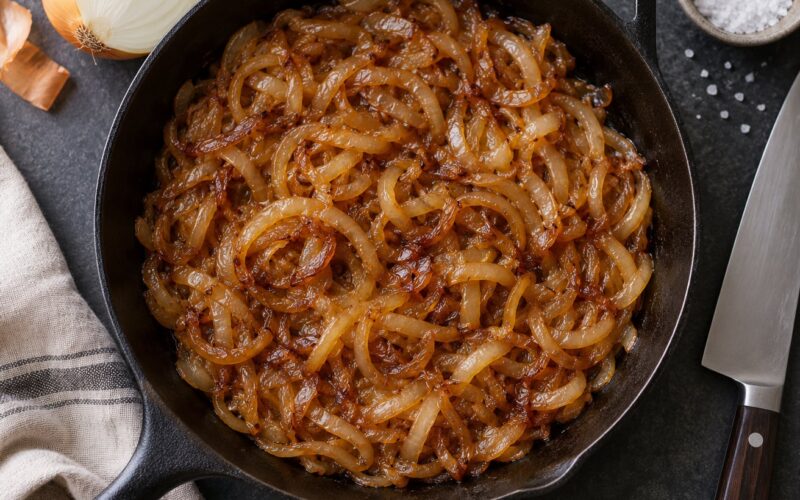
Salt, pepper, dill pickles, and grilled onions are the classic top. Add a thin smear of mustard or ketchup if you want it, but go light on sauces inside the bun since you already have molten cheese doing the work.
For leftovers, refrigerate cooked burgers for up to three days and reheat in a skillet over medium-low for 2 to 3 minutes per side. You can also freeze formed, uncooked burgers between sheets of parchment for up to three months and cook from frozen, adding 3 to 4 minutes to the skillet method and cooking straight from the freezer to 160F.
Common Mistakes and How to Fix Them
The patty splits and cheese shoots out. This is the number one complaint in every burger forum, and it almost always comes down to three things. Too much cheese, a filling disc that matches the patty width, or a patty that is too thick for the heat you are using. Fix it by dropping to four quarters of cheese, shrinking the filling to 3 inches across, and flattening the finished patty to a half inch.
The filling comes out dry and crumbly. You cooked it too long, or the beef was too lean. Pull the burger at 160F rather than chasing a brown crust through and past well done, and stay on 80/20 or 85/15.
It cooks unevenly. A thick, dome-shaped patty browns on the outside while the center stays cold. Press it flat, keep it the same thickness as a store-bought patty, and let it come to room temperature for 20 minutes before cooking if you have time.
The center is underdone. Pressing with a spatula and poking the middle with the thermometer both mean juices escape through holes. Probe the side, flip once, and trust the rest period to carry it the rest of the way.
The bun goes soggy. Molten cheese is grease, and grease on a soft bun makes a mess. Toast the bun, drain the burger on a rack for the full rest, and skip the extra sauce.
One honest note: a little cheese will always leak. The version served at the Minneapolis bars is not a spotless cross-section either. If your seam survives the flip, you did it right.
Frequently Asked Questions
What is a Lucy stuffed burger?
A Lucy stuffed burger is a cheese-stuffed hamburger: two thin beef patties pressed together around a slice of American cheese with the edges pinched shut, so the cheese melts into a molten pocket in the center during cooking. The cheese goes inside the patty rather than on top, which is what separates it from an ordinary cheeseburger. It originated in Minneapolis, Minnesota, where Matt’s Bar and the 5-8 Club both claim the original.
What should I stuff a Lucy burger with?
American cheese is the traditional choice because it melts evenly at burger temperature and stays liquid instead of breaking into oily strings. Cheddar, provolone, pepper jack, and smoked gouda all work too, each adding its own flavor. Use two slices, which are four quartered slices, per burger. Shredded cheese is the weakest option because the strands pull out in strings instead of pooling into a molten pocket.
How do I keep a Lucy stuffed burger from opening?
Leave a border of plain beef around the filling, pinch the edges together all the way around the patty, then run your fingertips along the seam twice to close any cracks. Keep the filling disc about 3 inches wide inside a 4 1/2 inch outer layer. Chill the formed patty for 15 minutes before cooking, and flip it only once with a thin spatula, never pressing down.
What temperature should a Lucy stuffed burger reach?
Ground beef is safe to eat at an internal temperature of 160F (71C). Because a thermometer probe can push straight through the cheese pocket, check the thickest part of the beef along the side of the patty. Clear juices and a firm, springy feel are the backup cues. Pull the burger a couple of degrees early and let the 5 minute rest finish the center.
Can I cook a Lucy stuffed burger in a skillet or on a grill?
Both work well. In a cast iron skillet over medium-high heat, cook 3 to 4 minutes per side without pressing. On a grill, use medium-high direct heat and close the lid for the second side so the top cooks through. You can also start in the skillet for 2 minutes per side, then finish at 400F in the oven for 8 to 10 minutes, or air fry at 375F for 11 to 13 minutes.
Can I freeze a Lucy stuffed burger before cooking?
Yes, and it is the easiest way to prep for a cookout. Form and seal the raw burgers, lay them between sheets of parchment on a tray, freeze until solid, then move them to a bag or container. They keep for up to three months. Cook straight from frozen in a skillet over medium-high heat, adding 3 to 4 minutes to the usual time, and confirm the center reaches 160F.
Conclusion
Start by making the filling slightly smaller than the outer beef layer, so you have a half-inch border of beef to pinch. Seal the edge properly, chill for 15 minutes, sear 3 to 4 minutes a side over medium-high heat without pressing, and check the thickest part of the patty at 160F. Rest it 5 minutes before it goes on the bun, and this how to make a juicy Lucy stuffed burger method will hold up every time.