If you only buy one blend for burgers, get 80/20. Eighty percent lean meat and twenty percent fat by weight is the most versatile fat ratio for burgers: it stays juicy, holds together on the grill, and shrinks less than fattier blends without turning dry and tight the way 90/10 does. Updated October 2026.
Table of Contents
- What Ground Beef Fat Ratio Is Best for Burgers?
- How to Read Ground Beef Fat Percentages
- What to ask for when the label is vague
- Which Fat Ratio Gives the Juiciest Burger?
- 80/20 vs. 85/15 vs. 90/10: Which Ratio Should You Buy?
- How Fat Ratio Affects Texture, Flavor, and Shrinkage
- Which Ratio Works Best for Different Cooking Methods?
- How to Choose the Best Ground Beef at the Store
- How to Adjust Fat Ratio for Burgers at Home
- How to Keep Burgers Juicy Without Excess Grease
- Frequently Asked Questions
- Is 80/20 ground beef the best for burgers?
- What is the best ground beef fat ratio for smash burgers?
- Is 90/10 ground beef better for grilling?
- What fat ratio is healthiest for ground beef burgers?
- Can I make an 80/20 burger blend at home?
- How do I keep lean ground beef burgers from drying out?
- Conclusion
What Ground Beef Fat Ratio Is Best for Burgers?
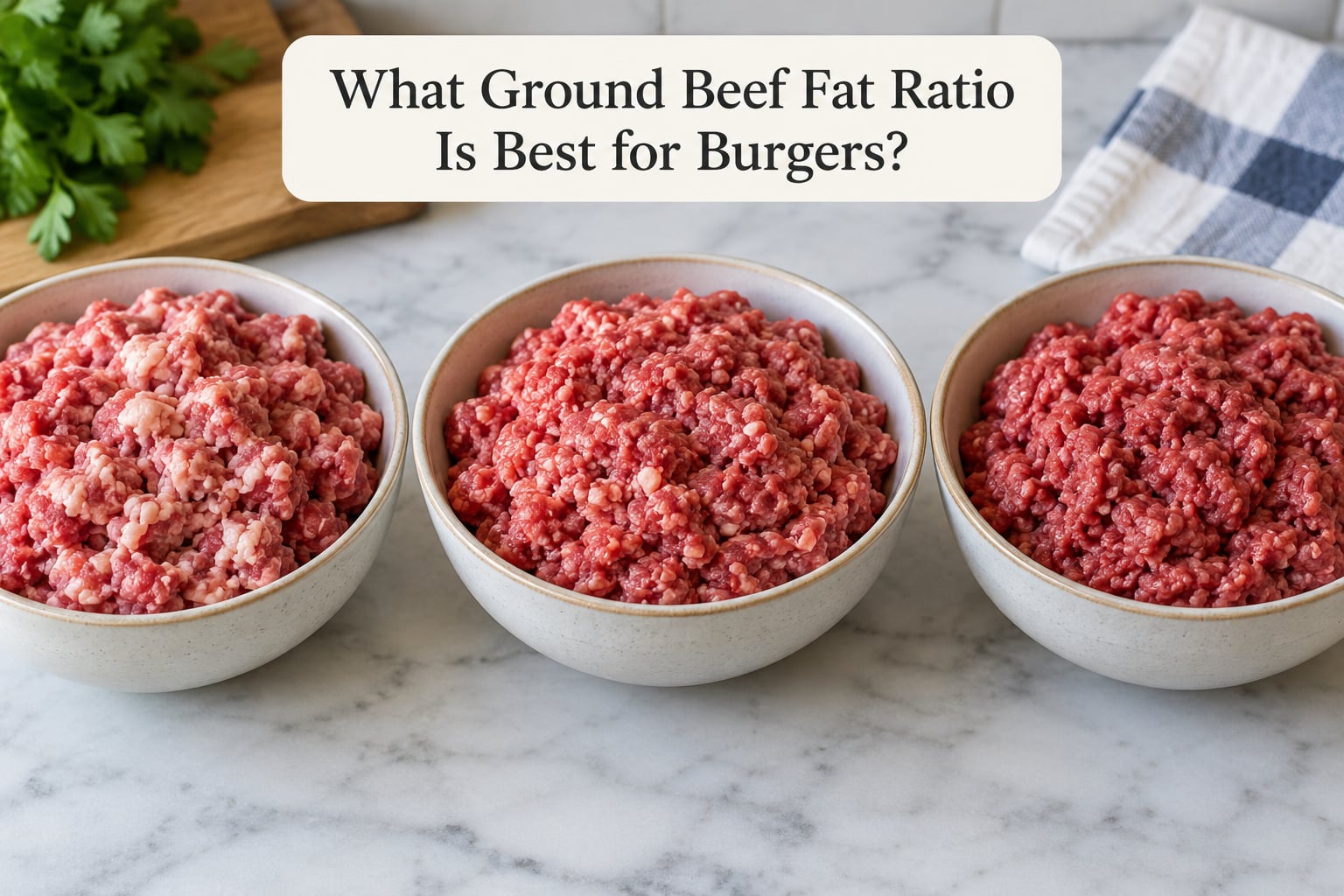
For most home cooks, 80/20 ground beef is the answer. It is the blend that stays juicy in the middle, browns well, and holds on a bun without dripping onto the grill for a full ten minutes.
Two situations push you off 80/20. Leaner blends work when you want a crisp-edged, thin patty that sears fast and eats light, and 85/15 is a good middle step if you prefer a less greasy finish. Fattier blends belong somewhere else: 70/30 is useful for meatloaf and saucy dishes, and it makes a plain grilled patty greasy.
Read the numbers as lean first, fat second. The first number is the percentage of lean meat, and the second is the percentage of fat, both measured by weight. So 80/20 is 80 percent lean and 20 percent fat, and 90/10 is 90 percent lean with 10 percent fat.
One bit of folklore to clear up early: you will hear 50/50 thrown around as the perfect ratio. It is a joke, and a bad one. Half your burger would be rendered fat, and the patty would shrink into a grease slick before you could flip it.
How to Read Ground Beef Fat Percentages
Ground beef labeled 80/20 is 80% lean meat and 20% fat by weight. That is a ratio statement, not a promise of identical content in every tray, and the same label can taste slightly different from one package to the next because grind size and the trim used vary.
Here is what the label rules actually say. Under USDA rules, ground beef may contain up to 30% fat, and a retailer is not required to state the lean-to-fat ratio at all. When a package does carry a number, it describes the blend that went into the tray.
So “90% lean” is not a regulated category, and 90/10 does not mean ten percent of what you eat is butter. It means ten parts fat by weight. If you care about the actual number, ask the person at the meat counter to tell you the ratio of the batch they are grinding today rather than trusting a printed label.
What to ask for when the label is vague
Ask three things: what is the ratio, what cut is it, and was it ground fresh in the store. A butcher who can answer all three is usually grinding from whole-muscle trimmings you chose, which is a better bet than a tray that sat on a foam tray under a case light.
Which Fat Ratio Gives the Juiciest Burger?
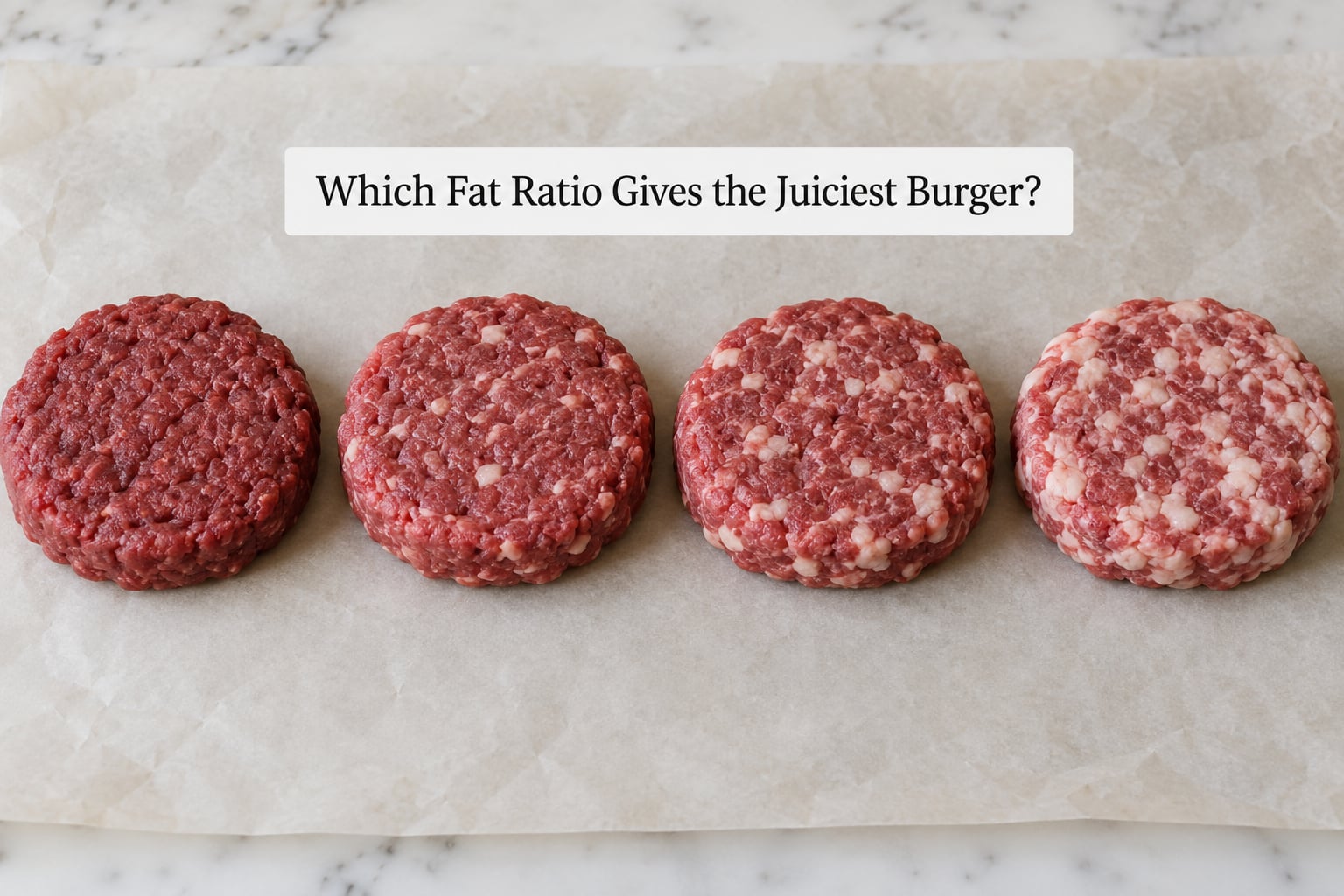
More fat means more juice inside the patty, up to a point. Past roughly 25% fat the patty starts giving the excess straight to the grill, and the burger tastes of rendered fat rather than beef.
| Ratio | Lean / Fat | Juiciness | Shrinkage | Best for |
|---|---|---|---|---|
| 90/10 | 90% lean, 10% fat | Dry to average | Minimal | Thin seared patties, burgers where you want the lean flavor |
| 85/15 | 85% lean, 15% fat | Moderate | Low | Everyday patties for people who dislike a greasy finish |
| 80/20 | 80% lean, 20% fat | Juicy | Moderate | The all-purpose choice: grill, cast iron, sheet pan |
| 75/25 | 75% lean, 25% fat | Very juicy | Noticeable | Smashed burgers and low-and-slow cooking where crust matters |
| 70/30 | 70% lean, 30% fat | Rich, greasy | Heavy | Meatloaf, sliders, dishes where sauce hides grease |
Home cooks on grilling forums converge on the same number. The most common advice is that anything leaner than 80/20 is not worth the money, and that 70/30 is fine for meatloaf but too greasy for a plain patty.
80/20 vs. 85/15 vs. 90/10: Which Ratio Should You Buy?
Buy 80/20 for the everyday burger. It handles more cooking methods than anything else, and it is the hardest to ruin.
Buy 85/15 when you want a slightly leaner patty that still eats juicy. It is a small step, but people who find 20% fat too rich tend to land here and stay happy. The tradeoff is a patty that holds a bit tighter and loses a little of the basting effect.
Buy 90/10 for thin patties cooked hot and fast. With a hard sear and a short cook, a lean blend develops crust fast and does not shrink much. Cooked through slowly, it is the blend most often described in forums as dry and crumbly.
Going leaner than 90/10 makes the problem worse. Muscle fibers tighten as they cook and squeeze out what little moisture they have left, and there is no fat left to baste the interior. A 93/7 patty usually needs help: a tablespoon or two of sauce on the bun, a softer topping, or a shorter cook over indirect heat.
Going fattier than 80/20 has its own failure mode. The patty shrinks, spreads on the grill, and drips fat, which is what causes flare-ups. It is not dangerous, but it takes over the cook and leaves you scrubbing the grate.
How Fat Ratio Affects Texture, Flavor, and Shrinkage
Fat renders as the patty cooks, melting at a lower temperature than the muscle around it. That rendered fat bastes the meat from the inside and collects in the burger when you cut into it. Take it away and the interior cooks dry, even with a hard sear on the outside.
Fat carries more of the beef flavor than lean muscle does, which is why experienced cooks rarely go leaner than 20% fat for a plain grilled patty. That same fat melts connective tissue and collagen in cheaper cuts like chuck and short plate, so a good 80/20 burger tastes beefier than a pricier lean sirloin blend.
Shrinkage tracks fat almost line for line. A 70/30 patty can lose a quarter of its raw weight on the grill, and a 90/10 patty barely loses any. That is not automatically a bad trade, but a lean patty has less to replace what it lost.
Too much fat has one more consequence: the patty spreads. A loose 75/25 or 70/30 burger will go thin and wide unless you chill the meat well and let it rest before it hits the grill.
Which Ratio Works Best for Different Cooking Methods?
The cooking method changes which ratio is best, because the method sets how much fat renders and how fast.
| Method | Best ratio | Why |
|---|---|---|
| Thin smash on a griddle | 80/20 or 75/25 | Fast high-heat cook renders some fat and builds a lacy crust; fatty hobbyist grinds go higher still |
| Cast iron or heavy skillet | 80/20 | High fat, low smoke; the hard sear needs fat to prevent sticking |
| Open grill over charcoal | 85/15 or 80/20 | Charcoal burns off excess fat, so a slightly leaner blend avoids a fire show |
| Sheet pan in the oven | 80/20 | Slow even cooking; 20% fat keeps the interior from tightening up |
| Stuffed or bacon-wrapped | 85/15 | The filling already adds fat, so a leaner base keeps it from going slick |
| Frozen pre-formed patties | 80/20 | Freezing and thawing costs moisture; more fat is the buffer |
To stop a lean blend from drying out, cook it gentler for a little longer and finish it with a topping. A 90/10 patty on indirect heat for a few extra minutes, then finished under the broiler or with a lid on, behaves far better than one seared hard straight through.
How to Choose the Best Ground Beef at the Store
Ask for the ratio first. Everything else is secondary, and a stated ratio you trust beats a printed label on a foam tray.
Know your cuts. Ground chuck usually lands near 80/20 on its own and brings the most flavor. Ground round is lean, often around 85/15 to 90/10, and it needs fat added. Sirloin sits in between. Short plate and brisket trim are the classic fat sources for a custom blend.
Be careful with pre-ground packages. A “80% lean” tray is a blended product, and the same ratio from two brands can cook differently because of grind size. A coarse grind from a butcher holds more juice than a fine grind, because the fat pieces stay intact longer.
Buy in small quantities if you are experimenting. Grind freshness matters more than most shoppers think, and a pound of today’s grind beats a freezer-bought tray every time.
How to Adjust Fat Ratio for Burgers at Home
You do not need a special blend to hit a target. You need lean ground beef and rendered beef fat, sometimes sold as beef suet, from the same butcher.
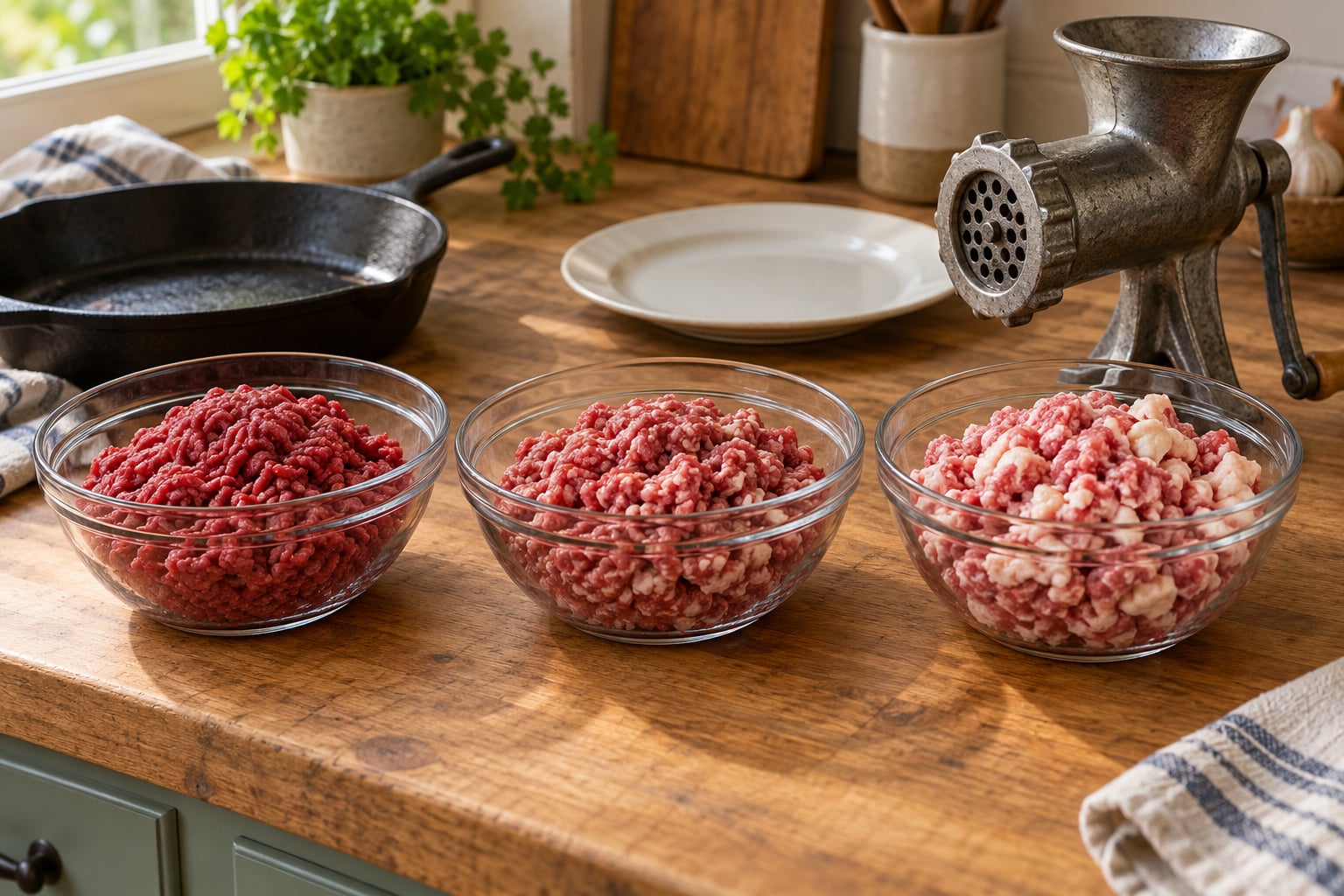
Mixing two lean meats is the gentler option. Equal parts 90/10 and 85/15 give you about 87.5/12.5. Triple parts 90/10 to one part 85/15 gets you close to 89/11. Slowly nudge that up with pure fat only when you need a jump.
For a five-pound batch, this is the arithmetic. Starting from 90/10 lean, add 8.5 ounces of pure beef fat to 4 pounds 7 ounces of lean meat and you land at about 80/20. Use 4.5 ounces of fat with 4 pounds 8 ounces of lean and you land near 85/15. Starting from 93/7 instead, it takes about 11 ounces of pure fat in a five-pound batch to reach 80/20.
Grind it twice. First pass mixes the fat through, second pass distributes it evenly. If you only own a food processor, pulse in short bursts and keep everything cold, or the fat smears instead of blending.
A grind closer to 70/30 is worth trying if you like a rich, almost bacon-forward burger. That is the range smash-burger hobbyists talk about, and it only works with a very hard sear and a very short cook.
How to Keep Burgers Juicy Without Excess Grease
Technique can rescue a slightly off ratio, but it cannot rescue 93/7. Start with the meat, then work on the rest.
Handle the meat gently. Overworking it warms the fat and squeezes out the juice before it ever hits the grill. Mix in seasoning with a light hand and form patties with a few quick, firm presses.
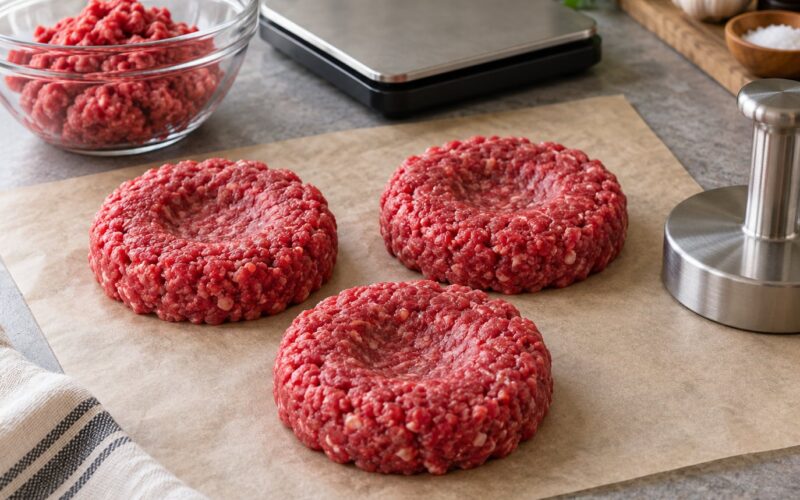
Make a slight dimple in the center of each patty. It cooks more evenly and stops the middle from pulling away from the edges into a donut shape.
Chill before you cook. Thirty minutes in the fridge firms the fat so the patty holds its shape, which also means less fat smearing onto the grate.
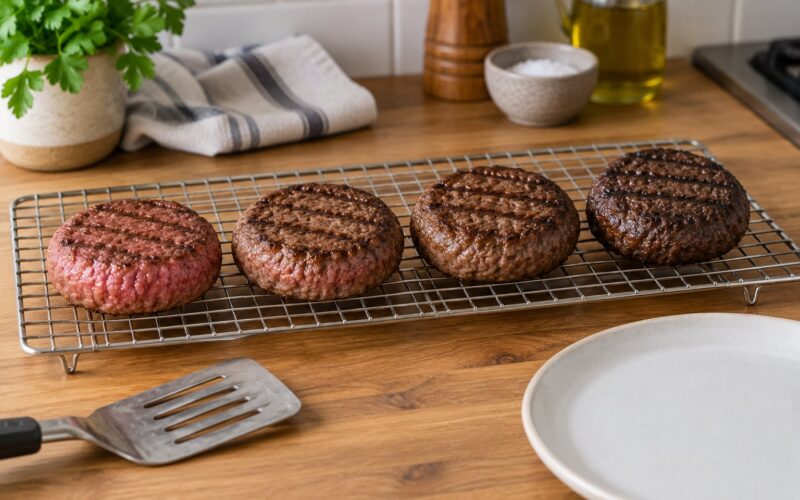
Season after forming, not before, and use a two-zone fire. Sear hard on one side, then move the patty to a cooler zone to finish. Flip once, when the surface is set, and stop pressing it.
Lean patties need a little help with moisture. A raw egg per pound of beef is the most commonly cited shrinkage fix on cooking forums, and a spoonful of Worcestershire or soy in the mix works too. Add cheese or sauce after cooking rather than during, so the patty keeps its own juice.
Cook ground beef to 160°F (71°C) internal temperature and use a thermometer. That is the USDA safe minimum for ground meat, and it is the one number here that is not negotiable.
Frequently Asked Questions
Is 80/20 ground beef the best for burgers?
For most home cooks, yes. Eighty percent lean and twenty percent fat stays juicy in the middle, browns well, holds together on the grill and shrinks less than a fattier blend. It also handles more cooking methods than any other ratio, from a cast iron skillet to a sheet pan. Leaner blends are drier, and blends above twenty-five percent fat turn greasy and spread on the grate.
What is the best ground beef fat ratio for smash burgers?
Eighty-twenty is the safe pick, and 75/25 gives you more. A smash patty cooks in under two minutes on a hard sear, so you want enough fat to build a lacy crust without the burger puddle on the griddle. Hobbyists go higher, into a 60/40 beef-to-fat grind, and get excellent results with very high heat and a very short cook. If you are starting out, stay at 80/20.
Is 90/10 ground beef better for grilling?
It is not better for a thick grilled patty. Ninety-ten has the least shrinkage and the fastest crust development, so it works well for thin patties seared hot and fast, and for people who want the flavor of lean meat. Cooked through over a longer grill, it is the blend most often described as dry and tight. If you buy it, cook it gently, finish it with a topping, and do not cook it past the safe minimum.
What fat ratio is healthiest for ground beef burgers?
A 90/10 or 93/7 blend gives you the least fat per serving, and that is the straightforward answer. Both still meet the definition of lean beef. Rather than chasing the leanest number, most cooks get more satisfaction from an 80/20 patty eaten with a vegetable side than from a dry patty with fries. If you go lean, add moisture with sauce and keep the cook short. Your own needs are worth a word with a doctor or a registered dietitian.
Can I make an 80/20 burger blend at home?
Yes, and it is easier than most people expect. Take 4 pounds 7 ounces of 90/10 lean ground beef and add 8.5 ounces of rendered beef fat, sometimes sold as suet. That gives you about eighty percent lean. Starting from 93/7, you need roughly 11 ounces of pure fat in a five-pound batch. Run the mixture through the grinder twice, once to combine and once to distribute the fat evenly, and keep the meat cold throughout.
How do I keep lean ground beef burgers from drying out?
You cannot add back what the meat never had, but technique buys you a lot. Cook lean blends over indirect heat for a little longer and finish them under a lid, rather than searing hard straight through. Add a raw egg or a spoonful of Worcestershire per pound of meat, a common shrinkage fix on cooking forums. Use a dimple in the center of the patty, avoid overworking the beef, and always pull the patty at 160°F internal temperature.
Conclusion
Buy 80/20 for your next cookout and stop overthinking it. Ask the meat counter for the ratio of the batch they ground today, form the patties gently, give them a dimple, and pull them at 160°F. Everything else on the counter is a variation on the same meal.