Chicken wings are done when the thickest piece hits 165°F (74°C), the USDA safe minimum, and ideally lands somewhere between 175°F and 190°F (79-88°C) where the collagen softens and the fat under the skin renders out. A thermometer settles it. Color, juices and texture confirm what the number already told you, but they never replace it. Here is the order I work in, and the mistakes behind most batches that came out chewy or dry.
The whole check takes about 30 seconds per batch. It works the same whether the wings came out of a fryer, the oven, an air fryer, a grill or a smoker.
Table of Contents
- What You Need
- Step-by-Step: How to Tell When Chicken Wings Are Done
- 1. Check the Thickest Part with a Thermometer
- 2. Read 165°F as the Floor, Not the Target
- 3. Check the Meat, Skin, and Juices
- 4. Confirm Texture, Then Rest Before Serving
- Common Mistakes
- Frequently Asked Questions
- Can I tell chicken wings are done by their color?
- What temperature should chicken wings reach?
- Where should I place the thermometer in a chicken wing?
- How do I know wings are cooked through if they are fried?
- Should I let chicken wings rest after cooking?
- What if the juices from my chicken wings look pink?
- Conclusion
What You Need
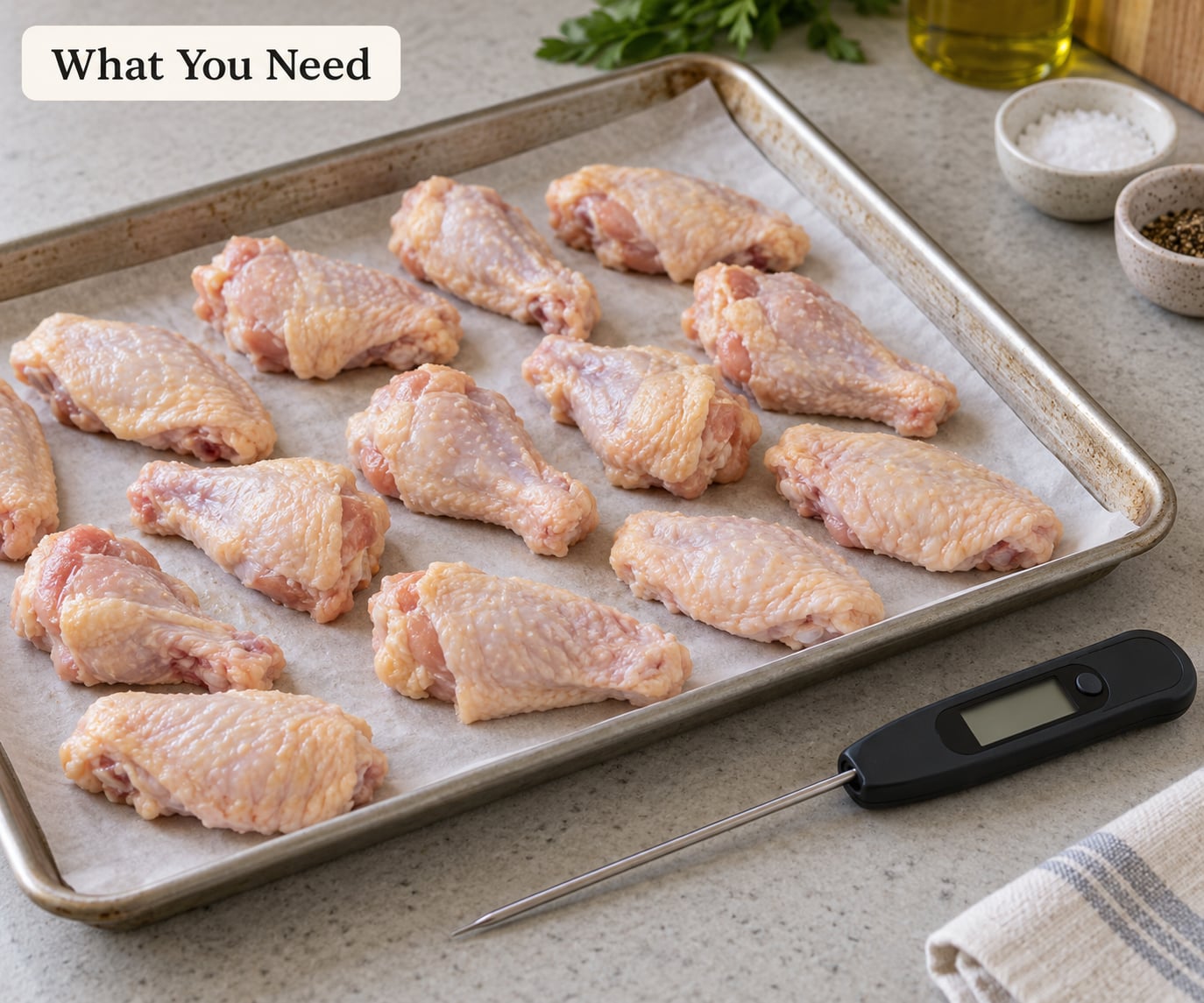
You need very little, and none of it is exotic.
- The wings themselves, patted dry with paper towels. Moisture on the surface steams instead of browns, which slows the skin down and makes doneness harder to read.
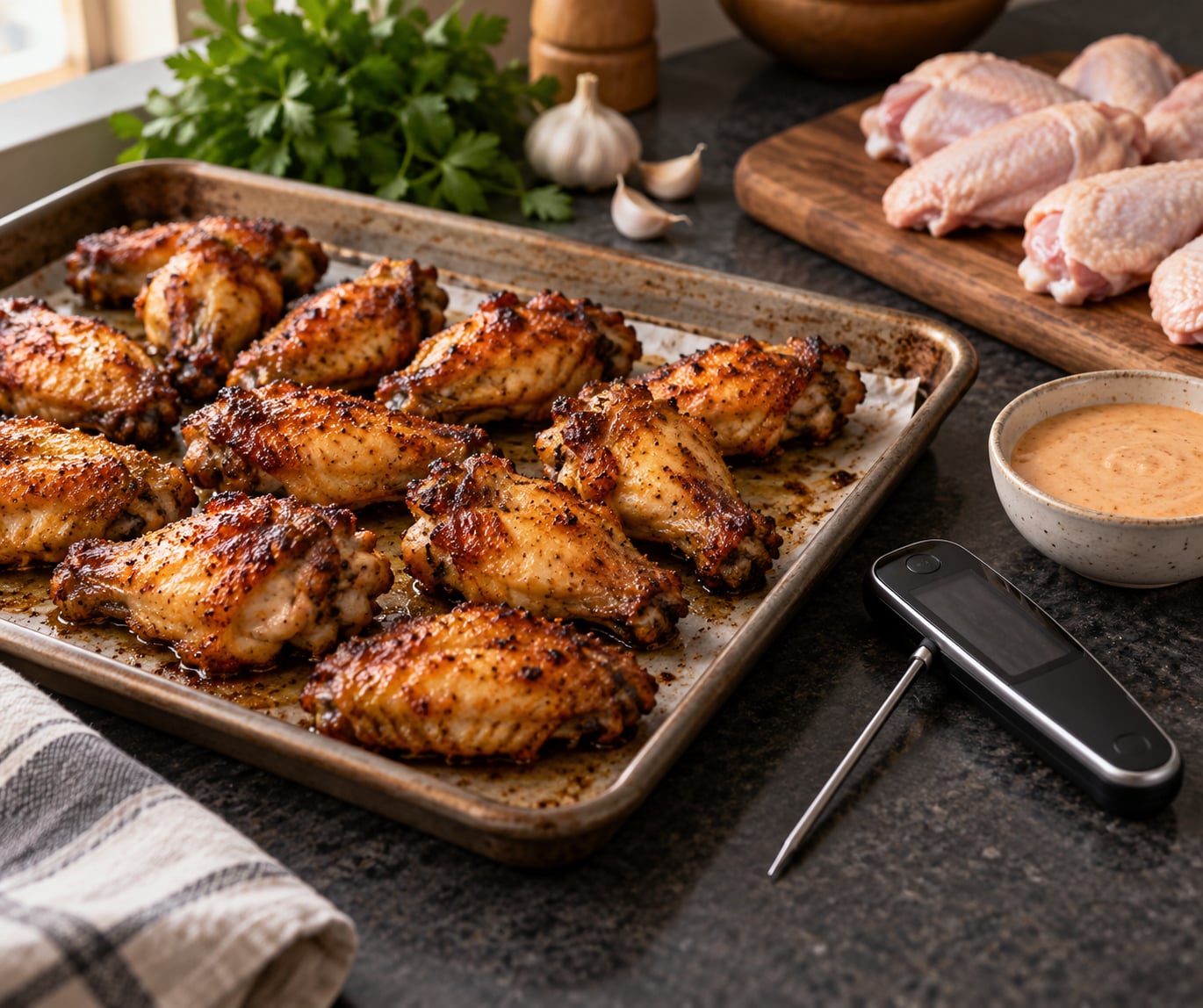
- An instant-read digital thermometer. This is the one tool that is not optional. A cheap stick thermometer with a dial is not precise enough for small cuts, and it is hard to read with wet hands.
- A rimmed baking sheet and a wire rack, so hot fat drips away from the skin instead of pooling under it.
- Tongs for turning, and a clean plate or board for resting.
- Optional but useful: a leave-in probe thermometer if you cook a large batch at once, since it lets you monitor without opening the grill or oven door every minute.
One habit matters more than the equipment: let the wings sit at room temperature for 15 to 20 minutes before they go on the heat. Cold wings cook unevenly, and the outside can crisp long before the drumette is anywhere near done. Patting them dry also lets the skin start crisping immediately.
If you are planning a big game-day batch, cook time and holding temperature matter as much as the doneness check itself. Cooking two hours ahead and holding warm at 140°F is a different problem than telling a wing is done on the grill, and the temperature ladder below covers both.
Step-by-Step: How to Tell When Chicken Wings Are Done
1. Check the Thickest Part with a Thermometer
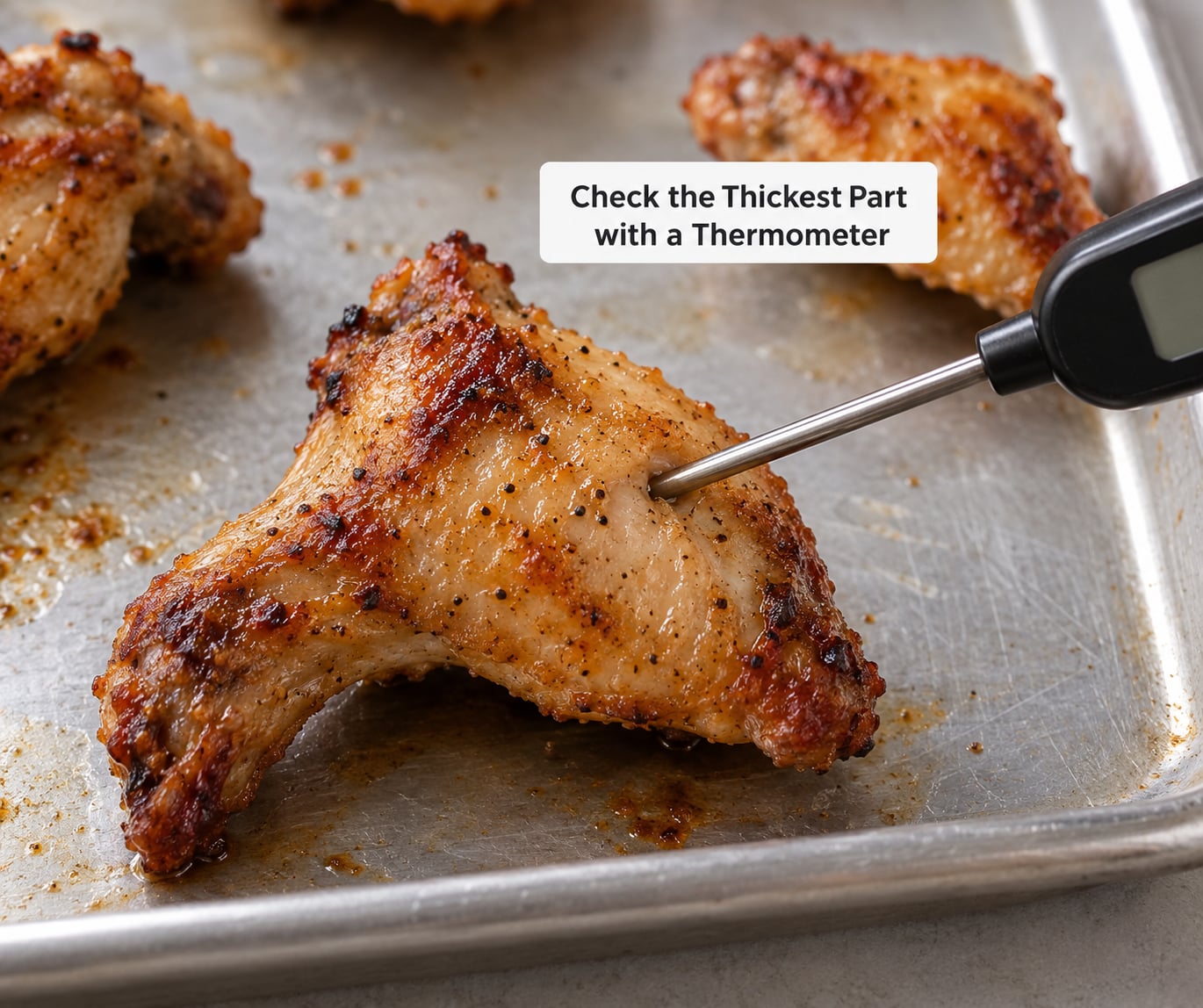
A wing has three sections that cook at very different speeds. The flat is thin and reaches temperature first. The tip renders fat almost immediately. The drumette is thick, bone-in the middle, and heats slowest. Always probe the drumette, or at least the meaty end of the flat, and check it last.
Push the probe into the thickest meat, aiming straight in from the exposed end rather than stabbing through the top. Keep the tip buried in meat, not resting against bone or skin. Bone conducts heat and can pull a reading 10°F or more above the actual meat temperature, which is exactly how you get a raw-tasting wing that reads “done.”
If the tip hits bone, pull it out and re-probe a half inch over. On a wing this small there is usually somewhere else to get a clean reading.
2. Read 165°F as the Floor, Not the Target
The USDA minimum internal temperature for poultry is 165°F (74°C), measured at the thickest part. That is the safety line, and it is non-negotiable.
It is also, for wings, where most disappointing batches stop. Chicken wings are dark meat loaded with connective tissue, and below roughly 175°F that tissue has not broken down enough to soften. Cooks on r/Cooking put it plainly: get the internal temp over 175°F and the wings stop being stringy. Home cooks hunting for one number for a game-day batch mostly land in the 175°F to 190°F range.
| Internal temp | Celsius | What it means | Recommended? |
|---|---|---|---|
| 140°F | 60°C | Holding temperature only, for wings cooked ahead and kept warm | Not for eating straight off the heat |
| 160-165°F | 71-74°C | USDA minimum. Safe, but connective tissue is still tight | Safe, rarely ideal |
| 175-185°F | 79-85°C | Collagen softening, fat rendering, meat pulling from the bone | Yes, the sweet spot |
| 190-200°F | 88-93°C | Very tender, well rendered. Past this the meat dries out fast | Fine for a few wings, watch the clock |
Below 165°F, put the wings back on the heat. Give them another 2 to 4 minutes and test again, choosing a different wing rather than retesting the same spot.
Pull temperature varies by method, because the cooking surface sets the top-end temperature and how hard the skin works:
| Method | Cook temp | Rough time | Pull at |
|---|---|---|---|
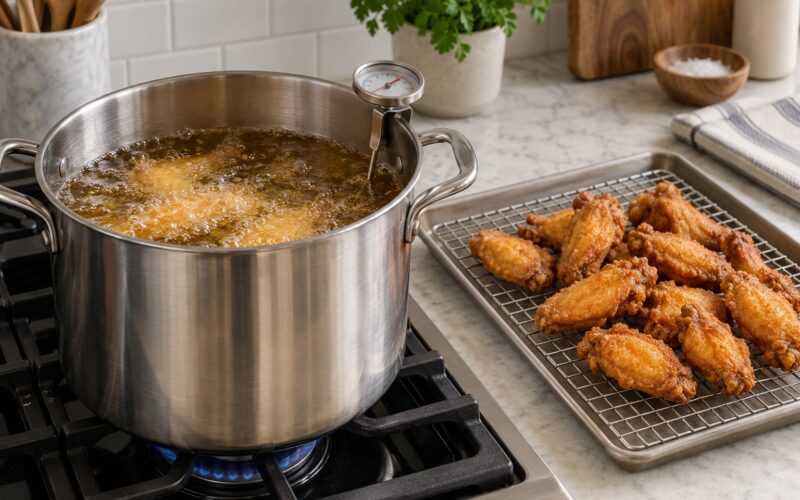
| Deep fry | 350-375°F oil | 10-14 minutes | 175-180°F |
| Oven baked | 400-425°F | 35-50 minutes | 180-190°F |
| Air fryer | 380-390°F | 22-30 minutes | 175-185°F |
| Grill (two-zone) | 425°F grate, indirect first | 20-30 minutes | 180-190°F |
| Smoker, then render | 185°F smoke, finish at 250-300°F | 1.5-3 hours total | 180-190°F |
Those times are ranges because wing size varies so much between packages. A batch of jumbo flats can outrun small drumettes by ten minutes or more. Treat time as a hint and the thermometer as the answer.
If you hold wings for a party, cook them to 175°F and above, then keep them at 140°F or hotter in a low oven. Anything cooler invites bacteria back into the picture.
3. Check the Meat, Skin, and Juices
Once the thermometer confirms the number, use your eyes and hands. Four things are worth looking for:
- Clear juices. Cut into the thickest part or push the joint aside with a spoon. The juices run clear or faintly cloudy. Pink is a different question, covered below.
- Opaque white meat inside. No translucent, gelatinous or glassy patches in the drumette. Raw-looking spots in a wing almost always mean undercooked meat near the joint.
- Skin that has rendered. The skin shrinks, tightens and crisps, and you can often see fat bubbling under it during the last minutes. If the skin still looks pale and slack, the fat under it has not rendered yet, no matter what the thermometer says about the meat.
- Meat retracting from the bone. Fully cooked wing meat pulls back from the ends of the bones and leaves a gap you can slide a spoon into. Sticking to the bone at 165°F is normal. Sticking at 190°F means you pulled too early.
Color alone is not a doneness test. Smoked wings pick up a pink or red cast from smoke, and some marinades and sauces do the same. Both can tint cooked meat without any risk, and neither can prove cooked meat is safe.
4. Confirm Texture, Then Rest Before Serving
Pick up a drumette with tongs and give it a gentle twist at the joint. If the joint gives and the meat separates from the bone end with almost no resistance, the connective tissue has converted to gelatin and the wing is done. This twist test is the most reliable no-thermometer check there is, and it costs nothing.
Then press the meat lightly. Done wing meat springs back and feels tender, not rubbery. Springy is fine. Bouncy and tough means you pulled it short of 175°F.
Rest the wings 3 to 5 minutes before saucing or serving. During that window, residual heat keeps cooking the interior and the temperature climbs another 2 to 4°F. That carryover cooking is free tenderness, and it is why pulling at 175°F usually lands at 180°F by the time the plate arrives.
Do not rest them long enough to lose the crisp skin. Five minutes, then sauce and serve.
Common Mistakes
Almost every disappointing batch traces back to one of these.
| What went wrong | Why it happened | The fix |
|---|---|---|
| Wings read 165°F but are still chewy | Safe, not done. Connective tissue has not broken down | Keep going to 175-180°F and retest |
| Reading higher than reality | Probe tip touched bone or skin | Re-probe in the thickest meat, tip fully buried |
| Raw inside, dark outside | Crowded pan or a very hot oven set the skin ahead of the meat | Give each wing space on the rack, drop the heat 25°F |
| Flats dry out before drumettes soften | Thin pieces hit temperature first and keep cooking | Pull flats early and hold them back, check the drumette last |
| Skin soft and pale | Wings sat wet, or were sauced too early | Pat dry before cooking, sauce in the last 2 minutes |
| Uneven batch | Wings went on straight from the fridge at mixed sizes | Warm them 20 minutes, and sort by size if the spread is wide |
Two habits fix most of that list at once. Give the wings room on the rack, because a crowded pan drops the temperature and traps steam. And check the drumette last every single time, no matter how obviously done the flats look.
The classic render-then-crisp pattern does the same work on a grill or smoker. Cook low and slow until the meat is tender, as r/Traeger cooks do at 185°F for a couple of hours, then raise the heat hard to render the skin. r/biggreenegg users land on a similar shape, going indirect at 300°F for two hours and then ramping to 350°F. Same principle, different numbers.
One more mistake worth naming: cutting into every wing to check it. You open the batch up to dry it out and lose the skin. Test two wings, one flat and one drumette, and trust the rest of the batch if they are similar in size.
Frequently Asked Questions
Can I tell chicken wings are done by their color?
Not reliably. Brown skin can sit on undercooked meat, and pale skin does not mean raw, especially if the wings were brined, marinated or smoked. Smoke and acid marinades both tint cooked meat pink. Use color as a supporting cue that fat has rendered and the skin has crisped, then confirm with a thermometer at 165°F minimum and preferably 175-190°F.
What temperature should chicken wings reach?
165°F (74°C) is the USDA safe minimum for poultry and the point below which you should not eat them. For the best texture, keep cooking to 175-185°F (79-85°C), where collagen softens and the meat pulls cleanly from the bone. Past 190°F the wings still taste good but start losing moisture fast.
Where should I place the thermometer in a chicken wing?
Push the tip into the thickest meaty part, which on most wings is the drumette, aiming in from the exposed end. Keep the probe buried in meat and never let it rest against bone or skin, since bone conducts heat and can read 10°F or more high. If the tip hits bone, pull out and re-probe half an inch to the side.
How do I know wings are cooked through if they are fried?
Fry at 350-375°F for about 10 to 14 minutes, then check a drumette rather than a flat, since flats finish first. Pull at 175-180°F. Because the oil temperature is hard to judge by eye, the thermometer matters more here than with any other method. A wing that floats is usually dense enough to be cooked, but float is not a safety test.
Should I let chicken wings rest after cooking?
Yes, 3 to 5 minutes. The interior keeps cooking during the rest and the temperature climbs another 2 to 4°F, which softens the meat a little more. Rest also firms the skin so it does not go soggy under the sauce. If you need to hold wings longer than that, keep them at 140°F or hotter.
What if the juices from my chicken wings look pink?
Check the temperature before you decide. Pink near the joint, next to the bone, on an otherwise fully cooked wing is usually myoglobin and smoke rather than undercooking. If the reading is at or above 165°F and the meat is opaque with no translucent patches, it is safe to eat. If the reading is low, put the wings back on the heat and check again.
Conclusion
Start with the thickest piece, because that is the only check that cannot lie. Probe the drumette, keep the tip clear of bone, and treat 165°F as the floor you never go under. Keep cooking to 175-185°F for meat that pulls cleanly off the bone, and you are done. Everything after that, clear juices, opaque white meat, rendered fat and a joint that gives on the twist, is confirmation that the reading was right.