The fastest way to stop flare-ups is to control where the fat goes: trim the fat cap, keep a cool zone open on one side of the grill, and never spray water on a flame. Everything else is detail.
A flare-up happens when liquid fat drips off the patty, hits a burner or a glowing coal, vaporizes instantly and ignites. It is normal. The goal is management, not elimination.
This guide covers both fuel types, because the fix on a gas grill is not the fix on charcoal. It takes about 15 minutes of prep and about four minutes a side once the patties are down.
Table of Contents
- What You Need
- Step-by-Step: How to Grill Burgers Without Flare Ups
- Set Up a Two-Zone Fire
- Prepare Lean, Dry Burgers
- Control Oil, Seasoning, and Heat
- Flip and Finish the Burgers Without Setting Off More Flare-Ups
- Gas Grill vs Charcoal Grill: What Changes
- Common Mistakes and Quick Fixes
- Flames every single time you flip
- Burgers charred outside and raw in the middle
- Flames before the burgers even go down
- Flare-ups worse after you added sauce
- Grease fire in the drip tray
- Cooking a full basket for a crowd
- Frequently Asked Questions
- Can you use a water spray bottle on a grill flare-up?
- Should I close the lid to stop a grill flare-up?
- Why do burgers cause so many flare-ups?
- How long should I let charcoal burn before grilling burgers?
- Are flare-ups good for flavor?
- What is the ground beef fat ratio that causes the fewest flare-ups?
- Conclusion
What You Need
Most of the equipment you already own. The list is short because flare-up control is technique, not gear.
- A grill with a lid and adjustable heat. Gas burners that step down, or adjustable charcoal vents. A lid is what you close when a flare-up gets too tall.
- Long-handled tongs, about 16 inches. Short tongs put your wrist near the flame. Long tongs also move patties to the cool zone in one fast motion.
- An instant-read thermometer. Flare-up control makes it tempting to move burgers around constantly. A thermometer removes the guessing.
- Paper towels and a high smoke point oil. Avocado or canola oil. Olive oil burns off well below grill temperature and turns bitter.
- A grill brush and an empty drip tray. A tray full of last cook’s grease is a grease fire waiting for a hot day.
- Heatproof gloves, a squeeze bottle and a lid or extinguisher close by. For putting out a flare-up, never a water spray bottle.
Step-by-Step: How to Grill Burgers Without Flare Ups
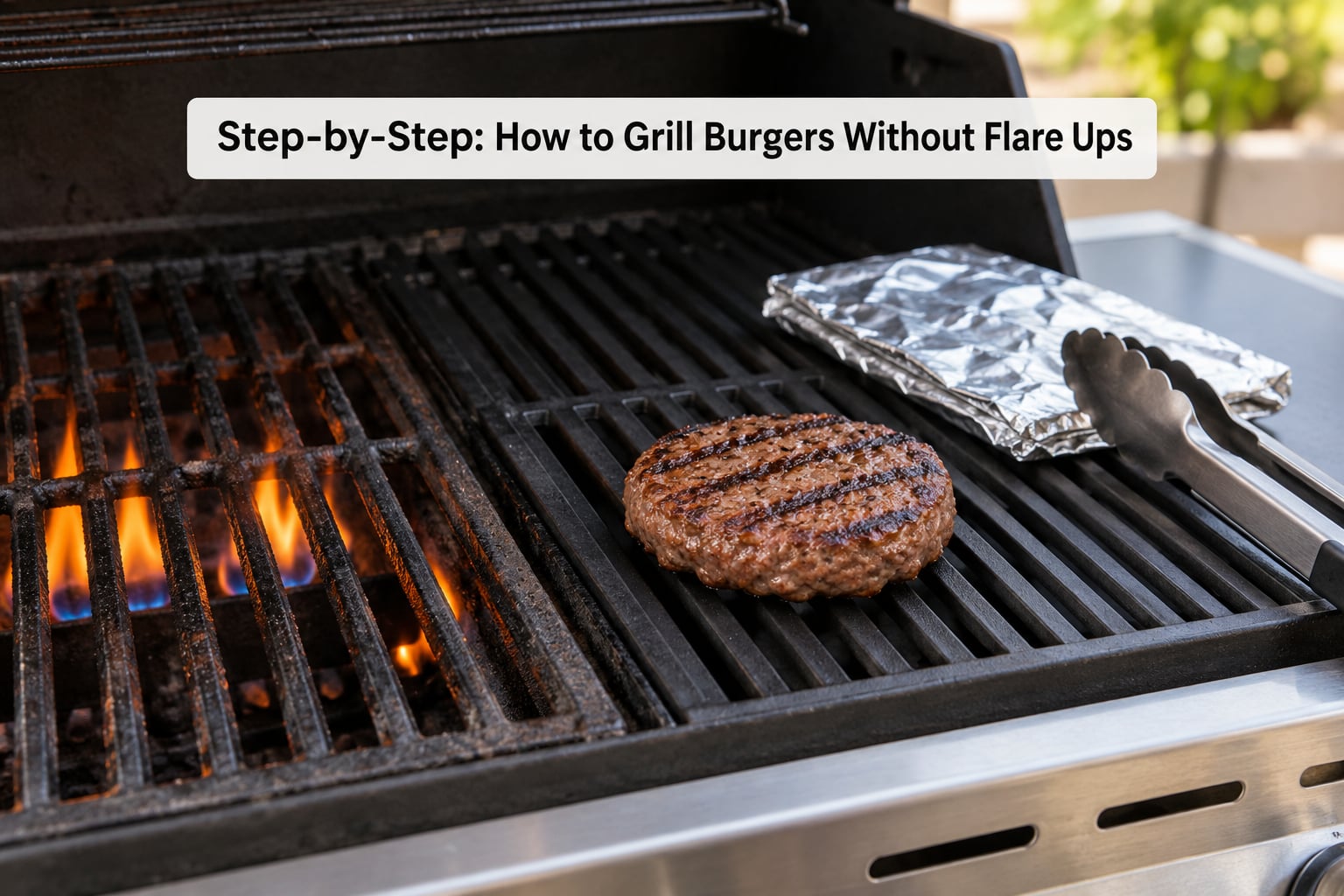
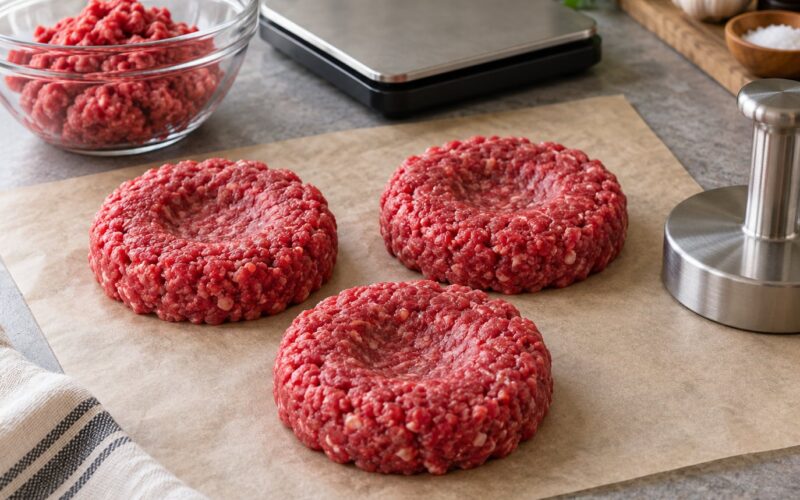
These are the raw patties sitting on the cool side of a two-zone fire, away from the burners. Everything that follows in this section is built around that one move.
Set Up a Two-Zone Fire
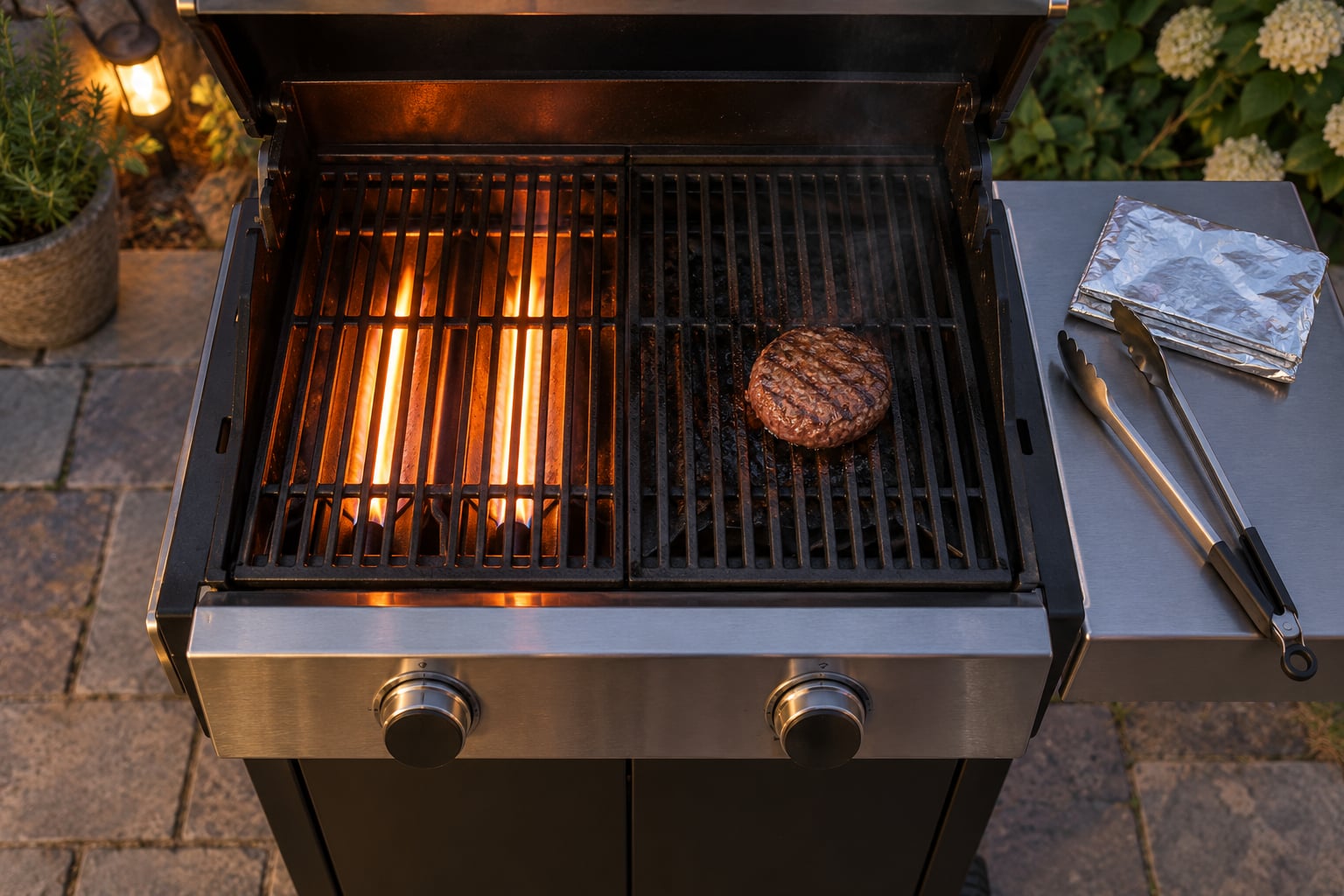
Burners or coals on one side, empty grate on the other. That empty 30% of the cooking surface is the single most useful thing you can set up before the burgers go down.
On a gas grill, light one burner on high and leave the others off. On charcoal, push the lit coals to one edge of the kettle and let them burn down there. A rack of cold, clean grate sits beside the fire.
The point is simple. When fat drips, it lands on cold grate instead of open flame. If a patty still catches, you slide it two inches toward the cool zone instead of wrestling it in place.
Give the grill room. Six 4-ounce patties on a full-size grate is a comfortable load; eight is where the cool zone disappears and you have nowhere to move anything.
Prepare Lean, Dry Burgers
Flare-up fuel is fat, and a standard 80/20 ground beef blend carries plenty of it. That blend tastes great, and a trim takes care of most of the problem.
Use 80/20 for flavor and accept a little flare-up risk, or go to 85/15 or leaner if your grill is temperamental or your guest list is large. Restaurants do the opposite: loose 80/20 patties cooked hard and fast on a flat top, then the extras toasted separately.
Trim the fat cap down to about 1/4 inch, or trim it off entirely. The cap is the fat that renders first and drips first. Slice between the meat and the fat rather than shaving from the meat side, so you keep the patty intact.
Pat every surface dry with paper towels. A wet surface holds dripping fat against the meat instead of letting it fall away clean.
Do not press the patties. Pressing squeezes fat and juice out of the meat in one go and pours it straight onto the fire. This is the most common flare-up trigger people report, and it is entirely avoidable. Just let the heat do the work.
Control Oil, Seasoning, and Heat
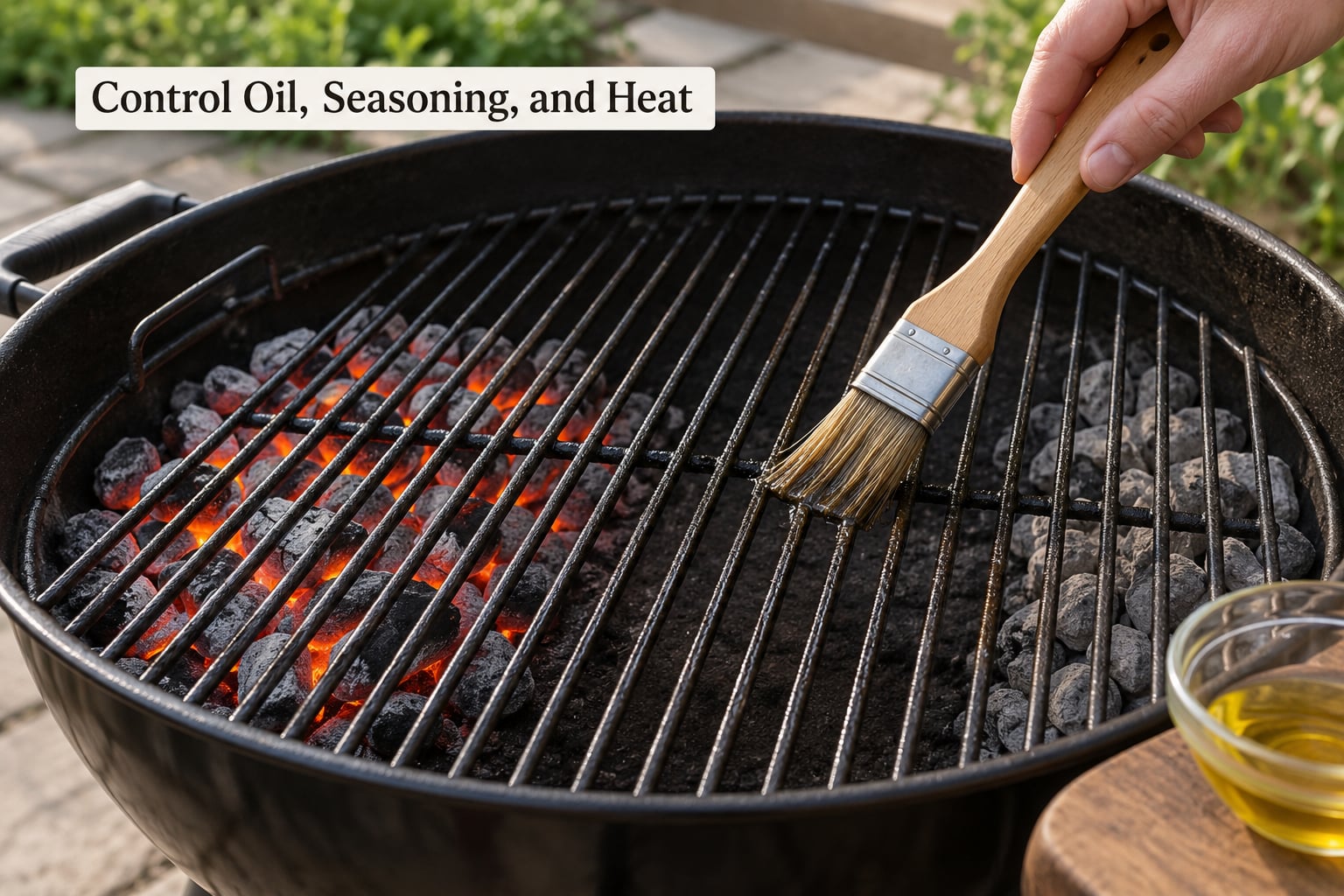
Lightly oil the grate, not the burger. A dry grate sticks and tears the crust; a dripping-oiled patty drips oil into the fire. Rub a little high smoke point oil on the grate with a paper towel, then wipe the patties dry instead.
Season before the meat hits the grate. Salt and pepper added mid-cook sit on the surface and fall through the grates onto the fire.
Scrape the grates while the grill is still warm, before you turn the heat up. Caked-on carbon holds grease that ignites later, when you have forgotten about it.
Empty the drip tray now, not later. Grease sitting in the tray under a hot burner can catch without you touching anything.
Then manage heat instead of fighting fire. On gas, turn the lit burner from high to medium and leave the lid open. On charcoal, close the bottom vent partway rather than all the way; less air means less flame.
Flip and Finish the Burgers Without Setting Off More Flare-Ups
Flip once, with the tongs, without pressing. Many grillers use the 5-6-7 rule as a starting rhythm: 5 minutes on the first side, flip, 6 minutes on the second, then 7 minutes total in the cool zone with the lid down if you want it well done.
Treat that as a rough guide rather than a rule. Thin patties cook in 3 to 4 minutes a side, thick ones take 5 to 6. Use your judgment and check early with the thermometer.
Watch three cues: the surface stops bleeding red juice, the edges firm and brown, and the patty releases from the grate without scraping. Two of those three usually mean it is time.
The USDA minimum safe internal temperature for ground beef is 160F. Most people pull burgers at 125F to 130F for a medium center, which is a personal risk preference, so use the thermometer and choose your own target.
When a flare-up starts, move in this order:
- Slide the patty. Use long tongs to move it to the cool zone, away from the burner or coals. Do not lift and shift; slide.
- Close the lid. If flames are still tall, shut the lid to cut off the oxygen. Leave it closed for 30 to 60 seconds, then check.
- Trim the remaining fat. Back on the grate, pull off the loose fatty bits before cooking continues.
Never squirt water on a flare-up. Water meets hot grease and flashes to steam, throwing burning fat up toward your face and possibly spreading the fire to the coals below.
How do you tell a flare-up from a grease fire? A flare-up is a brief burst over a single patty that dies when you move the food or cut the oxygen. A grease fire is a sustained flame in the drip tray or along the bottom of the bowl. If it is coming from the tray, turn off the burners, close the lid, and let it smother. If the lid does not put it out in about a minute, move the grill away from anything combustible and call for help.
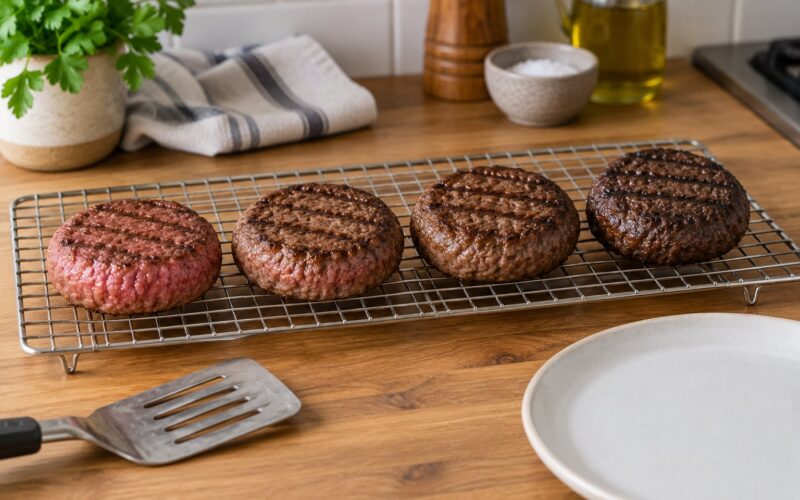
Rest the burgers 3 to 5 minutes after they come off. The rest is what keeps the juice in, and juice in the patty is juice that stays out of the fire.
If you are glazing with a sugary barbecue sauce, wait until the last 30 to 60 seconds. Sugar burns and flashes long before the meat is cooked through.
Gas Grill vs Charcoal Grill: What Changes
The goal is the same on both fuels. The controls are completely different.
On gas, heat control is a dial. Start the burner on high to preheat, drop it to medium for the cook, and park patties over the unlit side. Many Weber-style grills use angled Flavorizer bars above the burners, and those bars do real work catching drips before they reach the flame.
On charcoal, heat control is airflow. The single best charcoal habit comes from cooking forums and it has no equivalent in any blog: light a chimney, no lighter fluid, then wait 30 to 40 minutes until the coals are ash grey with no visible flame.
Cooking over black coals with flames licking up is what causes the sustained flare-ups people complain about. Ash grey coals are clean fuel that radiates heat without spitting fire. When flames do come up, partly close the bottom vent and slide the food over.
Do not push the fire to one side by throwing cold coals on top of hot ones. Relight fresh charcoal on the side, let it catch, then merge it.
One forum complaint worth repeating: foil wrapped around the grate to catch grease can backfire. It holds grease in place for a while and then the grease finds a path to open flame anyway, often producing a bigger flare-up than doing nothing. If you want a physical barrier, a cast iron griddle works properly because the grease stays in the pan and never reaches the fire.
Common Mistakes and Quick Fixes
Most flare-ups trace back to one of these, and most of them are habits rather than bad equipment.
Flames every single time you flip
Something on the meat is adding fuel at the moment it turns. Pull the patty off and trim the loose fat and any fallen toppings off the grate. If you oiled the burgers heavily, that oil was pooling and flashing.
Do not keep flipping a patty to chase flames. One flip, then leave it.
Burgers charred outside and raw in the middle
That is a flare-up, or a moved patty, scorching the outside while the centre cooks. Get them off the direct heat entirely. A closed lid on medium heat, or the cool side of a charcoal grill, finishes them evenly.
A large spatula pressed flat on the patty acts as a heat sink and speeds this up. It is the one time a press helps, but only flat and gentle, never forcing the meat.
Flames before the burgers even go down
You are cooking over raw flame, which means coals are not burnt down or a burner is blasting. Wait for ash grey coals on charcoal. On gas, check that the burner is on medium and not high.
Flare-ups worse after you added sauce
Sugar and molasses ignite at a fraction of the temperature needed to cook the patty. Glaze at the end, thinly, over low heat.
Grease fire in the drip tray
Empty the tray before every cook and line it with foil so you can lift the whole liner out. Keep water in the tray only on a charcoal grill, where the tray sits away from the flame; the water acts as a thermal barrier and steam keeps the grease from sticking to the pan.
Cooking a full basket for a crowd
With eight or more patties the cool zone disappears and you lose your only safe spot. Cook in two rounds instead. First round on medium heat with the lid down for most of the cook, second round over direct heat for a short sear.
Or crowd the grill on purpose and stop pretending. If space is the problem, cook burgers in batches while the first batch rests, and keep raw patties cold on a tray, not out on the counter.
Frequently Asked Questions
Can you use a water spray bottle on a grill flare-up?
No. Water on a grease fire flashes to steam instantly, throwing burning fat upward toward your face and sometimes spreading the fire to the coals underneath the grates. Close the lid to cut off oxygen, move the patty to the cool zone with long tongs, or turn off the burners. If the flame is coming from the drip tray itself, shut everything down, close the lid and let it smother.
Should I close the lid to stop a grill flare-up?
Yes, closing the lid is the fastest safe move when flames are too tall. It cuts off the oxygen feeding the fire and drops the temperature inside. Give it 30 to 60 seconds before opening. On a gas grill you can also slide the patties to the unlit side or turn the burner down to medium. On charcoal, partly closing the bottom vent does the same job more slowly.
Why do burgers cause so many flare-ups?
Because beef is fatty and the fat renders as it cooks. Liquid fat drips through the grates, hits a hot burner or glowing coal, vaporizes and ignites instantly. An 80/20 blend, a thick untrimmed fat cap, and pressing the patty all push more fat into the fire than it can burn off. Trim the cap to a quarter inch, keep the meat dry, and stop pressing.
How long should I let charcoal burn before grilling burgers?
Wait 30 to 40 minutes after lighting, until the coals are ash grey with no visible flame. Black coals with active flames on top spit grease and fuel into the food and produce sustained flare-ups. A chimney starter gets you there faster and without lighter fluid. Skip lighter fluid entirely, since the fumes coat the burgers and the residue keeps burning.
Are flare-ups good for flavor?
A one-second flare is fine and adds a little char. A sustained flare is not. It deposits bitter black creosote on the surface and can scorch the outside while the centre stays raw. Flavor comes from Maillard browning on the meat surface, not from burning grease, so you get a better result and a safer grill by managing the flame rather than chasing it.
What is the ground beef fat ratio that causes the fewest flare-ups?
Leaner blends flare less. An 85/15 or leaner blend drips noticeably less fat than 80/20, so flare-ups become occasional rather than constant. Use 80/20 when flavor matters most and you have a good two-zone setup, and trim the fat cap either way. Restaurants go the other way and cook loose 80/20 patties hard and fast on a flat top.
Conclusion
Start with the fire, not the meat. Light or preheat the grill, push the heat to one side, and leave at least 30% of the grate empty before anything else happens.
Trim the fat cap to a quarter inch, pat the patties dry, oil the grate instead of the burgers, and flip once without pressing. Those four habits remove most flare-ups before they start, and the rest you manage with the lid and the cool zone.