A pub burger at home comes down to four things: a properly fatty beef blend, a patty shaped with a light hand, a very hot cooking surface, and a bun toasted in the same pan as the meat. Get those right and you get a deeply browned crust, a juicy middle and a stack that stays intact to the last bite, whether you are using a grill, a griddle or a single cast iron skillet.
This guide walks through exactly how to build the perfect pub burger at home, from choosing the beef to the order of the stack. It takes about 30 minutes start to finish, and the active work is closer to 15. No special equipment, no break-fast-anywhere ingredient list.
Table of Contents
- What You Need
- Step-by-Step: Building Your Pub Burger
- 1. Choose the Right Beef Blend
- 2. Form the Patty Without Overworking It
- 3. Season the Burger Right Before Cooking
- 4. Create a Hot, Crisp Cooking Surface
- 5. Cook the Patty to the Desired Doneness
- 6. Melt the Cheese and Toast the Bun
- 7. Build the Burger in the Right Order
- 8. Let It Rest and Serve Immediately
- Common Mistakes and How to Fix Them
- Tips for a Better Pub Burger
- Frequently Asked Questions
- Should I put butter on a burger bun?
- How do I stop a burger patty falling apart?
- What is the 5 6 7 rule for burgers?
- What beef blend is best for a pub burger?
- How long do you cook a burger patty on a grill?
- Can I make a pub burger without a grill?
- Conclusion
What You Need
The ingredient list is short because a pub burger is deliberately simple. Everything that makes it taste like pub food comes from the beef, the heat and the bun, not from a complicated stack.
- Ground beef, 600g for four burgers. Aim for an 80/20 blend. Chuck carries the flavour and fat, brisket adds a little chew. Ask your butcher for a chuck and brisket mix, or buy regular supermarket mince and check the label.
- Buns, 4. Brioche or potato buns work well. Brioche is richer and holds a saucy burger; potato buns are sturdier and stand up to wetter toppings. Measure the bun width against your patty before you buy.
- Cheese, 4 slices. White cheddar for sharpness, American or processed cheese for a clean melt, provolone for a mild melt that drapes.
- Butter and one garlic clove. For the bun, grated or soft so it spreads easily.
- Coarse salt and cracked black pepper. Nothing fancy. This is the whole seasoning list.
- Toppings your table actually wants. Pickled red onion, shredded lettuce, thick tomato slices, cooked bacon, and a mustard mayo of equal parts mayonnaise and Dijon.
For tools, a cast iron skillet or a griddle does the job of an outdoor grill, a digital thermometer removes all guesswork from doneness, and a thin metal spatula gets under a patty without tearing it. A scale is nice but not essential: 150g to 180g of meat per person is the working number, and that scales fine by eye once you have made a few.
Step-by-Step: Building Your Pub Burger
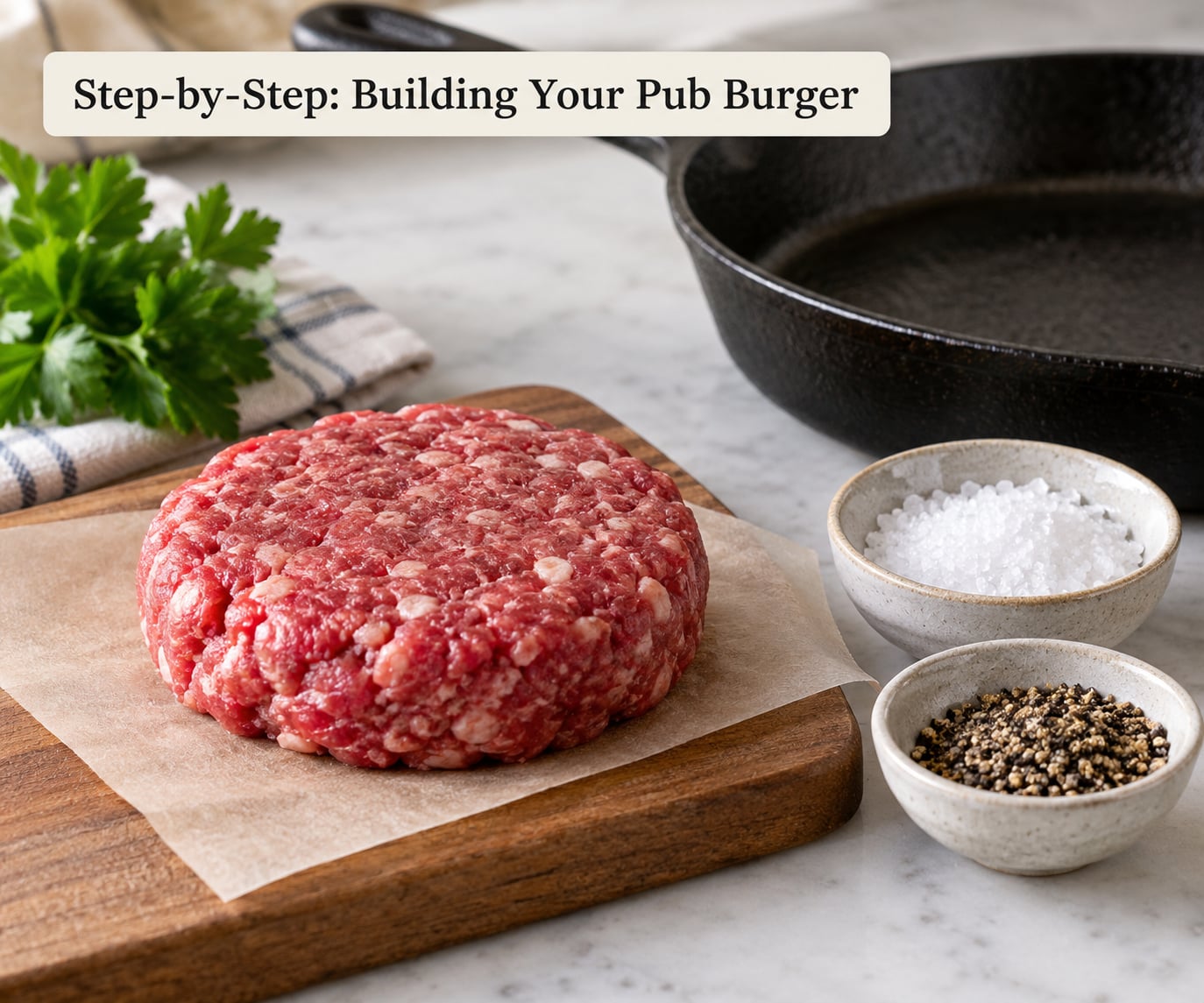
1. Choose the Right Beef Blend
Fat is what makes a burger juicy, so buy 80/20 ground beef and avoid anything leaner than 85/15. Lean mince cooks dry no matter how carefully you handle it, and no amount of sauce on the bun puts that juice back.
Chuck alone is the most forgiving option and easy to find anywhere. Chuck and brisket is better if you can get it, because brisket adds a little bite that stops the patty tasting like a sausage. If your butcher sells short rib, a blend of chuck, brisket and a little short rib is the version most pub kitchens would recognise.
Budget 150g to 180g per person. That is a proper pub-sized patty that still fits inside a standard bun, which is where a lot of home attempts go wrong. More meat per bun means a taller burger that leans and eats in awkward bites.
2. Form the Patty Without Overworking It
Handle the mince as little as possible. Working it warms the meat and glutes together the proteins, and you get a dense, bouncy patty instead of a tender one. Use your fingertips, not your palms.
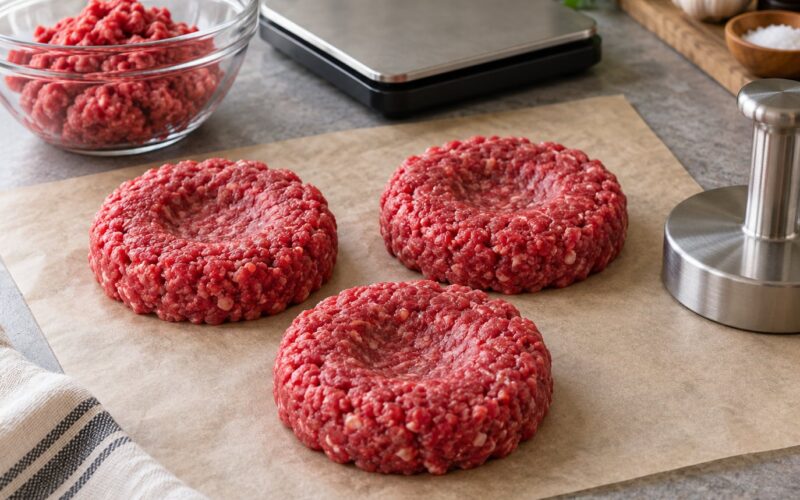
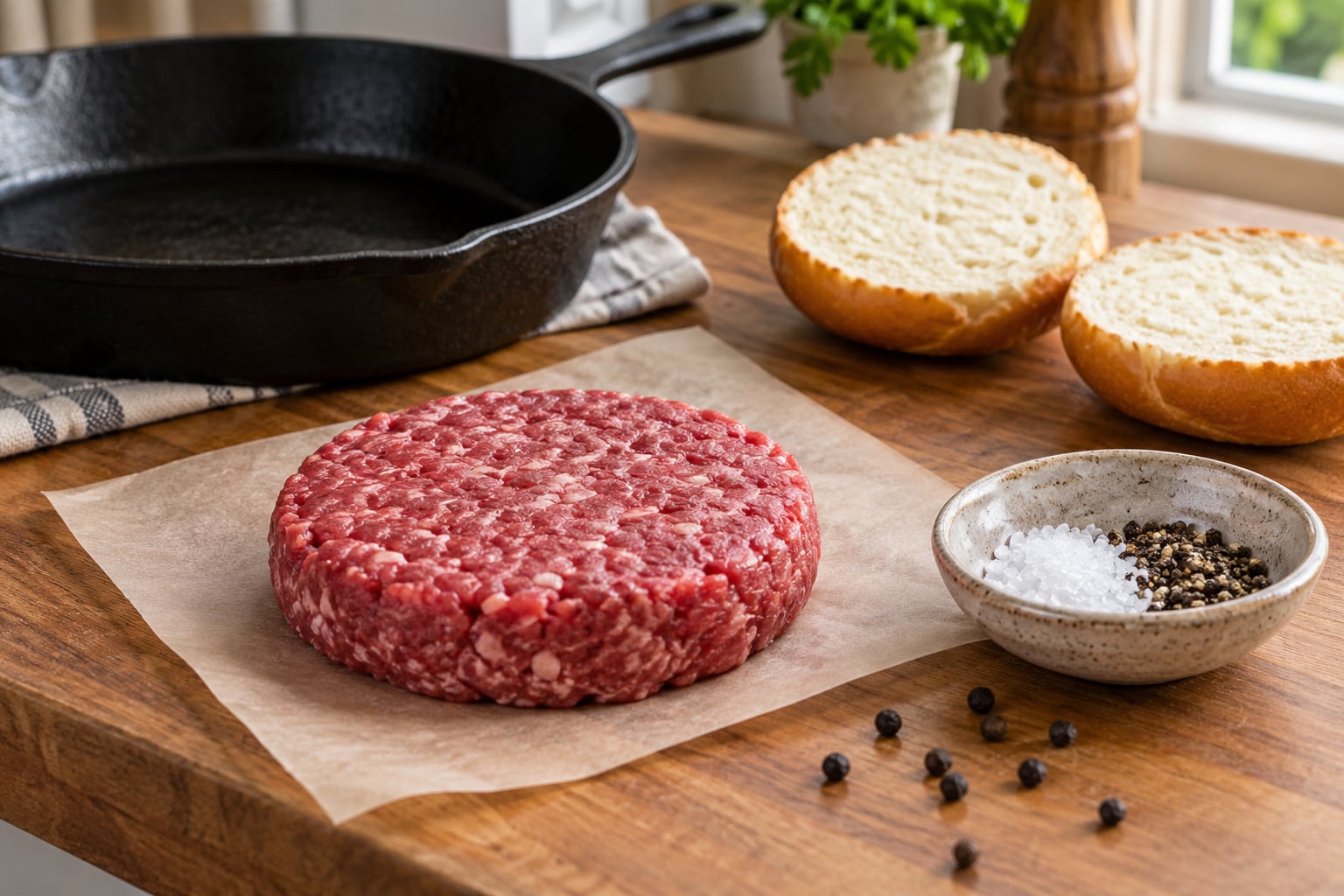
Make the patty a quarter inch wider than the bun all round, so a sliver of crust shows at the edges. Keep it slightly domed rather than flat, and press a shallow thumb indent into the centre. That indent absorbs the shrinkage so the patty stays flat instead of bowing into a dome and sliding off the grates. Pat it to roughly three-quarters of an inch thick.
3. Season the Burger Right Before Cooking
Salt both sides of the patty in the last minute before it hits the heat, not earlier. Salt sitting on the meat for a long time pulls moisture to the surface, and that moisture has to go somewhere when you cook, which means steam instead of a crust.
Seasoning inside the meat works too. Work a small amount of salt and pepper gently into the beef before you shape it, then finish the outside generously. You end up with seasoning on every bite and a dry-looking surface for the sear. Add garlic powder or a pinch of smoked paprika if you like, but keep the profile simple.
4. Create a Hot, Crisp Cooking Surface
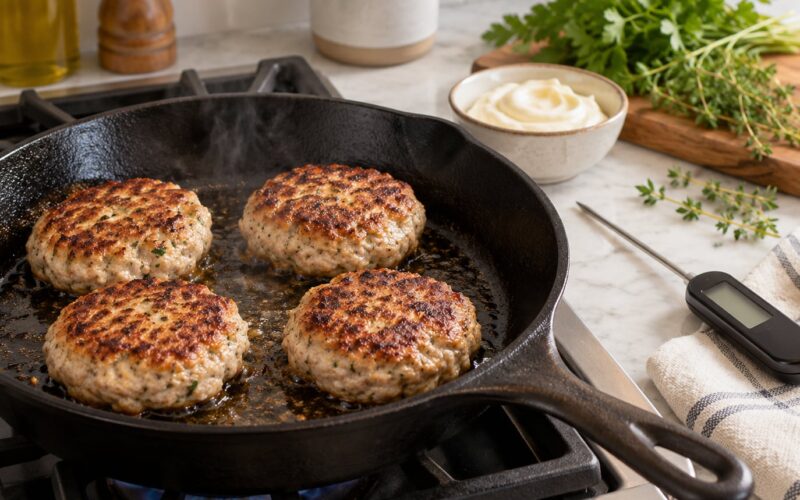
Preheat a cast iron skillet over medium-high heat for four to five minutes, until it is hot enough to shimmer. Skillet seasoning is not the same as cooking oil, so wipe on a thin film of neutral oil before the patty goes on, or the meat will stick.
To test readiness without a thermometer, flick a drop of water onto the surface. It should sizzle and skate across the metal rather than sit there steaming. A lightly smoking pan is right. Heavy, continuous smoking is too hot and will scorch the outside while the centre stays cold.
Leave the pan empty until the patties are formed and seasoned. Heat stored in cast iron is easy to lose, and a pan that drops while the meat is still being seasoned gives you a pale, grey burger with no crust.
5. Cook the Patty to the Desired Doneness
For a pub-style thick patty, cook three to four minutes on the first side without touching it, then flip once and cook three to four minutes more. Move the patty only when you are turning it. Every early tug pulls the forming crust loose and gives you a pale patch instead of a browned one.
Check with a thermometer, aiming for the centre of the patty. Between 130 and 135°F is rare, 140 to 145°F is medium, and 160°F is well done. Many home cooks prefer their burgers cooked through, and food safety guidance in the US sets 160°F as the safe minimum internal temperature for ground beef. Many British and European recipes serve a pub burger pink in the middle, which is a matter of personal risk appetite rather than a rule.
Press the patty only once, gently, after flipping, to confirm the crust has set. If the juices run clear, you have your answer without guessing.
6. Melt the Cheese and Toast the Bun
Put the cheese on the patty during the last 30 to 60 seconds of the second side. A lid or a small bowl over the skillet traps the heat and melts the cheese evenly, so it drapes over the patty instead of sitting in a stiff slab.
While the patty rests, butter the cut faces of the buns and lay them cut-side down in the same pan, in the beef fat and fond. Thirty to forty-five seconds is enough to get a golden, crisp interior that will not go soggy under sauce. Wipe the pan first so the buns toast rather than fry.
This is the step most home cooks skip, and it is the one people notice most. An untoasted bun turns a good burger into a disappointment within a minute of assembly.
7. Build the Burger in the Right Order
Spread a thin layer of mustard mayo on the toasted bottom bun, then lettuce, then the patty with its cheese. Add pickled onion and tomato after the meat, and finish with a second small spoon of sauce on the crown.
The logic is keeping wet ingredients away from bread. Lettuce and tomato sit next to the beef and drip onto the patty rather than into the bun, and a heavy sauce on the bottom slice is the fastest route to a soggy middle. Two tablespoons of sauce is plenty for a normal burger.
Check the proportions before you serve: the patty should be a fraction narrower than the bun on every side, and the whole thing should stand up without being pinched together.
8. Let It Rest and Serve Immediately
Give the patty two or three minutes off the heat before it goes on the bun. That short pause lets the muscle fibres relax, which means the first bite releases juice instead of pushing it out onto the plate.
Rest the patty on a rack or plain board, not back on the bun, or the steam softens the bread you just toasted. Build, eat straight away, and serve with thick chips or skin-on fries, a pickle and something cold to drink. A pale lager, a pilsner or a dry stout all sit well with a beefy, peppered patty.
Common Mistakes and How to Fix Them
Most disappointing home pub burgers come from one of eight habits. Each has a direct fix.
- Using lean beef. 90/10 mince cooks dry and chalky. Buy 80/20, or mix a fatty chuck with a leaner mince to land around 20% fat.
- Pressing the patty on the grill. Every press squeezes out juice and flattens the crust you spent three minutes building. Touch it once, lightly, after the flip and leave it alone.
- Moving it too early. If the patty moves when you nudge it, it is not ready. Give it the full three to four minutes per side. A crust that has set will release from the pan on its own.
- Cooking on a cool surface. A grey, flat burger means the pan was not hot enough. Preheat cast iron for a full five minutes, add oil, and confirm with a drop of water before you commit the beef.
- Salting too early. Seasoning a patty ten minutes ahead pulls water to the surface and costs you the crust. Salt and pepper it right before the sear.
- Overcrowding the pan. Six patties on a skillet drop the temperature fast and steam each other instead of searing. Cook in batches, or use two pans. Fifteen minutes is better than eight tough burgers.
- Skipping the bun toast. A soft, untoasted bun collapses under a wetter topping stack. Butter the cut faces and give them 30 to 45 seconds in the same pan.
- A patty wider than the bun. The classic complaint from burger forums is a bun far too big for the meat, leaving two dry corners nobody wants. Form the patty slightly smaller than the bun and save the excess meat for a second thinner patty.
Tips for a Better Pub Burger
A few upgrades are worth the extra five minutes, and none of them require a new technique.
- Pick the cheese for melt, not just flavour. American cheese and provolone melt smoothly over a hot patty. White cheddar gives a sharper bite but needs an extra few seconds under a lid.
- Cook bacon in the pan before the patties. A single layer for two to three minutes per side, then drain on paper so the fat does not slide the cheese off later.
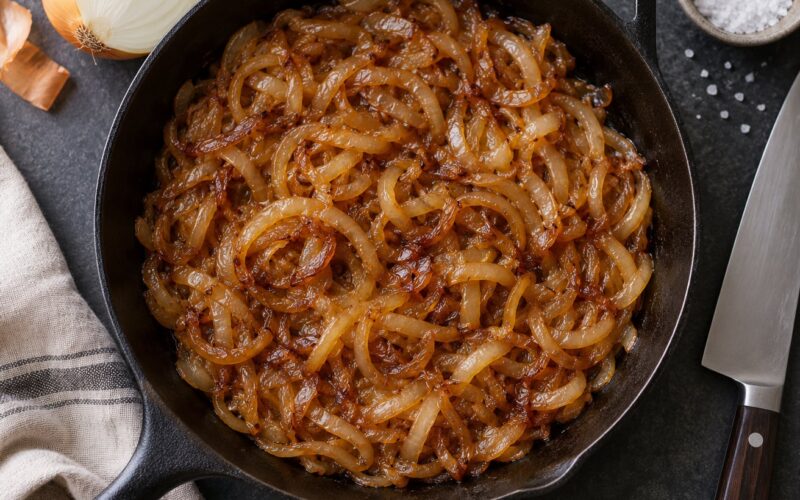
- Caramelise onions slowly. Slice one onion thin, cook it in the same skillet for 12 to 15 minutes over medium-low heat until genuinely soft and brown. It is the one topping that improves with patience.
- Use a thin metal spatula. A thicker turner gets under the edge of a patty far less cleanly. Slide it in fast, all the way to the pan, and lift in one motion.
- Add brine or a sharp pickle. A slice of pickle, a pickled jalapeno or a brine-soaked cheese cuts the fat and keeps each bite interesting through the second half of the burger.
- Make two thinner patties for a game-day crowd rather than one thick one. They cook faster, hold their shape better, and are far easier to serve to eight people at once.
Frequently Asked Questions
Should I put butter on a burger bun?
Yes. Butter the cut faces, not the crust, and toast them cut-side down in the same pan for 30 to 45 seconds. The butter adds flavour and slows the inside from absorbing sauce, which is what causes a soggy middle. Garlic butter, made by softening butter with a little minced garlic, is the pub kitchen version. Skip the butter only for low-fat buns, which crisp better on their own.
How do I stop a burger patty falling apart?
Three habits cause almost every broken patty. Handle the meat as little as possible, since kneading glues the proteins together and makes the patty brittle. Fold in any seasoning gently, before shaping, rather than stirring it in hard. And make the patty slightly wider than the bun so you have a margin, pressing a shallow indent in the centre so it does not bow and slide off the grates.
What is the 5 6 7 rule for burgers?
It is not an official rule and has no standing with any food safety body. Versions of it circulate online as an unsourced rule of thumb for timing and temperature, and they disagree with each other. Use it as a memory aid at most. The guidance that actually matters is simpler: cook ground beef to an internal temperature of 160°F for safety, and rest the patty two or three minutes before serving.
What beef blend is best for a pub burger?
An 80/20 blend is the sweet spot, with 150g to 180g of meat per person. Chuck alone is the easiest option and stays juicy, while chuck and brisket adds chew that stops the burger tasting like a sausage. Short rib in the mix gives an even richer result. Avoid anything leaner than 85/15, which cooks dry no matter how well you handle it.
How long do you cook a burger patty on a grill?
For a thick pub-style patty, allow three to four minutes on the first side without moving it, then flip once and cook three to four minutes more. Check the centre with a thermometer: 130 to 135°F for rare, 140 to 145°F for medium, and 160°F for well done and safe. Thinner patties need closer to two minutes a side.
Can I make a pub burger without a grill?
Yes, and the result is nearly identical. A cast iron skillet or a griddle over medium-high heat gives you the same hard sear, and a single home oven finish at 180°C for six to eight minutes works well if you want to keep several patties cooking at once. Air fryers also do the job at around 200°C for nine to eleven minutes, though you get less crust than a pan.
Conclusion
Start with an 80/20 chuck blend at 150g to 180g a person. Handle it gently, shape a patty slightly wider than the bun with a shallow indent in the centre, and salt it in the last minute before cooking. Preheat the pan until a drop of water skates across it, then give the patty three to four minutes a side without touching it.
Toast the buttered bun in the beef fat while the patty rests, stack the sauce and lettuce under the meat, and serve it straight away. Those five moves are the whole difference between a grey, dry bun burger and something that tastes like it came out of a pub kitchen.