How to keep burgers warm for a crowd comes down to one thing: hold cooked patties at 140F or higher in a low oven set to 150-170F, a slow cooker on Warm, a shallow beef broth bath, a preheated cooler, or a chafing dish. Cook patties to 160F, rest them, and tent them loosely with foil so they stay juicy instead of drying out.
The reason this matters is simple: a burger that waits on the grill for its turn at the serving line dries out before anyone touches it. A burger that was cooked to temperature, rested, and held warm arrives at the plate the way it left the grill. That is why food trucks, buffets, and game-day cooks all hold meat rather than cook to order in front of a queue.
Most home grills produce about 20 finished patties every 15 minutes. Twenty hungry guests will eat those in under four minutes. Holding is how you bridge that gap, and doing it right takes nothing more than a low oven, a wire rack, and a little attention to moisture.
Table of Contents
- What You Need
- Step-by-Step
- Choose the Best Holding Method for Your Crowd
- How to Keep Burgers Warm for a Crowd, Juicy and Safe
- Finish and Serve the Burgers
- Mistakes That Dry Burgers Out
- Common Mistakes When Keeping Burgers Warm for a Crowd
- Frequently Asked Questions
- How long can cooked burgers stay warm for a crowd?
- Can I keep burgers warm in a slow cooker?
- Should I cover cooked burgers with foil while holding them?
- How do I keep cheese from melting or drying out on burgers?
- What temperature should the oven be when keeping burgers warm?
- How can I keep 20 or more burgers warm until everyone is ready?
- Bottom Line
What You Need
Pick the holding setup that matches how many people you are feeding and how long the burgers have to sit before serving. The pieces below cover every method in this guide, and most households already own most of them.
- Low oven — your main holding station for anything under about 30 patties. Set it to 150-170F and let it run.
- Rimmed baking sheet and wire cooling rack — the rack lifts patties off the pan so heat circulates underneath instead of steaming the bottom.
- Heavy-duty aluminum foil — for loose tents and cooler wraps. You need enough to tent a full sheet pan.
- Instant-read thermometer — the only way to know whether a patty or a holding vessel is where it should be. Cheap ones work fine.
- Slow cooker or roaster pan — good for 6 to 10 patties in broth, au jus, or just on the Warm setting.
- Preheated insulated cooler — the tailgate and picnic option when there is no oven nearby.
- Chafing dish with fuel — the answer for 20-plus guests who all want to serve themselves.
- Serving trays and a small towel or foil sheet — for the pass-through moment between holding and the table.
Cheap aluminum pans do the job as well as the heavy stuff. Grease the sheet pan lightly with beef tallow or butter if you have it, and it will clean in minutes.
Step-by-Step
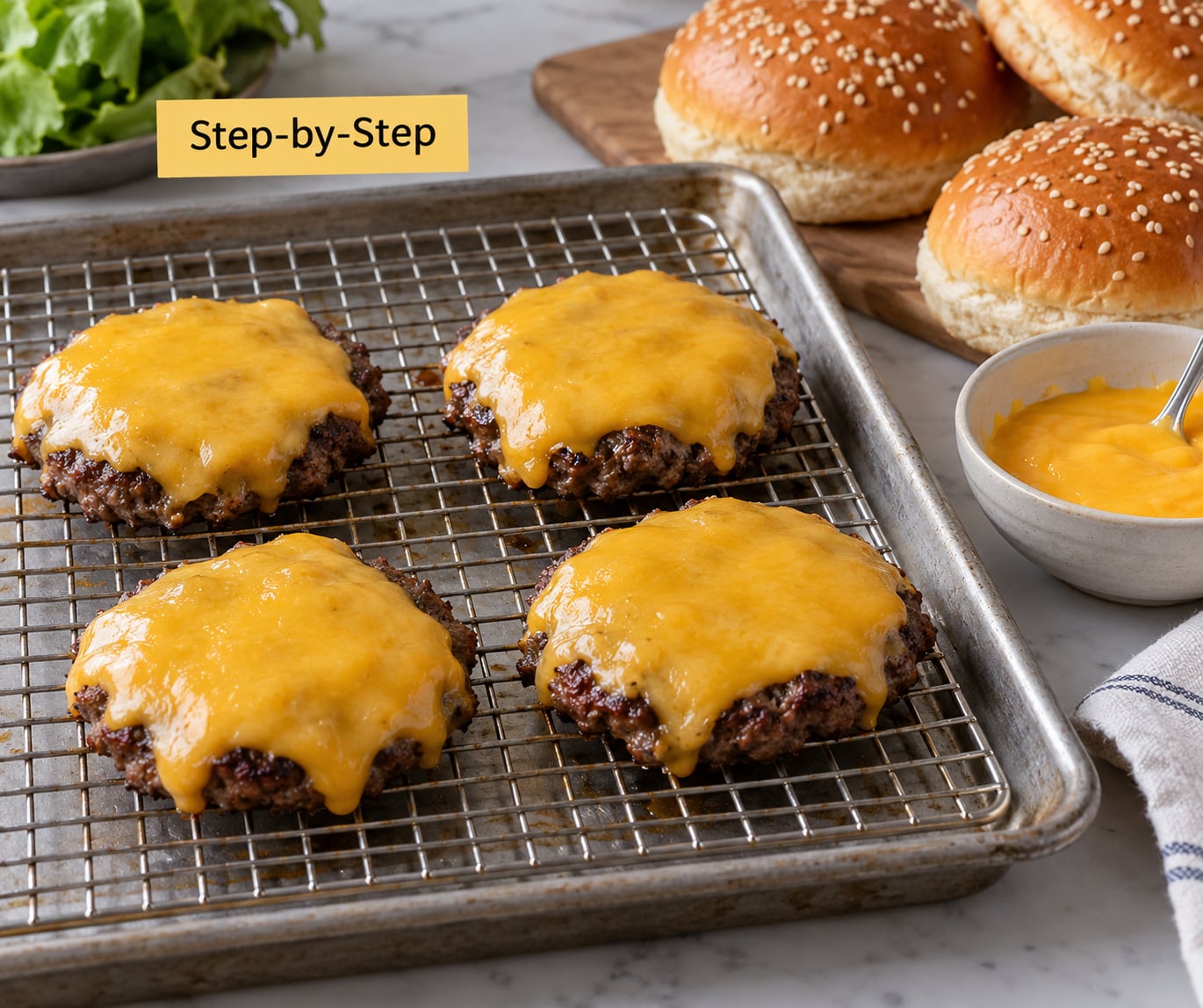
Choose the Best Holding Method for Your Crowd
Match the method to the hold window, not to the crowd size alone. A 20-minute gap between the grill and the call to dinner is easy. A two-hour gap while guests wander between the pool and the food table is a different problem entirely.
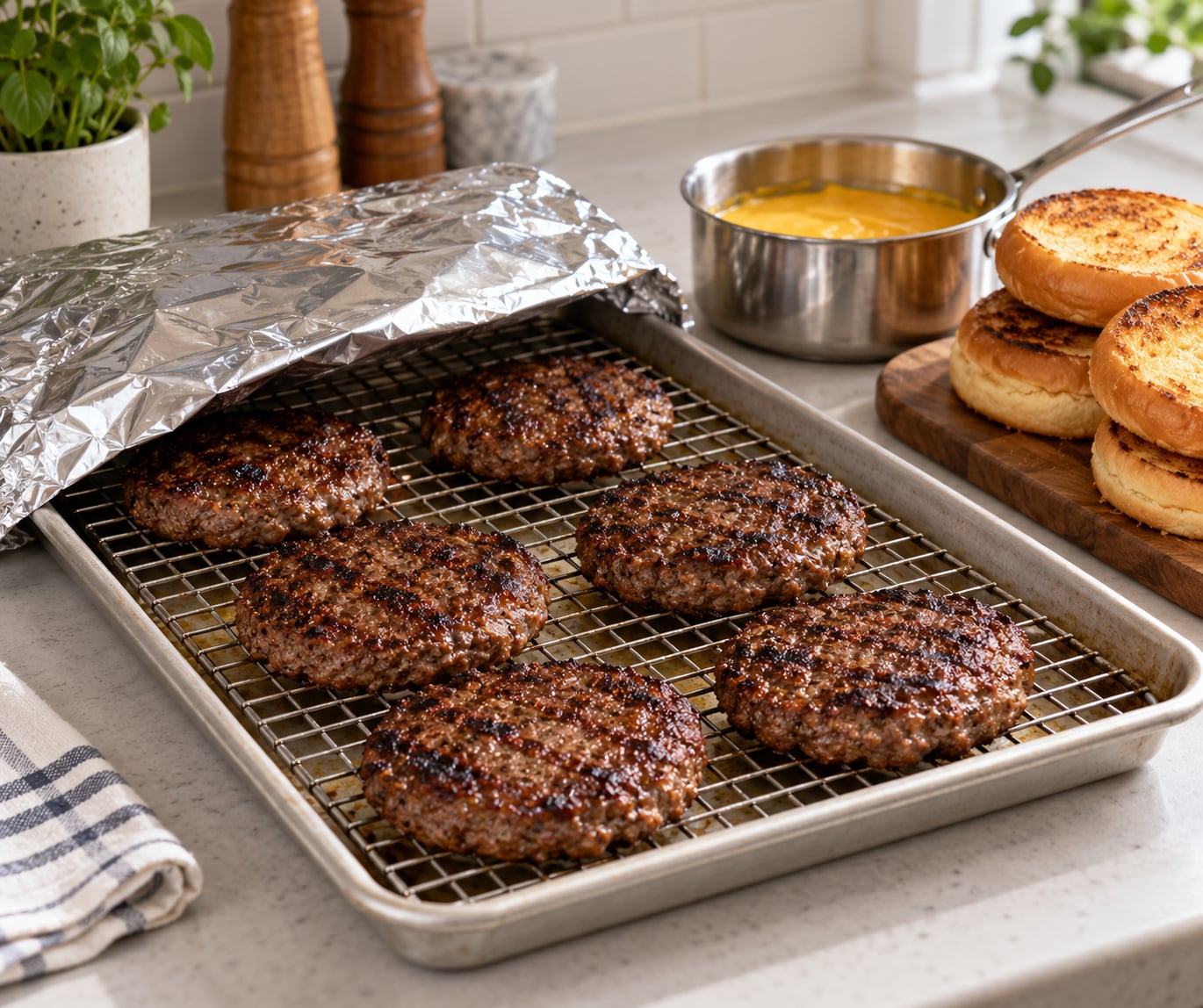
Warm oven with a rack or preheated tray (150-170F). Set the oven no higher than 170F, preheat it empty, and arrange patties in a single layer on a rack over a rimmed sheet. Greased patties sitting on a preheated aluminum tray pick up radiant heat and stay juicy. This is the most forgiving method and the one most people should use first.
Slow cooker or roaster pan on Warm (125-150F). Set the crockpot to Warm and put 4 to 8 patties in, ideally on a rack or with a splash of broth underneath so they do not sit in their own fat. Home cooks on r/slowcooking warn that some crockpots run hot on Warm and will scorch whatever touches the bottom, so test yours with the thermometer before the party and drop to Low if needed.
Broth or au jus bath. Put 6 to 10 patties in a shallow layer of warm beef broth or au jus in a roaster pan or slow cooker. The liquid replaces the moisture that evaporates off the surface, which is the single best defense against dry patties. Hold this method to one to two hours; after that the patties start breaking apart, and a baker’s rack keeps them from turning to mush underneath.
Preheated cooler. Pour boiling water into a hard-sided cooler, wait 10 minutes, dump the water, then nest foil-wrapped patties inside and shut the lid. The liner stays hot for roughly an hour to two, and it costs nothing but a kettle. Tailgaters have been running a version of it for years.
Chafing dish or steam table. For 20 or more guests, a fuel chafer keeps a full tray of patties above 140F for hours with zero attention. It is the one option that solves the buffet line better than anything else in a home kitchen.
| Holding method | Hold temperature | Maximum hold time | Patties it handles | Best for |
|---|---|---|---|---|
| Warm oven, rack over sheet pan | 150-170F | 2 to 3 hours | 12 to 16 per tray | Home cooks feeding up to 30 |
| Slow cooker on Warm | 125-150F | 2 to 3 hours | 4 to 8 | Small groups, keeping a kitchen cooler |
| Broth or au jus bath | 140-160F | 1 to 2 hours | 6 to 10 | Maximum juiciness, chili-cheese style |
| Preheated cooler | Insulation only | 1 to 2 hours | 8 to 12 | Tailgates, picnics, no oven |
| Chafing dish or steam table | 140F and up | 3 to 4 hours | 20 to 40 per pan | Buffet lines, 20-plus guests |
How to Keep Burgers Warm for a Crowd, Juicy and Safe
Cook ground beef to 160F, measured at the thickest part with an instant-read thermometer. Cook whole cuts of beef to 145F and poultry to 165F. Pull patties a few degrees early and let carryover cooking finish the job during the rest, which buys you time on the grill without serving raw centers.
Rest them 3 to 5 minutes before they go anywhere near a holding vessel. Resting lets the juices redistribute instead of running out onto the board the moment you cut into a patty.
Then set up the hold so moisture can still escape. A foil tent that touches the meat traps steam and softens the crust into something dull. Crumple a sheet of foil, drape it over the tray so it stands off the patties, and leave a gap along one edge. The patties stay warm while steam vents.
Space patties so air can move between them. A crowded tray traps heat and moisture unevenly, and the ones in the middle cool first. One sheet pan with a rack holds 12 to 16 patties comfortably; two pans stacked in the oven hold closer to 30.
Check the hold, not the pot. Put the thermometer into a patty rather than the air or the oven cavity, since an oven reading of 160F can hide patties sitting at 135F. Every 20 minutes for the first hour, then every 30 after that.
Hot holding means 140F or above. Between 40F and 140F is the danger zone where bacteria multiply quickly, and the general rule is two hours at room temperature, one hour if the day is above 90F. If your holding vessel drops below 140F and stays there, that clock starts.
Finish and Serve the Burgers
Add cheese in the last minute, not the last hour. Cheese that sits under a foil tent or under a chafing lid turns rubbery and dries out at the edges. If you want melted cheese ready in volume, melt a batch in a small pan and spoon it on at the line instead.
Same with sauces. Mayo and mustard tolerate holding fine. Thin barbecue sauce and hot sauce on a patty sitting for an hour will dry the surface under the sauce and make a mess of the bun. Keep sauces in squeeze bottles at the build station and let people add their own.
Do not pre-assemble. A fully built burger sitting even 20 minutes goes soft at the bottom and the bun turns to cardboard on top. Hold naked patties, warm buns separately in a low oven or wrapped in a towel in a slow cooker, and let people build. It is faster for everyone and it is the single biggest fix for a soggy bun pileup.
| Guests | Patties to cook | Holding gear | Realistic plan |
|---|---|---|---|
| 10 | 12 to 14 | One rimmed sheet pan, one rack | Warm oven at 160F, foil tent, serve from the stove |
| 25 | 30 to 34 | Two sheet pans, two racks | Cook in two waves, hold the first wave while the second finishes |
| 50 | 60 to 70 | Two chafing pans, a cooler for overflow | Cook in three waves, swap trays as they empty, restock from the cooler |
For a crowd, run a build-your-own line rather than handing people plates. Set out buns in a covered pan, patties in a chafing dish, and condiments in squeeze bottles at the end so people move in one direction. It kills the queue, which is the complaint that comes up again and again in grilling forums when people cook for a reunion.
Guests usually arrive in waves. Rather than putting everything out at once, swap trays. Bring out a full pan of fresh patties and pull the one that has been sitting, which cuts waste and keeps everything above 140F. A cook on r/BBQ running a fundraiser with a small propane grill described exactly this approach: cook on a patio skillet plus a slow cooker so the house stays cool and nobody waits more than a few minutes.
If you cook the night before, refrigerate patties shallowly on a tray so they cool fast, then reheat them covered on a sheet pan at 325F for about 10 minutes and hold them warm. Reheating a second time is hard on the texture, so make it a backup plan rather than the plan.
Mistakes That Dry Burgers Out
Stacking patties. Weight presses out moisture and the ones underneath cook from steam. Single layer, every time, and use a second pan instead.
Sealing foil tight. A tight wrap traps steam and softens the crust. Tent loosely and leave a vent gap.
Cranking the oven. 200F and up is a reheating oven, not a holding oven. Anything past 170F cooks the patty from the inside out and dries it fast. Set it and check the meat, not the dial.
Crowding the pan. If patties touch, heat circulates unevenly and the middle of the tray goes cold before the edges overcook. Give them room or add a tray.
Holding cheese and sauce too long. Melt and spoon them at the end.
Reholding already-held patties. Every reheat cycle squeezes out more juice. If patties sit past two hours, hand them out or start a fresh batch rather than trying to rescue them.
Common Mistakes When Keeping Burgers Warm for a Crowd
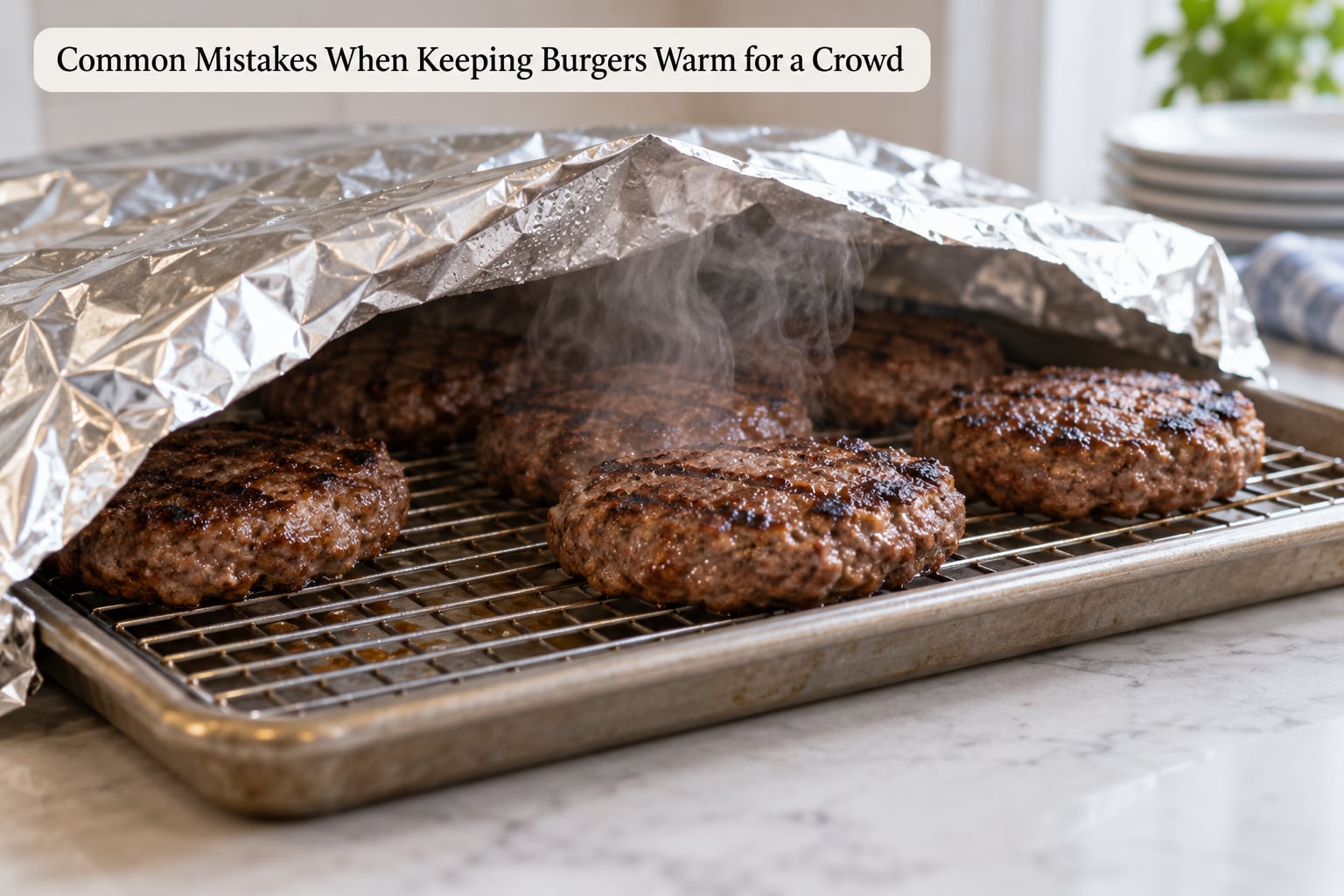
Most dry-burger complaints trace back to one of a handful of problems, and every one of them has a quick fix. Here is what went wrong, why it happened, and what to change.
| Problem | Cause | Fix |
|---|---|---|
| Rubbery patties | Held above 170F or reheated repeatedly | Drop the oven to 150-160F and check the patty with a thermometer |
| Soggy buns | Burgers assembled early, or buns covered while venting | Warm buns uncovered or loosely wrapped, build to order |
| Patties cool in the middle | Overcrowded tray, no air circulation | Use a wire rack, one layer, add a second pan |
| Patties fall apart | Broth bath held past two hours | Cap broth baths at one to two hours, switch to a dry hold |
| Scorched bottoms | Slow cooker on Warm runs hot in that model | Use Low, add a rack or a layer of broth underneath |
| Skin forming on patties | Foil sealed tight, no venting | Loose foil tent, one edge open |
Two habits cover most of these. Start the hold vessel before the patties are done, so there is no dead time where finished meat sits on the counter while you hunt for a pan. And keep a spare tray ready, because the single best recovery move is moving patties off a crowded tray onto a fresh one with air around them.
Frequently Asked Questions
How long can cooked burgers stay warm for a crowd?
A warm oven at 150-170F holds patties well for two to three hours, and a chafing dish will run three to four hours. Keep broth baths to one or two hours so the patties do not break apart, and use a preheated cooler for one to two hours. Whatever the method, keep the temperature at 140F or above and check it with an instant-read thermometer.
Can I keep burgers warm in a slow cooker?
Yes, a slow cooker is one of the easiest methods. Set it to Warm, place 4 to 8 patties inside on a rack or over a little broth so they do not sit in their own fat, and keep the lid on. Some models run hot enough on Warm to scorch the bottom, so test yours ahead of time and use Low if the patties brown.
Should I cover cooked burgers with foil while holding them?
Cover them loosely, not tightly. A crumpled foil tent over the tray holds heat while letting steam vent through the gaps, which keeps the crust from turning soft. Foil pressed directly against the meat traps condensation, dulls the crust, and leaves the patty damp rather than juicy. Leave one corner open as a vent.
How do I keep cheese from melting or drying out on burgers?
Add cheese in the final minute before serving instead of during the hold. Melted cheese held under a foil tent or a chafing lid turns rubbery and dries at the edges. For a crowd, melt a batch in a small pan and spoon it on at the build-your-own line, which is faster than topping every patty ahead of time.
What temperature should the oven be when keeping burgers warm?
Set it between 150F and 170F. That range holds cooked patties above the 140F food safety minimum without drying them out, while anything at 200F or higher re-cooks the meat and pushes moisture out of it. Preheat the empty oven, put the patties on a rack in a single layer, and verify the temperature in a patty rather than trusting the oven dial.
How can I keep 20 or more burgers warm until everyone is ready?
Use two sheet pans with wire racks in a 160F oven, or move to a chafing dish if you have 20-plus guests. Cook in waves, hold the finished batch in the warm vessel, and swap pans as each one empties instead of putting everything out at once. Warm buns in a separate covered pan and let people build their own so nothing goes soggy.
Bottom Line
Start here: preheat the oven to 160F, cook your patties to 160F, rest them a few minutes, then park them in a single layer on a rack over a rimmed sheet pan under a loose foil tent. Check one patty with the thermometer every 20 minutes, keep cheese and sauces for the last minute, and let people build their own burgers. Once you are past 20 guests, scale up to a broth bath, a preheated cooler, or a chafing dish.