How to make turkey burgers that are not dry comes down to three levers: buy a fattier grind, add a measured amount of moisture, and stop cooking before the patty squeezes itself dry. Choose 93% lean ground turkey thighs instead of 99% lean breast, mix in a tablespoon or two of mayonnaise or grated butter, then pull the patties at 160°F and let a five-minute rest carry them up to a safe 165°F.
- Choose the right meat. Aim for 90-93% lean dark meat. Ultra-lean ground turkey breast is the single biggest reason turkey burgers come out dry.
- Add moisture and fat. One to two tablespoons of mayonnaise, Dijon, Greek yogurt, or two tablespoons of grated unsalted butter per pound of turkey binds the mixture and keeps it tender.
- Stop the dry-out at the source. Pull the patties at 155-160°F, cover them, and let carryover cooking finish the job to 165°F instead of hammering them over high heat.
That is the whole method. Everything else below is the detail that separates a decent turkey burger from one people actually ask for twice.
Table of Contents
- What You Need
- What Lean Percentage Actually Means
- How to Make Turkey Burgers That Are Not Dry: Step-by-Step
- 1. Choose the Right Ground Turkey
- 2. Add Moisture Without Making the Mixture Soggy
- 3. Season and Mix the Patty Mixture Lightly
- 4. Form Uniform, Loose Patties
- 5. Cook Until the Burgers Reach 165°F
- 6. Rest, Top, and Serve
- Common Mistakes
- The patties fall apart in the pan
- The outside is gray and the center is still pink
- The burgers turn out mushy or gummy
- The patties shrink dramatically
- They stick to the pan or grill
- They are fine fresh but dry after reheating
- Frequently Asked Questions
- How can I make ground turkey less dry?
- What is a good binder for turkey burgers?
- Is it okay if turkey burgers are a little pink?
- Why is my ground turkey mushy?
- Do you need breadcrumbs to keep turkey patties together?
- How long should turkey burgers rest before serving?
- Conclusion
What You Need
The ingredient list for four juicy turkey burgers is short, but two of the items are doing more work than you would expect.
- 1 to 1.25 lb ground turkey, ideally 93% lean ground turkey thighs or a light-and-dark blend. Yield is four patties.
- A binder: one egg plus 1/4 cup panko or breadcrumbs, or 2 tablespoons of mayonnaise if you prefer to skip the egg.
- A moisture add-in: mayonnaise, Dijon mustard, Worcestershire sauce, plain Greek yogurt, grated unsalted butter, or finely grated mushrooms.
- Seasoning: kosher salt, black pepper, garlic powder, onion powder, smoked paprika, and a splash of Worcestershire. Fresh parsley, chives, or sage if you have them.
- Oil for the pan: olive oil or avocado oil, about 2 tablespoons for a skillet.
- Toppings and buns: cheese, lettuce, tomato, red onion, pickles, and a sauce such as mayo, sriracha mayo, or barbecue sauce.
- Equipment: a digital meat thermometer, a cast iron or nonstick skillet, a plate for resting, and foil or a bowl to cover.
What Lean Percentage Actually Means
The number on the tray tells you how much fat is in the mix, and fat is what a burger has instead of butter. Here is roughly what each number gives you.
| Lean percentage | What you are buying | What you get |
|---|---|---|
| 85% lean | Extra-fatty dark meat | Rich and forgiving. Can feel greasy on its own; needs bold seasoning. |
| 90% lean | Mostly thigh | Juicy, holds together well, still clearly turkey rather than beef. |
| 93% lean | Ground turkey thighs | The sweet spot. Enough fat to stay moist, enough protein to sear. |
| 99% lean | Breast only | Dry by default. It will need serious help, and it shrinks hard. |
Store packaging often does not tell you whether you are getting breast or leg meat, and that is a genuine annoyance at the shelf. Look for the words “thigh,” “dark meat,” or a “light and dark” blend on the label, and check the nutrition panel for total fat.
How to Make Turkey Burgers That Are Not Dry: Step-by-Step
1. Choose the Right Ground Turkey
Turkey has far less fat than beef, which is why lean turkey patties have almost no lubricating fat to hold on to. When the proteins tighten in the pan, whatever moisture is in the meat gets pushed out, and with no fat to slow it down you end up with a hockey puck.
Go with 93% lean ground turkey thighs, or a 90-92% lean blend. If you already bought 99% lean breast, add more moisture than the recipe calls for: bump the mayonnaise up to a quarter cup, and consider a tablespoon of olive oil in the mix. Swapping the grind does more for how to make turkey burgers that are not dry than any amount of mixing and fussing.
2. Add Moisture Without Making the Mixture Soggy
The point of an add-in is twofold. Fat and water keep the patty tender, and a wet ingredient also holds the meat together, so you can skip some of the breadcrumbs. A tablespoon or two per pound is the working range; more than that and the patty falls apart in the pan.
| Add-in | Amount per 1 lb turkey | What it does | Tradeoff |
|---|---|---|---|
| Mayonnaise | 1 to 2 tbsp | Binds and stays moist; mild flavor | Makes the patty softer, so chill it longer |
| Grated unsalted butter | 2 tbsp, cold | Melted fat distributes evenly through the meat | Adds calories and richness quickly |
| Dijon mustard | 1 tbsp | Sharp flavor, good binder | Can taste sharp if doubled |
| Worcestershire sauce | 1 to 2 tsp | Salt and depth in one | Salty, so ease the salt back |
| Plain Greek yogurt | 2 tbsp | Does not evaporate easily, so it stays moist | Slightly tangy |
| Finely grated mushrooms | 1/2 cup | Water and umami, bulks the patty | Needs a longer chill to firm up |
| Egg | 1 | The standard binder | Adds no extra moisture of its own |
If you add wet vegetables such as grated zucchini or mushrooms, let the mixture sit in the fridge for at least an hour. Raw patties made with wet additions go soft and hard to handle otherwise, and readers who skip that chill usually come back to say the patties smeared in the pan.
3. Season and Mix the Patty Mixture Lightly
Season more than feels right. Lean turkey takes salt and pepper, garlic powder, onion powder, smoked paprika, and a splash of Worcestershire, and it still tastes bland next to beef.
Use your hands and mix until the seasoning is evenly distributed, then stop. Overmixing works the meat into a dense, gummy texture, which is the usual reason ground turkey comes out mushy instead of tender. Fresh parsley, chives, or chopped fresh sage goes in at the end with a light hand.
4. Form Uniform, Loose Patties
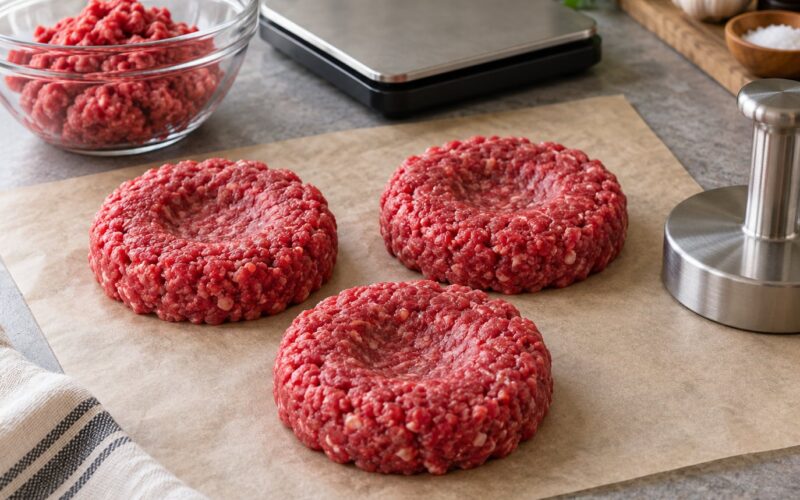
Divide the mixture into four equal balls, roll each one tight, then flatten it. Rolling first locks the mixture together and gives you a patty that holds its shape in the pan.
Press each patty to 3-4 inches wide and half to 1 inch thick, sized to your bun, and indent the center with your thumb so it does not dome up or curl. Do not pack the meat down or squish it flat; a gently handled patty stays tender, and pressing hard squeezes out the air and everything else.
Chill the formed patties for 15 minutes before cooking, or 30 minutes if the mixture had a lot of mayonnaise or wet vegetables in it. Cold patties hold together better and lose less moisture in the pan.
5. Cook Until the Burgers Reach 165°F
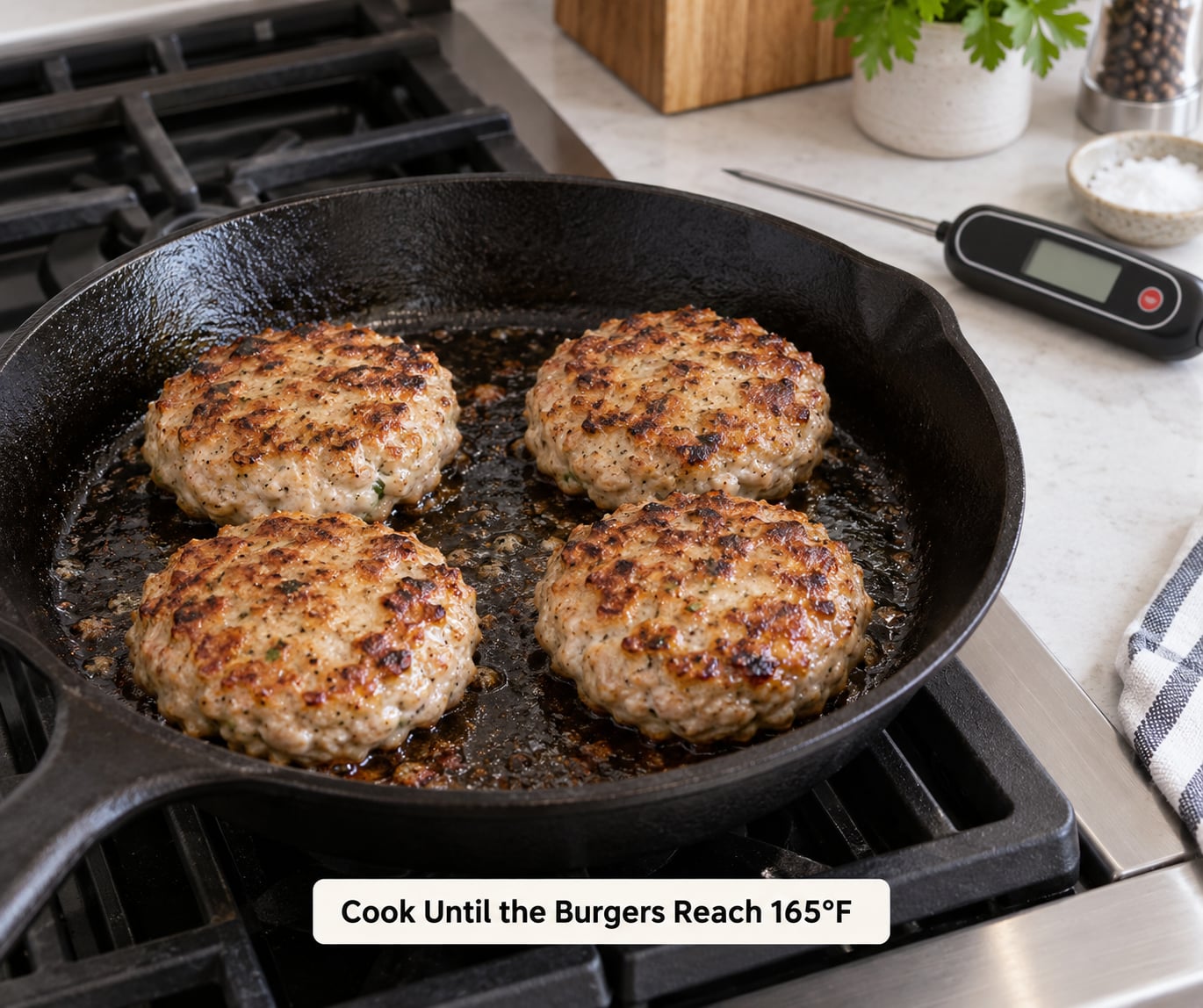
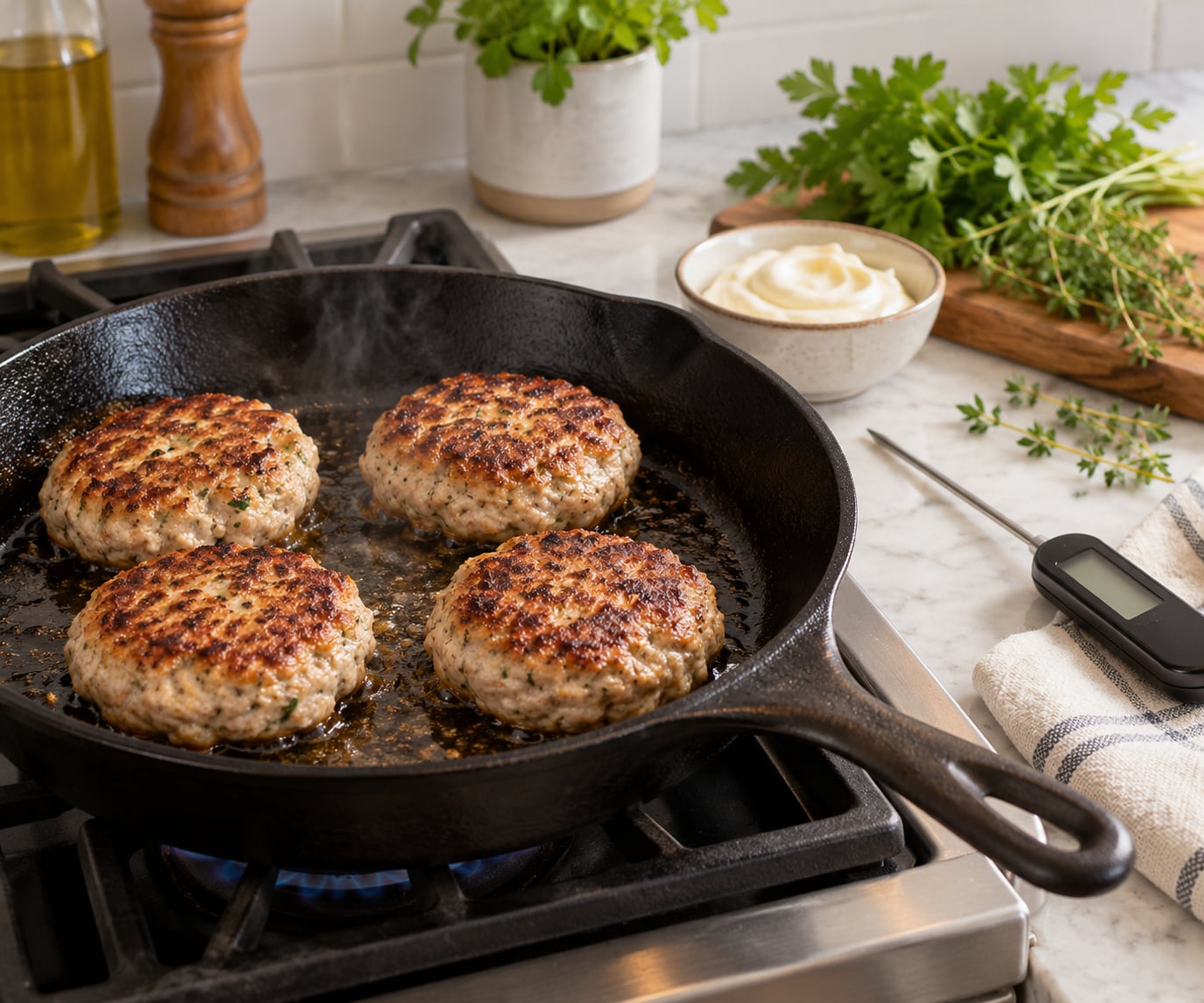
Heat 2 tablespoons of oil in a cast iron or nonstick skillet over medium heat until it shimmers. Lay the patties down and resist the urge to press them. Cook for 4 to 5 minutes per side, depending on thickness, until the outside is deeply browned.
Start with medium rather than high heat. A screaming-hot pan burns the outside to gray long before the center catches up, which gives you a burger that is dry outside and still pink inside. Cooking low and steady also lets the Maillard browning build slowly without tearing the patty.
| Method | Heat | Time | Pull at | Notes |
|---|---|---|---|---|
| Cast iron skillet | Medium | 4-5 min per side | 160°F | Best crust; baste with pan juices after flipping |
| Nonstick skillet | Medium | 4-5 min per side | 160°F | Easiest for beginners, gentlest on delicate patties |
| Flat-top griddle | Medium | 4-5 min per side | 160°F | Cook in batches; juices stay in contact with the patty |
| Gas grill | 450°F, oiled grates | About 4 min per side | 160°F | Add 1/4 cup breadcrumbs to the mix if the patties feel fragile |
| Oven | 425°F, sheet pan | 18-22 min total, flip at 10 | 160°F | Lightly oil the pan; a crust needs a preheated pan |
| Air fryer | 390-400°F | 9-12 min, flip once | 160°F | Dry heat, so bump the moisture add-in slightly |
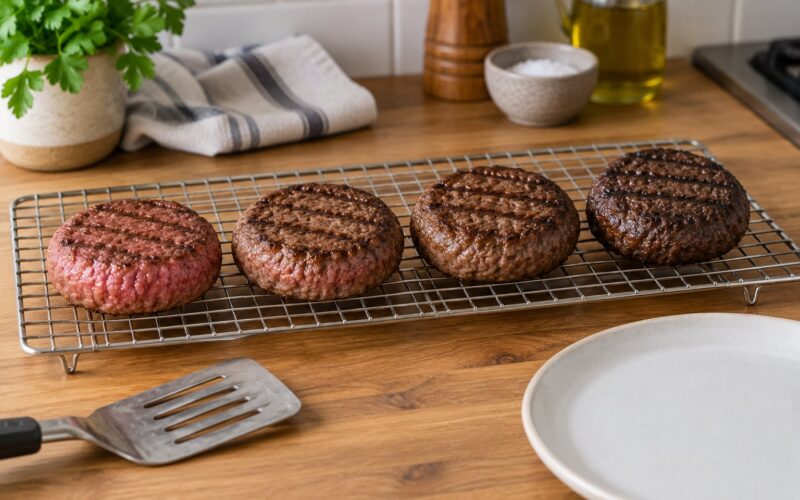
Check with a digital thermometer, inserted into the thickest part of the patty without touching the pan. Pull the burgers at 155-160°F. USDA guidelines put the safe minimum internal temperature for ground poultry at 165°F, and carryover cooking gets you there: a patty pulled at 160°F keeps climbing while it rests, and the juices redistribute back into the meat instead of evaporating away.
This is also how you get past the pink-center anxiety. The pink disappears during the rest, so a burger that reads 160°F in the pan finishes fully cooked and still juicy. Patting it to 165°F in the pan is what dries it out.
6. Rest, Top, and Serve
Move the patties to a plate and cover them with foil or an upside-down bowl for at least 5 minutes. Skipping the rest is the most common reason an otherwise good turkey burger still tastes dry on the first bite.
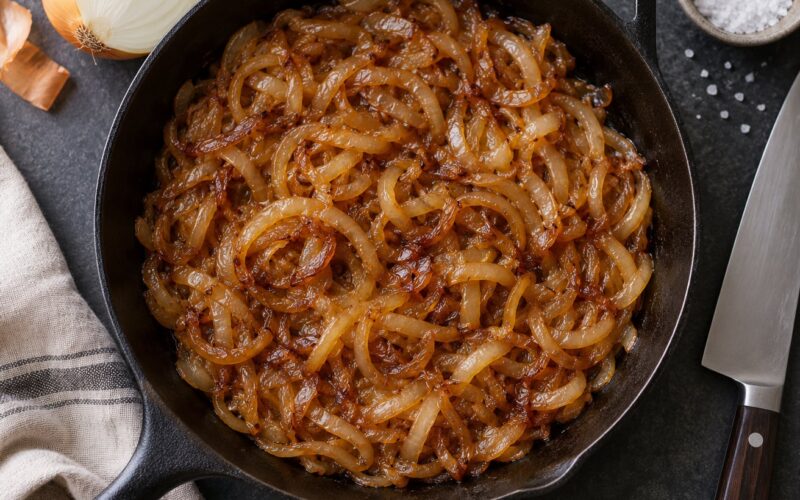
Butter and toast your buns while they rest. For toppings, sharp cheese, caramelized onion, crisp lettuce, pickles, and a mayo-based sauce all add moisture back to the plate, and a slice of avocado does more for perceived juiciness than any amount of extra add-in in the meat.
Turkey will never taste exactly like beef, and pretending otherwise is where most people give up on it. Season it like a chicken burger rather than a beef one and it stands on its own.
Common Mistakes
Almost every dry turkey burger comes down to one of six things.
The patties fall apart in the pan
The mixture was too lean or too loose. Add a tablespoon of breadcrumbs or another egg, and chill the formed patties longer before cooking. Overhandling the raw meat also makes patties fragile, so form them gently and keep the mixture cold.
The outside is gray and the center is still pink
The heat is too high. Drop to medium and extend the cook by a minute or two per side. Pulling at 160°F and resting until it hits 165°F solves the pink center without the gray crust.
The burgers turn out mushy or gummy
You overmixed the meat. Work the seasoning in with your fingertips until it is evenly distributed, then stop. Dense, sticky patties are almost always overworked rather than undercooked.
The patties shrink dramatically
That is lean meat losing water and fat under heat. A 90-93% lean grind shrinks far less, a center indentation gives the patty room, and pressing with a spatula during cooking squeezes out what you are trying to keep.
They stick to the pan or grill
Let the pan get properly hot before the patties go down, and oil it generously. Raw patties release naturally once a crust forms; if you are scraping them off the pan, they need another minute or a thinner patty.
They are fine fresh but dry after reheating
Cool cooked patties fast, refrigerate them airtight, and reheat gently in a skillet over low heat with a splash of oil or a lid on. The microwave is what dries them out, so use it only as a last resort at half power and for under a minute.
For a batch, cook the patties ahead, stack them in a single layer on a sheet pan, and keep them in a 200°F oven with a damp towel over the pan. Do not pile them, and pull them out the moment your guests are ready to eat. The same low-and-slow logic works for cooking straight from frozen: 400°F in the oven for about 35 minutes, or the air fryer settings above with a few extra minutes.
Frequently Asked Questions
How can I make ground turkey less dry?
Buy a higher-fat grind, ideally 93% lean ground turkey thighs, and add a measured moisture ingredient such as 1-2 tablespoons of mayonnaise or 2 tablespoons of grated unsalted butter per pound. Chill the patties before cooking, keep the pan at medium heat, and pull the burgers at 160°F so the rest finishes them at 165°F.
What is a good binder for turkey burgers?
Egg plus 1/4 cup panko or breadcrumbs is the standard binder. For turkey specifically, mayonnaise, Dijon, Greek yogurt, or grated butter work just as well while also adding moisture, which is why they are usually a better choice. Any of these will keep a patty together without making it taste like a meatloaf.
Is it okay if turkey burgers are a little pink?
Pull the patty when it reads 155-160°F and cover it while it rests. Carryover cooking continues raising the internal temperature, so a burger that looks pink in the pan reaches the USDA safe minimum of 165°F for ground poultry during the rest, and the pink disappears on its own. That is also the easiest way to avoid drying the patty out.
Why is my ground turkey mushy?
Mushiness almost always comes from overmixing. Working the meat too long develops a dense, gummy texture, much like overworked meatloaf. Mix in your seasonings just until they are evenly distributed, then stop handling it. Form the patties with light hands and chill them before they hit the pan.
Do you need breadcrumbs to keep turkey patties together?
Not always. A wet ingredient such as mayonnaise, Dijon, or Greek yogurt binds the mixture on its own, and so does the fat in 90-93% lean dark meat. Add 1/4 cup breadcrumbs when you are grilling delicate patties, for a gluten-free version, or when the mixture feels loose, and leave them out otherwise.
How long should turkey burgers rest before serving?
At least 5 minutes, covered with foil or a bowl. Resting lets the juices redistribute back into the patty instead of running out onto the plate, which is the final step that keeps a turkey burger from tasting dry. Pull the burgers at 160°F and the rest doubles as the last step of carryover cooking to 165°F.
Conclusion
Start with the meat, because nothing else rescues 99% lean breast. Pick 93% lean ground turkey thighs, add 1 to 2 tablespoons of mayonnaise or 2 tablespoons of grated butter per pound, and mix it in with a light hand so the patty stays loose and tender.
Chill the formed patties for 15 minutes, cook them at medium heat, pull them at 160°F, and let a covered five-minute rest carry them to a safe 165°F. Most guides to how to make turkey burgers that are not dry lead with add-ins, but the fat in your grind and a light hand matter more than anything you stir into it. That sequence fixes most of the dry turkey burgers I have cooked, and it takes about half an hour start to finish.