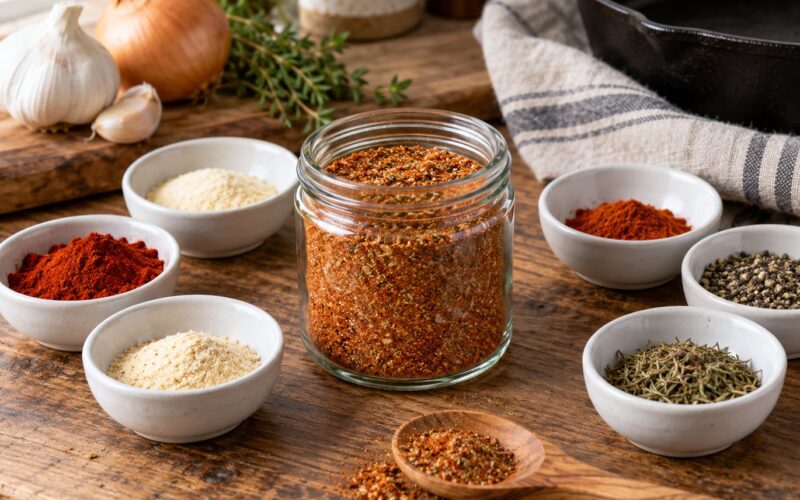
Steak house seasoning is a dry rub you mix in one bowl from salt, coarse black pepper, garlic powder, onion powder, paprika and a couple of dried spices, and a batch of it will season steaks, burgers and vegetables for weeks. Learning how to make steak house seasoning takes about fifteen minutes, most of it spent measuring, and the whole thing costs a fraction of what a jar of the restaurant version does.
The version below leans savory and peppery rather than fiery, which is what most steakhouse steaks actually taste like. Heat is easy to add later and nearly impossible to take back once it hits the meat, so it stays out of the base blend.
Table of Contents
- What You Need
- How to Make Steak House Seasoning
- 1. Measure and Toast the Whole Spices
- 2. Grind the Spices for a Coarser Texture
- 3. Combine the Salt and Seasonings
- 4. Taste and Adjust the Balance
- 5. Store the Steak House Seasoning
- Common Mistakes
- Frequently Asked Questions
- How long does homemade steak house seasoning stay fresh?
- How much steak house seasoning should I use on a steak?
- Can I use steak house seasoning on chicken?
- How do I make steak house seasoning without too much salt?
- Can steak house seasoning be used on vegetables and burgers?
- Should I use kosher salt or table salt for steak seasoning?
- Conclusion
What You Need
The tool list is short, and most kitchens already have all of it: a set of measuring spoons, a small dry skillet for toasting, a spice grinder or mortar and pestle, a medium mixing bowl with a whisk or fork, and a small airtight jar or spice tin with a lid for storage.
This recipe makes roughly one-half cup of finished seasoning, which is enough for several meals. Measure carefully, especially the salt.
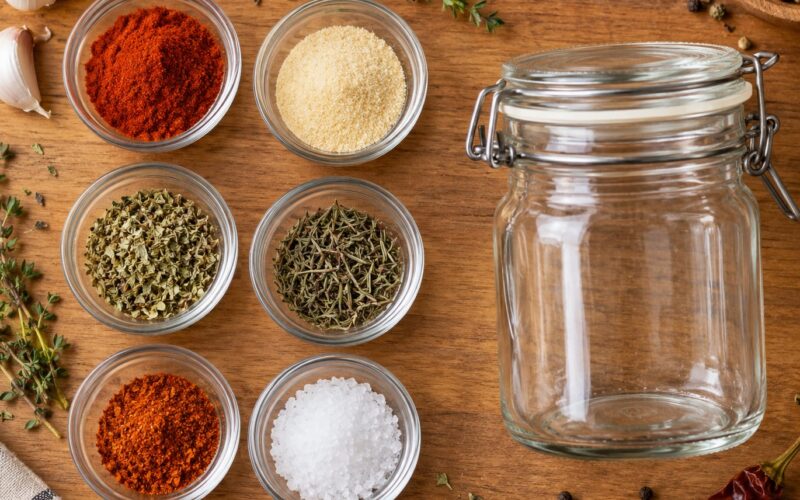
- 3 tablespoons fine kosher salt
- 2 tablespoons coarsely ground black pepper
- 1 tablespoon garlic powder
- 1 tablespoon onion powder
- 1 tablespoon sweet paprika
- 1 teaspoon dried mustard
- 1 teaspoon dried oregano
- 1/2 teaspoon ground cumin, or whole cumin seeds if you are grinding your own
- 1/2 teaspoon granulated sugar
Those nine items are the classic blend. Everything else people add, including smoked paprika, brown sugar, garlic salt, red pepper flakes and celery salt, is a variation on top of it rather than part of it.
How to Make Steak House Seasoning
There are five steps, and three of them take under a minute. Toasting the whole spices, grinding them, and whisking everything with the salt is the whole recipe; the last two steps, tasting and storing, are what separate a good batch from a great one.
1. Measure and Toast the Whole Spices
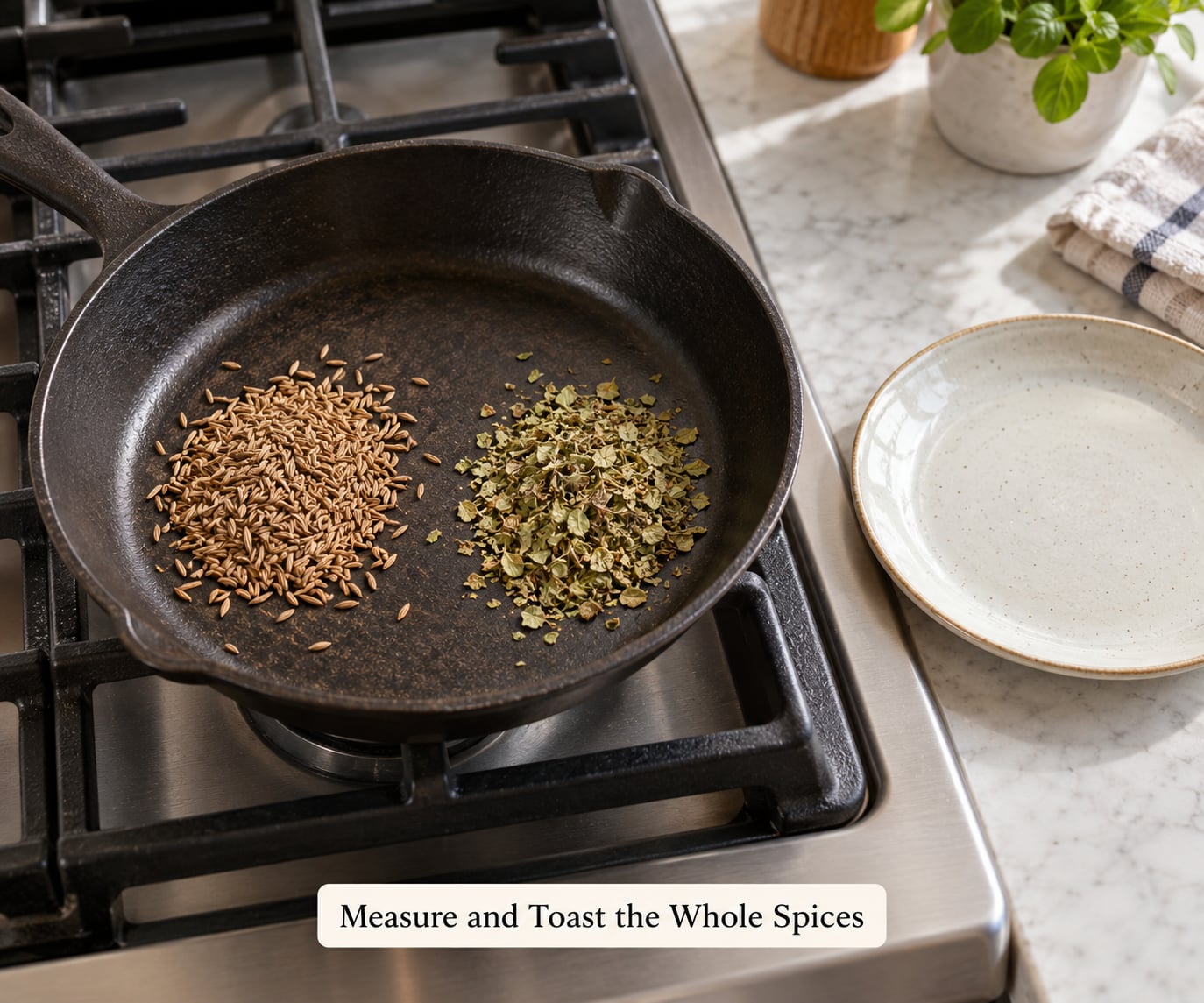
Toast your whole cumin seeds and dried oregano for 30 to 60 seconds in a dry skillet over medium heat until they smell fragrant, then tip them straight onto a plate to cool.
Keep the skillet moving with a shake every few seconds. The whole point of this step is aroma, and the second a bit of oregano goes from fragrant to acrid the benefit reverses. Black smoke means you have gone too far, so scrape it out and start again with a fresh spoonful.
2. Grind the Spices for a Coarser Texture

Pulse the cooled cumin, oregano and 2 tablespoons of black pepper in a spice grinder until you have a mix that is mostly fine powder with some grit still in it.
Aim for texture, not powder. Powders that have been ground to dust dissolve into the meat and disappear, while a blend with visible flecks stays on the surface through the sear and gives the crust its peppery bite. You can grind the pepper with the other two spices or leave it coarse and stir it in later; both work, and the coarse version is the one I prefer.
3. Combine the Salt and Seasonings
Whisk the 3 tablespoons of fine kosher salt, garlic powder, onion powder, sweet paprika, dried mustard, sugar and your ground spice mix together in a medium bowl until the color is even.
Sift the garlic powder through a fine strainer first if it has any clumps in it. Those clumps are how a single bite ends up tasting like nothing but raw garlic while the rest of the steak tastes underseasoned, and breaking them up takes ten seconds with the back of a spoon.
4. Taste and Adjust the Balance
Taste a small pinch straight from the bowl, then decide what it needs: more pepper for a sharper steakhouse bite, more garlic or onion powder for savoriness, a pinch more sugar to soften the heat, or less salt if you plan to finish the steak with flaky salt after cooking.
Adjust conservatively. This blend is heavily seasoned on purpose, and it is easier to add pepper than to walk back a salt decision. If you taste it on a piece of bread rather than by itself, you will read the balance much more accurately than if you sample the powder straight from the spoon.
5. Store the Steak House Seasoning
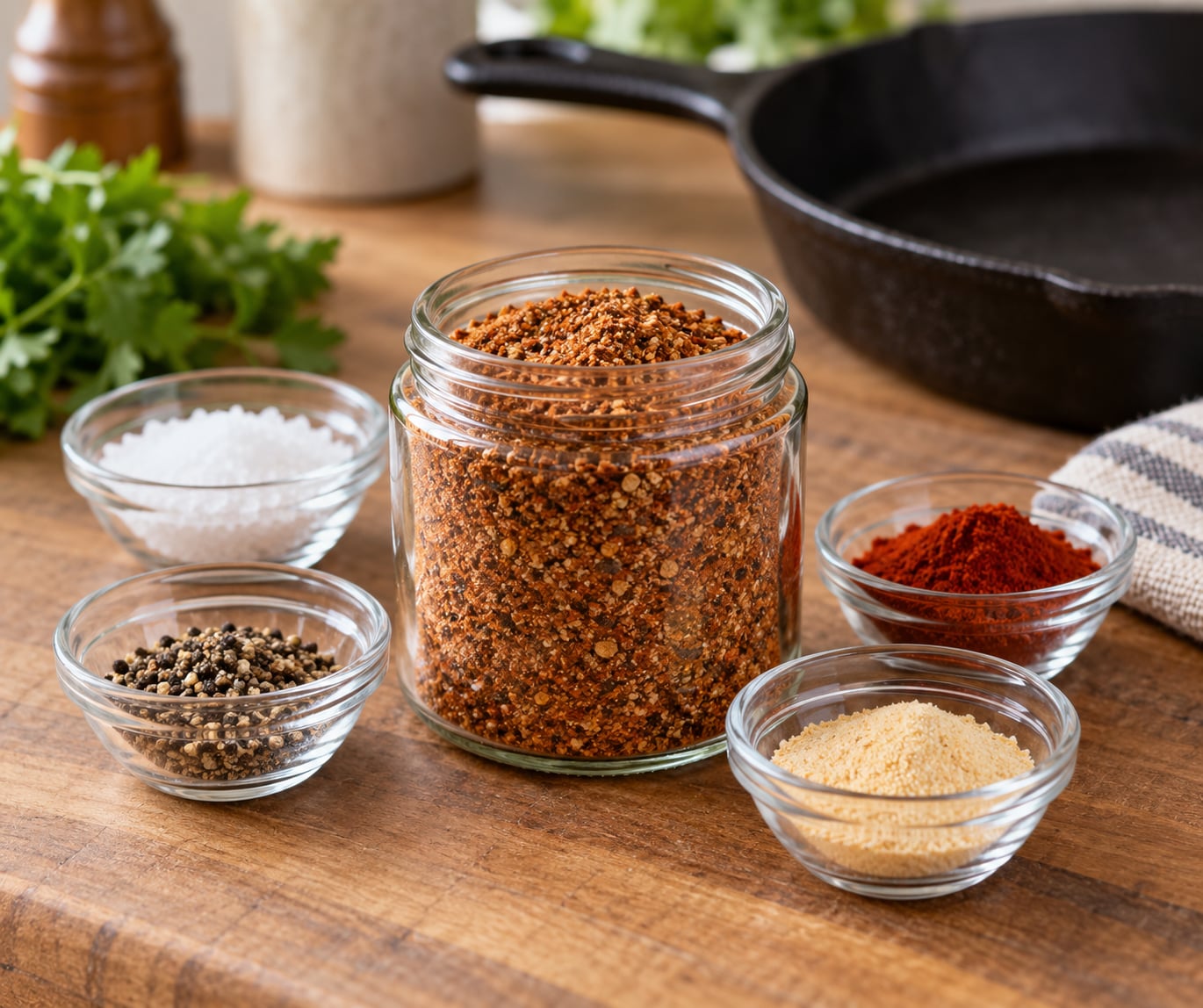
Transfer the finished blend to a labeled airtight jar, write the date on the lid, and keep it in a cool, dark pantry away from the stove.
Use it within about six months for the brightest flavor, and expect the aroma to fade sooner than the salt does. If you like to keep a working jar by the grill, treat that one as refill stock and keep the sealed reserve jar in the back of a cabinet.
Common Mistakes
Almost every disappointing batch of homemade steak seasoning comes down to one of five things, and all of them are easy to fix.
Over-salting. Homemade rubs overshoot on salt because kosher salt and table salt do not measure the same by volume, and because the recipe is nearly half salt by weight. Use lower-sodium kosher salt and drop the tablespoon to two, or leave the salt out entirely and season the meat itself with salt before the rub goes on. Taste a pinch before it ever reaches a steak.
Grinding everything too finely. A blender or food processor run too long turns the whole blend into dust that vanishes into the meat. Pulse a spice grinder instead and stop when it still looks slightly uneven. Leaving part of the black pepper coarse is the single cheapest upgrade here.
Using stale spices. Ground spices lose their aroma long before their flavor, and old paprika turns flat and dull. Open the jar and smell it. If the oregano smells like a closet, the blend is not going to taste like a steakhouse no matter how good your ratios are.
Adding heat to a blend that is supposed to be savory. Cayenne and red pepper flakes are the most common reason a copycat blend tastes wrong, and once they are on a steak they cannot be removed. Add them to only the portion you are cooking that night, and start with a pinch rather than a teaspoon.
Applying the rub right before the sear without drying the meat. Salt pulls surface moisture to the outside of the steak over time, and a wet surface steams instead of browning. Pat the steak dry with paper towels, season it just before it hits the hot pan, and give it a minute or two before flipping. You are after crust, and crust needs a dry surface to start.
A few practical habits that make the blend stretch further. Use it on burgers pressed into the meat right before they hit the grill, on roasted potatoes and corn tossed with a little oil, on pork chops, and on grilled vegetables where it does the work of a whole marinade. On thicker cuts, season the night before and keep it under forty minutes, since longer than that and the salt starts drawing more moisture than you want.
On the grill, watch for burn. Any blend with sugar in it will catch and turn bitter over direct high heat, so sear on one side over direct heat and move the steak to an indirect zone or a cooler side of the grate to finish. Pull whole cuts at 145 degrees for the USDA minimum, and rest them five to ten minutes before slicing so the juices stay in the meat.
Frequently Asked Questions
How long does homemade steak house seasoning stay fresh?
In a sealed, airtight jar kept in a cool dark pantry, the blend stays at peak flavor for about six months. In a jar that sits open by the stove or gets damp spoons in it, expect closer to three. The salt keeps it from spoiling, so it stays safe well past that; it just tastes flatter. Label the jar with the date and toss it when the aroma fades.
How much steak house seasoning should I use on a steak?
Use about one tablespoon per pound of steak, scattered over both sides and the edges rather than poured on top. For a thick ribeye you can go a little heavier on the fat cap. Apply it right before the steak hits a hot, dry pan so the surface is still damp enough for the rub to stick and dry enough to crust.
Can I use steak house seasoning on chicken?
Yes, and it is one of the most useful things in the jar. The salt, pepper, garlic and paprika work on any meat that sears well, so use it on chicken breasts, pork chops, shrimp and even thick salmon fillets. Poultry needs to reach 165 degrees internally, and it is worth tasting one piece before seasoning the whole batch.
How do I make steak house seasoning without too much salt?
Drop the salt to two tablespoons, or leave it out entirely and season the meat with salt separately so you control the amount per piece. Lower-sodium kosher salt works and keeps more of the pepper and garlic forward. Salt also gives the blend its keeping quality, so if you leave it out, store the mix in the fridge and use it within a couple of months.
Can steak house seasoning be used on vegetables and burgers?
Yes, and most people use more of the jar on vegetables than on steak. Press it into raw burger patties before grilling, toss it with oil on roasted potatoes, corn, or green beans, and dust it over cauliflower or mushrooms in the last few minutes of roasting. Foods that are already salted, like brined or cured items, need a much lighter hand.
Should I use kosher salt or table salt for steak seasoning?
Fine kosher salt is the better choice because it seasons evenly without the harsh bite of table salt, and its crystals dissolve faster on a wet steak surface. Table salt works in a pinch, but because it packs tighter by volume, use about three-quarters of the amount called for. Sea salt is fine for finishing on top after cooking.
Conclusion
Start by measuring the salt and the nine spices into one bowl. Toast the cumin and oregano for half a minute so they smell like something, grind them with the pepper so a little texture survives, and whisk everything together before tasting a pinch.
Then label the jar with the date and put it back in the pantry. By next week you have a homemade steak house seasoning you can adjust to your own taste, which is the one thing no jar off a shelf gives you.