How to make blackened seasoning at home takes about five minutes and gives you roughly six tablespoons of a peppery, smoky blend built on smoked paprika, garlic powder, cayenne and dried herbs. No specialty equipment, no premixed jar. You measure, stir and store, and you control the heat and the salt the whole time.
That last part is why most people make their own. Jarred blends tend to be heavy on salt and light on aroma, and once the spices on the shelf have been sitting for a few years there is not much left to smell. A homemade batch tastes brighter, costs almost nothing to put together, and lets you dial the cayenne up or leave it out entirely.
Below is the base formula I keep in a jar by the stove, what each spice is doing in there, how to get a true black crust on fish or chicken in a home kitchen, and how to keep the jar good for months after you make it.
Table of Contents
- What You Need to Make Blackened Seasoning at Home
- Step-by-Step
- How to Make Blackened Seasoning at Home
- How to Use It on Fish, Chicken, and Vegetables
- How to Store It and How Long It Keeps
- Blackened vs Cajun vs Creole Seasoning
- Common Mistakes
- Frequently Asked Questions
- What spices are in blackened seasoning?
- Can I make blackened seasoning without cayenne pepper?
- How spicy is homemade blackened seasoning?
- How long does blackened seasoning stay fresh?
- Should I oil food before applying blackened seasoning?
- Can I use blackened seasoning on vegetables?
- Conclusion
What You Need to Make Blackened Seasoning at Home
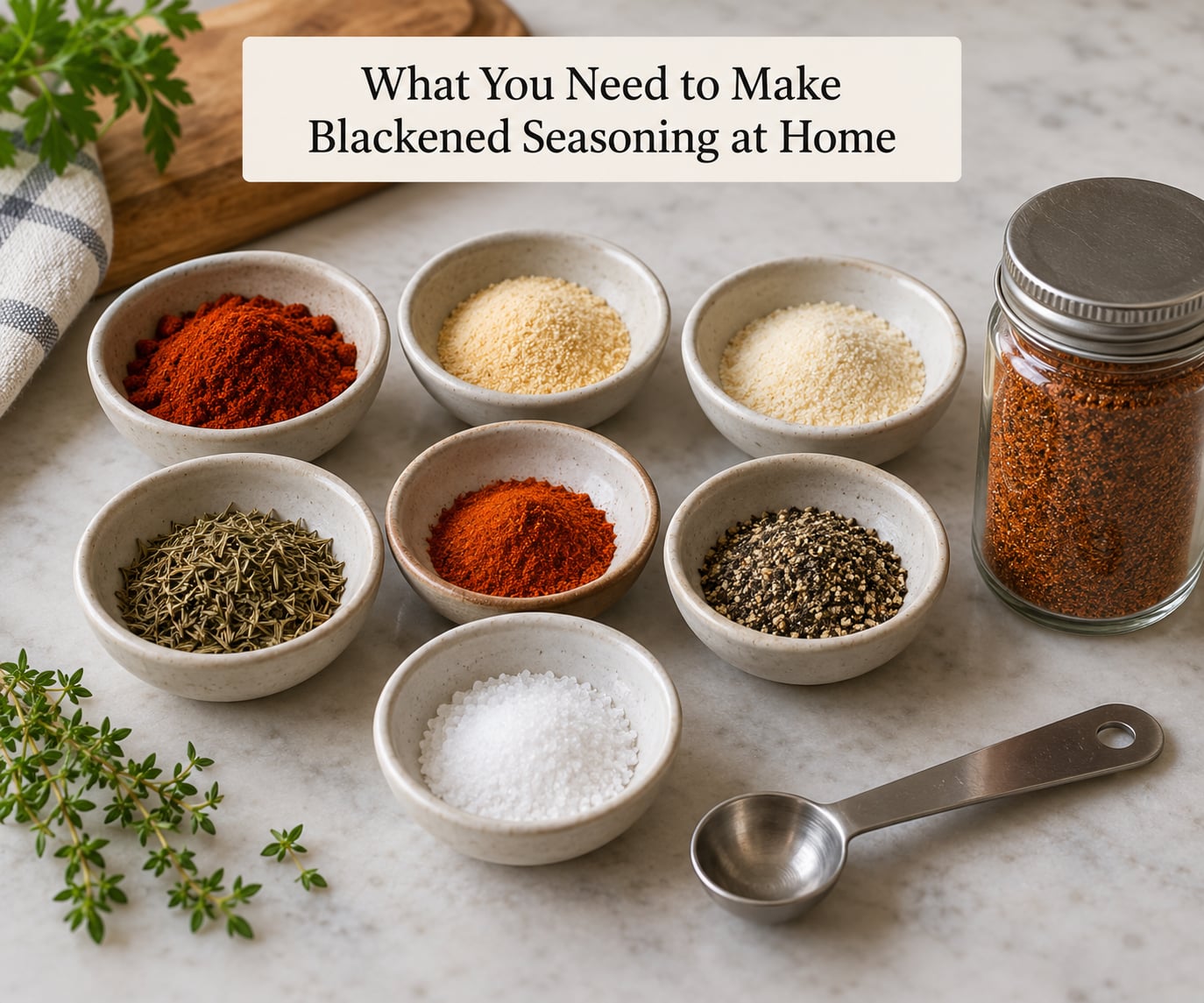
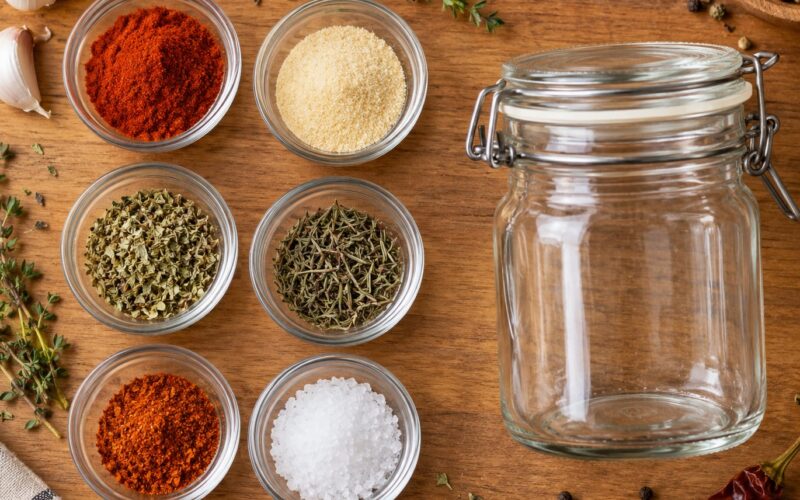
Everything below is either already in a well-stocked pantry or cheap to pick up. The base recipe makes about 6 tablespoons, which is roughly 2 tablespoons per pound of protein or a jar that lasts a month of weeknight cooking.
- 3 tablespoons smoked paprika — the base. Smoked, sweet, faintly earthy. Regular paprika works, you just lose the smoke and need another spice to fill the gap.
- 2 teaspoons garlic powder — savory depth. Granulated garlic gives a sharper, more textured note if you prefer it.
- 1 teaspoon onion powder — sweetness that survives high heat without turning sugary.
- 1 teaspoon cayenne pepper — the heat. This is the dial you turn up or down, not a fixed rule.
- 1 teaspoon dried thyme — the herb note that makes the blend smell like blackening rather than generic spice rub.
- 1 teaspoon ground black pepper — peppery bite and aroma. White pepper is the swap if you want heat without the visible flecks.
- 2 teaspoons kosher salt — Diamond Crystal or similar, so it seasons evenly. Skip it entirely if you salt the food separately.
- 1/2 teaspoon dried oregano — a little floral, woody punctuation.
- 1/2 teaspoon ground mustard powder — a tangy edge that keeps the blend from tasting flat. Optional but I would not skip it.
Three optional additions change the blend in specific ways. A teaspoon of brown sugar rounds the paprika and takes the edge off the cayenne, which is useful on thicker cuts like pork chops. Half a teaspoon of white pepper gives a cleaner, sharper heat than black pepper. A pinch of celery seed adds a grassy, almost savory note that some people love and some find strange, so use less than you think you need.
One practical note on salt, since it comes up constantly: forum cooks who have kept a personal formula for years tend to put salt in the blend and then season nothing else. Others leave it out and salt the protein separately so they can adjust for brined or already-salty food. Both work. Pick one and stay consistent, because a seasoning mix used inconsistently is how food ends up bland in the middle and salty on top.
Step-by-Step
How to Make Blackened Seasoning at Home
The method is deliberately dull, which is why it works every time.
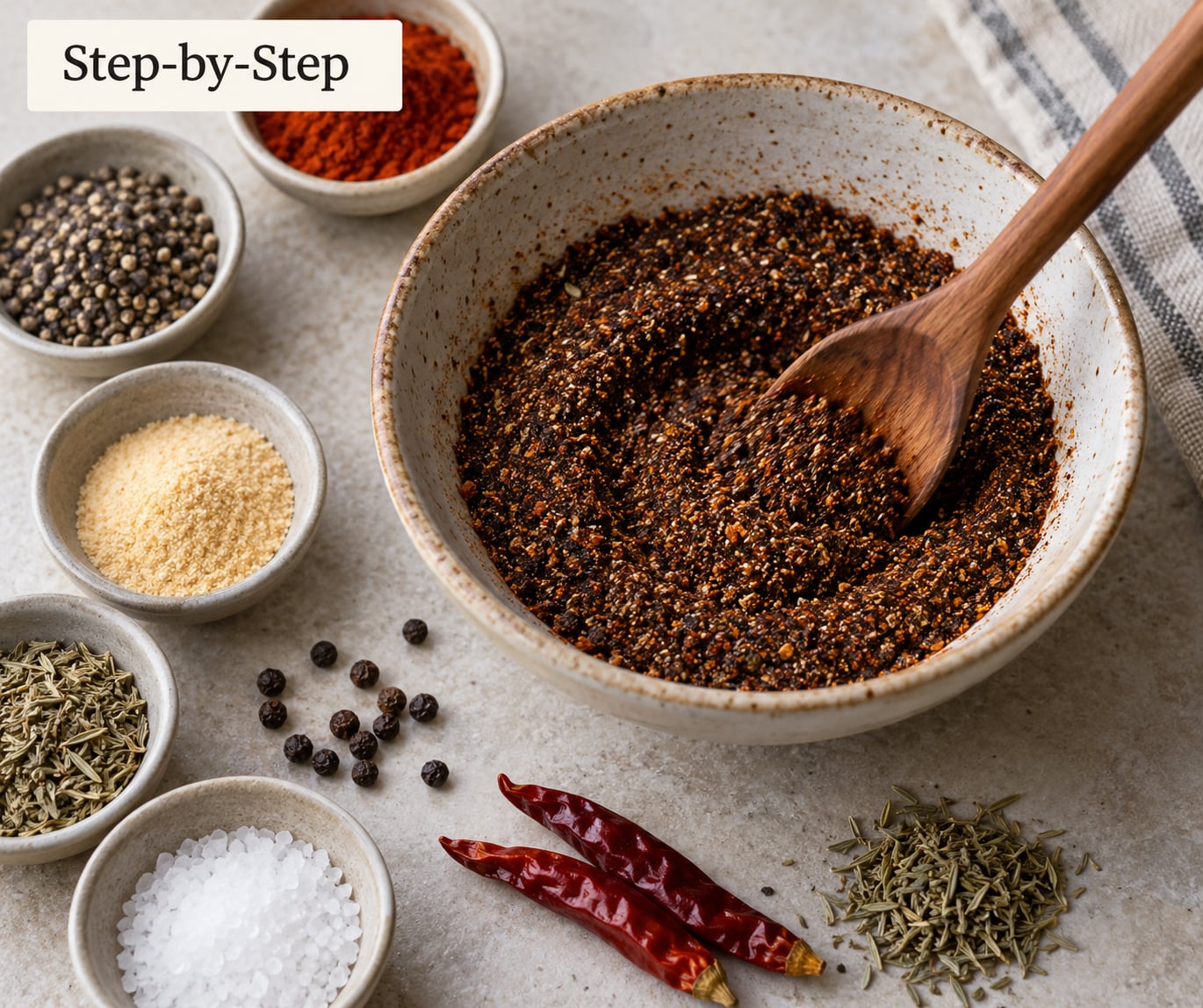
- Measure everything first. Spoon each spice into its own small bowl or on a sheet of paper before you pour anything into the mixing bowl. Cayenne hides behind paprika and clumps, and finding a teaspoon of it later is annoying.
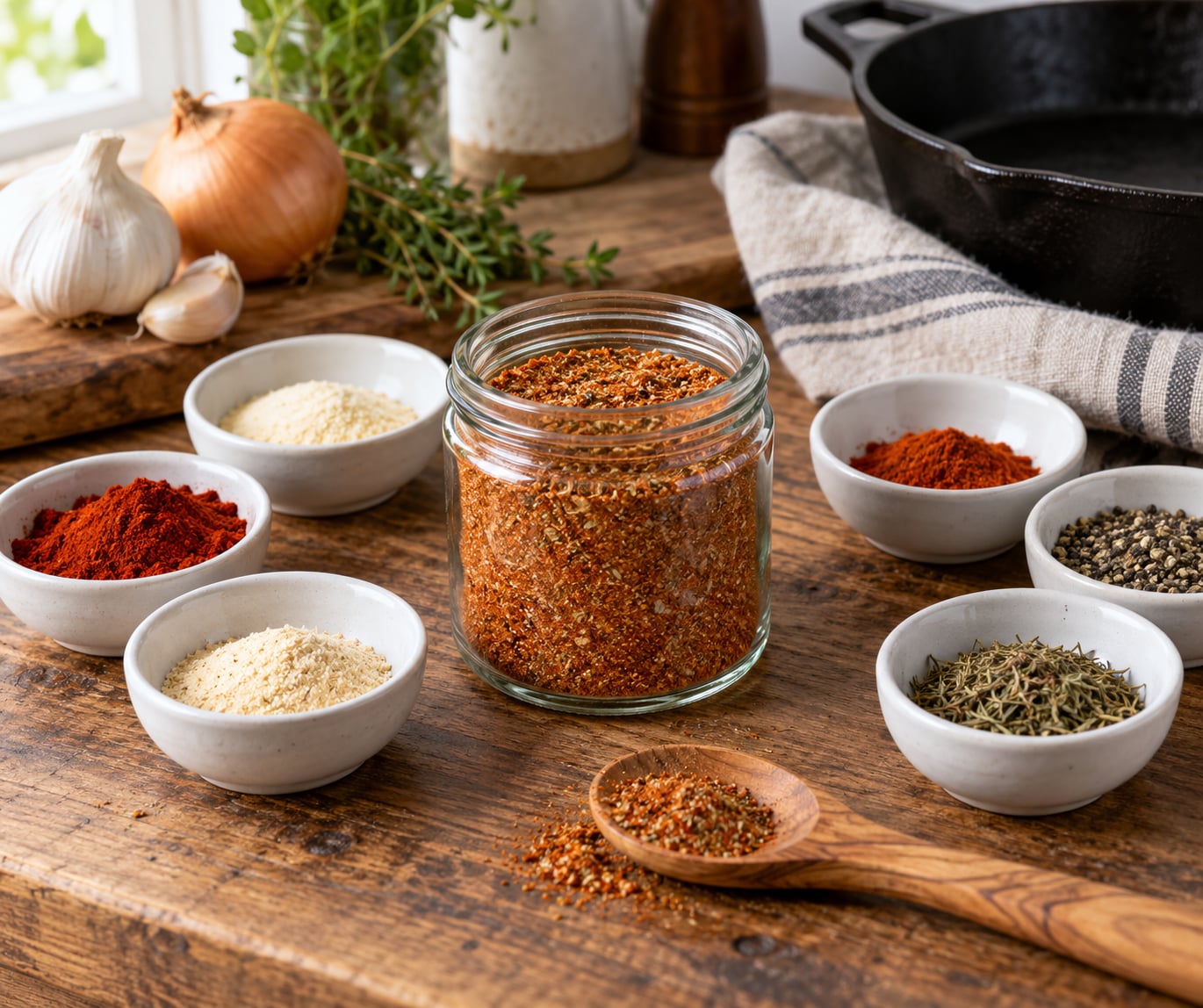
- Combine and stir. Tip all of it into one small bowl and stir with a fork or spoon for 30 to 60 seconds until the color is completely even. If you see streaks of red or white, keep stirring.
- Taste a pinch. Put a small amount on your fingertip. It should taste savory and smoky with heat at the back. If it tastes only hot and nothing else, add another tablespoon of smoked paprika. If it tastes flat, add 1/2 teaspoon more garlic powder and another 1/2 teaspoon of salt.
- Label and store. Pour the finished blend into a jar with a tight lid and write the date on masking tape. A plain 4-ounce mason jar is plenty.
Adjusting the heat is simple arithmetic. Add 1/2 teaspoon cayenne per batch for a hotter blend, or leave cayenne out and use 2 teaspoons of chili powder instead for warmth without sharp capsaicin. To make it milder, drop cayenne to 1/2 teaspoon and add 1/2 teaspoon extra smoked paprika. Doubling the recipe scales cleanly: two batches give about 12 tablespoons, which is enough for a large family meal or a jar to hand someone else.
One optional technique: toast the dried spices in a dry skillet over medium heat for 60 to 90 seconds before mixing, just until they smell fragrant. It deepens the flavor slightly and wakes up spices that have been in the cabinet a while. Watch them, because paprika goes from fragrant to acrid fast once it catches.
How to Use It on Fish, Chicken, and Vegetables
The seasoning is only half the technique. Real blackening comes from fat plus very high heat plus a heavy coat, and a home stovetop will not always get you there in one shot.
- Heat the pan until it is smoking. Cast iron or a heavy carbon steel skillet, set over high heat, until you see a haze rising off the surface. Cast iron holds temperature better than anything else you own at home.
- Melt butter in a shallow dish. A tablespoon of melted butter per piece, enough to coat both sides.
- Press the food into the butter, then into the seasoning. Heavy is right. A thin dusting steams instead of crusting. Aim for a visible, even layer with no bare patches.
- Press it into the pan and leave it alone. Lay the coated side down and do not move it for 3 to 4 minutes, until the crust releases on its own and the outside is dark brown to nearly black.
- Flip, add a spoon of butter, and baste. Two more minutes on the second side, spooning melted butter over the top as it cooks.
Doneness matters more than the crust. Fish and shell-on fillets reach 145°F, chicken and poultry reach 165°F, and whole cuts of beef, pork and lamb reach 145°F with a three-minute rest. Those are the USDA minimum internal temperatures, and an instant-read thermometer in the thickest part is faster and more reliable than cutting into the food.
Shrimp and thin fillets take 2 to 3 minutes a side. Chicken breasts go in flat and finish in a low oven. Vegetables work too: corn, zucchini, eggplant and peppers char beautifully, though you will want to oil them lightly first so the seasoning sticks. Salt the food before the seasoning, not after, so the salt has time to penetrate.
How to Store It and How Long It Keeps
Pour the finished blend into an airtight container and put it in a cool, dark cabinet away from the stove and the window. Light and heat are what flatten the aroma, and an airtight seal keeps moisture and oils in the blend instead of on the shelf.
Four to six months is the window where the blend tastes best. Up to twelve months is the practical ceiling, after which the paprika dulls and the herbs go dusty, though it will not make anyone sick. If you mix a lot of it, freeze the excess in a freezer-safe bag or a small jar, leave a bit of headspace, and thaw it to the counter when you need it. Frozen spices keep their aroma noticeably better than spices sitting in a jar for a year.
Blackened vs Cajun vs Creole Seasoning
These three get used interchangeably in restaurants and rarely should be. Blackening seasoning is built for high heat and crust formation, Cajun seasoning leans green and herbal, and Creole seasoning leans tomato-forward with a gentler heat profile.
| Blend | Heat level | Herb profile | Typical use |
|---|---|---|---|
| Blackened | Medium to hot, usually cayenne-forward | Low, smoke and pepper dominate | Searing fish, chicken, shrimp, vegetables in butter |
| Cajun | Medium, often green pepper and cayenne | High, thyme, oregano and parsley forward | Seasoning chicken, gumbo, jambalaya, dirty rice |
| Creole | Mild to medium | Medium, with bell pepper and thyme | Seasoning shrimp, sausage, soups and tomato dishes |
The practical difference for your kitchen: Cajun seasoning is fine on a dish you are simmering for an hour, while blackening seasoning is best used within the four minutes it takes to sear. Its flavors are built to survive screaming-hot cast iron, which is also why a heavy hand is correct there and wrong almost everywhere else.
Common Mistakes
The crust comes out grey instead of black. The pan was not hot enough or the food sat still too long to form a crust. Give the skillet a full two minutes on high before adding anything, and resist the urge to check or move the food. Grey seasoning with steam is the sign the heat was too low or the coat was too thin.
Everything is bitter. Paprika burned. The spices toast fast once the oil is in, and black pepper and paprika go acrid within seconds of catching. Stir constantly during the butter step and pull the pan off the heat if the butter browns rather than foams.
The seasoning tastes like nothing. Usually two causes: the spices are old, or the salt is missing. Break a pinch open and smell it. If there is no aroma, buy new jars before you remake the blend, and add an extra 1/2 teaspoon of salt before you add more paprika.
It is gritty. You ground everything, including the herbs, or the blend sat unsealed and the top turned to powder. Store the jar closed, and use ground dried herbs rather than rubbing the leaves between your fingers.
The kitchen fills with smoke. Run the exhaust fan before the skillet goes on, not after, open a window, and turn the burner to high for the final two minutes rather than starting high. Expect visible smoke. That is the seasoning blistering, not something going wrong.
Home pans will not get hot enough. Most stovetops top out well below a restaurant burner, so a sear that should take four minutes can stall. Work in smaller batches so the pan does not drop temperature, give it a full preheat, and finish the protein in a 375°F oven if the crust is browning faster than the center is cooking.
Frequently Asked Questions
What spices are in blackened seasoning?
The core of a homemade blend is smoked paprika, garlic powder, onion powder, cayenne, black pepper, salt, dried thyme and oregano, with ground mustard powder for tang. Many cooks add basil, white pepper or a teaspoon of brown sugar. The proportions are flexible as long as paprika leads, garlic and onion stay close behind, and salt and heat are adjusted to your taste.
Can I make blackened seasoning without cayenne pepper?
Yes, and you lose almost nothing. Leave the cayenne out and use 2 teaspoons of chili powder instead for warmth without the sharp burn, or add an extra teaspoon of smoked paprika for depth. White pepper gives a similar clean heat. Taste the blend before bottling it and add cayenne later if the finished seasoning feels too mild on fish.
How spicy is homemade blackened seasoning?
It depends entirely on the cayenne, which is the only real source of heat in the base recipe. At 1 teaspoon per 6 tablespoons of blend, most people describe it as a warm background kick rather than burn, especially since the fat in butter and the crust mellow it further. Halve the cayenne for a mild version or double it for a hot one, then taste as you go.
How long does blackened seasoning stay fresh?
Four to six months gives you the best aroma in an airtight jar kept in a cool, dark cabinet. Twelve months is the practical ceiling before the paprika dulls and the herbs turn dusty, though the blend stays safe well past that. If you make double batches, freeze the extra in a sealed bag with a little headspace and it will hold its aroma far longer than a jar on the shelf.
Should I oil food before applying blackened seasoning?
Butter is the classic choice and the best one, because the fat carries the spices into the crust. Melt a tablespoon of butter in a shallow dish, press the food into it, then press it firmly into the seasoning. For vegetables, a light coat of neutral oil works instead. Dry surfaces steam, and you get a seasoned dish rather than the dark crust blackening is named for.
Can I use blackened seasoning on vegetables?
Yes, and it is one of the most useful applications. Corn, zucchini, eggplant, bell peppers and thick-cut onions all char well, since they hold up to four minutes a side without falling apart. Brush them lightly with oil first so the seasoning adheres, then sear in the same screaming-hot pan. Blackened corn with lime and butter is a two-minute job once the blend is in the cabinet.
Conclusion
Start with the single batch above and make it once, exactly as written, so you know what the blend tastes like before you start adjusting it. Once that jar is on your shelf, the only thing left to decide is heat: less cayenne for pork chops and vegetables, more for shrimp.
Six tablespoons is enough for roughly two pounds of protein, and the same jar handles a weeknight chicken dinner, a pan of blackened corn and a batch of fish tacos. Make a second batch once you know the ratio suits you, and freeze half of it so you are not rebuilding the whole thing from spices every time the cabinet runs dry.