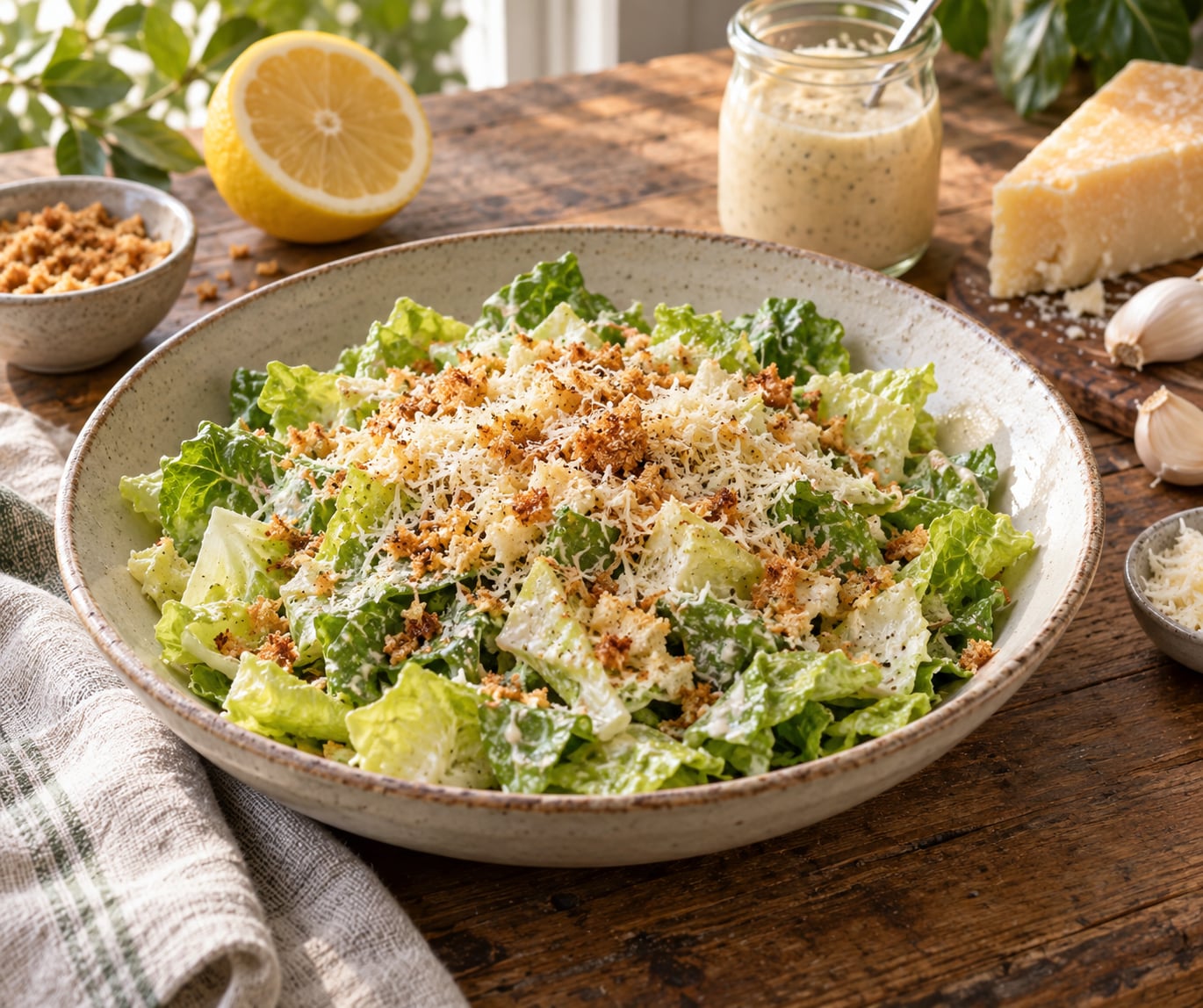
A Caesar salad is crisp romaine, grated Parmesan, crunchy croutons and a garlic-lemon dressing built by emulsifying egg yolk with slowly streamed olive oil, and doing it at home takes about 30 minutes. The dressing is the whole dish, which is why a jarred bottle tastes so flat next to it. Here is how to make a caesar salad with homemade dressing that coats every leaf instead of pooling at the bottom of the bowl.
Prep is 20 minutes, there is no cooking beyond toasting breadcrumbs, and the yield is four side-sized portions or two generous mains. Difficulty is low. The only technique that rewards care is whisking the oil in slowly, and once you get that, you will keep the dressing on hand all summer.
Table of Contents
- What You Need
- For the classic homemade dressing
- For the salad
- Step-by-Step: How to Make a Caesar Salad With Homemade Dressing
- Make the Homemade Caesar Dressing From Scratch
- Prepare and Season the Romaine
- Assemble the Caesar Salad With Homemade Dressing
- Common Mistakes
- The lettuce turned soggy
- The dressing is thin and watery
- The dressing broke and separated
- The dressing tastes too sharp or bitter
- The croutons are greasy or soft
- The salad is too salty
- Frequently Asked Questions
- How do I make Caesar dressing from scratch?
- What ingredients do you need for Caesar salad dressing?
- How do I thicken up my Caesar salad dressing?
- Can I make Caesar salad without anchovies?
- Do I need to coddle the egg for Caesar dressing?
- How do I keep Caesar salad crisp for a party?
- Conclusion
What You Need
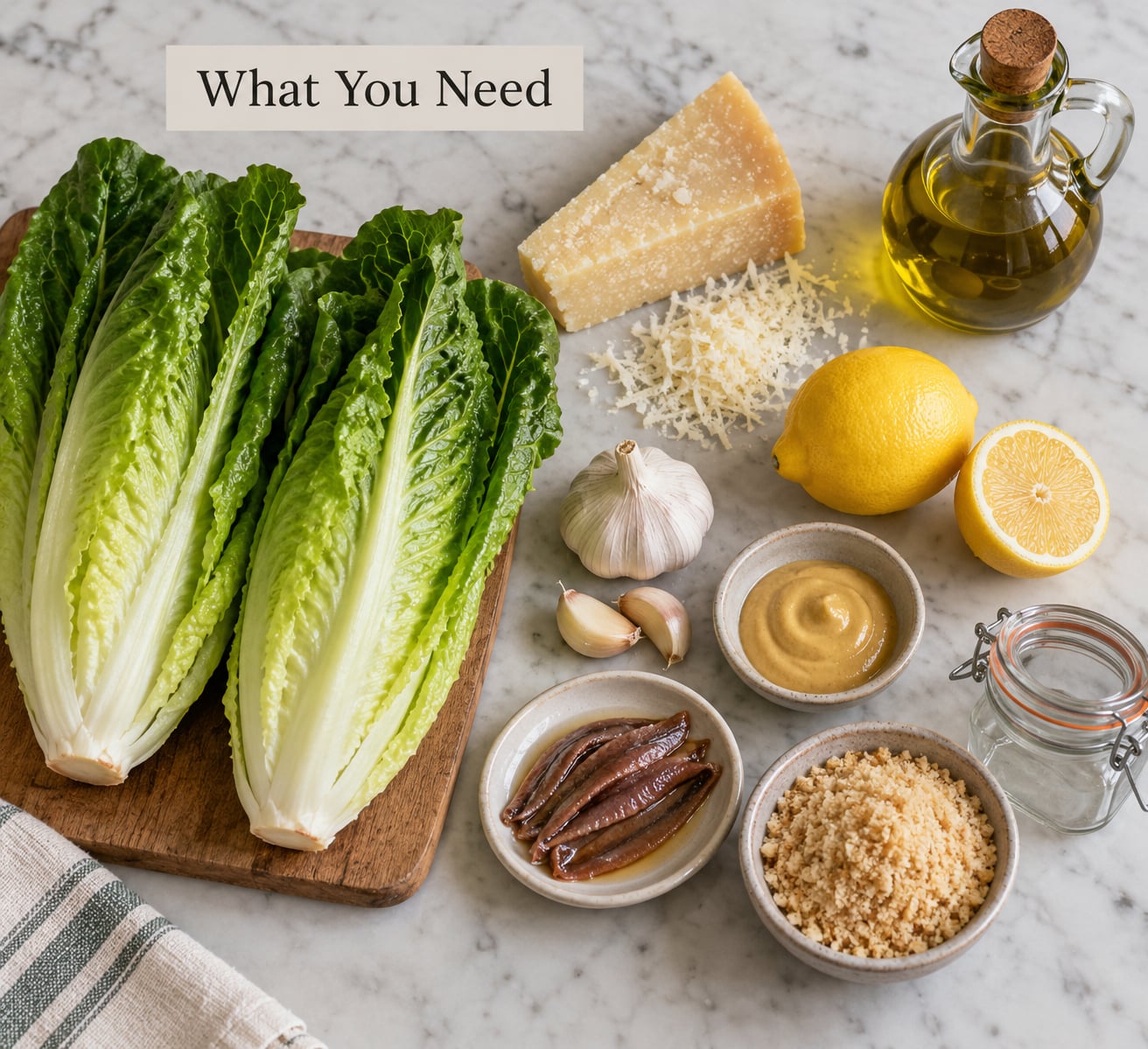
Caesar dressing is a thick, emulsified garlic-and-lemon sauce built on olive oil and an egg yolk, sharpened with Dijon mustard and Worcestershire, salty with Parmesan, and traditionally flavored with anchovies. That list is the entire dressing. Everything else on this list supports it.
For the classic homemade dressing
- 1 garlic clove, grated or minced
- 2 anchovy fillets in oil, rinsed and finely chopped (or 1 teaspoon anchovy paste)
- 1 large egg yolk, at room temperature
- 1 tablespoon fresh lemon juice, plus more to taste
- 1 teaspoon Dijon mustard
- 1 teaspoon Worcestershire sauce
- 1/2 cup finely grated Parmesan, divided
- 1/3 cup extra virgin olive oil
- 1/2 teaspoon freshly ground black pepper
For the salad
- 2 romaine hearts or 1 large head, outer leaves removed
- 1 cup panko breadcrumbs or day-old bread cubes
- 2 tablespoons unsalted butter or olive oil, for the breadcrumbs
- Remaining Parmesan, for grating over the bowl
- A squeeze of lemon and a little black pepper, for finishing
Tools matter less than people think. A salad spinner or clean towel gets the romaine dry, a microplane handles the Parmesan and garlic, and a wide bowl gives you room to toss. A food processor makes the emulsification effortless, but a mason jar and a whisk work about as well.
Three substitutions cover most households. Skip anchovies and mash in 1 tablespoon white miso plus 2 chopped capers, which supplies the same salty umami without fish. Avoid raw egg entirely and blend 1/3 cup mayonnaise with the lemon, Dijon, Parmesan and garlic for a dressing that is thinner but still good. For a gluten-free bowl, toast 1/2 cup chopped walnuts or pumpkin seeds instead of breadcrumbs.
Step-by-Step: How to Make a Caesar Salad With Homemade Dressing
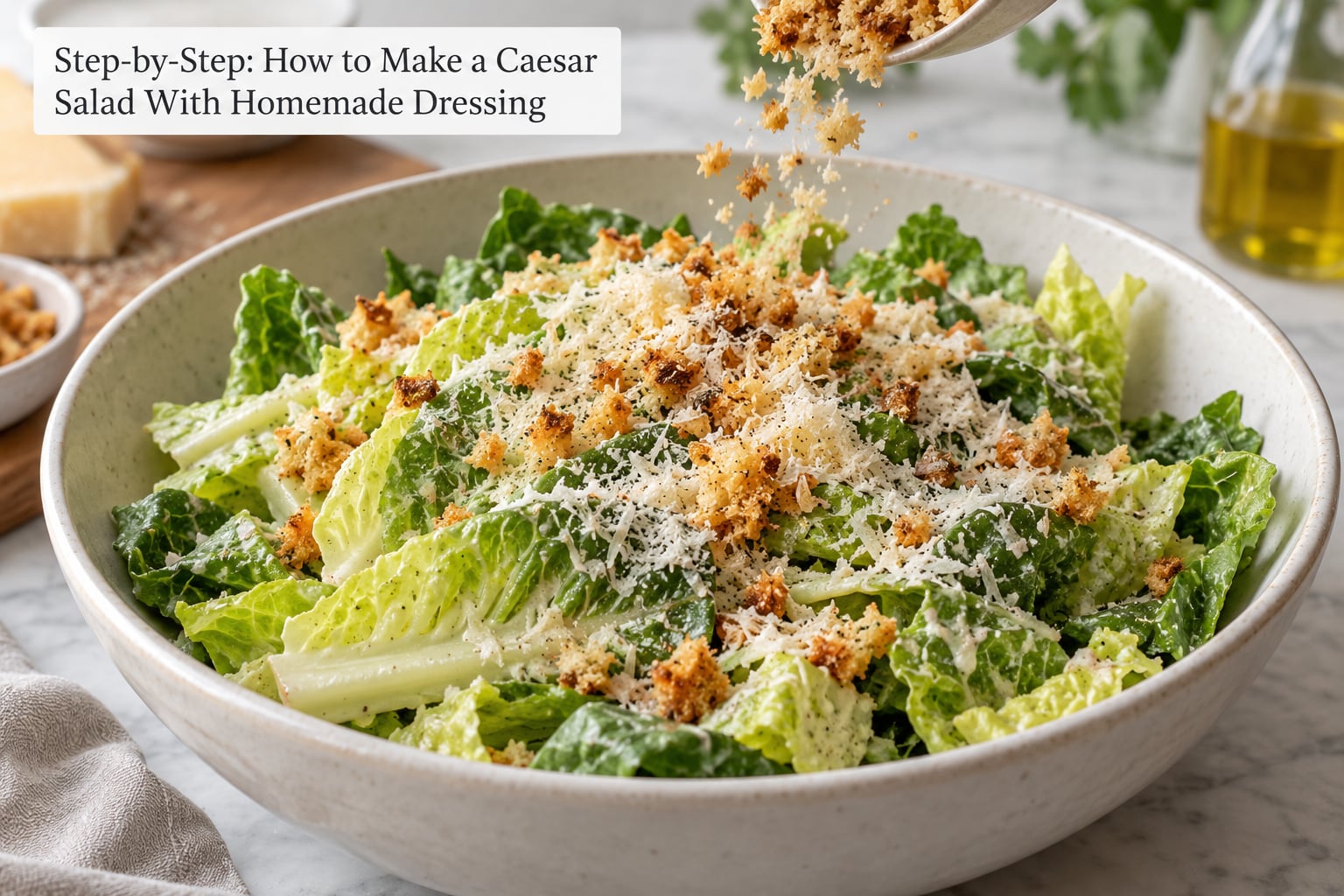
Make the dressing first, then let the romaine dry while you toast the breadcrumbs. The dressing keeps three days refrigerated, so it can get made ahead, but the salad itself comes together in the last five minutes.
Make the Homemade Caesar Dressing From Scratch
Whisking the egg yolk with lemon juice creates the base, and streaming in olive oil while you whisk steadily is what turns the mixture pale and thick. Dump the oil in fast and it stays thin and watery no matter how long you stir. That single habit separates restaurant dressing from a jar.
- Mash the anchovies and garlic. Put 2 rinsed anchovy fillets and 1 grated garlic clove in a bowl and press them together with the back of a spoon until they form a paste. Scrape down from the side of the bowl. If you are using anchovy paste, use half the amount, because it is considerably saltier.
- Whisk in the yolk, lemon, and seasonings. Add 1 room-temperature egg yolk, 1 tablespoon lemon juice, 1 teaspoon Dijon, 1 teaspoon Worcestershire, and 1/2 teaspoon black pepper. Whisk until the mixture looks pale yellow and slightly foamy, about 30 seconds.
- Stream the oil in slowly. Set a whisk or a fork moving and pour in about 1 tablespoon of olive oil, then wait until it disappears into the mixture before adding the next. The dressing should thicken and lighten in color within a minute. If it turns thin again, keep whisking or start again with a fresh yolk.
- Fold in half the Parmesan. Add 1/4 cup of the finely grated Parmesan and whisk until completely smooth, with no visible streaks.
- Taste before you salt. Anchovies and Parmesan bring plenty of salt on their own. Taste, then season with black pepper and a squeeze of lemon. A well-balanced dressing tastes creamy first, then savory, with lemon right at the back.
- Adjust the consistency. It should coat the back of a spoon and fall slowly. Too thick? Beat in a teaspoon of lemon juice. Too thin? Beat in another tablespoon of Parmesan. Cover and refrigerate until you need it.
Two faster routes get you the same flavor. For an anchovy-free dressing, blend 1 tablespoon white miso with 2 chopped capers and 1 grated garlic clove, then whisk in 1/3 cup olive oil, 1 tablespoon lemon, 1 teaspoon Dijon and 1/4 cup Parmesan. For a no-raw-egg version, blend 1/3 cup mayonnaise with 1 tablespoon lemon juice, 2 anchovies, 1 garlic clove, 1 teaspoon Dijon and 1/4 cup Parmesan until smooth. Both are stable for days in the fridge and both coat the leaves more lightly than the classic version.
Prepare and Season the Romaine
Cut off the outer leaves, slice the romaine hearts in half lengthwise, then chop into two-inch pieces. Romaine hearts work better than a full head because the inner leaves stay tender and the ribs stay crunchy, and they need almost no trimming.
Wash the chopped romaine in cold water, then dry it properly. Use a salad spinner and run it twice, or roll the leaves in a clean kitchen towel and press gently. Lettuce that still holds water turns a creamy dressing into soup within minutes, and this is the single most common way Caesar salad goes wrong at home.
Chill the romaine in a sealed container in the fridge while you make everything else. Cold, dry leaves hold their crunch and keep the dressing from wilting them on contact. Season the lettuce lightly with a pinch of salt and a little black pepper before it meets the dressing, and hold back on the full seasoning until after the toss.
Assemble the Caesar Salad With Homemade Dressing
Put the romaine in your widest bowl and pour over about two-thirds of the dressing. Start with less than you think you need, because you can always add more, and an over-dressed salad cannot be rescued. Toss with two large spoons or your hands until every leaf has a thin, even sheen.
Taste a leaf. If it needs more, add the rest of the dressing a spoonful at a time. Then grate Parmesan over the top, scatter the toasted breadcrumbs, and finish with a squeeze of lemon and a grind of pepper.
Toast breadcrumbs by melting 2 tablespoons butter in a skillet over medium heat, adding 1 cup panko, and stirring until golden, about 3 minutes. Keep them loose and light, and hold off adding them until the very end so they stay crunchy instead of soft.
Serve the bowl right away, ideally with extra dressing in a small pitcher on the side so each person can add more. A Caesar salad built this way holds its crunch for the length of dinner, which is exactly what you want next to burgers, grilled chicken or a smoky steak off the grill.
Common Mistakes
Almost every disappointing Caesar salad comes down to four things. Here is what went wrong and what to do about it.
The lettuce turned soggy
The leaves were not dry enough, or the salad was dressed too early. Dry romaine twice, chill it ahead, and dress only when everyone is at the table. If you must prepare ahead, keep the dressing and the lettuce separate and toss at the last moment.
The dressing is thin and watery
The oil went in too fast. Emulsification happens gradually, and each tablespoon needs to disappear before the next. Restart with a fresh egg yolk, add 1 tablespoon of oil, whisk hard until it thickens, then continue slowly. A spoonful of extra Parmesan also thickens a thin dressing.
The dressing broke and separated
Once an emulsion splits it looks curdled and oily, and whisking alone will not fix it. Beat in a tablespoon of cold water or a pinch of salt to bring it back together, or start over. If the cause was overheating, add the oil in cooler, slower streams next time.
The dressing tastes too sharp or bitter
Too much lemon and not enough Parmesan. Pull it back with 2 tablespoons finely grated Parmesan and 1 teaspoon olive oil, then taste again. Bitter garlic usually means a clove was browned before it went into the bowl, so grate it fresh rather than cooking it.
The croutons are greasy or soft
Too much butter, or breadcrumbs added too early. Toast them in a dry or lightly buttered skillet until they are golden and loose, and scatter them over the salad at the very last second. Store-bought croutons tend to be oily and dense, which is why homemade ones are worth 10 minutes.
The salad is too salty
Salt was added before tasting. Anchovies, Parmesan and Worcestershire all carry salt already, so season only after everything is mixed, and taste a leaf before reaching for the grinder.
Working with store-bought dressing instead? Half of any jarred Caesar and half of your own lemon-vinegar or olive-oil dressing makes it taste closer to house dressing, and adding a spoonful of finely grated Parmesan helps it cling.
Frequently Asked Questions
How do I make Caesar dressing from scratch?
Mash 2 anchovy fillets with 1 grated garlic clove into a paste, then whisk in 1 egg yolk, 1 tablespoon lemon juice, 1 teaspoon Dijon mustard, 1 teaspoon Worcestershire and black pepper. Stream in 1/3 cup olive oil one tablespoon at a time while whisking constantly, then fold in 1/4 cup finely grated Parmesan. Taste for salt before adding any more. The dressing should be thick enough to coat a spoon.
What ingredients do you need for Caesar salad dressing?
The classic dressing needs garlic, anchovy fillets, one egg yolk, fresh lemon juice, Dijon mustard, Worcestershire sauce, finely grated Parmesan, extra virgin olive oil and black pepper. That is the traditional list, and the Parmesan goes into the dressing itself rather than only on top. For the bowl you add chopped romaine, toasted breadcrumbs and more Parmesan.
How do I thicken up my Caesar salad dressing?
If the dressing is too thin, beat in a tablespoon of finely grated Parmesan and whisk it in until it disappears. For an emulsion that stayed watery because the oil went in too fast, start again with a fresh egg yolk, whisk in one tablespoon of oil until the mixture thickens, then continue adding oil slowly. A spoonful of any emulsifying mustard also thickens a broken dressing.
Can I make Caesar salad without anchovies?
Yes, and most people cannot tell once the salt is right. Mash 1 tablespoon white miso with 2 chopped capers and a grated garlic clove, then whisk in olive oil, lemon juice, Dijon and Parmesan until creamy. The miso and capers supply the savory depth anchovies do. You can also leave them out entirely and lean on Worcestershire plus an extra squeeze of lemon for brightness.
Do I need to coddle the egg for Caesar dressing?
No. The raw yolk is traditional and is what gives the dressing its body, but use pasteurized eggs if you are serving anyone pregnant, elderly, very young or immunocompromised. Another route is blending 1/3 cup mayonnaise with the lemon, Dijon, Parmesan and garlic, which needs no raw egg at all. Homemade egg-based dressing keeps in the fridge for 2 to 3 days.
How do I keep Caesar salad crisp for a party?
Chop and dry the romaine, then refrigerate it. Make the dressing and toast the breadcrumbs ahead of time, and store all three separately. Toss the lettuce with dressing only when guests are about to eat, scatter the breadcrumbs last, and pass extra dressing on the side. Dressed romaine starts wilting within 20 minutes, so anything longer than that needs a fresh bowl.
Conclusion
Three habits decide whether this turns out well. Make the dressing first, so the lemon and garlic have time to settle. Dry the romaine completely, because water is what makes a creamy dressing go slick. And toss at the last second, with the Parmesan and breadcrumbs going on after the lettuce is dressed.
Follow those three and how to make a caesar salad with homemade dressing stops being the tricky part. It becomes a 30-minute bowl you make on repeat, and it sits happily next to anything coming off the grill.