Learning how to make baked ziti ahead of time is mostly about one decision: how far ahead you want to stop. Assemble the whole dish and refrigerate it unbaked for up to 3 days, or freeze it for up to 2 months, then on the day you bake covered at 375°F and finish it uncovered until the cheese bubbles. Total hands-on time is about 45 minutes, and the oven does the rest while you’re doing something else.
Baked ziti is a good make-ahead candidate because every component is already cooked before it goes in the pan. Nothing raw needs to finish cooking later except getting hot, which is a much shorter, more forgiving job. It’s also the dish I lean on when feeding a crowd, since one 9×13 pan covers about 8 generous servings and travels well under foil.
Table of Contents
- What You Need
- Step-by-Step: How to Make Baked Ziti Ahead of Time
- Step 1: Choose How to Make Baked Ziti Ahead of Time
- Step 2: Cook the Pasta and Cool It Slightly
- Step 3: Prepare the Sauce and Cheese Mixture
- Step 4: Assemble the Baked Ziti
- Step 5: Chill or Freeze the Dish
- Step 6: Bake, Reheat, and Finish the Ziti
- Common Mistakes and How to Fix Them
- Frequently Asked Questions
- How far ahead can I make baked ziti?
- Can I make baked ziti the night before?
- Can baked ziti be frozen after baking?
- How do I keep reheated baked ziti from drying out?
- Should I cover baked ziti with foil while baking?
- Can I use chicken or spinach in baked ziti?
- Conclusion
What You Need
The equipment matters less than most people think. A 9×13-inch glass or ceramic casserole is the standard, and any straight-sided oven-safe dish of similar depth works. For freezing, a disposable aluminum foil pan saves you the dish-washing later and handles the temperature swing better than glass does.
- A 9×13-inch casserole dish, or two 8-inch square dishes
- A disposable foil pan if you’re freezing
- Heavy-duty aluminum foil and plastic wrap
- Two large mixing bowls, a colander, and a wooden spoon
For the food itself, a 9×13 pan takes about 1 pound of ziti, 5 cups of marinara sauce, 15 ounces of whole-milk ricotta, and 8 to 10 ounces of low-moisture mozzarella. Parmesan, provolone, or a handful of pecorino all work alongside the mozzarella if you like more sharpness.
A few substitutions are easy. Cottage cheese blended smooth works in place of ricotta if you want a lighter, tangier filling, and sour cream mixed with a little milk does something similar. Ground beef or Italian sausage browned with onion and garlic replaces part of the sauce for a meatier version. For gluten-free, use a gluten-free ziti and shorten the cook time, since those noodles go soft fast.
Step-by-Step: How to Make Baked Ziti Ahead of Time
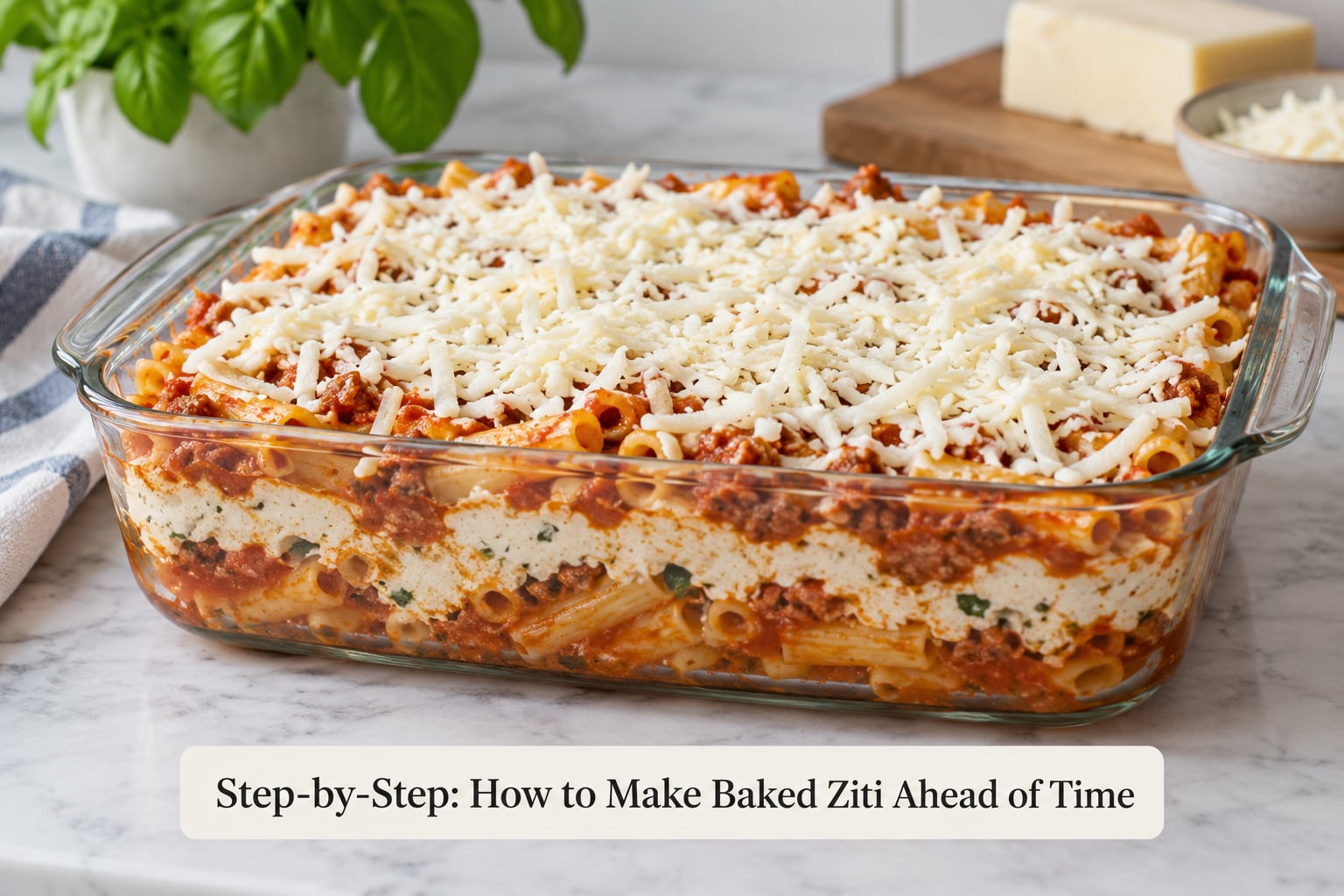
Step 1: Choose How to Make Baked Ziti Ahead of Time
There are three ways to do this, and the right one depends on when you’re cooking.
Assemble and refrigerate. Best when you’re baking within 3 days. Cook everything, layer it in the dish, cover tightly, and refrigerate. Add about 15 to 20 minutes to the bake time and let the dish sit at room temperature for 30 to 60 minutes before it goes in, so the center isn’t fighting a cold pan.
Bake a day ahead and refrigerate. Best when the reheating happens somewhere else, like a warming tray at a party. Bake it fully the first day, cool it, cover, and refrigerate. Reheat covered at 325°F for 30 to 40 minutes.
Assemble and freeze unbaked. Best for a month or more out. Freeze it unbaked rather than after baking. Everything in the dish is already cooked, and the oven’s job is simpler if it isn’t reheating pasta that was cooked once already, which is why this tends to reheat with the best texture. One 9×13 pan holds about 8 servings; two pans cover 15 to 20.
Step 2: Cook the Pasta and Cool It Slightly
Undercook the ziti by about two minutes less than the box says. It should still have a firm, chalky core when you pull it out, because it keeps absorbing sauce and steam for the next 20 to 30 minutes. Pasta cooked to the package’s full time turns to mush after it sits.
Drain it well and spread it on a baking sheet or in a colander for five minutes. Dumping wet pasta into sauce thins the whole casserole, and letting it cool slightly keeps the cheese from melting into strings the moment it hits the pan. Toss with a tablespoon of olive oil so the noodles don’t weld themselves into a solid block.
Step 3: Prepare the Sauce and Cheese Mixture
Simmer your marinara for 10 to 15 minutes before you use it. Jarred sauce carries a lot of water, and reducing it means it clings to the pasta instead of pooling in the bottom of the pan. The spoon-coat test: drag a spoon through the sauce and you should see a clean channel that stays clean for a few seconds.
For the ricotta layer, stir the ricotta with a cup of the cooled sauce, half the parmesan, and a pinch of red pepper flakes. Blending the cheese into sauce rather than layering it dry is the single biggest upgrade, because plain ricotta spots go chalky and dry in a long bake. Season it until it tastes slightly under-seasoned on its own, since the sauce and mozzarella pull it back over the full bake.
Step 4: Assemble the Baked Ziti
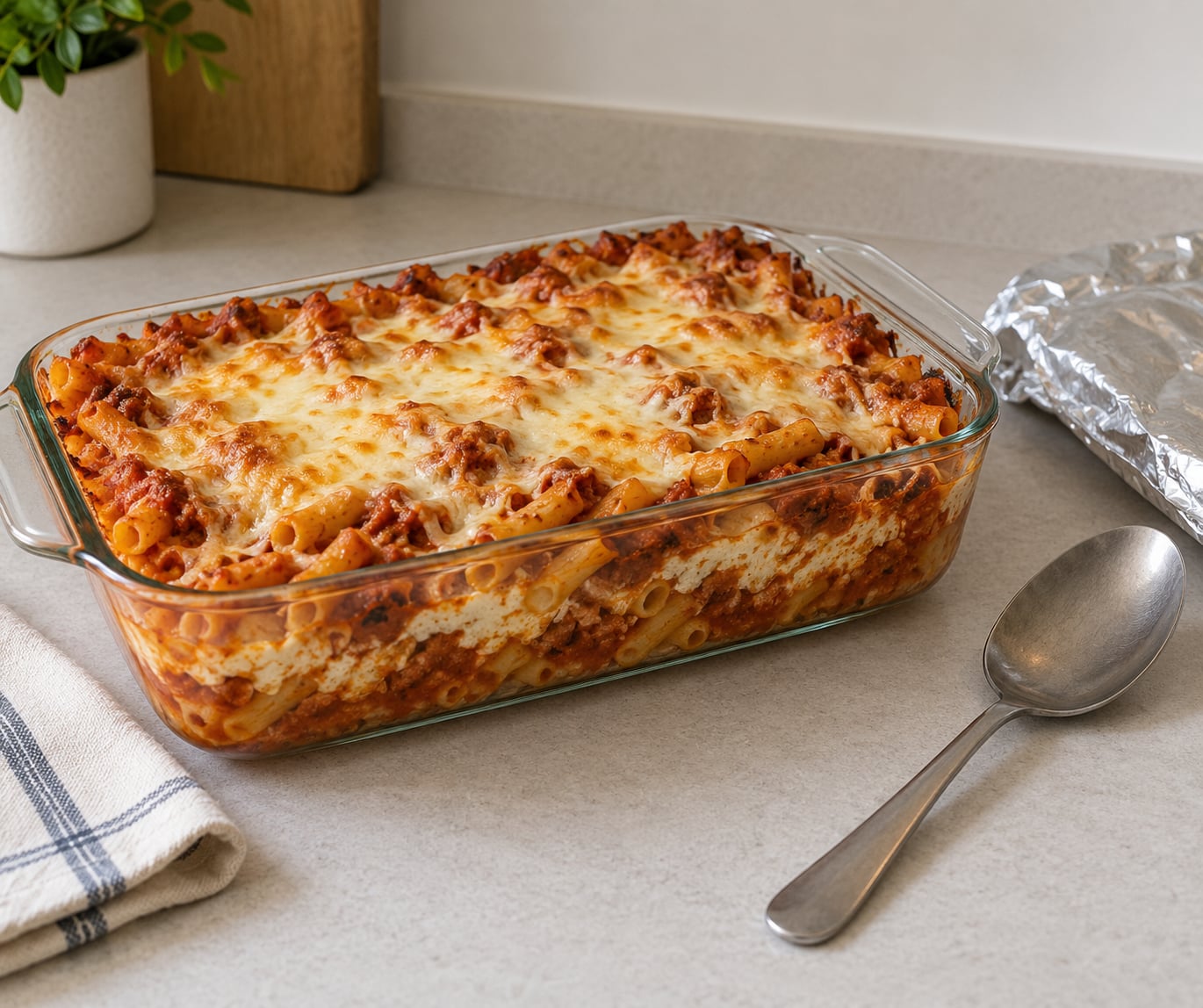
Layer in even amounts: half the pasta, half the sauce, the ricotta mixture, half the mozzarella, then repeat. Finish with a thin layer of sauce and the rest of the mozzarella. That top layer of sauce seals the dish, which keeps the cheese from forming a tough skin during a long refrigerated or frozen bake.
Press each layer down gently so air pockets don’t leave the center raw. If you’re feeding more than about 12 people, split it into two pans instead of deepening one. A deep casserole heats from the outside in and leaves you with hot edges and a cold middle.
Step 5: Chill or Freeze the Dish
Let the assembled dish sit uncovered for no more than 30 minutes, then cover it. For the fridge, press plastic wrap directly onto the surface, then wrap the whole dish in foil. Two days ahead is safe and reliable; three is the practical limit before the pasta starts to drink up the sauce.
To freeze, cover the dish in foil, then plastic wrap, then a second layer of foil, and set it flat in the freezer. That triple wrap is what keeps the top from getting freezer burn, which is where frozen casseroles usually lose their appeal. Wrap individual single-serve portions in the same way for meal prep, and label them with the date. Use within 2 months.
Thaw frozen ziti in the refrigerator for 24 to 48 hours, not on the counter. If you’re short on time, run cool water over the foil-wrapped pan for 20 to 30 minutes before opening it.
Step 6: Bake, Reheat, and Finish the Ziti
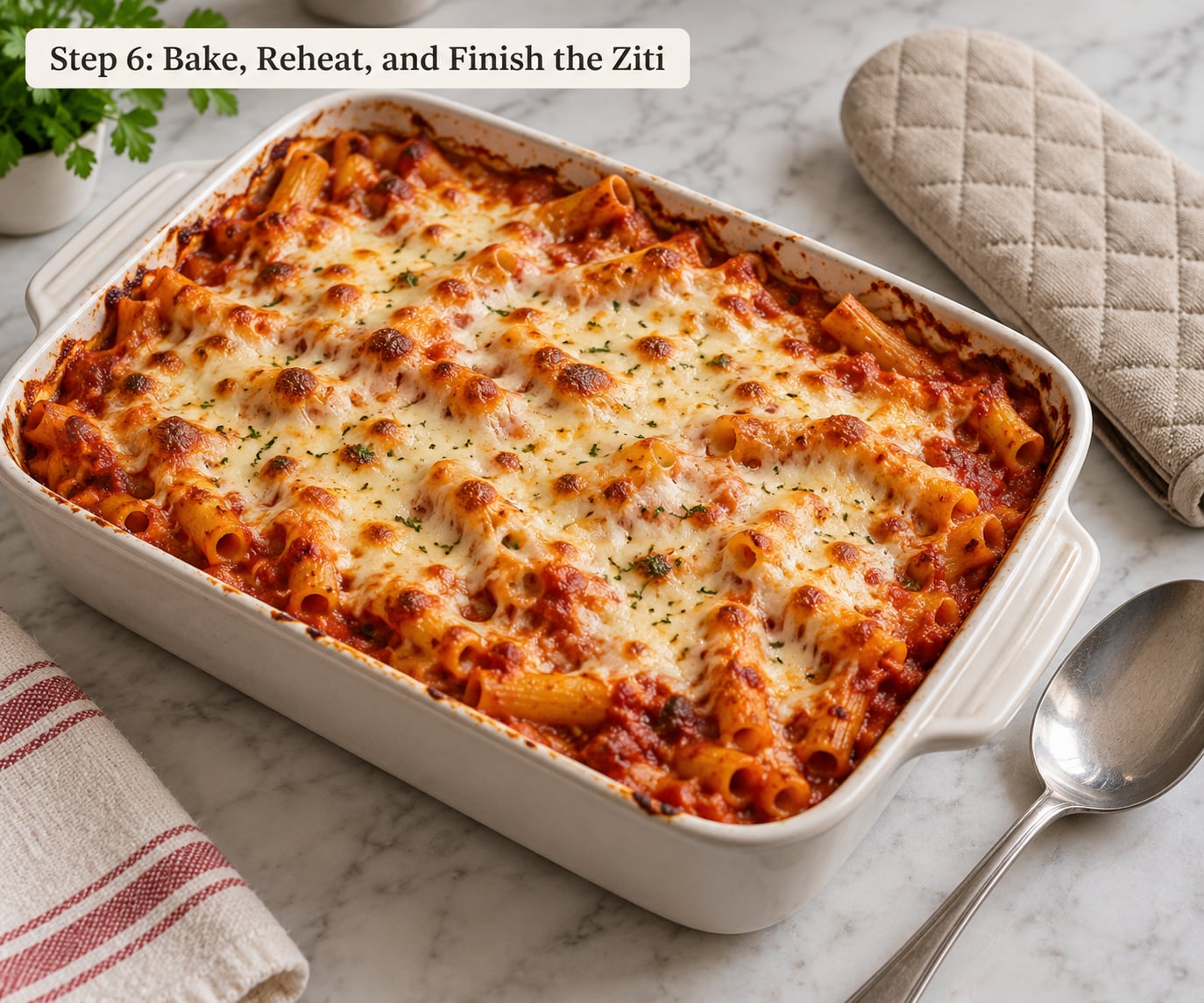
Bake at 375°F. Cover tightly with foil for the first 25 minutes, then pull it back and bake 20 to 25 minutes more, until the edges are bubbling, the center is hot, and the top is golden in spots. The foil stage isn’t optional in a make-ahead bake: it traps steam so the reheating pasta rehydrates instead of drying out, and it stops the cheese from browning before the middle cooks.
A dish assembled and baked the same day needs about 35 to 40 minutes total. From the refrigerator, add 15 to 20 minutes. From thawed, it lands close to the refrigerated timing, around 50 to 60 minutes with the foil. From frozen with no thawing, go to 400°F, keep it covered for 35 minutes, then uncover for 20 to 25 and expect the texture to be softer than a fresh bake.
Let the finished dish rest 10 to 15 minutes before serving. The carryover heat sets the sauce, and cutting straight into a bubbling pan gives you molten cheese and a puddle on the plate.
Common Mistakes and How to Fix Them
Pasta turned to mush. You cooked it to the full package time. Pull it 2 minutes early, cool it briefly, and toss with oil. In a make-ahead dish, this is the mistake that can’t be fixed later.
Watery sauce in the bottom. The sauce wasn’t reduced, or the pasta wasn’t drained. Simmer the sauce 10 to 15 minutes and check the spoon-coat test before assembling.
Dry, chalky patches of ricotta. Ricotta was dolloped in dry rather than mixed with sauce. Blend it with a cup of cooled sauce so it stays creamy through the long bake.
Cheese browned before the center was hot. Cover with foil longer, or lower the oven by 25°F. A cold pan from the fridge needs more covered time than a room-temperature one.
The middle was cold in a big pan. One oversized casserole. Split it into two shallower dishes; they cook faster and more evenly.
Freezer burn on the top. Missing the third wrap layer. Foil, plastic wrap, foil, pressed flat, frozen flat.
Reheated ziti dries out. You baked it uncovered. Reheat covered at 325°F, and add a couple of tablespoons of sauce or a light sprinkle of water if it looks tight before it goes in.
Two habits fix most of these at once: cool the pan briefly before covering it, and cover the dish the moment it hits the fridge or freezer. Going in warm and uncovered is what dries the top layer.
Frequently Asked Questions
How far ahead can I make baked ziti?
You can assemble baked ziti unbaked up to 3 days before baking and refrigerate it, or freeze it unbaked for up to 2 months. Two days is the most reliable window for the best texture, since the pasta slowly absorbs sauce as it sits. Thaw frozen ziti in the refrigerator for 24 to 48 hours before baking, and add 15 to 20 minutes to the bake time when it comes out of the fridge.
Can I make baked ziti the night before?
Yes, and that is the most common way people do it. Cook the pasta about 2 minutes under the package directions, reduce the sauce for 10 to 15 minutes, then layer everything in the dish. Cover tightly with plastic wrap and foil, refrigerate overnight, and let the dish sit at room temperature for 30 to 60 minutes before baking so the center cooks evenly.
Can baked ziti be frozen after baking?
You can, but freezing it unbaked usually gives a better result. Every ingredient in an unbaked assembled dish is already cooked, so the oven only has to bring it to temperature. A previously baked dish has to reheat pasta that has been cooked twice, which tends to dry the edges. Either way, wrap the dish in foil, plastic wrap, and foil, and use it within 2 months.
How do I keep reheated baked ziti from drying out?
Reheat it covered, at a lower temperature than you baked it. Set the dish in a 325°F oven with foil or a tight lid for 30 to 40 minutes, then uncover for the last 5 minutes to re-crisp the cheese. A splash of sauce or a light sprinkle of water on top before covering helps if the casserole looks tight. Covering is what traps the steam that keeps the pasta moist.
Should I cover baked ziti with foil while baking?
Yes, for most of the bake. Foil for the first 25 minutes traps steam so the reheating pasta softens properly instead of drying out, and it keeps the cheese from browning before the middle is hot. Take the foil off for the last 20 to 25 minutes to brown the top and drive off excess moisture. That covered-then-uncovered split is the key detail in most make-ahead methods.
Can I use chicken or spinach in baked ziti?
Yes. Cooked shredded chicken works well, and using cooked chicken rather than raw is what makes the dish safe to assemble a day ahead; brown ground beef and sausage fully before layering them in as well. Spinach is easier still, since it wilts in the hot sauce. Stir either one into the sauce layer, and avoid raw spinach, which releases water and thins the casserole.
Conclusion
Pick your method now and the rest gets easy. Within 3 days, assemble it unbaked and refrigerate; further out, freeze it unbaked and thaw in the refrigerator for a day or two. Cook the pasta short, reduce the sauce, cool and cover the dish promptly, then bake covered at 375°F and uncover only for the last stretch. That’s the whole job, and it turns a party-day bake into something you can finish while the guests are still arriving.