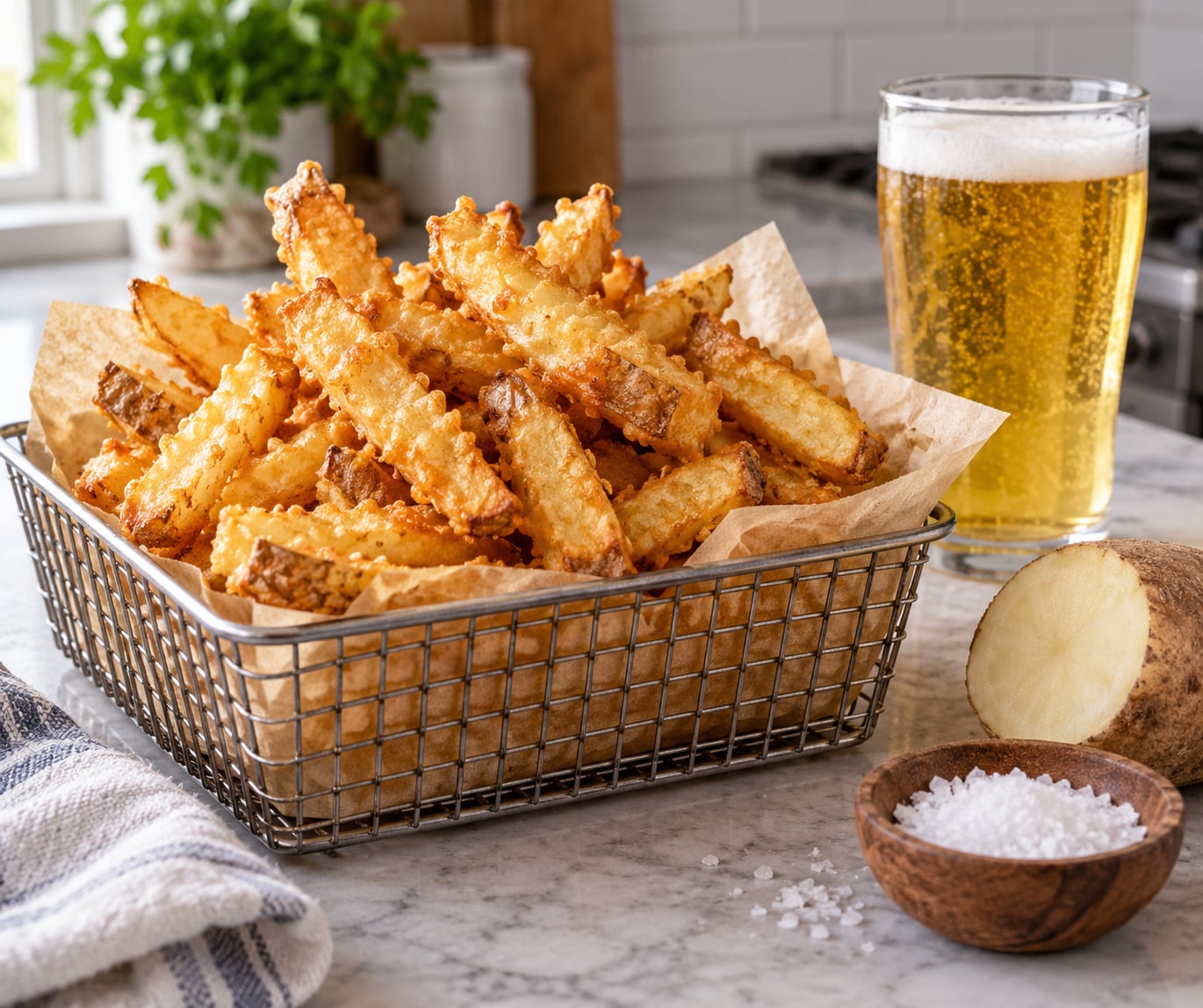
Beer battered fries are frozen or fresh-cut potatoes dipped in a thin batter of flour and ice-cold beer, then fried at 350 F until the coating turns pale gold and shatters. This method takes about 30 minutes start to finish using frozen fries, and the whole thing hinges on three things: ice-cold beer, bone-dry potatoes, and oil that is actually at temperature.
The technique comes straight out of British and American pub kitchens, where a beer batter is what separates a coating that crunches from one that goes soft in your hand. It is worth learning, because the same batter works on onion rings, chicken tenders, fish fillets and wedges of squash.
Table of Contents
- What You Need for Beer Battered Fries
- How to Make Beer Battered Fries Step-by-Step
- 1. Heat the Oil First
- 2. Mix the Cold Batter
- 3. Dry and Dredge the Fries
- 4. Dip and Coat
- 5. Fry at 350 F
- 6. Drain and Season Hot
- 7. Serve Immediately
- How to Make Beer Battered Fries Extra Crispy
- Common Beer Batter Mistakes and How to Fix Them
- Frequently Asked Questions
- What kind of beer is best for beer battered fries?
- Why is my beer batter not sticking to the fries?
- What oil temperature should I use for beer battered fries?
- Can I make beer battered fries ahead of time?
- How do I keep beer battered fries crispy after frying?
- Can I bake beer battered fries instead of deep-frying them?
What You Need for Beer Battered Fries
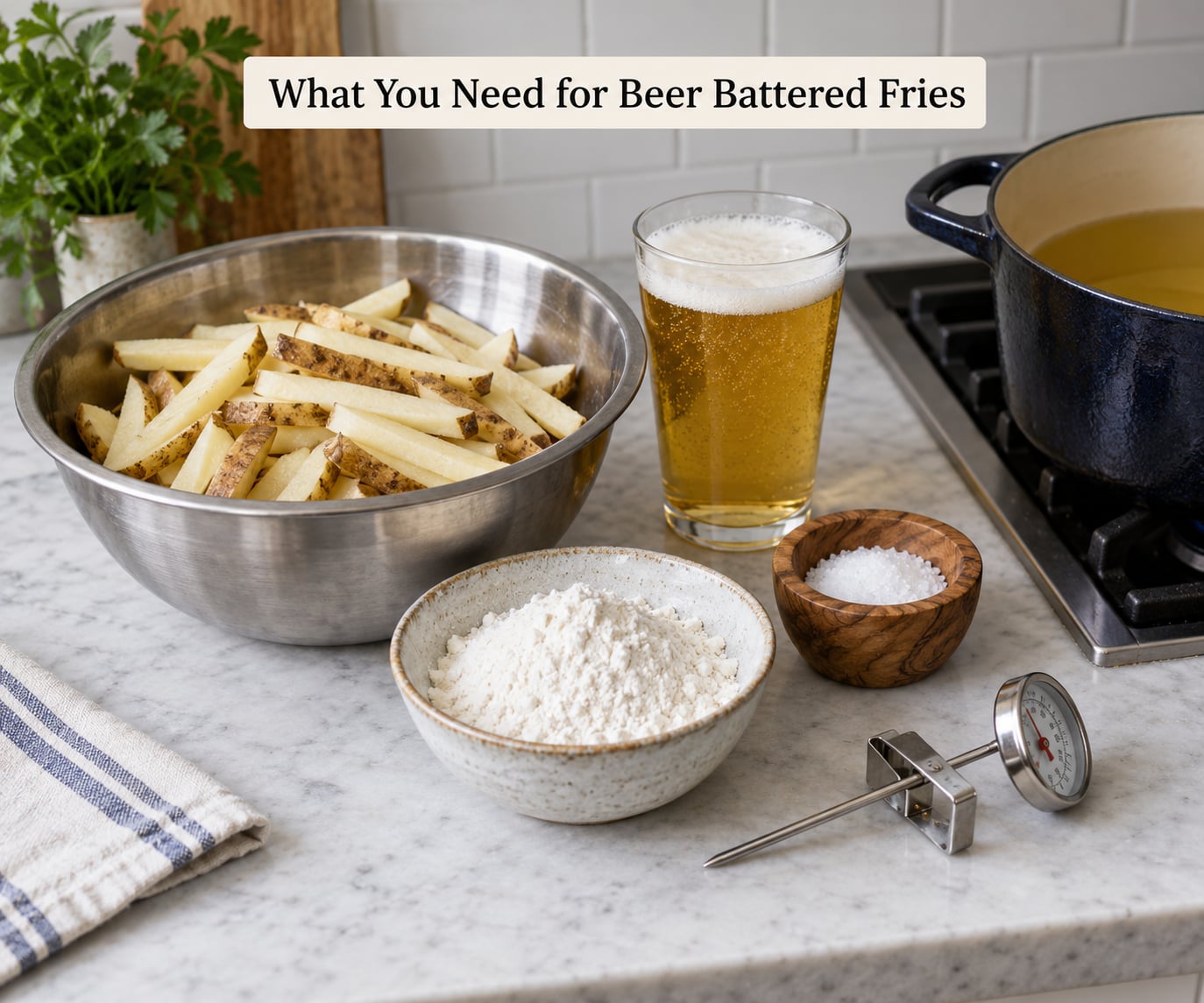
Here is the shopping list. The flour and beer quantities are the backbone of the batter, and they are worth measuring rather than eyeballing.
- 32 oz frozen skin-on straight-cut fries, or 3 to 4 russet potatoes cut into sticks if you are starting from scratch
- 1 cup all-purpose flour
- 1/2 cup white rice flour
- 1 tsp kosher salt and 1 tsp black pepper, plus more salt for the fries
- 12 oz ice-cold beer, roughly 1 1/2 cups
- 1/2 cup of the flour mix, seasoned, reserved in a shallow dish for dredging
- 3 to 4 cups of frying oil — peanut, canola, sunflower or vegetable
For equipment, a heavy pot with at least 6 inches of depth or a countertop fryer will hold a proper batch without the oil climbing the sides. An instant-read thermometer is not optional in my kitchen; guessing at 350 F is the single most common reason home-fried fries turn out greasy. A wire rack set over a rimmed sheet pan keeps finished fries from steaming each other.
Any pale, clean lager works well in the batter, and pilsner is the classic choice. Wheat ales make a slightly lighter coating, and a stout works but pushes a roasted, almost coffee note through the crust, so it suits a bolder palate. Very hoppy beers can leave a faint bitterness behind. If you are out of beer, ice-cold soda water plus a splash of vinegar works and keeps the same carbonation.
Oil choice is about smoke point. Peanut and sunflower hold up best because they take high heat without smoking, and canola is the budget-friendly all-rounder. Olive oil does not have the smoke point for deep frying and will turn bitter.
How to Make Beer Battered Fries Step-by-Step
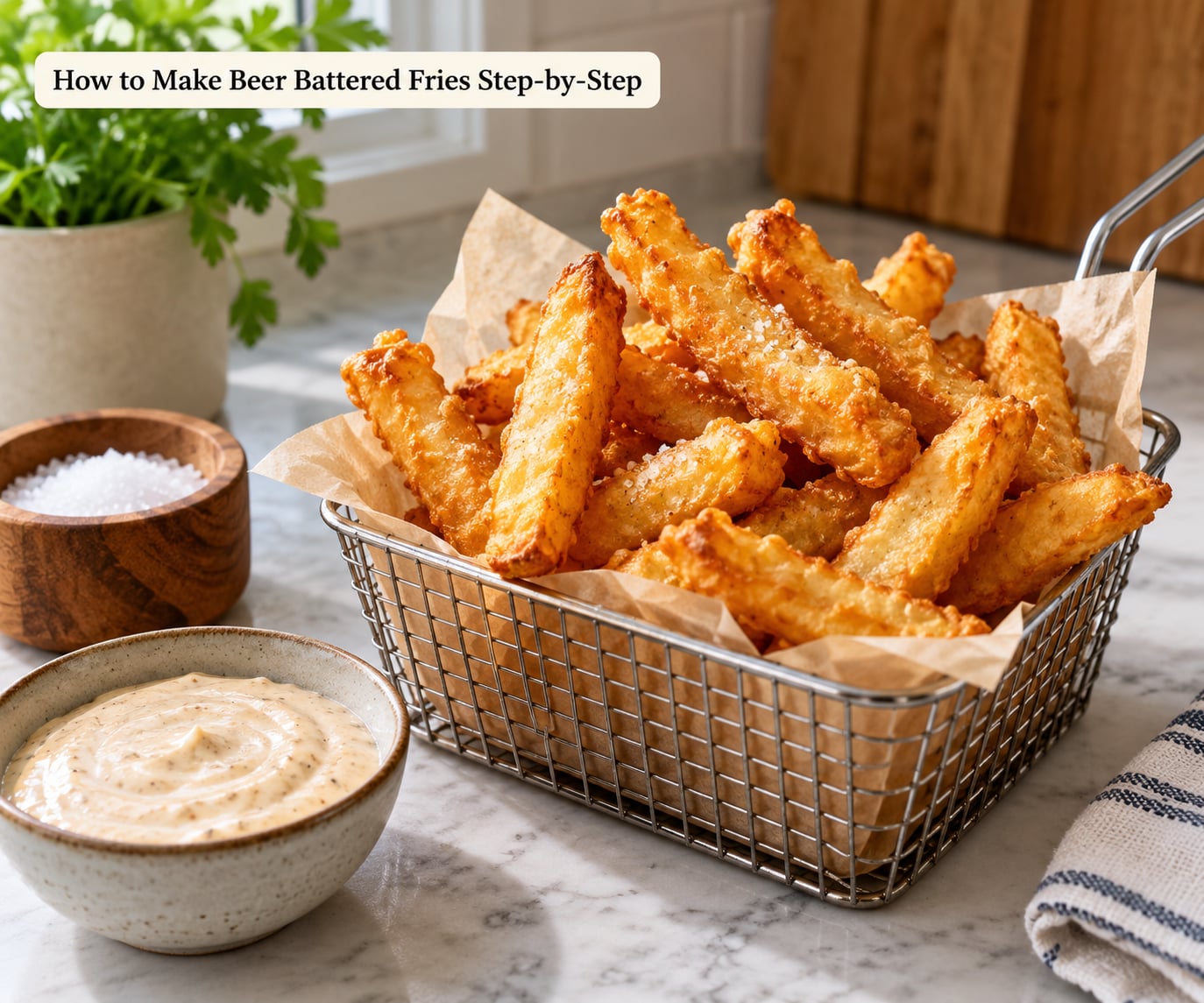
Read these once before you start, because the order matters. The oil has to be hot before the batter gets mixed, and the batter should be used immediately rather than sitting.
1. Heat the Oil First
Pour 3 to 4 cups of oil into a heavy pot and set it over medium-high heat. Attach your thermometer or clip it to the side of the pot, and wait until it reads 350 F. Do not skip this and do not guess. If you put fries in oil that is too cool they drink it and turn greasy; too hot and the outsides scorch before the centers cook. A small fry dropped in should sink and bubble steadily for several seconds. That is your cue that the oil is ready.
2. Mix the Cold Batter
Combine 1 cup all-purpose flour, 1/2 cup white rice flour, the salt and the pepper in a wide bowl. Pour in the ice-cold beer and stir about ten times, then stop. The batter should look slightly lumpy and should run off the spoon in a slow ribbon. Smooth batter is overworked batter, and the gluten it develops makes the coating chewy. Set the bowl next to the stove so it stays cold, and plan to fry within 15 minutes of mixing.
3. Dry and Dredge the Fries
If you are cutting fresh potatoes, soak the sticks in cold water for 30 minutes to pull off surface starch, then drain and dry them completely. Pat them with a towel or run them in a salad spinner. Moisture is the number-one reason batter slides off. Take 1/2 cup of the flour mix, season it with a pinch of salt, and spread it in a shallow dish. Toss the dry fries through it so every surface has a dry, floury layer to grab.
4. Dip and Coat
Drop six to eight fries into the batter at a time and turn them with tongs or a fork so every side is covered. Let excess batter drip back into the bowl for a second or two before they go into the oil. A thick glob of batter dripping off is a wasted coating that burns before the fry cooks through, and it is what turns a crisp crust heavy. Work in small batches and keep the rest of the fries dry and undredged until their turn comes.
5. Fry at 350 F
Lower each coated fry into the oil away from you, letting it slide in rather than dropping it from height. Fry for 3 to 4 minutes, turning once, until the crust is pale gold and the surface looks dry and shaggy rather than wet and glossy. Thicker wedges need closer to 6 minutes. Watch the thermometer during the batch: if the temperature drops below 340 F, pull the fries out, let the oil recover, and restart that batch. Crowding the pot is the main reason oil temperature sags.
6. Drain and Season Hot
Lift the fries out and let them drip over the pot for a few seconds, then spread them on a wire rack set over a rimmed sheet pan. A rack drains them in seconds; a paper towel or a plate traps steam underneath and softens the crust. Salt them the moment they come out of the oil, while the surface is still glossy, so it clings properly.
7. Serve Immediately
Beer battered fries are at their best in the first few minutes, so put them out with a dip and eat them while the coating still snaps. A squeeze of lemon, malt vinegar, or a thick dip like beer batter mayo all work. If you need to hold them for a short while, keep them on the rack in a 250 F oven, uncovered, for no more than about 20 minutes.
How to Make Beer Battered Fries Extra Crispy
Crispness is mostly a matter of what you do and do not do to the batter. The carbonation in cold beer releases carbon dioxide during frying, leaving small air pockets in the crust, and the cold liquid keeps the flour from developing gluten strands that would make the coating dense and chewy. Six habits do most of the work:
- Keep the beer and the bowl cold. Ice-cold beer, straight from the fridge, is worth the extra five minutes.
- Add rice flour. Rice flour has no gluten and produces a lighter, crunchier crust than all-purpose flour alone. A 1:2 ratio of rice flour to all-purpose flour works well.
- Stir about ten times and stop. Some lumps are better than a smooth batter. A blender or a stand mixer encourages gluten development, which is exactly what you do not want.
- Dry the potatoes properly. Pat them with a towel or run them in a salad spinner until the surface is completely dry.
- Fry in small batches. Six to eight fries at a time keeps the oil from dropping out of the 340 to 360 F range.
- Drain on a rack and season hot. Salt clings to hot fries far better, and a rack drains them in seconds instead of letting them sit in oil.
A double-fry gives a marginally better crust: a 3-minute fry at 300 F to cook the potato, a rest, then a 2-minute fry at 375 F. Frozen fries have already been blanched, so most home cooks skip it. When you have both, hold the finished fries in a 250 F oven for no more than about 20 minutes, on the rack, never in a covered container.
Common Beer Batter Mistakes and How to Fix Them
Nearly every disappointing batch traces back to one of these. Work down the list before you change anything else in the recipe.
- Soggy, heavy coating: the beer was warm or the batter was overmixed. Mix it cold, stir ten times, and fry within 15 minutes.
- Batter slides straight off: the potatoes were wet. Pat them dry, then dust them in the seasoned flour before dipping so the batter has something to grab.
- Greasy fries: the oil fell below 340 F because too many fries went in at once. Fry six to eight per batch and wait for the temperature to recover before the next one.
- Oil foams and threatens to overflow: raw potatoes carry surface starch. Soak fresh-cut fries in cold water for 30 minutes, dry them thoroughly, and never let the pot more than half full of oil.
- Clumped together in the pot: the fries sat in the basket waiting. Drain each batch on the rack instead of stacking wet fries.
- Pale, limp crust: the oil was not hot enough or the fries went in cold from the fridge. Take the pot off the heat, let it come back to 350 F, and restart.
- Bitter or smoky coating: the oil was past its smoke point. Peanut and sunflower oils tolerate more heat than most people expect.
Deep frying at home does splatter. Dry everything that goes into the oil, keep the pot half full, turn the handle inward, and never walk away from the stove. Kids and pets stay out of the kitchen while the oil is hot.
Frequently Asked Questions
What kind of beer is best for beer battered fries?
A pale lager or Czech-style pilsner is the standard choice because its flavor is mild enough to disappear into the crust. German wheat ales give a lighter, slightly sweeter coating. IPAs and stouts both work, though hop bitterness or roasted notes come through more strongly. Whatever you pick, it should be ice-cold and poured flat, not foamy.
Why is my beer batter not sticking to the fries?
The usual culprit is moisture on the potato. Pat the fries dry with a towel or spin them in a salad spinner, then dust them in seasoned flour before dipping so the batter has a dry surface to cling to. A too-thick batter also slides off. Thin it with a splash of cold beer until it runs off the spoon in a slow ribbon.
What oil temperature should I use for beer battered fries?
Aim for 350 F and use a thermometer, not guesswork. A working range of 340 to 360 F is fine, and the fries should fry for 3 to 4 minutes for a straight cut. Thicker wedges need closer to 6 minutes. If the oil falls below 340 F when you add the batch, the fries will soak up oil and turn greasy instead of crisp.
Can I make beer battered fries ahead of time?
You can prep ahead, just not far ahead. Cut and soak your potatoes, then dry them and freeze them on a sheet pan for up to a week. Mix the batter only when you are ready to fry, since it loses its lift as it sits. Cooked fries will keep for about two hours in a 250 F oven on a rack, but they soften after that.
How do I keep beer battered fries crispy after frying?
Drain on a wire rack set over a rimmed sheet pan, not a paper towel or a plate, so oil falls away instead of pooling under the crust. Season them with salt the moment they leave the oil. For a short hold, keep them in a 250 F oven uncovered for up to 20 minutes. Skip the microwave entirely; it softens the coating and dries out the center.
Can I bake beer battered fries instead of deep-frying them?
You can, and it is a decent lower-mess option. Toss frozen fries with a little oil, bake at 425 F for 25 to 30 minutes turning once, then dip each fry in the batter and return to the oven for 8 to 10 minutes more. Spray the battered fries lightly with oil before they go back in. You will get more color and less shatter than deep frying, so temper your expectations.
Start with three habits and the rest follows: heat the oil until a thermometer reads 350 F, pour the beer cold, and dry every fry before it meets the batter. Once that batch comes out of the pot, salt it while it is hot and eat it fast, because beer battered fries are at their best in the first few minutes.