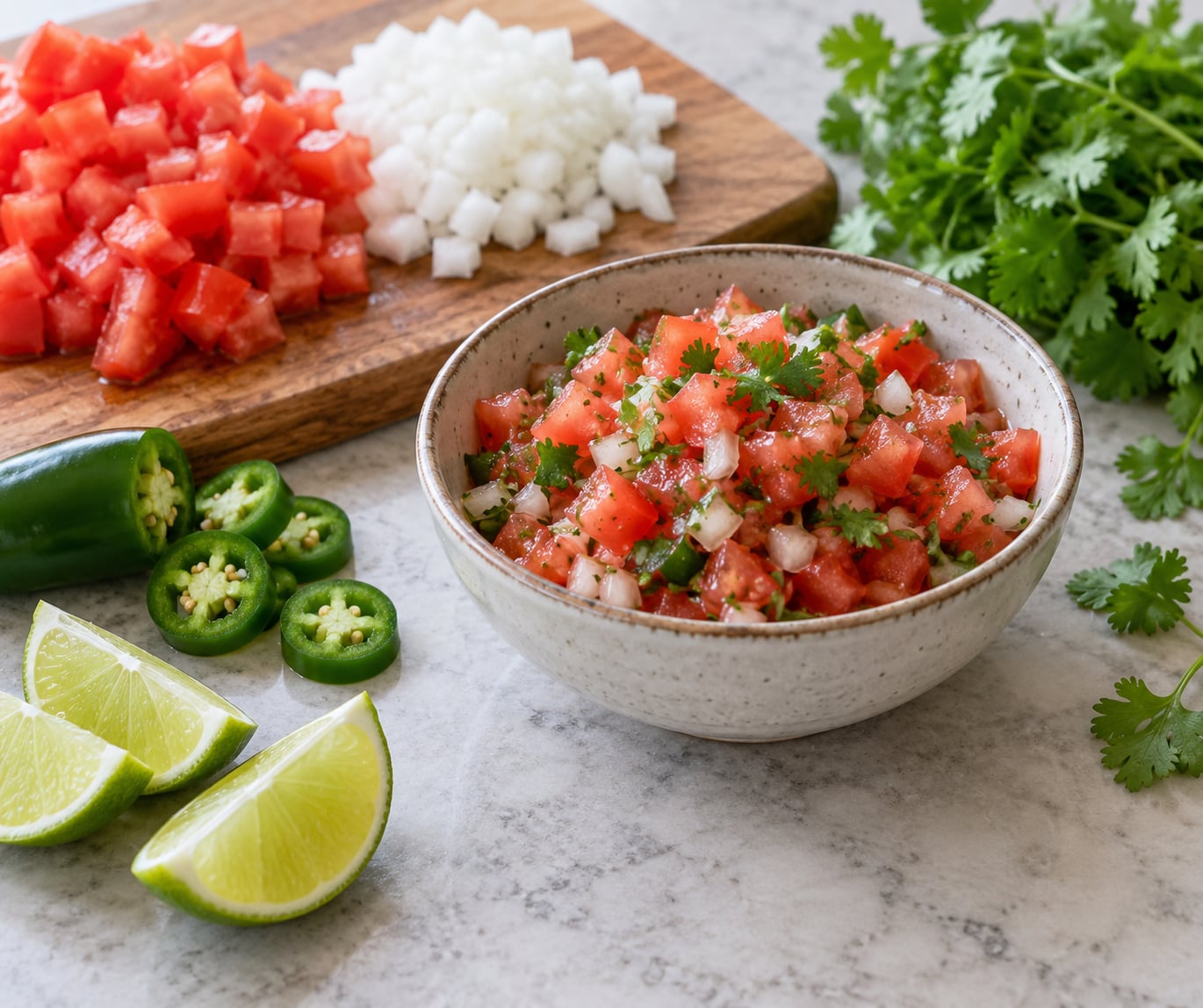
You can make pico de gallo at home in about 15 minutes with no cooking: dice ripe tomatoes, white onion, and jalapeno, add chopped cilantro, fresh lime juice, and salt, then let the mixture rest so the flavors meld. That is the whole recipe. The difference between a good batch and a watery one comes down to how you handle the tomato seeds and skins, how small the dice is, and how restrained you are with the salt and lime.
Pico de gallo is a fresh Mexican salsa, also called salsa fresca or salsa cruda, and the name translates literally as “rooster’s beak,” a reference to how the diced vegetables look on a chip. Unlike cooked salsa, nothing is simmered or blended, which is why the produce has to be very fresh and cut small.
Table of Contents
- What You Need
- Step-by-Step: How to Make Pico de Gallo at Home
- Step 1: Dice the Vegetables
- Step 2: Drain and Season Pico de Gallo at Home
- Step 3: Rest and Check the Texture
- Common Mistakes
- Frequently Asked Questions
- Can I use canned tomatoes to make pico de gallo?
- How do I make pico de gallo less watery?
- Should I leave the seeds in the jalapeno?
- How long should pico de gallo rest before serving?
- How long does homemade pico de gallo last?
- Conclusion
What You Need
This basic version makes about 4 cups, roughly 8 servings as a dip. Double it if you are feeding a group.
- 1 pound Roma or plum tomatoes (about 4 medium), ripe but still firm
- 3/4 cup white onion (1 small onion), finely diced
- 1 jalapeno, seeded for mild heat, left whole for more
- 1/2 cup fresh cilantro, leaves and tender stems, roughly chopped
- 1/4 cup fresh lime juice (about 2 limes)
- 1/2 teaspoon fine sea salt, plus more to taste
Tomatoes: Roma or plum tomatoes are the right choice because they carry less water than slicers and their flesh holds its shape when diced. Cherry or grape tomatoes work too, but you halve them instead of seeding them, so the finished salsa will release more liquid. Aim for ripe, evenly red fruit that still feels firm at the shoulders. Overripe tomatoes collapse into soup once salted.
Onion: White onion is the traditional pick. Its flavor is sharp and clean, and it softens without turning mushy during the rest. Red onion also works if you like a milder bite and a slight edge of sweetness. Yellow onion is the sweetest of the three and my least favorite here, since it can make the salsa taste dessert-ish.
Jalapeño: One medium pepper gives a gentle warmth. A serrano is the move if you want real heat, and two serranos plus a jalapeño will make a salsa that clears sinuses.
Cilantro: Use a large bunch and chop the tender stems along with the leaves. The stems carry more flavor than the leaves. If you are not a cilantro person, see the swap below.
Optional: A small clove of minced garlic (not traditional, but common in U.S. kitchens), a pinch of sugar if your tomatoes taste flat, or a diced avocado stirred in at the end for a creamy version.
Tools: A sharp chef’s knife is the only one that really matters. A large cutting board, a mixing bowl, a spoon, and a citrus juicer or handheld squeezer round out the list. No special equipment, no blender.
Step-by-Step: How to Make Pico de Gallo at Home
Step 1: Dice the Vegetables
Start with the tomatoes. Cut a shallow X in the bottom of each one, set them cut-side down, and leave them alone for a few minutes. Then core them, cut in half, scoop out the seed pulp with a spoon, and squeeze the cavity gently to remove what is left. The seeds and gel are where most of the water lives.
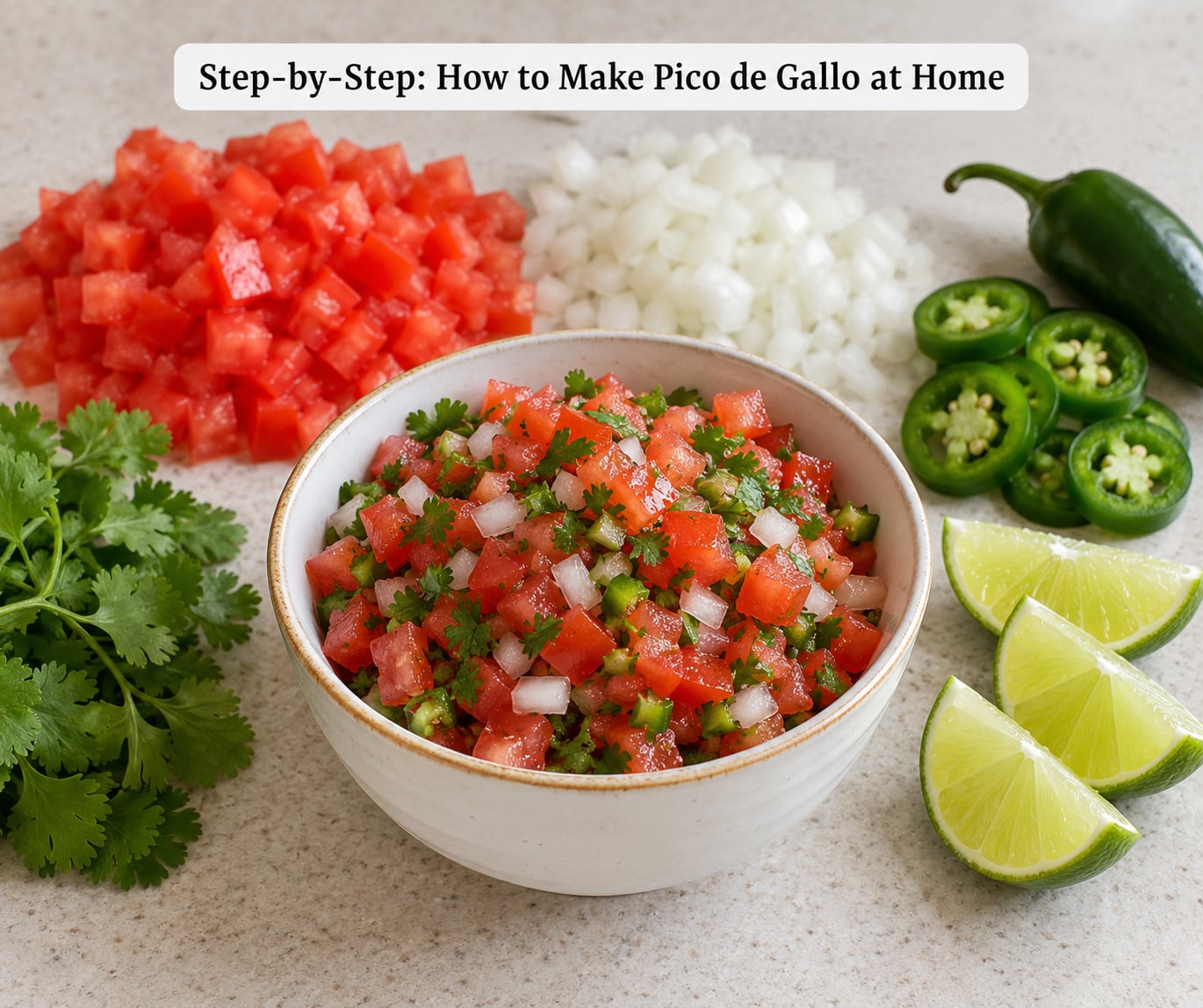
Dice the flesh into roughly 1/4-inch pieces, the size of a small pea. Smaller than you think is right. Restaurant pico is cut finer than most home versions, and a fine dice distributes flavor so every chip tastes the same instead of landing on one big tomato chunk.
Dice the white onion just as small, then mince the jalapeno. For mild heat, split the pepper, cut out the white ribs and the seeds, and dice only the flesh. Rough-chop the cilantro. Set everything aside and keep the cilantro cold until the end; warm cutting boards and time on the counter brown the leaves.
Step 2: Drain and Season Pico de Gallo at Home
Put the diced tomatoes in a strainer set over a bowl and let them sit for 5 to 10 minutes. They will release a surprising amount of liquid. Pour that off and discard it. This single step is the difference between salsa and tomato soup, and it is the step most recipes skip.
In a separate bowl, combine the onion and jalapeno first, then pour over the lime juice and salt and stir. Let that sit for 5 minutes while you finish the tomatoes. The acid and salt start softening the onion’s raw bite and drawing heat out of the chile, so the finished salsa tastes seasoned rather than sharp.
Add the drained tomatoes and cilantro and fold gently with a spoon. Taste before adding anything else. Adjust in small moves: a squeeze of lime if it tastes flat, another pinch of salt if it tastes muted, a bit more jalapeno if the heat has vanished. You cannot take salt out later, but you can always add lime or more tomato.
Step 3: Rest and Check the Texture
Let the mixture sit for 10 to 15 minutes at room temperature, or refrigerate it for 20 to 30 minutes. The salt and lime pull water out of the diced tomatoes, and the onion and chile soften. You want to see it turn glossier and settle just slightly, with liquid collecting at the bottom of the bowl but not flooding it.
If you are adding avocado, wait until the moment of serving. Fold in half a ripe avocado diced to the same size as the tomatoes. It will soften the sharpness of the onion and turn the salsa creamy, but it also browns quickly and loosens the texture, so it has no business sitting in the bowl.
Serve with a slotted spoon so the extra liquid stays in the bowl instead of turning your chips soggy. Scrape the bowl down for a second pass once it has settled, and expect to do this again before serving to a crowd.
Storage: Move the salsa to an airtight container and refrigerate it promptly. It keeps about 3 to 4 days, with the best flavor and crunch in the first two. Raw chopped produce does not freeze well, since the tomatoes turn mushy when thawed, so make a fresh batch rather than freezing it. Toss or discard pico left at room temperature for more than about two hours.
Common Mistakes
Your pico is watery. You either skipped the seed removal or the draining step. Salt and lime both pull moisture out of the tomato, and that is by design, so the cure is more control at the start: firm tomatoes, no seeds, and ten minutes in a strainer. If a finished batch pools liquid, drain it before serving and stir from the bottom.
The pieces are too big. A rough chop gives you tomato wedges, which release their water in one big pocket and make the salsa inconsistent. Cut everything to about 1/4 inch. If you would rather not knife-chop the whole time, a food processor pulse works, but leave a little texture in it rather than running it to a puree.
It is too hot. You left in the ribs and seeds. Pull them out next time, and start with half a jalapeno for mild heat. To fix the batch you already made, add a ladle of finely diced tomato and a little extra lime. Do not try to drown it with dairy, which ruins everything else in the bowl.
It tastes bland. Usually under-salted and under-acidified rather than missing an ingredient. Add a quarter teaspoon of salt, stir, wait a minute, and taste again. A pinch of sugar helps when the tomatoes are ripe but flat, which is common with supermarket Roma in winter.
It tastes dull or slightly sour. That is usually limes that have been sitting for weeks. Squeeze the lime before you commit; if it barely gives anything, the batch reads as flat even at the right volume. Fresh lime has a strong aroma the moment you cut it.
The cilantro or tomato looks brown. Chopping herbs early and letting them sit out oxidizes them, and it dulls the salsa. Chop the cilantro right before it goes into the bowl, keep the cut side of the tomatoes facing down on the board, and serve within the hour if you can.
You hate cilantro. Skip it entirely rather than trying to mask it. Swap in 1/3 cup of sliced scallion greens for a milder herb note, or flat-leaf Italian parsley for a brighter, more vegetal one. Curly parsley is a poor substitute, as it reads as grassy. Mint plus a little scallion is another common combination. Be aware that none of these taste like cilantro, so the salsa will read differently.
You are out of limes. Use 2 tablespoons of lemon juice for the same 1/4 cup of lime, or 1 tablespoon plus 1 teaspoon of white vinegar for a sharper edge. Canned lime juice works in a pinch but tastes flatter. If you over-acidify, stir in a tablespoon of finely diced tomato or a small pinch of sugar rather than diluting the whole bowl.
Frequently Asked Questions
Can I use canned tomatoes to make pico de gallo?
Yes, canned tomatoes work, though fresh ones deliver a brighter flavor and firmer texture. Choose fire-roasted tomatoes packed in juice or water, drain them well, and pulse them coarsely in a food processor instead of leaving them whole. Canned tomatoes are more acidic, so start with less lime juice, then taste before adding salt.
How do I make pico de gallo less watery?
Use ripe but firm tomatoes, core and seed them before dicing, and let the diced pieces sit in a strainer for 10 minutes so they release liquid. Discard that liquid rather than pouring it back in. Salt and lime both pull out extra moisture, so add them in small amounts and taste between each pinch.
Should I leave the seeds in the jalapeno?
The choice depends on how much heat you want. Seeds contribute noticeable heat but are not essential to the flavor. Remove most of the seeds and the white ribs for a mild pico, leave a few in for medium heat, and use a serrano pepper when you want serious heat.
How long should pico de gallo rest before serving?
Let the basic mixture sit for 10 to 15 minutes at room temperature, or refrigerate it for 20 to 30 minutes. This short rest softens the raw onion and chile and lets the lime and salt meld with the tomatoes. Much longer rests give you a thinner salsa, so a brief pause is the sweet spot.
How long does homemade pico de gallo last?
Refrigerate homemade pico de gallo in an airtight container and use it within 3 to 4 days, although quality is usually best during the first two days. Drain any liquid that collects before serving again. Discard it if it smells off, and never leave it at room temperature for more than about two hours.
Conclusion
Knowing how to make pico de gallo at home comes down to three things: ripe but firm produce, seasoning you add in small tastes rather than all at once, and an even 1/4-inch dice. Start with the basic six-ingredient version, let it rest 15 minutes, then decide what it needs. More jalapeno, a little garlic, some avocado, no cilantro. Once you can nail the base, the variations take about five minutes of thought and no new technique at all.