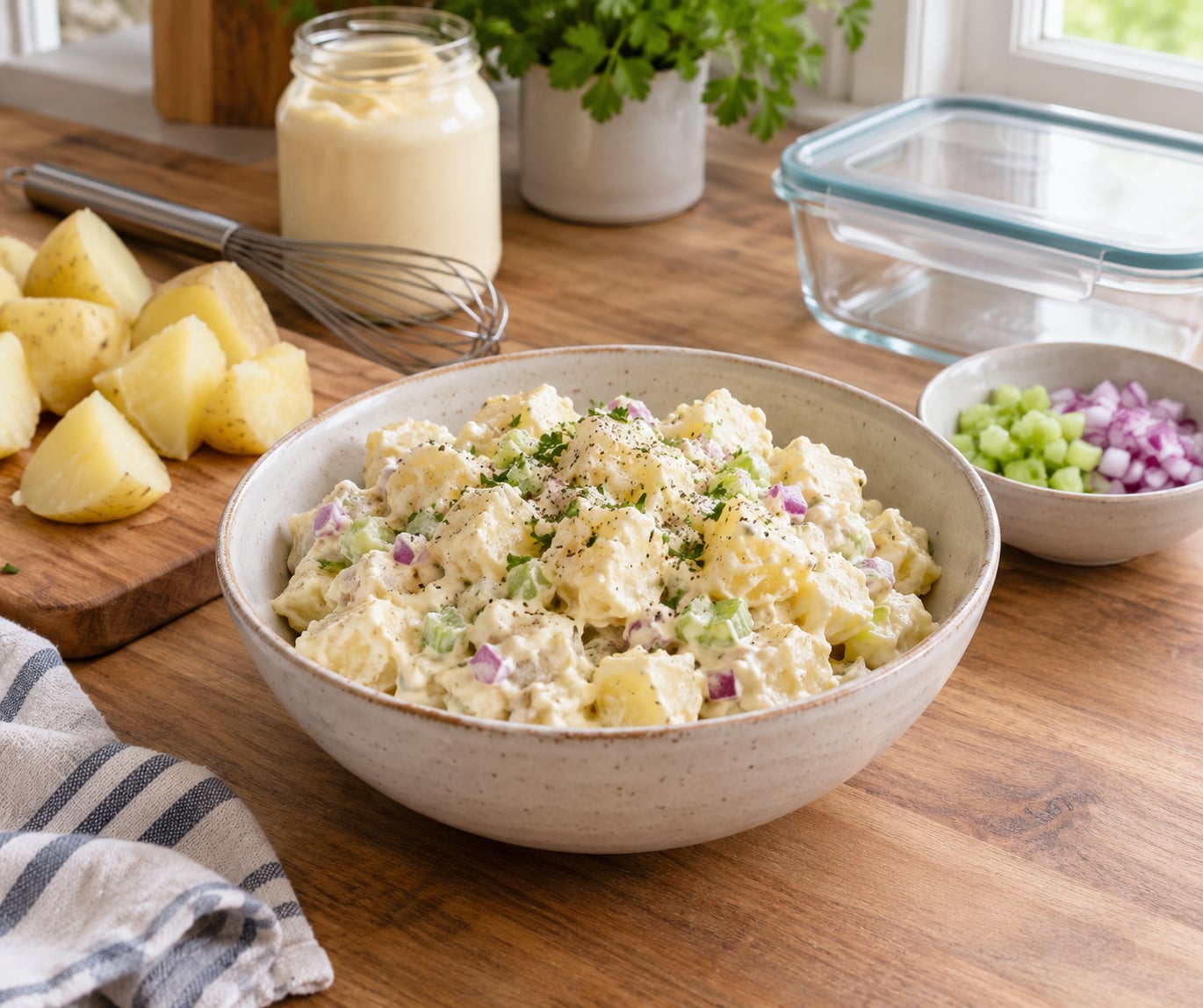
Yes, potato salad can be made 1 to 3 days ahead and it genuinely tastes better after it chills. The sweet spot is the night before: cook the potatoes, dress them while still warm with vinegar, then cover and refrigerate at or below 40°F. Give yourself about 45 minutes of hands-on work the day before and 10 minutes on the day you serve.
Most recipes get this wrong by assembling the whole salad too early. Mayonnaise breaks down when it sits for days, the eggs go rubbery, and the dressing turns greasy in the fridge. Fix that and you get a side dish that holds its texture from the cooler all afternoon.
Table of Contents
- What You Need
- Step-by-Step: How to Make Potato Salad Ahead of Time
- Step 1: Choose the Right Potatoes for Potato Salad That Stays Firm
- Step 2: Cook the Potatoes Without Making Them Mushy
- Step 3: Make the Dressing in Advance
- Step 4: Cool and Season the Potatoes
- Step 5: Assemble and Refrigerate the Potato Salad
- Step 6: Finish and Serve
- Common Mistakes
- Frequently Asked Questions
- How long can I make potato salad ahead of time?
- Can I make potato salad the night before?
- Should I dress the potatoes before refrigerating potato salad?
- What is the best potato for potato salad that stays firm?
- How long does potato salad last in the refrigerator?
- Can potato salad be left out at a picnic or party?
What You Need
The ingredient list is short. The part that actually decides whether your make-ahead salad works is the potato.
- 3 to 4 pounds potatoes — about 1 pound per 4 servings. Yukon Golds, red potatoes, or russets if you like a softer, creamier salad.
- 2 tablespoons salt for the cooking water, plus a tablespoon for the salad itself.
- 1/3 cup apple cider vinegar or white wine vinegar — this goes on warm potatoes, not on the finished salad.
- 3/4 cup mayonnaise for a creamy version, or 3/4 cup sour cream and buttermilk for a lighter one.
- 1 tablespoon Dijon or whole grain mustard, plus 1 teaspoon pickle juice or the brine from a jar of dill pickles.
- 2 hard-boiled eggs, roughly chopped. Peel them before you chop them.
- 1/2 cup chopped celery and 1/3 cup thinly sliced red onion, soaked in cold water for 10 minutes to take the edge off.
- Fresh dill or parsley, chopped right before serving. Not the night before.
For equipment, a large pot, a colander, a sheet pan for cooling, and a tight-fitting container that seals properly. A shallow container beats a deep bowl. Potato salad served cold needs to chill fast, and a deep pile in the middle of a bowl stays lukewarm for hours.
Scale for a crowd at about 3/4 pound of potatoes per person. Forty people means 15 pounds of potatoes, and you need two pots because a single pot will not cool down fast enough.
Step-by-Step: How to Make Potato Salad Ahead of Time
Step 1: Choose the Right Potatoes for Potato Salad That Stays Firm
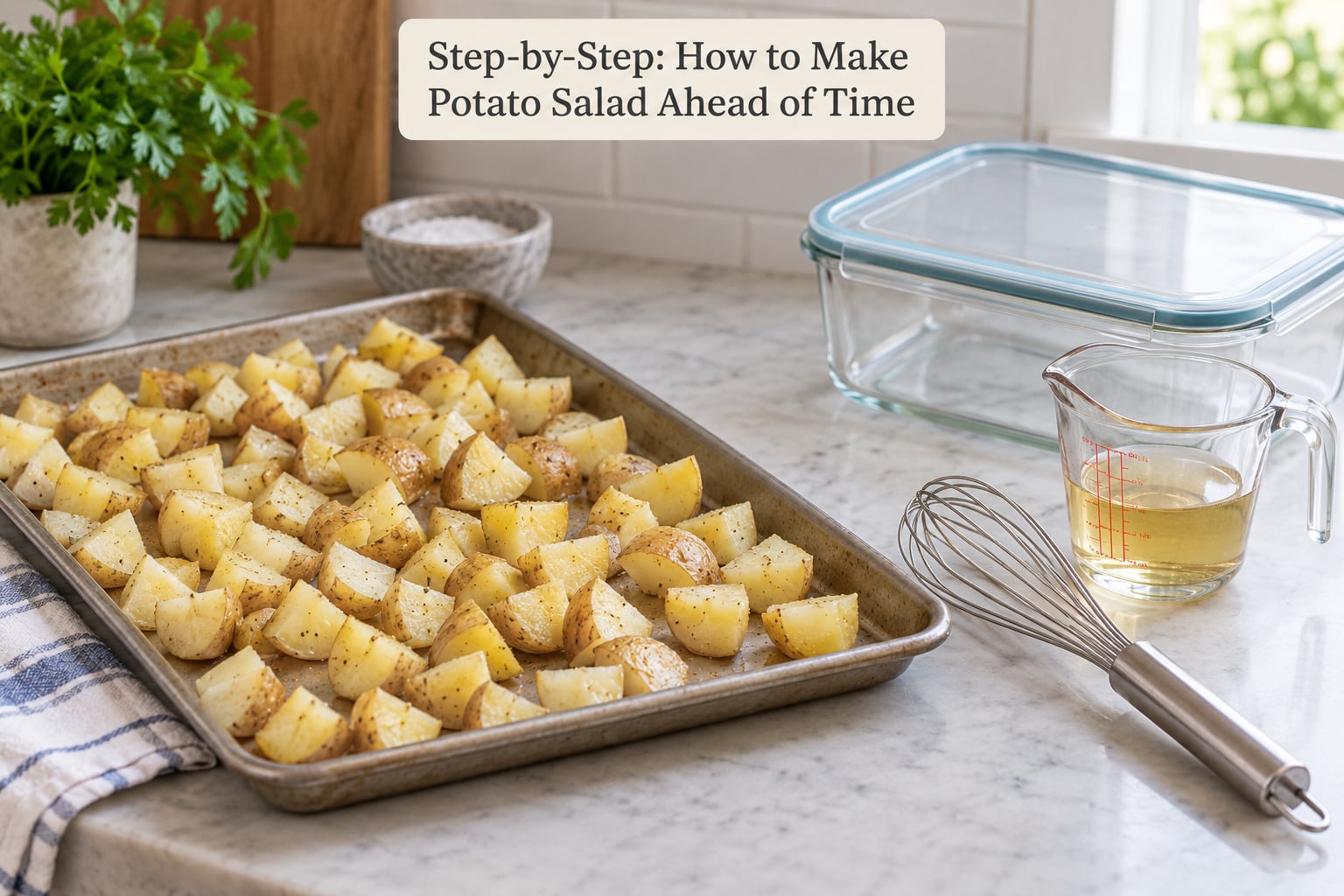
Waxy potatoes hold their shape. That is the whole reason to pick them for a salad that will sit overnight. Red potatoes, Yukon Golds, fingerlings, and new potatoes fall into that group. Their starch content is low, so they stay firm and their edges stay intact after a day in the fridge.
Floury potatoes like russets and Idaho do the opposite. They break apart when you stir them, and the starch they release turns a creamy salad into glue. They are not wrong, they are just a different dish. If you like that soft, almost mashed texture, cook them a little less and use them the same day.
All-purpose potatoes sit in the middle and are a safe middle ground. Yukon Golds are my default because the skin is thin enough that you can leave it on and the color stays pale yellow after cooking.
Step 2: Cook the Potatoes Without Making Them Mushy
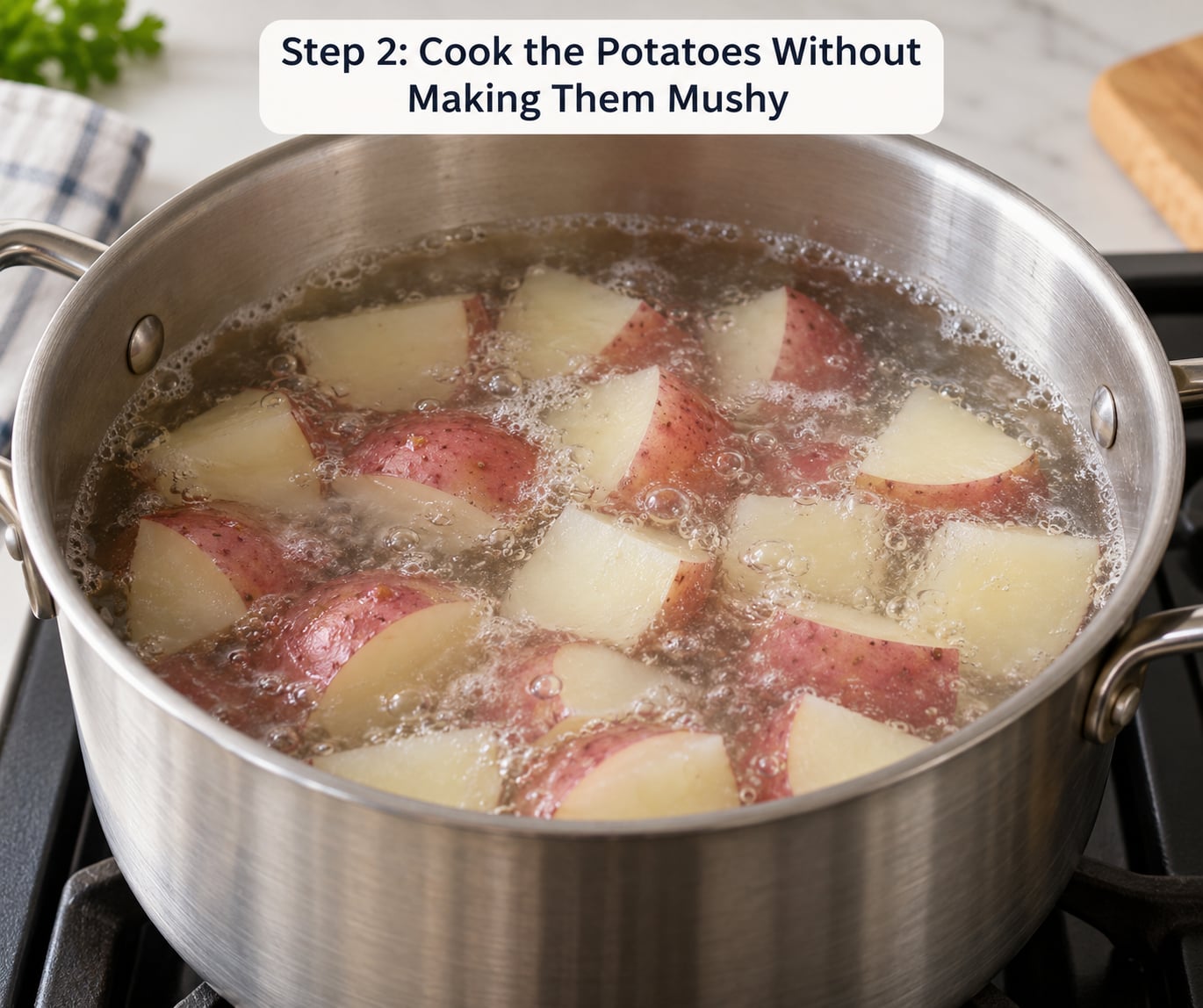
Start in cold, salted water. Put your cut potatoes in the pot, cover them by an inch, add the 2 tablespoons of salt, then bring the pot to a boil and drop to a steady simmer. Starting cold cooks the centers at the same rate as the outsides.
Season the water like the ocean, which is the most repeated tip in this whole recipe. If it does not taste too salty, it will not be salty enough once the potato absorbs it.
Cut into 1.5-inch chunks rather than slicing thin. Thin slices turn to mush, and small dice breaks apart when you fold in the dressing. Peel first with a paring knife if you want smooth texture, or scrub and leave the skin on for something rustic.
Test at 18 minutes. The potatoes are done when a fork slides in with no resistance at all, but the chunk still holds together when you lift it out of the pot. If you boil past that, the edges crumble and the salad goes gluey in the fridge.
Drain and let them steam dry for 10 to 15 minutes. Tossing wet potatoes into dressing thins it out, and the thin salad is the most common complaint I hear about overnight potato salad. Skipping this step is the single biggest reason people think they need to add more mayonnaise later.
Step 3: Make the Dressing in Advance
This is the trick that separates good make-ahead potato salad from bad. While the potatoes are still warm, pour the vinegar over them and let it sit. Warm potato has open pores and drinks the vinegar up. Cold potato has sealed pores and the acid just runs off, leaving the salad sharp and thin.
Make the full dressing separately the day before, jar it, and refrigerate it. Mayo, mustard, pickle brine, and salt keep five days covered with no trouble. Stir it again right before you pour it out because the salt settles at the bottom.
Skip the cream or sour cream if you are storing more than two days. Mayonnaise holds its texture longer and does not turn grainy in the cold.
Step 4: Cool and Season the Potatoes
Do not put warm potatoes straight into a closed container. Condensation forms under the lid, drips back down, and pools at the bottom of the salad. Spread them in a single layer on a sheet pan and refrigerate for 30 to 45 minutes until they feel room temperature.
Once cooled, fold in the pickled red onion, celery, eggs, and about half the dressing. Taste it. It will taste sharper than you want right now, because the potatoes have not finished absorbing. Season with the remaining salt now and again later.
Step 5: Assemble and Refrigerate the Potato Salad
Add the rest of the dressing and fold gently with a large spoon. Never stir hard. You are coating pieces of potato, not mixing batter, and breaking them is what turns a salad to paste by day two.
Press a piece of parchment or wax paper directly onto the surface before you close the lid. That keeps air off the top and stops the surface from drying and browning, which is the other thing that makes day-old salad look tired.
Refrigerate at 40°F or below, covered, for up to four days. Three to four days is the outside limit and I would not push it, especially in a warm kitchen or with eggs in the mix.
For a party, put the salad in a shallow container and set it over a large bowl of ice once you get to the picnic. Keeps it below 40°F without a generator or a cooler full of ice packs.
Step 6: Finish and Serve
Fifteen minutes before you serve, take it out of the fridge. Cold dulls flavor, so let it sit and taste it again. It almost always needs more salt and a squeeze of lemon.
If the salad looks dry or stiff, loosen it with a small splash of pickle juice or a spoonful of the brine, not more mayo. The usual recipe for each cup is 1 tablespoon mayo, 1 teaspoon mustard, and 1 teaspoon pickle juice. Mix those together and stir it in until the salad moves again.
Add your fresh herbs last. Dill and parsley chopped the night before go brown and limp by morning, and there is no fixing that. Scatter them on right before it hits the table.
Chilled potato salad works best next to grilled meat, burgers, or a smoked chicken on a bun, and it holds up on a buffet line better than a leafy salad does.
Common Mistakes
Almost every disappointing make-ahead potato salad comes down to water, oil, or time. Here is what went wrong and what fixes it.
- Watery salad. The potatoes were rinsed, drained, and dressed while still dripping. Steam them dry for 10 to 15 minutes and use less dressing at first. You can always add more at the end.
- Gluey-coated salad. Too much starch. You used russets, overcooked the potatoes, or mixed instead of folded. Waxy potatoes, a fork at 18 minutes, and a spoon instead of a potato masher solve it.
- Greasy dressing that separates. The mayo was added to warm potatoes instead of vinegar. Dressing warm potatoes with acid first, then chilling them, keeps the emulsion intact.
- Dry, stiff salad. The potatoes drank everything you gave them, or the container went uncovered. Press a layer of parchment on the surface and stir in the mayo-mustard-pickle juice mix before serving.
- Bland salad. Seasoned too early and only once. Taste at Step 4, again before refrigerating, and again 15 minutes before serving. Salt needs three chances.
- Rubbery eggs. They were chopped while hot and left in the salad for days. Boil them a day ahead, peel, then chop and add them on the day you serve.
- Wilting herbs. Chopped too early. Hold them until the last five minutes.
- Soggy surface. Warm potatoes sealed into a container. Cool them uncovered on a sheet pan first.
- Assembling the whole salad four days early. Make it one to two days ahead for the best texture. Four days is a ceiling, not a target.
And the one thing not to do: do not freeze it. Mayonnaise splits when it freezes, cooked potatoes turn watery as their cells rupture, and after thawing you get a grainy dressing sitting in a puddle. There is no version of this that improves with freezing.
On food safety, the rule that matters most is the two-hour rule. Any salad with mayonnaise, sour cream, or eggs should not sit above 40°F for more than two hours, and only one hour if the day is over 90°F. Put the serving bowl over ice, use a small bowl instead of a big one so people are not standing over it, and skip the mayo entirely for an outdoor party if you need the salad to sit out for hours. Vinegar-based potato salad travels and holds better for that reason.
Frequently Asked Questions
How long can I make potato salad ahead of time?
Make it 1 to 3 days ahead for the best flavor and texture, with 24 hours being the sweet spot. Store it covered in the refrigerator at or below 40°F for up to four days, though three days is where texture stays reliable. Beyond four days the potatoes go soft and the dressing thins out. The night before is when the flavors have melded nicely and the cubes still hold their shape.
Can I make potato salad the night before?
That is the best window for this recipe. Boil the potatoes, dress them warm with vinegar, cool them uncovered on a sheet pan, then assemble and cover. Chilling overnight is exactly long enough for the flavors to meld without the potatoes going soft or the mayo splitting. Keep herbs and chopped eggs out until the next day so nothing turns rubbery or brown.
Should I dress the potatoes before refrigerating potato salad?
Yes, but dress them in two stages. Pour the vinegar over the warm potatoes first and let them drink it up, because acid is what warm potato absorbs. Chill the cooked potatoes before adding mayonnaise-based dressing, or the mayo can break into an oily emulsion. Add the rest of the dressing right before refrigerating, and loosen it again with pickle juice before serving.
What is the best potato for potato salad that stays firm?
Waxy varieties hold their shape best. Red potatoes, Yukon Golds, fingerlings, and new potatoes all have low starch, so they stay firm and keep clean edges after sitting in the fridge overnight. Russets and Idaho potatoes are floury and fall apart when stirred, which makes more of a creamy salad than a chunky one. Leave the skin on when you can, since thin-skinned potatoes need no peeling.
How long does potato salad last in the refrigerator?
Up to four days in a covered container at or below 40°F, and that is a hard ceiling rather than a target. One to three days gives you the best result. If you made it more than four days ago or it smells off, changed color, or the dressing looks watery, discard it rather than tasting to check. Keep the container shallow so the center chills as fast as the edges.
Can potato salad be left out at a picnic or party?
Any salad with mayonnaise, sour cream, or eggs should stay under 40°F, which means no more than two hours unrefrigerated, or one hour when the temperature is above 90°F. Set the bowl over a large bowl of ice and keep it in the shade. If you know the salad will sit out for hours, make a vinegar-based version instead, since it handles room temperature far better.
Start with the potatoes, because everything else depends on them. Pick waxy ones, cut them into 1.5-inch chunks, and start them in cold salted water. Finish the night before, keep the salad cold, and add the herbs at the table.