To make corn on the cob on the grill, soak the ears in cold water, set the grate to medium-high heat, and cook for 15 to 25 minutes, turning every 3 to 5 minutes. You can grill corn three ways: on the bare grate for smoky char, in the husk for juicy steamed kernels, or in a foil packet for a mess-free cook.
Sweet corn peaks in midsummer, and grilled ears turn a two-minute vegetable into the side dish everyone fights over. The trick is managing moisture and char at the same time, and that comes down to which of the three methods you pick.
Table of Contents
- What You Need
- Step-by-Step: How to Make Corn on the Cob on the Grill
- Prepare the Corn: Trim, Soak and Oil
- Set Up the Grill at Medium-High Heat
- Grill the Corn and Watch for Char
- Season and Serve Right Away
- Common Mistakes and How to Fix Them
- Frequently Asked Questions
- How long does corn on the cob take on a grill?
- Is it better to grill corn in foil or not?
- Is it better to grill corn on the cob with or without the husks?
- Why do you soak corn before grilling, and how long?
- Can you overcook corn on the cob on the grill?
- Can you grill corn ahead of time and reheat it?
- Conclusion
What You Need
The ingredient list is short, which is exactly why this works on a weeknight cookout or a Fourth of July party for twenty people.
- Fresh sweet corn, or frozen ears thawed just enough to handle
- Butter for finishing, plus a small amount of neutral oil for the grate or the corn
- Coarse salt and black pepper
- Optional flavorings: chili powder, lime wedges, crumbled Cotija or Manchego, cilantro, garlic, smoked paprika
- Optional: a large bowl of cold water for soaking, heavy-duty foil, kitchen twine
You do not need anything unusual. A gas grill works, and so does a charcoal grill, though each behaves differently at the same nominal setting.
Medium-high heat is the target. On a gas grill, that is usually one burner on high with the other burner off, or all burners on medium. On charcoal, it means the coals are ashed over on the outside and the center is glowing without flames licking the grate.
Step-by-Step: How to Make Corn on the Cob on the Grill
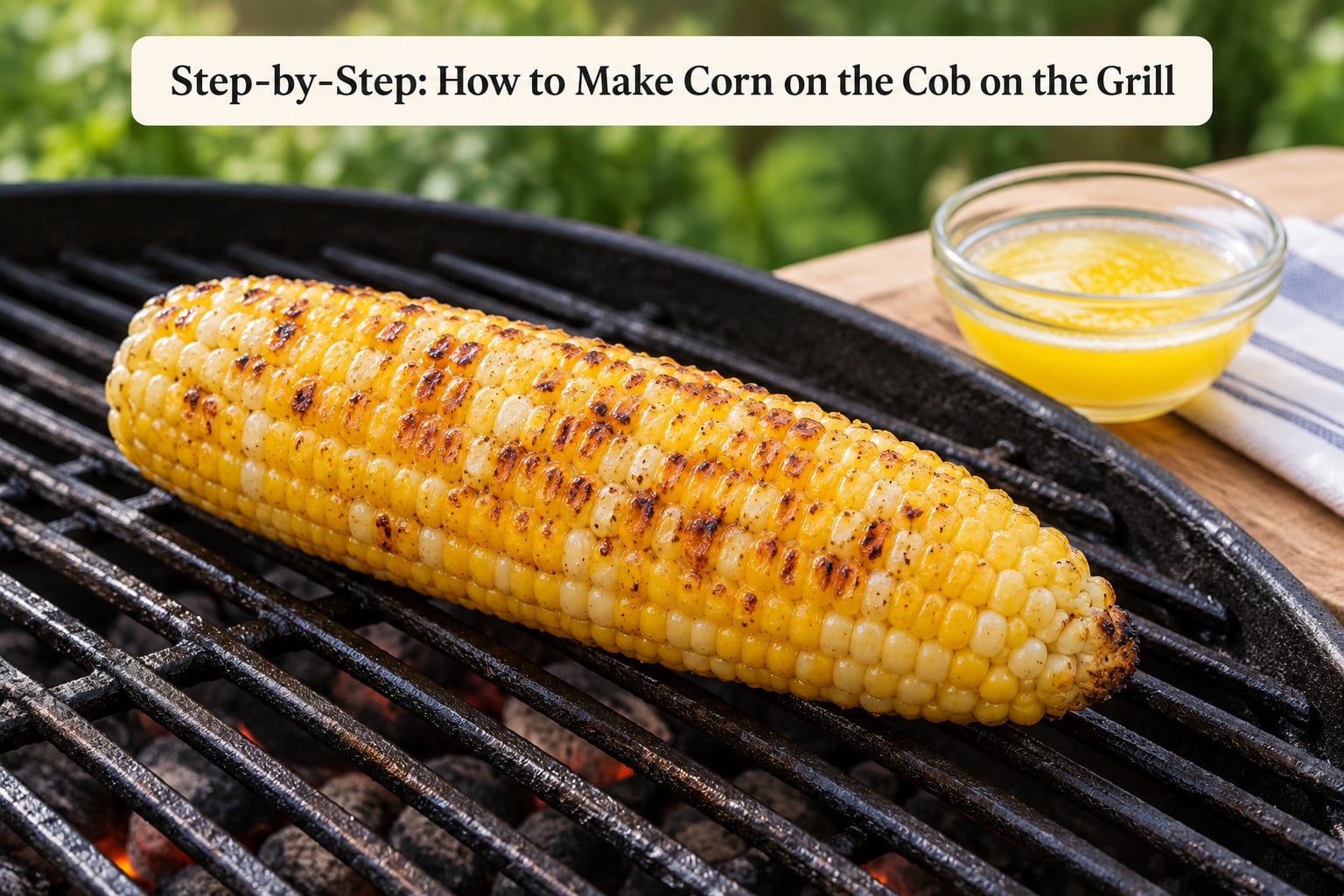
Do this and the kernels come out plump, sweet, and lightly charred rather than shriveled. The order matters more than any single step.
Prepare the Corn: Trim, Soak and Oil
Pull back the husks and strip the silk. If you are grilling the bare cob, shuck it completely. If you are grilling in the husk, leave it on but tie it back at the top with a strip of husk or kitchen twine so it does not flare open over the coals.
Soak the ears in cold water for 10 to 30 minutes, then drain and pat dry. Ten to 15 minutes does the job on a gas grill, while charcoal grillers usually go the full 30.
The soak is not about washing the corn. Waterlogged husks steam instead of incinerating, they shield the kernels from direct flame, and the wet exterior slows how quickly the leaves curl to ash. Skip it on a charcoal grill and you will likely end up peeling black paper off a cob that is still raw in the middle.
Rub a thin coat of oil or melted butter over shucked corn before it hits the grate. That extra fat is the difference between kernels that char and kernels that glue themselves to the metal.
Set Up the Grill at Medium-High Heat
Scrub the grate while the grill is cold, then heat it. Residual sugar from last week’s burgers is the main reason corn sticks on the first try.
Wipe the bars with an oiled paper towel once hot. Build a two-zone fire: one side for direct heat and char, one side for slow finishing. Gas grillers do this by shutting off a burner. Charcoal grillers push the coals to one half of the kettle and let the bare grate on the other half act as the indirect zone.
Charcoal corn usually runs a touch faster than gas once the coals are hot, since there is no lid buffering the temperature. Give it a minute less and pull it sooner than you think you need to.
Grill the Corn and Watch for Char
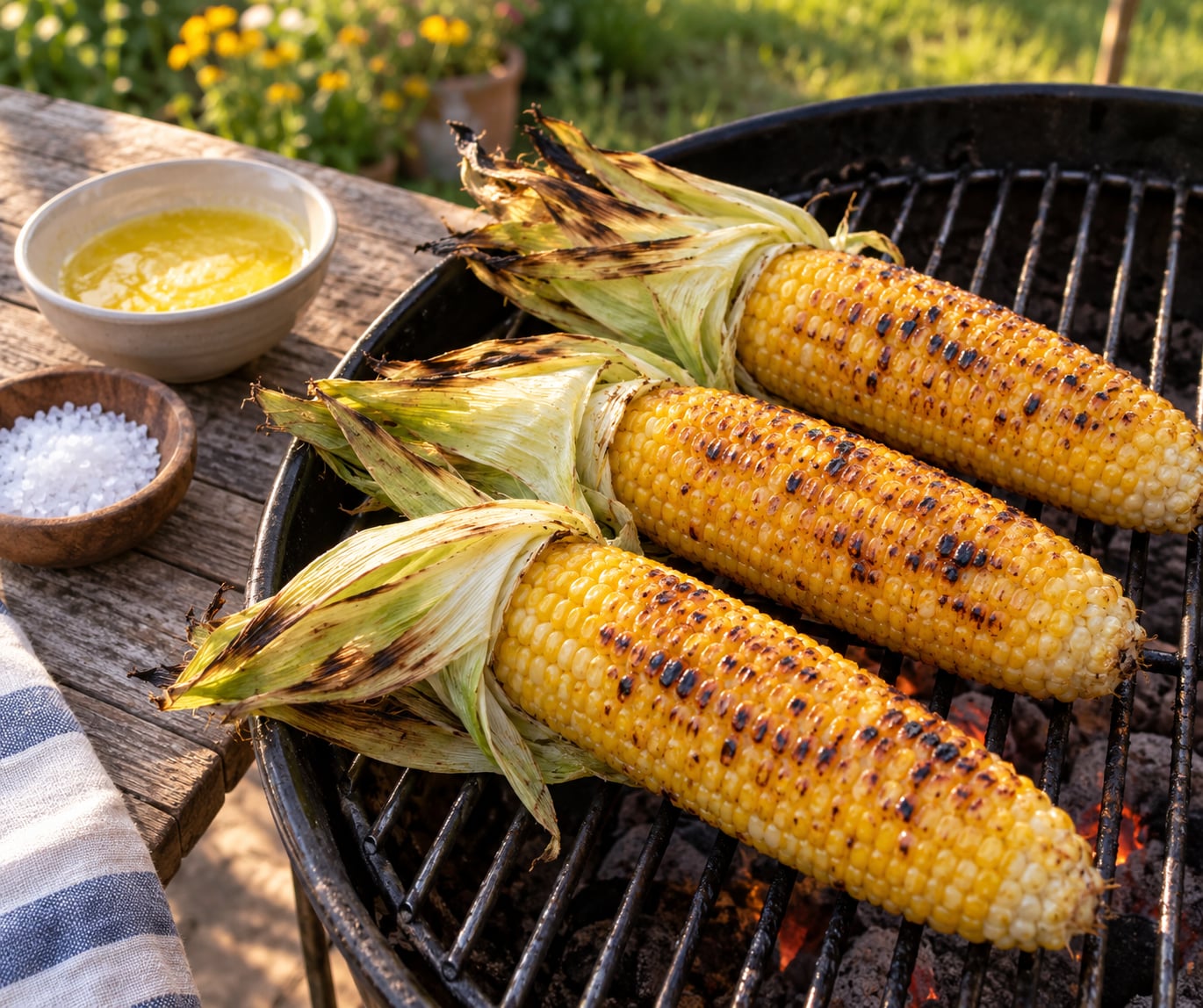
Lay the ears down and leave them alone for 3 to 5 minutes at a time. Turn every time you come back to the grill. Constant turning dries the surface and you lose the char you came for.
Fresh ears off the cob take about 15 to 20 minutes. Frozen ears take 20 to 25 minutes because of the ice in the kernels. Corn in the husk takes roughly 20 minutes, and a foil packet takes 25 to 30 minutes because it cooks in a sealed box.
Three cues tell you when to stop, and none of them is a timer. Pull a kernel: it should be plump, glossy, and release with a little resistance, not mushy or fibrous. Squeeze the cob near the middle; it should give slightly like a ripe peach. And look at the color: deep golden brown with scattered black spots is the target, and evenly black husks mean you have gone too far.
If the outside darkens before the middle softens, move the ears to the indirect side, close the lid, and give them three more minutes.
Almost everyone lands on roughly the same routine: soak, grill about 20 minutes, rotate. That is the safest starting point before you adjust for your own grill.
Season and Serve Right Away
Corn is at its best within minutes of leaving the heat. Put it on a plate and roll each ear in butter, then season with salt and pepper.
Timing matters more than most people think. Butter applied right after grilling melts into hot kernels and disappears. Butter brushed on during the last two minutes clings to the surface instead of sliding off.
For chili-lime corn, roll in butter, dust with chili powder, squeeze over lime, and add crumbled Cotija plus cilantro. That is elote, the Mexican street corn style, and it converts a plain side into the thing guests talk about all night. Garlic herb butter, a mix of softened butter with minced garlic, parsley, and a pinch of salt, works the same way with less heat.
Dry seasoning goes on after grilling, never before, because salt on the surface pulls moisture out and dries the kernels. Coarse salt sticks better than fine.
Common Mistakes and How to Fix Them
The kernels are dry and tough. Almost always one of three causes: too long on direct heat, corn grilled without the husk or foil, or no oil. Fix it by soaking 20 to 30 minutes, moving the ears to indirect heat sooner, and brushing with oil before grilling. Husk-off corn dries out fast because nothing is trapping steam.
Browning is uneven on one side. Your fire is too small or too one-sided. Set up two zones and rotate the ears a quarter turn on each pass, not just end over end.
The corn sticks and tears kernels off. A dirty grate and a dry surface. Scrub the bars, oil them hot, and coat the corn. If the kernels tear as you turn, the corn is not ready to move yet; wait until it releases on its own.
The husks catch fire. Unsoaked husks go to ash long before the center cooks. Soak them, keep them tied back, and choose the cooler side of the coal bed. Some people keep a spray bottle of water nearby, though a wet husk dripping onto hot coals raises the flare-up risk more than it helps.
The corn tastes bland. It needs salt, and it needs fat. Butter first, then seasoning, and do not skip the salt. Dry rub applied mid-cook has already burned off.
The cob falls apart in your hands. You are likely gripping it by the kernels instead of the base. Cut a few inches off the bottom of the cob so it becomes a handle, or leave husks on and use them as grips.
Two more habits worth building. If you are grilling for a crowd, raw ears take roughly twice as long as thawed frozen ones, so start frozen batches first. And grilled corn reheats fine the next day in a hot skillet with a knob of butter for two minutes a side.
Frequently Asked Questions
How long does corn on the cob take on a grill?
Fresh ears take 15 to 20 minutes over medium-high heat, turning every 3 to 5 minutes. Frozen ears need 20 to 25 minutes, corn in the husk about 20 minutes, and a foil packet 25 to 30 minutes. Stop when a pulled kernel is plump and glossy and the kernels squeeze slightly under pressure.
Is it better to grill corn in foil or not?
Foil is best when you want the least mess and the steamiest corn, since the packet traps moisture and keeps the kernels juicy. Grilling bare or in the husk gives you real smoke flavor and visible grill marks, but you need to watch the char more closely and oil the surface to prevent sticking.
Is it better to grill corn on the cob with or without the husks?
In the husk is the forgiving choice. The leaves act as a steaming chamber, hold moisture in, and protect the kernels from direct flame, so the corn stays sweet and juicy. Without the husk you get stronger smoke and char, but the kernels dry out faster and cook in less time, usually 15 to 18 minutes.
Why do you soak corn before grilling, and how long?
Soaking fills the husk and outer layers with water so they steam rather than burn. Ten to 15 minutes is enough on a gas grill. On a charcoal grill, go 30 minutes because the heat is more intense and husks scorch faster. Cold water works best, and you can drain and grill right after.
Can you overcook corn on the cob on the grill?
Yes, and husk-off corn is the easiest to ruin. Once kernels start drying out they turn tough and wrinkled, and char spreads faster once the surface loses moisture. Pull at the first sign of deep golden color, move the ears to indirect heat to finish gently, and stay close near the end of the cook.
Can you grill corn ahead of time and reheat it?
You can. Grill the ears a few minutes short of done, cool them, and refrigerate in a sealed container for up to three days. Reheat in a hot skillet or on the grill over medium heat with a little butter, about two minutes a side, until the kernels are hot and glossy again.
Conclusion
Start by shucking and soaking your ears, then preheat the grate to medium-high so the corn hits hot metal instead of a cold one.
From there the method is the same whether you want plain salted corn or heavily seasoned elote: turn every few minutes, finish with butter and salt, and eat it while it is hot. While the ears are still on the grill, check for plump kernels and deep golden color rather than trusting the clock, and pull them a shade before you think you should.