Soft pretzels are a yeasted dough shaped into a twist, dipped for about 30 seconds in a hot baking soda bath, salted, and baked until deeply brown. That alkaline dip is the whole trick. Skip it and you get bread rolls with a funny shape, not pretzels. Active time is about 40 minutes, most of which is spent waiting on the dough, and the whole batch costs six pantry staples and a pot of water.
If you have never worked out how to make soft pretzels at home without a bread maker or a stand mixer, this is the version I stopped rewriting after the third attempt. I make it most weeks, usually for a Saturday afternoon with kids around. No bread maker, no stand mixer, no lye, no special pan. A stockpot, a baking sheet and a fork do the job.
Two things decide whether the batch turns out right: how long the pretzels sit in the soda bath, and how long you let them cool on a rack instead of piling them under a towel. Everything else is adjustable.
Table of Contents
- What You Need to Make Soft Pretzels (and What You Can Skip)
- Dough
- Baking soda bath
- Finishing
- Equipment
- How to Make Soft Pretzels at Home: Step-by-Step
- How to Make the Pretzel Dough for Homemade Soft Pretzels
- How to Shape Soft Pretzels
- How to Boil and Bake the Pretzels
- Why the Baking Soda Bath Matters
- Why Skip the Bath and Your Pretzels Taste Like Bread
- Common Pretzel Mistakes and How to Fix Them
- The pretzels are rubbery or tough once they cool
- The pretzels came out pale and bready
- They taste soapy
- They are inedibly salty
- They stick to the pan and tear when lifted
- The dough tears or springs back while rolling
- How to Serve Soft Pretzels at Game Day
- Frequently Asked Questions
- Do soft pretzels need a baking soda bath?
- Why are my homemade soft pretzels dense or tough?
- Can I make soft pretzels ahead of time?
- How long should pretzel dough rise before shaping?
- Can I freeze unbaked soft pretzels?
- How do I keep baked soft pretzels soft?
- Conclusion
What You Need to Make Soft Pretzels (and What You Can Skip)
Soft pretzels need five dough ingredients and one bath. The topping list is where most people over-buy, so read that part twice before you go to the store.
Dough
- Bread flour, 3 cups (360 g) — or all-purpose flour for a slightly lighter, less chewy crumb.
- Instant yeast, 2 teaspoons (6 g) — or 2 1/4 teaspoons (7 g) active dry yeast, which you dissolve in the warm water first.
- Warm water, 1 1/4 cups (300 ml) — about 110°F (43°C), warm like a bath, not hot.
- Fine salt, 1 1/2 teaspoons — regular table or fine sea salt dissolves into the dough where coarse salt does not.
- Brown sugar, 2 tablespoons — feeds the yeast and browns the crust. Honey works too.
- Unsalted butter, 2 tablespoons, melted and cooled — optional, but it gives you the enriched mall-style crumb.
Baking soda bath
- Water, 10 cups (2.4 L)
- Baking soda, 2/3 cup (150 g) — about 8 tablespoons. This is more than most recipes call for on purpose; it is what raises the pH of the water enough to change the crust.
- Dark beer, optional — swap up to half the water for a stout, porter or dark lager for a malty, pub-style finish. Reduce the baking soda a little if you do.
Finishing
- Egg wash — one egg yolk plus a teaspoon of water, beaten with a fork.
- Coarse salt or pretzel salt, 2 tablespoons — pretzel salt is the flat, flaky kind sold near the bakery aisle; coarse sea salt is the next best thing.
- Melted butter, optional — brushed on straight from the oven for the glossy finish.
Equipment
A wide pot with at least 4 inches of depth keeps the water at a steady simmer, which matters more than pot material. A rimmed baking sheet works better than a flat one, because the boiling water carries over. Line it with parchment or, better, a silicone baking mat — home bakers on r/Breadit and r/BakingIT report parchment and foil sticking more often than a bare greased sheet. A wire cooling rack is worth having; it is the difference between soft pretzels and soggy ones.
Skip the beer, skip the butter, skip the brown sugar if you must. Do not skip the baking soda bath.
How to Make Soft Pretzels at Home: Step-by-Step
Total time: about 2 hours, with roughly 40 minutes of that being hands-on. If this is your first time learning how to make soft pretzels at home, the timings below are the part worth reading twice. Most of the rest is rise time, so the recipe fits comfortably into a game day afternoon.
How to Make the Pretzel Dough for Homemade Soft Pretzels
Warm the water first. Yeast dies above about 140°F (60°C), and cold water slows the rise enough to matter.
If you are using active dry yeast, stir it into the warm water with the brown sugar and wait 5 minutes until it looks foamy. No foam means the yeast is dead and you need new yeast, not a longer wait. Instant yeast skips this step and goes straight into the flour.
Mix the flour, salt, and (if using) instant yeast in a large bowl. Add the water and mix with a spoon until a shaggy mass forms, then knead by hand for 6 to 8 minutes, or 5 minutes in a mixer with a dough hook on low speed.
You will know the dough is ready when it feels smooth, tight, and slightly tacky, and it springs back slowly when you poke it. Under-kneaded dough tears at the edges and shapes badly. Over-kneaded dough gets tight and rolls back on itself, which is the other reason beginners fight the rope step.
Put the dough in a lightly oiled bowl, cover it, and let it rise in a warm spot for about 1 hour, until it has roughly doubled. Some ovens have a light you can switch on; a cupboard near the dishwasher works. If you are in a hurry, 30 minutes in a very warm bowl of water is usually enough.
How to Shape Soft Pretzels
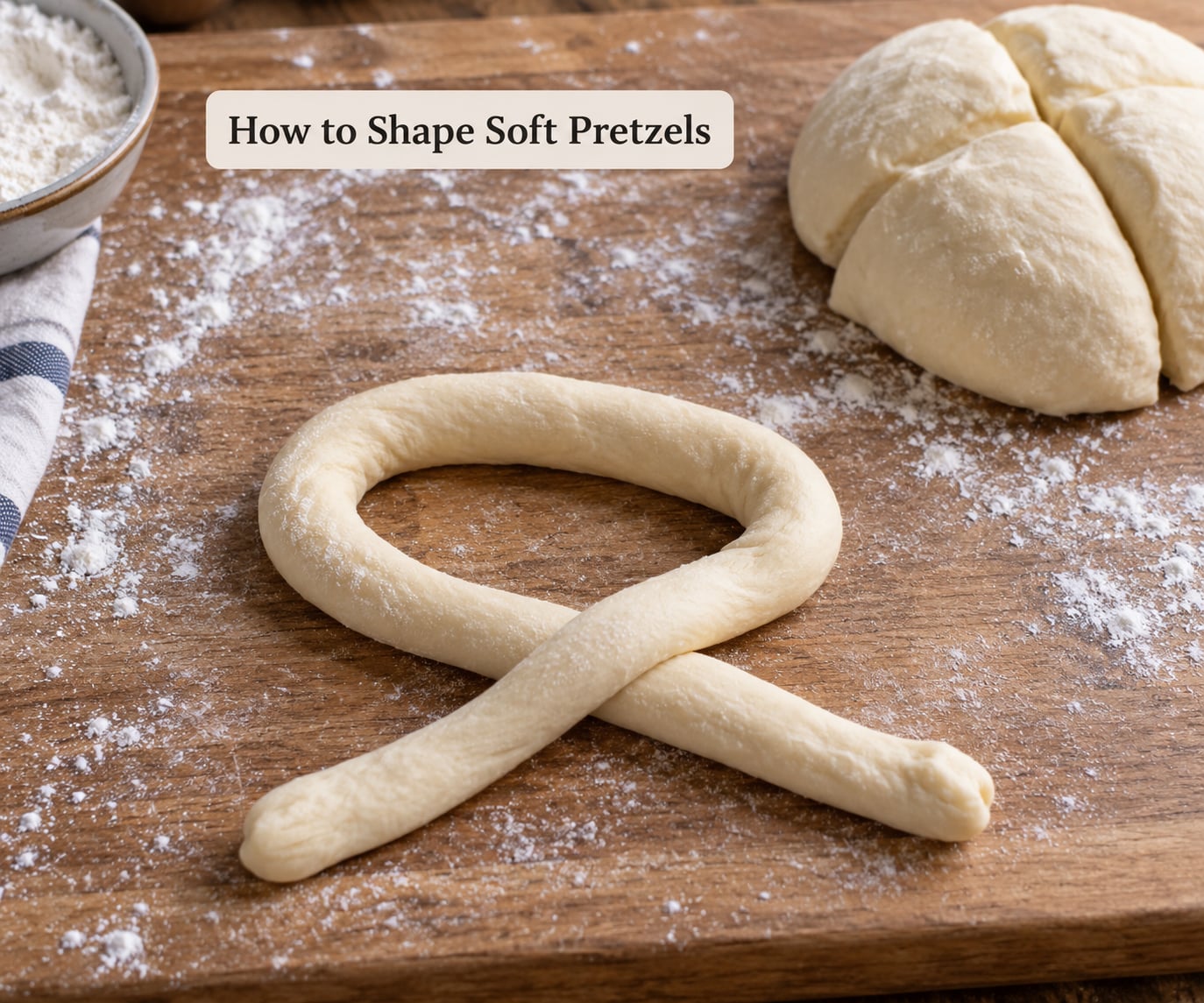
Punch the dough down, turn it onto a floured surface, and divide it into 8 pieces. Roll each piece into a ball, then let each rest for 5 minutes. That rest relaxes the gluten and is the difference between a rope that rolls out smoothly and one that fights you.
Roll the first ball into a rope about 18 inches long and 1/2 inch thick, moving your hands outward from the center as you go. Long ropes make thin pretzels and tear easily, so err on the shorter side.
Layout for the classic shape: lay the rope down, cross the two ends over each other, lift both ends and twist them together two or three times, then bring the twisted ends down and tuck them into the loop you made at the start. That is a pretzel. Press the two little ends firmly against the base of the loop so the whole thing holds its shape in water.
If rolling ropes by hand is where you usually give up, flatten each dough ball into a rectangle about 1/2 inch thick and cut it into strips with a bench scraper or knife. Rope length then takes care of itself. This is the fastest way I know to shape a big game day batch.
The pieces are ready when they are the same thickness all the way around and the arms are even. Even thickness is what makes them puff at the same rate in the bath.
How to Boil and Bake the Pretzels
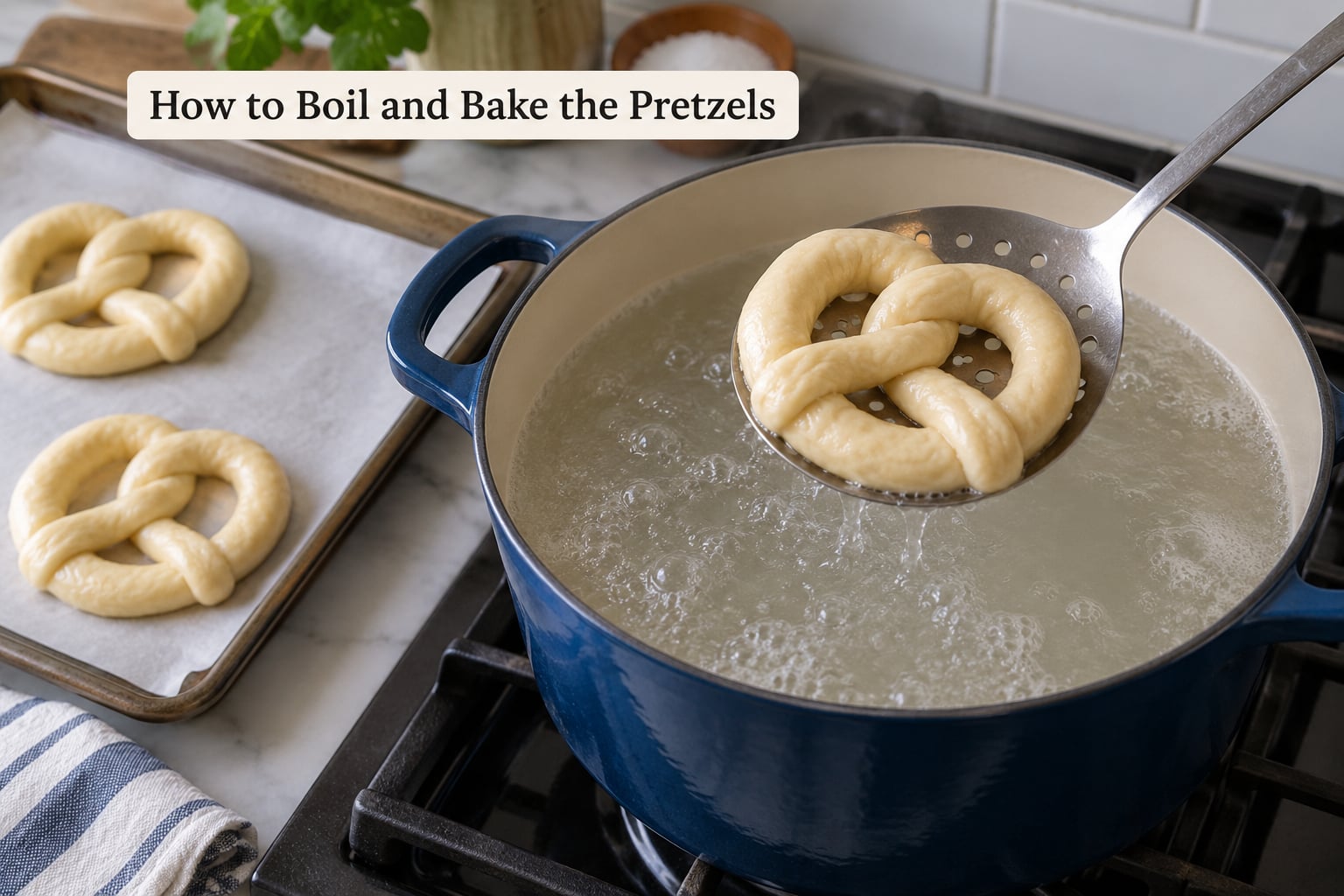
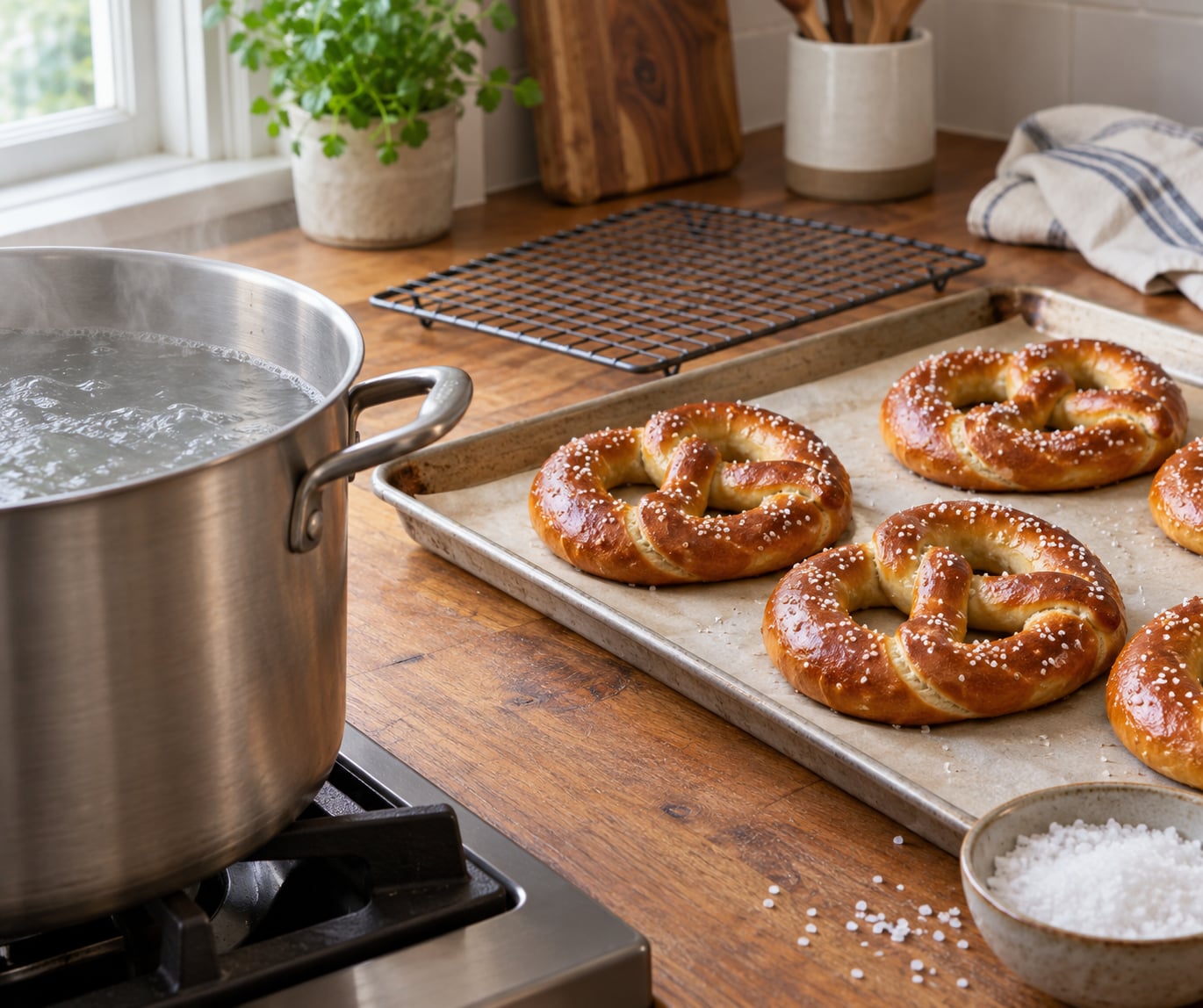
Bring 10 cups of water and 2/3 cup baking soda to a rolling boil, then turn it down to a steady, hard simmer. Turn the oven to 425°F (220°C) at the same time so both are ready.
Slap one pretzel into the bath at a time. Let it cook for 30 seconds — no more. Longer soaks push the pH high enough to leave a soapy aftertaste, which is the most common complaint about baking soda pretzels on the home baking forums. The pretzel should swell slightly and turn glossy, not fall apart.
Lift it out with a slotted spoon and let it drip for a few seconds over the pot. Set it on the lined sheet. If a pretzel splits while you are moving it, reshape it quickly with wet hands; the dough is soft enough at this stage to mend.
Once they are all on the sheet, brush each with egg wash, then scatter coarse salt over the top. The egg wash is not optional; it is what makes the salt stick and gives the deep mahogany color.
Bake for 10 to 14 minutes until the tops are dark brown and the crust no longer looks pale in the center. Pull them at the dark end of the range. Pretzels keep baking from residual heat, and the ones that look slightly underdone coming out of the oven settle into chewy rather than hard.
Brush with melted butter if you want that bakery sheen, then move them to a wire rack. Give them 15 minutes before eating. Cooling is when the crumb sets, and cutting too early is the reason pretzels feel gummy in the middle.
Why the Baking Soda Bath Matters
Baking soda is sodium bicarbonate, and plain baking soda water is only mildly alkaline. Heating it in a large volume of water drives off carbon dioxide and converts much of it to sodium carbonate, which is a genuinely strong alkali at roughly pH 11 or higher.
That alkaline surface does three things to your pretzel. It gelatinizes the starch on the outside, which is where the chew comes from. It pushes the surface pH above the point where sugars brown faster, which is why pretzels go dark while the inside stays pale and soft. And it strips a little of the dough’s starch into sugars, producing the faint sweetness and malt character people identify as pretzel flavor.
Food-grade lye, or sodium hydroxide, does the same job harder, at a pH of 12 to 14. It gives you a more pronounced sour-malt tang and an even glossier skin, which is why German bakers use it. It is also corrosive, and it requires gloves, goggles, a scale, and care around disposal. Baking soda gives you 90 percent of the look and flavor with none of that handling. If you do go the lye route, work with a 3 percent solution — about 30 g of lye per 1000 g of water — and never pour lye into water; always add lye to water.
Why Skip the Bath and Your Pretzels Taste Like Bread
Without the bath, the dough bakes like a small enriched loaf. You get a soft, pale crumb with a browned top and no chew, because nothing has converted the surface starch. The salt on top will sit loose, the shape will slump slightly in the oven, and the color will stay tan rather than going mahogany.
Soaking for 30 seconds in soda water is what converts a bread roll into a pretzel. It is the shortest step in the recipe and the one that matters most.
Common Pretzel Mistakes and How to Fix Them
Nearly every disappointing pretzel batch traces back to one of five things.
The pretzels are rubbery or tough once they cool
The most reported complaint on home baking forums, and usually caused by too little yeast activity or too much flour. Check that your water was 110°F (43°C) and that the yeast foamed before you mixed. Also make sure you weighed the flour, or spooned and leveled it; a heaping cup adds a quarter cup of flour you did not plan for. A slow, cool first rise produces a tight crumb that never softens properly.
The pretzels came out pale and bready
Two causes: skipped or rushed bath time, or an oven that runs cool. Give the bath a full 30 seconds at a steady simmer, not a cold dip into barely-warm water. Then check your oven with a cheap thermometer. If it is 25°F (14°C) low, add 3 to 4 minutes and use the color, not the clock.
They taste soapy
Too much baking soda, too long a soak, or both. Cut the bath to 1/2 cup (115 g) of baking soda per 10 cups of water and hold the dip to 20 seconds. You want tang, not detergent.
They are inedibly salty
Some older published recipes call for 4 tablespoons of coarse salt on top. That is roughly six times what belongs there. Two tablespoons is plenty, and it goes on after the egg wash, not before.
They stick to the pan and tear when lifted
Moisture from the bath plus bare metal equals sticking. Use parchment, a silicone mat, or a well-greased rimmed sheet, and dry each pretzel for a few seconds on the counter before it touches the pan. Use a thin metal spatula, not a thick one, to move them.
The dough tears or springs back while rolling
Two fixes. Rest the dough balls 5 minutes after dividing, and if it still fights you, let the whole batch relax under a towel for 10 minutes. A warm dough rolls easier; a cold one from the fridge needs longer, not shorter, resting.
How to Serve Soft Pretzels at Game Day
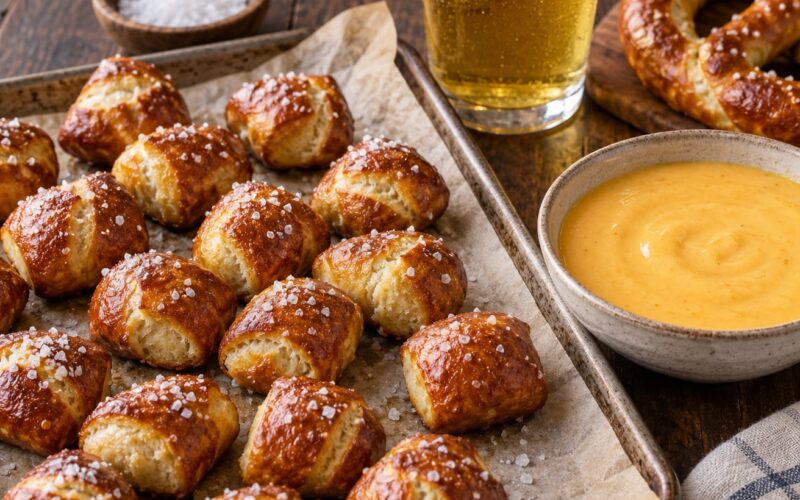
Warm pretzels with a thick, warm dip beat anything cold. Warm 1/2 cup of butter with 2 tablespoons of the pretzel cooking water until melted and whisked smooth; that starchy, salty butter is what stadium stands serve, and it is better than plain melted butter.
A soft cheese dip spiked with mustard and a little hot sauce is the other reliable option. For a sweeter turn, brush with melted butter and cinnamon sugar right after baking and serve with a cream cheese glaze.
Storage matters more than most recipes admit. Baked pretzels keep at room temperature in a paper bag or on a rack for two days, and they stay soft because that surface starch keeps them from drying out. Airtight container makes them soft in the wrong way, so avoid it. Refrigerate for up to a week, reheat at 350°F (175°C) for 5 minutes, and refresh with a splash of water on the pan if they have hardened. Freeze baked pretzels on a sheet first, then move them to a bag; thaw at room temperature and warm for 5 minutes.
Unbaked shaped pretzels also freeze well. Freeze them raw after the first dip, then bake from frozen with 2 to 3 minutes added. You can also freeze the dough after the first rise and let it come to room temperature before shaping, which is the easiest way to split a big batch across two days.
If you want a no-yeast version for kids who will not wait for a rise, the shortcut is a quick yeasted dough: 4 teaspoons instant yeast in the same proportions gives you a rise you can skip entirely by shaping and baking right away, with a 10 minute rest to relax the gluten. The bath does most of the work, so the result still looks and tastes like a pretzel.
Frequently Asked Questions
Do soft pretzels need a baking soda bath?
Yes. The bath is what raises the surface pH so starch gelatinizes, the crust chews, and the outside browns dark while the inside stays soft. Boil each shaped pretzel for about 30 seconds in a simmering 2/3 cup baking soda bath. Skip it and you get a bread roll shaped like a pretzel, with no chew, no gloss and no malt flavor.
Why are my homemade soft pretzels dense or tough?
Usually under-activated yeast or too much flour. Your water should be about 110°F (43°C) and the yeast should foam for five minutes before you mix. Weigh the flour instead of scooping it, knead 6 to 8 minutes until the dough feels smooth and elastic, and give the first rise a full hour in a warm spot so it can double.
Can I make soft pretzels ahead of time?
Yes, in three ways. Refrigerate the risen dough overnight and let it come to room temperature before shaping. Freeze raw shaped pretzels after the bath and bake from frozen, adding 2 to 3 minutes. Or bake a full batch up to a day ahead, store it on a rack at room temperature, and reheat at 350°F (175°C) for 5 minutes.
How long should pretzel dough rise before shaping?
About 1 hour at room temperature, until the dough has roughly doubled and a finger pressed into it leaves a dent that springs back slowly. A warm spot speeds it up and 30 minutes in a very warm bowl is usually enough. If you push the rise past about 90 minutes the dough can over-proof and collapse when you roll it.
Can I freeze unbaked soft pretzels?
Yes, and they bake up well. Freeze them after the baking soda dip, before the egg wash, on a flat tray so they keep their shape. Move them to a bag once firm. Bake straight from frozen at 425°F (220°C), adding 2 to 3 extra minutes, and brush with egg wash and salt just before they go in.
How do I keep baked soft pretzels soft?
Cool them on a wire rack rather than under a towel, and give them 15 minutes before cutting. Store baked pretzels at room temperature in a paper bag or uncovered on a rack for up to two days, never in an airtight container, which traps steam and softens the crust into a shell. Refrigerate for longer storage and reheat at 350°F (175°C) for 5 minutes.
Conclusion
If you keep one thing from how to make soft pretzels at home, make it this: start with the bath. Heat 10 cups of water with 2/3 cup baking soda to a hard simmer, hold each pretzel in it for 30 seconds, and everything downstream gets easier — the crust browns, the salt sticks, and the crumb turns chewy instead of bready. Weigh your flour, feed your yeast warm water, and let the finished pretzels cool uncovered on a rack. That is the whole difference between a batch that looks like the mall and a batch that looks like yours.