To make a steak marinade from scratch you need four things: oil, acid, a salty umami source like soy sauce or Worcestershire, and aromatics such as garlic, herbs, and pepper. Whisk them together in that order and you have a batch that seasons and lightly tenderizes thin, tougher cuts like flank, skirt, and round steak. The whole thing takes about five minutes and no cooking experience at all.
That formula is the whole trick. Bottled mixes are expensive and often unbalanced, and the reason most homemade marinades fail is a cook reaching for four times the vinegar they need. Learn the four blocks and the ratio, and you will never need another recipe.
One thing worth saying up front, because it saves a lot of disappointment: a marinade only works on the outer eighth of an inch or so of the meat. It seasons the surface and softens the outer fibers, and that is genuinely transformative on a thin steak. It does almost nothing to the middle of a thick ribeye. For a big tender cut, salt it ahead of time and skip the marinade.
Table of Contents
- What You Need
- Step-by-Step
- 1. Choose Your Acid, Oil, and Aromatics
- 2. How to Make a Steak Marinade From Scratch
- 3. Choose a Container and Marinating Time
- 4. Cook the Steak Safely
- Common Mistakes
- Frequently Asked Questions
- What are the basic ingredients in a steak marinade?
- How long should steak marinate in an acidic homemade marinade?
- Does marinating steak make it tender?
- Can I reuse steak marinade as a sauce?
- Should I salt the steak before adding the marinade?
- Can I make steak marinade without oil?
- Conclusion
What You Need
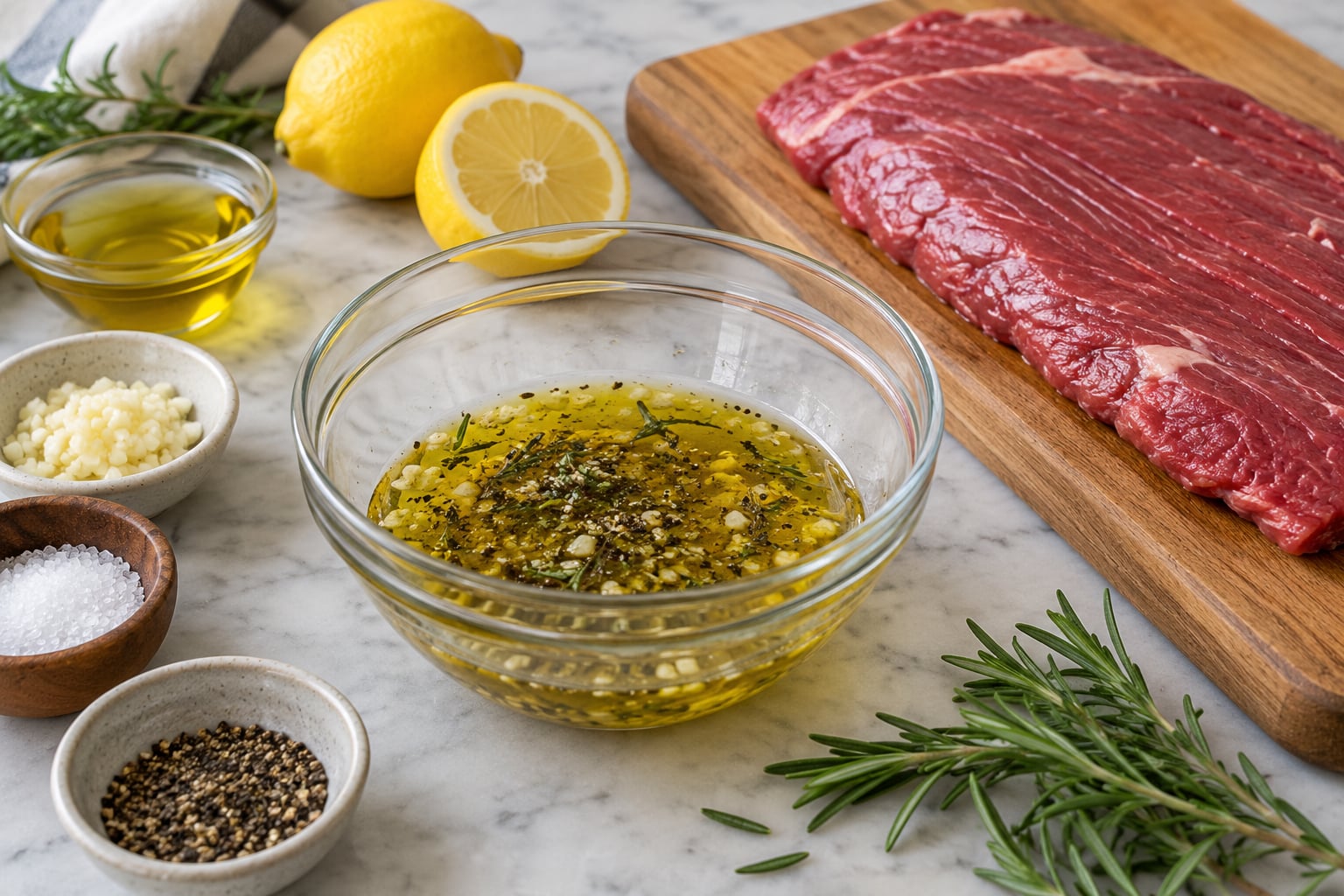
Here is the shopping list for a batch that covers 1 to 2 pounds of steak, roughly two good dinners or one cookout.
- Oil, 1/2 cup. Olive oil for a fruity, peppery finish, or avocado, canola, or grapeseed oil if you want the flavor of the meat to lead.
- Acid, 1/4 cup. Fresh lemon juice, red wine vinegar, balsamic, rice vinegar, or a dry red wine. Citrus and light vinegar stay bright; balsamic goes sweet and dark.
- Salty umami, 3 to 4 tablespoons combined. Low-sodium soy sauce, Worcestershire sauce, or fish sauce. This layer is what makes a homemade batch taste like a restaurant one.
- Garlic, 3 to 4 cloves, minced. Or 1 tablespoon of minced ginger alongside it.
- Herbs, 1 tablespoon fresh or 1 teaspoon dried. Chopped rosemary and thyme, or Italian seasoning.
- Black pepper, 1 teaspoon. Plus a pinch of crushed red pepper if you want heat.
Optional flavor builders change the direction of the whole batch. Worcestershire or A-1-style steak sauce replace some of the soy for a sweeter, more commercial profile. Dijon mustard adds a sharp emulsifying bite. Smoked paprika and a teaspoon of brown sugar build a steakhouse-style bark. Honey or maple syrup balances a sharp vinegar. Miso or chili paste pushes it in a bolder, spicier direction.
You need almost no equipment: measuring cups and spoons, a whisk or a fork, a glass or ceramic bowl, or a resealable plastic bag, and a pair of tongs. Skip metal bowls and pans for the mixing step, since a long soak in acid can give a marinade and the meat a dull, off taste. A paper towel and an instant-read thermometer are the two things that will improve your results most.
Worth separating three words that get mixed up constantly. A marinade goes on before cooking and touches raw meat. A sauce goes on after cooking and is cooked or heated for safety. A rub is a dry seasoning with no liquid, ideal for thick cuts where you want a crust and deep seasoning without any acid. Same family, different jobs.
Step-by-Step
1. Choose Your Acid, Oil, and Aromatics

Each block has one job. Oil carries flavor onto the surface, keeps the meat from tightening up, and gives you something to emulsify with. Acid is the tenderizer: it softens surface proteins and connective tissue so a chewy cut relaxes. Salt seasons deeper than anything else and holds moisture in the meat through cooking. Aromatics, herbs, and pepper are simply taste.
The rule people repeat on grilling forums, and it is a good one: you can always add more acid, but you can never take it out. Keep the oil at half the batch or more, and hold the acid at the same volume or less.
Scale it per pound of meat and the math stops being guesswork.
| Block | Amount per 1 lb of steak | Good choices | If you overdo it |
|---|---|---|---|
| Oil | 1/4 cup (4 tablespoons) | Olive, avocado, grapeseed, canola | Greasy surface, no browning, smoke point hit too early |
| Acid | 1 to 2 tablespoons | Lemon juice, red wine vinegar, balsamic, rice vinegar, dry wine | Mushy, chalky texture and a sour finish |
| Salt and umami | 1 tablespoon soy or Worcestershire, or 1/2 teaspoon kosher salt | Soy sauce, Worcestershire, fish sauce, A-1 | Salty enough to drink a glass of water after |
| Aromatics and herbs | 2 cloves garlic, 1 tablespoon fresh herbs | Garlic, ginger, shallot, rosemary, thyme, Italian seasoning, chile | Burnt garlic on the grill, herb bitterness |
| Sweetener, optional | 1 teaspoon | Brown sugar, honey, maple syrup | Blackened crust before the steak is done |
For 2 pounds of steak, double everything. Do not double the acid, though. Acid is the one block that gets worse as it goes up, so scale the first four and keep the acid steady at 2 tablespoons.
2. How to Make a Steak Marinade From Scratch
Pour the oil into your bowl first, then add the acid and whisk hard until they come together into one cloudy emulsion. That is the visual cue you want: no slick layer floating on top, no watery ring at the edge.
Now whisk in the soy or Worcestershire. Add the minced garlic, herbs, and pepper last, along with any mustard, sugar, or chili you decided on. Taste it with a clean spoon. It should taste slightly too strong, because the steak dilutes it and the marinade concentrates as it reduces on the grill.
If it tastes flat, add salt. If it tastes sharp enough to make you wince, add oil in a spoonful at a time until it does not. That adjustment takes ten seconds and it is the difference between a good marinade and one you dump down the sink.
A thicker, darker version: swap half the lemon juice for balsamic and add a teaspoon of brown sugar. A brighter, faster one: lime juice instead of lemon, with cilantro and cumin for flank steak. That combination comes up more than anything else on r/steak and r/BBQ when people ask for a weeknight flank marinade.
3. Choose a Container and Marinating Time
A resealable plastic bag is the best option because the steak lies flat and every surface touches the marinade. A glass or ceramic dish works, but turn the steak every few hours so the top does not dry out. Whatever you use, the meat should lie in a single layer with enough marinade to come partway up the sides. Crowding leaves patches unseasoned.
Time depends on the cut, the acid level, and the method.
| Cut or method | Time | Notes |
|---|---|---|
| Counter, thin cut | 30 to 60 minutes | Safe for up to 2 hours total, then move it to the fridge |
| Fridge, thin cut | 2 to 6 hours | Flank, skirt, sirloin tip, hanger, tri-tip |
| Fridge, thick or lean cut | 8 to 24 hours | Round, eye of round, bottom round |
| Fridge, tender premium cut | 30 minutes at most | Ribeye, filet, porterhouse can go chalky |
| Freezer, sealed bag | Up to 3 months | Half-frozen overnight is the sweet spot |
How do you know it has absorbed what it can? The surface turns tacky and slightly darker, and coarse pepper and garlic specks have bedded into the meat instead of sliding off. If liquid is still pooling in the bottom of the bag, the steak has taken all of it and more time will not add much.
One more limit to keep in mind. Marination moves about an eighth of an inch into a piece of meat, then stalls. A marinade works with surface area, not thickness. That is why slicing thin cuts against the grain after cooking matters as much as the soak itself.
4. Cook the Steak Safely
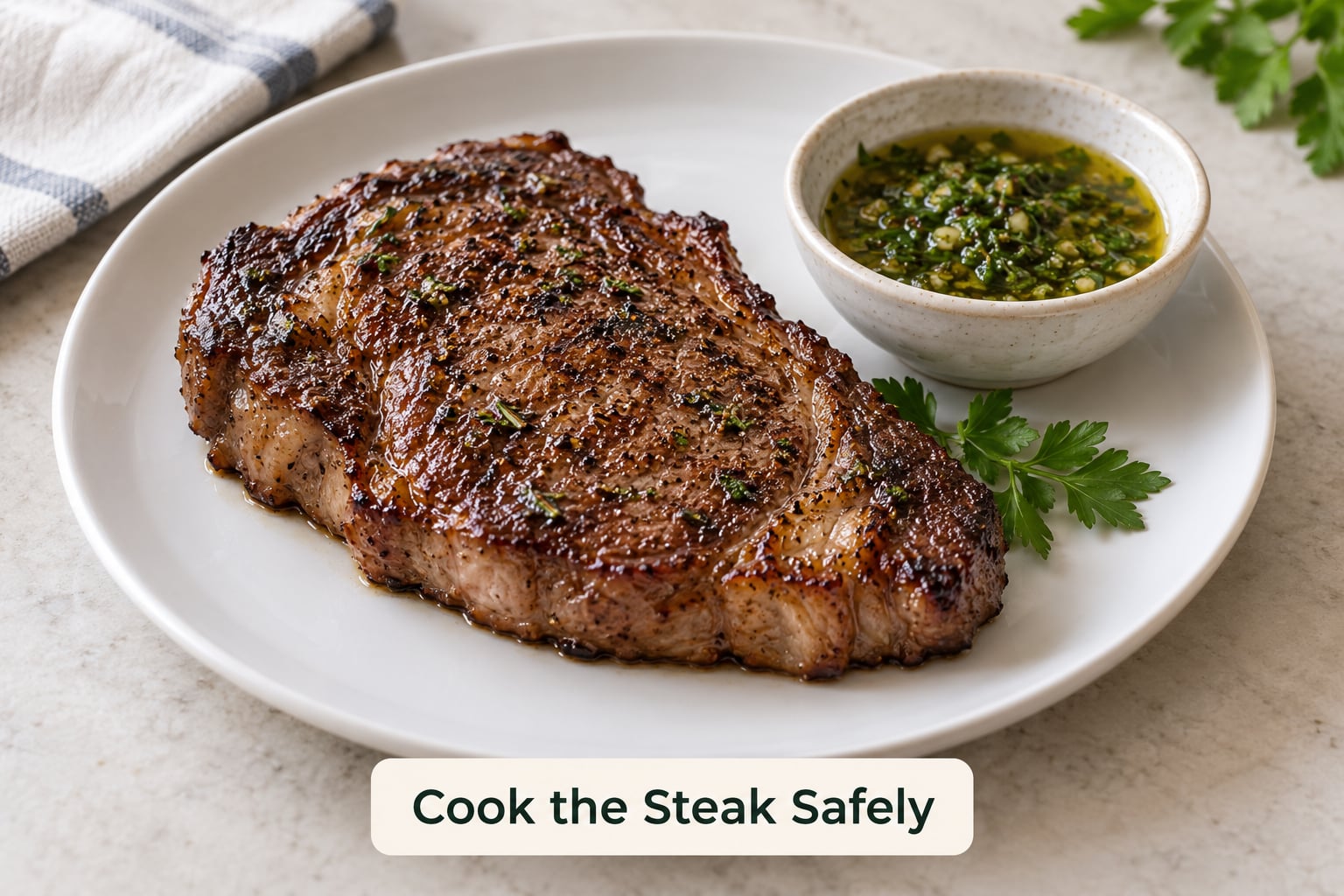
Pull the steak out and pat it thoroughly dry with paper towels. Wet steak steams instead of browning, and it will never crust properly. Scrape off the garlic cloves, bay leaves, and whole chile pieces, which burn on a hot grill before the steak reaches temperature.
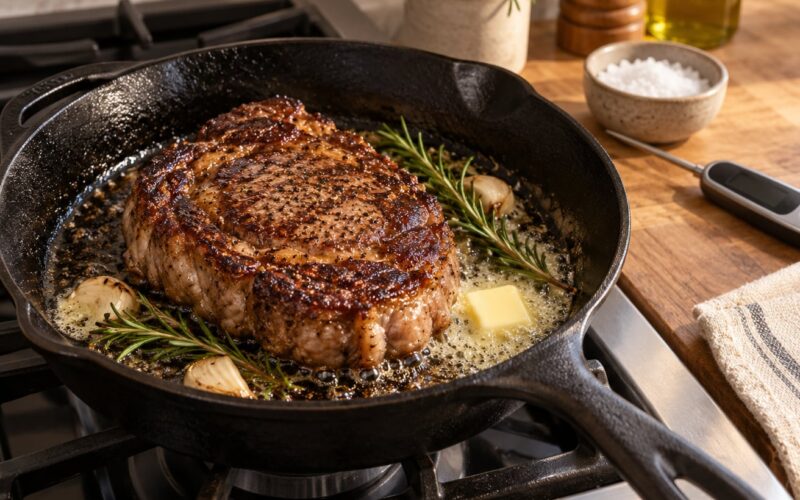
If the raw meat sat in the marinade, pour that marinade out and do not bring it to the table. It carries surface bacteria and you cannot boil or taste your way out of it. For a separate sauce, reserve a clean cup of marinade before the meat ever touches it, or build a quick pan sauce after cooking from butter, garlic, and a splash of the reserved liquid.
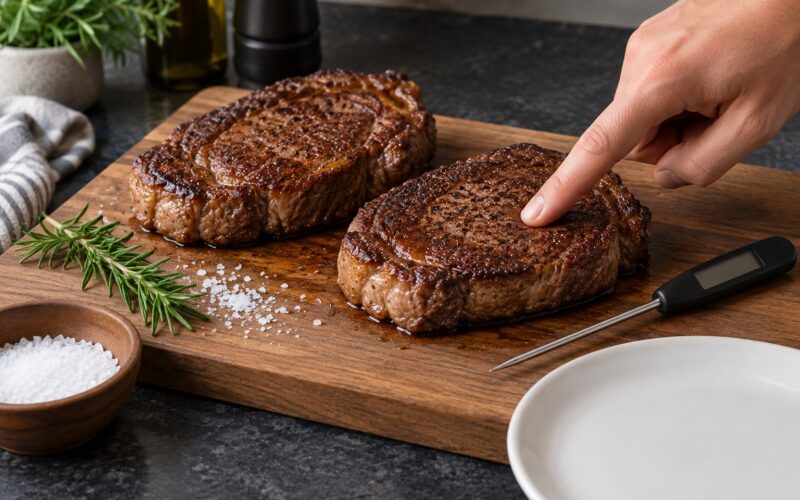
Cook to a safe minimum internal temperature of 145F for whole cuts of beef, measured in the thickest part away from bone and fat, then rest the steak 3 minutes before slicing. Cooks who like to firm the texture up take it a little further, but 145F with the rest is the food-safety floor and there is no reason to shoot past it for a tender cut.
Resting is not optional. Slice against the grain, on a clean plate that never held raw meat, and you are done in about 15 minutes from grill to first cut.
Common Mistakes
- Too much acid. The most repeated complaint from home cooks is a steak that comes off the grill mushy and chalky. Acid works on a timer, and past a few hours on a fatty or premium cut it starts dissolving the surface protein that gives meat its texture. Fix it next time by cutting the acid roughly in half and shortening the soak. You can dilute a finished batch with oil, but you cannot un-tenderize the meat.
- Too much salt. Soy sauce and Worcestershire both bring salt, and adding a measured teaspoon of kosher salt on top of a salty batch is how a good steak becomes inedible. Season in layers and taste before you add more.
- Too much sugar. A teaspoon of brown sugar or honey caramelizes nicely. Two tablespoons and the outside blacks while the center is still rare. If you like a sweet glaze, brush it on in the last two minutes of cooking instead of soaking it in from the start.
- An oily finish. If the oil is not emulsified into the acid, the steak fries in a slick before it sears. Whisk until the mixture turns uniformly cloudy and pour rather than spoon it on.
- A muddy, flat marinade. It means everything was dumped in at once and nothing balanced. Salt to sharpen, oil to round, and a squeeze of lemon if it tastes flat rather than harsh.
- Uneven coating. Crowded containers, marinating in a deep pile, and forgetting to turn the steak all leave half the surface bare. One layer, bag, and a turn at the halfway mark.
- Metal containers and long counter soaks. Acid reacts with reactive metals and can pick up a dull taste, and more than 2 hours at room temperature is a food-safety problem. Glass, ceramic, or plastic, and the fridge if you need longer than that.
One thing I do not do is marinate a ribeye. A dry brine of salt and pepper 40 minutes ahead, then a hot pan, beats any marinade I have made for that cut. Save the mixing bowl for the flank, skirt, and round steaks, which is where the difference is night and day.
Frequently Asked Questions
What are the basic ingredients in a steak marinade?
Four blocks: oil, acid, a salty umami source, and aromatics. For 1 to 2 pounds of steak that is 1/2 cup olive oil, 1/4 cup lemon juice or vinegar, 3 to 4 tablespoons soy or Worcestershire sauce, 3 to 4 minced garlic cloves, fresh or dried herbs, and black pepper. Everything else, including mustard, sugar, and chile, is a variation on that base.
How long should steak marinate in an acidic homemade marinade?
In the fridge, give thin cuts such as flank, skirt, and sirloin tip 2 to 6 hours. Lean round cuts can take 8 to 24 hours. Tender premium cuts like ribeye or filet need 30 minutes at most, because extended acid exposure makes the surface mushy and chalky. At room temperature, keep any soak to 2 hours or less.
Does marinating steak make it tender?
Only on the surface. Acid softens the outer layer of proteins, which is why thin cuts improve dramatically, but penetration stops at roughly an eighth of an inch. A marinade will not fix the interior of a thick cut. For those, dry brining with salt 40 minutes to a few hours ahead seasons all the way through.
Can I reuse steak marinade as a sauce?
Only if the raw meat never touched it. Reserve a clean cup of marinade before adding the steak, then simmer it after cooking to make a pan sauce or a brushing glaze. Any marinade the raw steak soaked in should be discarded, not boiled and not served, because it carries surface bacteria from the meat.
Should I salt the steak before adding the marinade?
It depends. Soy sauce and Worcestershire already bring plenty of salt, so skip extra salt for those batches and taste as you go. If your marinade is oil, acid, and herbs with no salty component, add about 1/2 teaspoon of kosher salt per pound of meat. For thick premium cuts, skip the marinade and dry brine the salt on ahead instead.
Can I make steak marinade without oil?
You can, and it works for a quick 30 to 60 minute soak on a thin cut. Just know that without fat you lose the flavor carrier and the browning, so the result tastes more like a dressing than a grilled marinade. A practical compromise is a small amount of olive oil plus a little melted butter mixed in at the end.
Conclusion
Start with the four blocks and everything else becomes a preference. Oil carries the flavor and holds at least half the batch, acid does the tenderizing and stays at or below the oil, a salty soy or Worcestershire layer gives you the savory depth, and garlic, herbs, and pepper make it taste like something specific. Mix it in a glass or ceramic bowl, taste it, adjust the acid before it is too late to fix.
Your next step takes five minutes. Pick a flank or skirt steak, measure 1/2 cup olive oil and 1/4 cup lemon juice for every 2 pounds, add the soy, garlic, herbs, and pepper, and let it sit in the fridge a few hours. Once you have mixed that batch once, every variation after it takes about the time it takes to open the cupboard. Updated for 2026, this formula is where I start every steak.