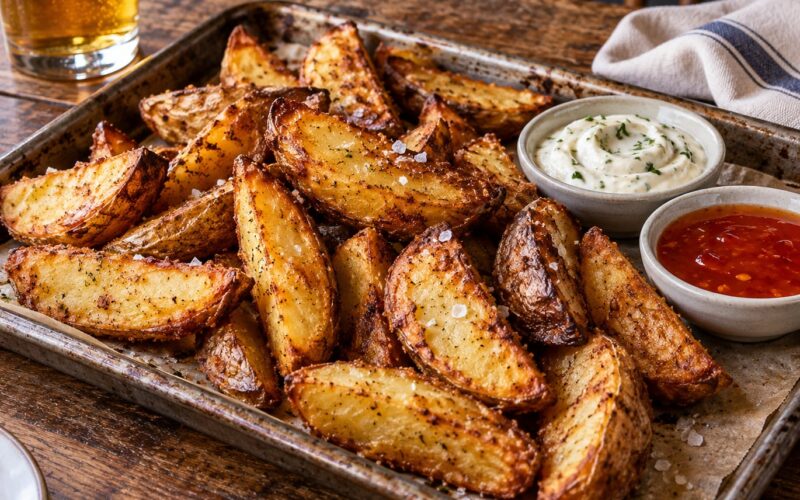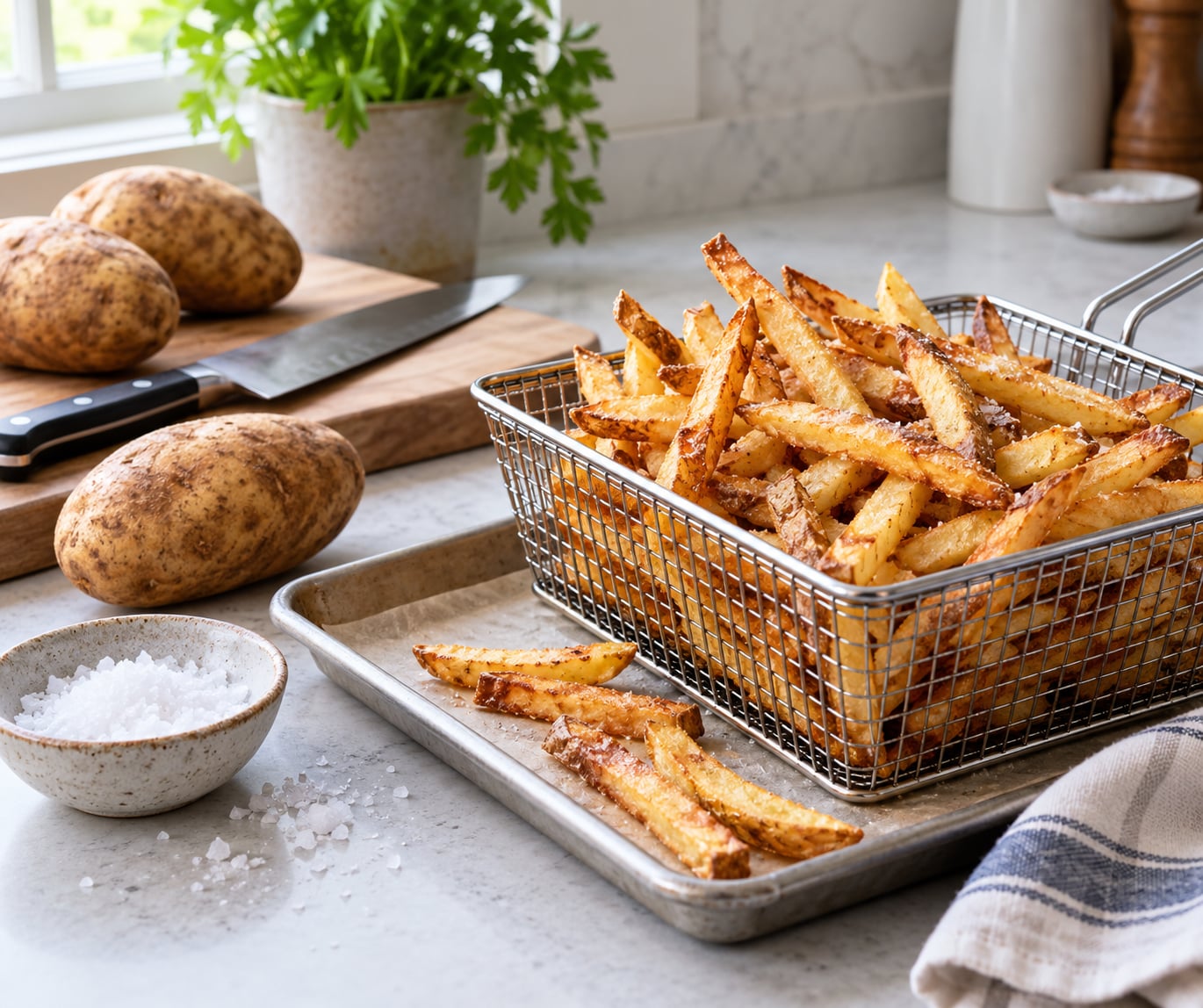
To make hand cut french fries crispy, the crust has to come from two short fries, not one long one: cut the potatoes into even 1/4-inch batons, soak them in cold water for 30 minutes, dry them completely, blanch at 325°F/163°C for 4 to 6 minutes, rest them, then flash-fry at 375°F/191°C for 1 to 3 minutes and salt them while they are still hot. That is the whole method. Everything else on this page exists to explain why a step you skipped is the reason your fries went limp.
Crispness is not a function of how long you fry. It is a function of how dry the surface is, how even the cut is, and whether the starch inside got cooked all the way through before the outside was pushed past golden.
The short version:
- Prep and cut. Russet potatoes, peeled or skin-on, squared off and cut into 1/4-inch batons, all of them the same thickness.
- Soak and dry. Thirty minutes in cold water to pull surface starch and sugars off, then dry until the surface reads matte with no wet sheen.
- First fry at 325°F/163°C for 4 to 6 minutes. Small batches, no crowding. Fry until pale gold and floppy, not brown.
- Second fry at 375°F/191°C for 1 to 3 minutes. Straight from the first fry, no resting tray in between for longer than 10 minutes. Fry until deep gold and rigid, then drain on a wire rack and salt immediately.
Allow about 90 minutes from cutting to serving, most of which is hands-off time. If that is too much for a weeknight, there are honest shortcuts at the end of this page.
Table of Contents
- What You Need
- Potatoes
- Oil
- Tools
- Optional but effective
- Step-by-Step: How to Make Hand Cut French Fries Crispy
- 1. Choose and Cut the Potatoes
- 2. Rinse Away Surface Starch
- 3. Dry the Fries Thoroughly
- 4. Heat the Oil and Fry in Batches
- 5. Drain and Salt Immediately
- Common Mistakes
- Frequently Asked Questions
- What type of potatoes are best for hand-cut french fries?
- Should I soak hand-cut french fries before frying?
- What oil temperature makes hand-cut french fries crispy?
- How do I keep french fries crisp after frying?
- Can I make hand-cut french fries without a deep fryer?
- How do I reheat hand-cut french fries?
- Conclusion
What You Need
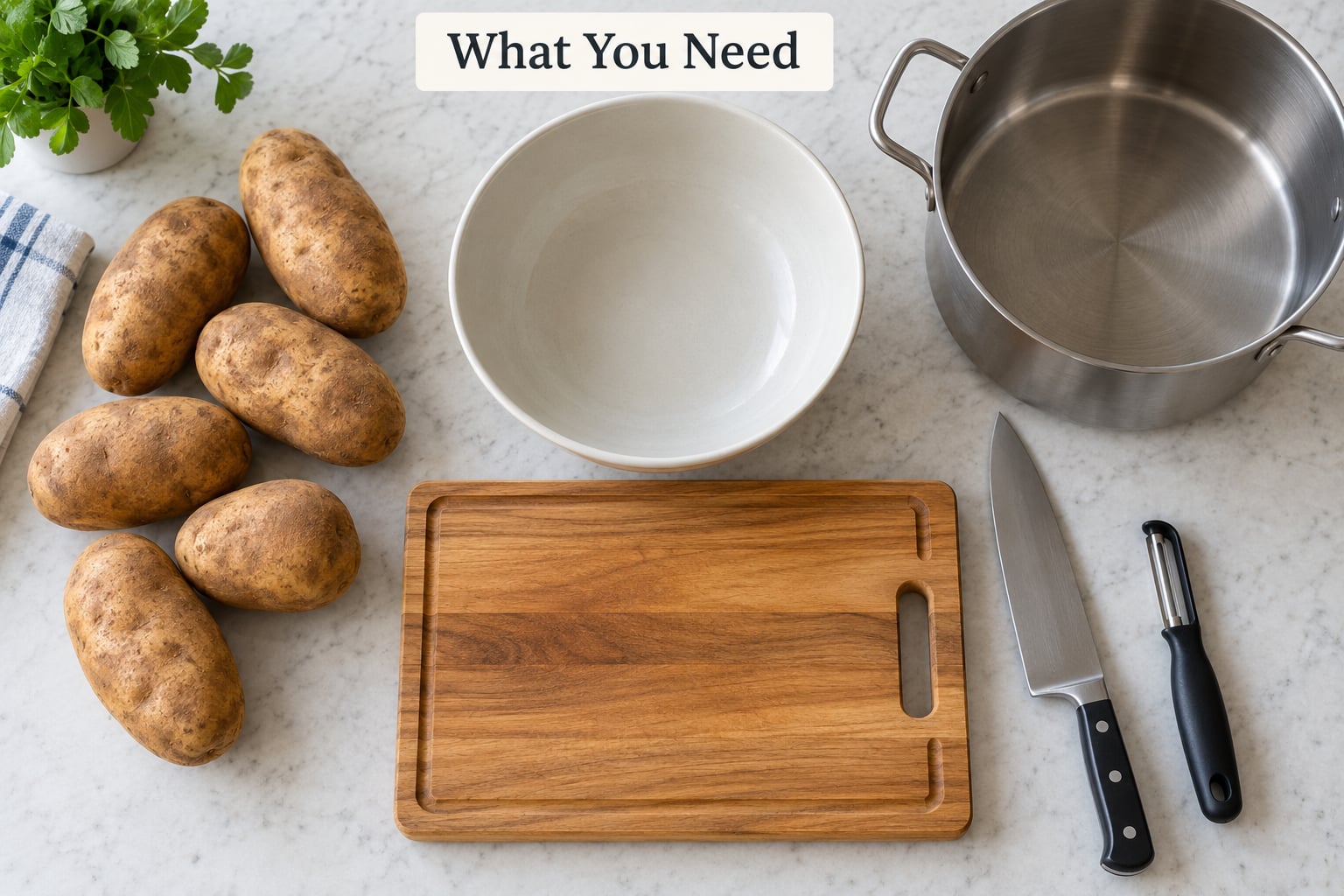
Roughly 2 pounds of potatoes feeds four people as a side, or two if you are serving them as the main event with a burger. Nothing on this list is unusual, and nothing is expensive, but three items do most of the work: a heavy pot, a thermometer, and a wire rack.
Potatoes
Go floury. Russet, also sold as Idaho or Maine, is the default for a reason. Maris Piper and King Edward are the UK and pub-kitchen equivalents and behave the same way in a home pot. Their high starch content is what gives you a fluffy interior and a craggy crust once the surface starch gelatinizes.
Stay away from Yukon Gold, red potatoes, and anything waxy. Waxy potatoes hold their cells together, take on a waxy sheen, and usually give you a fry that bends instead of snapping. That is the single most common mistake I see in home fries, and it is a buying mistake, not a technique mistake.
Oil
You need enough to cover the fries by two inches, and you need it to take heat. Peanut oil is the flavor-neutral favorite because it holds together at 375°F/191°C without tasting like the oil. Canola and refined vegetable oil are fine and cheaper. Lard, beef tallow, and duck fat all work and give a fries a noticeably meatier flavor, which is why they show up on pub menus.
What you should not use is olive oil, and that is about smoke point rather than taste. Extra virgin olive oil starts smoking well below frying temperature and will taste bitter by the time the fries are done.
Tools
- A heavy pot or Dutch oven with 8-inch walls. A thin pan drops its temperature too fast and the fries soak before they crust. This is the most common equipment mistake.
- An instant-read thermometer clipped to the rim, or a clip-on fry thermometer. Guessing at oil temperature is the most common technique mistake.
- A wire rack set over a sheet pan for draining. Paper towels trap steam and soften the bottoms.
- A spider strainer or slotted spoon for lifting, and a mandoline or fry cutter if you cut a lot of potatoes at once.
- Coarse salt for finishing, plus whatever seasoning you like to work into the oil.
Optional but effective
Cornstarch, mixed with salt in a shallow bowl, gives you a noticeably louder crunch. Toss the dried fries in it lightly and shake off the excess before they hit the oil. It is a compensation for the fact that the soak washes away some of the surface starch you would otherwise have gotten for free. Do not skip the soak in order to keep that starch; the soak does more good than the coating does.
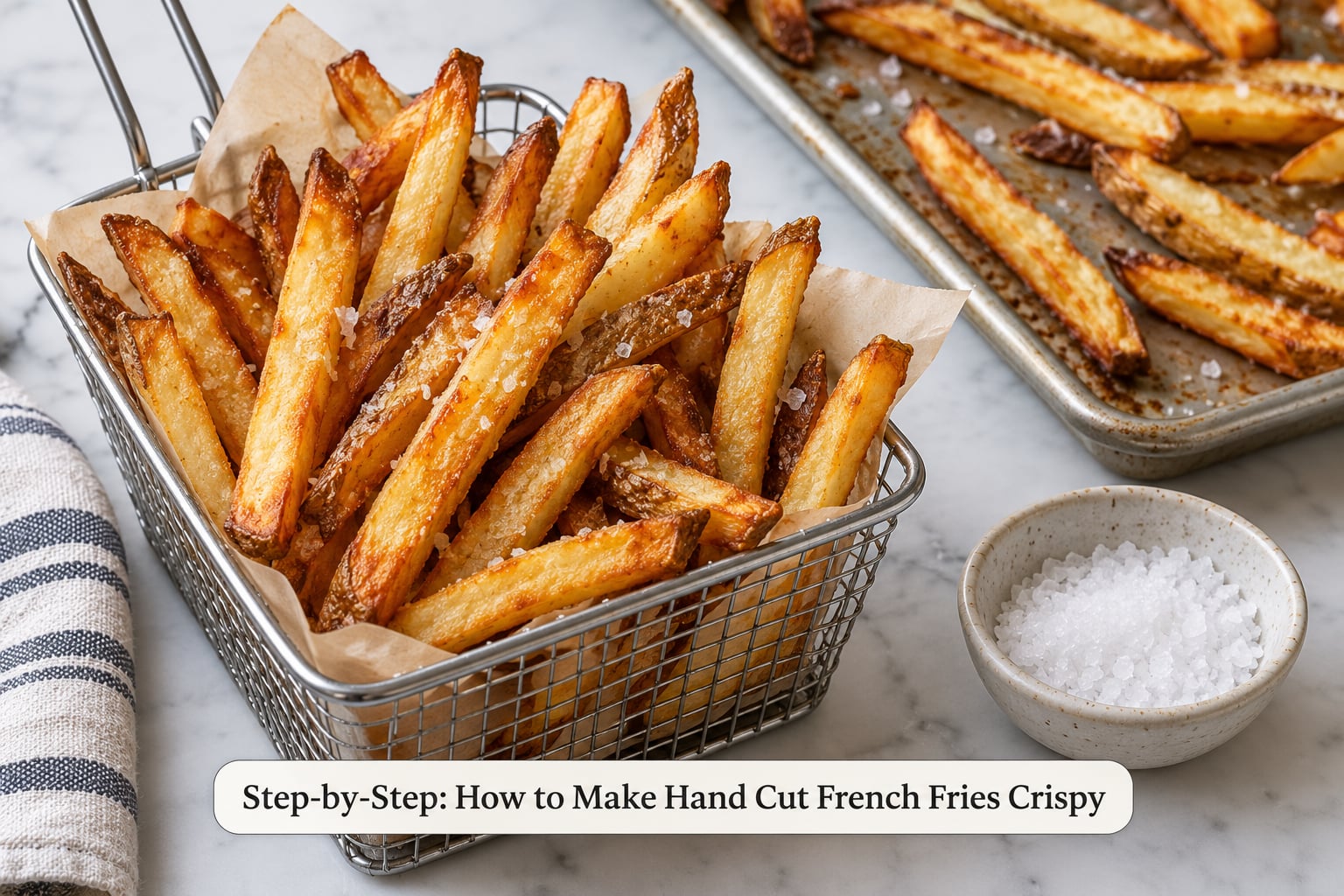
Step-by-Step: How to Make Hand Cut French Fries Crispy
1. Choose and Cut the Potatoes
Cut every baton to the same thickness. This is the part of hand-cut fries that packaged fries win at outright, and it is the part most people get wrong. A thin fry and a thick fry cannot finish at the same time in the same oil: the thin one burns while the thick one is still raw in the middle.
Here is the sequence that gives you even pieces without a ruler:
- Peel the potato, or scrub it and keep the skin on. Skin-on fries crisp a little better and hold their shape; peeled fries look more like what most people mean by a fast-food fry. Both work.
- Stand the potato on a flat end and cut a 1/4-inch slice off each of the four sides. That squaring step removes the tapered ends where there is no potato to speak of, and it gives you four flat faces to work from.
- Slice 1/4-inch planks across the face of the potato.
- Turn each plank on its side and cut it again into 1/4-inch batons. The second cut is the one that makes the batons square rather than flat, and a square fry has more surface area to crisp.
About 6mm, or a little less than the width of a standard pencil, is the target. Without a ruler, use a coin as a gauge: a quarter is close to 1/4 inch on most coins.
Skip the big pieces. A 1/2-inch fry takes roughly twice as long in the first fry to cook through, so by the time the middle is creamy the outside has gone dark and bitter. If you want thick-cut steak frites, cut them 3/4-inch and give them a 8-minute first fry, then expect a different result: crisp outside, distinctly bready inside.
2. Rinse Away Surface Starch
Hold the cut fries under cold running water and agitate them with your hands until the water runs mostly clear, then move them to a bowl of cold water and leave them for 30 minutes. The water will turn cloudy and then milky as starch comes off the cut faces.
You are removing two things: loose surface starch that would otherwise glue your fries into one solid raft, and the sugars sitting on the freshly cut faces. Those sugars are why raw-cut fries brown in about three minutes while the center is still cold. Remove them and the fry spends its time cooking instead of burning.
Thirty minutes is the standard. If you are short on time, a thorough rinse under cold water for a full minute does most of the same work and is the compromise most home cooks land on. What does not work is a quick dunk and no agitation, because the starch just resettles.
3. Dry the Fries Thoroughly
Drain the soaked fries and spread them on a towel or a sheet pan, then dry them thoroughly with another clean towel. A salad spinner works too. Do it until the surface reads matte with no wet sheen and feels dry to the touch, not just slightly damp.
This step exists for two reasons. Water in the pot makes the oil sputter violently, which is how people get burned. It also drops the oil temperature on contact, so a wet fry sits in oil that is too cool to form a crust and drinks it up instead. That is the single most common cause of greasy fries.
Change the towel partway through if the first one feels damp. Fresh-cut potatoes hold a surprising amount of water and the towel gives it up quickly.
4. Heat the Oil and Fry in Batches
Fill your pot no more than one-third full of oil and leave at least four inches of head space above the oil line. Heat to 325°F/163°C, verified with a thermometer rather than a guess or a flicker of smoke.
Lower a single loose layer of fries into the oil using the spider, not the bag. The count that works for most home pots is about a quarter of the potato volume per batch, and if the fries are touching on the way in, the batch is too big. Dropping a cold batch into hot oil takes roughly 75°F out of the oil, and a pot that never recovers will give you pale, greasy fries no matter what temperature you started at.
Fry for 4 to 6 minutes. Watch for a soft, floppy fry with a pale straw color and no color at the edges, and a gentle, lazy bubbling that settles as the water cooks off. Pull them out at that point even though they look nowhere near done. They are not done, and cooking them to brown here is the mistake that produces a tough, greasy fry instead of a crisp one.
Tip them onto the wire rack in a single layer and give them at least 10 minutes, up to 30. During that rest the residual heat drives moisture out toward the surface, and the interior starch finishes setting. Skipping the rest means the second fry is working against trapped steam, which is exactly the bloat that makes fries go soft in the bowl.
Bring the oil back to 375°F/191°C. Raise the drained fries into the hot oil a few at a time and fry for 1 to 3 minutes, depending on how thick they are. You want a deep even gold and a fry that holds its shape and feels rigid when you lift it. Get them out the moment they color, because this second stage goes from gold to dark fast.
If you coated them in cornstarch, add a minute to the second fry and watch the color, since the coating browns before the potato does.
5. Drain and Salt Immediately
Lift the fries onto the wire rack, not onto a folded pile of paper towels, and salt them within about 30 seconds of leaving the oil. Put one good pinch of coarse salt per pound of potato into a lidded shaker or a bowl and toss gently so it lands evenly, or salt in layers straight from a fine-mesh sieve.
Hot fries have an open, slightly tacky surface. Salt on a hot fry melts and bonds into the crust. Salt on a cooled fry sits on top as crystals and the first thing that touches it is oil, which slides the seasoning off onto the plate.
Serve straight away, in a shallow bowl or a paper-lined basket rather than a deep bowl, and do not cover them. Condensation under a lid or foil is what turns a good fry soft ten minutes after serving.
Common Mistakes
Almost every soggy batch traces back to one of six things. Work down this list with the fries from your last attempt in mind and the cause usually becomes obvious.
1. Uneven cuts. A mixed-thickness batch browns unevenly, so you either pull the thin ones at the right moment and leave the thick ones pale, or you leave them in until the thin ones are dark. The thick fries then have an undercooked, waxy core. Fix it by squaring the potato before cutting and setting one piece aside as a gauge for the rest.
2. Skipping the dry step. Wet fries drop the oil temperature on contact and soak. You get limp fries with a greasy sheen, which is how hand-cut fries earn their reputation for tasting like leftovers. Fix it by drying until matte, and change the towel if it is soaked through.
3. Crowding the pot. More fries means colder oil, and colder oil means more time in the pot, which means more oil absorbed. Fix it with smaller batches and a wait for the oil to come back to temperature between them. Three smaller batches beat one big one every time.
4. Wrong oil temperature, or no thermometer. Oil that is too cool at the start produces a pale, greasy fry. Oil that is too hot darkens the outside while the center stays cold and bends when you pick it up. Fix it with a thermometer every single time, including after the pot has been used for a while.
5. Taking the first fry too far. The first fry is a cook, not a brown. If you fry it to a deep color, the crust sets into something tough and bready rather than brittle. Fix it by pulling the first fry at pale gold and floppy, and trusting the second fry to do the coloring.
6. Salting late or salting on the plate. Salt applied after the fries have cooled sits on the surface and slides off into the oil in the bowl. Fix it by salting within 30 seconds of draining.
Keeping them crisp: Salt hot, drain on a wire rack in a single layer, and serve in something that lets air move. If you must hold them, spread them on a rack in a warm, turned-off oven with the door cracked rather than stacking them in a bowl. Expect them to stay genuinely crisp for about 20 to 30 minutes in that setup.
Making them ahead: You can cut and soak the potatoes up to a day ahead. Hold them in cold water in the fridge, and change the water once or twice so the starch does not settle back onto the cut faces. Dry them and fry as normal. Do not soak in warm or room-temperature water, and do not leave cut potatoes sitting dry and uncovered for more than about 2 hours, because the exposed cut surfaces turn grey and take on an off taste.
Freezing: Freeze after the first fry, not before. Blanch a batch at 325°F/163°C, drain, let it cool completely, spread it on a tray to freeze without touching, then bag it. Fries frozen this way go straight into oil at 375°F/191°C from frozen and need about 3 to 5 minutes. They are the reason double frying is worth the extra 10 minutes of work, because the first fry becomes prep you can do days ahead.
Reheating: Reheat in a 400°F/205°C oven for 8 to 10 minutes on a rack, or in an air fryer at 400°F/205°C for 5 to 7 minutes. Never microwave, which steams the crust. An air fryer reheats them almost as well as a second fry.
Without a deep fryer: An air fryer at 400°F/205°C for 15 to 20 minutes works well. Toss the dried fries in a teaspoon of oil first, spray lightly with more oil, and shake the basket two or three times so every face gets heat. They will color faster than they crisp, so pull them at golden and check one before you commit to the full time.
The oven route is a bake-then-fry, or bake-only, method. Par-cook the dried fries at 400°F/205°C for 25 to 30 minutes until they look cooked but pale and soft, chill them, then flash them in oil at 375°F/191°C for 2 to 3 minutes. Bake only if you must: toss in oil and cornflour, bake at 425°F/218°C for 35 to 40 minutes, turning twice, and expect a crisp-but-drier fry with a mealy core. It is a different food, and pretending otherwise does not help anyone.
Sweet potato fries are the one variation that needs its own plan. They have more water and less starch, so they need a lower and longer first fry: 300°F/149°C for 6 to 7 minutes, then 375°F/191°C for 2 to 3 minutes. Cut them a little thicker, at 1/2 inch, because the higher water content makes thin sweet potato fries collapse before they crisp.
Scaling up for a crowd: A 5-pound batch is about right for a dozen people alongside burgers and wings, and it needs a pot deep enough that the oil is at least 3 inches deep with room to double. Fry in six or seven batches. The second fry is fast enough that the last batch lands hot at about the same time as the first, which is the whole point of resting between the two stages.
Frequently Asked Questions
What type of potatoes are best for hand-cut french fries?
Russet potatoes, also sold as Idaho or Maine, give you the best result, and Maris Piper and King Edward work the same way. You want a floury, high-starch potato because that starch gelatinizes into a fluffy interior and a brittle crust. Avoid Yukon Gold, red potatoes and other waxy varieties, which hold their cells together, take on a sheen, and usually bend instead of snapping. Peel them for a fast-food texture or leave the skin on for a slightly crisper exterior.
Should I soak hand-cut french fries before frying?
Yes, if you have 30 minutes. The soak pulls loose surface starch off the cut faces so your fries do not fuse together, and it washes away the surface sugars that would otherwise brown them in about three minutes while the center is still cold. Rinse under cold water with your hands until it runs mostly clear, then soak. If you are short on time, a full minute of agitated rinsing does most of the same work. A quick dunk with no agitation does not.
What oil temperature makes hand-cut french fries crispy?
325°F/163°C for the first fry, then 375°F/191°C for the second. The low first fry cooks the interior starch all the way through without browning the outside, which is what makes a fluffy center. The hot second fry flashes the surface dry and sets a crisp crust. Use a thermometer, keep batches small, and remember that adding a cold batch of potatoes can drop the oil by around 75°F, so let it recover between batches.
How do I keep french fries crisp after frying?
Salt them within 30 seconds of draining, while the surface is still tacky enough to hold the crystals. Drain on a wire rack in a single layer rather than a pile or a paper towel, which traps steam and softens the underside. Serve in a shallow basket or paper-lined bowl, never covered, and keep air moving. Held that way, they stay properly crisp for roughly 20 to 30 minutes before they start to relax.
Can I make hand-cut french fries without a deep fryer?
Yes. An air fryer at 400°F/205°C for 15 to 20 minutes gives you a crisp fry, and you should toss the dried potatoes in a teaspoon of oil first and shake the basket two or three times so every face gets heat. They color faster than they crisp, so pull them at golden and test one early. For the oven, par-bake at 400°F/205°C for 25 to 30 minutes, chill, then finish in hot oil if you have a pot. Oven-only fries are drier and a little mealy in the middle.
How do I reheat hand-cut french fries?
Use a 400°F/205°C oven for 8 to 10 minutes on a wire rack, or an air fryer at the same temperature for 5 to 7 minutes. Heat drives the moisture back out of the flesh and re-crisps the crust, and low and slow is what gets there without burning the outside first. Skip the microwave entirely, because the steam it creates softens the crust and the fries never recover. Reheated fries will not be quite as good as fresh, but they beat day-old leftovers by a wide margin.
Conclusion
How to make hand cut french fries crispy comes down to four things, in this order: cut them even, get the surface starch and sugars off with a cold soak, get the surface completely dry, and fry them twice at 325°F/163°C and then 375°F/191°C. Salt them within 30 seconds of the second fry and serve them uncovered on a rack.
Start tonight with the cut. Squaring off the potato and measuring against a quarter is unromantic, but it is the step that separates a batch with some dark sticks in it from a batch where every fry snaps. Once the cuts are even, the rest of the method mostly takes care of itself.