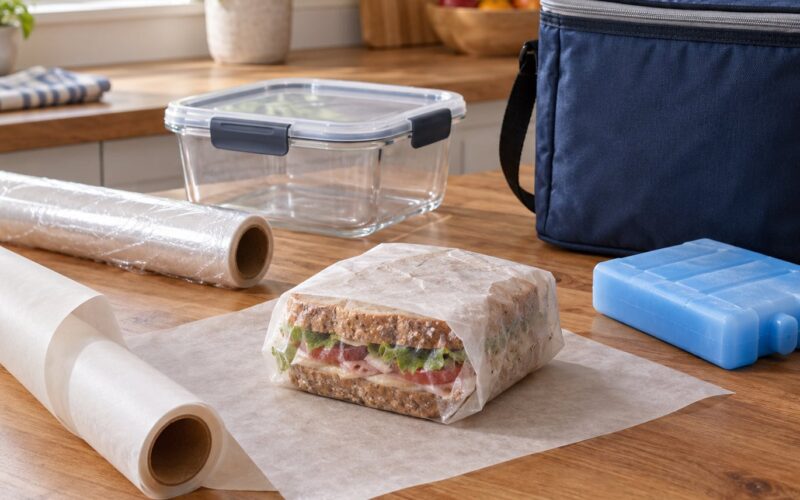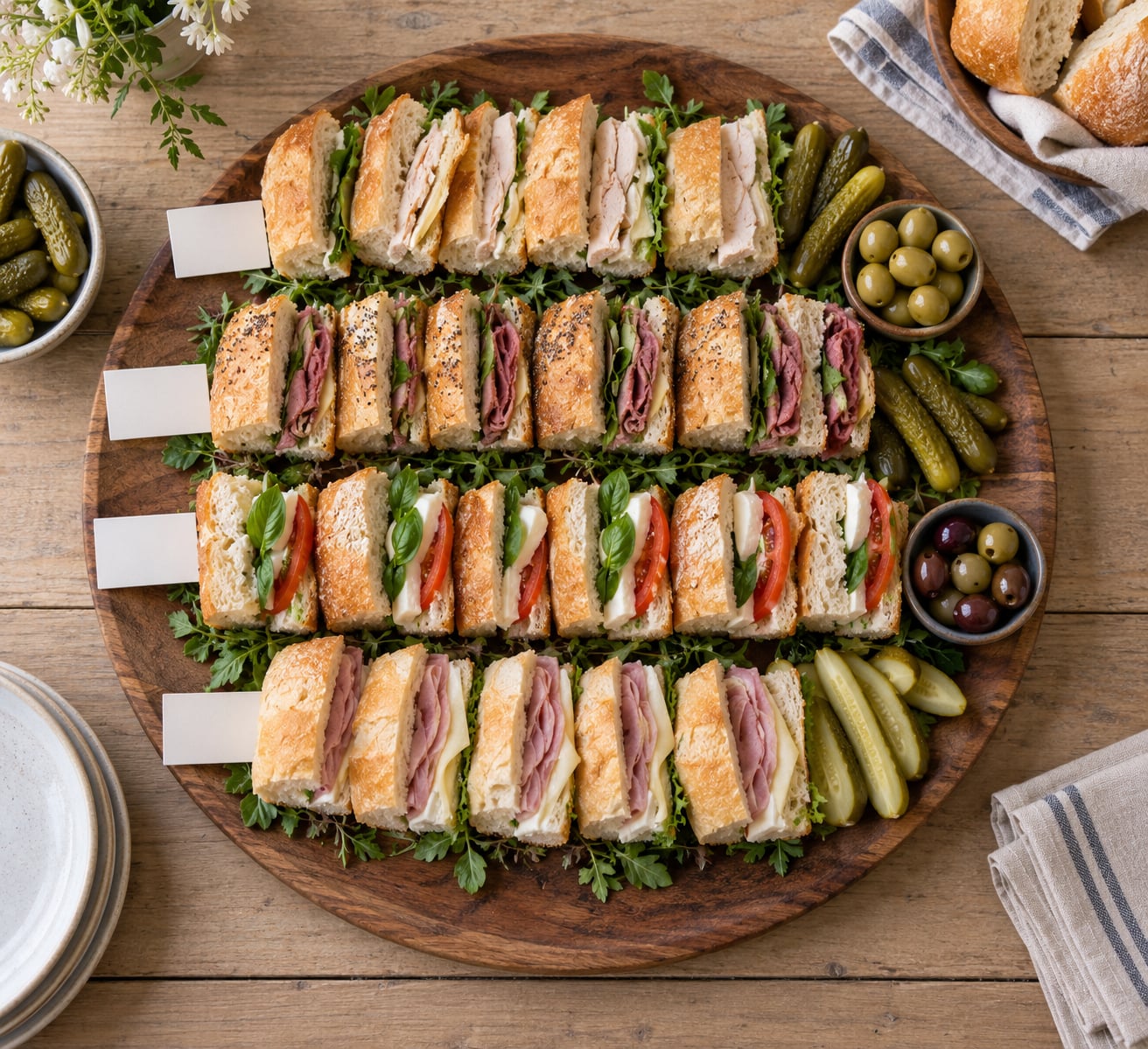
A sandwich platter is a large tray of pre-built sandwiches, usually quartered or cut into pick-size pieces, grouped by filling and served buffet-style so a group can feed itself without a food line. If you are learning how to make sandwich platters for a group, plan on 6 to 8 ounces of deli meat per adult, which works out to roughly 1.5 to 2 sandwich portions each, and give yourself about 90 minutes of prep the day before plus 30 minutes on the day.
That math matters more than any recipe. Hosts who guess end up with two outcomes, and I have seen both: a table picked clean twenty minutes in, or half a tray of untouched sandwiches going in the bin. Counting first, then buying, fixes almost everything that goes wrong later.
Table of Contents
- What You Need
- How much food per person
- Bread and roll options
- Sides that take the pressure off the meat
- Step-by-Step: How to Make Sandwich Platters for a Group
- Step 1: Estimate Quantities and Choose Your Formats
- Step 2: Build a Balanced Sandwich Menu
- Step 3: Prepare the Ingredients Ahead of Time
- Step 4: Assemble the Sandwiches in Batches
- Step 5: Arrange and Label the Platter
- Step 6: Keep, Serve, and Store the Food Safely
- Common Mistakes
- Frequently Asked Questions
- How many sandwiches should I make for a group?
- Can I make sandwich platters the night before?
- How do I keep sandwiches from getting soggy?
- What are the best vegetarian sandwiches for a group platter?
- How long can a sandwich platter sit out?
- How do I handle gluten-free or allergy-friendly sandwiches?
- Conclusion
What You Need
You do not need catering equipment. A home kitchen, a couple of sheet pans or a wooden board, and sharp bread slices cover everything.
| Supply | How much | Where to get it |
|---|---|---|
| Cooked deli meat | 6 to 8 oz per adult, 3 to 4 oz per child | Grocery deli counter, Costco, Sam’s Club, BJ’s |
| Sliced cheese | 4 to 6 slices per adult | Same trip as the meat |
| Rolls or bread | 2 to 3 pieces per adult | Party rolls or dollar rolls for waste control |
| Fillings | Lettuce, tomato, pickles, olives, condiments, 1 to 2 spreads | Produce department, jars aisle |
| Serving trays | One tray per 8 to 10 guests | Disposable foil pans or a wood board with parchment |
| Label cards | One per filling group | Index cards, or folded cardstock cut with a knife |
| Small plates and napkins | 2 plates per guest, 2 napkins per guest | Wholesale aisle or grocery |
| Tongs and a small knife | 1 per tray | Your own kitchen drawer |
| Ice and a cooler or insulated bag | Enough to hold trays under 40°F | Grocer or gas station on the way |
| Storage containers | 1 per tray type | Airtight deli containers with lids |
How much food per person
Two rules of thumb circulate for deli meat, and reconciling them is easy. Six ounces of cooked meat per adult is the baseline, which is about 1.5 sandwich portions, and it works when the sandwiches sit alongside salads, chips, fruit, and other picks. Eight ounces per adult, or about half a pound, is the standard when sandwiches are the main meal and guests arrive hungry.
Forum threads going back years are split the same way, and both camps are right for a different event. A caterer on one parenting forum put it at eight full sandwiches per eight to ten people when other picks are on the table. Cooks planning a 100-person meal on DiscussCooking land nearer 6 ounces of cooked meat per person plus about 1 cup of sides.
Count children separately. Plan 3 to 4 ounces of meat and one sandwich portion for a young child, and 4 to 6 finger sandwiches for a group of kids eating as snacks.
The table below scales those numbers. It assumes an afternoon or evening event where sandwiches are the centerpiece, with sides on the table.
| Guests | Sandwich portions | Cooked deli meat | Sliced cheese | Dollar or party rolls | Trays |
|---|---|---|---|---|---|
| 10 | 20 to 25 | 2 to 2.5 lb | 1 lb | 24 | 1 to 2 |
| 15 | 30 to 35 | 3 lb | 1.5 lb | 36 | 2 |
| 20 | 40 to 45 | 4 lb | 2 lb | 48 | 2 to 3 |
| 25 | 50 to 55 | 5 lb | 2.5 lb | 60 | 3 |
| 30 | 60 to 65 | 6 lb | 3 lb | 72 | 3 to 4 |
| 50 | 100 to 110 | 10 lb | 5 lb | 120 | 5 to 6 |
| 100 | 200 to 220 | 20 lb | 10 lb | 240 | 10 to 12 |
Plan a tray to hold 8 to 10 guests comfortably. That is why 25 people means three trays, not two, and 100 guests means ten or more. Cramming a crowd onto one big board looks impressive in a photo and turns into a bottleneck when half your guests are trying to reach the middle.
Bread and roll options
Party rolls are soft, small, and come in packs of 24. Dollar rolls, sold uncut at warehouse clubs, are roughly two-thirds the size of a hamburger bun and slightly taller, which is the main reason hosts switch to them: guests take one roll and finish it instead of carrying half a sandwich to the bin. Sliced bread costs the least and works for finger sandwiches, but it produces the most waste. Sub rolls suit a six-foot-sub style spread, and the long rolls get cut by the guest to the size they want, which is a low-stress answer for 50 or more people.
Sides that take the pressure off the meat
Cheap, big-batch fillers let you cut the expensive deli meat without leaving anyone hungry. Simple pasta salad, potato salad, macaroni salad, egg salad, a vegetable tray, a fruit platter, chips, and dips cover it. Budget about one cup of sides per person in total and you will not run out of sandwiches before you run out of guests.
Step-by-Step: How to Make Sandwich Platters for a Group

Step 1: Estimate Quantities and Choose Your Formats
How many sandwiches do you need for 20 people? Plan 40 to 45 sandwich portions, about 4 pounds of cooked deli meat, 2 pounds of sliced cheese, and 48 dollar or party rolls. For 25 guests the same math gives you 50 to 55 portions and 5 pounds of meat, and for 30 people you are looking at 60 to 65 portions and 6 pounds.
Decide the format before the shopping list. A main-meal lunch wants full-size sandwiches cut in quarters. An afternoon event where guests have already eaten wants finger sandwiches, mini sandwiches, or quartered rolls. A brunch table works well with thinner slices, cream cheese spreads, and cucumber or tomato instead of cold cuts.
You know the count is right when you can see the trays in your head. Twelve sandwiches on a board that fits 20 people means you are short; 30 sandwiches on that same board means waste. Pull the tray sizes out and stack the sandwiches on them before you buy anything.
Step 2: Build a Balanced Sandwich Menu
Three to five filling types is the sweet spot. Fewer than three and someone in your group is left out, more than five and you are running an assembly project instead of a party.
Classic deli options cover the crowd: ham and Swiss, turkey and provolone, roast beef and cheddar, and a chicken salad or tuna salad made the day before. Vegetarian options should be real sandwiches, not an afterthought: caprese with tomato and mozzarella, cucumber and cream cheese on wheat, roasted vegetable and hummus, brie with apple, or a peanut butter and jelly stack for kids.
Vegan and gluten-free guests can be folded into the same list with banana and peanut butter, hummus and cucumber on a gluten-free roll, or avocado and lime on a corn tortilla roll. Premium options like smoked salmon, brie, or a chicken and brie combination add a little ceremony, usually for 10 to 20 percent of the tray.
Then vary the bread, the texture, and the flavor across the platter. A platter of five ham-and-cheese sandwiches on white rolls looks generous and reads as one option. The same five sandwiches with different breads, one spread with mustard instead of mayo, one with pickle spears, and one with tomato gets picked twice as fast.
Step 3: Prepare the Ingredients Ahead of Time
Chop, spread, and slice the day before, then store each component separately. Wash lettuce and store it with a paper towel in the crisper. Slice tomatoes and hold them on a paper towel-lined container in the refrigerator so they do not water down the bread. Grate or slice cheese the night before and keep it covered.
Keep every perishable ingredient at or below 40°F. Take the meat out of the cooler only as you need it, and never let a tray sit on a warm counter while you assemble the next batch.
Two hours before guests arrive, spread the fillings onto slices of bread. Do not top them yet. Lettuce and tomato added hours ahead of service are the single biggest cause of soggy sandwich platters, and keeping them separate until the last possible moment costs you nothing.
You know this step worked when every filling sits in its own container, labeled, and your counter is clear. If you are still slicing cheese at party time, you started too late.
Step 4: Assemble the Sandwiches in Batches
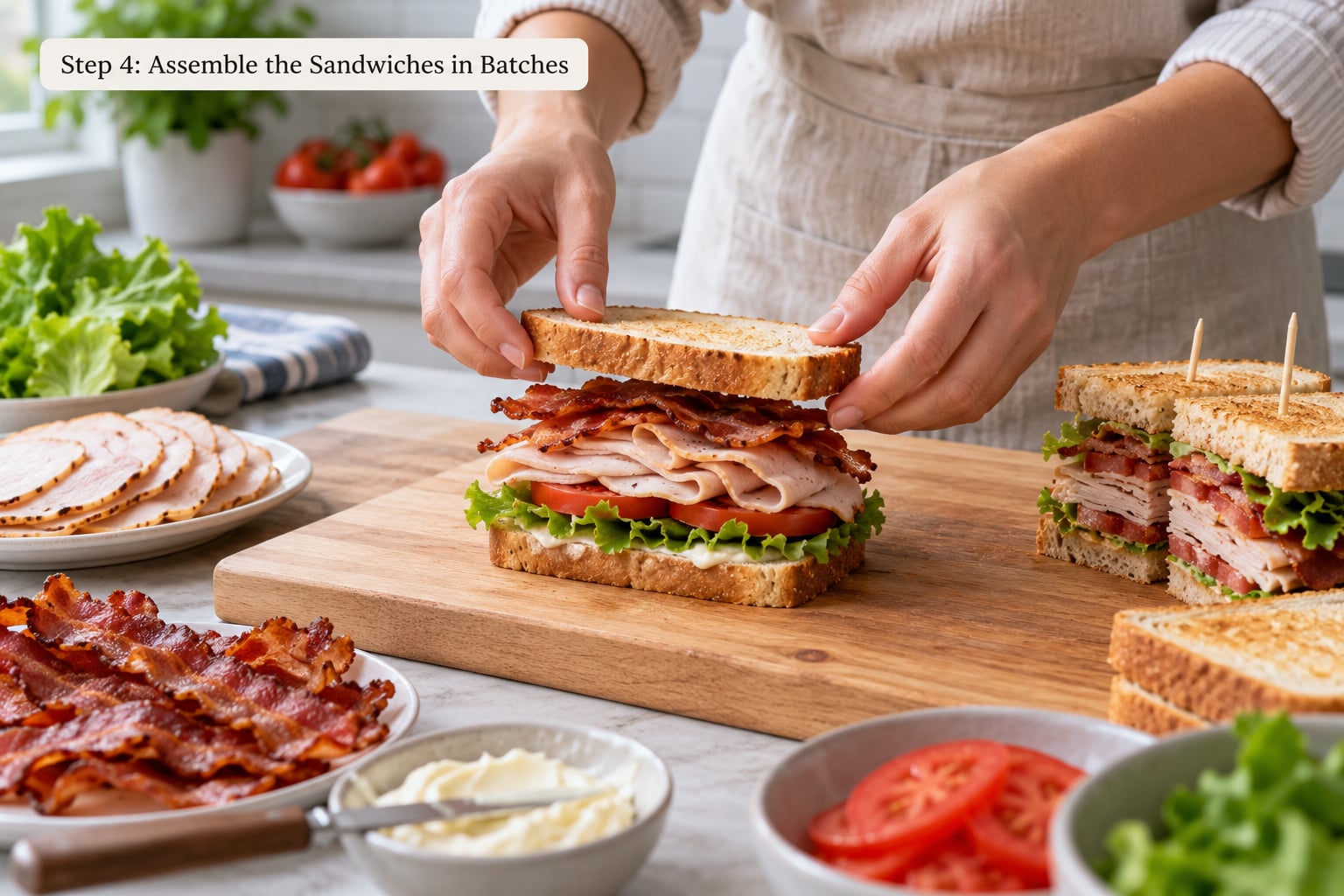
In what order should you assemble a sandwich? Spread first, then the wetter ingredients in the middle, then lettuce or lettuce cups as a barrier, then the top slice. Mayonnaise or butter on the bread blocks moisture from the fillings, which is the whole trick. Tomato and pickles belong near the center so they never touch the bread directly.
Work in batches by filling type rather than sandwich by sandwich. Build all the ham and Swiss together, then all the turkey and provolone, then the vegetarian group. Batching keeps the flavors separate and means every sandwich in a group looks identical, which matters more than people expect when the tray is on a table.
Keep the assembly simple: one meat, one cheese, one or two condiments, one crunchy element. A club-style stack works if you cut it into quarters with a sharp knife and a ruler to keep the pieces even, but complicated tall sandwiches collapse on a platter and travel badly.
Cut as you go. Quartered triangles for rolls, halves for subs, and one-bite minis for crowds where the food line is long. Line the tray with parchment or a liner so nothing slides off during transport.
Step 5: Arrange and Label the Platter
Group by filling, not by ingredient. Lay all the ham and Swiss in one row, all the turkey and provolone in the next, and the vegetarian group somewhere with its own space, which keeps cross-contact down for allergy guests as well as flavor purists.
Fill the gaps with something edible. Pickle spears, olives, cherry tomatoes, rolled pickles, and a few clusters of lettuce make natural dividers and stop the rows from looking flat. Vary the height by standing a few triangles on their edge or stacking two layers in one corner.
Tuck a label card into or beside each group naming the filling and anything a guest needs to know, such as contains nuts or gluten free. It takes two minutes and it is the difference between a guest eating confidently and a guest asking around the room.
Set the trays out before guests arrive rather than carrying them in one at a time. Place them away from drinks, keep tongs on each tray, and leave space in front of the table so the line can form without blocking the doorway.
Step 6: Keep, Serve, and Store the Food Safely
A cold sandwich platter can sit out at room temperature for two hours, and only one hour if the air is above 90°F or the table is in direct sun. Past that, bacteria on meat and cheese grow fast enough to matter, and you cannot taste or smell it. Set a timer, and treat it as a hard limit rather than a suggestion.
Keep perishables cold the whole time they are not being eaten. Refrigerate at 40°F or below, transport in a cooler with ice, and put out small batches and refill them from the fridge instead of setting the whole platter on the table at once.
Where cooking is involved, the USDA minimum internal temperatures are 165°F for poultry, 160°F for ground meat, and 145°F for whole cuts of meat and fish. If you are serving a cooked filling, hit that temperature, then cool it fast and refrigerate it within two hours.
Store leftovers in airtight containers in the refrigerator and use them within three to four days, which is tighter than the bagged salad rule people remember because deli sandwiches have less moisture to spare. Discard anything that sat out past the two-hour window.
Common Mistakes
Most hosting problems with sandwich platters are one of eight repeating mistakes, and each has a simple fix.
- Overpacking the tray. Spread sandwiches across two trays instead of stacking them four deep. Guests take the top layer and the bottom layer gets squashed.
- Too much of one filling. Split the meat budget evenly across your three or four types. If ham is 60 percent of the tray, you have built a ham platter with extras.
- Soggy bread. Spread mayo or butter on every slice, keep tomatoes and pickles in the center, and add lettuce no more than about 30 minutes before serving.
- Five sandwiches that taste identical. Change the bread, swap mustard for mayo, add pickle spears to one, and use a cream cheese spread on another.
- No labels. Write a card for each group, especially for vegetarian, vegan, gluten-free, and nut-containing fillings.
- Uncovered moisture. Line trays with parchment or liners, keep wet ingredients in their own containers, and refrigerate sliced tomatoes on paper towels.
- Perishables out too long. Use the two-hour rule, one hour above 90°F, and refill small batches from the fridge.
- A food-line bottleneck. Pre-built platters exist to solve this. For 20 or more guests, avoid a build-your-own line, since a host slowly making sandwiches turns a buffet into a queue and holds everyone up. Put out pre-cut bread, meats, and toppings on separate labeled platters instead, so guests assemble fast with nothing that needs cooking.
One more habit pays off: put the extra trays in the fridge and bring them out after the first wave. A table that refills looks generous, a table that starts full looks like a lot of food.
Frequently Asked Questions
How many sandwiches should I make for a group?
Plan on 1.5 to 2 sandwich portions per adult, which is roughly 6 to 8 ounces of cooked deli meat each, plus about one cup of sides. For 20 guests that means 40 to 45 portions and about 4 pounds of meat. Children need less: one portion and 3 to 4 ounces of meat each. Add 10 percent if sandwiches are the only food.
Can I make sandwich platters the night before?
Mostly yes, with one rule: spread the fillings and assemble no more than about two hours before serving. Build the whole platter the night before and the bread will be soft and the fillings watery by noon. Safe to prep ahead: sliced meat and cheese, chopped lettuce, spreads mixed, and sides such as pasta or potato salad. Refrigerate everything at 40°F or below and cover tightly.
How do I keep sandwiches from getting soggy?
Spread mayonnaise or butter on both slices of bread first, which blocks moisture from the fillings. Keep tomatoes, pickles, and wet condiments in the middle of the sandwich, and place lettuce as a barrier between the wet fillings and the bread. Add lettuce and tomato no more than 30 minutes before serving, and store the assembled platter covered in the refrigerator, not on the counter.
What are the best vegetarian sandwiches for a group platter?
Go for fillings that hold up without a hot chain and taste good cold. Caprese with tomato, mozzarella, and basil, cucumber with cream cheese and dill, roasted vegetables with hummus, brie with apple, and a tuna-free chicken-style salad all work. Serve at least one option on a different bread from the meat sandwiches, and label it clearly so vegetarian guests eat first rather than last.
How long can a sandwich platter sit out?
A cold platter of meat and cheese sandwiches can sit at room temperature for up to two hours. If the temperature is above 90°F, or the tray is in direct sun, cut that to one hour. Serve small batches and refill from the refrigerator rather than setting out everything at once. Anything left out past the limit should be discarded rather than refrigerated and served later.
How do I handle gluten-free or allergy-friendly sandwiches?
Use dedicated bread and separate utensils, and keep allergen-free items on their own tray at one end of the table so there is no contact or tong swapping. Common requests include gluten-free rolls, nut allergies, and dairy-free choices, and roughly one guest in a dozen has one. Label every group on a card, and ask your guests about restrictions when you confirm attendance rather than at the door.
Conclusion
Count your guests first. Multiply by 1.5 to 2 sandwich portions for adults, add one portion per child, and pick three to four filling types that differ in bread and topping. Slice and prep everything the day before, assemble no more than about two hours ahead, and finish each tray with labels and an edible divider before it goes to the table.
That is the whole method behind how to make sandwich platters for a group. Everything else on the list is a variation on it.