Beer batter for fish comes down to three things: ice-cold beer, a batter you barely mix, and oil held at 180°C (350°F). From cold pan to plate a batch takes roughly 25 minutes, and it gives you the pale, airy, shattering crust that pub-style fish and chips is known for.
The cold beer is doing most of the work. Carbonation turns to steam in the hot oil and puffs the coating, alcohol flashes off before the water can, and a slack batter develops almost no gluten, so the crust stays delicate instead of bready and rubbery. Get any of those three wrong and you end up with the heavy, greasy shell most home attempts produce.
Table of Contents
- What You Need to Make Beer Batter for Fish
- Step-by-Step
- 1. Mix the batter, barely
- 2. Prepare the fish before battering
- 3. Heat the oil to 180°C (350°F)
- 4. Coat and fry the fish
- 5. Drain and serve immediately
- Common Mistakes and How to Fix Them
- Frequently Asked Questions
- What beer is best for beer batter for fish?
- Should you let beer batter sit before using it?
- Can I make beer batter with water or soda water instead?
- What is the ideal temperature for frying beer battered fish?
- Does beer batter need an egg?
- How do I keep beer battered fish crispy after frying?
- Conclusion
What You Need to Make Beer Batter for Fish
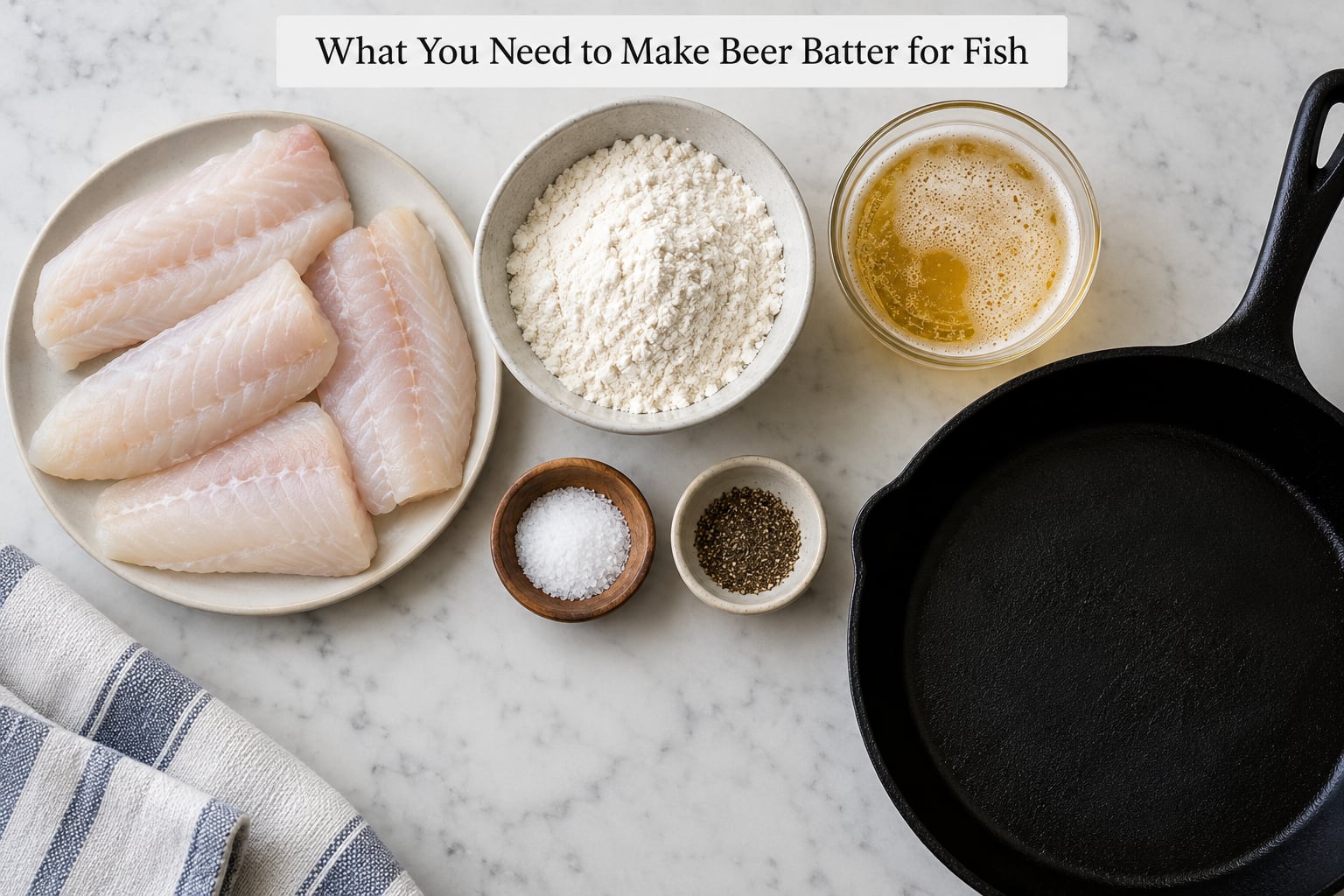
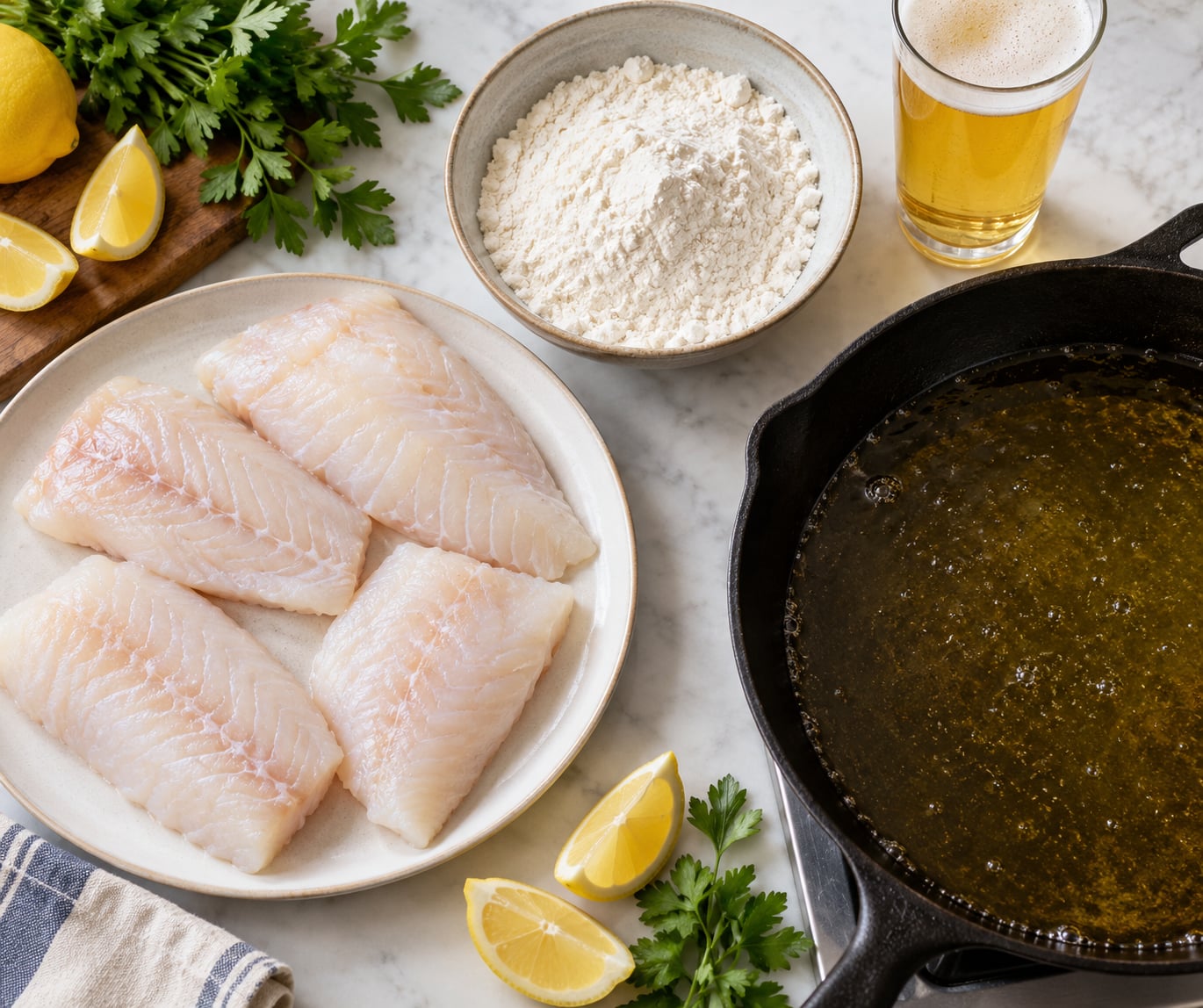
This batter makes enough for four servings. Everything except the fish goes into one bowl, and the whole thing takes about 15 minutes of prep before the oil is on.
- 1 to 1.5 lb (450 to 680 g) firm white fish fillets — cod, haddock, pollock, halibut or basa. Cut into pieces about the size of your palm, roughly 3 in (7.5 cm) wide.
- 1.5 cups (190 g) all-purpose flour — plain white flour, not self-raising, so you control the lift.
- 12 oz (355 ml) ice-cold lager or pilsner, straight from the fridge.
- 1 large egg, beaten.
- 1 tsp baking powder, for extra lift.
- 1 tsp garlic powder, 1 tsp paprika, 1/2 tsp fine salt and a few grinds of black pepper.
- 1/2 cup (65 g) rice flour, for dredging.
- About 2 quarts (1.9 L) neutral oil — canola, sunflower or peanut. It needs to be deep enough that the fish floats rather than sits on the base.
- Lemon wedges and tartare sauce, for serving.
Choosing the beer matters less than people think, but a very heavy, roasty beer will mask delicate fish. Here is a quick pairing guide.
| Beer style | Best with | Why |
|---|---|---|
| Light lager or pilsner | Cod, haddock, pollock | Clean and neutral, the classic choice |
| Pale ale | Pollock, halibut, basa | A little bitterness cuts through the oil |
| Wheat beer | Sole, flounder, basa | Light and cloudy, softens delicate fish |
| Non-alcoholic lager | Any white fish | Still carbonated, so the puff still happens |
Step-by-Step
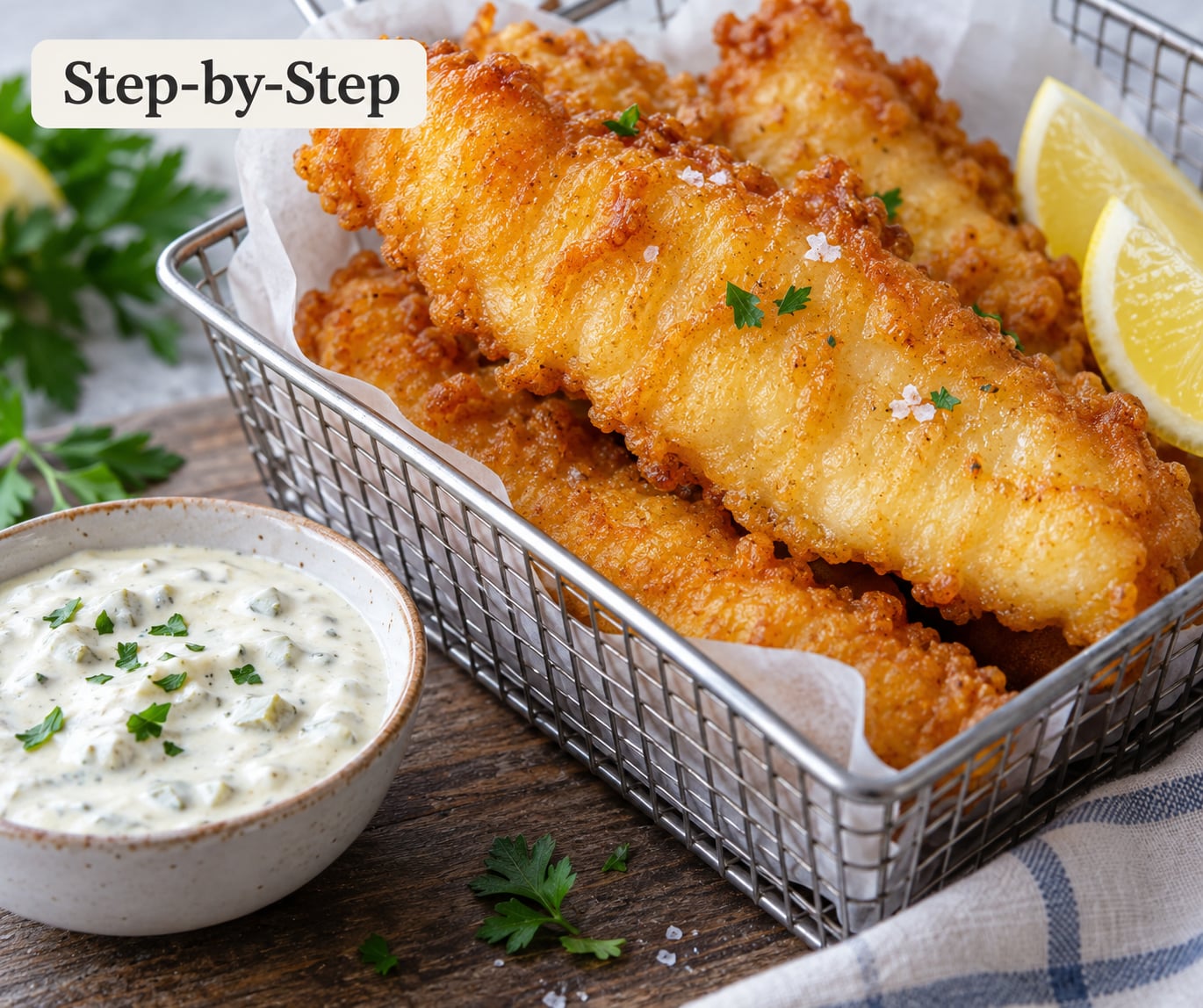
1. Mix the batter, barely
Put both flours, the baking powder, the salt, the paprika and the garlic powder in a large bowl and stir to combine. Beat the egg into the ice-cold beer, then pour it into the dry ingredients.
Fork it together until about 80% combined. A few lumps are the goal, and that is not a mistake — overmixing is what turns beer batter into a dense, bready shell. Leave it alone, put it in the fridge while you get everything else ready, and stop touching it.
2. Prepare the fish before battering
Pat the fillets completely dry with paper towel. Standing surface moisture is the main reason batter peels away in the oil, so take your time with this.
Dip each piece in the rice flour and shake off the excess until only a thin dusty layer remains. That flour layer is the glue that stops the coating sliding off.
3. Heat the oil to 180°C (350°F)
Fill your pot or deep pan about a third full of oil and heat it to 180°C (350°F). Check the oil with a clip-on thermometer rather than guessing — cold oil gives you greasy batter, and oil that is too hot scorches it before the fish cooks through.
If you have no thermometer, drop a small teaspoon of batter into the oil. It should sizzle hard immediately and float to the surface within a few seconds. If it sinks and sits there, the oil is not ready.
4. Coat and fry the fish
Lower each floured fillet into the batter and turn it once so every face is covered. Let it drip for a count of three, then lower it away from you into the oil. Gentle lowering is what keeps the coating intact; dropping it flat tears the batter apart.
Fry in batches of three or four pieces at most. Crowding drops the oil temperature, and a cooler oil is exactly what gives you pale, greasy, sagging batter. Cook until the crust is deep golden and the thickest part of the fish reaches 145°F (63°C) internally.
| Fillet thickness | Fry time at 180°C (350°F) |
|---|---|
| 1/2 in (1.3 cm) | 2 to 3 minutes |
| 3/4 in (2 cm) | 3 to 4 minutes |
| 1 in (2.5 cm) | 4 to 5 minutes |
| 1.5 in (4 cm) | 6 to 7 minutes |
5. Drain and serve immediately
Lift the fish out on a wire rack set over a tray, not on paper towel. A rack lets steam escape from underneath; paper traps it and softens the base of the crust within a couple of minutes.
If you are cooking in batches, hold the finished pieces in a low oven at 200°F (95°C). Crispness drops fast at room temperature, so fry the last batch as close to serving as you can and get the whole plate to the table straight away. Salt, lemon wedges and tartare sauce, plus chips if you are the patient type.
Common Mistakes and How to Fix Them
Almost every disappointing batch of beer battered fish comes down to one of five things. Here is what went wrong and what changes it.
| Problem | Cause | Fix |
|---|---|---|
| Batter is soggy or heavy | Oil too cool, or the pan was crowded | Fry three or four pieces at a time and check the oil is back to 180°C (350°F) before the next batch goes in |
| Batter slides off in the oil | Fish was wet, or it was dropped rather than lowered | Dry the fish properly, flour it in rice flour, and lower it away from you slowly |
| Batter is rubbery or bready | Overmixed, or the batter sat and was re-beaten | Mix until roughly 80% combined and leave the lumps; never beat it smooth afterwards |
| Coating is flat, not airy | Batter went flat while sitting, or the beer was warm | Use beer straight from the fridge and mix a fresh batch for each sitting; never top up old batter with more beer |
| Crust goes dark before the fish cooks | Oil well above 180°C (350°F), or pieces are thick | Pull back to 170°C (340°F) for thick fillets and extend the time slightly |
A double-dip is worth trying once you have the basics right: dip, let it set for two minutes, then dip again. The second layer gives you a noticeably thicker, crunchier shell, which is how most takeaway kitchens do it.
On the rest-time question that recipe sites disagree about, the honest answer is this. You do not rest beer batter the way you rest a pancake. A short rest of about five minutes lets the flour hydrate and the batter thicken just enough to coat cleanly, and that is the whole benefit. After about 15 minutes the carbonation starts escaping, the batter thins out, and the puff you paid for is gone.
If you would rather skip the deep fryer, an air fryer at 200°C (400°F) gives a lighter, drier crust with less oil. Spray the battered pieces lightly, space them out so air can circulate, and cook for 6 to 8 minutes, turning once.
Frequently Asked Questions
What beer is best for beer batter for fish?
A light lager or pilsner is the safest choice, especially with cod or haddock, because it does not mask the flavour of the fish. Pale ale works well with firmer cuts like pollock and halibut, and wheat beer suits delicate soles and flounder. Non-alcoholic lager still carbonates, so the puff survives and the alcohol is not doing the work anyway.
Should you let beer batter sit before using it?
Only briefly. Let it stand about five minutes so the flour hydrates and the batter thickens enough to coat properly. After roughly 15 minutes the carbonation starts to escape and the batter thins, so the airy lift fades. If it has sat much longer than that, mix a fresh batch rather than thinning the old one with more beer.
Can I make beer batter with water or soda water instead?
Yes, and the soda water version is genuinely excellent. Sparkling water gives you the same carbonation lift, since the bubbles are the part that matters, and many home cooks mix half soda water with half lager for an even lighter result. Still water gives you a noticeably flatter, heavier crust, so it is the weakest substitute of the three.
What is the ideal temperature for frying beer battered fish?
180°C (350°F) is the number to hold. Below it the coating absorbs oil and turns greasy; above it the crust darkens before the fish cooks. Without a thermometer, drop a teaspoon of batter into the oil: it should sizzle immediately and float to the surface within a few seconds.
Does beer batter need an egg?
No, not strictly. Egg adds colour and a little extra lift, and it helps the batter cling, but a plain flour and beer batter still fries well. Leave it out if you are avoiding eggs, and expect a slightly thinner, less golden coating rather than a failure. Some cooks add a teaspoon of baking powder instead to compensate.
How do I keep beer battered fish crispy after frying?
Drain on a wire rack rather than paper so steam escapes from underneath, and serve within a couple of minutes. If you must hold a batch, keep it in a low oven around 200°F (95°C). A light brush of oil on the crust while it stays warm also helps it hold its crunch for longer.
Conclusion
Start with the part that decides everything else: get the beer and the fish properly cold, mix the batter until it is still lumpy, and hold the oil at 180°C (350°F) while frying three or four pieces at a time. Fry two fillets first as a test batch, check the crust and the internal temperature of 145°F (63°C), then cook the rest with confidence.