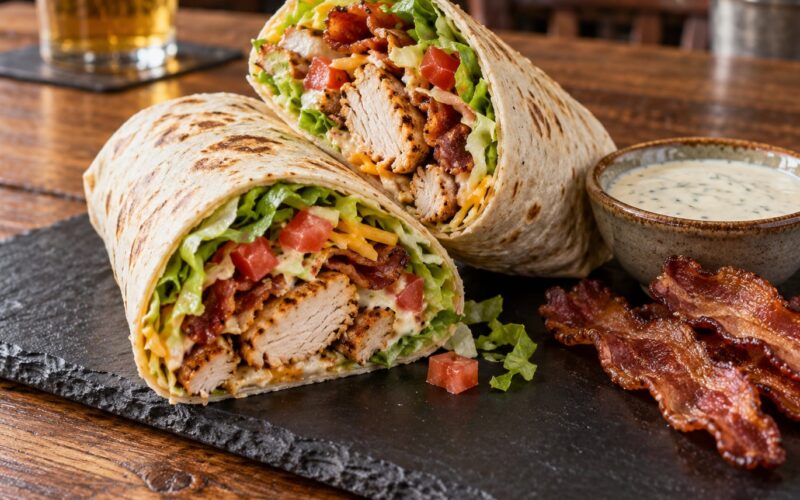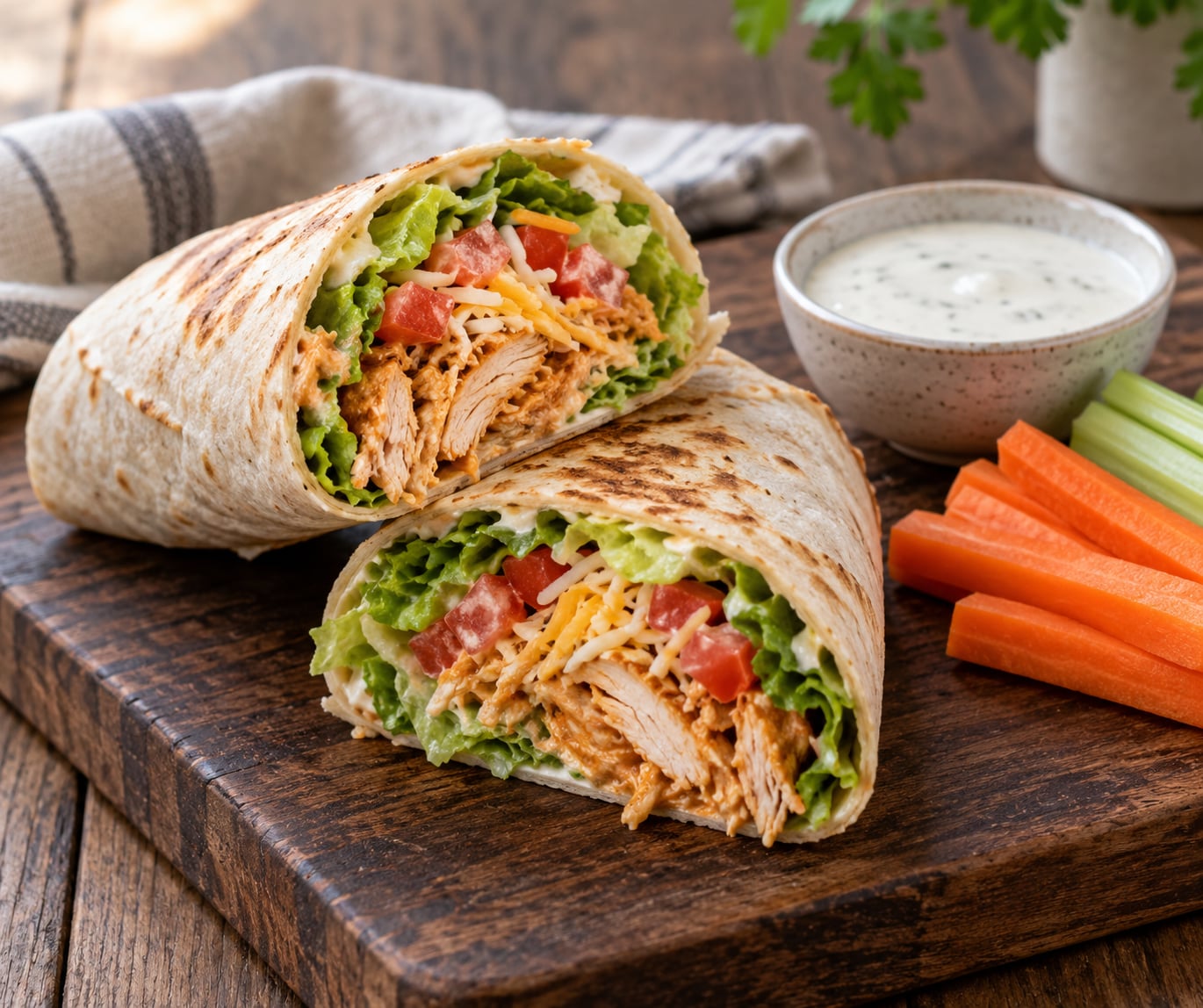
Knowing how to make buffalo chicken wraps comes down to one big flour tortilla rolled around chicken tossed in Buffalo sauce, cool ranch or blue cheese dressing, shredded lettuce and a bit of grated cheese. Cook the chicken to 165°F, toss it in melted butter and wing sauce until glossy, then roll everything tight. This version makes four big wraps in about half an hour, start to finish.
The reason this recipe works is balance. Buffalo sauce is hot and fatty, the dressing and raw vegetables are cool and crunchy, and the tortilla holds the whole thing together in one hand. Get the ratios right and it tastes like bar food; get them wrong and you end up with a soggy, overspiced burrito that falls apart halfway through the first quarter.
Prep is about 10 minutes, cooking takes another 15, and assembly moves fast. If you are feeding a crowd, double the chicken and keep every component separate until people build their own.
Table of Contents
- What You Need
- How to Make Buffalo Chicken Wraps Step by Step
- 1. Prep the Chicken and Ingredients
- 2. Cook the Chicken Thoroughly
- 3. Make the Buffalo Chicken Wrap Sauce
- 4. Crisp the Wraps as an Optional Step
- 5. Fill and Fold the Wraps
- 6. Slice, Serve, and Store Leftovers
- Common Mistakes
- How to keep buffalo chicken wraps from getting soggy
- Uneven or undercooked chicken
- Sauce that is too thin or too heavy
- Overfilling and loose rolling
- Frequently Asked Questions
- Can I use bottled Buffalo sauce for buffalo chicken wraps?
- How far in advance can I make buffalo chicken wraps for a party?
- What internal temperature should the chicken reach?
- How can I make buffalo chicken wraps less spicy?
- How should I store leftover buffalo chicken wraps?
- Conclusion
What You Need
These quantities make four large wraps using 10-inch tortillas, or eight smaller wraps on 8-inch tortillas. Everything is common supermarket stuff.
- 1 1/4 pounds boneless, skinless chicken breasts or thighs
- Kosher salt and freshly ground black pepper
- 1 tablespoon neutral oil for the skillet
- 4 large flour tortillas, warmed
- 1/2 cup Buffalo wing sauce, plus more to taste
- 2 tablespoons unsalted butter
- 2 cups finely shredded iceberg or romaine lettuce
- 1 medium tomato, diced
- 1 cup grated cheddar or Monterey Jack
- 1 avocado, sliced (optional)
- 1/2 cup ranch or blue cheese dressing, about 1 1/2 tablespoons per wrap
Substitutions are easy here. Thighs stay juicier than breasts if you are not watching the pan closely, and leftover rotisserie chicken works if you chop it while it is still warm. Coleslaw or shredded cabbage and carrot can stand in for the lettuce, and a Greek yogurt ranch mix gives you the same cooling effect with less fat.
The one ingredient not to substitute carelessly is the sauce. Buffalo wing sauce is vinegar-forward and already seasoned with garlic and pepper; plain hot sauce is mostly straight cayenne heat. Use the wing sauce bottle, and mix it with melted butter before it ever touches the chicken.
How to Make Buffalo Chicken Wraps Step by Step
1. Prep the Chicken and Ingredients
Pat the chicken dry with paper towels and slice it into strips about the thickness of a finger, or cut thin cutlets across the grain. Even pieces cook at the same rate, which is how you avoid one dry strip next to one undercooked one.
Salt and pepper both sides. Keep the raw chicken on its own board, then wash your hands before you touch the lettuce and tomato.
2. Cook the Chicken Thoroughly
Heat the oil in a skillet over medium-high heat until it shimmers, then lay the chicken down in a single layer. Leave it alone for about two minutes before turning so it picks up color instead of tearing.
Keep turning every minute or two until both sides are browned and no pink remains. Check with an instant-read thermometer in the thickest piece: 165°F is the USDA-recommended minimum internal temperature for chicken. Move the cooked chicken to a plate and let it rest a few minutes.
3. Make the Buffalo Chicken Wrap Sauce
Melt the butter in the same skillet over medium heat. Pour in the 1/2 cup of wing sauce and let it bubble and steam for about a minute, stirring, until it looks glossy rather than thin.
Add the chicken back in and toss until every piece is coated and the sauce clings to it. Taste a small piece. If it needs more moisture, splash in a little extra sauce; if you want a thicker coating that holds up inside a wrap, simmer another minute until it coats the back of a spoon.
4. Crisp the Wraps as an Optional Step
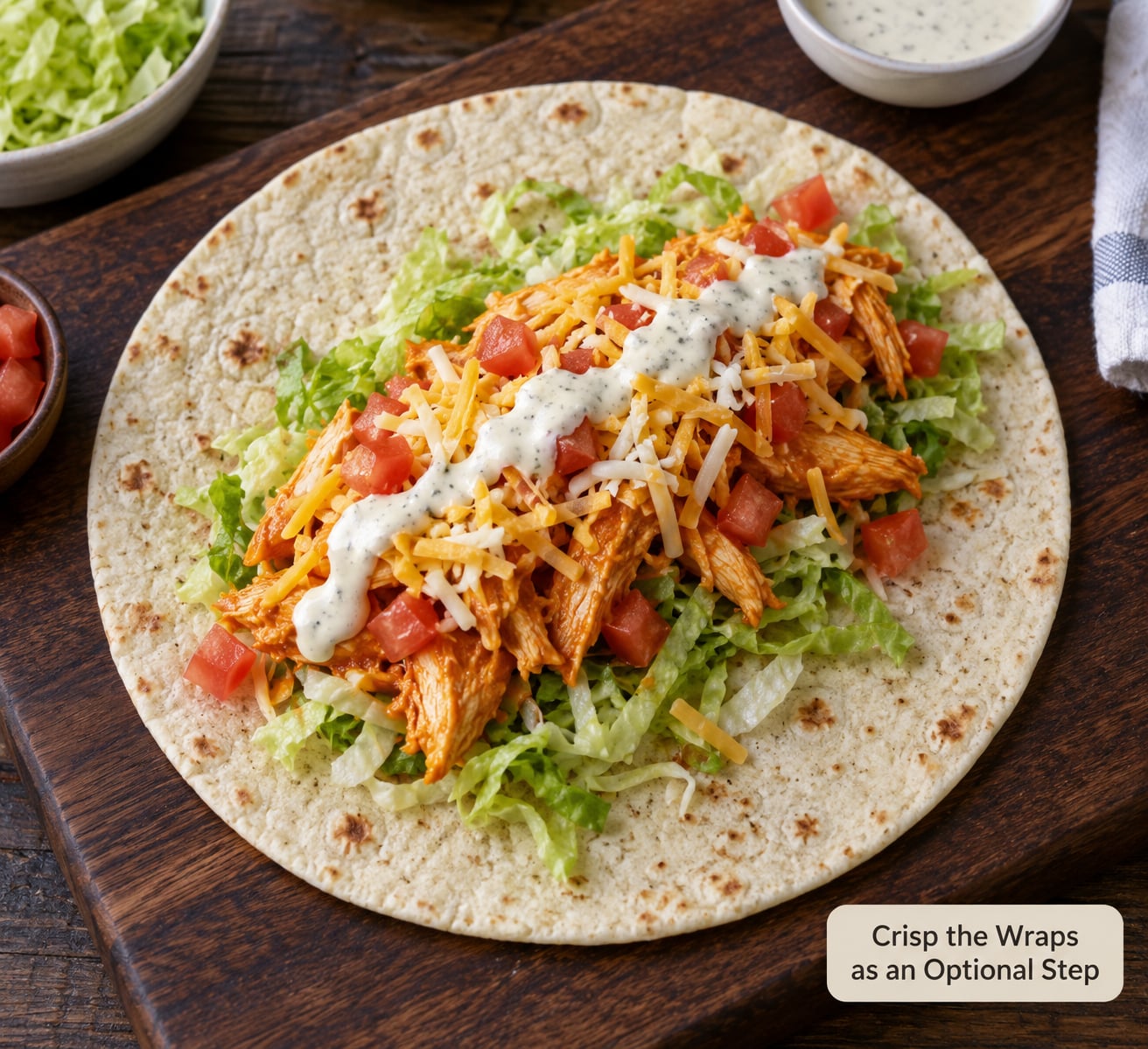
You have two good finishes. Serve the wraps soft and folded, which is the classic deli-style version, or crisp them for a few minutes in a skillet.
For the skillet, lay the folded wraps seam-side down over medium heat and leave them two to three minutes until the underside is golden, then turn and repeat. Filled tortillas leak, so keep the heat moderate and pull them out before the outside darkens or the cheese catches.
5. Fill and Fold the Wraps
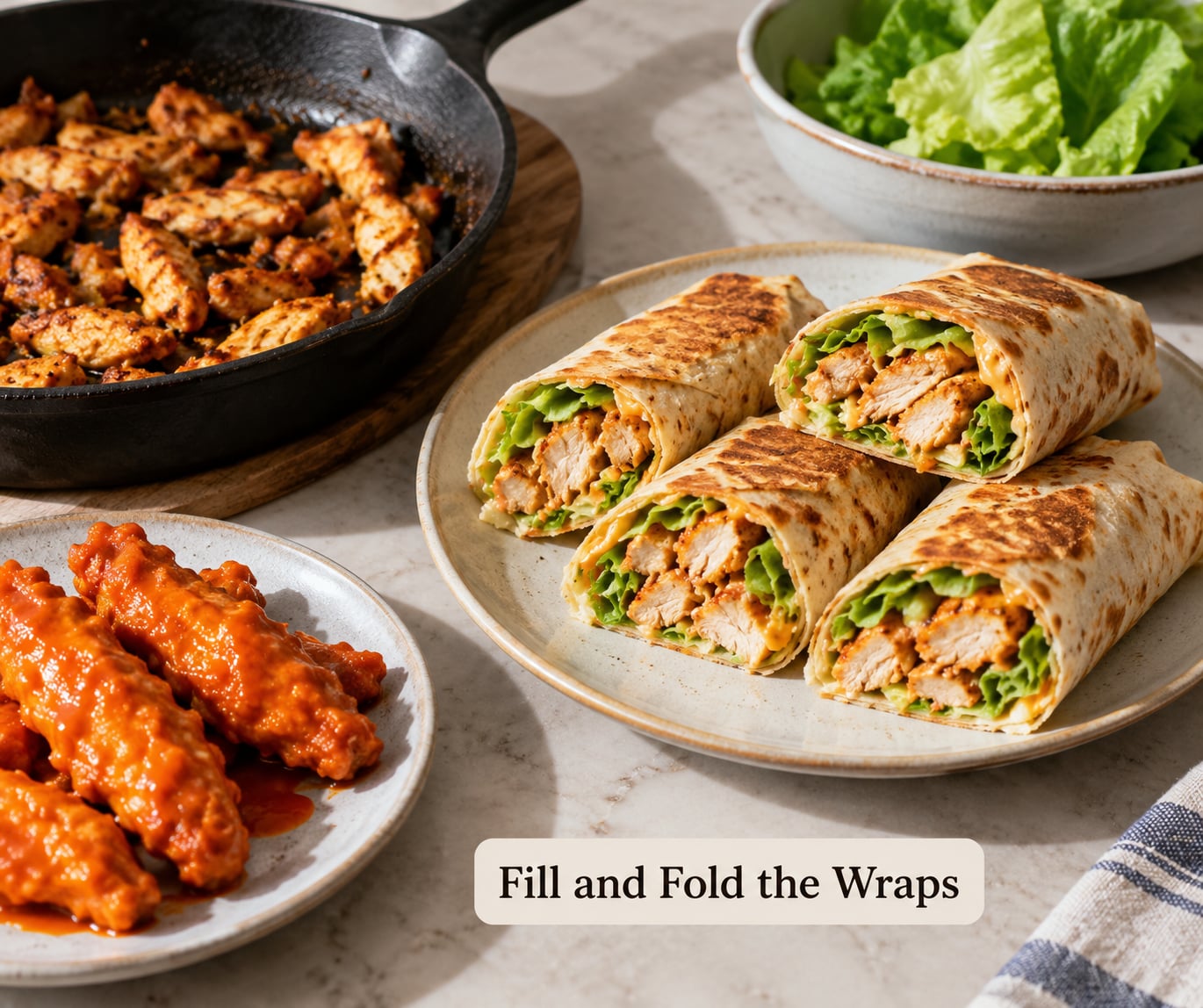
Build each one with a small handful of lettuce, about a quarter cup of sauced chicken, a spoonful of tomato, a little grated cheese and one or two tablespoons of dressing. That is the working ratio.
Keep the filling inside the widest part of the tortilla, past the halfway line. Fold the sides inward first, then roll away from you, tucking as you go so the seam stays tight. The wrap should look like a fat little cylinder with no gaps at the ends.
6. Slice, Serve, and Store Leftovers
Let the folded wraps sit for a minute so the filling settles, then slice each one on the diagonal. The diagonal cut makes a wedge that holds together on a plate instead of unrolling at the first bite.
Serve right away with extra ranch or blue cheese on the side and something crunchy alongside: carrot and celery sticks, a pickle, or a handful of chips. Cool chicken leftovers go into the fridge within two hours and get used within three to four days; reheat until the center hits 165°F again.
Common Mistakes
How to keep buffalo chicken wraps from getting soggy
Wet lettuce. Salt it in a colander for ten minutes and squeeze out the water before it goes anywhere near a tortilla. Romaine and iceberg hold less liquid than a loose head of lettuce, so shred those instead.
Dressing in the wrong place. Spoon dressing onto the filling, not the tortilla. That alone buys you an hour before the wrap turns damp, and it is the single most useful habit for packing lunch.
A hot, wet filling. Let the sauced chicken drain on a plate for a minute, and cool it slightly before assembling. Steam plus dressing equals a soft tortilla by lunchtime.
If a wrap does go floppy, put it seam-side down in a dry skillet over medium heat for two minutes a side. The tortilla re-crisps and the filling reheats at the same time.
Uneven or undercooked chicken
Cutting to a uniform thickness solves most of this before the pan is even on. If you skipped the thermometer and cut into a thick piece to check, put that piece back in the pan until the juices run clear, then give it another minute in the pan for good measure.
Sauce that is too thin or too heavy
Too thin means the sauce runs off the chicken and pools in the wrap. Simmer it a minute longer, or add another tablespoon of butter. Too heavy means the tortilla gives up before you do. Loosen it with a tablespoon of warm water or a splash of extra wing sauce at the last second.
Overfilling and loose rolling
A full tortilla looks generous and then tears on the second turn. Stay under a quarter cup of chicken per wrap and resist the extra slice of cheese. The two sides-in fold is what keeps the bottom from springing open; skip it and the wrap will collapse on the plate.
A few other habits help: warm the tortillas for 20 seconds in a dry pan or microwave so they bend without cracking, taste the sauce before it goes in, and double-wrap if you are packing for later.
Frequently Asked Questions
Can I use bottled Buffalo sauce for buffalo chicken wraps?
Yes, and bottled Buffalo wing sauce is what most home cooks should use. Melt two tablespoons of unsalted butter in a skillet, add half a cup of wing sauce, and let it bubble for about a minute before tossing in the cooked chicken. Bottled sauce is more acidic and savory than plain hot sauce, which is vinegar and cayenne only. If you only have plain hot sauce, mix it with butter and a splash of vinegar to get closer to the real flavor.
How far in advance can I make buffalo chicken wraps for a party?
Cook the chicken and mix the sauce up to three days ahead and keep them refrigerated in separate containers. Store the lettuce, tomato and grated cheese separately too, and assemble the wraps the day of the party, or right before guests arrive. This keeps the tortillas from absorbing dressing and going limp, which is the usual reason make-ahead wraps disappoint.
What internal temperature should the chicken reach?
Chicken is safe to eat at an internal temperature of 165 degrees Fahrenheit, or 74 degrees Celsius. Check the thickest piece with an instant-read thermometer after it comes off the heat, since carryover cooking adds a little more. Color alone is not a reliable test, because some darkly seasoned or smoked pieces look well-done well before the center is safe.
How can I make buffalo chicken wraps less spicy?
Start with less sauce and add butter, not more hot sauce. For four wraps, mix two tablespoons of butter with a quarter cup of wing sauce instead of half a cup, which softens the heat without thinning the coating. A tablespoon of honey or BBQ sauce also rounds out the bite. Serve with extra ranch or blue cheese dressing on the side so each person controls their own heat.
How should I store leftover buffalo chicken wraps?
Refrigerate cooked-chicken leftovers within two hours and eat them within three to four days. To keep them from getting soggy, store the filling and the tortillas separately and build the wrap when you are ready to eat it. Reheat in a skillet seam-side down for two minutes a side; the microwave works too but tends to leave the tortilla rubbery.
Conclusion
How to make buffalo chicken wraps well starts with evenly cut chicken cooked to 165°F, then a glossy Buffalo sauce of melted butter and wing sauce. Build each wrap with a modest handful of lettuce, a quarter cup of chicken and a couple of tablespoons of dressing, keep the filling low on the tortilla, and roll it tight. Done that way, they hold up on a game-day table as well as they do in a lunchbox.