Knowing how to season fajita meat comes down to a warm spice blend built on chili powder, cumin, paprika, garlic powder, onion powder, salt and a little cayenne, applied in one of two ways: as a dry rub pressed onto the surface, or as an oil-and-lime marinade. Whichever route you pick, the seasoning only works if the meat is dry, the spices are bound with fat, and the seasoned meat rests before it hits a very hot grill or cast iron pan. That is about ten minutes of prep and cooks in under fifteen.
The reason I care about the oil step so much is that most bland fajitas I have eaten were not short on spice, they were short on surface. Dry powder bounces off wet meat, and a wet marinade steams instead of sears. Fix those two things and the same blend tastes completely different.
Table of Contents
- What You Need
- Step-by-Step
- Choose the Right Meat
- Mix the Fajita Seasoning
- Coat the Meat and Let It Rest
- How to Season Fajita Meat Without Burning the Spices
- Common Mistakes
- Frequently Asked Questions
- How much fajita seasoning should I use per pound of meat?
- Can I make fajita seasoning ahead of time?
- What is the best seasoning for chicken, beef, pork, and shrimp fajitas?
- How do I make fajita seasoning less spicy?
- Should I season fajita meat before or after cooking?
- How long should I cook fajita meat on the stovetop or grill?
- Conclusion
What You Need
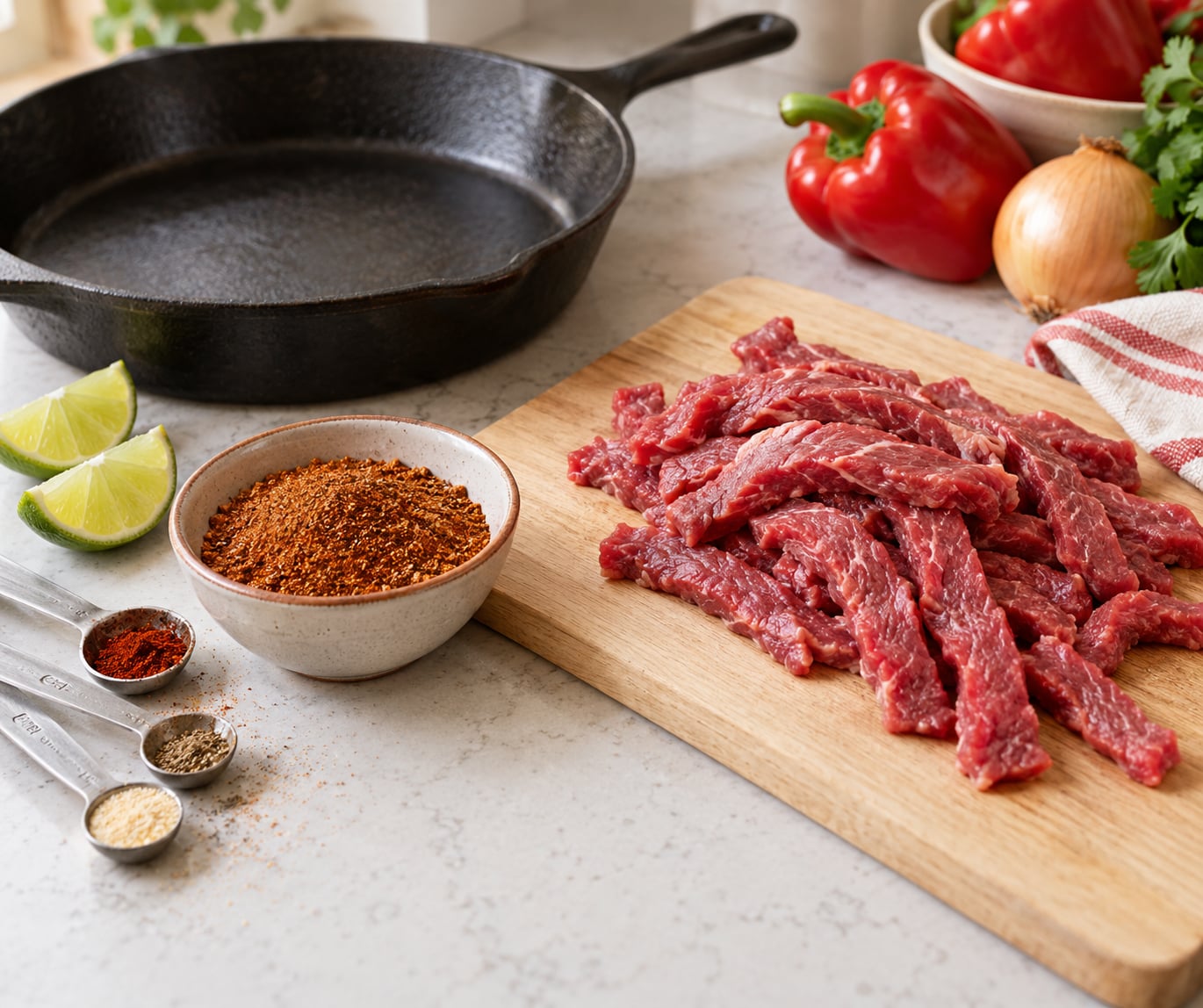
Start with the meat. Skirt steak is the classic choice, but flank, flat iron, sirloin, chicken breast, chicken thigh, pork shoulder, shrimp and cauliflower all work, and each takes a slightly different amount of seasoning.
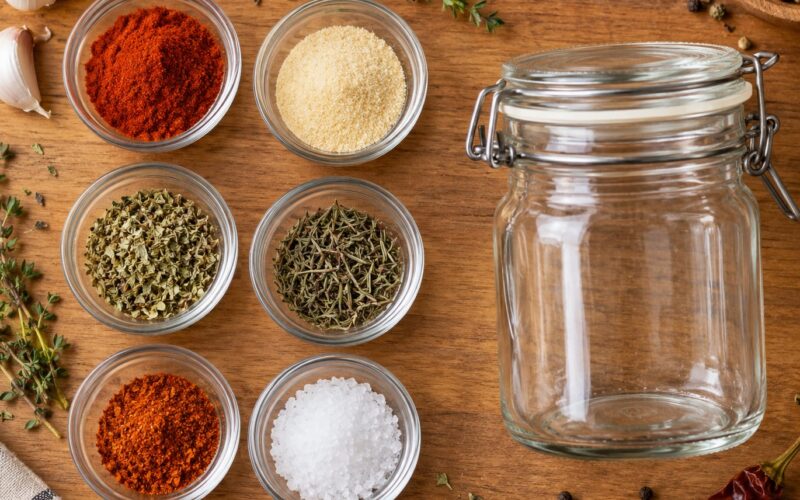
Then the blend, measured for 1 lb (450 g) of meat:
- 2 tablespoons chili powder
- 2 teaspoons ground cumin
- 2 teaspoons paprika, smoked if you like
- 2 teaspoons garlic powder
- 2 teaspoons onion powder
- 2 teaspoons kosher salt
- 1 teaspoon black pepper
- 1/4 to 1 teaspoon cayenne, which is your heat dial
A few more things finish the job: a neutral oil such as avocado, canola or grapeseed for the film that binds the rub, fresh lime juice for the marinade route, and a cast iron skillet or a grill preheated until it smokes. A mortar and pestle is optional, but grinding cumin seed and coriander fresh instead of using ground spices gives you a noticeably brighter blend.
Step-by-Step
Choose the Right Meat
Cut decides both the seasoning amount and the cooking time, so pick before you measure. Skirt steak is thin, fatty and takes heat beautifully, and flank and flat iron are leaner, which is why they can dry out if you walk away from them.
One prep job matters more than any other: pull the silver skin off skirt steak. That membrane contracts hard on a hot grill, curls the strip into a tight roll and leaves you chewing on a tough ribbon instead of tender beef. Score the membrane where it meets the fat, get a knife under it, and peel it away in one piece.
Pound chicken breast to an even thickness if it is thicker than about 3/4 inch at one end. Shrimp and scallops need almost nothing beyond seasoning right before they cook.
Mix the Fajita Seasoning
Whisk everything in a small bowl until the color is even and no streaks of salt remain. Taste a pinch on a fingertip: it should taste bold, because it is about to season a surface that will shrink and char.
How much you use depends on the protein. Shrimp and cauliflower drink more per pound than a fatty skirt steak does, and seasoned salt or a pre-rubbed steak needs far less added salt.
| Protein | Blend per lb (450 g) | Rest before cooking | Cook to |
|---|---|---|---|
| Skirt steak | 2 tablespoons | 30 minutes | 145°F (63°C), then rest 5 minutes |
| Flank or sirloin steak | 2 tablespoons | 30 to 45 minutes | 145°F (63°C), then rest 5 minutes |
| Chicken breast | 1.5 tablespoons plus salt | 30 minutes | 165°F (74°C) |
| Chicken thigh | 1.5 tablespoons | 30 minutes | 165°F (74°C) |
| Pork shoulder | 2 tablespoons | 45 minutes | 145°F (63°C) |
| Shrimp or scallops | 1 tablespoon | 5 to 10 minutes | Cook until just opaque, about 2 minutes |
| Cauliflower | 1 to 1.5 tablespoons | 10 minutes | Roast or sear until browned through |
If you want to scale up for a crowd, a fajita night for ten people runs about 4 lb (1.8 kg) of meat plus extra for the cook, and that is roughly eight times the blend above. Nine tablespoons of chili powder and a full cup of the finished mix in a mason jar is the easy way to do it without multiplying small measuring spoons.
Coat the Meat and Let It Rest
Pat the meat dry with paper towels first. Then drizzle about 2 teaspoons of neutral oil per pound over the surface and rub it around with your hands until the meat looks faintly glossy all over.
Sprinkle the blend on, then press it in with your palm. Rubbing it in feels unnecessary at first and makes a real difference: the oil film gives the powder something to stick to, and pressure pushes the spices into the surface rather than leaving them sitting on top. Turn the meat and do the second side.
Let it rest. Thirty minutes is the floor for a dry rub on beef and chicken, and 45 minutes works well for pork. This is the step that gets skipped, and skipping it is why seasoning applied right before cooking tastes thin. For a wet version, whisk 2 tablespoons of oil, the juice of one lime and a teaspoon of the blend per pound, coat the meat, refrigerate it for 2 to 6 hours, and skip the extra salt since the marinade already carries plenty.
Do not push past about 12 hours for steak. Acid and salt keep drawing moisture out of the muscle, and past that point you get mushy, textureless meat. Always marinate in the refrigerator, not on the counter, and discard or cook the marinade if it touched raw meat and you want to baste.
How to Season Fajita Meat Without Burning the Spices
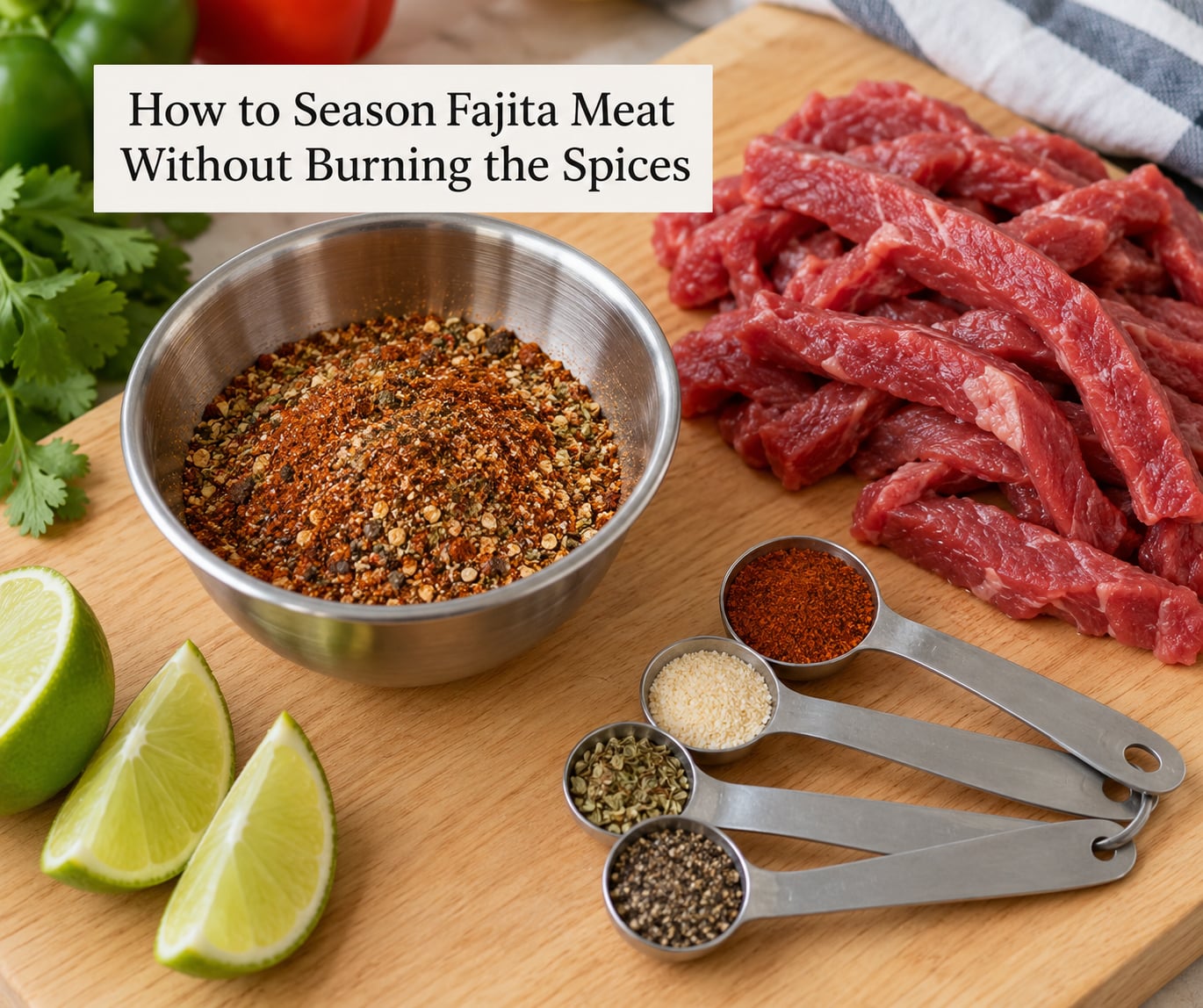
Get the pan hotter than feels comfortable. A cast iron skillet over medium-high heat needs a full 5 minutes of preheating, and a grill should already be smoking before the meat goes on.
Crowding is the other big mistake. It drops the temperature, traps steam under the meat and gives you a grey, boiled surface instead of char. Cook in a single layer and work in batches when the pan is full, or move everything onto a hot sheet pan while the skillet recovers.
Add the peppers and onions after the meat is already searing, not before. They release water, and water in a searing pan means the crust never forms. Cut them to a similar size so they finish at the same time, which is the fix for raw onion sitting in a pile at the bottom of the skillet.
For beef, that is usually 2 to 3 minutes per side for skirt steak in a screaming hot pan, or 3 to 4 minutes per side on a grill. Push past that and you scorch the spice dust into a bitter crust long before the meat is done. Use a thermometer rather than the clock: 145°F (63°C) with a 5-minute rest for whole cuts of beef, pork and lamb, and 165°F (74°C) for chicken.
Common Mistakes
Using a packet and calling it done. Store-bought blends are the most repeated complaint on cooking forums, usually because they are heavy on salt and light on cumin. Mix your own and keep it in a jar by the stove; it takes two minutes and costs almost nothing.
Seasoning a wet surface. Blotted meat holds seasoning. A slick surface sends it into the pan.
Forgetting the oil. This is the most commonly reported missing step. Without a fat film, powder falls off in patches and you get half-seasoned meat.
Salting hours ahead and skipping the rest. Salt applied four hours early draws liquid to the surface, and that liquid steams instead of searing. Season, rest 30 minutes, wipe off any beading, then cook.
Crowding the pan or adding vegetables too early. Both drop the temperature. Same fix: single layer, meat first, vegetables second.
Cooking on low heat. Below about 400°F (205°C) you brown rather than char, and the spice dust simply toasts into an acrid film.
Two side notes worth knowing. Fajita seasoning and taco seasoning are close cousins, and a fajita blend leans on cumin, paprika and onion powder while taco seasoning leans on oregano and blends of peppers, so a taco packet works in a pinch but tastes more herbal. And store your homemade blend airtight in a cool, dark, dry cupboard, away from the stove; ground spices lose aroma in a few months and go dull after a year.
Frequently Asked Questions
How much fajita seasoning should I use per pound of meat?
Use about 2 tablespoons of the blend per 1 lb (450 g) of skirt steak, flank or pork. Chicken breast and thigh take 1.5 tablespoons, shrimp and scallops only need 1 tablespoon, and cauliflower roasts well with 1 to 1.5 tablespoons. If the meat is already salted or comes pre-rubbed, cut the salt from the blend and keep everything else the same. Taste a pinch before it goes on, since the surface will char and shrink in the pan.
Can I make fajita seasoning ahead of time?
Yes, and it is better that way. Most home cooks mix a batch, keep it in a mason jar by the stove and use it all year. Store it airtight in a cool, dark, dry cupboard away from the stove heat, and write the date on the lid. Ground spices hold their aroma for several months and fade noticeably after about a year, so make a fresh batch each season rather than topping off an old jar.
What is the best seasoning for chicken, beef, pork, and shrimp fajitas?
The same base blend works across all of them: chili powder, cumin, paprika, garlic powder, onion powder, salt and black pepper, with cayenne as the heat control. What changes is the quantity and the timing. Fatty skirt steak takes a light hand and a 30-minute rest, lean chicken takes a bit more salt, and delicate shrimp should be seasoned only 5 to 10 minutes before it hits the pan or the powder turns gritty.
How do I make fajita seasoning less spicy?
Cut the cayenne, not the chili powder. Regular chili powder is mild and earthy, so removing it strips flavor and leaves you with cumin dust. Start with an eighth of a teaspoon of cayenne per pound, taste the finished blend, and add more only if you want it. Smoked paprika adds depth without heat, and adding a teaspoon of brown sugar or honey rounds out the sharpness without taking away the kick.
Should I season fajita meat before or after cooking?
Before, always. Seasoning after cooking only coats the surface, and fajitas are defined by the crust and char that seasoning creates before the meat hits heat. Apply the blend 30 minutes ahead for a dry rub so the salt has time to penetrate the outer layer. The one exception is shrimp, which only needs 5 to 10 minutes because long seasoning makes the coating turn pasty.
How long should I cook fajita meat on the stovetop or grill?
Skirt steak takes 2 to 3 minutes per side in a preheated cast iron skillet, or 3 to 4 minutes per side on a grill over high heat. Chicken needs 5 to 6 minutes per side depending on thickness, and shrimp turns opaque in about 2 minutes. Use a thermometer instead of the clock: 145°F (63°C) for whole cuts of beef and pork, 165°F (74°C) for chicken. Rest the meat 5 minutes before slicing so the juices stay in the meat.
Conclusion
The method that works every time is short: mix the blend, dry the meat, lay down a thin film of oil, press the seasoning in with your palm, and let it rest 30 minutes before a very hot pan. Skip one of those steps and the seasoning falls off, steams instead of searing, or simply never leaves the surface.
Once that is in place, the rest is heat control. Single layer, meat before vegetables, thermometer instead of guesswork, and a five-minute rest before you slice. That is how to season fajita meat so the crust is seasoned all the way through instead of in patches.