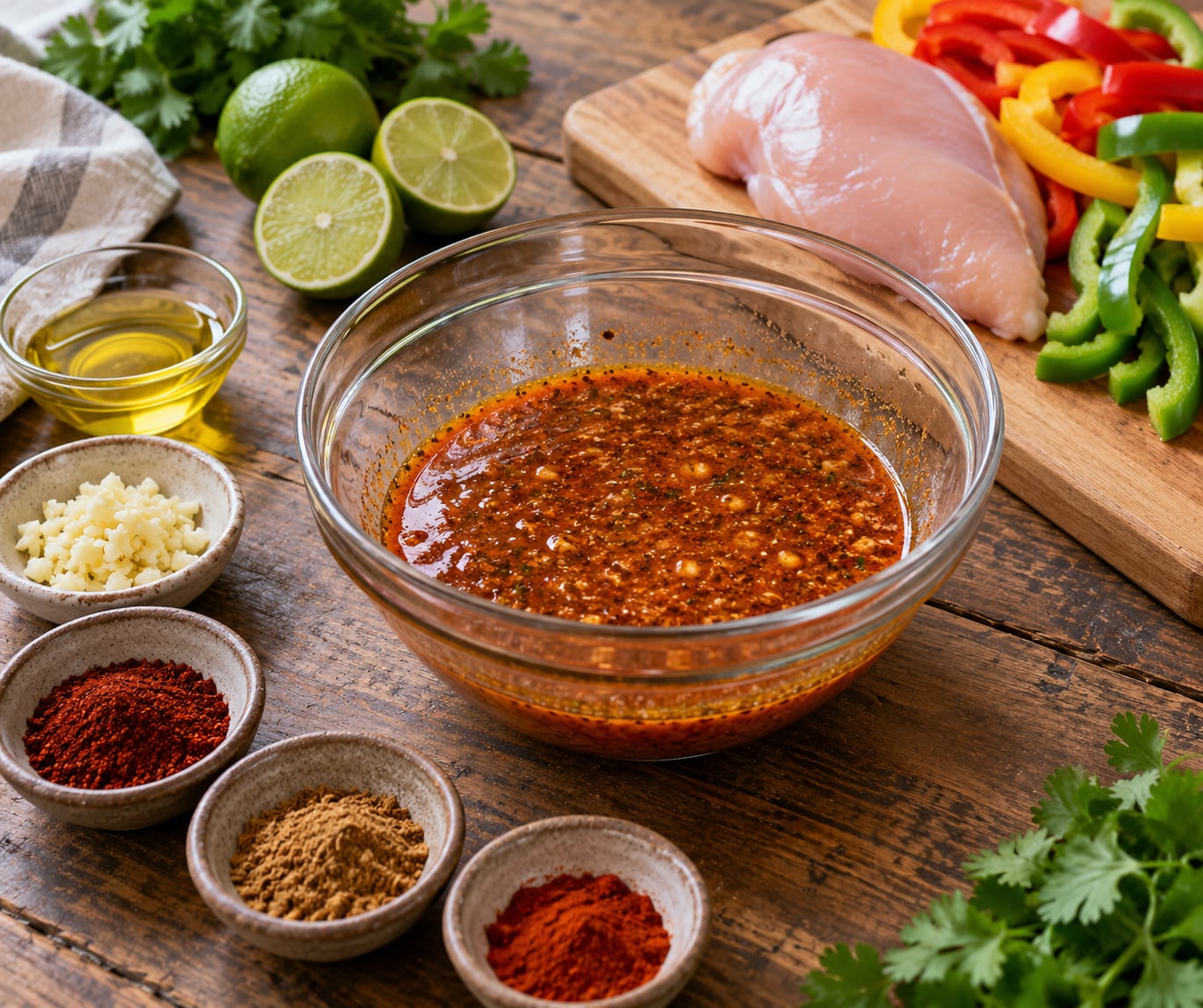
A good chicken fajita marinade is four things in one bowl: acid, fat, salt and warm spice. Whisk fresh lime juice with olive oil, garlic, chili powder, cumin, smoked paprika, oregano and salt, then let sliced chicken soak in it for anywhere from 30 minutes to a few hours. Hands-on time is about five minutes, and the payoff is meat that tastes seasoned all the way through instead of only on the outside.
Most home cooks already own every ingredient. The two details that separate a great batch from a mediocre one are how long the chicken sits and whether you pour off the marinade before it hits the pan.
Table of Contents
- What You Need
- Marinade ingredients
- What each part does
- Substitutions and shortcuts
- Step-by-Step: How to Make Chicken Fajita Marinade
- Step 1: Build Your Chicken Fajita Marinade Base
- Step 2: Add the Garlic, Chili, and Spices
- Step 3: Marinate the Chicken
- Marinating time guide
- Choosing and slicing the chicken
- Step 4: Cook the Chicken Safely
- Step 5: Finish and Serve Your Chicken Fajitas
- Common Mistakes
- Frequently Asked Questions
- How long should chicken marinate for chicken fajitas?
- Can I use bottled lime juice in a chicken fajita marinade?
- What is the best chicken cut for chicken fajita marinade?
- Can I reuse the marinade after cooking the chicken?
- How do I keep marinated chicken from tasting too spicy or salty?
- Conclusion
What You Need
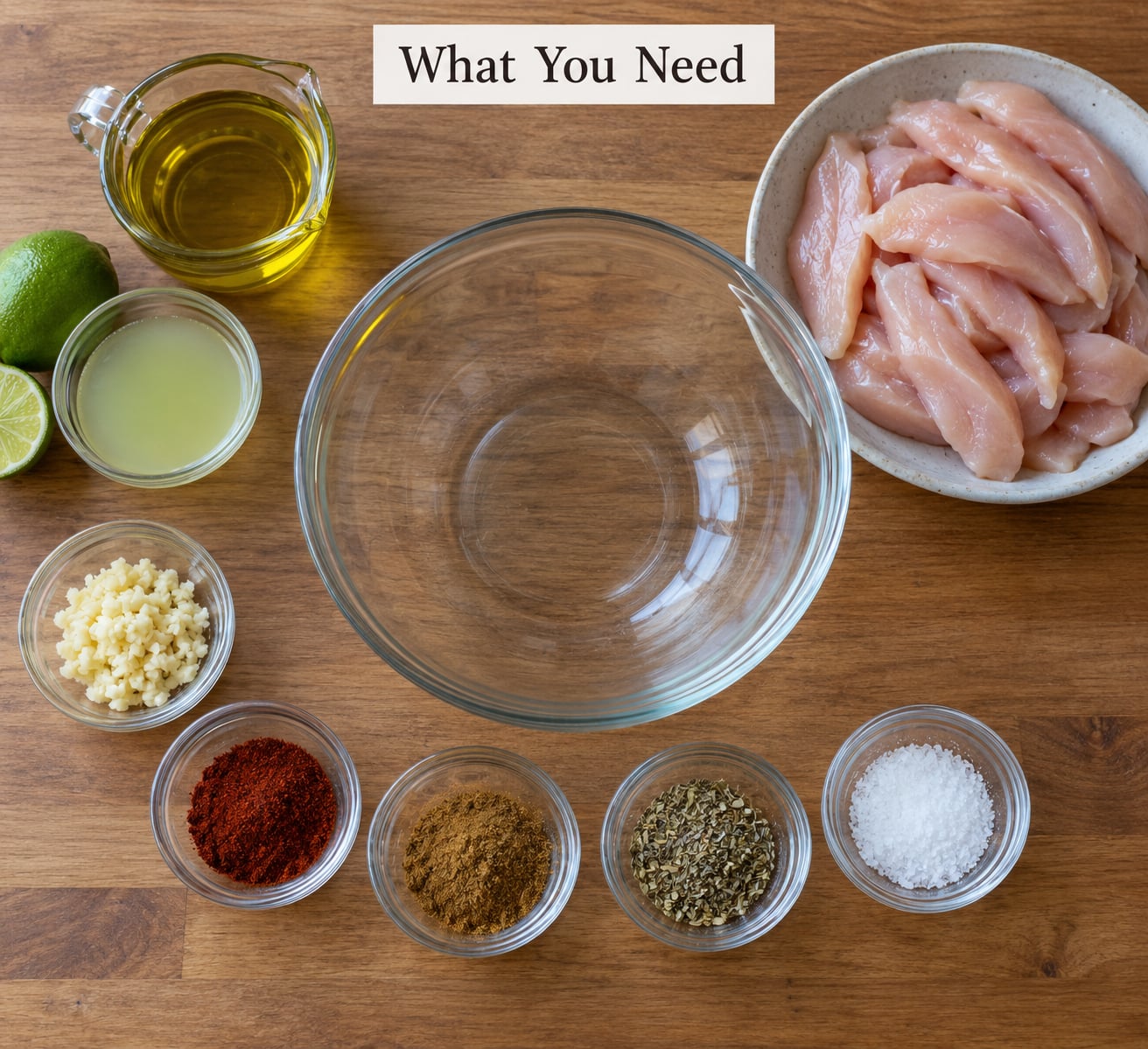
This quantity works for 1 to 1.5 pounds (450 to 680 g) of boneless, skinless chicken. It is enough to coat the meat without drowning it, which matters because excess marinade pools in the pan and steams the chicken instead of searing it.
Marinade ingredients
- 3 tablespoons olive oil (or avocado oil, which takes heat better)
- 2 tablespoons fresh lime juice, roughly half a medium lime
- 1 garlic clove, minced or finely grated
- 1 teaspoon chili powder
- 1 teaspoon ground cumin
- 1 teaspoon smoked paprika
- 1/2 teaspoon dried oregano, ideally Mexican
- 1/2 teaspoon salt, plus more to taste at the end
- 1/4 teaspoon black pepper
- 1 teaspoon ancho chile powder or a small splash of hot sauce, optional
What each part does
The lime juice supplies the acid. It tenderizes the surface of the meat and softens the muscle fibers just enough to take on seasoning without turning the chicken mushy.
The oil carries the fat-soluble flavors from the paprika, chili powder and cumin into the meat, and it keeps those spices from scorching when the chicken hits a hot skillet. The garlic and oregano supply the aromatic backbone, and the salt is what makes the rest of the flavors register.
Skip the oil and the spices taste dusty. Skip the acid and the meat stays tight and chewy. Skip the salt and everything tastes flat no matter how much chili powder you add.
Substitutions and shortcuts
Out of limes? A r/Cooking thread on fajitas collected several working swaps from home cooks: lemon juice at the same amount, orange juice for a sweeter version, or a teaspoon of apple cider vinegar thinned with a splash of water to mimic the brightness of lime.
Pineapple juice also works and pushes the marinade sweet-savory, though it caramelizes fast on the grill. If you have no chili powder, go with a small amount of cayenne or chipotle in powder form, and start with half the amount you think you need.
A packet of fajita seasoning can stand in for the paprika, cumin, oregano and salt, but add the lime juice and oil anyway. The packet is a dry blend, and dry blends alone are the reason so many home-fried fajitas taste flat.
Useful tools are a resealable zip-top bag or a container with a lid, a cutting board, and either a cast iron skillet, a grill or a sheet pan. A meat thermometer is worth having.
Step-by-Step: How to Make Chicken Fajita Marinade
Step 1: Build Your Chicken Fajita Marinade Base
Pour 3 tablespoons of olive oil into a bowl or jar, then add 2 tablespoons of fresh lime juice. Bottled lime juice works fine here and is what most restaurants use, since the flavor of the zest is not doing much in a cooked marinade.
Whisk or shake until the two combine, which takes a few seconds. This fat-and-acid base is the part of the chicken fajita marinade that actually changes the texture of the meat, so do not skip either one.
Step 2: Add the Garlic, Chili, and Spices
Add 1 minced garlic clove, 1 teaspoon chili powder, 1 teaspoon ground cumin, 1 teaspoon smoked paprika, 1/2 teaspoon dried oregano, 1/2 teaspoon salt and 1/4 teaspoon black pepper. Whisk again until the spices are dispersed and no dry pockets sit at the bottom.
For more smoke and less heat, add a teaspoon of ancho chile powder. For more heat, add a teaspoon of cayenne or a small pour of hot sauce and taste the marinade on a wiped fingertip before the chicken goes in.
A pinch of brown sugar or honey is worth adding if you like a touch of sweetness. It rounds out the chili powder and helps the marinade caramelize on the grill without burning.
Step 3: Marinate the Chicken
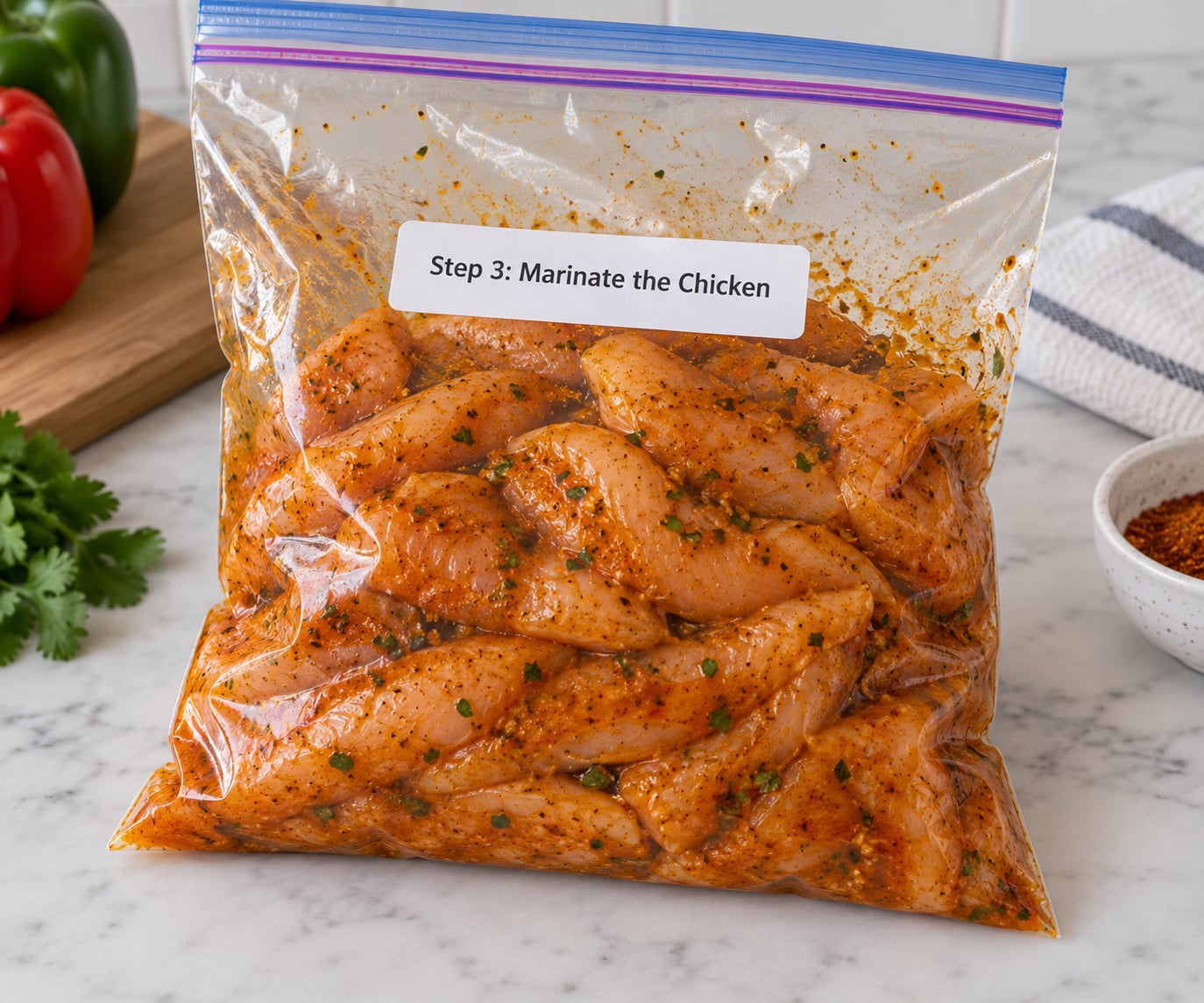
Slice 1 to 1.5 pounds of boneless, skinless chicken across the grain into strips about half an inch thick. Put the chicken in a resealable bag, pour in the marinade, seal it, and massage or turn the bag until every piece is coated.
Refrigerate for at least 30 minutes. Two to four hours gives noticeably deeper flavor, and a thin breast can handle up to 24 hours in this recipe because the oil and the salt balance out the acid. Keep raw chicken in the refrigerator at all times, and never leave it sitting on the counter to marinate.
Marinating time guide
- 30 minutes: light seasoning, chicken still has its own texture. Best for weeknight speed or very thick cut chicken.
- 2 to 4 hours: solid flavor, tender surface, the best all-around result. Ideal for strips and tenders.
- 8 to 12 hours: deeper flavor with a slightly firmer surface. Suits thinly sliced breast cooked over high heat right after.
- Up to 24 hours: noticeably tangy and softer. Keep this for thighs and leg meat only.
Home cooks on cooking forums routinely marinate overnight and love the result, which is fair for dark meat. The acid is what changes texture over long soaks, and breast meat has less fat and connective tissue to buffer it, so overnight is the outer limit there rather than the sweet spot.
Choosing and slicing the chicken
- Boneless skinless breast: slice to 1/4 to 1/2 inch strips and cook 4 to 6 minutes. It dries out fast, so do not walk away from the pan.
- Boneless skinless thigh: slice to 1/2 inch strips and cook 6 to 8 minutes. Forgiving, and my pick for a first attempt.
- Chicken tenders: leave whole or halve them and cook 3 to 5 minutes a side. Easiest option, with no cutting required.
Step 4: Cook the Chicken Safely
Take the chicken out of the bag and scrape off the excess marinade, then pat the pieces dry with paper towels. This is the step people skip, and it is the single biggest reason home fajitas come out pale and soggy. Wet chicken in a hot pan steams instead of searing, and the liquid left in the pan keeps the spices from browning.
Preheat a cast iron skillet over medium-high heat until a drop of water skates across the surface and sizzles, about 3 to 5 minutes. Add a thin film of oil, then lay the chicken down in a single layer.
Leave the pieces alone for 2 to 3 minutes so they develop a crust before you move them. Cook until deeply browned and the thickest piece reaches 165°F (74°C) inside, verified with a thermometer rather than guessed from the color of the juices.
Once the chicken is done, move it to a plate and cover it loosely while you cook the vegetables. Those few minutes of rest let the juices settle back into the meat, which is the difference between juicy chicken and dry chicken.
One safety note on the bowl of raw marinade: if you added raw peppers and onions to it, or if the raw chicken has been sitting in it at room temperature at any point, pour it out. If you want to reuse the liquid as a sauce, boil it for a full minute first.
Step 5: Finish and Serve Your Chicken Fajitas
Char two sliced bell peppers and half a sliced onion in the same skillet over medium-high heat, adding a little more oil. They need 6 to 8 minutes and should pick up dark spots and a bit of char.
Slice the rested chicken across the grain, then pile it onto warm flour tortillas with the peppers and onions. Pico de gallo, sliced avocado, shredded cheese, a spoonful of guacamole and a drizzle of sour cream or Greek yogurt all work as toppings.
Cilantro lime rice on the side turns the plate into a fajita bowl, which is the easiest version to serve to a crowd.
Common Mistakes
Marinating past 8 hours in a breast-heavy marinade. The lime acid keeps working after it has seasoned the meat, and past about a day the surface turns grainy and squeaky. Cap long soaks at 8 to 12 hours for breast, and use thighs if you want to go longer.
Leaving the whole marinade in the pan. That liquid boils before the chicken browns, and you end up with steamed meat in a shallow puddle. Scrape it off, pat the chicken dry, and save the rest for basting after the meat turns.
Skipping the oil. The oil is what carries the paprika, cumin and chili powder onto the meat and keeps them from burning in a screaming hot pan. Without it you get a dry rub that mostly falls onto the skillet.
Using only one chile. A single teaspoon of chili powder gives heat with no depth. Chili powder for warmth, cumin for earthiness, smoked paprika for smoke and a little oregano for the herbal note is the combination that tastes like a restaurant.
Crowding the skillet. Six raw pieces in a cold pan release water and stew. Give every piece a couple of inches of space and cook in batches if you need to. Fifteen minutes of searing beats one soggy pile.
Cutting the chicken with the grain. Slice across the grain and the fibers shorten as you chew, so thin strips stay tender. Cut along it and even a well-marinated piece feels tough.
Overcooking. A crowded pan plus a wandering cook equals rubbery chicken. Pull the pieces the moment the thermometer reads 165°F (74°C) and get them off the heat.
Reusing marinade that touched raw chicken. Boil it for a full minute if you want to use it as a sauce, otherwise pour it out. The same goes for the cutting board and the bowl the chicken sat in, which get washed with hot soapy water before anything else touches them.
Frequently Asked Questions
How long should chicken marinate for chicken fajitas?
Thirty minutes is the floor, two to four hours is the sweet spot for strips and tenders, and 8 to 12 hours works well for thinly sliced breast. You can go longer for thighs, up to about 24 hours, since dark meat has more fat to buffer the lime acid. Never leave raw chicken marinating on the counter.
Can I use bottled lime juice in a chicken fajita marinade?
Yes, and most restaurant kitchens do. Bottled lime juice has the same acidity, so it tenderizes the chicken in the same way, and the flavor difference largely disappears once the chicken is cooked. Fresh juice gives you a slightly brighter aroma, which is nice if you are finishing the dish with extra lime after plating.
What is the best chicken cut for chicken fajita marinade?
Boneless skinless thighs are the most forgiving. They stay juicy even if you overcook them by a minute or two, and they take the marinade flavor without turning grainy. Breasts work well sliced thin and cooked fast over high heat, and tenders need no cutting at all, which makes them the quickest option for a weeknight.
Can I reuse the marinade after cooking the chicken?
Only if you boil it first. Raw chicken has been sitting in it, so pour it into a small pan and bring it to a rolling boil for a full minute before using it as a basting sauce. If you would rather not risk it, discard it. A marinade you never touched raw chicken in can be refrigerated for up to two days and reused.
How do I keep marinated chicken from tasting too spicy or salty?
Cut the amounts before the chicken goes in rather than after, since you cannot take spice or salt back out. Start with half the chili powder the recipe calls for and taste the marinade on a fingertip. If it is already hot, add more lime juice and a spoon of oil, which dilute the concentration without dulling the other flavors.
Conclusion
Start by whisking together the lime juice, olive oil, garlic, chili powder, cumin, paprika, oregano and salt, then coat the sliced chicken for at least 30 minutes. While it marinates, cut the peppers and onions and warm the tortillas so everything lands on the table at once. When the chicken hits the pan, scrape off the marinade, cook it fast over high heat, and take it off at 165°F (74°C).