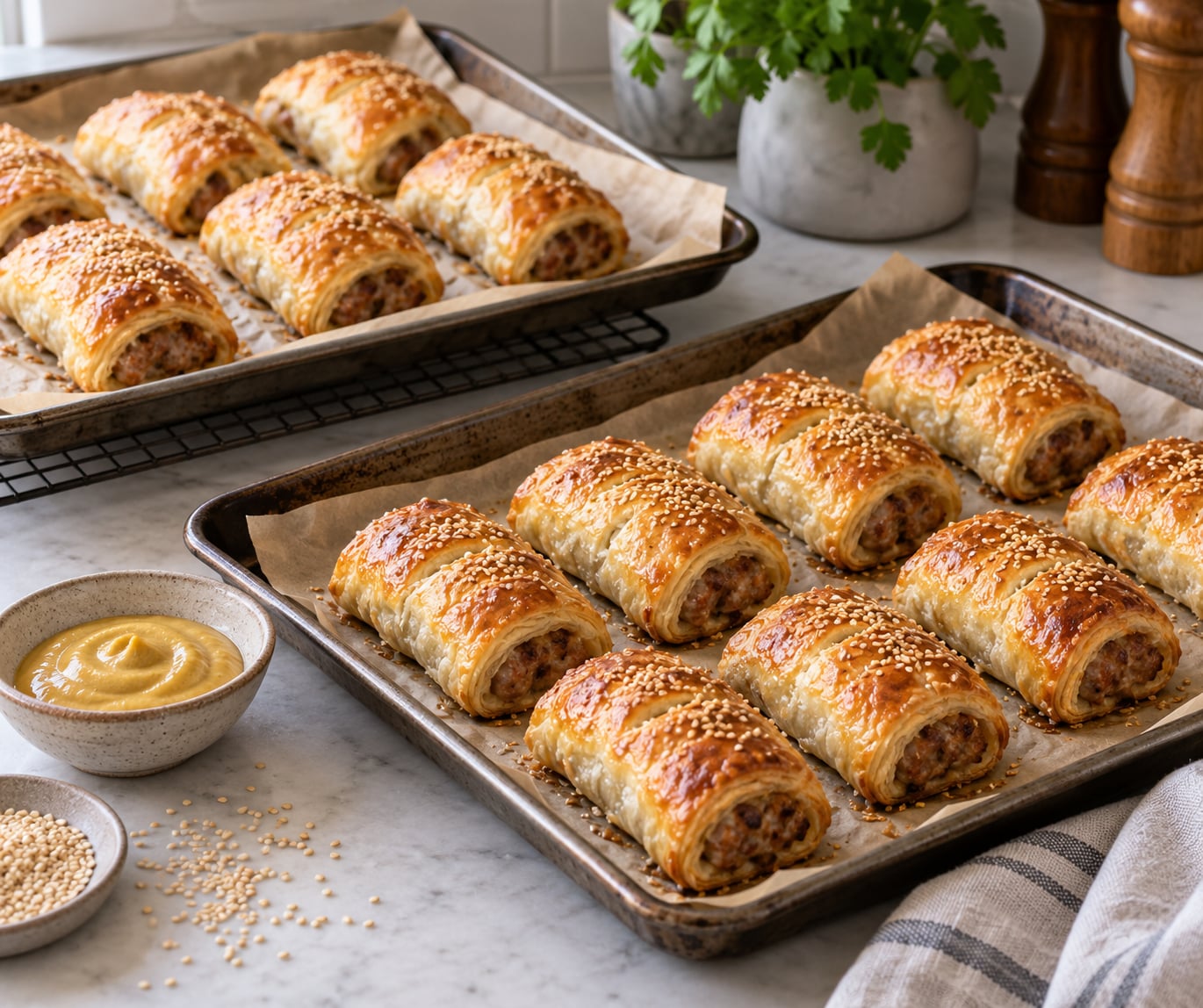
The trick to learning how to make pigs in a blanket for a crowd is not a fancier recipe. It is space. Two pastries per guest, two pans that are not packed solid, and a seam that is pinched tight on the underside so nothing unrolls in the oven.
Most problems with a big batch come down to crowding, and crowding causes soggy bottoms, uneven browning, and a pile that cools down fast on the serving platter. Bake in smaller pans back to back instead of one giant crowded tray, and you get crisp pastry from start to finish.
From my kitchen to yours: this method takes about 35 minutes for a 24 to 30 piece batch, scales cleanly to 50 or 100 people, and most of the work is standing at the counter rolling sausages. It is the easiest batch appetizer I make for game day, a holiday cocktail party, or a tailgate, and it is still the first thing that disappears from the platter.
Table of Contents
- What You Need
- Ingredients for 24 to 30 pigs
- Equipment for a large batch
- How much to make for a crowd
- Substitutions that work
- Step-by-Step
- Step 1: Preheat the Oven and Plan the Pans
- Step 2: Cut and Organize the Pastry and Sausages
- Step 3: Wrap the Pigs in a Blanket
- Step 4: Brush and Bake Until Golden
- Step 5: Check the Batch and Let It Rest
- Step 6: Keep Warm, Serve, and Store Leftovers
- Common Mistakes
- Frequently Asked Questions
- Can I make pigs in a blanket with raw sausage for a crowd?
- How many pigs in a blanket should I make per guest?
- What temperature should I bake pigs in a blanket in the oven?
- How do I keep pigs in a blanket warm without drying them out?
- Can I make pigs in a blanket ahead of time and freeze them?
- Conclusion
What You Need
For a crowd batch of 24 to 30 pigs, you need about two per guest if pigs are one of several dishes, or three per guest if they are the main event with sauce and salad on the side. Buy a little extra. Running out three minutes before a party is worse than having leftovers.
Ingredients for 24 to 30 pigs
- 2 tubes refrigerated crescent roll dough, or 1 sheet of all-butter puff pastry for a flakier, more grown-up bake
- 2 packages cocktail sausages or lil smokies, about 14 ounces each
- 1 egg plus 1 tablespoon water for egg wash, or butter-flavored spray if you are in a hurry
- Everything bagel seasoning, sesame seeds, or flaky salt for the top
- Mustard, honey, or barbecue sauce for a dot inside the roll if you like
Equipment for a large batch
- Two rimmed baking sheets, parchment lined, plus a third sheet or a wire rack for the finished batch
- Pizza cutter or bench scraper for straight, fast dough cuts
- Pastry brush or spray bottle for the wash
- Cooling rack so steam does not pool under the pastry bottoms
- Low warming tray, a warm oven, or a crockpot lined with parchment for holding
How much to make for a crowd
- 12 to 15 guests: 24 to 30 pigs, 2 tubes of dough, 2 packages of sausages at 14 ounces each, and 2 baking sheets.
- 25 guests: 60 pigs, 4 tubes of dough, 4 to 5 packages of sausages, and 3 to 4 baking sheets.
- 50 guests: 100 to 120 pigs, 7 to 8 tubes of dough, 8 to 9 packages of sausages, and 5 to 6 baking sheets.
- 100 guests: 200 to 240 pigs, 14 to 16 tubes of dough, 17 to 20 packages of sausages, and 10 or more sheets baked in waves.
Those numbers assume two or three pieces per guest. Cooking for 100 means waves out of the oven, not one enormous tray, and it means two people rolling at once.
Substitutions that work
Any dough that is refrigerated and unbaked behaves about the same here. Biscuit dough works, and it gives you a slightly fluffier, less buttery shell. Pizza dough, brushed with olive oil and garlic, turns them into something that reads more like a mini sausage roll. Store-bought puff pastry is the most forgiving option of all, since the sheets are square and easy to divide.
On the filling side, mini hot dogs cut in half, cocktail franks, Vienna sausages, snipped andouille, or thin chicken sausage all wrap up well. Anything wider than a cocktail sausage needs a wider strip of dough, so cut to fit rather than forcing it. Vegetarian versions work exactly the same way, just cook the filling to 165°F before wrapping if it is a plant-based frank rather than a pre-cooked one.
Step-by-Step
Read this once through before you start, because the order matters more than the recipe. Getting pans lined, dough out, and sausages laid out before the oven is hot turns wrapping into assembly-line work.
Step 1: Preheat the Oven and Plan the Pans
Heat the oven to 400°F. That is hot enough for the pastry to puff and brown before the fat in the sausages has a chance to soak the dough from underneath, which is the single biggest cause of sad, pale bottoms.
Line your pans now, not later. You want enough sheet surface that no two pastries touch, with about an inch of air around each one. If you only own two pans, you will bake in waves, and that is genuinely better than cramming everything onto one tray. Set a wire rack or a third sheet near the oven so the first batch has somewhere to go.
Step 2: Cut and Organize the Pastry and Sausages
Unroll the crescent dough on a flat surface and press the seam flat with the heel of your hand so the whole sheet behaves like one piece of dough. Keep the perforated lines visible as a guide. A pizza cutter makes the cleanest strips and takes about a second per cut compared with a knife.
Cut strips roughly the length of one sausage plus an inch of overlap. For 24 to 30 pigs from two tubes, that works out to 8 to 10 strips per tube. Line the sausages up in rows on the counter or a sheet pan so you can grab them one at a time, and cover the cut dough with a clean towel or plastic wrap while you work so it does not dry out and shrink.
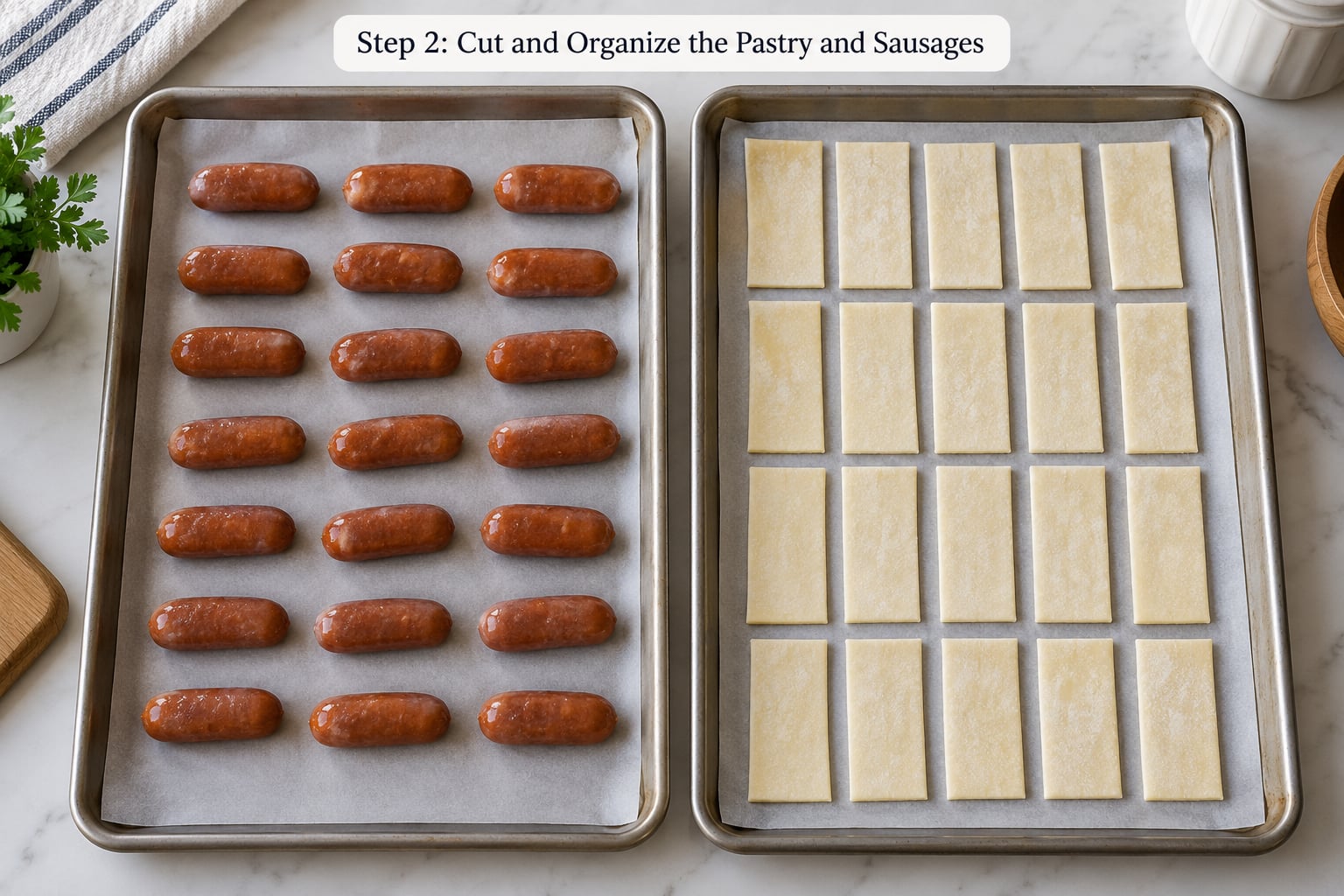
Keep the dough cold. Puff pastry that has warmed up fights you when you roll it and leaks butter onto the counter. If your kitchen is warm, work in batches of ten and put the rest back in the fridge.
Step 3: Wrap the Pigs in a Blanket
Place one sausage on a strip with a slight gap at one end. Add a small dab of mustard, honey, or barbecue sauce if you are using it, then roll the strip tightly so the seam runs along the length of the sausage.
Press the seam firmly with your fingertips, then set the seam side down on the pan. That single flip is what keeps a pig from springing open in the oven. Do not roll it so tight that the pastry has nowhere to expand; leave a small gap at one end for the puff.
Space them about an inch apart. If they look crowded, they are crowded. Any sausages that touch bake into each other and their shared seam stays pale.
Step 4: Brush and Bake Until Golden
Beat one egg with a tablespoon of water and brush it over the tops, or mist with butter spray from about six inches away. The wash is what gives you a glossy, evenly browned shell instead of a pale, floury one. Sprinkle everything bagel seasoning, sesame seeds, or flaky salt over while the wash is still wet so it sticks.
Bake on the middle rack for 12 to 16 minutes at 400°F, rotating the pans halfway through if your oven runs hot at the back. Pull them when the pastry is puffed and deeply golden and the seam at the bottom has set. Pale dough is the one problem you cannot fix after the fact.
Step 5: Check the Batch and Let It Rest
Cocktail sausages are sold fully cooked, so the pastry color is your main cue. Still, check the centers if you used raw or uncured sausage. Ground sausage needs to reach 160°F internally, and raw chicken sausage needs 165°F. An instant-read thermometer takes the guesswork out of a big batch, and it is the difference between confidently serving a crowd and hoping.
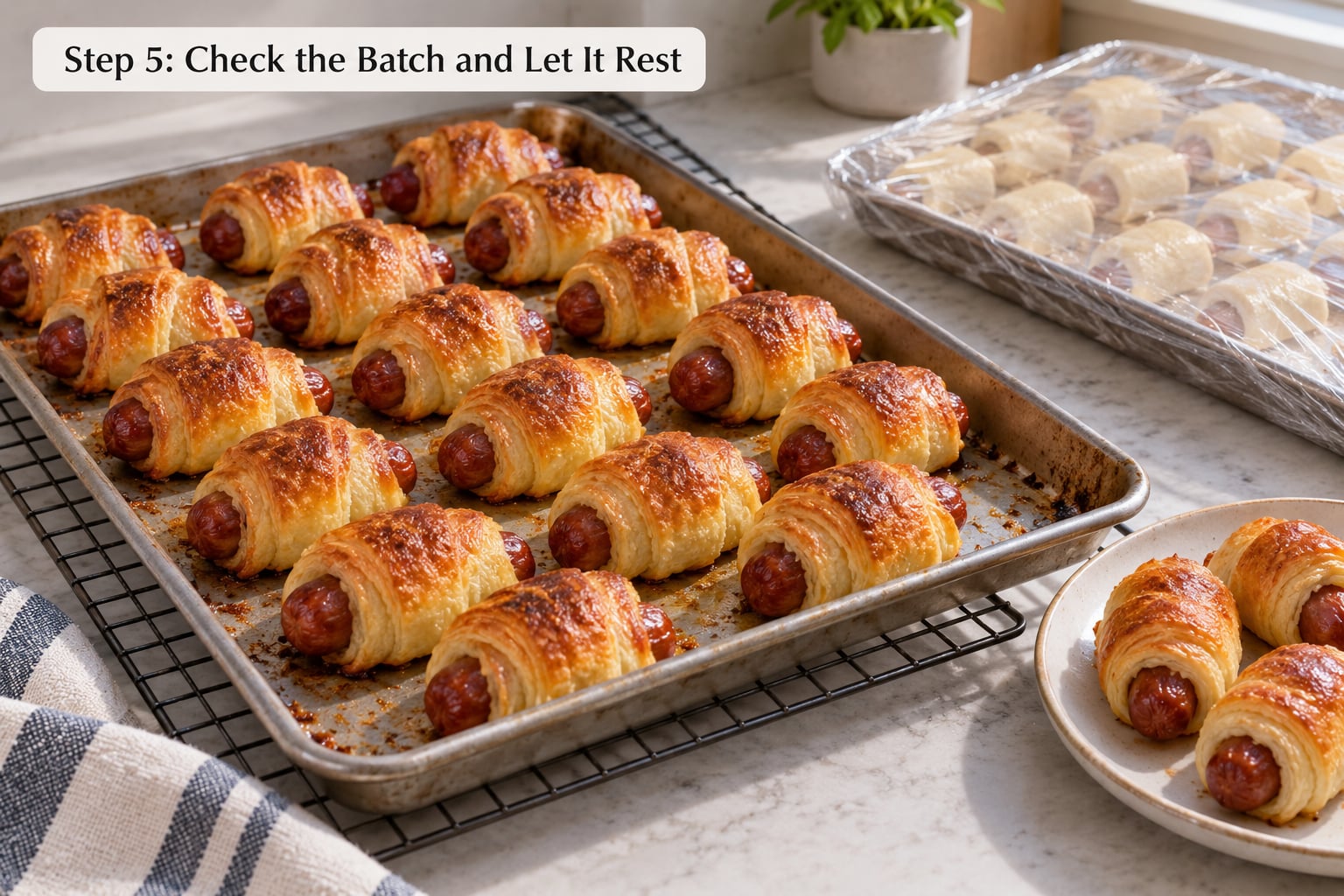
Move the finished pigs to a wire rack for three to five minutes. The steam escaping underneath is what keeps the bottoms crisp, and the short rest lets the filling settle so the pastry does not feel doughy when someone bites into it. Skip the rack and the bottom half of every pig goes soft on the platter.
Step 6: Keep Warm, Serve, and Store Leftovers
Holding is where a great batch turns average. The pastry goes soft within about 30 minutes at room temperature, so your holding setup matters as much as the bake.
- Warm oven: Set to 200°F with the door cracked and the pans inside. This is the gentlest option and the crust stays reasonably crisp for an hour or two.
- Crockpot: Line the bottom with parchment, set to warm, and layer the pigs in a single layer. Parchment keeps them from welding themselves to the crock, which is the fix people who have tried this usually land on.
- Air fryer: 350°F for 4 to 6 minutes brings back a lot of snap in a small batch right before serving. It is fast, but the basket is small, so plan for a few rounds.
- For transport: Cool them completely, then move them in a single layer in a rigid container with parchment between layers. Never stack them warm, and never seal the lid while steam is still inside. You will arrive with a container of damp pastry.
Serve three sauces and you will not hear anyone ask for more. Spicy mayo with a splash of sriracha, honey mustard, and a maple Dijon of equal parts each are enough to cover every kind of guest. Ranch works too, and so does a mustard and barbecue blend.
Refrigerate what is left within 3 to 4 days, in a sealed layer, not stacked. Reheat at 350°F in the oven for 8 to 10 minutes rather than in the microwave, which softens the shell and dries the sausage at the same time.
Common Mistakes
Crowding the pan. Pastries that touch each other cook in each other’s steam. The shared seam stays pale, and moisture collects under the pastry. Fix: one inch of air around each pig, and bake in waves with more pans rather than one loaded tray.
Loose seams. If the seam is not pressed down or the roll is seam side up, the pigs unroll in the oven and leak onto the pan. Fix: pinch firmly along the whole seam, set seam side down, and give the pastry room to expand at one end.
Pale pastry. Underbaking is the usual reason, and it also happens when the oven is too cool or the tray is too close to the top element. Fix: 400°F on the middle rack, 12 to 16 minutes, and do not pull them until the top is deeply golden. Egg wash or spray helps more than people expect.
Soggy bottoms. This is a steam problem, not a dough problem. Fix: parchment on every pan, a wire rack for cooling, and never let a finished batch sit in the pan while you wrap the next one.
Making them too early. Assembled pigs waiting in the fridge for a day go soft and doughy, which is the complaint almost every home cook brings back after trying it the night before. Fix: prep the dough strips and the sausages the night before and refrigerate them separately, then wrap and bake the day of the party.
Drying out before serving. A platter sitting out uncovered loses its crust fast. Fix: hold in a low warm oven or a parchment-lined crockpot, and refill the platter in small amounts instead of putting everything out at once.
Microwave reheating. It makes the pastry soft and the filling hot and dry. Fix: 350°F oven for 8 to 10 minutes, or an air fryer for 4 to 6 minutes if you only have a few to re-crisp.
A couple of scaling notes for a big room. Roll in two-person teams, one cutting and one wrapping, and count finished pieces into batches of ten so you know where you stand. And keep raw and cooked separate if you are handling any uncooked sausage, since you will be reaching for the same counter space all evening.
Frequently Asked Questions
Can I make pigs in a blanket with raw sausage for a crowd?
Yes, and you just need to plan the bake for it. Raw or uncured sausage needs to reach 160°F at the center before it is safe to serve, which usually adds 6 to 10 minutes to a 400°F bake. For 30 pieces, check several centers with an instant-read thermometer rather than trusting color alone, since pastry hides the filling. It is far simpler to use pre-cooked cocktail sausages for a large batch and reserve raw sausage for a smaller tray.
How many pigs in a blanket should I make per guest?
Two per guest works well when pigs are one of several dishes, and three per guest is right if they are the main event with sauce on the side. For 25 people, plan on 60. For 50, plan on 100 to 120 and expect to bake in waves across five or six sheets. Buying a dozen extra costs you almost nothing compared with running out of the platter an hour before the game starts.
What temperature should I bake pigs in a blanket in the oven?
400°F on the middle rack is the number that works best for a crowd batch. It gives the pastry time to puff and brown before the sausage fat softens the dough underneath. Bake 12 to 16 minutes and rotate the pans halfway if your oven runs hot at the back. You will see lower temperatures recommended often, but those tend to produce pale, softer shells in a full pan where the pieces are close together.
How do I keep pigs in a blanket warm without drying them out?
Keep them uncovered in a 200°F oven with the door cracked, or in a crockpot on warm lined with parchment so nothing sticks. Avoid a small air fryer holding a whole batch, since the basket gets crowded and the heat dries the pastry unevenly. Either way, warm them for no more than a couple of hours, then bring out fresh pans as they empty instead of setting out everything at once.
Can I make pigs in a blanket ahead of time and freeze them?
Yes, freeze them unbaked. Wrap the assembled pigs seam side down on a lined sheet, freeze until solid, then move them to a bag or container and keep them frozen for up to a couple of months. Bake straight from frozen at 400°F, adding a few extra minutes, and do not thaw them first, since thawed pastry goes soggy. Once baked, refrigerate leftovers within 3 to 4 days and reheat in the oven rather than the microwave.
Conclusion
Start with the oven. Preheat to 400°F while you line two pans, measure two pastries per guest, and set your dough and sausages out in rows before you roll the first one.
The whole method rests on three things: space around every pig, a seam pressed tight and placed face down, and a rack underneath the finished batch so steam escapes. Those three details are the difference between a platter of crisp, golden pigs and a tray of pale, soft ones. Once you have them down, scaling to 50 or 100 people is just more pans and two pairs of hands.