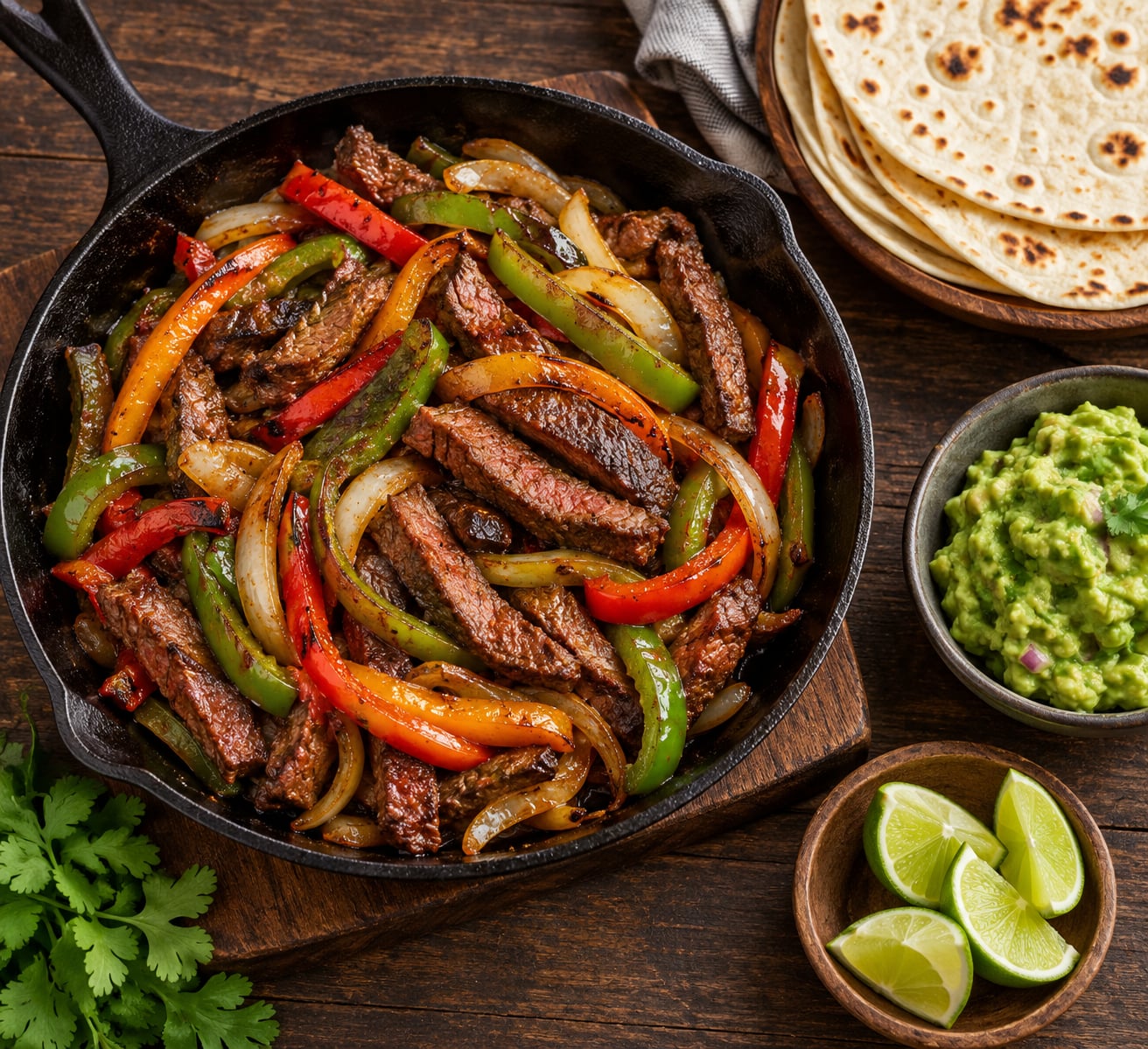
Beef fajitas are thin strips of skirt or flank steak seared in a screaming-hot cast iron skillet until charred outside and rare inside, then served in warm tortillas with blistered peppers and onions. That is the whole technique. From cutting board to first bite takes about 30 minutes, and most of that is the skillet heating up.
If you are wondering how to make beef fajitas at home and want them to taste like the sizzling plate at a restaurant rather than a weeknight compromise, the details below are the difference. A cool pan, a crowded pan, or meat sliced the wrong direction will undo an otherwise good recipe.
I have made these roughly as often as I have made burgers, and the version below is the one I settled on after getting soggy vegetables and chewy strips more than a few times. Short citrus marinade, very hot cast iron, meat cooked first and lifted out, vegetables in the same fat. Keeps well, reheats well, and scales to a crowd without extra pans.
Table of Contents
- What You Need To Make Beef Fajitas At Home
- The beef
- The fajita seasoning
- The vegetables and tortillas
- Optional toppings
- Which cut of beef works best
- Step-By-Step: How To Cook Beef Fajitas In A Cast Iron Skillet
- Prepare The Beef And Seasoning
- Cook The Beef Until Tender And Browned
- Saute The Peppers And Onions
- Warm The Tortillas And Assemble
- Common Mistakes To Avoid (And How To Fix Them)
- Frequently Asked Questions
- What is the best cut of beef for fajitas at home?
- How do I keep beef fajitas tender and juicy?
- Can I make beef fajitas ahead of time?
- How spicy should the fajita seasoning be?
- Should I use flour or corn tortillas for beef fajitas?
- How long do leftover beef fajitas last?
What You Need To Make Beef Fajitas At Home
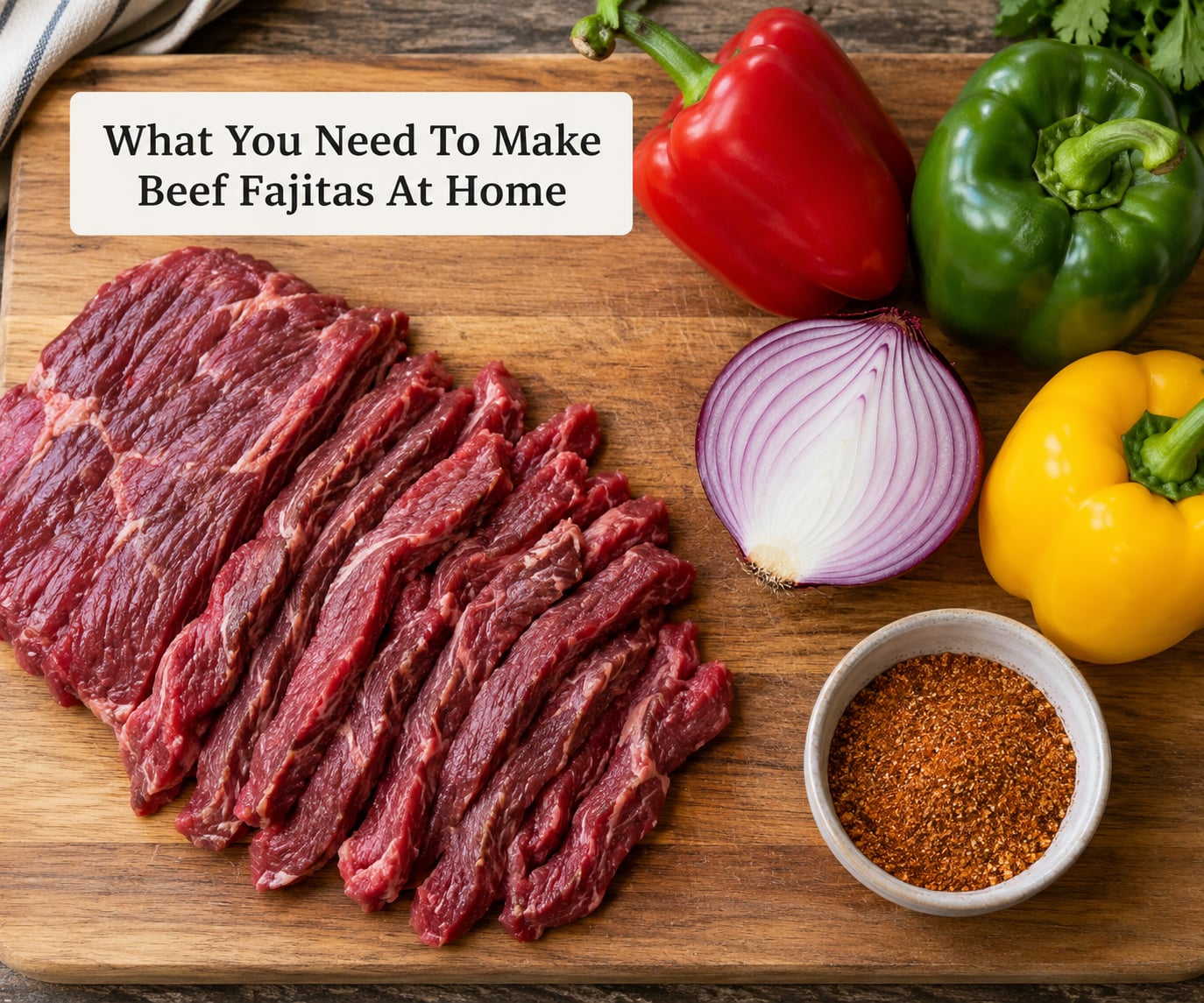
This list feeds four as a main course or six in fajita bowls, and every item on it does something specific. If you swap something, know which role it fills.
The beef
- 1.25 to 1.5 pounds skirt steak, or flank steak, hanger steak, or sirloin
- 3 tablespoons olive oil, divided
- 2 tablespoons fresh lime juice plus 1 tablespoon orange juice
- 1 tablespoon Worcestershire sauce or soy sauce
The fajita seasoning
- 2 tablespoons chili powder
- 2 teaspoons ground cumin
- 1 teaspoon smoked paprika
- 1 teaspoon garlic powder
- 1 teaspoon granulated sugar
- 1.5 teaspoons salt
- 1/2 teaspoon black pepper
The sugar is not optional in my version. It rounds the sharp edge of the citrus and helps the spice rub brown instead of scorching.
The vegetables and tortillas
- 2 bell peppers, one red or yellow and one green, sliced into strips
- 1 large red or yellow onion, sliced into strips
- 3 tablespoons neutral high-heat oil such as avocado, canola, or grapeseed
- 8 to 10 flour or corn tortillas, 8-inch
- Lime wedges for squeezing at the table
Optional toppings
- Guacamole, sour cream or Mexican crema, salsa or pico de gallo
- Quick-pickled red onions: thin slices in lime juice, a pinch of salt, left for 15 minutes
- Shredded cheese, chopped cilantro, and sliced jalapenos
Which cut of beef works best
All four cuts below work. They differ in thickness, how much they need acid, and how quickly they go from rare to overcooked.
| Cut | Thickness | Tenderness | Needs marinating | Cook time | Best for |
|---|---|---|---|---|---|
| Skirt steak | Thin and uneven | Tender when handled right, tough when overcooked | Yes, 30 minutes to 2 hours | 2 to 3 minutes a side | Restaurant-style fajitas |
| Flank steak | Evenly thin | Lean and firm, benefits from acid | Yes, up to 4 hours | 2 minutes a side | Leftovers and fajita bowls |
| Sirloin | Thick | Tender and forgiving | Optional, 30 minutes | 3 to 4 minutes a side | Beginners and big crowds |
| Hanger steak | Thin with a tender middle | Very tender, odd shape | 30 minutes is enough | 2 to 3 minutes a side | A tender option that costs less |
If you are substituting, remember that flank and skirt are among the pricier cuts at the butcher counter. Top sirloin and hanger are the usual swaps, and neither one ruins the dish.
For the tools: a cast iron skillet or heavy stainless pan, an instant-read thermometer, and a sharp knife with a dedicated board for the beef. If you are still choosing, a small cast iron skillet beats a nonstick pan here because you need the heat to climb and the crust to form.
Step-By-Step: How To Cook Beef Fajitas In A Cast Iron Skillet
Prepare The Beef And Seasoning
Trim the skirt steak and pull off the silver membrane if your piece still has it. That membrane is a thin connective layer that stays chewy no matter how long you cook it, and it is the reason many people decide fajita meat is unpleasant.
Cut against the grain. Find the direction the fibers run across the raw steak, lay the knife across them at a slight diagonal, and slice thin, about a quarter inch. Against the grain shortens the muscle fibers into shorter pieces to chew, which is most of what people mean when they say a cut of beef is tender.
Whisk the olive oil, lime juice, orange juice, and Worcestershire in a large bowl or zip bag. Add the chili powder, cumin, paprika, garlic powder, sugar, salt, and pepper, then add the beef and turn it with your hands so every strip is coated. Marinate 30 minutes at room temperature, or up to 2 hours in the refrigerator.
Go past 4 hours and citrus starts to make the surface mushy and oddly meaty tasting. That is not a safety problem, it is a texture problem, and flank steak takes it worst of the four cuts. For a weeknight dinner, 30 minutes is enough to season and start softening the surface.
While the beef rests, make the rest of your mise in place: peppers and onions cut and dry, tortillas out of the package, toppings in small bowls. Fajitas cook in about 8 minutes once the pan is hot, and none of it happens while you are chopping.
Cook The Beef Until Tender And Browned
Set the cast iron skillet over high heat and add 2 tablespoons of neutral oil. Do not add the beef yet. Wait until the oil shimmers and a drop of water skitters across the pan, roughly 3 to 4 minutes, because a warm pan steams the beef instead of searing it.
Lay the strips in a single layer, touching as little as possible, and leave them alone for 2 minutes. You want to hear a sizzle, and if you hear silence or a sputter, the pan is not hot enough or the strips are stacked. Cook 2 to 3 minutes a side for skirt and flank, 3 to 4 for sirloin.
The USDA safe minimum internal temperature for whole cuts of beef is 145°F with a 3-minute rest, which on thin fajita strips is almost always medium rare or medium by the time you slice them. Most cooks pull it at 125°F to 135°F and let carryover cooking do the rest, because those strips lose heat fast and nothing is more disappointing than a gray ribbon.
Move the beef to a clean plate. Rest it 5 minutes before slicing, and while you wait, scrape the browned bits and the rendered fat from the pan. That fat and fond is the best seasoning the vegetables will ever get, and it is why you cook the meat first rather than adding raw beef and vegetables together.
Saute The Peppers And Onions
Turn the heat to medium-high and add the sliced peppers and onions to the same skillet with the reserved beef fat. Spread them into one layer. If they mound up or you see steam, pull a handful out and cook in batches, because crowded vegetables steam and turn gray and limp instead of charring.
Leave them for 2 to 3 minutes without stirring so the edges blister, then toss and continue until the peppers are soft with dark brown patches and the onions have lost their raw bite, about 6 to 8 minutes total. Season with a pinch of salt at the end rather than at the start, since salt early pulls water out and slows the char.
Return the beef to the pan and toss everything together for 30 seconds. Kill the heat. The residual heat keeps cooking the strips while you build the tortillas, which is why this is the last step before assembly and not the first.
Warm The Tortillas And Assemble
Tortillas need heat, not just room temperature, and there are three good ways to do it. Hold them over a gas flame for a few seconds per side until they puff and blister. Or warm them in a dry skillet for 20 to 30 seconds a side. Or wrap a stack in foil with a barely damp towel and warm in a 350°F oven for about 10 minutes, which is the method that works best when you are feeding a crowd.
Slice the rested beef thinly on a diagonal against the grain, then combine it with the peppers and onions in the skillet. Keep the assembly off the heat. If you build tortillas sitting over a hot burner, the steam from the peppers soaks them within a minute.
Fill each tortilla with a spoonful of beef and vegetables, add guacamole, crema, salsa, and pickled onions, and squeeze lime over the top at the table. The lime is not optional garnish, it is the acidic note that ties the spice rub to the meat.
For a group, keep the cast iron in the low oven at 250°F and set it on a trivet on the table. That way everyone builds their own and the skillet stays at a sizzle, which is half of what makes fajitas feel like an event.
Common Mistakes To Avoid (And How To Fix Them)
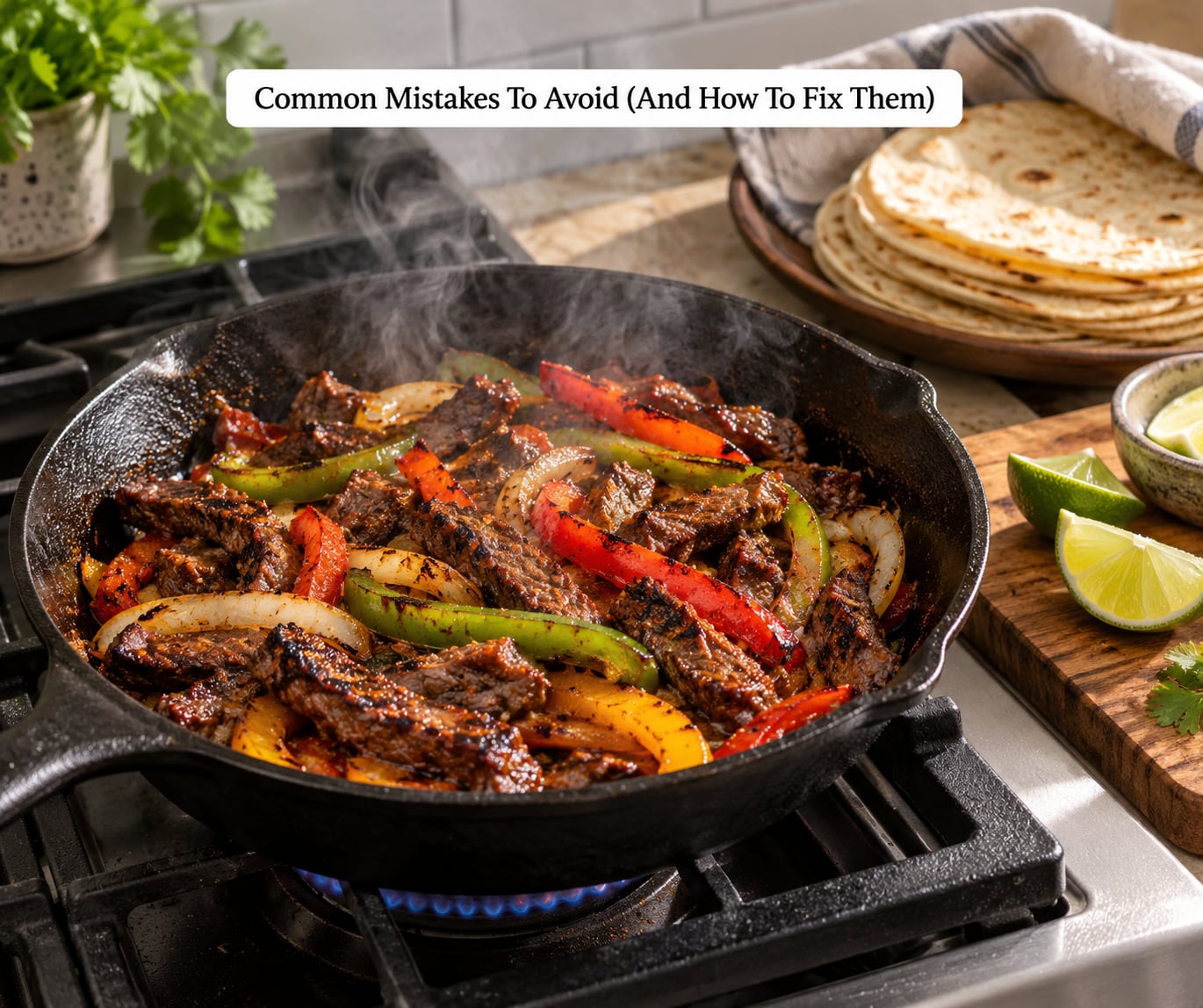
Most disappointing fajitas trace back to one of these eight things.
- Chewy meat. Usually cut with the grain or overcooked. Slice against the fibers, pull the strips at 125°F to 135°F, and rest them 5 minutes before cutting.
- Silver membrane left on. It does not soften no matter how long you cook it. Peel it off before seasoning.
- A pan that was not hot enough. Grey meat with no crust means the oil was shimmering but not smoking. Give it another minute.
- A crowded pan. Touching strips steam each other. Cook in two batches if the meat fills more than about half the surface.
- Vegetables cooked too long. Eight minutes is the ceiling. Mushy peppers come from crowding and low heat, not from time alone.
- Salting the vegetables early. Salt draws out water and you get a gray stew. Season the peppers and onions at the end.
- Cold tortillas. They crack when you roll them. Sixty seconds over a flame fixes it.
- A citrus marinade left overnight. Four hours is fine for skirt, but overnight makes flank and sirloin surfaces mushy. Trim the marinating time instead of the seasoning.
One more thing people misread: beef releases a surprising amount of liquid in the pan, and that is normal. It is the juice and the rendered fat, not a sign that you burned anything. Scoop it with the vegetables and keep going.
If you are planning for extra servings, cook the meat in batches rather than making one enormous pan. The sear-to-crowding ratio matters more than the clock, and a second cast iron or a sheet pan in a 425°F oven works fine for the overflow batch.
Frequently Asked Questions
What is the best cut of beef for fajitas at home?
Skirt steak is the traditional and best-tasting choice because it is thin, well marbled, and takes a fast sear. Flank steak is leaner and more uniform, hanger is tender and cheaper, and top sirloin is the most forgiving for beginners. Whichever you use, slice it thin against the grain and do not skip the citrus marinade, since acid is what softens these lean cuts.
How do I keep beef fajitas tender and juicy?
Three things do the work: a 30-minute to 2-hour citrus marinade, slicing against the grain, and pulling the strips off the heat early. Skirt and flank lose their juice fast, so aim for 125°F to 135°F in the center and rest the meat 5 minutes before slicing. Resting lets the juice redistribute instead of running out onto the cutting board.
Can I make beef fajitas ahead of time?
Yes, mostly. Cook the beef and slice it, then store the meat and the charred peppers and onions in separate airtight containers in the refrigerator for up to 3 days. Keep the tortillas separate so they do not go soft. Marinate the raw beef only as long as the recipe says, since holding marinated raw meat for a day is when citrus turns the surface mushy. Reheat in a hot skillet, not a microwave.
How spicy should the fajita seasoning be?
Start with 2 tablespoons of chili powder and 2 teaspoons of cumin for about 1.5 pounds of beef, then taste a pinch of the dry mix on a fingertip. You want warmth and a little smoky depth, not heat. If you want more, add a teaspoon of ancho chile powder or a few drops of hot sauce at the table rather than raising the salt, which is what people usually overdo.
Should I use flour or corn tortillas for beef fajitas?
Flour tortillas are the default for Tex-Mex fajitas because they stay soft, fold without cracking, and hold heavy fillings. Corn tortillas have more flavor and a griddled, crisp texture that many people prefer, but they need to be warm and doubled. Whichever you choose, heat them until they puff and blister, then keep them wrapped in a towel so they steam themselves soft.
How long do leftover beef fajitas last?
Cooked beef and sautéed vegetables keep 3 to 4 days in the refrigerator in a sealed container. Reheat the beef in a hot cast iron skillet for a minute or two per side so it re-sears instead of turning gray, and warm the peppers and onions in the same pan. Refrigerate within 2 hours of cooking, and use refrigerated leftovers within that window rather than repeatedly reheating.
Start with the pan, not the meat. Get the cast iron hot enough to make water skitter, let the beef marinate while you do it, and slice everything against the grain once it rests. Those three habits fix nearly every bad plate of beef fajitas.
If you are planning a fajita night rather than a single dinner, put the toppings in small bowls, warm the tortillas in a foil packet in a 350°F oven, and keep the skillet in the low oven until your guests are ready. Everything else on this page is detail compared to that timing.