Shrimp fajitas take about 30 minutes and one skillet: you sear seasoned shrimp with sliced peppers and onion over high heat, then warm tortillas and build them at the table. Shrimp cooks in two to three minutes per side and cannot be paused, so all the seasoning, heat and toppings need to be ready before it hits the pan. This method serves four and scales cleanly for a crowd, and it works just as well with frozen shrimp as with fresh.
The one rule that separates good shrimp fajitas from sad ones is a hot pan and dry shrimp. Wet shrimp steams, a lukewarm pan steams, and both turn chewy in the time it takes to find a spatula. I cook these the same way for a Tuesday dinner for four and for eight people at game day, and the only real variable is how many pans I light.
Table of Contents
- What You Need
- Homemade Fajita Seasoning
- How to Make Shrimp Fajitas Step by Step
- Prepare the Vegetables and Shrimp
- Cook the Peppers and Onions First
- Season and Sauté the Shrimp
- Warm the Tortillas and Assemble
- Should You Marinate the Shrimp?
- Common Mistakes
- Frequently Asked Questions
- How long should shrimp be cooked for fajitas?
- Can I make shrimp fajitas without a cast-iron skillet?
- How do I keep the vegetables from becoming watery?
- What is the best way to reheat leftover shrimp fajitas?
- Can I prepare shrimp fajitas ahead of time?
- What toppings and sauces work best for shrimp fajitas?
What You Need
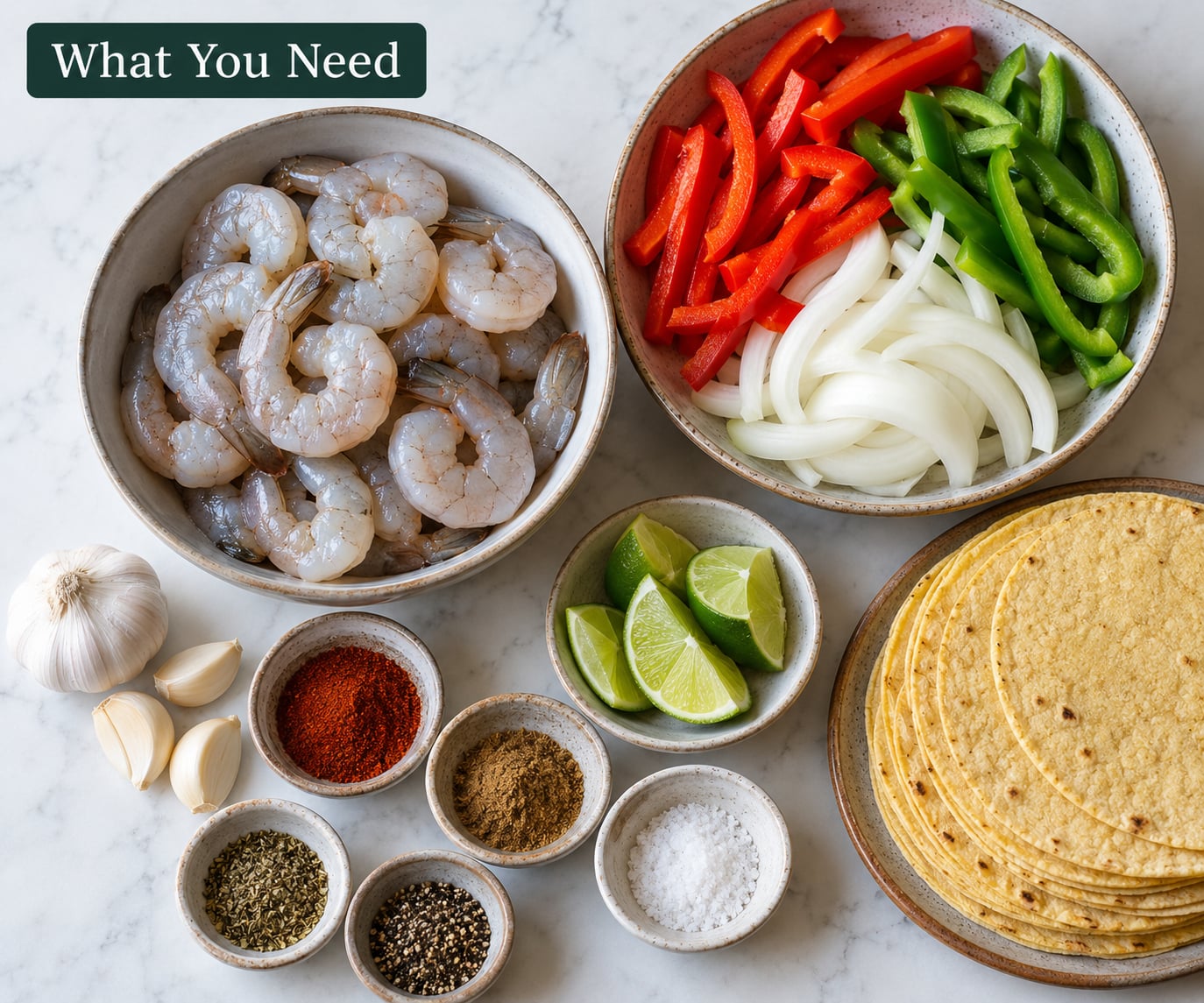
Everything here comes from a normal grocery run, and most of it can be chopped while the shrimp thaws. Quantities below are for four hungry people.
- 1 pound large shrimp, peeled and deveined (about 20 to 24 shrimp per pound). Frozen is fine, and honestly usually fresher than the display case.
- 2 bell peppers, one red and one green, sliced into thin strips. Red for sweetness and color, green for a little bite.
- 1 medium onion, sliced into strips rather than diced, so it chars in strips instead of dissolving.
- 2 tablespoons olive oil, plus a tablespoon of unsalted butter if you like the flavor.
- 2 teaspoons homemade fajita seasoning (blend below), or 1.5 tablespoons of a store-bought packet.
- 2 cloves garlic, thinly sliced.
- 8 corn or flour tortillas, 6-inch size, plus a package for any seconds.
- 1 lime, cut into wedges, plus a squeeze for the pan at the end.
- Fresh cilantro, a handful of stems and leaves, roughly chopped.
- Optional: sliced jalapeno, sour cream, guacamole, pico de gallo, shredded cheese, pickled red onion.
For a crowd of ten, use two pounds of shrimp and double the vegetables. Do not try to squeeze it all into one skillet. Cook two batches back to back, or use two pans at once, because crowding drops the pan temperature and you lose the sear entirely.
Homemade Fajita Seasoning
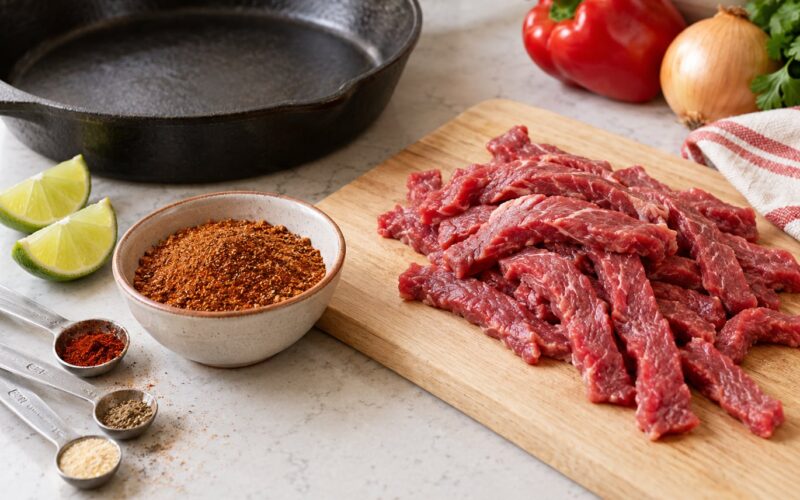
The blend is the whole personality of the dish, and it takes thirty seconds. Combine two teaspoons chili powder, two teaspoons cumin, one teaspoon smoked paprika, one teaspoon garlic powder, half teaspoon dried oregano, half teaspoon onion powder, a quarter teaspoon cayenne, plus one teaspoon salt and a quarter teaspoon black pepper. That is enough for one pound of shrimp and two peppers.
Cumin carries the earthiness, chili powder brings warmth without sharp heat, smoked paprika adds color and a faint smoke note, and cayenne is the only thing that should make you reach for water. Double the salt if you are using unsalted butter. The blend keeps about six months in an airtight jar, so make extra and keep the next weeknight covered.
How to Make Shrimp Fajitas Step by Step
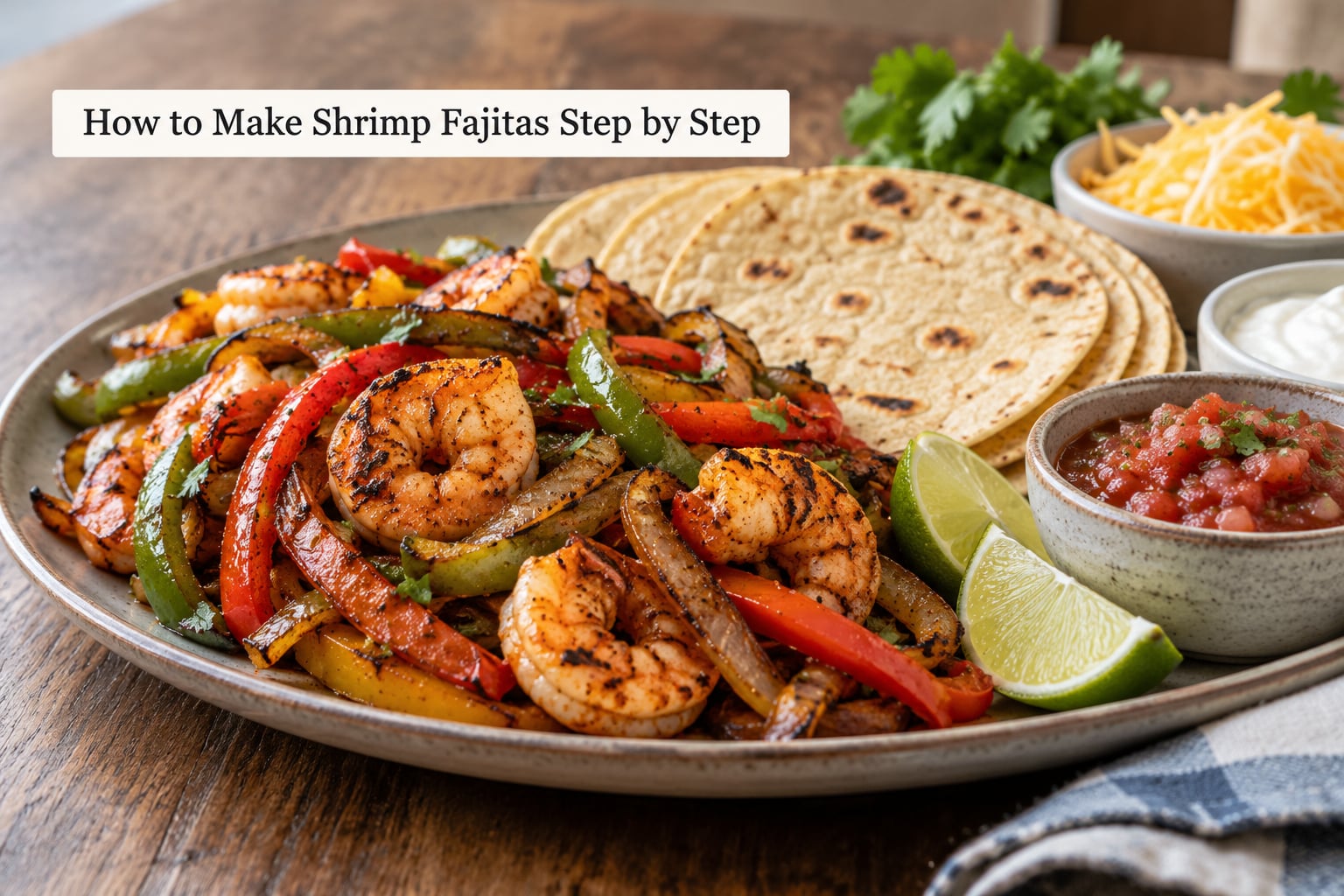
Start with the vegetables, then the shrimp, then warm the tortillas while everything else is already plated. That order keeps the shrimp from sitting and drying out, and it gives you one pan to wash instead of three.
Prepare the Vegetables and Shrimp
Slice both peppers and the onion into strips about a quarter inch thick, roughly the same width so they finish cooking together. Lay them on a towel or paper towel and blot the tops dry; surface water is what turns peppers into mush.
Pat the shrimp completely dry, then toss them with the seasoning and a tablespoon of the oil right before they go in the pan. If you are starting from frozen, put the shrimp in a bowl, cover with cold tap water, and let them sit about 20 minutes until they’re flexible, then drain and dry thoroughly. Deveining is optional on peeled shrimp if the vein already looks broken, but pull it when you see a dark line.
Cook the Peppers and Onions First
Heat the remaining oil in a cast iron or heavy nonstick skillet over medium-high heat until it shimmers and a drop of water skitters. Add the peppers and onion in a single layer and leave them alone for two minutes rather than stirring constantly.
You are looking for tender-crisp with brown patches on the edges, roughly six to eight minutes total. Season them with a pinch of salt at the halfway mark. If a liquid pool forms in the pan, the heat is too low; the vegetables should sizzle when they hit, not hiss quietly.
Pull the vegetables out onto a warm plate. Do not cover them with foil, which traps steam and softens the char you just built. If you need somewhere warm to hold them, a switched-off oven is the only place I would put them.
Season and Sauté the Shrimp
Turn the heat to high and add the seasoned shrimp in a single layer without crowding. The first side needs about 2 minutes with no touching at all.
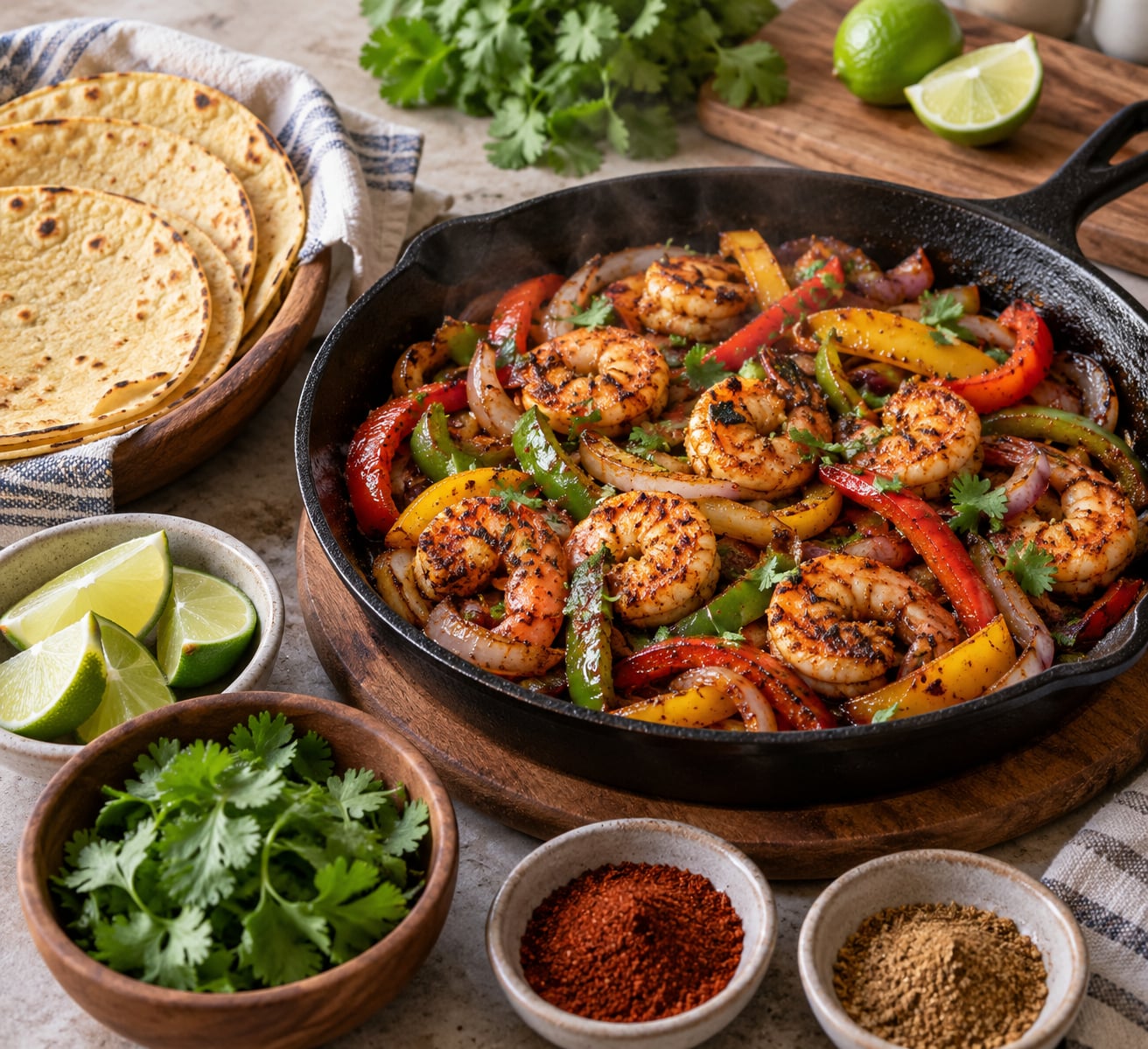
Flip once and give the second side 1 to 2 minutes. Shrimp is done when it turns opaque and pink and curls into a loose C shape; a tight O means you went a minute too far, and a straight I shape means it still needs another half minute. The safe internal temperature is 145°F (63°C), and most home cooks hit it slightly before the color finishes, because the shrimp keeps cooking in the pan.
Squeeze in the juice of a lime wedge and toss for fifteen seconds. The juice deglazes the browned bits on the pan floor and turns them into the sauce, which is the step most recipes leave out.
Warm the Tortillas and Assemble
Warm tortillas directly over a gas flame for fifteen to twenty seconds a side, turning with tongs until they puff slightly. A dry skillet works too, or you can wrap a stack in a damp towel and warm it in a switched-off oven for a few minutes.
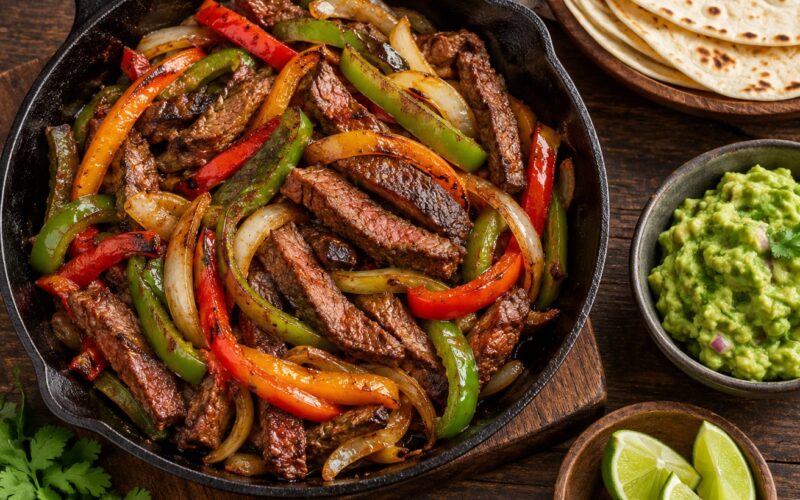
Set out the warm tortillas, the shrimp and peppers, the cilantro, lime wedges and whatever sauces you chose. Each person builds their own: a couple of tortillas, a spoonful of shrimp and vegetables, then guacamole, sour cream, pico de gallo and pickled onion over the top.
Should You Marinate the Shrimp?
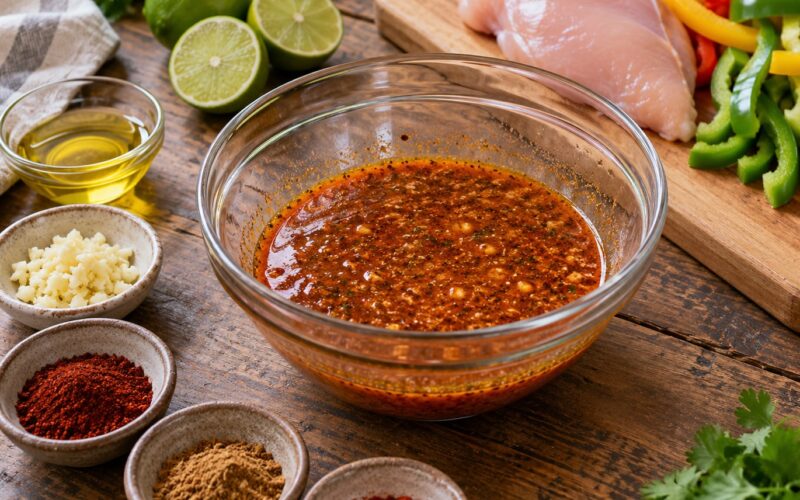
No, not for this method. Shrimp are small and porous enough to absorb dry seasoning in under two minutes, and a marinade or oil soak softens the surface, so the shrimp sear less and the seasoning falls off in the pan. Marinate only if you are going a different route entirely, like a grilled skewer or a sheet-pan bake where the shrimp spends eight minutes in the oven instead of three in a hot skillet.
Common Mistakes
Almost every disappointing shrimp fajita comes down to one of five things, and all five are easy to avoid.
- Rubbery shrimp. The pan is too cool or the shrimp sat too long after cooking. Get the skillet properly hot before the shrimp go in, cook one batch at a time, and pull them the moment they curl into a C.
- Soggy peppers and onions. They were crowded, salted early, or covered while waiting. Use a wide pan, give them room, and keep them uncovered.
- Flat seasoning. Store-bought taco seasoning is mostly salt and cumin, and the flavor dies under high heat. Use the six-spice blend above, or add a spoonful of the mix to the vegetables as they cook so the flavor has something to cling to.
- Dry spice clumps on the shrimp. Seasoning sat on the surface and scorched before the shrimp cooked through. Toss the shrimp with the blend right before it hits the pan, after drying, so it seasons evenly.
- Cold, chewy tortillas. They were warmed too long ago or not at all. Warm them last, keep them in a damp towel, and stack them in a clean dish so steam softens the whole pile.
For a hands-off version, the same ingredients go on a lined sheet pan: peppers and onion at 425°F for 10 minutes, shrimp added on top for another 6 to 8 minutes until opaque. Same seasoning, same lime finish, less char, one pan to clean.
Leftovers keep in the refrigerator for up to two days in a sealed container. Reheat them in a hot skillet for two minutes rather than the microwave, which dries the shrimp out; hold the lime until the very end.
Frequently Asked Questions
How long should shrimp be cooked for fajitas?
Cook shrimp 2 minutes on the first side without touching them, then flip and give it 1 to 2 more minutes. They are done at 145°F (63°C), when the flesh turns opaque and pink and curls into a loose C. A tight O shape means overcooked, and a straight I means undercooked. Shrimp keeps cooking after it leaves the pan, so pull them a little early.
Can I make shrimp fajitas without a cast-iron skillet?
Yes, and most weeknight cooks use a heavy nonstick skillet. The pan needs to hold heat, so thin nonstick over a weak burner is the weak link, not the coating. A stainless skillet works if you give it a full minute to heat up and do not crowd it. Skip the lid at every stage; covered vegetables steam instead of char.
How do I keep the vegetables from becoming watery?
Slice peppers and onion into strips, blot them dry, and cook them in a single layer over medium-high heat with no crowding. Give them two undisturbed minutes before the first stir, and expect six to eight minutes total. Salt partway through, not at the start, and never cover them while they wait, because trapped steam softens everything you just charred.
What is the best way to reheat leftover shrimp fajitas?
A hot skillet beats the microwave every time. Spread the shrimp and vegetables in a single layer over medium-high heat and toss for two minutes until the shrimp turn opaque and the edges pick up a little char. Warm tortillas separately, and add a fresh squeeze of lime after reheating so the sauce tastes fresh rather than reheated.
Can I prepare shrimp fajitas ahead of time?
Yes, with one rule: keep the components separate. Cook the peppers, onion and shrimp as the recipe says, then refrigerate them apart from the tortillas and toppings within two hours of cooking. Store in a sealed container for up to two days. Assemble the fajitas only when you are ready to eat, since tortillas warmed earlier will be cold and chewy.
What toppings and sauces work best for shrimp fajitas?
Lime comes first, squeezed over the shrimp while they are hot, followed by fresh cilantro and a spoonful of guacamole. Sour cream or Mexican crema cools the chile heat, pico de gallo adds juice and crunch, and quick-pickled red onions cut through the richness. Shredded cheese works, but skip heavy salsa before serving, because wet sauce makes the tortillas soggy.
Start with the shrimp: thaw them cold, dry them well, and mix the seasoning so it is ready to go. Then heat the pan until it shimmers, cook the peppers and onion first, and give the shrimp three focused minutes in a hot skillet. Warm the tortillas last, squeeze lime over the finished shrimp, and let everyone build their own at the table.