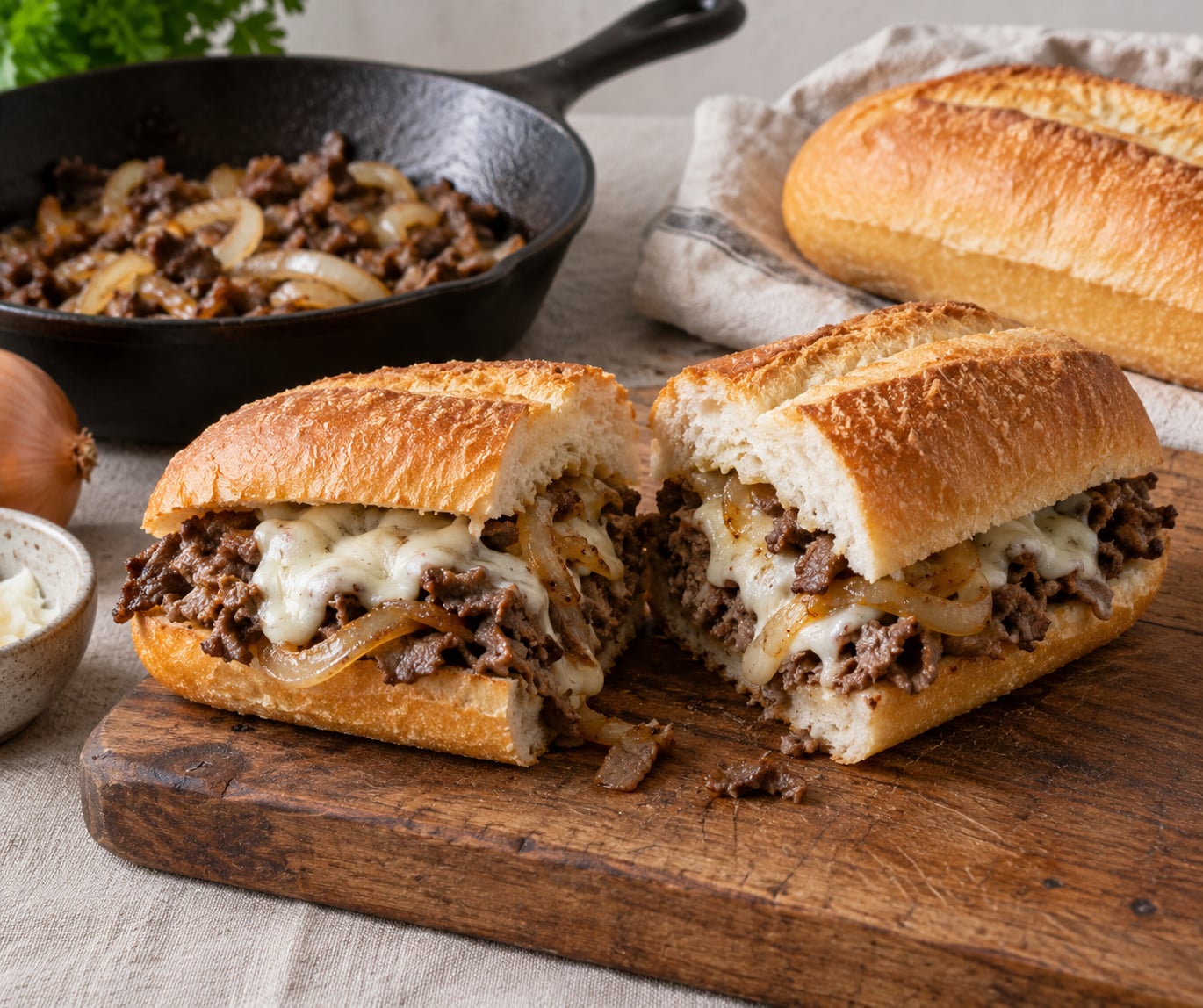
How to make a philly cheesesteak at home comes down to three things: beef sliced paper-thin and seared in small batches, onions cooked well past golden, and cheese melted gently into the pan juices inside a toasted roll. Get those right and you get a sandwich that actually tastes like the counter version. The whole thing takes about 35 minutes, most of it waiting on the beef to firm up in the freezer.
The reason home versions often disappoint is crowding. Throw a pound of steak into one skillet at once and the pan temperature crashes, the beef releases water, and you get gray boiled meat sitting in a puddle. Cook it in two batches on a hot surface and the same steak browns properly and stays tender.
A note on the sausage sub version, since people ask: cheese whiz on the roll and a hot dog are a Philadelphia ordering convention, not part of the steak sandwich. Leave them out unless you specifically want them.
Table of Contents
- What You Need
- Best cuts of beef
- Cheese
- Vegetables and bread
- Equipment
- Step-by-Step: How to Make a Philly Cheesesteak at Home
- 1. Prepare the Beef and Vegetables
- 2. Cook the Peppers and Onions
- 3. Cook the Beef Without Overcrowding
- 4. Melt the Cheese and Build the Filling
- 5. Toast the Rolls and Assemble
- Common Mistakes and How to Fix Them
- The beef is thick and chewy
- The meat boiled instead of browning
- The cheese is clumpy and grainy
- The bread went soggy
- The vegetables are watery
- The filling tastes bland
- Can I make it ahead?
- Frequently Asked Questions
- What cut of meat do I use for a Philly cheesesteak?
- Do I need to freeze the steak before slicing it thin?
- What cheese melts best for a cheesesteak?
- Should I add green peppers and mushrooms?
- How do I reheat a cheesesteak without soggy bread?
- How long does it take to make a cheesesteak at home?
- Conclusion
What You Need
For two sandwiches you need about 1 to 1.25 pounds of beef, one large onion, two or three slices of cheese per sandwich, and two rolls. That is the whole list.
Best cuts of beef
- Ribeye is the classic. The marbling keeps it tender even after a hard sear, and it holds up when you cook it fast.
- Skirt steak is what a lot of Philadelphia shops actually use. It is cheap, deeply beefy, and forgiving, but it has a tough membrane on one side that you have to cut away.
- Sirloin works and costs less. It is leaner, so give it a bit more oil in the pan and do not walk away from it.
- Flank steak is usable only if you slice it extremely thin across the grain. Any thicker and it turns to leather.
If you buy it at a counter, ask for the ribeye sliced thin across the grain while you wait. Most butchers will do it, and many will freeze the slices for you so they are firm when you get home.
Cheese
Mild provolone is the most common choice. White American, and specifically Cooper Sharp if your grocery store carries it, is the local favorite for how cleanly it melts. Cheese whiz is the third option and gives you the sauciest result. Skip aged or smoked provolone. Older cheese resists melting and turns grainy.
Vegetables and bread
One large yellow onion, sliced thin, is the traditional filling. Green bell pepper is a common home addition and plenty of people prefer it, though strictly traditional cheesesteaks leave it out. Mushrooms are more of a California-style choice.
For the roll, Amoroso-style hoagie rolls are the benchmark because they are soft, slightly sweet, and sturdy enough to hold a wet filling. Any soft Italian or hoagie roll works. Avoid rolls that are very soft and doughy, since they tear when you try to scoop the filling in.
Equipment
A 12-inch cast iron skillet or a flat-top griddle does the real work here. You also want a wide, thin metal spatula or bench scraper for moving and chopping the beef, a sharp knife, and a cutting board. A second pan lets you cook both batches of beef at once, which saves a few minutes.
For oil, use canola, avocado, or grapeseed. Anything with a low smoke point will smoke and taste bitter at searing heat.
Step-by-Step: How to Make a Philly Cheesesteak at Home
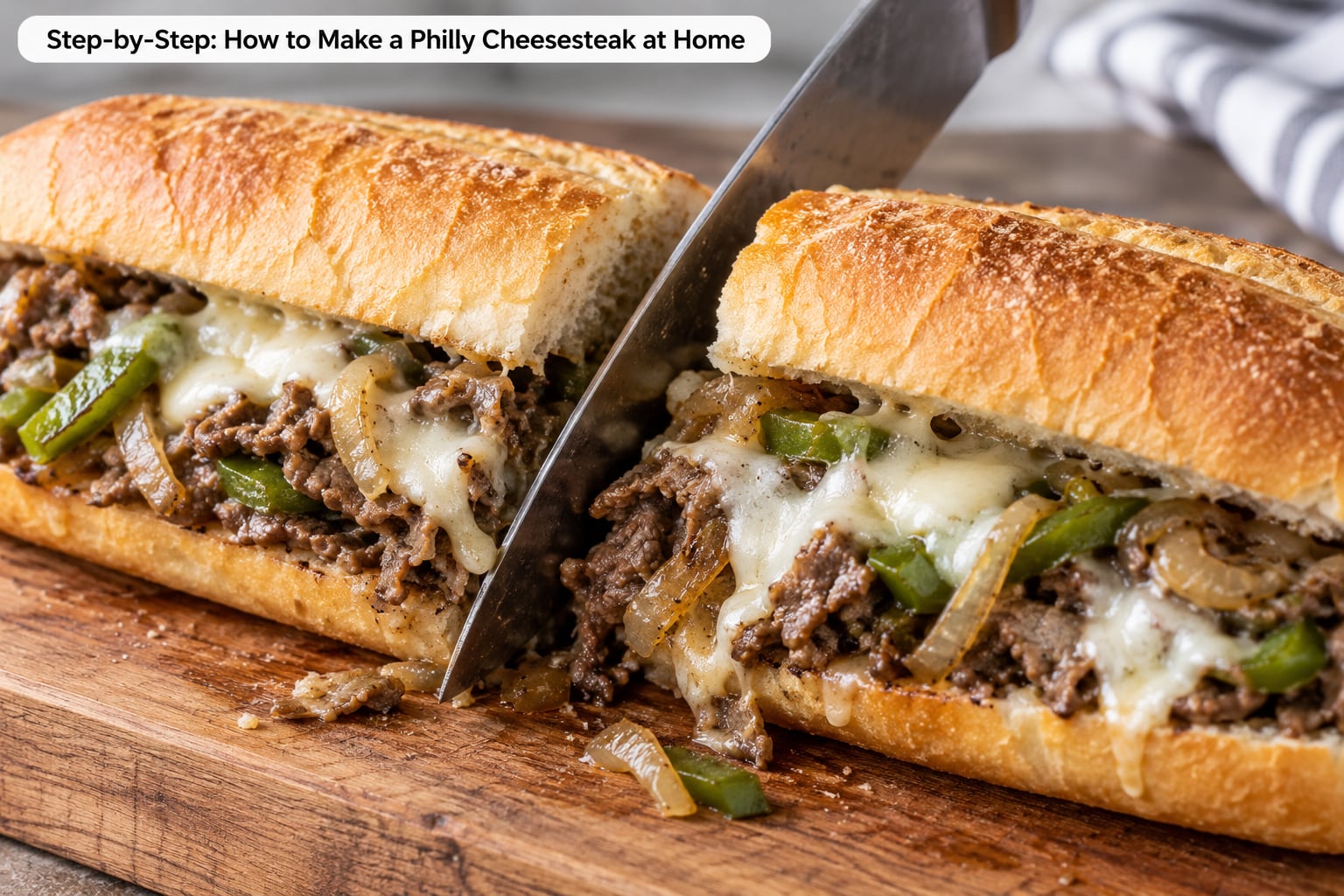
Read every step once before you start. The freezing happens first, and the onions take longer than you think, so the order matters.
1. Prepare the Beef and Vegetables
Put the steak in the freezer for 20 to 30 minutes. You want it firm enough to slice cleanly, not frozen solid. A cold steak slices paper-thin with a straight knife, while a room-temperature one tears and gives you thick, chewy pieces.
While it firms up, slice the onion. Cut it in half, peel, then slice into thin half-moons or dice it small. Dice gives better distribution in the finished sandwich. Halves cook faster and hold their shape.
If you are using pepper, cut it into thin strips. Set out your cheese and split the rolls so they are ready to toast later.
How you know the beef is ready: it resists the knife a little but is still bendable, not rock hard.
2. Cook the Peppers and Onions
Heat the skillet until it is genuinely hot. Add a thin layer of oil and let it shimmer, then add the onions in a single layer.
Cook over medium-high heat for 4 to 6 minutes, stirring occasionally, until they soften and start to brown at the edges. Then turn the heat down and let them go another 4 to 8 minutes until a real brown color develops. This is the part people rush and it is where most of the flavor lives.
Add the green pepper in the last two minutes if you are using it, and season the onions with a pinch of salt and black pepper once they are browned.
How you know they are done: the onions are limp, deeply golden to brown, and a little jammy rather than stringy or raw-tasting. Scrape them into a bowl and set aside.
3. Cook the Beef Without Overcrowding
Take the steak out and slice it as thin as you reasonably can, cutting across the grain. Look at the raw meat first and find the direction the fibers run, then cut perpendicular to them. On ribeye, that usually means slicing along the long side of the strip rather than across it.
Leave the beef in whole pieces or big chunks rather than dicing it. It cooks faster in strips and chops less.
Wipe the pan clean, add a fresh layer of oil, and heat until it is very hot. Add the first batch in a single layer with no crowding. Leave it alone for 30 to 45 seconds to sear, then toss and cook until just browned and no longer pink.
For safety, cook whole cuts of beef to an internal temperature of 145°F measured with an instant-read thermometer, or let it rest until cooked through. Since these slices are thin, the second batch goes fast.
Pull the beef out onto the board with the onions, then cook the second batch the same way. You should hear a strong sizzle when the meat hits the pan. If you do not, the pan is not hot enough or there is too much meat in it.
4. Melt the Cheese and Build the Filling
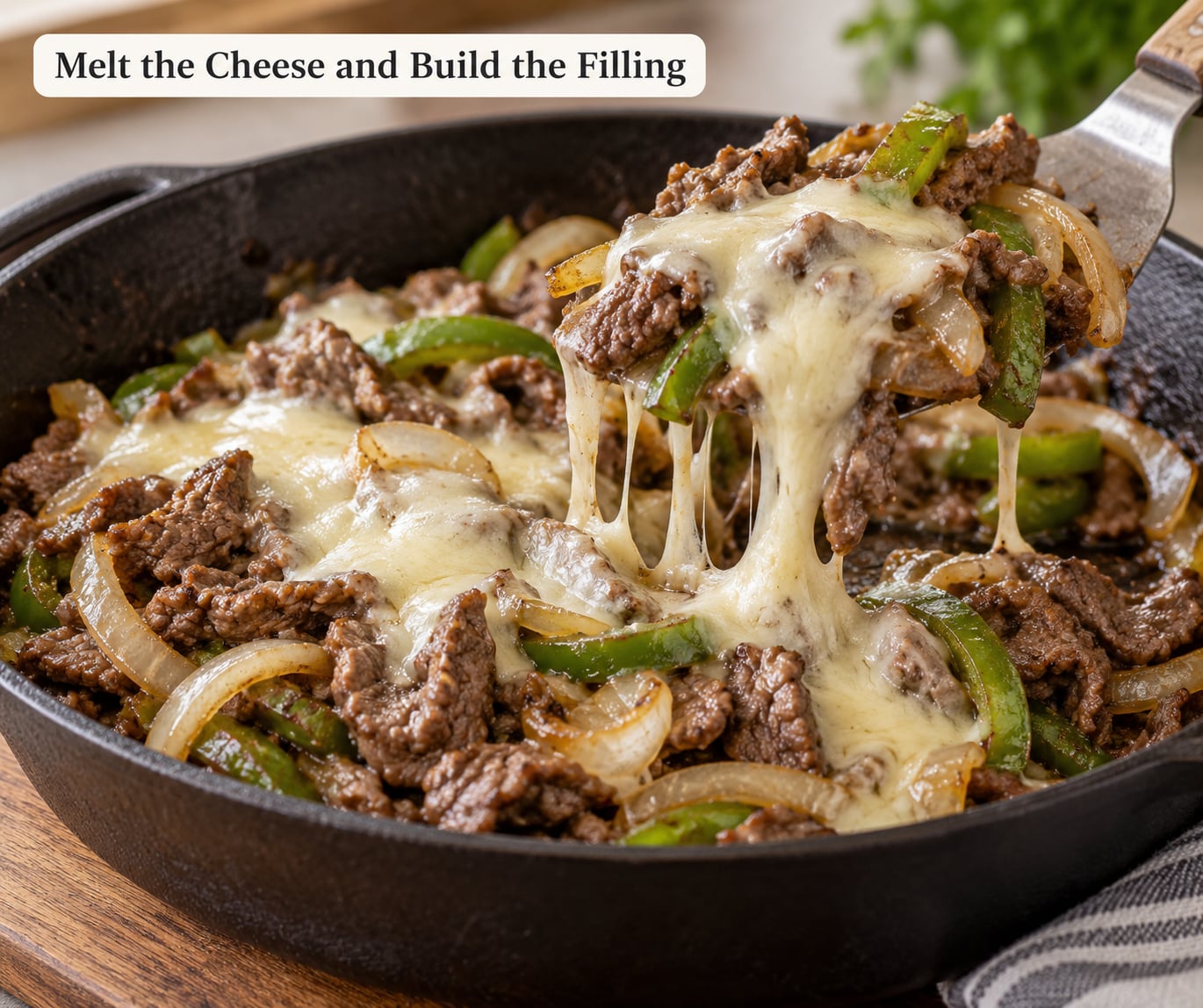
Chop the beef on the cutting board with the flat of the spatula or the edge of a knife. Do not leave it in long strips. Scrape everything back into the skillet with the pan juices, and make sure the heat is off or very low.
Lay the cheese slices on top in a single layer. Let it sit for about 30 seconds to soften, then stir gently until it turns into a glossy sauce clinging to the meat.
How you know it worked: the cheese looks like a thin coating rather than pooled slices, the mixture is loose and shiny, and steam is coming off it. If the cheese is sitting in a puddle on the bottom, the pan is too hot or the cheese is too cold and thick. If it looks stringy and dry, it sat too long.
Season the filling with salt and black pepper here. Seasoning earlier pulls moisture out of the meat before it sears, which is how you get sad gray beef.
5. Toast the Rolls and Assemble
Melt 2 tablespoons of butter with a minced garlic clove in a small pan, and brush it on the cut faces of the rolls. Toast them cut-side down for a minute or two until the edges are crisp and the inside is just warm. A thin layer of mayonnaise on the inside of the roll also works well and helps keep the bread from going soggy.
Scoop the filling into the rolls with the wide spatula. Press it down gently to pack it tight, then close the sandwich and wait about a minute before cutting.
That one-minute rest is not optional if you want a clean cut. The filling is molten, and it needs a minute to set enough that the sandwich holds together when you slice it.
Wrap the finished sandwiches in foil for a couple of minutes if you are making more than two. Foil traps steam and softens the crust back to the texture you want.
Common Mistakes and How to Fix Them
The beef is thick and chewy
The steak was not cold enough or you cut with the grain. Freeze it 20 to 30 minutes next time and look at the fibers before cutting. If the slices are already cut and too thick, they will never be right, so slice thinner going forward.
The meat boiled instead of browning
Crowding is the cause. When the pan is packed, the temperature drops and the beef steams in its own liquid. Cook in two batches, and give the pan two minutes to reheat between them. A second skillet removes the temptation entirely.
The cheese is clumpy and grainy
Two problems usually. Either the heat was too high while it melted, or you used aged provolone instead of mild. Use mild provolone or American, and melt off heat with a lid or over low heat.
The bread went soggy
Juicy filling on untoasted bread will always leak. Toast the rolls first, add the butter or mayo barrier, and pack the filling tightly so it sits in one layer rather than a puddle at the bottom.
The vegetables are watery
You cooked them too hot too fast and they steamed in their own liquid. Medium-high heat with patience gives you color. If they still look wet, let them cook another two minutes until the pan looks nearly dry before adding the beef.
The filling tastes bland
Season in two places. Salt the onions after they brown and the filling after the cheese melts. The butter on the roll adds more than you would expect. Skip steak seasoning blends and Worcestershire, since neither belongs here.
Can I make it ahead?
Cook the beef, onions, and cheese together, then refrigerate the filling in an airtight container for up to three days. Store the rolls separately so they stay fresh. Reheat the filling in a dry skillet over medium heat with a splash of water, and toast fresh rolls at the same time. Microwaving is what turns a cheesesteak into a rubbery disappointment.
Frequently Asked Questions
What cut of meat do I use for a Philly cheesesteak?
Ribeye is the standard because the marbling stays tender through a hard sear. Skirt steak is what many Philadelphia counters use and is more budget-friendly, though you need to trim off the membrane. Sirloin works with a little extra oil, and flank is only worth using if you slice it paper-thin against the grain. Freeze any of them 20 to 30 minutes before slicing.
Do I need to freeze the steak before slicing it thin?
Not strictly, but it is the difference between paper-thin slices and thick chewy ones. Twenty to thirty minutes in the freezer firms the surface enough to cut cleanly without it freezing solid. If you buy the meat already sliced from a butcher counter, ask them to freeze the slices so they are ready to cook straight from the freezer.
What cheese melts best for a cheesesteak?
Mild provolone is the most common choice and melts smoothly with a mild flavor. White American cheese, especially Cooper Sharp, melts even more cleanly and is the local favorite. Cheese whiz gives you the sauciest result. Avoid aged or smoked provolone, which has less moisture and turns grainy and stringy instead of melting into the beef juices.
Should I add green peppers and mushrooms?
Traditional cheesesteaks contain beef, onions, and cheese only. Green pepper is a very common home addition that many people actually prefer, so add it if you like. Mushrooms are more associated with California-style steak sandwiches than with the Philadelphia original. If you want the closest match to a South Street counter, leave both out.
How do I reheat a cheesesteak without soggy bread?
Skip the microwave. Warm the filling on its own in a dry skillet over medium heat with a splash of water, then toast fresh rolls for a minute. If you have a whole sandwich left, wrap it in foil and warm it in a 350°F oven for about ten minutes. The foil keeps the bread soft while the cheese melts without making the crust damp.
How long does it take to make a cheesesteak at home?
About 35 minutes from start to finish, including the 20 to 30 minutes the steak spends in the freezer. The active cooking is only about 15 minutes. If you skip the freezer step the whole thing moves faster but the beef is harder to slice thin, which is where most of the texture comes from.
Conclusion
Start with the beef. Freeze the steak for 20 to 30 minutes, slice it paper-thin against the grain, and cook it in two batches on a properly hot pan so it browns instead of boiling. Everything else follows from there: browned onions, mild cheese melted off the heat, and a toasted roll that gets the filling packed in tight.
Assemble it right after the cheese melts and slice it a minute later. That is the whole method, and once you have done it once it takes about a quarter of an hour on a weeknight.