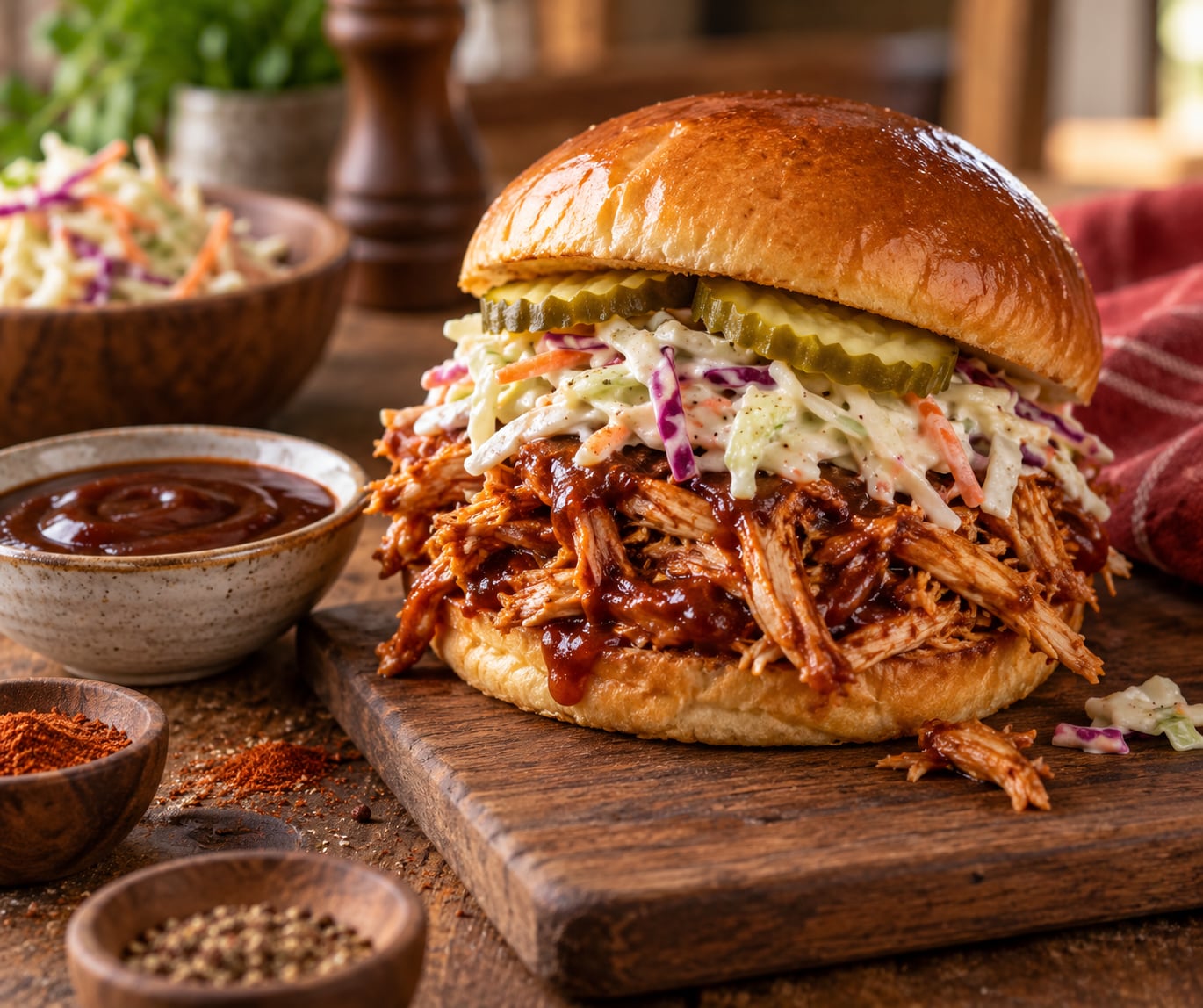
Pulled chicken is cooked chicken shredded into strands with two forks or a stand mixer paddle, then tossed back in its cooking liquid or barbecue sauce so it stays moist. If you want to know how to make pulled chicken for sandwiches, the whole job is cooking the meat gently until the thickest part reaches 165°F, then shredding it while it is still hot.
It is a hands-off recipe. You do about ten minutes of work, then the slow cooker or the oven does the rest, and you end up with a filling that is juicy, tangy and sturdy enough to hold up inside a bun.
Table of Contents
- What You Need
- Step-by-Step
- How to Season the Chicken
- How to Cook the Chicken Until Tender
- How to Shred and Season the Pulled Chicken
- How to Assemble Pulled Chicken Sandwiches
- Common Mistakes
- Frequently Asked Questions
- What kind of chicken is best for pulled chicken sandwiches?
- Why is my crockpot chicken not shredding?
- How long should pulled chicken be baked in the oven?
- How do I keep pulled chicken from drying out on the bun?
- Can I make pulled chicken ahead of time?
What You Need
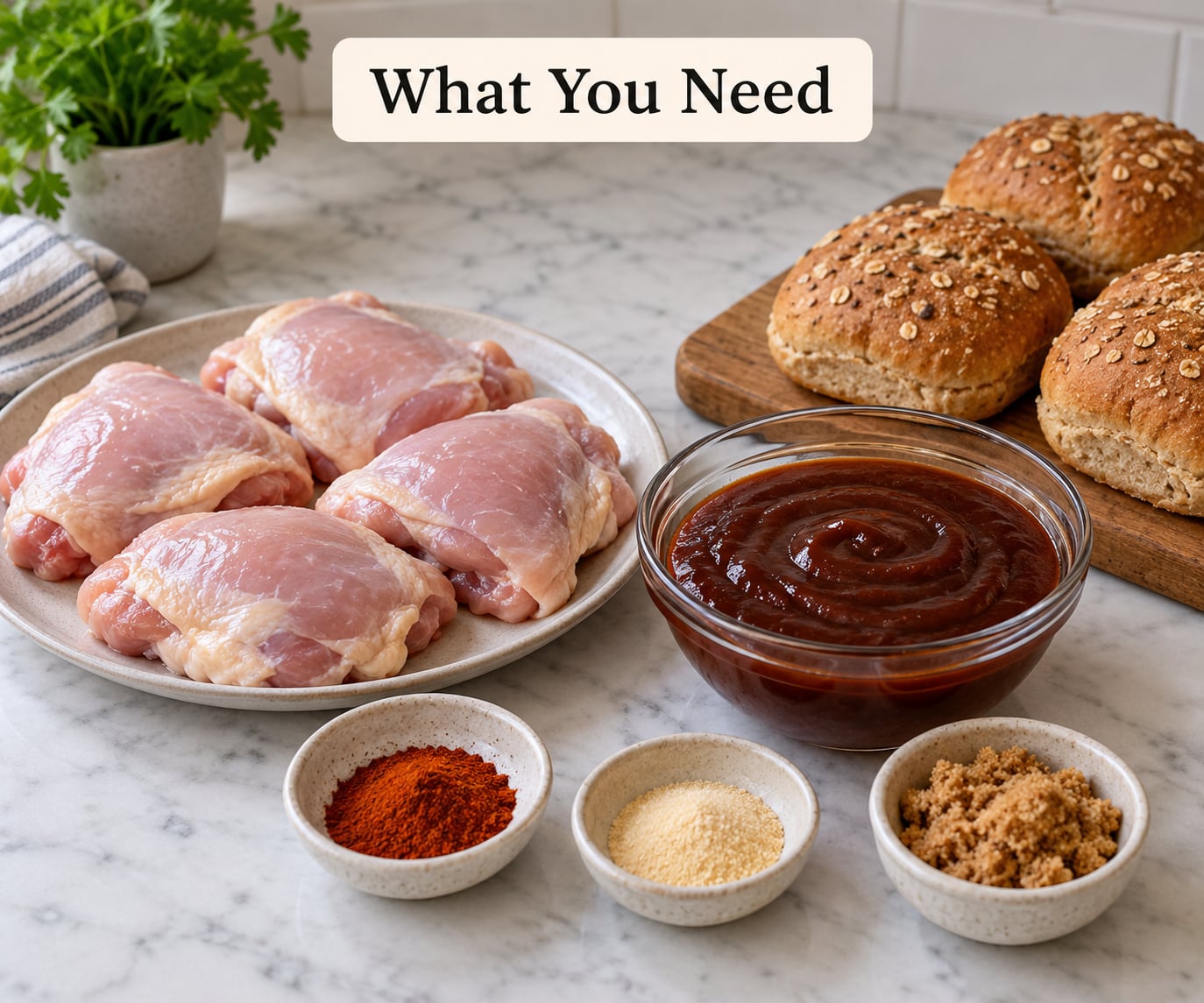
Pick the chicken first, because the cut decides how much liquid you need and how long you cook. Boneless skinless chicken thighs are the forgiving choice and the one I use most; breasts work fine if you watch them closely.
- 2 to 3 pounds boneless skinless chicken thighs, or a mix of thighs and breasts. Thighs stay moist and shred at a lower internal temperature, breasts shred leaner but dry out faster.
- 1 1/2 cups barbecue sauce, split into a half for the pot and a half for tossing after shredding.
- 1 tablespoon smoked paprika, 1 tablespoon garlic powder, 1 teaspoon onion powder, 1 teaspoon black pepper, and 1 teaspoon salt.
- 1 tablespoon brown sugar and 1 tablespoon Worcestershire sauce for the sauce base.
- 1/2 cup chicken broth if you are cooking on the stovetop or in the oven. Thighs in a slow cooker can go in with no added liquid at all.
- Optional: 1 tablespoon apple cider vinegar for tang, a pinch of cayenne for heat, and 1 teaspoon salt for the sauce if your barbecue sauce is already sweet.
- For assembly: brioche buns or potato rolls, coleslaw, dill pickles, sliced cheddar, and a thin layer of mayonnaise or the extra barbecue sauce.
On size: 3 pounds of raw boneless thighs cooks down to roughly 2 pounds of shredded meat, which fills about ten to twelve sandwiches at a normal 3-ounce build. Game day crowds eat smaller, closer to 2 ounces, so the same batch stretches to fifteen. Buy a pound per person only if sandwiches are the entire meal.
Step-by-Step
How to Season the Chicken
Mix the paprika, garlic powder, onion powder, black pepper and salt in a small bowl, then rub it over every piece of chicken on all sides. Seasoning the surface instead of the pot is what stops slow cooker chicken from tasting flat, because the sauce is mostly touching one flat face.
Pour half the barbecue sauce in the bottom of the cooker or pan and set the chicken on top, seasoned side up. Do that instead of pouring sauce over the top, because a thick layer of sauce over the meat steams instead of reducing and ends up sweet rather than tangy.
For a smokier result, add 1 teaspoon liquid smoke to the sauce you save for shredding. It is not smoked paprika’s job and no amount of paprika will get you there.
How to Cook the Chicken Until Tender
Cook until the thickest piece reaches 165°F on an instant-read thermometer and the meat gives easily to a fork. Shreddability matters more than the number: chicken that hits 165°F still needs another 30 to 60 minutes of gentle heat before it pulls apart cleanly.
Check with a thermometer, not by cutting into the meat, which lets out juice and slows the cook. Probe the thickest thigh, away from the bone, and check again after you turn the pieces.
Here is how the three methods compare. All three work, and they differ mostly in hands-on time and how much control you have over browning.
| Method | Heat | Time | Result |
|---|---|---|---|
| Slow cooker | Low | 4 to 5 hours for thighs, 3 to 4 for breasts | Most tender and hands-off, least browning |
| Stovetop simmer | Low, barely bubbling, covered | 60 to 90 minutes | Sauce reduces in the pot, deepest flavor |
| Oven | 325°F, covered then uncovered | 2 1/2 to 3 hours covered, then 15 minutes uncovered | Crisps the edges, easiest for a big tray |
| Pressure cooker | High pressure | 8 to 12 minutes, then 10 minutes rest | Fastest, slightly firmer texture |
On the stovetop, put the seasoned chicken in a heavy pot with the broth, bring it to a boil, then drop the heat until it just bubbles and cover it. Stir and scrape the bottom every 20 minutes so nothing catches, and keep the heat low enough that you see a bubble now and then rather than a rolling simmer.
In the oven, cover the dish and bake at 325°F until the chicken is fork-tender, then pull off the foil for the last 15 minutes so the exposed edges dry and caramelize. That uncovered stretch is what separates oven pulled chicken from a slow cooker version that stays uniformly glossy.
A pressure cooker gets the same seasoned chicken to shreddable in under half an hour, but the meat comes out tighter and shreds into shorter strands. If you go that route, sauce it heavily after shredding to make up the difference.
How to Shred and Season the Pulled Chicken
Rest the chicken for five to ten minutes, then shred it while it is still hot. Two forks, one in each hand, pulling in opposite directions, works for any size batch and gives the longest strands, which is what you want on a bun. A stand mixer with the paddle attachment on low is faster for three pounds or more, and a potato masher is a poor substitute since it tears the meat into paste.
Shred straight in the pot or the pan if you are using the stovetop method. The reserved liquid is sitting under the chicken, and shredding into it means every strand picks it back up.
Toss the shredded meat with the reserved barbecue sauce and the pan juices until every piece looks damp. This step is the answer to dry pulled chicken, and it is why cooking chicken without reserving its liquid is the most common mistake in the whole process. If the meat looks dry before saucing, add a splash of broth or water rather than more sauce.
How to Assemble Pulled Chicken Sandwiches
Toast the buns briefly in the pan juices or under the broiler. A warmed bun is the difference between a good sandwich and a soggy one thirty seconds into eating it, and it holds together far better with a thin swipe of mayonnaise on each cut face.
Build with about 3 ounces of chicken, then a small scoop of well-drained coleslaw, two or three dill pickle chips, and a slice of cheddar if you want the salt-and-fat balance that heavy sandwich meat needs. A vinegar-forward slaw cuts the sweetness of the sauce, while a creamy mayo slaw makes the whole thing heavier, so pick one rather than both.
Keep extra sauce and slaw on the side for people who want them. For sliders, use small potato rolls and about 1 ounce of chicken each, which is the build most hosts use when feeding a group.
Common Mistakes
The chicken is dry. Nearly every bad pulled chicken sandwich starts here. The fix is cooking at low heat with the sauce in the pot, not over the top, and tossing the shredded meat with sauce and pan juices immediately after shredding. Shredding in the pot rather than on a dry cutting board makes the same fix automatic.
The meat is tough and stringy. Almost always overcooked, or cooked too hot. Slow cookers set to high reduce the liquid, and breasts left for eight hours turn to rubber. Use the low setting, check at three and a half hours, and pull the chicken out the moment a fork slides in without resistance.
It will not shred. Four causes cover nearly every case: the chicken was undercooked, the cut was too large and intact, the meat sat out and tightened as it cooled, or there was no liquid and the outside dried before the inside gave way. Cover it, add a splash of broth, give it another 30 minutes, and shred again while it is hot. Shredding cold chicken is the version people blame on the cut, but temperature does most of the work.
It tastes bland. Season the meat itself before it goes in, not just the sauce, and let it sit on the rub for 10 to 15 minutes. A pinch of salt and a splash of vinegar in the sauce after shredding fixes a flat batch that has already been cooked.
The sandwich falls apart. This is a bread problem, not a chicken problem. Warm the buns, drain the slaw properly, and keep the build modest. Heavy loads of chicken and wet toppings are why the bottom bun gives out two bites in.
Watery slaw. Drain the cabbage, dress it at the last minute, and use the vinegar version if the sandwich is already saucy. Creamy slaws release water within an hour, so make it close to serving.
For storage, cool the shredded chicken fast and refrigerate it in a sealed container for up to four days, keeping the sauce on the side so it does not soak the bread. It freezes flat in a freezer bag for two to three months and reheats best in a skillet with a splash of broth over medium heat for about five minutes, though nothing revives it quite like the first batch.
Frequently Asked Questions
What kind of chicken is best for pulled chicken sandwiches?
Boneless skinless chicken thighs are the best cut because they stay moist through a long, gentle cook and shred easily at a lower temperature. Breasts are leaner and shred fine, but they dry out and tighten if they go past fork-tender. A mixed batch gives you both textures and works well for a crowd. Cook everything to 165°F before shredding.
Why is my crockpot chicken not shredding?
Four things usually cause it: the chicken was underdone, the pieces were too large, the meat went cold before you shred it, or there was no liquid so the outside dried before the inside gave way. Add a splash of broth, cover, and give it another 30 minutes on low. Shred with two forks while the chicken is hot, not chilled.
How long should pulled chicken be baked in the oven?
Bake at 325°F for 2 1/2 to 3 hours with the dish covered, then remove the foil for 15 minutes so the edges caramelize. Thighs take the longer end and breasts the shorter end. The chicken is ready when it reaches 165°F in the thickest part and slides off a fork without resistance, which usually arrives before the timer does.
How do I keep pulled chicken from drying out on the bun?
Cook at low heat rather than a hard simmer, and shred the meat back into its own cooking liquid so the strands soak it up. Toss the shredded chicken with sauce and pan juices right after shredding, and keep extra sauce on the side for sandwiches that sit. Resting the meat five minutes before shredding also helps it hold moisture.
Can I make pulled chicken ahead of time?
Yes, and it is the better way to cook for a party. Shred, sauce, and refrigerate the chicken up to four days, storing the sauce separately so the bread stays dry. You can also freeze it flat for two to three months. Warm it in a skillet with a splash of broth over medium heat for about five minutes before serving.
Start with thighs, sauce underneath rather than on top, and shred while the chicken is hot. Everything after that is a matter of taste, and most of it is decided at the bun. If you want to know how to make pulled chicken for sandwiches one more way, the oven at 325°F gives you the same result with better browning and one less appliance on the counter.