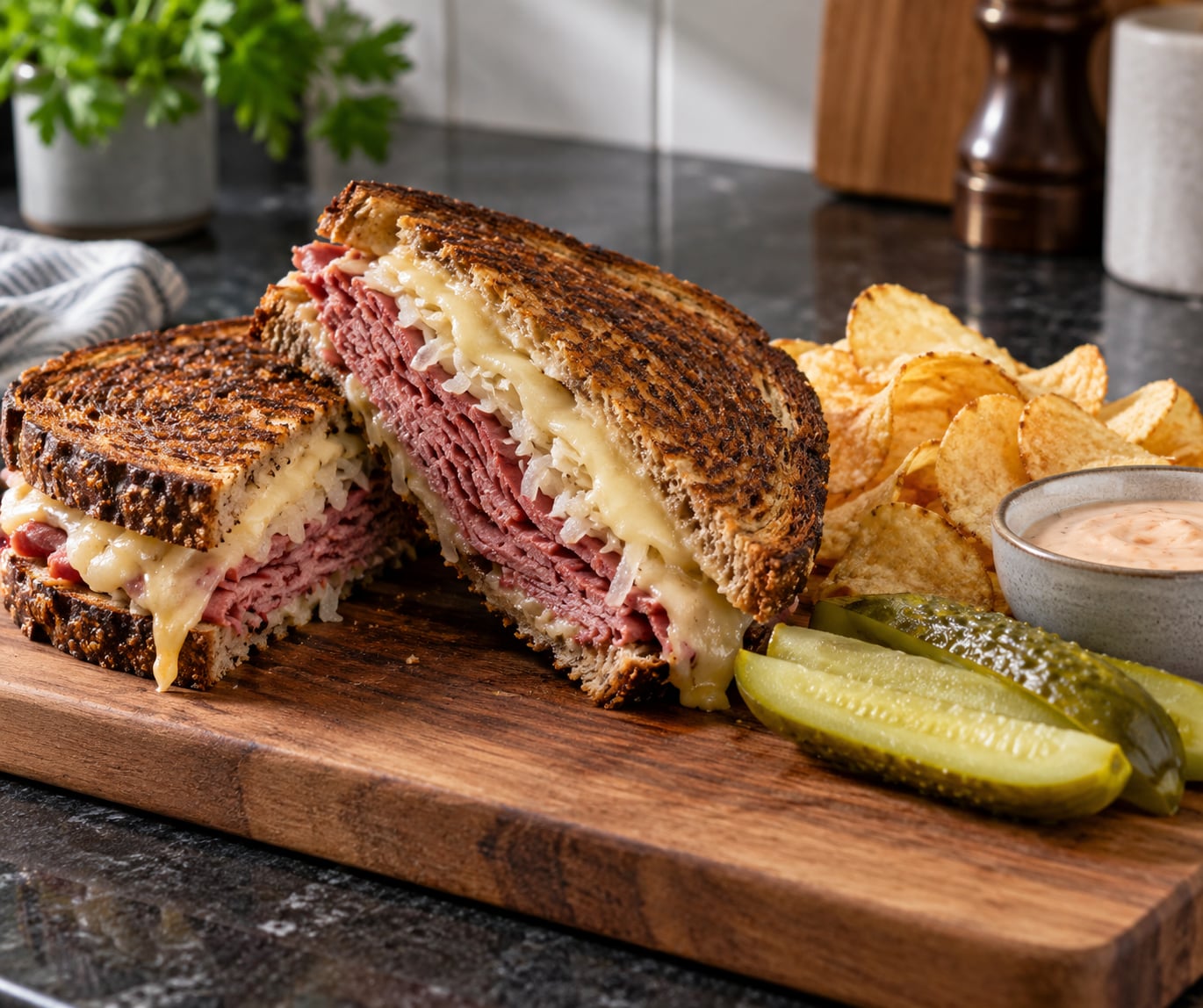
A Reuben sandwich is a grilled stack of corned beef, Swiss cheese, sauerkraut and Russian or Thousand Island dressing between two slices of rye bread, cooked in a buttered skillet until the bread is crisp and the cheese has melted. Knowing how to make a Reuben sandwich from scratch takes about 25 minutes and is far easier than most recipes make it sound.
The whole sandwich comes down to moisture control. Wet sauerkraut, cold meat straight from the fridge and a hot pan are the three things that turn a good Reuben into a soggy one, and all three are fixable before you ever turn on the heat.
Table of Contents
- What You Need
- Step-by-Step
- 1. Prepare the Ingredients
- 2. Season and Brown the Corned Beef
- 3. Toast the Rye Bread
- 4. Layer the Sandwich
- 5. Melt the Cheese and Finish Cooking
- 6. Rest, Cut, and Serve
- Common Mistakes
- Frequently Asked Questions
- Do you grill a Reuben sandwich?
- What kind of rye bread is best for a Reuben?
- Can I make a Reuben without sauerkraut?
- Why are my toasted sandwiches soggy?
- Should a Reuben use pastrami or corned beef?
- How long does it take to make a Reuben?
- Conclusion
What You Need
For one generous sandwich you want about 3 to 4 ounces of sliced corned beef, two slices of Swiss cheese, a quarter cup of sauerkraut, two tablespoons of Russian dressing, two slices of rye bread and a tablespoon of butter. Everything else is optional garnish. This is enough for a proper deli-style build, not a thin one.
- Rye bread, 2 slices. Jewish rye with a seeded crust is the classic choice. Marble rye works if you want a slightly milder flavor, and caraway-seeded rye is worth hunting down because the seeds sharpen up against the sauerkraut.
- Corned beef, 3 to 4 ounces, sliced thin. Packaged cooked corned beef is fine. Leftover corned beef from a boiled dinner is the best-case scenario.
- Sauerkraut, 1/4 cup, well drained. Jarred, refrigerated, or homemade, all work. Buy the kind sold cold in the jar rather than shelf-stable if you can.
- Swiss cheese, 2 to 3 slices. One slice under the filling and one on top gives you structural glue when you flip it.
- Russian dressing, 2 tablespoons. Thousand Island is the sweeter cousin and perfectly acceptable. Dijon mustard mixed with mayonnaise is the move if you find Thousand Island too sweet.
- Butter, 1 to 2 tablespoons, softened. For the outside faces of the bread.
- Equipment: a nonstick or cast iron skillet, a spatula wide enough to support the sandwich, a knife, and optionally a small saucepan or a lid for the skillet.
Substitutions are easy here. Turkey or pastrami stand in for corned beef, coleslaw replaces the sauerkraut for a Rachel, and gruyere or provolone work in place of Swiss. Just keep the balance the same: salty meat, sour crunchy vegetable, creamy dressing, melting cheese.
Step-by-Step
1. Prepare the Ingredients
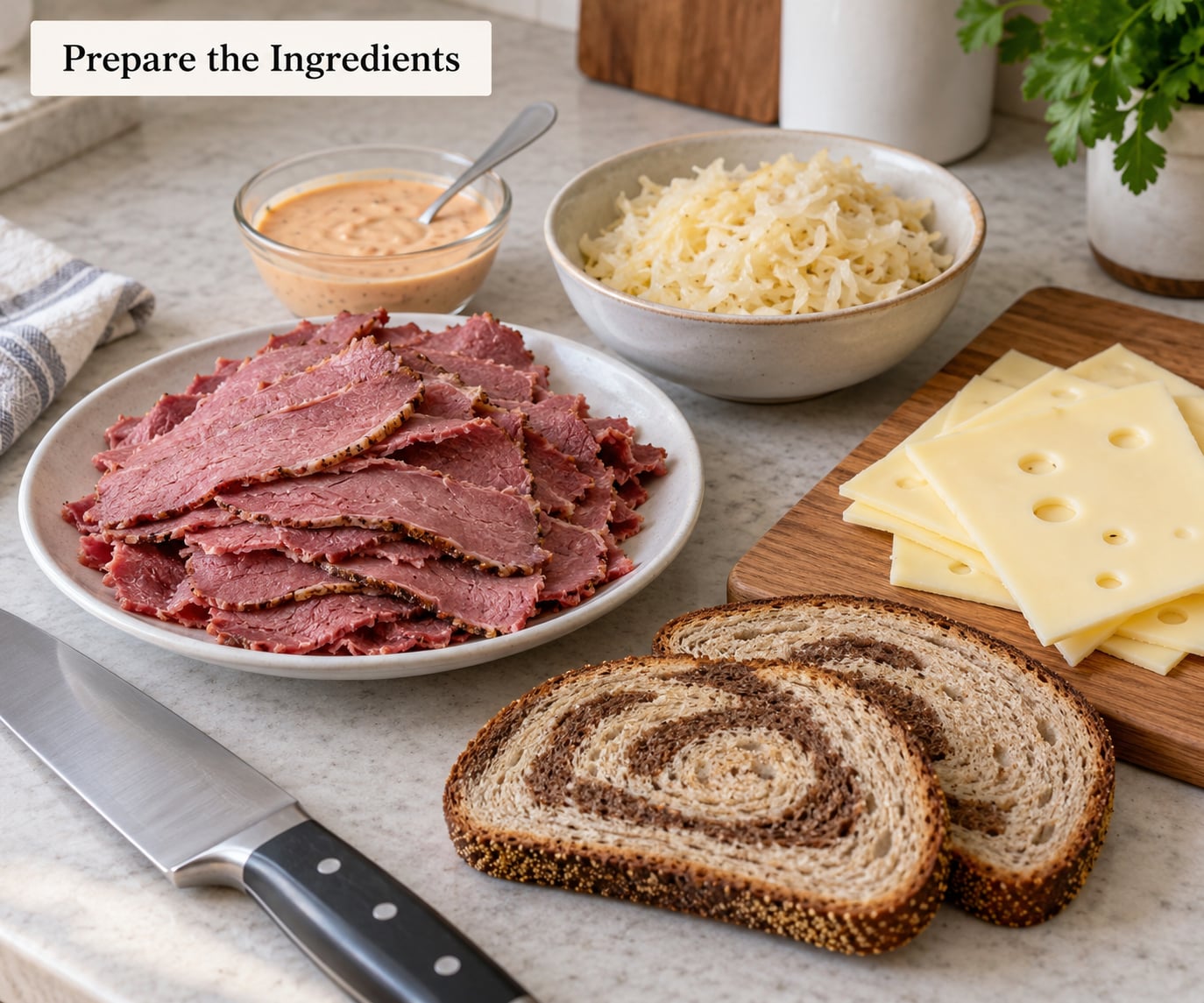
Put a skillet on medium-low heat and let it warm while you prep. This first stage decides whether the sandwich holds together later.
Drain the sauerkraut in a colander and squeeze it hard in handfuls until it stops dripping. Really press it. Squeezed-dry kraut is the single biggest difference between a crisp Reuben and a damp one.
Bring the corned beef to an even starting temperature. If it came straight from the fridge, either let it sit while you prep everything else, or warm it in a splash of its cooking liquid in a small pan. Cold meat means the cheese melts before the center of the sandwich gets hot.
Slice the cheese, chop the kraut, and measure the dressing so every layer is ready before the pan gets hot. That is the whole prep list.
2. Season and Brown the Corned Beef
Heat a tablespoon of butter in the skillet over medium heat and lay the sliced corned beef in a single layer. Let it sit undisturbed for about a minute so the edges catch and crisp slightly, then toss and cook another minute.
Season with a light pinch of black pepper and, if you like, a dash of caraway seed or Old Bay. Keep the salt restrained, because the meat and the kraut are already salty.
If you are using packaged pre-cooked corned beef, this step is just about building a little browned flavor on the surface. If you started with a raw or cured-from-scratch brisket, it needs to reach 145°F internal with a three-minute rest before it goes anywhere near the bread.
3. Toast the Rye Bread
Butter one outside face of each slice. Set the bread in the same skillet and toast for 60 to 90 seconds per side, until lightly golden and dry to the touch.
Pull the toast out and spread the dressing on the inner faces while they are still hot enough to steam. The dressing goes on the toasted face, not the raw one. That is the anti-soggy trick, and it is the one step most recipes skip without explaining why. A toasted surface has already lost most of its moisture, so it absorbs dressing instead of dissolving into it.
4. Layer the Sandwich
Build on one dressed slice, working from the bottom up. Swiss first, then the warm corned beef spread in an even layer that reaches the crust, then the squeezed-dry kraut, then a final slice of Swiss on top. Cap with the second slice and press down once with your palm.
Even distribution is what keeps a Reuben from collapsing. Piling the meat in the middle leaves one bare corner that folds and squeezes the filling out on the flip.
5. Melt the Cheese and Finish Cooking
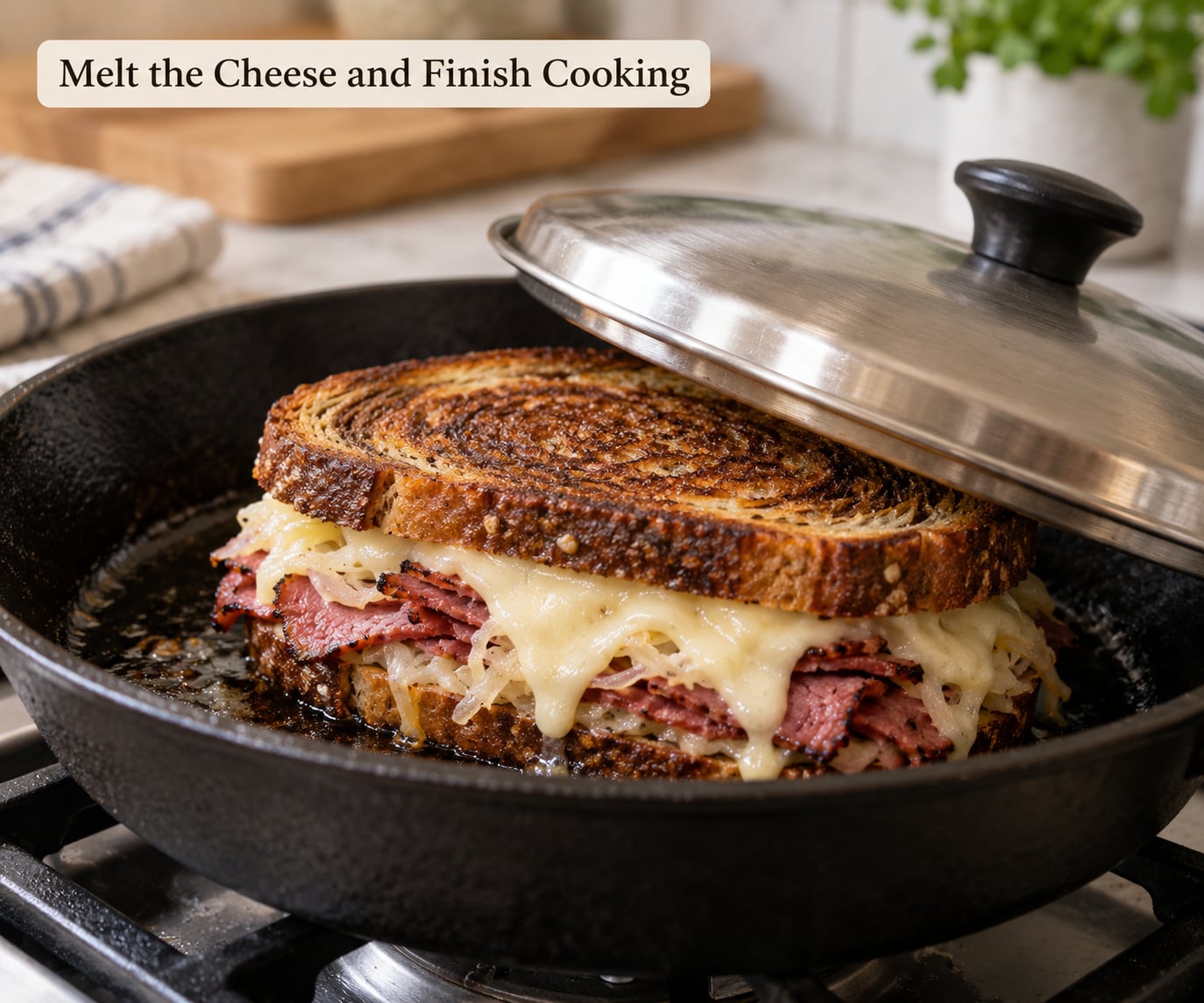
Lower the heat to medium-low and set the sandwich in the skillet. Cook for 3 minutes on the first side. Press gently with a spatula every 30 seconds so the layers stay tight.
Slide a loose lid over the skillet and cook for another 2 to 3 minutes. The lid matters more than the heat: it traps steam so the filling reheats through and the cheese melts evenly before the bread has a chance to burn.
You are looking for three cues at once: the outside bread golden brown, the Swiss fully melted and glossy at the seams, and the center of the sandwich piping hot. For food safety, any corned beef you did not cook in this skillet should reach 165°F when reheating leftovers, and freshly cooked whole cuts should reach 145°F with a rest.
6. Rest, Cut, and Serve
Lift the sandwich onto a board and let it rest for a minute. The filling settles slightly, and the cut comes out clean instead of dumping half the kraut onto the counter.
Slice it on the diagonal with a serrated knife. Sour kosher dill pickles on the side are traditional, and kettle chips handle the crunch. A cold cream soda cuts the salt better than most people expect.
If you made extra corned beef, an open-faced Reuben on a slice of rye with dressing and cheese under a hot broiler is a fast lunch. Pressed leftovers in the skillet with a little more butter reheats well for two or three days in the fridge.
Common Mistakes
Nearly every bad Reuben traces back to one of six things.
- Soggy bread. The kraut was wet or the dressing went on the untoasted face. Squeeze the kraut dry and spread dressing on the toasted side.
- Cold center. Fillings went from fridge to pan. Warm the corned beef first and give the sandwich an extra minute under a lid.
- Cheese that will not melt. Too much filling, or heat too high. Cut back the kraut, use medium-low, and lid the pan.
- Dry corned beef. It cooked too long on the first pass. Give it 60 to 90 seconds a side, no more.
- Filling falls out. An uneven layer or a hard flip. Press before you turn, and use a wide spatula.
- Bread browns before the cheese melts. The skillet was too hot. Medium-low plus a lid solves it in one move.
Frequently Asked Questions
Do you grill a Reuben sandwich?
Yes, and a skillet is the closest thing to a griddle at home. Butter the outside of the bread, cook the sandwich over medium-low heat for about 3 minutes on the first side, then cover with a lid for 2 to 3 minutes more. A panini press works too, though a lid gives you better control over the melted cheese.
What kind of rye bread is best for a Reuben?
Jewish rye with a caraway-seeded crust is the traditional pick, because the sturdy crumb holds up to a wet filling and the seeds add a flavor that plays well with sauerkraut. Marble rye is milder and softer, which some people prefer. Pumpernickel is denser and more sour, and it works if you like the bread to stand up to the meat.
Can I make a Reuben without sauerkraut?
You can, and it is still a good sandwich, but the sauerkraut is doing real work. Its acidity is what balances the salt of the corned beef and the fat of the cheese and dressing. Coleslaw makes a reasonable stand-in if you want crunch without the sourness. Pickles work in a pinch, and drain them well.
Why are my toasted sandwiches soggy?
Three causes account for nearly all of it. The sauerkraut was not squeezed dry, the dressing went onto the untoasted face of the bread, or the sandwich was stacked too thickly and steamed in its own moisture. Toast the bread first, press the kraut hard in a colander, and keep the filling layer even and slightly thinner than you think it needs to be.
Should a Reuben use pastrami or corned beef?
Corned beef is the classic choice, and pastrami is a legitimate swap that many regulars prefer. Corned beef is more seasoned and typically more uniform after curing, while pastrami is smokier and leaner with a pronounced crust. Pastrami also has a firmer texture that stands up better to a heavy cheese layer.
How long does it take to make a Reuben?
About 25 minutes for a sandwich made with store-bought corned beef and jarred sauerkraut, most of which is prep and stovetop time. If you are fermenting your own sauerkraut or curing your own brisket, that work happens days ahead, but the sandwich itself still assembles and cooks in the same 25 minutes.
Conclusion
Start by preparing and drying your filling. Squeeze the sauerkraut until it stops dripping, warm the corned beef, slice the cheese, and measure the dressing. Then butter and toast the rye, layer the filling evenly, and cook over medium-low heat under a lid until the bread is golden and the Swiss has melted all the way to the edges.