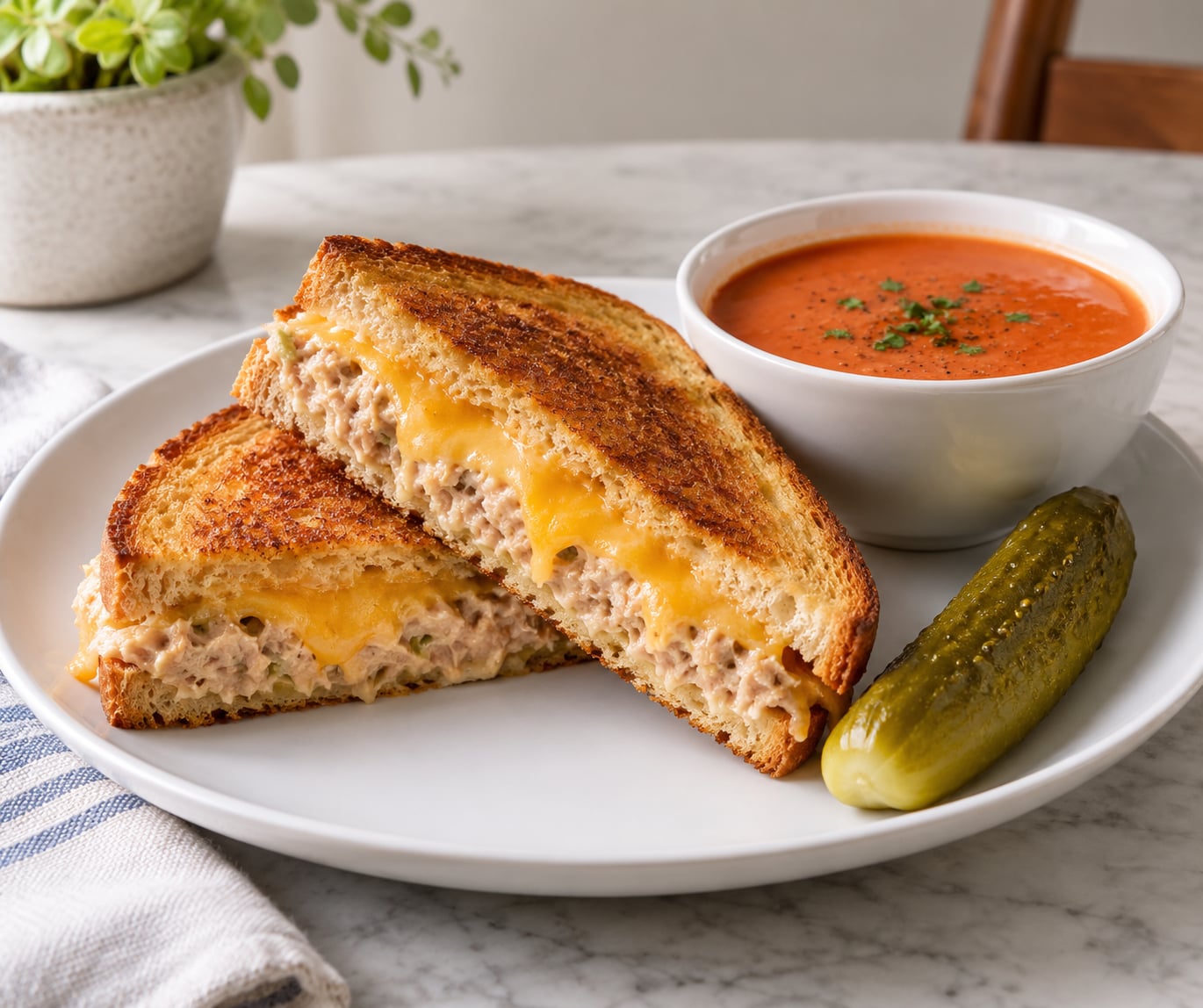
To make tuna melt sandwiches, drain canned tuna well, mix it with mayonnaise and a few sharp seasonings, pile it onto sturdy bread with cheese, and cook it in a buttered skillet over medium-low heat until the bread is golden and the cheese is fully melted. Fifteen minutes start to finish, four sandwiches, and no cooking skill beyond stirring a bowl.
This is comfort food that depends on two things people usually get wrong: a thoroughly drained tuna and a filling bound just loosely enough to spread. Get those right and you get a sandwich that is creamy in the middle and crisp on the outside, not a stack of wet bread.
Table of Contents
- What You Need
- How to Scale the Recipe
- Which Cheese Melts Best
- Tuna in Water or Oil
- Step-by-Step
- Step 1: Drain and Season the Tuna
- Step 2: Make the Creamy Tuna Filling
- Step 3: Toast the Bread for a Crispy Tuna Melt Sandwich
- Step 4: Assemble and Melt the Sandwich
- Step 5: Rest, Slice, and Serve
- Skillet, Oven, Broiler, Panini Press or Air Fryer
- Common Mistakes
- Frequently Asked Questions
- What kind of cheese is best for a tuna melt?
- Can I make a tuna melt without mayonnaise?
- Should I use canned or fresh tuna for a tuna melt?
- How do I keep tuna melt sandwiches from getting soggy?
- Can I make tuna melts in the oven instead of a skillet?
- How long do tuna melt sandwiches keep in the refrigerator?
What You Need
For four tuna melt sandwiches you want two 5-ounce cans of tuna packed in water, 1/4 cup mayonnaise, 2 tablespoons diced celery, 2 tablespoons diced red onion or pickle relish, 1 teaspoon Dijon mustard, 8 slices sturdy bread, 4 slices cheese, and 2 to 3 tablespoons softened butter. Everything except the bread is a pantry staple.
- 2 cans (5 oz each) tuna in water, drained and flaked
- 1/4 cup mayonnaise
- 2 tbsp diced celery
- 2 tbsp diced red onion, or pickle relish, or both
- 1 tsp Dijon mustard
- 8 slices sturdy bread (sourdough, rye, whole wheat or thick white)
- 4 slices cheese, or about 3/4 cup shredded
- 2 to 3 tbsp softened butter
- Black pepper, and salt in small amounts
The equipment list is short: a skillet or griddle, a bowl and a fork or the back of a spoon to flake, a spatula you would trust to flip a wet sandwich, and a knife and cutting board for the celery and onion. A sheet pan and a broiler or an oven at 450 F works just as well if you cook more than one at a time.
How to Scale the Recipe
| Sandwiches | Tuna | Mayonnaise | Celery | Onion or Relish | Dijon | Bread | Cheese |
|---|---|---|---|---|---|---|---|
| 2 | 1 can (5 oz) | 2 tbsp | 1 tbsp | 1 tbsp | 1/2 tsp | 4 slices | 2 slices |
| 4 | 2 cans (5 oz) | 1/4 cup | 2 tbsp | 2 tbsp | 1 tsp | 8 slices | 4 slices |
| 6 | 3 cans (5 oz) | 3/8 cup | 3 tbsp | 3 tbsp | 1 1/2 tsp | 12 slices | 6 slices |
Which Cheese Melts Best
Yes, cheese is the whole point of a melt. Sharp cheddar is the classic, and provolone is the one people in our comments keep asking about because it gets stretchy rather than rubbery.
| Cheese | Melt quality | Flavor | Best bread pairing |
|---|---|---|---|
| Sharp cheddar | Melts well, holds shape | Sharp, tangy | Rye, whole wheat |
| Provolone | Excellent, very stretchy | Mild, milky | Sourdough |
| Monterey Jack or Colby | Smooth, melts evenly | Buttery, mild | Thick white, sourdough |
| Swiss | Good, silky | Slightly nutty, holes | Rye, pumpernickel |
| Mozzarella | Very good, stringy | Very mild | Sourdough |
| Shredded cheddar jack blend | Good, fastest | Balanced | Anything |
A note on shredded cheese bought in a bag: those blends contain anti-caking starches, which is why they never melt into a smooth sheet and sometimes clump. Block cheese you shred yourself melts noticeably more evenly.
Tuna in Water or Oil
Go with tuna packed in water for a melt. Water-packed albacore has a cleaner, milder flavor, and it does not add grease to an already rich sandwich. Oil-packed tuna works too, but drain it and blot it with a paper towel, or the filling turns slick and the bottom bread steams instead of toasts.
Step-by-Step
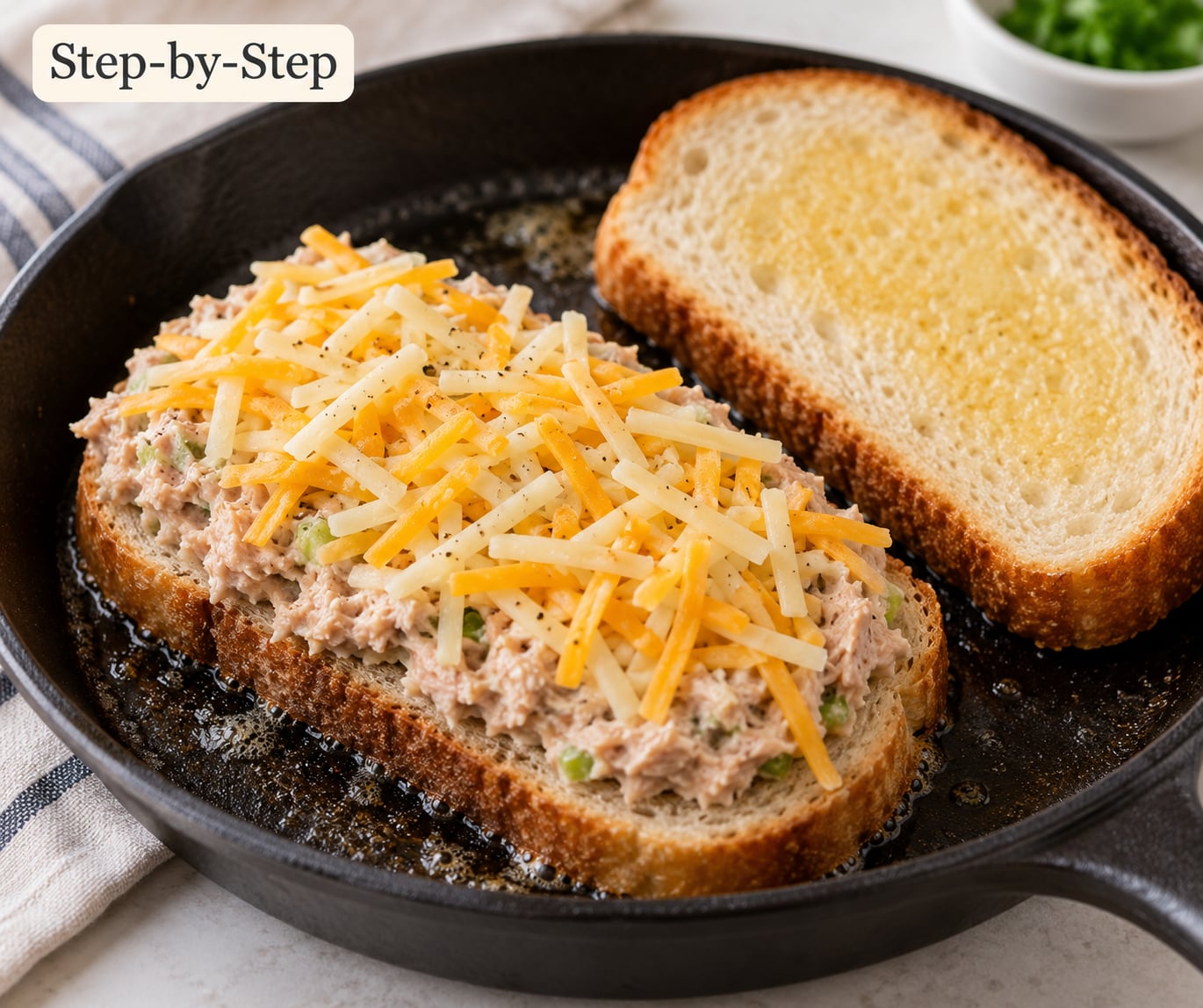
Step 1: Drain and Season the Tuna
Open both cans, press the lid down on the rim to seal it, and flip the can over the sink for a full minute. That inversion pulls the liquid out with the pressure of the lid, and it gets you far drier tuna than tilting the open can into a colander.
Drop the tuna into a bowl and flake it with a fork until there are no big solid blocks left. Break them up, because a chunk the size of a thumbnail survives the skillet as a dry lump inside a wet sandwich.
Taste one small flake before seasoning. Canned tuna carries a fair amount of salt already, so start with black pepper and a small pinch of salt, then taste again. Many recipes skip this and that is why tuna melts come out oversalted.
Step 2: Make the Creamy Tuna Filling
Add the mayonnaise to the flaked tuna and stir just until it holds together. The right ratio is about 1 tablespoon of mayo per can of tuna. More than that and the filling moves like a puddle; less than that and it crumbles.
Fold in the diced celery, the red onion or pickle relish, and the Dijon. The celery keeps the filling from tasting like paste, the pickle or onion cuts the fat of the mayo, and the mustard adds a sharpness that reads as a second flavor. A squeeze of lemon or a few chopped dill fronds also work.
What you want at the end is a consistency people usually call squishy but not sloppy. It holds a spoon shape and does not run off the spoon.
Step 3: Toast the Bread for a Crispy Tuna Melt Sandwich
Butter the outside of two slices of bread with softened butter, not melted. Softened butter spreads evenly and browns; melted butter runs off the sides and leaves patches bare.
Warm the skillet over medium-low heat and lay the slices buttered side down for about a minute, until the underside is pale gold and smells toasty. This is optional for a grilled-cheese style melt, and it is the single change that turns a soggy sandwich into a crisp one, because it builds a base that moisture cannot penetrate quickly.
Pull the bread off, buttered side up. Keep the heat on medium-low. Any hotter and the bread browns long before the cheese softens.
Step 4: Assemble and Melt the Sandwich
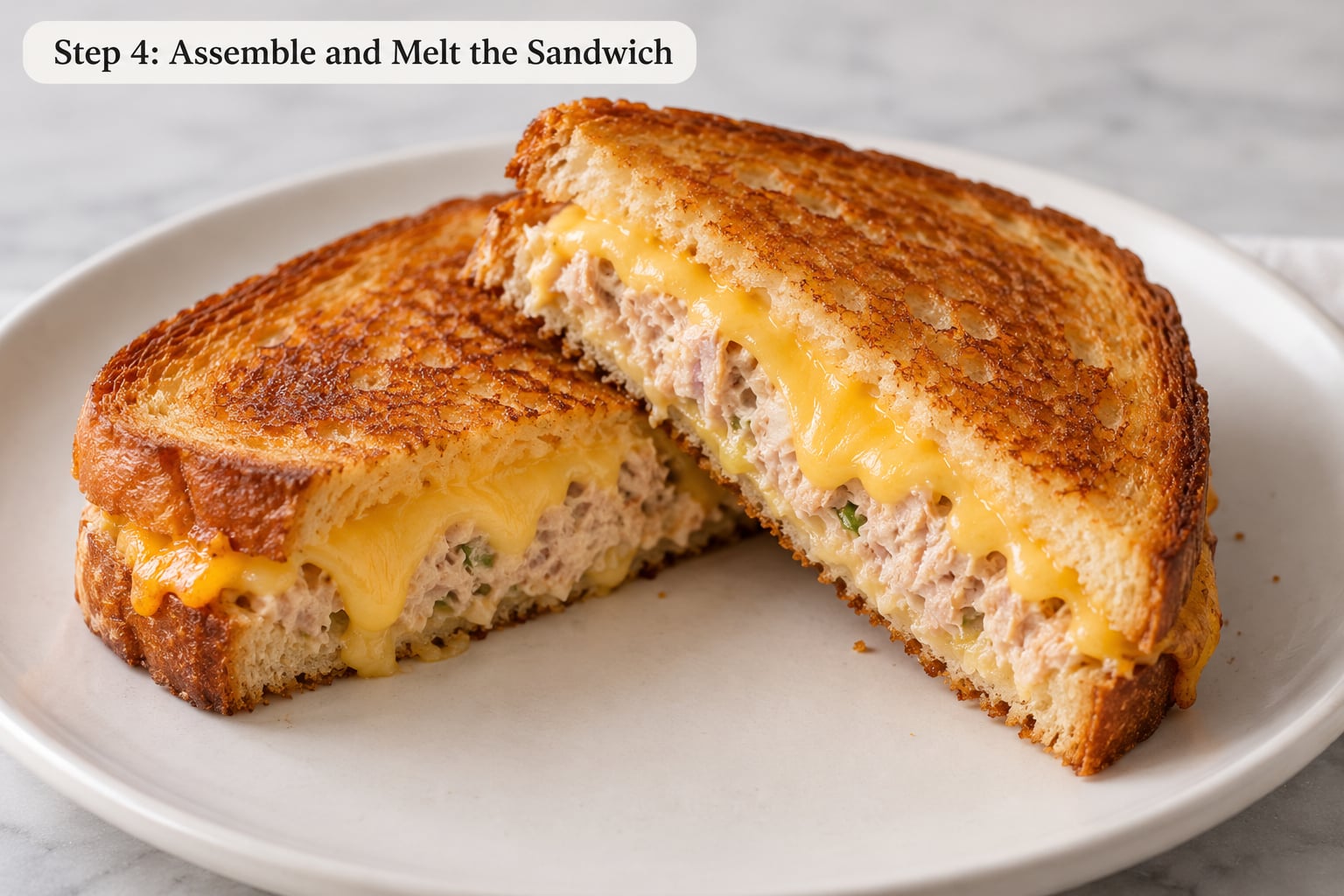
Spread a thin layer of mayonnaise on the toasted bread. That tiny layer acts as a moisture barrier between the wet filling and the slice above it, which is the trick for keeping a packed lunch dry by noon.
Spoon on the tuna mixture and spread it about a half inch thick, leaving a bare inch at the edges. Overfill is the second reason sandwiches leak out when you flip them. Top with the cheese, then add the second buttered slice buttered side up.
Cook at medium-low for 3 to 4 minutes, until the cheese is fully melted and the underside is golden brown. Flip carefully with a wide spatula and give it another 2 to 3 minutes. The cheese should run slowly when you press the top, not just soften at the corners.
Step 5: Rest, Slice, and Serve
Slide it onto a board and let it sit for two minutes. The filling sets slightly in the rest, so a diagonal cut stays clean instead of pushing tuna out of the seam.
Serve with tomato soup, a bowl of simple greens with a lemon dressing, potato chips, or a dill pickle on the side. Cut in halves and skewer for a party, or quarter it for smaller hands.
Skillet, Oven, Broiler, Panini Press or Air Fryer
Both skillet and oven give the same result with different effort, so pick by how many you are making.
| Method | Temperature and time | Result | Best for |
|---|---|---|---|
| Skillet | Medium-low, 3 to 4 min per side | Crisp, evenly browned, best crust | One or two sandwiches |
| Oven | 400 F, 10 to 12 min, flipped once | Even browning, softer crust | A batch |
| Broiler | 6 inches from the heat, 1 to 3 min, watch closely | Fastest melt, top browns first | Late nights and impatient cooks |
| Panini press | Medium, 4 to 5 min | Flattened and very crisp | Tuna melt toastie style |
| Air fryer | 350 F, 8 to 10 min | Crisp with little oil | A batch without a pan |
Common Mistakes
Nearly every disappointing tuna melt traces back to wet tuna, wet filling, or too much heat. Each one has a straight fix.
| Problem | Cause | Fix |
|---|---|---|
| Soggy, wet middle | Tuna not drained, or steam trapped under the cheese | Drain the can fully, bind lightly, and rest the sandwich two minutes before cutting |
| Filling leaks onto the pan | Too much mayo or filling spread edge to edge | One tablespoon of mayo per can, and leave a bare inch at each edge |
| Bread burns before the cheese melts | Pan too hot | Medium-low, and give it the full 3 to 4 minutes |
| Tastes too salty | Canned tuna is already salted | Skip added salt, use pepper, lemon and pickle relish instead |
| Filling falls out when flipping | Overfilled or loose mixture | Spread to the crust edges minus an inch, press the top slice down first |
| Cheese clumps and stays rubbery | Bagged shredded cheese with starches | Shred a block yourself, and use an even layer |
| Tuna tastes fishy | Old or poorly stored can | Check the pull date and smell the can; buy small cans more often |
Two more habits worth building. Toast the bread before you add the filling, and give the finished sandwich a two minute rest. Those two moves fix more tuna melts than any ingredient swap.
Storage and reheating: refrigerate a baked melt within two hours, use it within three to four days, and keep it in an airtight container lined with parchment. Reheat it in a dry skillet for two minutes a side rather than a microwave, which reheats the filling but leaves the bread chewy and soft.
Frequently Asked Questions
What kind of cheese is best for a tuna melt?
Sharp cheddar is the classic choice and the one most people expect. Provolone is a close second, because it melts stretchy instead of rubbery, and a shredded cheddar jack blend is the fastest option. Avoid bagged shredded cheese when you can: the anti-caking starches keep it from melting into a smooth sheet.
Can I make a tuna melt without mayonnaise?
You can, and it still works. Plain Greek yogurt gives a tangier filling with less fat. Mashed avocado adds richness but pushes the sandwich into rich-on-rich territory. For a mayo-free version with no fat at all, mix the tuna with a spoon of Dijon mustard, a little pickle relish and a dash of lemon juice.
Should I use canned or fresh tuna for a tuna melt?
Canned is the right call for this sandwich. Fresh ahi or yellowfin has a different texture and needs hot rice vinegar or citrus to be pleasant, which changes the whole dish. Use albacore in water for the cleanest flavor, drain it hard, and blot it before mixing.
How do I keep tuna melt sandwiches from getting soggy?
Three moves do most of the work. Drain the canned tuna for a full minute by inverting the can, then mix in only about a tablespoon of mayonnaise per can. Then spread a thin mayo layer on the toasted bread before the filling, which blocks moisture from soaking into the slice. A two minute rest before cutting firms the middle up too.
Can I make tuna melts in the oven instead of a skillet?
Yes, and the oven is better for a batch. Bake at 400 F for 10 to 12 minutes, flipping once halfway. For a quick finish, move the sheet pan under the broiler for the last 1 to 3 minutes and stand there, because broiler heat browns the top before the middle heats through.
How long do tuna melt sandwiches keep in the refrigerator?
Refrigerate them within two hours and eat them within three to four days. Store them in an airtight container, and put a sheet of parchment under the sandwich so the bottom bread does not steam against the container. Reheat in a dry skillet for two minutes a side; the microwave softens the crust.
Start with the drain. Invert the can for a full minute, flake the tuna, and mix it with about a tablespoon of mayonnaise per can plus the celery, pickle or onion, and Dijon. Toast the buttered bread first, cook the sandwich at medium-low until golden, then rest it two minutes before you cut. Those steps take fifteen minutes and they are the whole difference between a tuna melt that is crisp and creamy and one that leaks onto the plate.