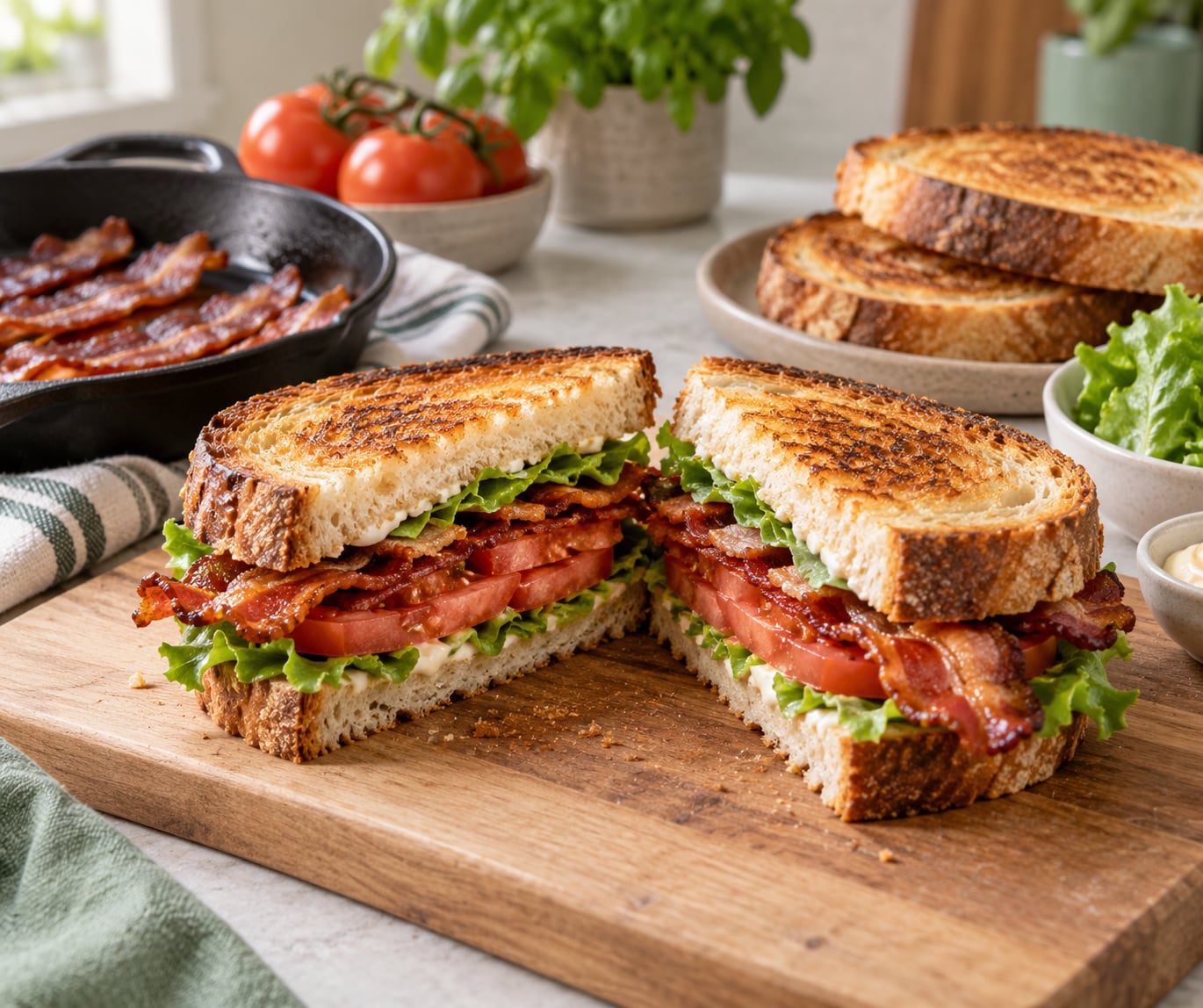
To make a BLT that is not soggy, prep and salt your tomatoes ahead of time, and build a fat-based moisture barrier on bread you have toasted until crisp. Fifteen minutes of prep and one extra step is the whole difference between a sandwich that crunches and one that droops.
Most soggy BLTs fail the same two ways: water leaves the tomato and the lettuce, and bread drinks it straight into the crumb. Fix those two things and the sandwich stays crisp for the entire time it takes to eat it.
Table of Contents
- What You Need
- Step-by-Step: Build a Crisp, Dry BLT
- Toast the Bread and Cook the Bacon
- Prepare the Lettuce and Tomato
- Assemble the BLT Without Trapping Moisture
- Cut and Serve Immediately
- Common Mistakes
- Frequently Asked Questions
- How do I keep a BLT from getting soggy?
- What is the best way to layer a BLT sandwich?
- Should the bacon be crumbled or left in strips?
- Does salting the tomatoes help or just make them mushy?
- Is it better to wrap a BLT in foil or plastic wrap?
- Can I make BLTs ahead for a party?
- Conclusion
What You Need
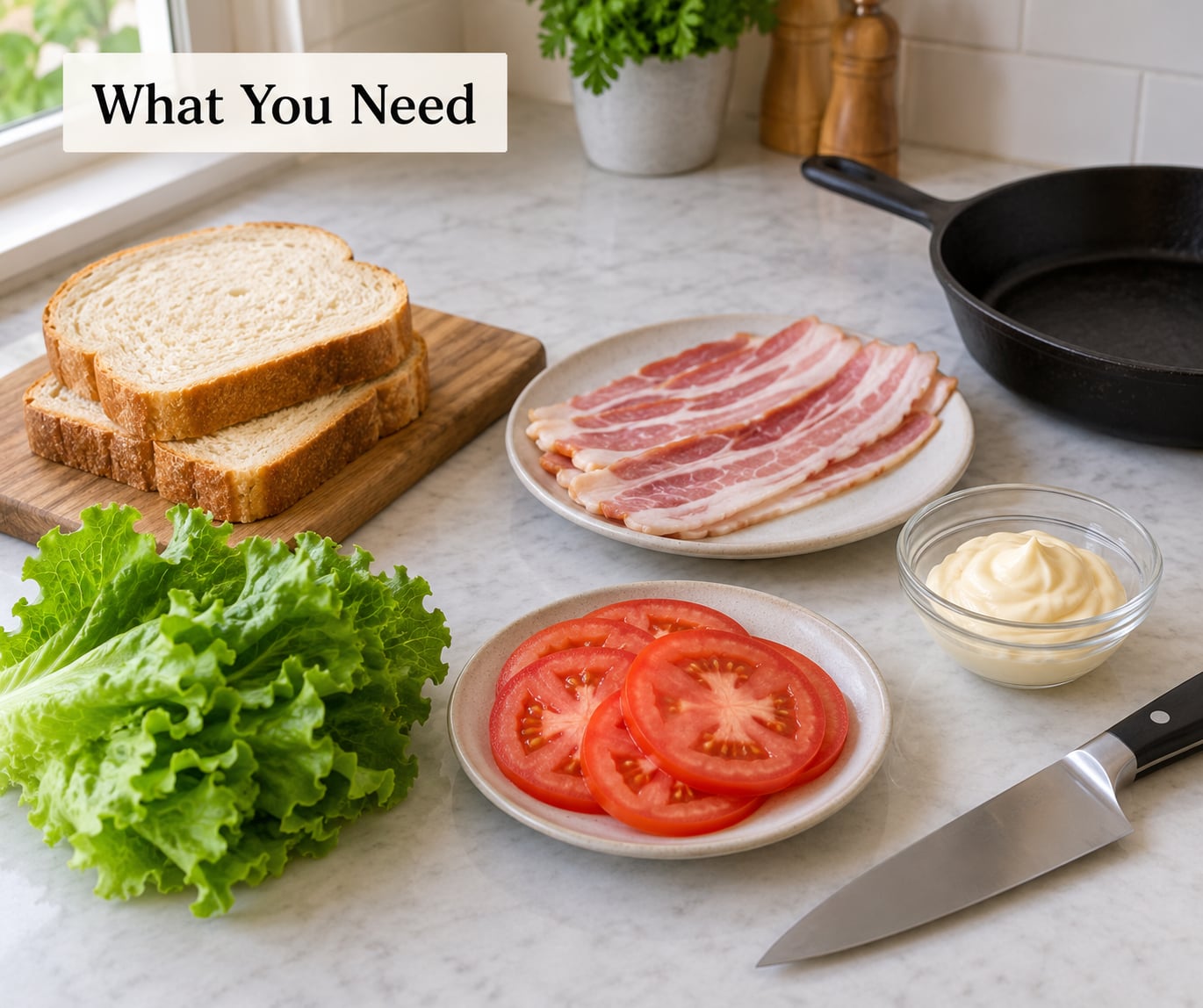
The ingredients are ordinary. What changes is choosing them for dryness rather than for looks.
- Bread: sturdy slices at least half an inch thick. Sourdough, farmhouse white, or a seeded rye. Soft sandwich bread gives up and tears before it can hold a filling.
- Bacon: thick-cut, roughly 3 strips per sandwich. Thin quick-cooking bacon renders fast and leaves a greasy film on the bottom slice.
- Lettuce: romaine or iceberg, shredded or chopped small. Butter lettuce works, but it wilts fastest.
- Tomatoes: firm beefsteak or vine tomatoes, sliced about a quarter inch thick.
- Mayonnaise: enough to spread edge to edge on both slices. This is the barrier, not a garnish.
- Tools: a sharp knife, a skillet or griddle, a colander or strainer, and clean paper towels.
One optional addition changes things: a sheet of parchment or a silicone mat under your drained tomatoes. It catches the water so it never sits on the counter to soak back in.
Step-by-Step: Build a Crisp, Dry BLT
Toast the Bread and Cook the Bacon
Toast the bread first, and toast it until you can see golden edges. Roughly 2 minutes a side in a dry skillet over medium heat does it, or 4 to 5 minutes in a 400 degree oven with the slices cut side down.
Toasting is not just for flavour. Heat gelatinises the starch at the surface and seals the pores into a thin crust, which is what stops moisture from reaching the soft crumb underneath. Bread you only warmed through has no crust yet, so it soaks like a sponge.
The mayo-griddle method goes further. Spread mayo on the cut face, lay it mayo-side down in the pan, and toast until the mayo browns and the bread is firm. It costs nothing extra and produces the crunchiest shell of the three methods.
Cook the bacon until every strip is dark brown and rigid, then lay it on paper towels for two minutes. That draining step is not optional. Bacon carries a surprising amount of rendered fat, and grease pooling on the bottom slice makes it greasy as well as soft.
How do you know it worked? Break one strip with your fingers. It should snap cleanly and crumble into pieces rather than bend.
Prepare the Lettuce and Tomato
Shred the lettuce and rinse it in cold water, then dry it hard. A salad spinner works, or roll the shreds tightly in a clean towel and press. The visual cue is simple: the towel comes out damp, not dripping.
Undrained shredded lettuce is the quietest cause of a damp sandwich. Wet shreds carry far more water than whole leaves, and that water leaves the moment you take a bite.
Now handle the tomatoes. Slice them a quarter inch thick, spread them on a paper towel, sprinkle both sides with salt, and wait 10 to 15 minutes. The salt pulls water out of the slices by osmosis, and a puddle forms underneath. Blot the top of each slice with a fresh towel before it goes anywhere near bread.
Worried the salt makes tomatoes mushy? A short salting window pulls water without collapsing the flesh. Ten minutes firms up the slice. Leave them for an hour and you get a different result, something closer to a cooked tomato.
Assemble the BLT Without Trapping Moisture
Work fast now, and build it in this order:
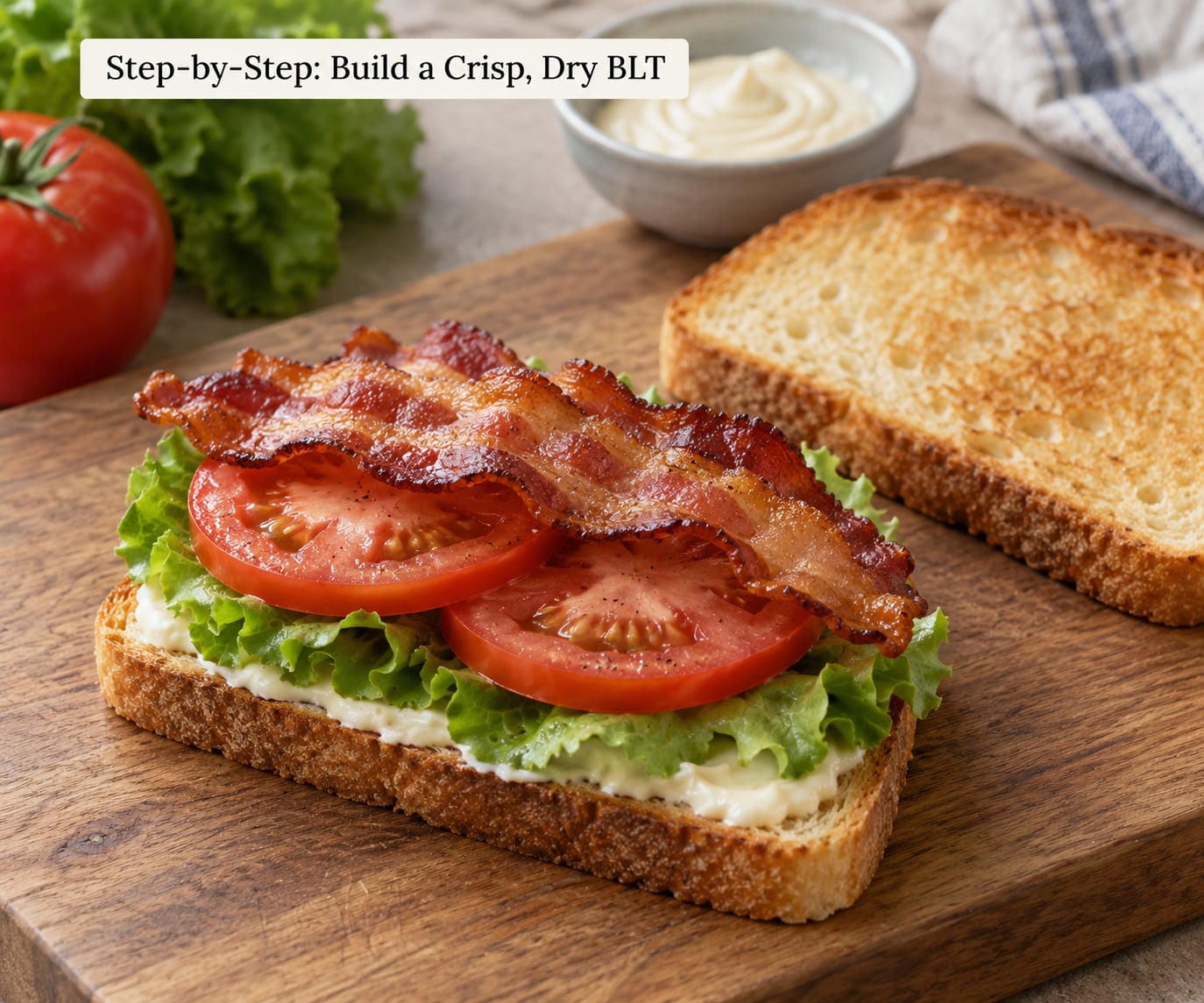
- Spread mayonnaise across the toasted slice, all the way to the edges.
- Add two or three pieces of bacon, torn or cut, rather than laid as whole strips.
- Add a loose layer of shredded lettuce.
- Set two or three tomato slices on top, keeping them off the crust border.
- Spread mayo on the second toasted slice, press down gently, and cut.
Two details do most of the work. First, the fat layer has to reach the crust. Mayo spread to the middle leaves an unprotected fringe where the crumb drinks tomato juice directly.
Second, keep the wet ingredients in the middle and away from the outer two inches. That dry border is the handle you grip when you pick the sandwich up, and it is what keeps a soggy patch from spreading outward.
Crumbling the bacon does two jobs at once. It distributes it evenly, so every bite has some, and a strip never pulls halfway out when you cut the sandwich.
| Spread | Barrier strength | Flavour | Best for |
|---|---|---|---|
| Mayonnaise | Strongest | Mellow, slightly sweet | The classic BLT |
| Butter | Strong, browns fast | Rich, nutty | Toast the bread in it first |
| Dijon mustard | Good, thinner spread | Sharp, tangy | A brighter, sharper BLT |
| Avocado | Good, but seeded flesh adds moisture | Buttery, neutral | A BLAT, where extra fat helps |
| Cheese | Weak on its own | Salty, melts into the filling | Flavour, not moisture control |
Mayonnaise wins because it is thick, emulsified, and spreads to the crust without tearing it. Butter works nearly as well and browns the bread better. Mustard is thinner, so use more of it. Avocado adds fat but also pulp and water, so it helps less than people expect.
Cut and Serve Immediately
Use a serrated knife and saw straight down rather than pressing, which compresses the layers and squeezes juice toward the cut edge. Cut on a board with a groove or a damp cloth underneath so the sandwich does not slide.
If you are wrapping part of it for later, wrap only the cut face loosely in parchment or a paper bag. Airtight foil and cling film trap the steam that is still inside, and the bread softens faster that way than if you left it open.
Then eat it. A non-soggy BLT stays crisp for 20 to 30 minutes, which covers lunch and most of a party tray.
Common Mistakes
Wet lettuce went straight in. A head of lettuce is about 96% water. Dry it properly, and if you are short on time, use fewer leaves and keep them whole rather than shredded.
Tomatoes were never drained. Sliced tomatoes start releasing juice within a minute of being cut. Salt them for 10 to 15 minutes and blot the tops.
The bread was not toasted. Warm bread still has an open crumb and drinks juice. You want a visible golden edge and a firm surface that springs back when you press it.
Greasy bacon went straight onto the bread. Two minutes on paper towels pulls off the loose fat before it soaks through.
The spread stopped short of the edges. That uncovered fringe is where sogginess starts. Spread to the crust, all the way around.
It got stuffed too full. An overstuffed sandwich squashes its own layers, and the tomato and lettuce get pressed into the bread. Two slices of tomato and three strips of bacon per sandwich is plenty.
It was assembled too early. A BLT is a sandwich to eat now, not a sandwich to sit. If you need to build ahead, toast the bread and cook the bacon the day before and keep the vegetables separate until serving.
And if one has already gone soft, put it in a dry skillet cut side down for 30 seconds a side with no oil. The heat drives off surface moisture and re-crisps the crumb. It will not undo a soaked sandwich, but it will take it from limp to decent.
Frequently Asked Questions
How do I keep a BLT from getting soggy?
Salt the tomato slices and let them drain on paper towels for 10 to 15 minutes, then blot the tops dry. Toast your bread until the edges are golden, spread mayonnaise edge to edge on both slices, and build the sandwich only when you are ready to eat it. The fat barrier keeps moisture out of the crumb and the crust keeps what gets through from spreading.
What is the best way to layer a BLT sandwich?
Start with mayo on the toasted slice, then bacon, then lettuce, then tomato, then mayo on the second slice. Tomato sits highest so its weight presses down into the fat rather than onto bare bread. Keep the fillings off the outer two inches of the slice so you have a dry crust to grip. Crumble or cut the bacon so every bite gets an even share.
Should the bacon be crumbled or left in strips?
Either works for texture, but cut or crumble it for a cleaner sandwich. Whole strips slide out when you pick the sandwich up and leave uneven bites behind. Cut strips in half crosswise and lay them so the pieces interlock rather than overlap. Drain them on paper towels first so the fat does not reach the bread.
Does salting the tomatoes help or just make them mushy?
A short salting window helps. Salt draws water out of the slices by osmosis and firms up the flesh at the same time, which is why a seasoned tomato slice holds together better than an unseasoned one. Ten to 15 minutes is the useful window. Salt them an hour or more ahead and they collapse into the texture of a cooked tomato.
Is it better to wrap a BLT in foil or plastic wrap?
For a sandwich you will eat within about 30 minutes, wrap it loosely in parchment or paper so the crust can breathe. Tight foil and cling film trap steam inside the sandwich, and the bread goes soft faster than it would uncovered. For transport in a lunchbox, wrap the tomato and lettuce separately and pack them in their own container so nothing wet touches the bread.
Can I make BLTs ahead for a party?
Make the components ahead and assemble at the last minute. Cook and drain the bacon the day before and store it in an airtight container at or below 40 degrees Fahrenheit, where it holds its crunch for several days. Salt and drain the tomatoes a few hours ahead and refrigerate them covered. Keep lettuce dry and unwashed in the fridge, and toast the bread right before serving.
Conclusion
Start with the tomatoes. Slice, salt, wait 10 to 15 minutes, and blot them, then toast your bread until the edges turn golden and spread mayo to the crust before anything wet touches it. Do those three things and the sandwich stays crisp from assembly to the last bite.