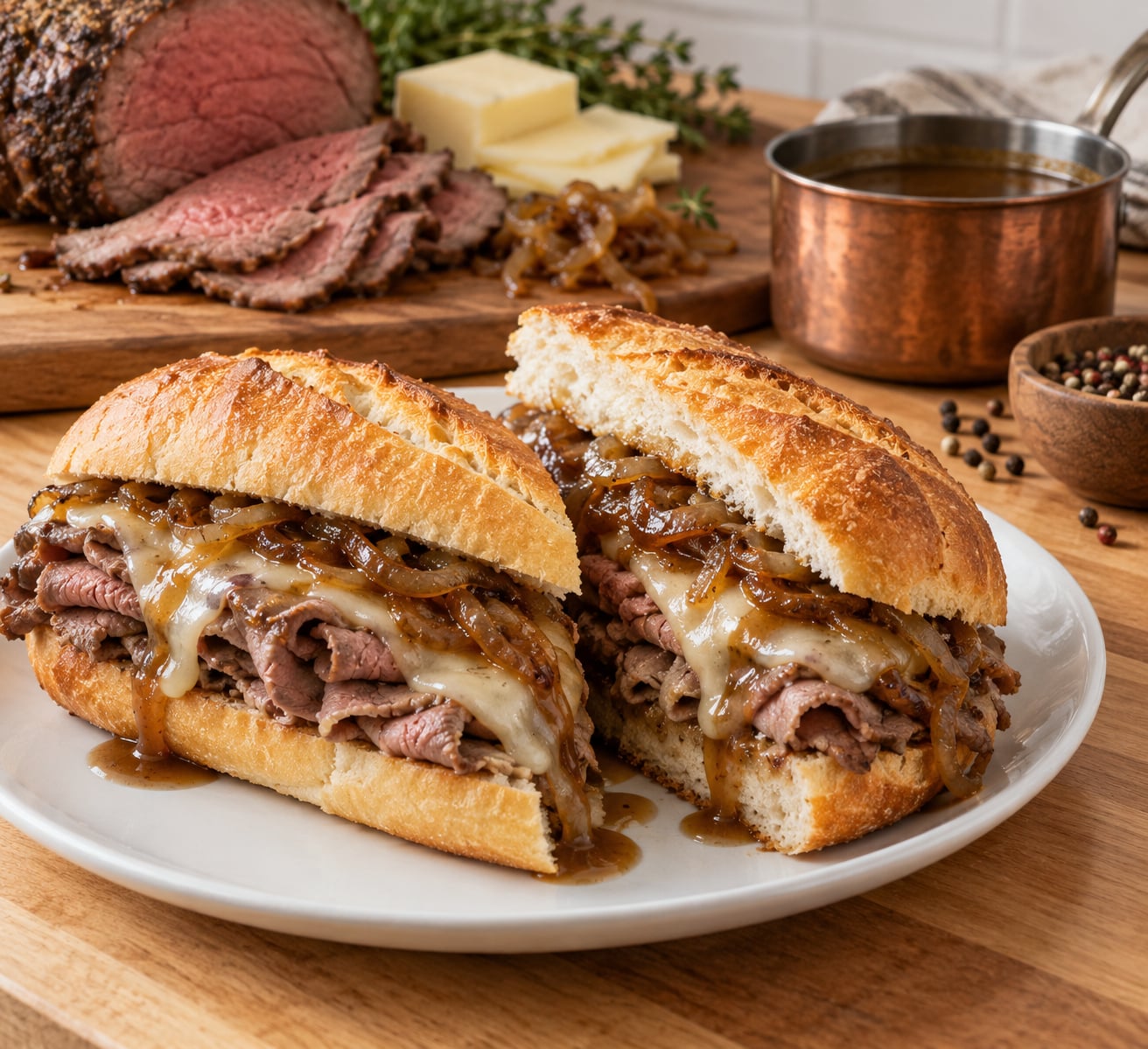
A hot roast beef sandwich is thinly sliced roast beef piled into a split crusty roll, covered in hot brown gravy and melted cheese, and served straight away. The 15-minute deli-meat version needs three ingredients and one pan; a from-scratch version takes a couple of hours. Either way, the whole thing is easy enough for a weeknight.
Most of the bad hot roast beef sandwiches I have made failed in the same place: the bread went soft and the beef stayed cold. Both problems have easy fixes, and they come down to toasting the roll first and warming the meat all the way through before it goes in.
Here is everything you need, then the method step by step, with the visual cues that tell you each part has worked.
Table of Contents
- What You Need
- Step-by-Step: How to Make a Hot Roast Beef Sandwich
- Step 1: Choose and Prepare the Roast Beef
- Step 2: Season the Bread and Add the Condiments
- Step 3: Layer the Roast Beef
- Step 4: Add Cheese and Optional Toppings
- Step 5: Melt the Cheese and Toast the Sandwich
- Step 6: Rest, Slice and Serve Your Hot Roast Beef Sandwich
- Common Mistakes
- Frequently Asked Questions
- What kind of bread is best for a hot roast beef sandwich?
- Can I make a hot roast beef sandwich ahead of time?
- How do I keep roast beef sandwiches from getting soggy?
- What cheese melts best on a roast beef sandwich?
- How do I reheat a hot roast beef sandwich without making it dry?
- How long should cooked roast beef be stored and reheated safely?
- Conclusion
What You Need
The base build is small enough to write on a napkin.
- Roast beef: 12 oz thinly sliced or shaved deli roast beef, roughly 3 oz per sandwich. Slow-cooker or home-roasted meat works too, just slice it thinner.
- Bread: 4 hoagie rolls, sub rolls, or a crusty French roll. A soft hamburger bun also works for a sheet-pan version.
- Gravy: 1 can (10.25 oz) beef gravy, or about 1 cup of pan gravy made from drippings.
- Cheese: 4 slices provolone, Swiss, cheddar, or American.
- Condiments: yellow mustard, horseradish cream, mayo, or garlic mayo.
- Optional toppings: caramelized onions, banana pepper rings, thin red onion, dill pickles, or sautéed mushrooms.
For equipment you need very little: a sharp knife, tongs, a small skillet or saucepan for the gravy, a baking sheet, and either a skillet or your oven broiler for the melt.
Substitutions are easy. Chuck roast or bottom round from a slow cooker can stand in for deli meat, just shred it rather than slicing it. A ciabatta split lengthwise works in place of a hoagie roll, and a can of French onion soup thinned with water makes a serviceable stand-in for canned gravy when you have nothing else.
Step-by-Step: How to Make a Hot Roast Beef Sandwich
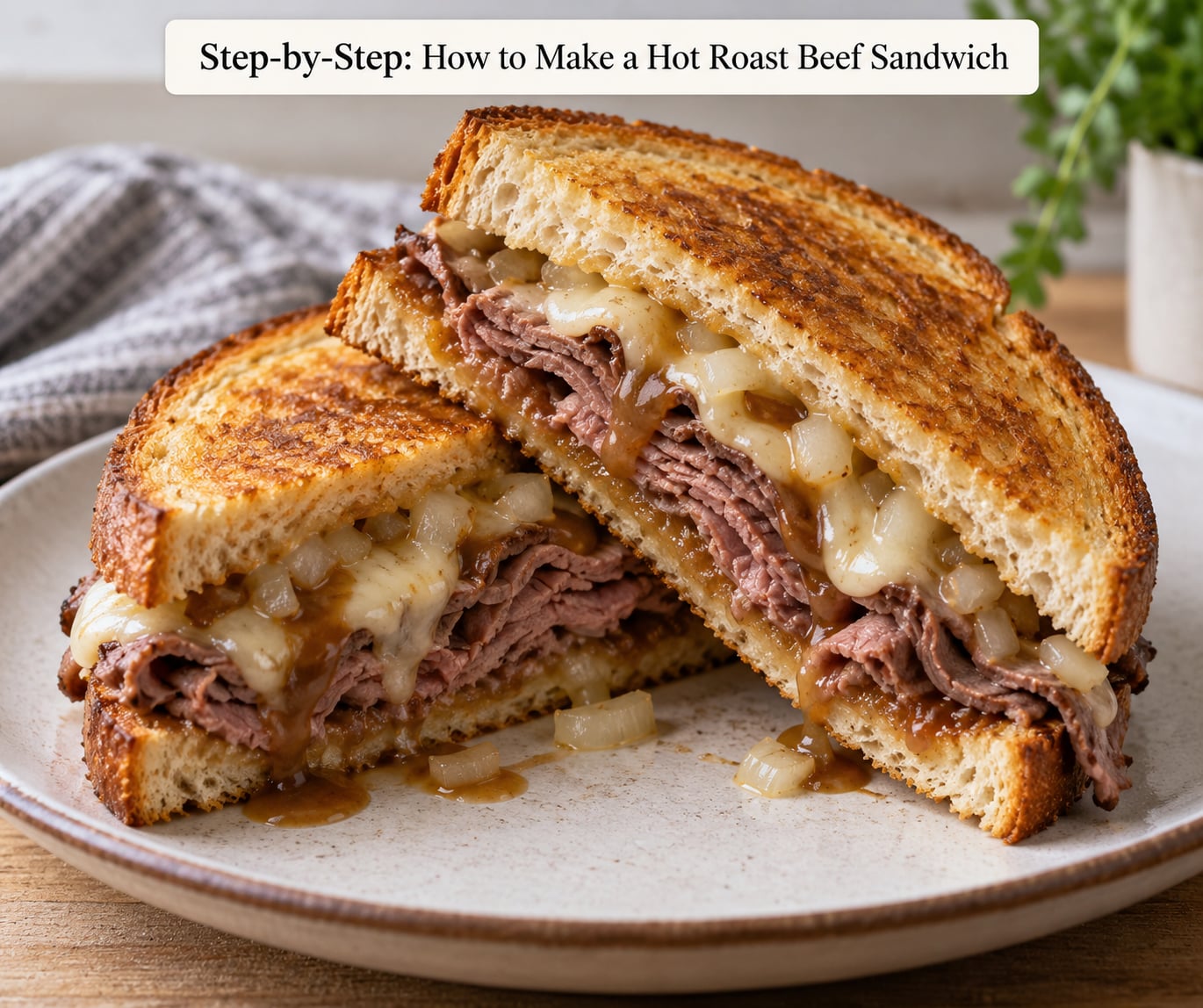
Step 1: Choose and Prepare the Roast Beef
Slice thickness is the single biggest lever on the finished sandwich. Aim for slices you can almost see light through, and if you are carving a home roast, put it in the freezer for 15 minutes first so the knife glides instead of tearing.
Trim off any ribbon of fat that would slide out onto the plate, then season the pile lightly with salt and black pepper. Over-seasoned deli meat makes the whole sandwich taste of nothing but beef and salt.
Warm the meat before it goes in the sandwich. Thirty seconds in hot gravy, or a couple of minutes in a skillet over medium heat, is enough. Food safety guidance is simple: reheat leftover cooked beef to 165°F (74°C) for hot holding, and never leave it sitting out at room temperature for more than two hours.
Step 2: Season the Bread and Add the Condiments
Butter or oil the outside of each roll. This is the step people skip, and it is exactly the step that keeps a hot roast beef sandwich from turning to mush under the gravy.
Spread a thin layer of mustard, horseradish cream, or mayo on the cut faces. Keep it thin. A sauce that would look reasonable on a cold turkey sandwich turns the roll to pulp once hot gravy lands on it.
For horseradish, use the real thing. Prepared horseradish sauce is unpredictable, and the version people buy by the bottle is often mild enough to do nothing. Fresh grated horseradish or a proper cream sauce has actual heat and a sweetness that cuts through the fat.
Step 3: Layer the Roast Beef
Use about 3 oz per sandwich, roughly a loosely packed handful. Pile the slices with plenty of overlap, and fold long slices rather than laying them flat.
Rolling the meat inside the sandwich rather than stacking it flat is a technique people have landed on independently over in r/Sandwiches, and it works because the folded edges hold the juices instead of pushing them out the back.
If you have pan drippings, spoon a little over the beef at this stage. It seasons the meat from the inside and keeps the sandwich moist, which is the whole point of a hot version.
Step 4: Add Cheese and Optional Toppings
Provolone is the classic choice: salty, mild, and it melts into a smooth sheet. Swiss works if you want something nuttier and a little more neutral, and American is the reliable melt when you are cooking for a crowd. Sharp cheddar brings more flavor than the sandwich needs unless the rest of the build is very plain.
Use one full slice per sandwich. Half a slice looks generous and never fully melts.
For toppings, caramelized onions are the strongest single addition because their sweetness stands up to the salt of the gravy. Banana pepper rings add acid, thin raw red onion adds bite, and pickles cut the richness. Skip anything with a lot of water in it, like fresh tomato, unless you eat the sandwich immediately.
Step 5: Melt the Cheese and Toast the Sandwich
The skillet gives you a restaurant-style toasted sandwich and the best crust. Set a medium skillet, brush it with a little butter, and place the sandwich cut side down. Weigh it down with another pan and cook for 3 to 4 minutes, until the underside is deep brown. Flip, add a splash of the hot gravy to the pan, cover, and give it another 2 minutes so the cheese goes fully liquid.
The oven does the same job for several sandwiches at once. Heat the broiler, put the sandwiches on a baking sheet, and watch them closely. Three to four minutes is usually enough for provolone or American. You want the cheese fully melted and lightly blistered, and the cut edges of the bread puffed and crisp.
The giveaway that you have waited long enough is the cheese running at the seam. If it only strings and still holds its slice shape, give it another minute.
Step 6: Rest, Slice and Serve Your Hot Roast Beef Sandwich
Ladle the hot gravy over the top at the table, not before it goes in the pan. This is the habit that keeps a hot roast beef sandwich crisp for the whole time you are eating it rather than for the first two bites.
Let it sit for a minute so the juices settle, then cut it on the diagonal with a serrated knife. A clean diagonal cut gives you more crust per bite and keeps the filling from sliding out on the first mouthful.
Serve immediately. Pub-style, the plate wants a side of chips or cheese fries, onion rings, or a small dressed salad. A stout, a brown ale, or a dry cider all handle the gravy and the salt.
Common Mistakes
The bottom bun turns to mush. Toast the roll, brush it with oil or butter, and add the gravy at the table. The bread needs a barrier, and toasted fat is that barrier.
The beef is still cold in the middle. Deli meat shrinks and turns leathery if it is reheated too hard, so warm it gently in the gravy rather than searing it. Shredded slow-cooker meat can take more heat because it has already been cooked once through.
The cheese strings but never melts. The pan is not hot enough. Add cheese before the sandwich hits the heat, and give the broiler an extra minute rather than crowding the sheet.
Gravy leaks out of the bottom. You have too much. Thickened gravy should cling to the meat, not pool. Simmer it a couple of minutes longer, or strain out excess liquid before assembly.
The sandwich is unevenly browned. Toast cut side down, press it flat with a second pan, and finish under the broiler for the last minute.
For a crowd, build the sandwiches on a sheet pan, melt the cheese first, then hold them in a 200°F (93°C) oven. Ladle the gravy on individually as you serve so nothing goes soft while it waits. If you are starting from a roast, the meat can be carved a day ahead and refrigerated; slice it and dress it on the day.
Frequently Asked Questions
What kind of bread is best for a hot roast beef sandwich?
A crusty roll with a soft interior is the target. Hoagie rolls, sub rolls and French rolls all work, because the crust holds up to the gravy while the inside stays tender. A soft hamburger bun works for a sheet-pan version and soaks up extra gravy, and ciabatta split lengthwise adds chew. Avoid very dense or very thin bread, since the first dries out and the second disappears under the filling.
Can I make a hot roast beef sandwich ahead of time?
Partly. Warm the meat and cook it a day ahead, and slice it just before serving. Build the sandwiches without gravy up to two hours ahead and keep them in a 200°F (93°C) oven so the cheese stays melted. Toasting the rolls and adding the gravy last are the two steps that cannot be done early, because both are what keeps the bread from going soft.
How do I keep roast beef sandwiches from getting soggy?
Toast the roll first and brush the cut face with butter or oil before anything wet goes on. Add mustard, mayo or horseradish cream in a thin layer, and ladle the gravy on at the table rather than in the pan. The gravy should be thick enough to cling to the meat instead of pooling in the bottom of the roll. Resting the built sandwich on a rack rather than a plate also keeps the underside dry.
What cheese melts best on a roast beef sandwich?
Provolone is the reliable answer: it melts into a smooth sheet and adds salt without fighting the beef. American cheese melts the most evenly of all and is the best choice when you are covering a sheet pan of sandwiches. Swiss is milder and nuttier, and sharp cheddar only works if the rest of the build is very plain. Use a full slice per sandwich, since half a slice never melts properly.
How do I reheat a hot roast beef sandwich without making it dry?
Use a skillet rather than a microwave. Cook it cut side down in a lightly buttered pan for 3 to 4 minutes, then flip, add a splash of gravy, cover and give it 2 minutes more. The cheese re-melts and the bread re-crisps at the same time. In a pinch, the microwave works for 45 seconds, but expect soft bread and no crust, so finish it in a hot pan for a minute before eating.
How long should cooked roast beef be stored and reheated safely?
Refrigerate leftover cooked beef within two hours and use it within three to four days. Keep it in a sealed container on the bottom shelf, and reheat it to 165°F (74°C) before serving hot, reheating only the portion you plan to eat. A whole cut that has not been cut into can also be reheated to 145°F (63°C) with a three-minute rest, per USDA guidance.
Conclusion
The whole sandwich comes down to four moves: toast and fat the bread, spread something sharp on the inside, pile in thin slices of well-warmed beef with a full slice of cheese, then heat until the bread is brown and the cheese runs.
Start by getting a skillet or a sheet pan heating, and do the gravy while the bread toasts. The rest takes about fifteen minutes, and the gravy goes on last.