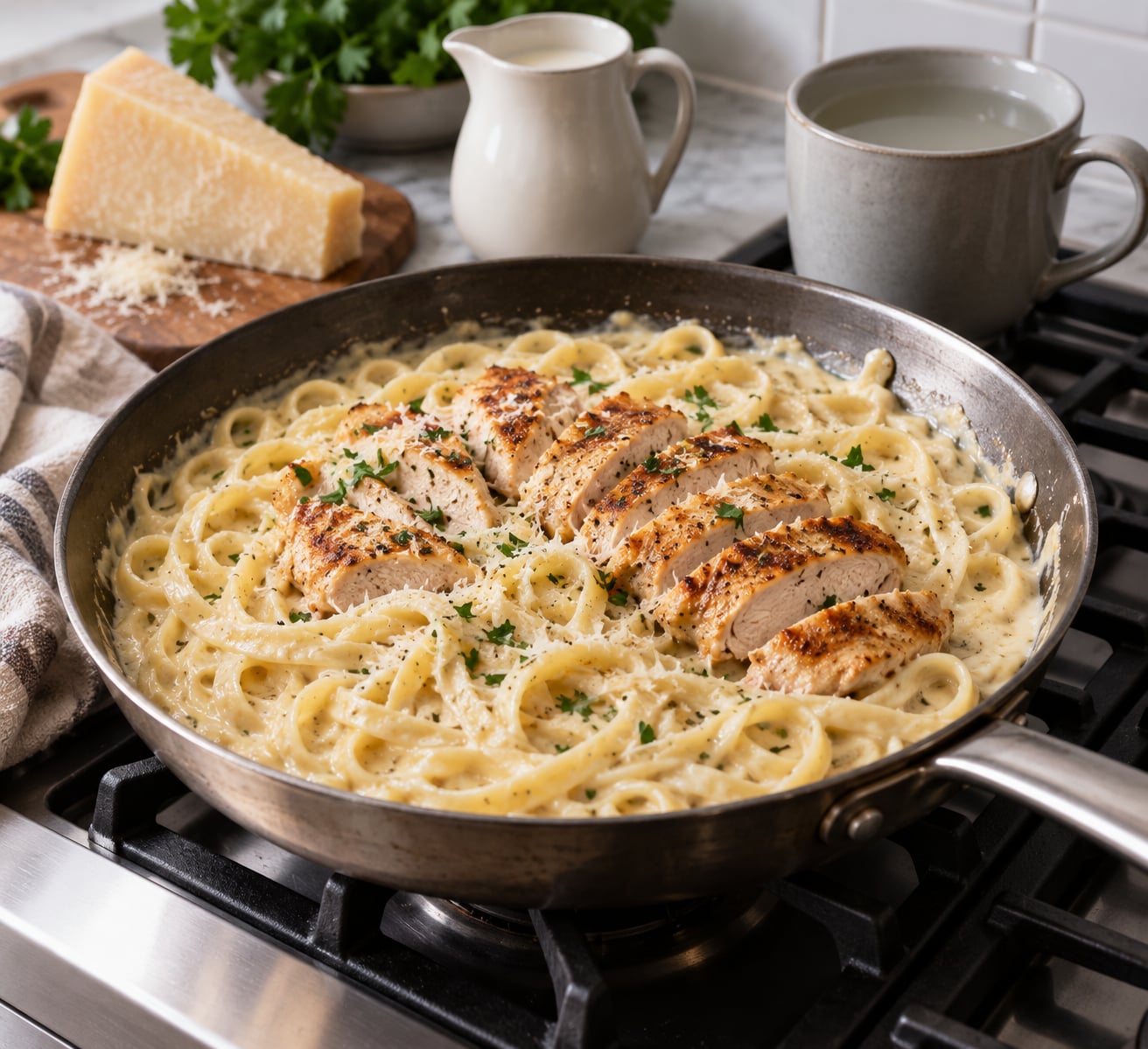
How to make chicken alfredo without it separating comes down to three controls: keep the heat low, add the Parmesan off the burner, and give the sauce a splash of cream or pasta water whenever it tightens up. Never let it boil once the cheese goes in, and whisk constantly. From a cold pan to a plated bowl, the whole thing takes about 35 minutes.
The reason that matters is that alfredo is an emulsion, not a gravy. Fat droplets and finely grated Parmesan are held in suspension by milk proteins, and those proteins fold apart the moment the sauce gets hot enough to boil. Push past that point and the fat slides out, the proteins clump into grains, and you get the oily, grainy puddle that has ruined more Sunday dinners than any pasta shape ever has.
Most of the advice floating around online treats this as one problem, but it is really two different failures with two different fixes. Oily sauce means the emulsion broke from heat. Grainy sauce means the cheese proteins seized before they had a chance to melt. Once you know which one you are looking at, the correction takes about ninety seconds.
Table of Contents
- What You Need
- Step-by-Step
- How to Make Chicken Alfredo Without It Separating: Keep the Order Right
- Common Mistakes That Cause Separation
- Frequently Asked Questions
- Why does my alfredo sauce separate after reheating?
- How do I keep homemade alfredo sauce from separating?
- Why is my chicken alfredo grainy?
- Can I reheat chicken alfredo in the microwave?
- Do I use heavy cream or milk for alfredo?
- Can I make chicken alfredo ahead without it splitting?
- Conclusion
What You Need
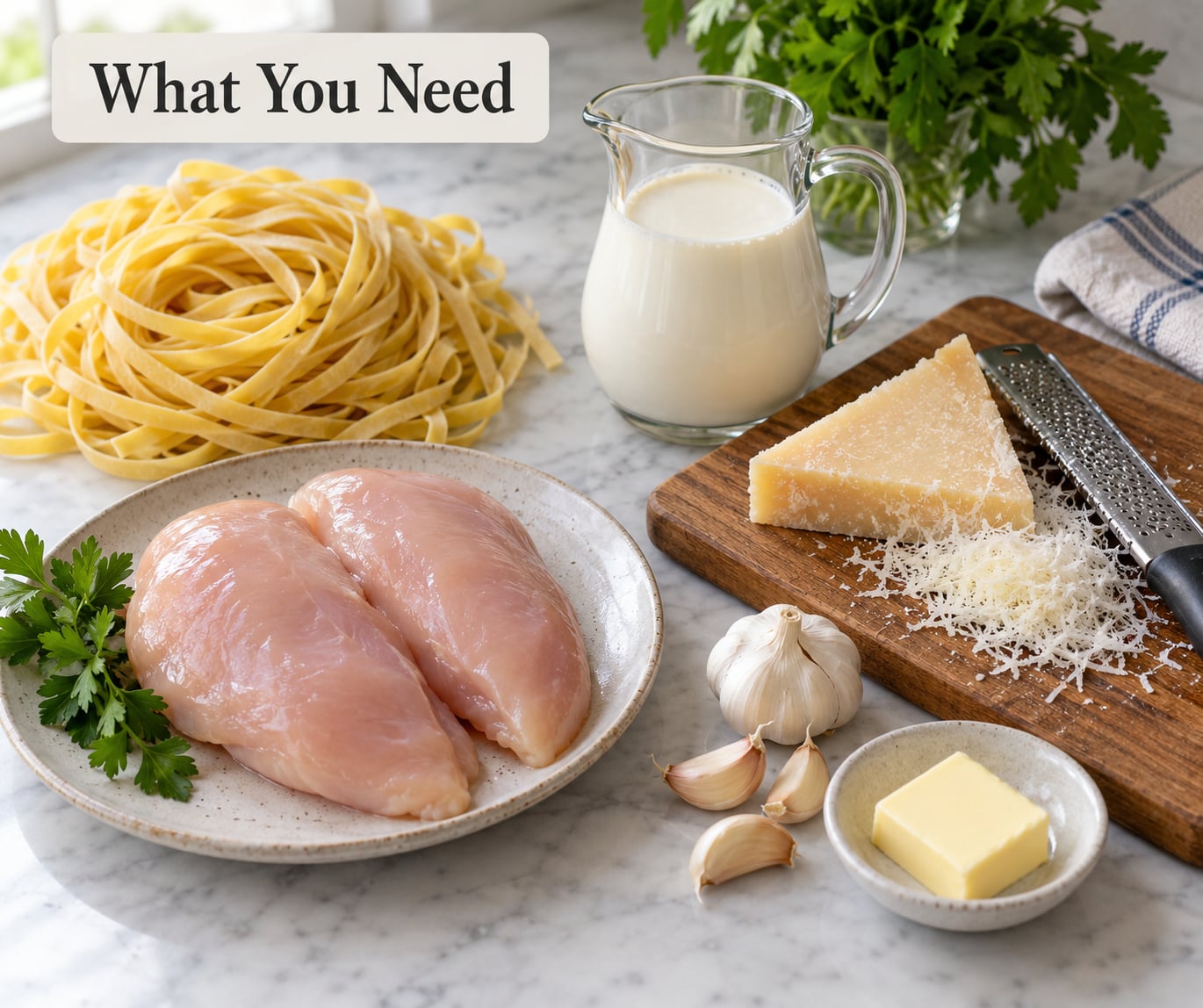
Ingredient choice does about half the work here. You are not looking for a long list, you are looking for four things that are hard to substitute, plus whatever chicken you have.
- Fettuccine or linguine. Flat noodles have surface area for the sauce to cling to. Long, straight shapes are not optional if you want the dish to hold together on the plate.
- Heavy cream. Look for a carton that says 36 percent fat or higher. Whole milk is roughly 3 percent, and the fat gap is the whole game: milk has too little fat to stay emulsified through a simmer, which is why it needs a roux in a white sauce and does not in this one.
- Parmigiano-Reggiano, grated by you. Buy the wedge, not the green tub. Pre-shredded cheese carries cellulose or silica anti-caking agents, and those never dissolve. They stay in the sauce as fine specks and give it a texture that reads as grainy even when nothing actually curdled.
- Unsalted butter. Butter is there for flavor and body, not thickness. Use a real stick rather than a measured spoon of the salted stuff, or season twice as carefully.
- Chicken. Boneless breasts pound thin, thighs stay juicier, and rotisserie meat from the fridge is a completely legitimate weeknight shortcut.
- Garlic, salt, black pepper, and a pinch of nutmeg. Nutmeg is optional and non-negotiable in my kitchen. It is what makes a cheese sauce taste like a restaurant rather than a classroom.
You also want a microplane or the fine holes on a box grater, a wide skillet with high sides, and a mug that can sit next to your pasta pot. That mug matters more than it sounds, because the pasta water is the most useful tool in this whole recipe.
For the chicken, cook it to an internal temperature of 165 degrees Fahrenheit and cool any leftovers within two hours before they go in the fridge. If you are prepping ahead, store the chicken, the pasta, and the sauce in three separate containers rather than one.
A few substitutions worth knowing. Half-and-half works if you are willing to keep the heat even lower and add the cheese in smaller handfuls. Cream cheese does not belong in a classic alfredo, but a tablespoon stirred in off the heat acts as a stabilizer if you are cooking for a crowd. Plain Greek yogurt, thinned with a splash of cream, gives you a tang that is wrong for the dish but still emulsifies. And for a thicker sauce without more dairy, mix a teaspoon of cornstarch with a tablespoon of cold water, whisk it into the hot sauce, and simmer for a minute.
Step-by-Step
Read the whole sequence once before you start. The order matters as much as the heat, and several of these steps want to happen while something else is still cooking.
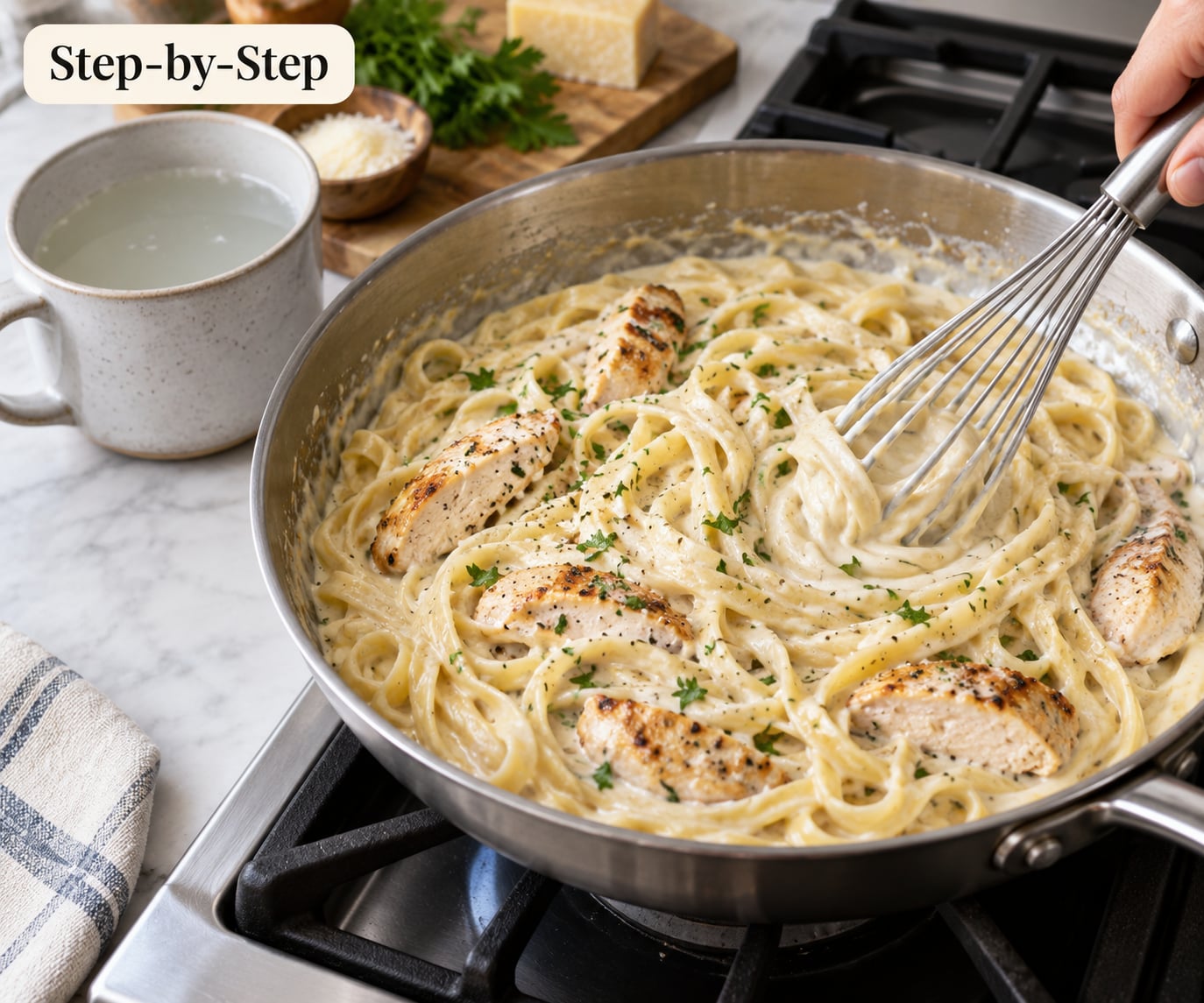
- Salt the pasta water hard and start the noodles first. Use a big pot of water at a full boil with more salt than looks right, about one tablespoon per quart. Fettuccine needs 9 to 11 minutes, but pull it two minutes early. The noodle is done when it bends without a snap and still has a visible hard core in the middle. Fully cooked pasta is dry pasta, and dry pasta drinks the sauce instead of wearing it.
- Scoop out a mug of pasta water before you drain. Set it on the counter. That cloudy, salty liquid is loaded with starch, and starch is what glues the fat droplets to the rest of the sauce.
- Drain the pasta and spread it on a baking sheet. Two minutes on a hot sheet lets the surface water evaporate. Sauce slides off wet noodles in ribbons and slides off slightly drier noodles in an even coat.
- Sear the chicken while the pasta cooks. Salt and pepper the meat, then lay it in a hot skillet with a thin film of oil. Leave it alone for three minutes until a crust forms, flip, and cook until the thickest part reads 165 degrees. Pull it onto a board and let it rest. Residual heat keeps cooking it.
- Melt the butter over medium-low. Add the garlic for about 30 seconds, until fragrant but not colored. Add two-thirds of your grated Parmesan and stir for another minute. It should melt into the butter rather than sit in shreds.
- Pour in the cream with the heat still moderate. Bring it to a bare simmer, and watch for the first bubbles. They should be small and lazy. A rolling boil at this stage is the single thing most likely to split the sauce before you have even added the rest of the cheese.
- Stir in the remaining Parmesan a handful at a time. Add a small amount, stir until it disappears, then add the next. Each handful should melt in about 30 seconds. If it sits in visible strings, the pan is too hot. Pull it off the burner for a beat and keep going.
- Kill the heat entirely and whisk. This is the step people skip. Once the cheese is in, the pan comes off the stove and you whisk with intent for about a minute. The sauce keeps cooking from residual heat, and letting that finish happen gently is what gives you a glossy, loose sauce rather than a tight one.
- Toss the hot noodles into the sauce. Add about a cup of the reserved pasta water first, then the pasta, and toss over medium heat for a minute. The starch in the water and the starch on the pasta emulsify the fat. The sauce should look a touch loose in the pan because it tightens as it sits.
- Slice the chicken and fold it in last. Chicken goes in off the heat, at the end, so it never sits in a sauce hot enough to move the proteins around. Toss once, taste, and adjust salt and pepper.
- Serve immediately. Pasta sauce keeps tightening as it cools, so what leaves the skillet is not what lands in the bowl. If it needs loosening at the table, a tablespoon of warm pasta water or cream fixes it instantly.
How to Make Chicken Alfredo Without It Separating: Keep the Order Right
Three rules carry most of the weight here, and they are all about sequence rather than ingredients.
Cook the pasta slightly underdone and never drain it dry. Pasta that is two minutes from done still has starch on the surface and water inside it. That is what lets it become part of the sauce instead of a separate object sitting in it.
Take the pan off the heat before the last of the cheese goes in. Residual heat, which is simply the warmth the pan keeps giving off after the burner is off, is gentle enough to melt Parmesan and hot enough to keep the emulsion moving. Boiling heat is neither.
Add the chicken at the end, off the heat. Chicken that has been resting in a simmering cream sauce for ten minutes dries out and gives the sauce extra protein to seize around. Fold it in during the last thirty seconds instead.
Add a splash of cream or milk whenever the sauce tightens. A tablespoon at a time, whisked in off the heat, is almost always the fix. A roux is not what you need here, and neither is a slurry of flour, which will dull the flavor and leave you with a heavy coating rather than a smooth one.
Common Mistakes That Cause Separation
Here is how to tell the failures apart, because the fix depends entirely on which one you have.
- Oily sauce, thin, with butter or oil floating on top. The emulsion broke, almost always from boiling. Take it off the heat, add a tablespoon of cold heavy cream or a splash of pasta water, and whisk hard for a full minute. Whisk continuously, adding liquid gradually until it comes back together. On a stovetop, set it over the lowest setting and do the same thing; the gentle warmth helps more than any amount of stirring alone.
- Grainy or curdled sauce, thick with tiny lumps. The cheese proteins seized before they melted, which happens when the pan was too hot or when pre-shredded Parmesan went in. Remove it from the heat, add a splash of cold cream, and whisk. If the grains are stubborn, strain the sauce through a fine sieve and whisk the strained liquid again with a little more cold cream. The texture comes back more often than people expect.
- Watery sauce that runs off the noodles. Usually undiluted cream, cold ingredients hitting a hot pan, or pasta that was rinsed. Warm everything first, and reduce the sauce over low heat for two or three minutes, stirring. Splash in pasta water only if you need to thin it, never to thicken it.
- Gluey sauce that clumps into a blob. Too much pasta and not enough liquid, or sauce cooked down too long. Loosen it with pasta water a tablespoon at a time, tossing over heat until it flows. A tablespoon of warm water at a time, with the pan off the burner, works even better than cream here because it does not mute the cheese flavor.
- A skin forming on the surface as it rests. The top is drying out and the fat underneath is concentrating. Press plastic wrap directly onto the surface of the sauce, or give it a quick blast under the broiler for 20 seconds until it bubbles. Not a disaster, but worth covering.
- Dry, stringy chicken. It sat in the sauce too long, or it was overcooked before it got there. Slice it and fold it through at the end next time, and pull it from the pan at 165 degrees rather than cooking to a well-done 170.
Two myths worth clearing up. Oil in the pasta water does not help sauce cling; it just makes the dish heavier and leaves a slick on the pan. And boiling the sauce to thicken it faster is the fastest route to a split sauce there is, even though it looks like progress.
One more, on reheating. Cream sauces that have been sitting in a fridge go through the same protein change, which is why a leftover alfredo can turn greasy in ninety seconds of microwaving even when it was perfect the night before. Low heat, short intervals, and a splash of liquid is the whole fix.
Frequently Asked Questions
Why does my alfredo sauce separate after reheating?
Reheating pushes dairy proteins past the point where they can hold fat in suspension, and a microwave does it unevenly and fast. The fat slides out, leaving an oily sauce. Reheat on the stovetop over the lowest setting, add a tablespoon of cream or pasta water first, and stir constantly. In the microwave, use a shallow bowl, 30 to 60 second bursts, and a stir between every burst.
How do I keep homemade alfredo sauce from separating?
Keep the heat at medium or lower, never boil after the cheese goes in, and add Parmesan off the burner a handful at a time while you whisk. Stir continuously so nothing sits against the pan. Cook pasta two minutes underdone, reserve the starchy water, and toss the hot noodles into the sauce with a splash of that water. If it thickens, add cream or pasta water a tablespoon at a time.
Why is my chicken alfredo grainy?
Graininess means the cheese proteins seized before they could melt, which happens with a pan that is too hot, cheese added too fast, or pre-shredded Parmesan with anti-caking agents in it. Take the pan off the heat, add cold cream, and whisk until it recombines. For stubborn grains, strain through a fine sieve and whisk the liquid again. Grating your own Parmigiano-Reggiano prevents most of it.
Can I reheat chicken alfredo in the microwave?
Yes, but not in a full-strength blast. Put it in a shallow bowl rather than a deep one, microwave in 30 to 60 second bursts, and stir between every burst so no hot spots form. Add a tablespoon of cream or water before it goes in. A microwave heats unevenly, so a spot can hit boiling while the rest of the bowl is still cool, and that is what splits the sauce.
Do I use heavy cream or milk for alfredo?
Heavy cream, and it is not a close call. Heavy cream is about 36 percent fat, which is enough to stay emulsified through a gentle simmer. Whole milk is around 3 percent, too lean to hold together, which is why white sauce using milk needs a roux and alfredo does not. Half-and-half works if you keep the heat low and add the cheese in small handfuls, but the flavor is thinner.
Can I make chicken alfredo ahead without it splitting?
Store the chicken, pasta, and sauce in three separate containers and recombine them on the day. A cream sauce that has been through a fridge and a microwave reheat is far more likely to split than one that never got cold. Refrigerate within two hours, use refrigerated leftovers within three to four days, and cool the sauce before covering it. If you freeze it, freeze the components and the sauce separately, never after they are combined.
Conclusion
Start with the pasta. Boil it in well-salted water, pull it two minutes early, and scoop out that mug of starchy water before you drain. Sear the chicken separately, let the sauce come to a bare simmer, and take the pan off the heat before the last of the Parmesan goes in. Toss the hot noodles with a splash of the pasta water, fold the sliced chicken in at the end, and serve it straight away. Follow that order and the sauce stays glossy and cohesive, and if it ever does break, you now know which fix it needs.