Restaurant pasta sauce tastes better because of control, not secret ingredients. A kitchen reduces the sauce until the flavor concentrates, seasons at every stage, then finishes each portion to order in the pan with starchy pasta water and fat so it clings instead of pooling. Every one of those moves works in a home kitchen, and most of them work just as well on a jar of sauce.
Here is how to make pasta sauce taste like restaurant sauce at home: build the aromatics in fat, season in layers, simmer until the liquid drops by about a quarter, then emulsify. Budget about 40 minutes for the whole thing, and there is nothing on the list you need to special-order.
The timings below follow standard Italian kitchen practice rather than any one recipe, so treat them as a reliable starting point and adjust to your own stove and sauce. Most home stoves run hotter than a restaurant range, which is where a lot of over-reduced, bitter sauces come from.
Table of Contents
- What You Need
- Step-by-Step: How to Make Pasta Sauce Taste Like Restaurant Sauce
- Step 1: Build a Balanced Flavor Base
- Step 2: Season in Layers
- Step 3: Simmer Until the Sauce Tastes Developed
- Step 4: Make the Sauce Glossy and Silky So It Tastes Like Restaurant Sauce
- Step 5: Finish With Fresh and Savory Elements
- Common Mistakes and How to Fix Them
- Frequently Asked Questions
- What makes restaurant pasta sauce taste better than homemade sauce?
- Why does my pasta sauce taste bland even after I added salt?
- Should I add pasta water to my sauce?
- How can I make tomato sauce taste richer without cream?
- How do I make pasta sauce thicker without flour or cream?
- What finishing ingredients make a simple pasta sauce taste restaurant-quality?
What You Need
The ingredient list for this is short, and almost all of it is already in your kitchen.
Salt. Any kind, but kosher or sea salt gives you a coarser grain and more surface contact, so you can taste it more easily as you go. You will use more than the recipe suggests, and you will use it in at least three separate stages.
Acid. This is the one most home cooks leave out. A squeeze of lemon juice or a small splash of white vinegar at the end does not make the sauce taste sour; it makes everything else in it more legible. Bottled sauce especially needs it, because most jarred sauce is under-acid for the amount of salt it carries.
Fat. Extra virgin olive oil for the aromatics, plus a finishing fat such as butter, the same olive oil drizzled cold, or grated cheese. Fat carries flavor and gives the sauce its gloss.
Aromatics. Onion, garlic, and whatever you have. Cooked carrot, celery, fennel, or a bell pepper all work, finely diced. Home cooks have reported grated zucchini, mushrooms and extra onion for years on cooking forums, and the reason it works is caramelization, not magic.
Umami. Something salty and aged: a Parmesan rind, a spoonful of anchovy paste, a teaspoon of white miso, or tomato paste cooked until it darkens. You only need one.
Reserved pasta water. A mug, scooped out before you drain. This is the single most useful thing on the list and the cheapest, since it costs nothing.
A finishing option. Torn fresh basil or flat leaf parsley, Pecorino Romano or Parmigiano-Reggiano, red pepper flakes, lemon zest, or toasted breadcrumbs. Pick one or two, not all six.
None of this is brand-specific, and nothing here needs to be bought to make the technique work. That matters, because the most common disappointment in home pasta is spending more on an ingredient and tasting no difference.
Step-by-Step: How to Make Pasta Sauce Taste Like Restaurant Sauce
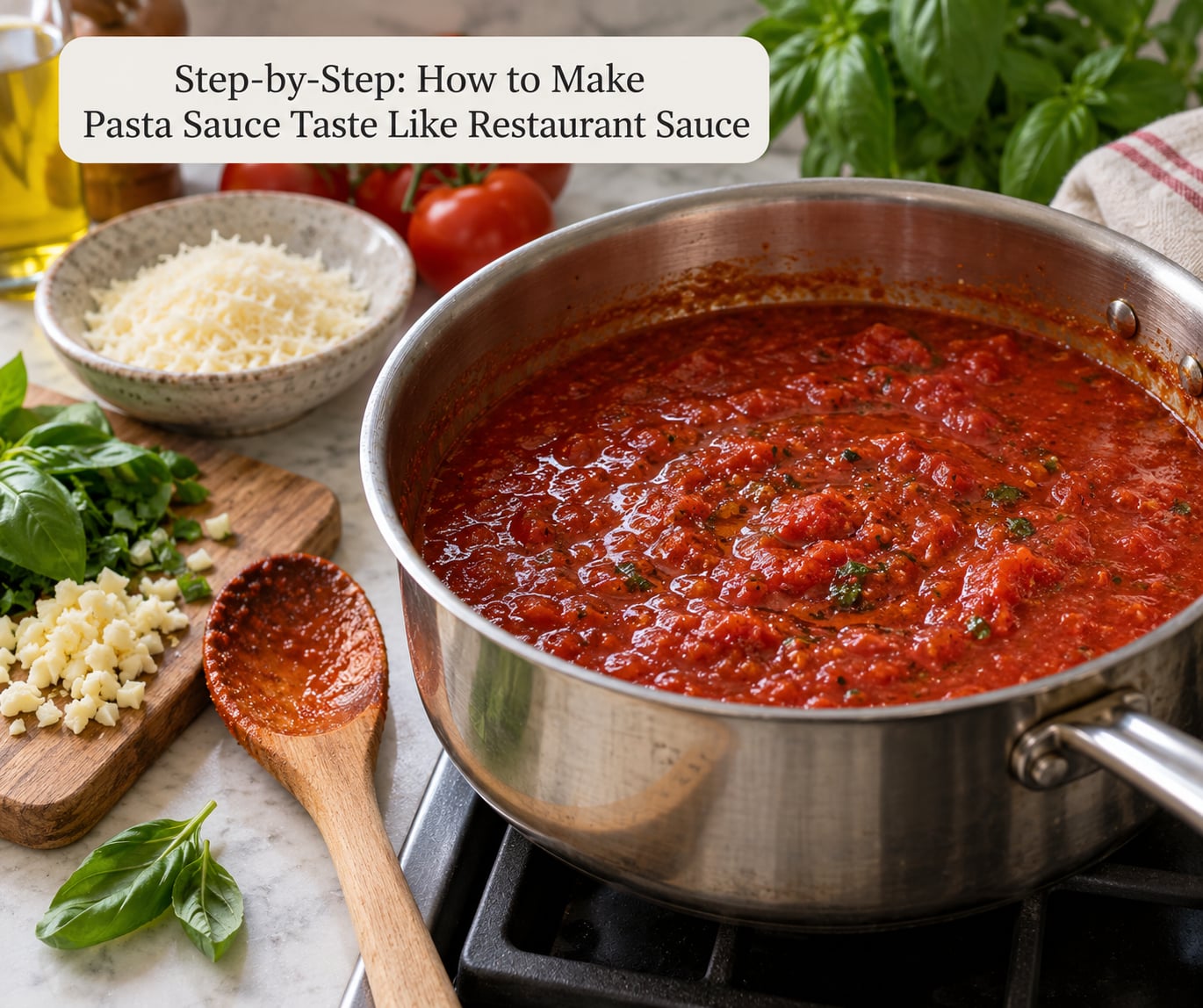
Step 1: Build a Balanced Flavor Base
Start with a soffritto, which is simply onion cooked slowly in fat until sweet and soft. Dice the onion small, put it in a saucepan with a generous pour of olive oil over medium-low heat, and give it 10 to 15 minutes until translucent and collapsing.
Do not push it to brown. Golden onion reads as cooked-sweet in a long sauce and as bitter in a quick one, and the color difference arrives well before the flavor difference does.
Slice garlic thin rather than chopping it, and add it after the onion has softened. Thin slices cook through in the oil instead of burning on the surface, which is where the bitter, acrid note in most failed garlic comes from. Two to three minutes is enough for a quick sauce; five minutes for a long one.
If you are starting from jarred sauce, do this step in the same pan first and add the jar to it, so you are building layers rather than reheating something finished.
Step 2: Season in Layers
Seasoning once at the end is the most common reason homemade sauce tastes flat, and no amount of extra salt afterward fully fixes it.
Salt the onions as they cook, salt the tomatoes when they hit the pan, and salt again near the end after the reduction. It sounds redundant because reduction concentrates salt, which means the same amount of salt added early ends up twice as salty by the time you serve, while a late addition lands at the finished intensity.
Add dried herbs early and fresh herbs late. Oregano, thyme, bay and chili flakes need minutes of simmering to shed their bitterness. Basil, parsley and mint do not; they go in off the heat or in the final minute, or you have cooked the life out of them.
Then balance the acid. If the sauce tastes heavy and blunt rather than sour, add a teaspoon of lemon juice or a splash of white vinegar and taste again. Sourness at that point is not the problem; a lack of contrast is. Aim for a sauce that tastes slightly brighter than comfortable, because fat and cheese served on top will flatten it again.
Step 3: Simmer Until the Sauce Tastes Developed
Restaurants cook sauce in batches so it can reduce properly, and that reduction is where a large share of the flavor gap comes from.
Uncovered, on a gentle simmer that barely breaks the surface, is the setting. Not a rolling boil, which scorches the bottom, and not a lid, which traps steam and stops reduction. Timing depends on the style you are making.
A fresh-tasting marinara wants 20 to 30 minutes after the tomatoes go in. Anything longer starts trading fresh tomato character for cooked depth, which is a different dish and not a better one.
A vodka sauce runs 30 to 45 minutes. A Bolognese or Sunday gravy runs two to four hours, low and steady. Thirty minutes is not going to turn a jar of sauce into Sunday gravy, and forum threads that insist otherwise are describing a different goal.
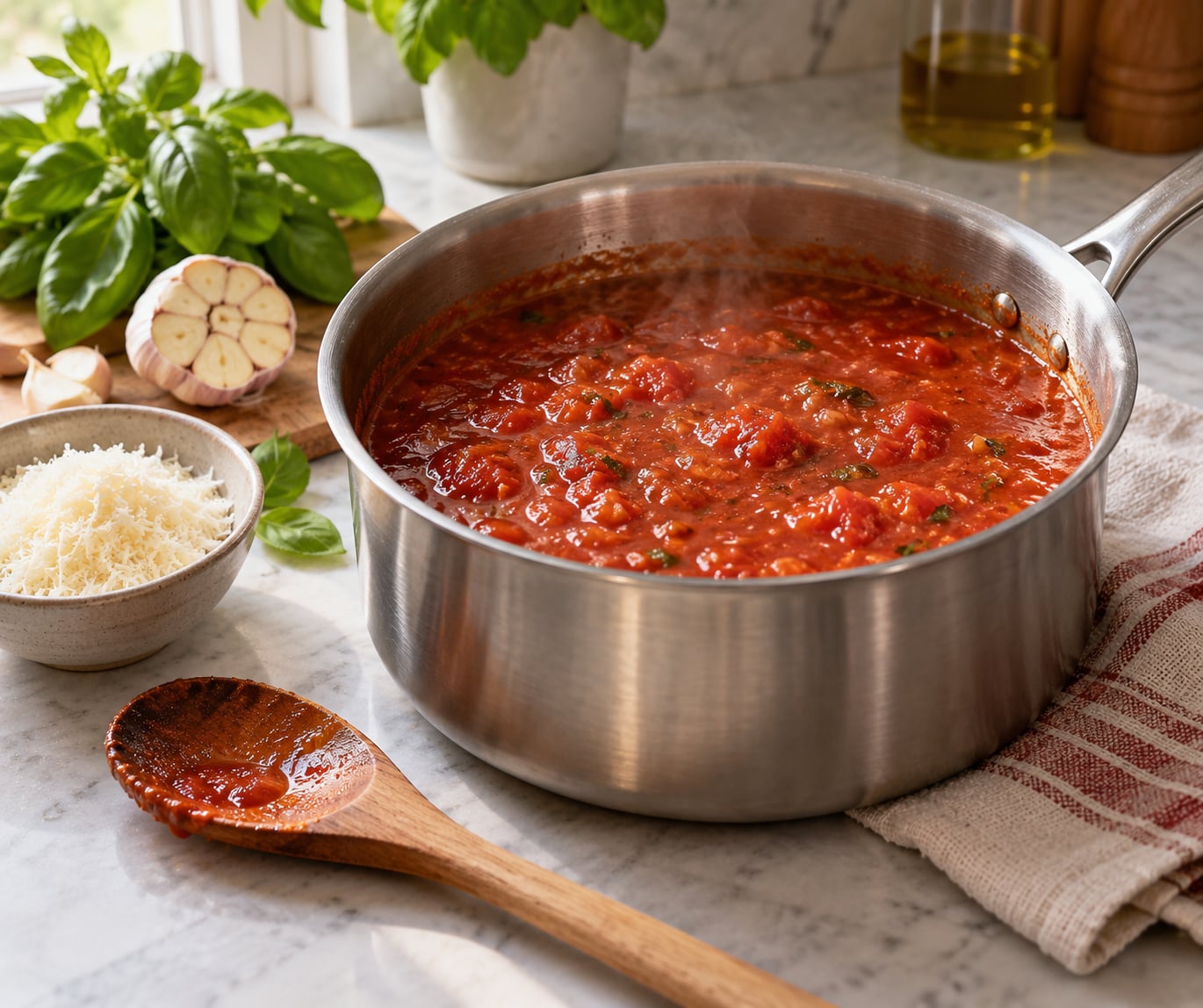
How do you know when it is ready? Put a spoon in, tilt it, and watch the trail the sauce leaves behind. When the line holds for a second or two before closing rather than vanishing instantly, you have roughly a 25 to 30 percent reduction and enough concentration to carry the rest of the method. If it is thin, give it another 10 minutes; if it is thick and dull, you have gone too far.
One shortcut fits inside that window. Cook 2 tablespoons of tomato paste in a dry pan over medium heat for two to three minutes until it darkens to brick red and smells roasted, then stir it in. That caramelized paste adds sweetness and body in about three minutes that would otherwise take an hour of simmering.
Step 4: Make the Sauce Glossy and Silky So It Tastes Like Restaurant Sauce
Starchy pasta water is the one ingredient that makes a sauce change texture rather than just taste. Gelatinized starch suspended in water behaves as an emulsifier, meaning it lets fat and water stay mixed instead of separating. Pasta cooks release that starch; tap water has none.
Cook the pasta two minutes short of al dente. Scoop out a mug of the water before draining, then return the pasta straight into the sauce pan with a splash of that water and a glug of olive oil or a knob of butter.
Toss over medium-high heat for 60 to 90 seconds, adding more water a tablespoon at a time as needed. The sauce should thicken, turn glossy, and start sticking to the pasta rather than sitting on it. This finishing step, called mantecatura, is what Italian kitchens do for every plate they send out, and skipping it is why homemade sauce pools at the bottom of the bowl while restaurant sauce coats the noodles.
Add grated cheese after the heat comes down, never to a boiling sauce. Boiling first is what turns cheese into rubbery strings; off heat and residual warmth is enough to melt it into a creamy sauce.
Step 5: Finish With Fresh and Savory Elements
The last thirty seconds do more work than people expect. Restaurants plate with intention, and you can copy that in under a minute.
Tear basil by hand and add it to the hot pan just before serving, so the leaves wilt but stay green and aromatic. Grate Pecorino Romano over the top for salt and a sharper, more savory bite than Parmesan alone.
For a lighter sauce, a thin ribbon of cold olive oil across the surface after the heat is off gives a green, peppery aroma that cooked oil cannot. Red pepper flakes and a squeeze of lemon zest work for richer sauces, and toasted breadcrumbs fried in garlic oil give a ragù or a meat sauce the bite that Italian trattoria plates almost always have.
Serve in a warmed bowl if you have one. A cold bowl pulls heat out of the sauce on contact, and the aroma you worked for arrives at the table weaker. Warm the bowls in the oven for five minutes while the pasta finishes.
Common Mistakes and How to Fix Them
Most disappointing pasta comes down to a handful of repeat errors, and each one has a direct fix.
Spooning sauce on top of the pasta. This is the big one. Finish the pasta in the sauce with pasta water, and the texture changes completely.
Burning the garlic. Slice it thin, add it after the onion softens, and keep the heat moderate. Bitter garlic flavors the entire batch and cannot be removed.
Seasoning only at the end. Salt at each stage and re-check after the reduction, because concentration changes everything.
Cooking a quick marinara for an hour. Long cooking flattens fresh tomato character. Hold fresh marinara to about 30 minutes and choose a long-simmer style if you want depth instead.
Adding fresh herbs at the beginning. Dried early, fresh late.
Chewing on rubbery cheese strands. Add cheese off the heat and let the residual warmth do the work.
Skipping the acid. A small splash of vinegar or lemon at the end wakes up a sauce that reads as heavy rather than sour.
Using a lid while simmering. Trapped steam prevents reduction and leaves the sauce thin.
Use this table to diagnose a batch you have already made.
| Symptom | Why it happened | Fix |
|---|---|---|
| Tastes flat despite the salt | Salt added once, then concentrated or diluted by finishing liquid | Taste in three stages; finish with lemon juice or white vinegar |
| Tastes sour or sharp | Too much acid, or tomatoes cooked in a hot uncovered pan | Add a spoon of fat and a pinch of sugar, then simmer gently 5 minutes |
| Thin and watery | Not reduced, or pasta boiled in too much water | Simmer uncovered 10 more minutes; finish with starchy water in the pan |
| Too thick, pasty | Over-reduced before the pasta went in | Loosen with reserved pasta water while tossing over heat |
| Bitter | Garlic or onion scorched, or sauce caught on the pan | Balance with a little sugar and acid; next time keep the heat lower |
| Too salty | All the salt added before reduction | Add unsalted starchy water and a ladle of plain water, then re-season gently |
| Greasy or slick | Oil split from the emulsion, or pasta served straight from the pot | Toss hard with pasta water over heat until it turns glossy again |
| Dull, cooked-out flavor | Simmered past the point where the style wanted it | Brighten with lemon juice and torn fresh herbs; add tomato paste next time for depth |
Three substitutions worth knowing. Umami replaces fish or meat: a Parmesan rind, a teaspoon of white miso, or a spoonful of tomato paste all supply the savory weight that anchovies would, without the fishiness. Cream replaces butter in a rich sauce, and you can lighten a vodka or alfredo by simmering it down a couple of minutes before the pasta goes in.
If you are cooking for a crowd, make the sauce a day ahead and hold it gently rather than letting it sit on a warm burner, which keeps reducing and eventually scorches. When it is time to serve, loosen it with warm water a little at a time, then finish each batch with pasta water in the pan like everything else.
Fridge storage runs about four days in a sealed container. For longer, freeze it flat in a bag with a little air pressed out, which limits freezer burn; thaw in the fridge overnight and reheat with a splash of water, loosening it back to its original texture.
Frequently Asked Questions
What makes restaurant pasta sauce taste better than homemade sauce?
Restaurants control reduction and finish the pasta in the sauce. A batch sauce is cooked uncovered until roughly a quarter of the liquid is gone, concentrating the flavor, then each order is tossed with the pasta, starchy water and fat so the sauce emulsifies and clings. Home cooks usually skip both, so the sauce tastes thinner and reads as less intense.
Why does my pasta sauce taste bland even after I added salt?
Because salt added once is not the same as seasoning in layers. A long simmer concentrates it, and the fat and cheese you add at the table blunt whatever is left behind. Salt the onions, the tomatoes and the finished sauce separately, then sharpen the whole thing with a teaspoon of lemon juice or a splash of white vinegar. Brightness reads as flavor.
Should I add pasta water to my sauce?
Yes, always save a mug before draining. Water from salted, starchy pasta emulsifies fat and water together, so the sauce thickens and turns glossy in the pan instead of sliding off the noodles. Add it while tossing the pasta in the sauce over medium-high heat, a tablespoon at a time, until the sauce coats. A thin, flat sauce benefits from it more than a thick one.
How can I make tomato sauce taste richer without cream?
Use caramelized tomato paste and an umami source. Cook two tablespoons of paste in a dry pan until it darkens, then stir it in. Add a Parmesan rind, a spoonful of anchovy paste or a teaspoon of white miso during the simmer, and finish with cold olive oil off the heat. Reducing the sauce uncovered for 10 extra minutes concentrates it, which also deepens it.
How do I make pasta sauce thicker without flour or cream?
Two methods work. Simmer it uncovered so water evaporates, watching for a sauce that coats the back of a spoon. Better still, finish the pasta in the sauce with reserved starchy water and fat, tossing for 60 to 90 seconds, which thickens the sauce and coats the pasta in one step. A tablespoon of tomato paste stirred in at the end adds body without changing the texture.
What finishing ingredients make a simple pasta sauce taste restaurant-quality?
Torn fresh basil or parsley added off the heat, grated Pecorino Romano, a thread of cold extra virgin olive oil, and red pepper flakes. Each does a different job: herbs for aroma, cheese for salt and body, oil for a peppery top note, flakes for heat. Toast breadcrumbs in garlic oil if you want texture, and serve in a warmed bowl so the aroma arrives as strong as it tastes.
Start with the one move most recipes skip: cook the pasta two minutes short, move it into the sauce with a mugful of the water you just drained, and toss for a minute. That alone closes most of the gap between a home pot and a restaurant plate, and it costs nothing but the habit of not draining.