To make baked mac and cheese creamy instead of dry and rubbery, you need three things: a real cheese sauce made from a roux and shredded cheese, more sauce than pasta, and a short bake. Most home versions go wrong in the oven, not the pot. If you cook the macaroni a minute or two short of done, melt the cheese off the heat, and pull the dish as soon as the top bubbles, the center stays silky.
This recipe makes a generous 9-by-13-inch batch, about eight servings, and takes roughly 50 minutes from the first pot of water to the table. It is forgiving once you get the pasta stage right, and every step below includes the visual cue that tells you it is working.
Table of Contents
- What You Need
- Step-by-Step: How to Make Baked Mac and Cheese Creamy
- 1. Cook the Pasta Until Just Tender
- 2. Make a Silky Cheese Sauce
- 3. Fold the Macaroni Into the Sauce
- 4. Choose a Cheese Topping
- 5. Bake Until Bubbly and Golden
- 6. Rest, Serve, and Store Leftovers
- Common Mistakes
- Frequently Asked Questions
- How do I keep baked mac and cheese creamy after baking?
- Why does my baked mac and cheese become dry?
- How do I prevent cheese sauce from becoming grainy?
- Can I use regular milk instead of evaporated milk?
- What is the best way to reheat baked mac and cheese?
- Conclusion
What You Need
Nothing here is exotic, and every item has a job. Measure the shredded cheese by weight if you can, since volume measurements are where home kitchens quietly go wrong.
- Pasta: 12 ounces (about 2 cups) elbow macaroni, or cavatappi, shells, or rotini
- Roux: 4 tablespoons unsalted butter and 4 tablespoons all-purpose flour
- Dairy: 2 cups whole milk plus 1 cup half-and-half or one 12-ounce can evaporated milk
- Cheese: 2 cups (about 8 ounces) sharp cheddar, grated by hand, plus 1 cup (about 4 ounces) Gruyere, Colby Jack, or a blend
- Emulsifier (optional): 2 slices American cheese, cut into strips
- Seasoning: 1 teaspoon kosher salt for the pasta water, 1 teaspoon salt for the sauce, 1 teaspoon black pepper, 1 teaspoon dry mustard or 1 tablespoon Dijon, 1/2 teaspoon smoked paprika, 1/2 teaspoon garlic powder
- Topping (optional): 1 cup panko breadcrumbs tossed with 3 tablespoons melted butter, or 1 cup extra shredded cheddar for a cheese-only crust
- Equipment: 9-by-13-inch ceramic or glass baking dish, a wide pot, a whisk, a box grater
That dairy total plus the cheese gives you roughly 4 cups of finished sauce for 12 ounces of pasta. Generous sauce is the whole game, so do not cut it back. You want visible liquid between the noodles when the dish comes out of the oven.
Whole milk beats skim for stability, since the extra fat keeps the emulsion from breaking as it heats. Heavy cream works in place of the half-and-half if you want a richer result, and plain Greek yogurt stirred in at the end adds tang without thinning the sauce much.
Step-by-Step: How to Make Baked Mac and Cheese Creamy
1. Cook the Pasta Until Just Tender
Bring a large pot of water to a rolling boil and salt it until it tastes like the sea. Add the macaroni and cook it two minutes short of the package time, which usually means about 6 minutes.
Undercooking on purpose is the single most important step here. Pasta that is already tender when it hits the sauce turns to mush during the bake, and mushy pasta drinks up liquid instead of holding it. Drain the pasta, then rinse it briefly under cold water and shake it dry. That stops the carryover cooking and washes off the surface starch that would otherwise glue everything together.
2. Make a Silky Cheese Sauce
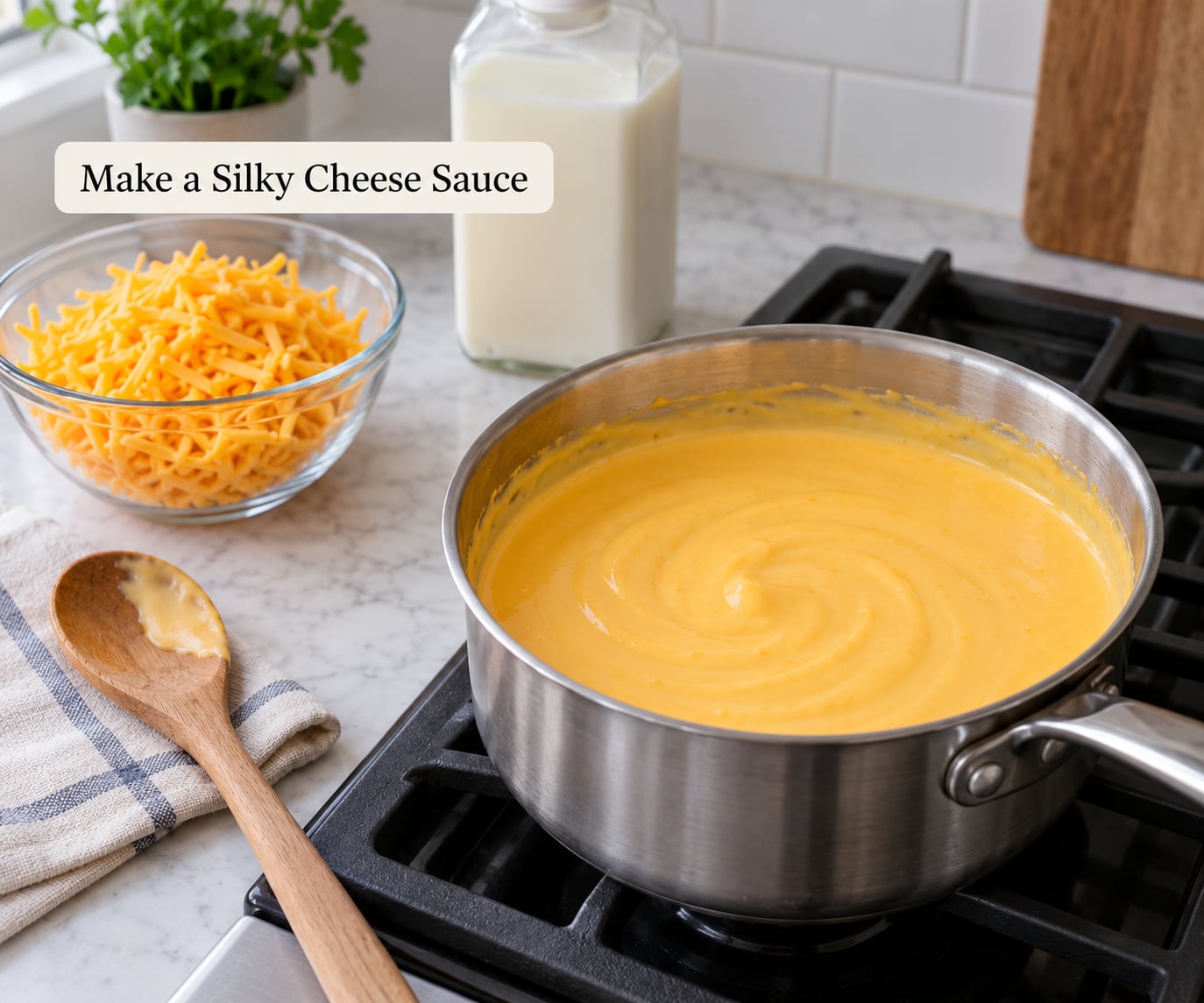
Melt the butter in a clean saucepan over medium-low heat. Whisk in the flour and keep whisking for a full minute, until the mixture smells toasty rather than raw. Flour needs that minute to cook off, and skipping it is what leaves a raw, floury taste behind the cheese.
Pour in the milk a little at a time, whisking constantly so no lumps form. It will seize and look broken for the first few seconds, then come together into a smooth, thick base. Add the half-and-half or evaporated milk, the salt, pepper, mustard, paprika, and garlic powder, and let the sauce simmer gently for two to three minutes until it coats the back of a spoon.
Kill the heat. Add the American cheese strips if you are using them, let them soften for 30 seconds, then add the shredded cheddar and Gruyere a handful at a time, stirring until each batch disappears. Melting cheese off the heat is the second rule that keeps the sauce smooth. Above about 140 degrees Fahrenheit the proteins in cheese tighten, squeeze out their fat and turn grainy, and no amount of stirring brings that back.
How do you know the sauce is right? Lift a spoon and let it fall back into the pan. It should ribbon off in a slow, unbroken stream and land with a soft plop, not run flat like milk and not fall in a stiff glob. That texture is what keeps the pasta creamy after a 25-minute bake.
3. Fold the Macaroni Into the Sauce
Tip the drained pasta into the saucepan and fold it through the sauce with a rubber spatula. Stir gently, breaking up any clumps, until every noodle is coated and a little sauce pools at the bottom of the pot.
Do that visual check before the dish ever hits the oven. Scoop some macaroni into a clear bowl and look at the edges. If the noodles sit in a thin film rather than a shallow pool, add a splash more milk, a quarter cup at a time. It is much easier to loosen the sauce now than to rescue a dry casserole later. Season here too, with a pinch more salt and a grind of pepper.
4. Choose a Cheese Topping
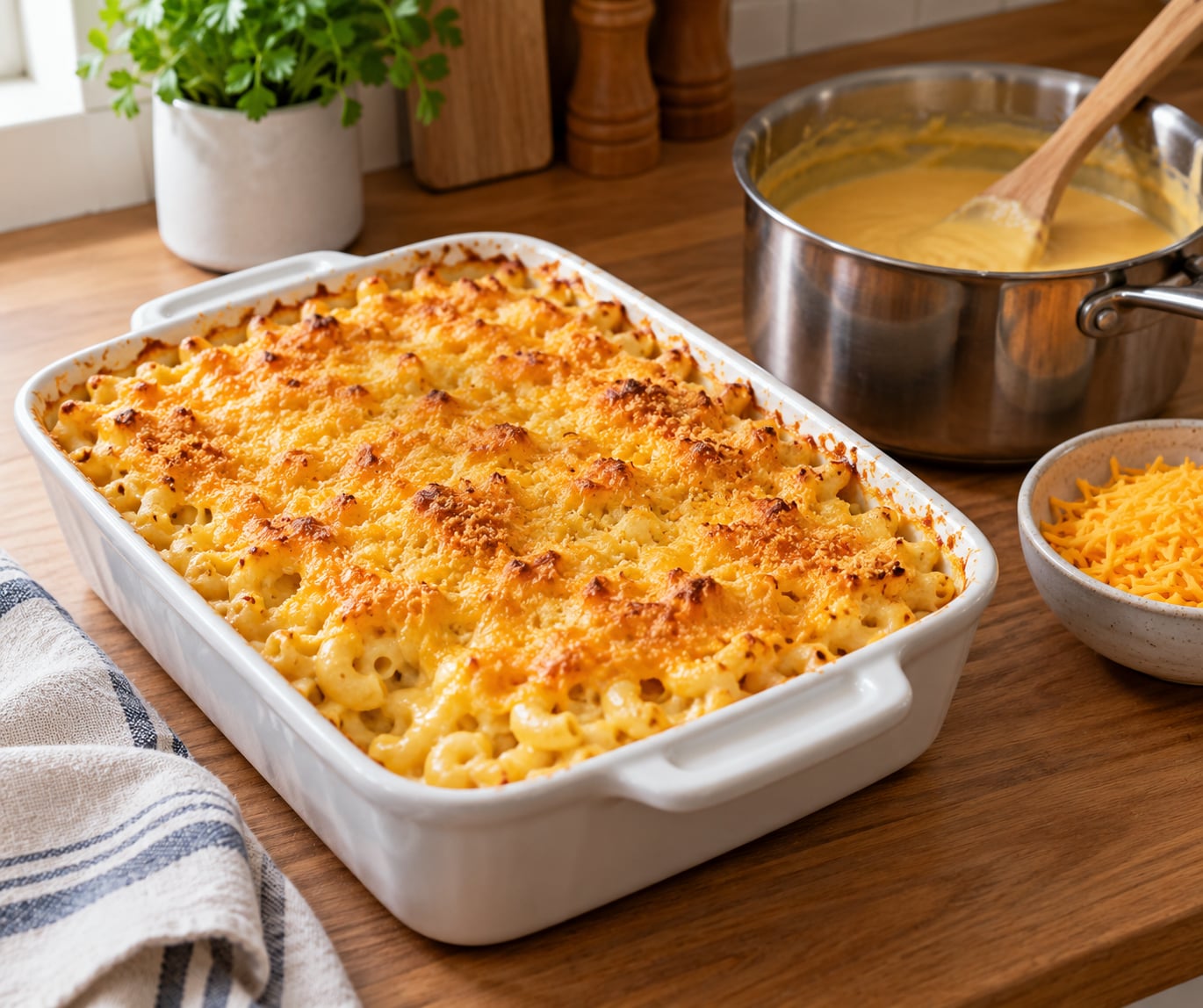
There are two good options and they solve different problems. A layer of extra shredded cheddar gives you a bubbly, blistered, golden cheese crust that snaps slightly on top while the middle stays saucy. It is the pub-kitchen choice, and it does not absorb any liquid.
A panko crumb topping tossed with melted butter gives you crunch and a deeper toasted flavor. Just know that crumbs drink moisture out of the top layer as they bake, so go a little lighter on the butter and add the crumbs only after the pasta is saucy enough to spare it. Press them on lightly rather than packing them down, or they sink into the macaroni instead of staying on top.
You can also do both, in layers, which is the move for a holiday table where you want the look of a crust and the crunch of crumbs.
5. Bake Until Bubbly and Golden
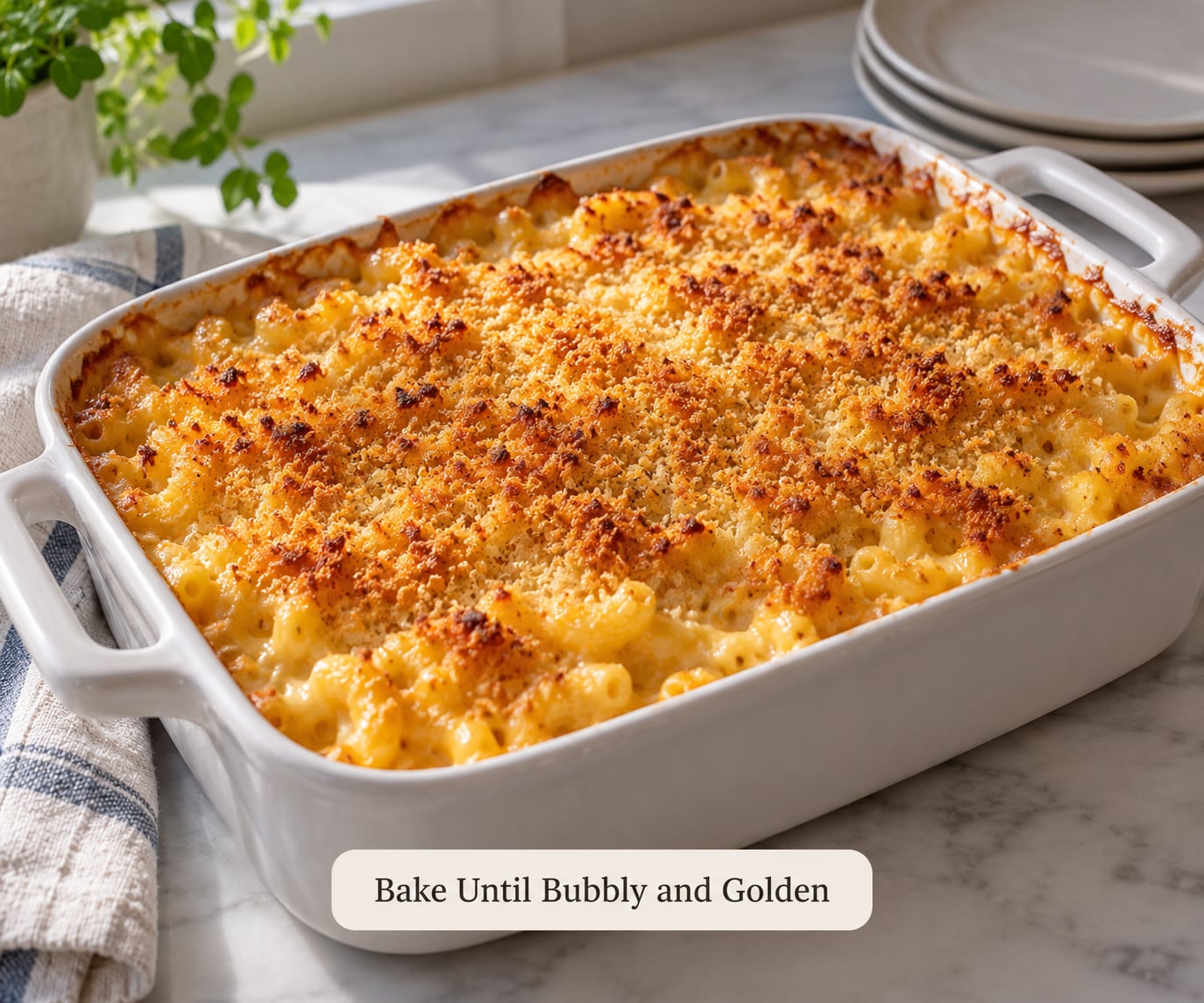
Spread the macaroni into the dish, level the top, and add whichever topping you chose. Bake at 375 degrees Fahrenheit, uncovered, for 20 to 25 minutes.
Uncovered is the important word. A crust needs exposed surface to brown, and a foil cover traps steam that softens the top and keeps the sauce thin. Pull the dish the moment the edges are bubbling, the top is lightly golden, and you can see sauce between the noodles near the center. If you want a deeper brown, give it three more minutes, not ten.
Other temperatures work too. At 425 degrees Fahrenheit, uncovered, expect 15 to 18 minutes, and the top browns fast so keep an eye on it. At 350 degrees, bake covered with foil for 20 minutes, then pull the foil and bake 10 to 12 more minutes uncovered. That lower-and-longer route is the safest choice if your oven runs hot, and it is the method to use for a make-ahead dish baked straight from the refrigerator, since it heats through gently. A convection oven cuts roughly 5 minutes off the 375-degree time.
6. Rest, Serve, and Store Leftovers
Let the dish sit 10 to 15 minutes before serving. This is not a formality. The sauce is still loose when it leaves the oven, and the resting time lets it tighten into a glossy set that clings to the pasta instead of pooling in the bottom of the dish. Cutting straight in gives you soup with noodles.
To store leftovers, refrigerate within two hours of baking. It will keep about three to four days in the fridge; a shallow covered container works better than the baking dish, since it cools faster and the crust does not turn soft in the moisture.
Reheat portions in the microwave with a splash of milk or cream, stirring halfway through, until they hit 165 degrees Fahrenheit. If you have a stove, the stovetop is nicer: low heat, a lid on, and a couple of tablespoons of milk stirred in as it loosens. Covering the dish and baking it at 350 degrees for 12 to 15 minutes also works, again with a little milk.
Common Mistakes
Almost every disappointing baked mac and cheese traces back to one of four things: the pasta was too done, the sauce was too thin, the oven was too hot or the bake too long, or the cheese got overheated. Here is how to spot each one and what to do about it.
| Symptom | What caused it | Fix it |
|---|---|---|
| Dry, crumbly, sauce pulled away from the noodles | Too little sauce, or baked too long at too high a heat | Use 4 cups of sauce per 12 ounces of pasta, and pull the dish at the first sign of bubbling |
| Grainy or clumpy sauce | Cheese melted over high heat, or pre-shredded bagged cheese | Take the pan off the heat, add cheese a handful at a time, and grate it yourself |
| Oily sheen on top | Cheese proteins tightened and pushed out their fat, usually from boiling the sauce | Keep the heat low, stir often, and add a splash of warm milk to loosen |
| Mushy, shapeless pasta | Pasta cooked to full tenderness before it went into the dish | Boil two minutes short of the package time and rinse under cold water |
| Rubbery, chewy leftovers | Reheated too long or without liquid | Add warm milk and reheat gently, covered, stirring once or twice |
If a batch already came out dry, you can bring most of it back. Warm two to three tablespoons of milk in a pan, tip the macaroni in, and stir over low heat for three to four minutes until the sauce loosens and coats the noodles again. In a pinch, the microwave works: cover the dish, microwave in 60-second bursts, stirring with a splash of milk between each burst.
A couple of habits keep the creaminess consistent. Grate the cheese yourself, because pre-shredded bags contain anti-caking agents that melt into a waxy film rather than into the sauce. Add the mustard, even though it tastes odd on its own, because it emulsifies and gives the sauce a gentle tang. And never let the sauce boil once the cheese goes in, because boiling is what pulls water out and turns a smooth sauce grainy.
To get ahead, assemble everything except the topping, cover, and refrigerate for up to two days. Bake from cold covered at 350 degrees for 25 to 30 minutes, uncover, stir in a splash of warm milk, then add the topping and bake 10 minutes more. That cold-start method is the single best answer to dry make-ahead mac and cheese, since a dish straight from the fridge will not dry out in a hot oven before the center heats through.
One caution about the old advice to bake until it looks done, which usually means pushing the dish until the top is dark and the edges are crusty. That approach suits a firm, sliceable casserole, and it is the opposite of what most people are asking for here. Pull the dish a minute or two earlier than feels right and let the rest finish the job.
Frequently Asked Questions
How do I keep baked mac and cheese creamy after baking?
Cook the macaroni two minutes short of the package time, use more sauce than feels necessary, and pull the dish from the oven the moment the edges bubble and the top looks pale gold. A short uncovered bake sets the crust without driving water out of the sauce. Letting the dish rest 10 to 15 minutes afterward lets the loose sauce tighten into a glossy set that clings to the pasta.
Why does my baked mac and cheese become dry?
Three things cause it: too little sauce, too long a bake, and pasta that was cooked fully before it went into the dish. Aim for roughly 4 cups of finished sauce per 12 ounces of pasta, so liquid is visible between the noodles. Bake uncovered at 375 degrees for 20 to 25 minutes, then check early. Covered foil traps steam but softens the crust, so uncover for the last stretch.
How do I prevent cheese sauce from becoming grainy?
Take the pan off the heat before you add the shredded cheese, and melt it in a handful at a time with constant stirring. Cheese proteins tighten and squeeze out their fat above roughly 140 degrees, which is what makes a sauce break and turn grainy. Grate your own cheese rather than using bagged pre-shredded, which carries anti-caking agents that leave a waxy film, and never let the sauce boil once the cheese goes in.
Can I use regular milk instead of evaporated milk?
Yes, though the texture shifts slightly. Evaporated milk is milk with about 60 percent of its water removed, so it is naturally thicker and more stable through a long bake. Regular whole milk works fine if you keep the roux slightly thicker and the bake on the shorter side. Very low-fat or skim milk is the one to avoid, because the missing fat is what keeps the emulsion from splitting.
What is the best way to reheat baked mac and cheese?
Add a splash of milk or cream first, then reheat gently and covered. On the stovetop, warm two to three tablespoons of milk in a pan, add the macaroni, cover, and stir over low heat for three to four minutes. In the microwave, use 60-second bursts with a stir and another splash between each burst. Covered baking at 350 degrees for 12 to 15 minutes also brings it back to 165 degrees without drying it out.
Conclusion
The technique that makes the biggest difference is cooking the pasta a minute or two short of done and giving it more sauce than you think it needs, so there is visible liquid in the dish before it goes into the oven. Build the sauce fresh, melt the cheese off the heat, and bake uncovered just until the top bubbles and browns lightly. Rest it for ten minutes, and you will have a baked mac and cheese that stays creamy all the way to the last bite.