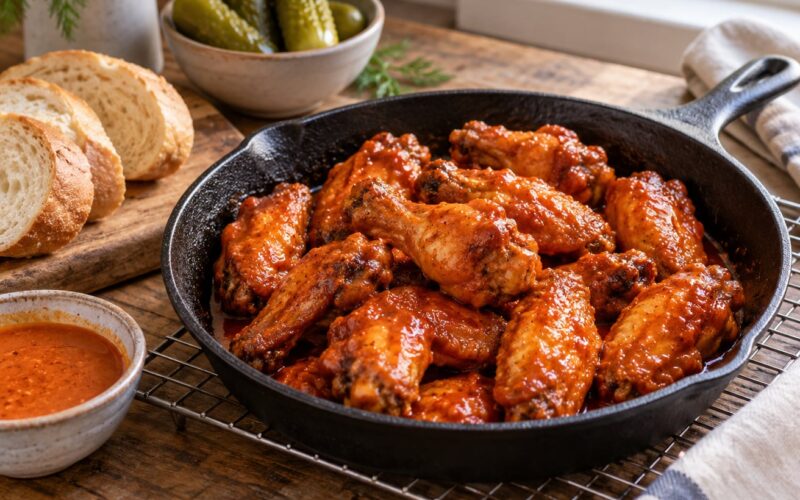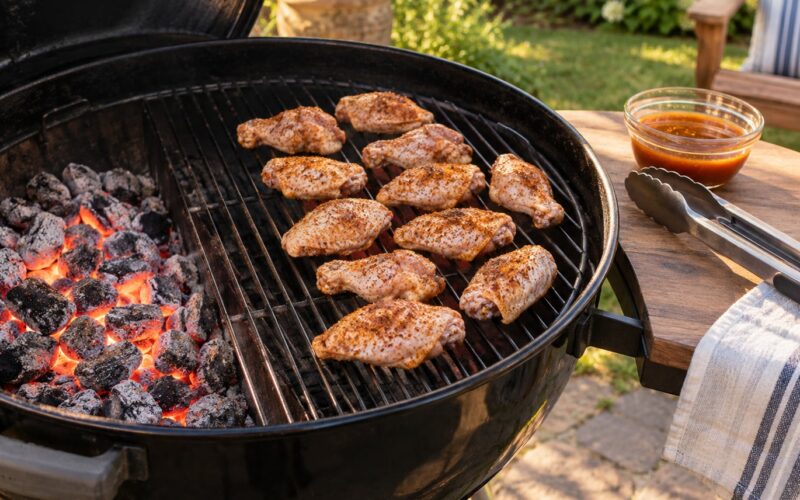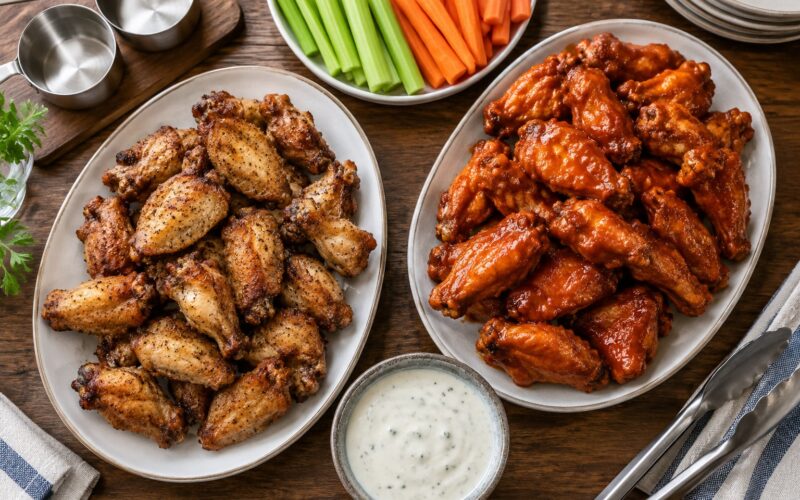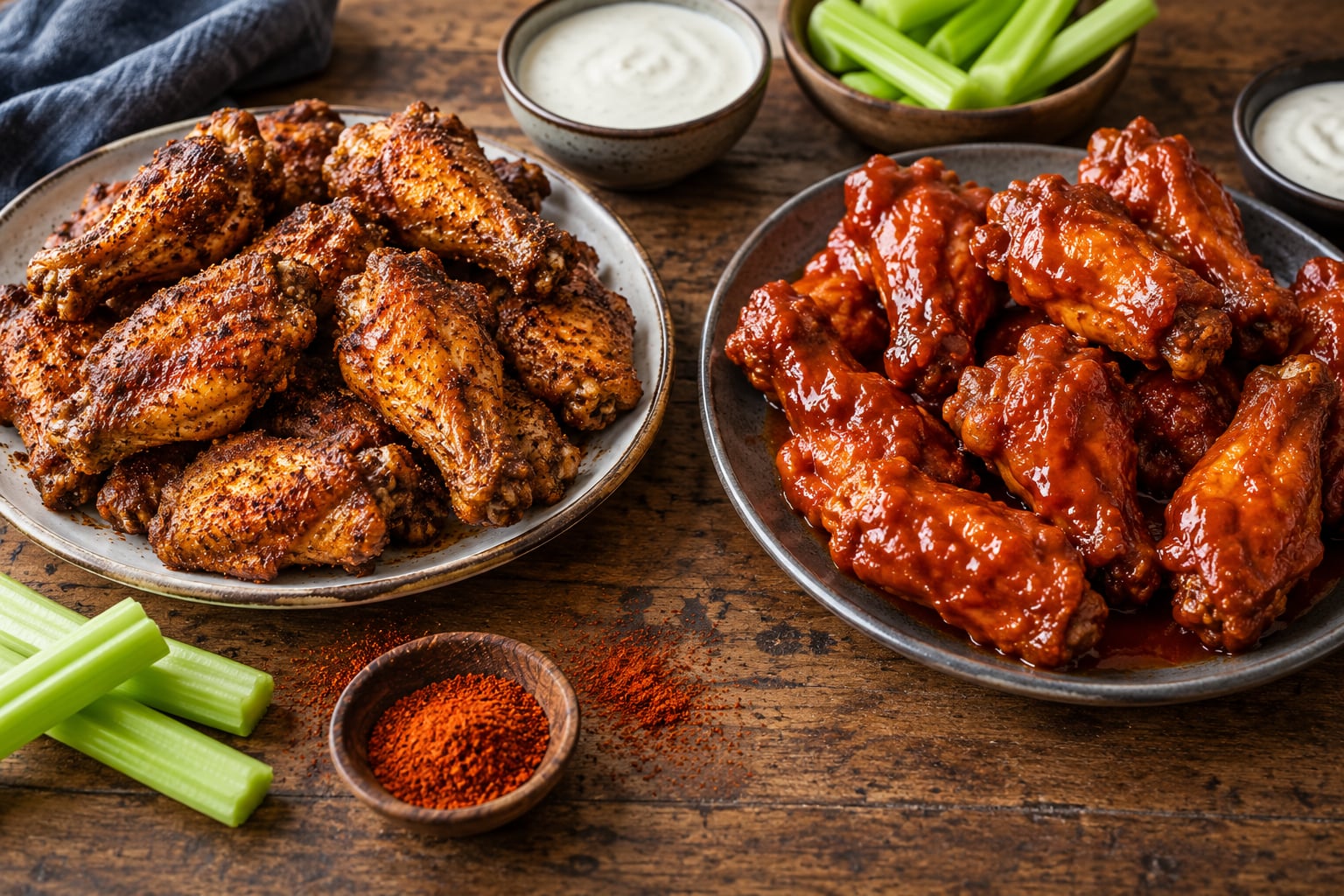
Dry rub wins on crisp skin, clean hands and reheating; sauce wins on immediate flavor, adjustable heat and crowd appeal. On the core question of dry rub vs sauced wings which is better, the honest answer depends on who is eating and what equipment you own, not on which style is objectively superior. Most hosts land on the same compromise anyway: dry rub the wings before cooking, then toss them in warm sauce at the very end.
I have served both at plenty of game-day tables, and the thing nobody tells you is that the debate sounds fierce online but turns into a non-issue in the room. People eat what is in front of them. What does matter is the texture you set up, how much mess you hand your guests, and whether the batch still holds together an hour after kickoff.
Table of Contents
- Dry Rub vs Sauced Wings Which Is Better at a Glance
- Flavor and Heat: Which Style Wins?
- Texture: Crunchy Rub or Tender, Sauced Wings?
- Dry Rub vs Sauced Wings: How Preparation Changes the Result
- Mess, Holding, and Party Practicality
- Dips, Drinks, and the Best Pairings
- Which Should You Choose?
- Frequently Asked Questions
- Are dry-rubbed wings healthier than sauced wings?
- How do I keep sauced wings crispy?
- Should I apply a dry rub before or after baking the wings?
- Can I make dry-rubbed wings ahead for a party?
- What sauce works best if I want both dry and sauced wings?
- Which wing style is easier for a beginner to make?
- Conclusion
Dry Rub vs Sauced Wings Which Is Better at a Glance
Here is the short version before we dig into each factor. Read the crispness and mess rows first, because those two decide the outcome more often than flavor preference does.
| Factor | Dry Rub Wings | Sauced Wings |
|---|---|---|
| Flavor intensity | Layered and savory, spice builds in stages | Bold and immediate, hits the tongue on the first bite |
| Heat control | Adjust by adjusting the blend | Adjust by adjusting the sauce |
| Texture | Crackly skin with a seasoned crust | Glossy coating over softer skin |
| Mess factor | Low, you can eat one with a napkin | High, expect a wet hand and a sticky platter |
| Ease of eating | Easy, two hands or one | Fiddly, drips land on the plate or shirt |
| Best cooking methods | Bake, air fryer, grill, smoke, deep fry | Fry, bake then glaze, grill then glaze |
| Best for kids | Only if the rub is mild | Usually the safer pick |
| Best for a party | Clean platter, easy to eat while watching | Showy platter, heavier to eat |
| Beginner difficulty | Forgiving if you dry the skin well | Timing-sensitive, easy to make soggy |
| Reheat and leftovers | Revives well in a hot oven | Turns rubbery and dull |
Flavor and Heat: Which Style Wins?
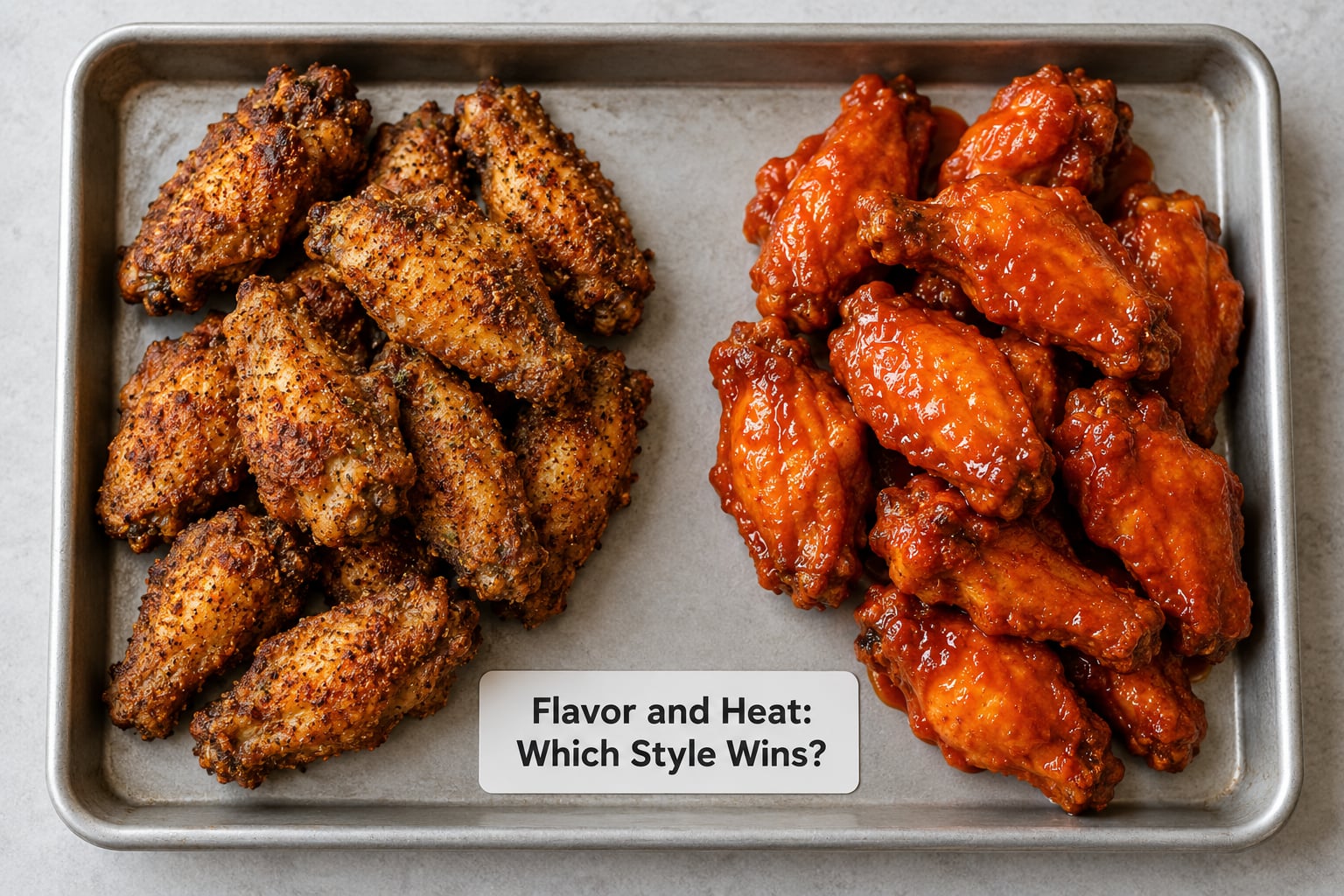
Sauce wins the first bite. A wing tossed in buffalo or honey barbecue sauce carries its flavor on the surface, so it tastes exactly the same hot, lukewarm or at room temperature ten minutes later. That immediacy is why sauced wings dominate bar menus and why people describe them as more exciting.
Dry-rubbed wings taste better on the second and third bite. Seasoning applied before cooking has time to travel into the skin and set into a crust, so the flavor feels attached to the meat rather than sitting on it. A good rub built on salt, garlic powder, smoked paprika and a little brown sugar layers sweet, smoky and savory notes instead of shouting one flavor from the first second.
Heat control is where the rub quietly wins. A dry blend is fully editable: halve the cayenne for a mild table, double it for a spicy one, and swap smoked paprika for chipotle powder without changing anything else. With sauce, extra heat usually means more liquid, and more liquid means more softening of the skin you just worked to crisp.
Coating options are also wider on the sauce side. Buffalo, honey barbecue, garlic parmesan, salt and vinegar, gochujang glaze, hot honey and lemon pepper sauce all exist in liquid form. A handful of rubs cover the same territory, but they cover it in a different language, one that skews smoky and savory rather than sweet and tangy.
The forum consensus matches my own kitchen experience. In r/Wings, the recurring defense of dry wings is almost never about taste; it is about mess and texture, with lemon pepper named more often than anything else.
Texture: Crunchy Rub or Tender, Sauced Wings?
Dry rub wins texture, and it is not close. Seasoning goes on before heat hits the skin, so the surface has time to dry out, brown and set into a crust while fat renders underneath. A sauced wing gets liquid added after that crust forms, which traps steam against the skin and softens exactly the part you spent 45 minutes creating.
Dry-rubbed wings also stay crisp longer on a platter. Sauced wings start losing their crack within minutes, and they soften fastest in a closed bowl or a foil-covered tray. Dry wings are basically indifferent to how long they sit, which matters on a game day when the platter hits the table an hour before anyone eats.
Dry Rub vs Sauced Wings: How Preparation Changes the Result
The rub goes on before cooking, always. Pat the wings bone-dry with paper towels, season generously, and let them sit uncovered in the fridge for 4 hours to overnight. That uncovered rest is a dry brine: salt draws moisture out of the skin, and drier skin is crispier skin. A light coat of neutral oil before the rub helps the seasoning grip, which is a common fix for rub that peels off in flakes.
Sauce goes on after cooking, and later is better. Toss warm wings in sauce warmed in a pan, then return them to high heat for 60 to 90 seconds to set the glaze. That toss-and-return step is the whole trick, and it is why restaurant wings taste glossy instead of wet.
Beginners get an easier time with dry rub wings, mostly because there is no timing window to miss. Dry the skin, season, cook to 165°F internal for safety, and rest 15 to 30 minutes on a wire rack over a sheet pan. Sauce punishes impatience: wings straight out of the fryer or oven steam each other into softness before you can get the coating on.
Both styles want the same setup. A wire rack instead of a flat pan, wings spaced so they do not touch, and no crowding. Overcrowding is the single most common cause of soggy wings in home kitchens, and it gets blamed on the sauce every time.
Mess, Holding, and Party Practicality
Dry rub wins this row and nobody argues with it. A dry-rubbed wing can be picked up with one hand, eaten in two bites, and put down without leaving a mark. Guests are watching a game, not sitting at a table, so anything that can be eaten one-handed is worth a lot in that setting.
Sauced wings are a napkin business. One wing leaves sauce on the thumb, the pad of the index finger, and the corner of the serving tray. On a platter of twenty, you are handing out napkins you did not plan for, and the platter is sticky before anyone starts. That is a fine trade if you want the visual impact and nobody mind. It is a poor trade in a room full of people with couch cushions and upholstered chairs.
Holding is the second practical point. Dry wings can go out early and stay good through a long pregame. Sauced wings are best sauced close to serving, which means you either sauce in small batches or accept that the first half of the platter will be softer than the second.
Leftovers tip the scale again. Dry-rubbed wings reheat well in a hot oven or air fryer, coming back close to their original texture. Reheated sauced wings turn rubbery, and the sugar in most sauces makes them sticky and dull. If you expect leftovers, rub them.
One hosting rule I use regardless of style: put sauce on the side for anyone who wants it. A bowl of sauce on the platter lets the dry wings stay crisp, and it costs you nothing. It also gives you the hybrid answer below without cooking two batches.
Dips, Drinks, and the Best Pairings
Dry-rubbed wings pair with cool, sharp dips that cut the fat and reset the palate. Cool ranch dressing is the default, blue cheese dressing is the grown-up version, and a squeeze of lemon over lemon pepper wings does the same job with no dip at all. Celery and carrot sticks belong on that platter too, mostly for crunch and because they keep guests from wiping their fingers on the couch.
Sauced wings do not need much help. Extra sauce for the ones that need more heat, a small cup of blue cheese or ranch for the wing that is hotter than the person eating it, and that is about it. Piling on dip with a sauced wing is like adding frosting to a cake that already has a layer.
For drinks, dry-rubbed wings handle anything. A cold lager cleans salt and smoke off the palate, and a dry cider or sparkling water does the same without adding weight.
Sauced wings want refreshment more than pairing. Sweet barbecue and buffalo both benefit from something cold and slightly acidic, so a sparkling water, a ginger beer or a tart cocktail works better than another heavy beer. The sugar and vinegar in the sauce already do plenty of work on their own.
If you are building a full spread, the pairing pattern that works is simple: one dry-rub platter, one sauced platter, two dips, one vegetable tray. Celery and ranch carry both styles, which keeps your shopping list short.
Which Should You Choose?
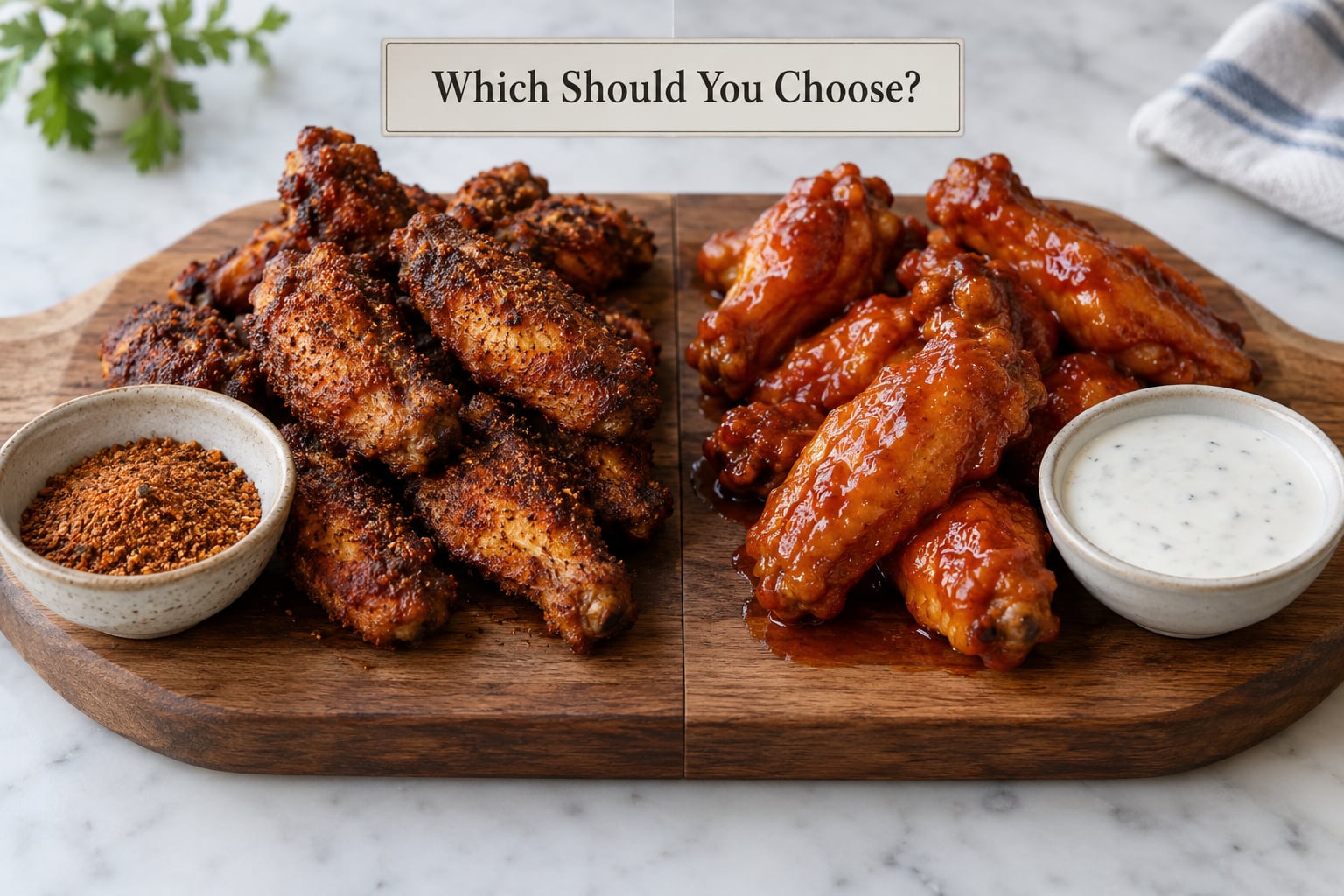
Choose dry rub when crispness is the point, the guests are adults, or the wings need to survive a wait. Lemon pepper, salt and vinegar, and a smoky paprika rub are the crowd-pleasing versions, and they are the ones people ask about at the table.
Choose sauce when you want instant flavor, when kids are eating, or when heat tolerance in the room is a question you cannot answer in advance. Buffalo and honey barbecue are the safe middle of the range; gochujang and hot honey are for a group that already likes heat.
Choose the hybrid when you want both. Dry rub the wings, cook them to 165°F internal, then toss them in warm sauce and give them 60 to 90 seconds back on high heat. You get a seasoned crust, a glossy coating and skin that stays mostly intact. It is the method most experienced cooks use at home, and it is the honest answer to dry rub vs sauced wings which is better.
For a beginner cook with an oven, dry rub is the lower-risk first batch. For a host who wants the table to look like a party, sauce is the more forgiving choice emotionally, because people forgive sauce long before they forgive a flabby wing.
Frequently Asked Questions
Are dry-rubbed wings healthier than sauced wings?
Mostly, but the gap is smaller than people think. A dry rub adds salt and spices with almost no added sugar or fat. A sauce, especially honey barbecue or a sweet glaze, carries real sugar, and frying wings in oil adds calories regardless of what you coat them in. A baked or air-fried dry-rubbed wing is the lightest option on the table.
How do I keep sauced wings crispy?
Pat the wings dry before cooking, cook to 165°F internal, let them rest 15 to 30 minutes on a wire rack, then toss them in sauce warmed in a pan. Return them to high heat for 60 to 90 seconds to set the glaze, and serve them on a rack or in a bowl rather than a flat pile. Saucing earlier and letting them sit is what softens them.
Should I apply a dry rub before or after baking the wings?
Before, always. Seasoning goes on raw wings so it can set into a crust during cooking. A light coat of neutral oil on dry skin first helps the rub adhere instead of flaking off. Bake uncovered on a wire rack over a sheet pan at 425°F until the internal temperature reaches 165°F.
Can I make dry-rubbed wings ahead for a party?
Yes, and they are better for it than sauced wings. Season the wings up to a day ahead and leave them uncovered in the fridge, which works as a dry brine and dries the skin further. Cook them a few hours before the game, hold them uncovered on a rack, and they will still be crisp at kickoff. Sauce them only at the last minute if you want both.
What sauce works best if I want both dry and sauced wings?
Make one dry-rubbed batch and one sauced batch from the same raw wings, which costs you only a few extra minutes. Buffalo and honey barbecue are the most popular picks, while lemon pepper sauce and garlic parmesan cover guests who want tang or richness rather than heat. A third small bowl of sauce on the side lets dry-rubbed guests add their own.
Which wing style is easier for a beginner to make?
Dry rub wings, mostly because there is no window to miss. Dry the skin, season, and cook to 165°F internal, and the batch works. Sauced wings depend on timing: wings tossed while they are still steaming soak up liquid and go soft. If sauce is your goal, warm the sauce separately and give it a hot 60 to 90 second toss at the end.
Conclusion
Dry rub wins crispness, mess, ease of eating and leftovers. Sauce wins first-bite flavor, kid appeal and adjustable heat. Start there and choose the one that matches your crowd.
If you want the best of both, dry rub the wings, cook them to 165°F internal, then toss in warm sauce and return them to high heat for 60 to 90 seconds. That is the version that satisfies the dry rub vs sauced wings which is better debate at your own table.