Wings aren’t crispy because surface moisture turns to steam instead of letting the skin render and brown. Pat the wings dry, give them room and hot air, use an alkaline boost like baking powder, and sauce them after cooking rather than before, and the crackle comes back.
This is a troubleshooting guide, not a recipe. If your last batch came out chewy, rubbery or soft underneath, the fix is almost always one of nine things, and you can usually spot the culprit in under a minute by looking at the wings before you eat them.
I have ruined more batches of wings than I care to admit, usually by crowding the pan and then saucing too early. Both mistakes are so common that cooks argue about them constantly on cooking forums, and the answers are worth borrowing. The forum consensus matches what the kitchen tests show: moisture is the enemy, temperature is everything, and sauce is a last-minute decision.
The whole diagnostic runs about 20 minutes of active work, plus cooking time. No special equipment beyond a wire rack and a thermometer, both cheap.
Table of Contents
- What You Need for Consistently Crisp Chicken Wings
- Step-by-Step: Why Are My Chicken Wings Not Crispy, and How to Fix It
- 1. Dry the wings before anything else
- 2. Why are my fried chicken wings soggy? Watch the oil temperature
- 3. Why are my chicken wings not crispy underneath? Give the skin room and airflow
- 4. Season before cooking and sauce afterward
- 5. Rest briefly and serve immediately
- Baking powder, baking soda, or cornstarch: which one actually works
- Common Mistakes That Keep Wings Soft
- 6. Tossing raw wings in a wet marinade or sauce before cooking
- 7. Cooking wings low and slow and expecting crisp skin
- 8. Stacking wings on the platter
- 9. Saucing too early
- Frequently Asked Questions
- Why are my baked chicken wings not crispy?
- Are frozen chicken wings less likely to become crispy?
- Does cornstarch make chicken wings crispier?
- Can I reheat chicken wings and keep them crispy?
- Should I add sauce before or after cooking wings?
- How long should I cook chicken wings at 350°F?
- Conclusion: What to Do First
What You Need for Consistently Crisp Chicken Wings
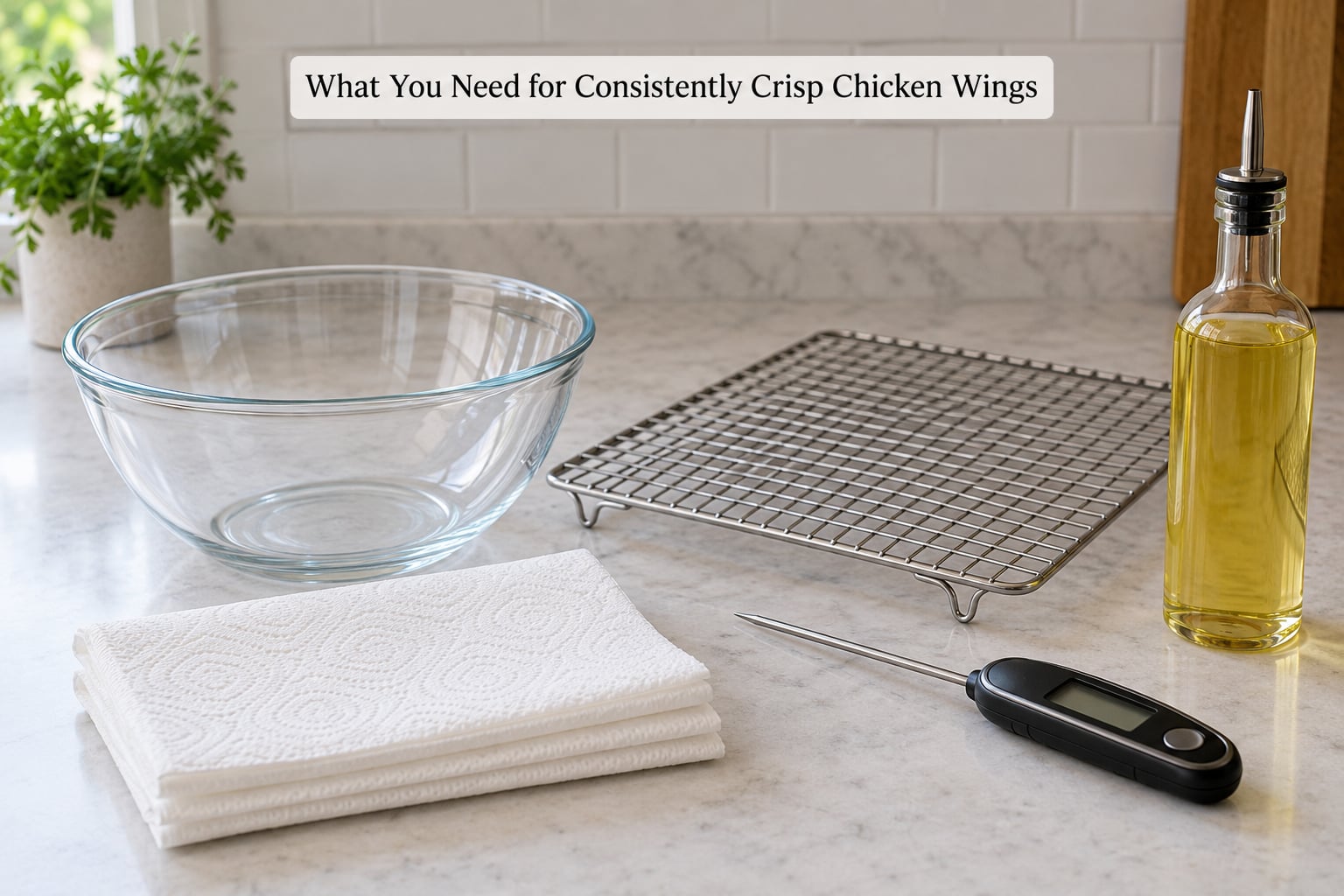
The list is short, and you probably own most of it already.
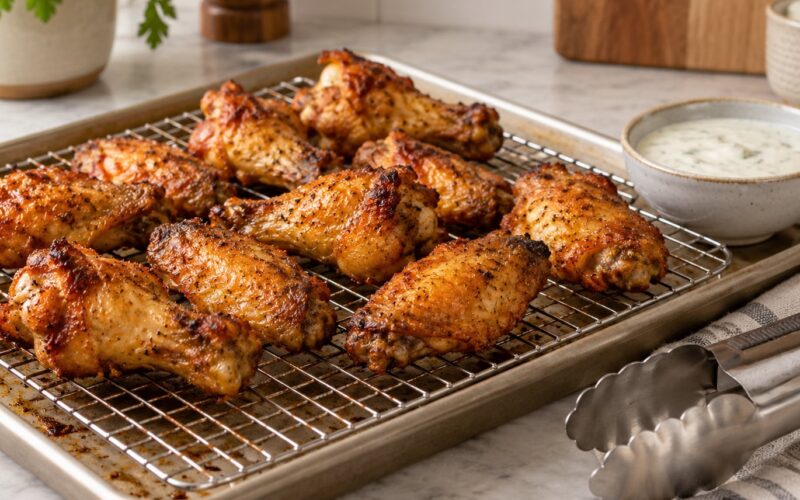
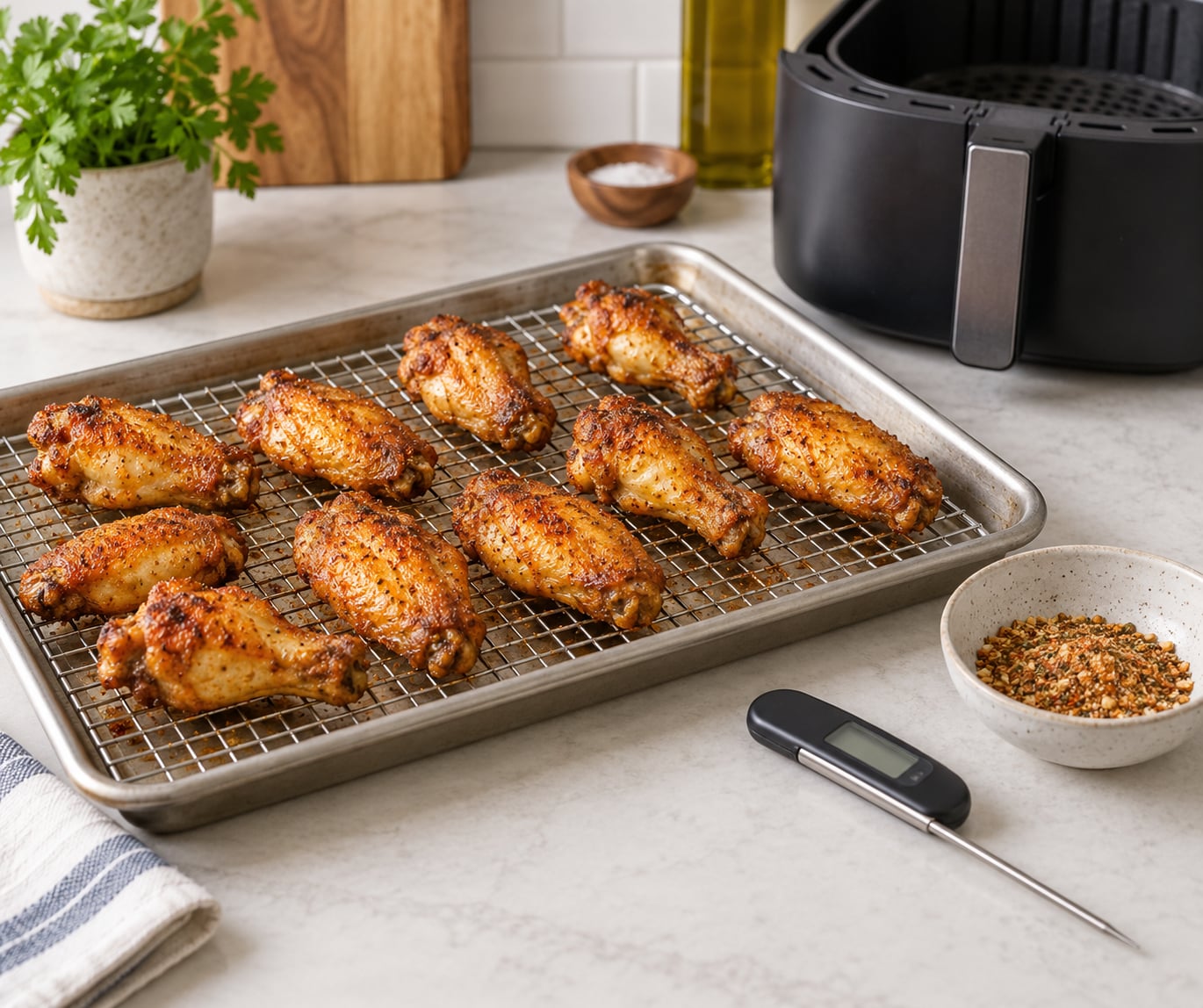
- A wire cooling rack set inside a rimmed baking sheet. The single most useful piece of equipment for this job. The rack holds the wings above the drippings so hot air reaches the underside; the sheet catches the fat so the oven stays clean.
- Paper towels and a clean towel or colander. For drying the wings before seasoning and for draining fried ones after.
- A digital instant-read thermometer. One for oil temperature, one you can push into the thickest wing. Guessing is the single biggest reason batches fail.
- A deep pot or fryer with 2 to 3 inches of neutral oil if you’re frying, plus a splatter screen and a slotted spoon.
- Double-acting baking powder. Not baking soda. The quantity is 1 teaspoon per pound of wings, which is a very small amount for a typical two-pound bag.
- A dry rub or sauce. A salt-heavy dry rub works well. Whatever sauce you like, held back until the wings are cooked and drained.
- An air fryer if you have one. It works well for wings once you know its one quirk, which is crowding.
Everything below is Fahrenheit, and every temperature here is re-checked each 2026 season as ovens drift a little with age.
Step-by-Step: Why Are My Chicken Wings Not Crispy, and How to Fix It
Work through these five fixes in order. Each one removes a specific physical obstacle to crisp skin, and you can usually see whether it worked before the wings even reach the plate.
1. Dry the wings before anything else
Surface moisture is the root cause behind most soggy wings. Water on the skin turns to steam at oven temperature, and steam softens skin instead of browning it. Frying is the same problem in a different form: wet wings make the oil bubble violently and drop the temperature.
Pat every wing dry with paper towels, then spread them on a rack or a plate and refrigerate them uncovered for 30 minutes to an hour if you have time. That air-dry step pulls a surprising amount of water out of the skin.
How you know it worked: the wings look matte and slightly tacky rather than wet and glossy when you pick them up. Glossy skin goes into a hot oven and comes out soft every time.
2. Why are my fried chicken wings soggy? Watch the oil temperature
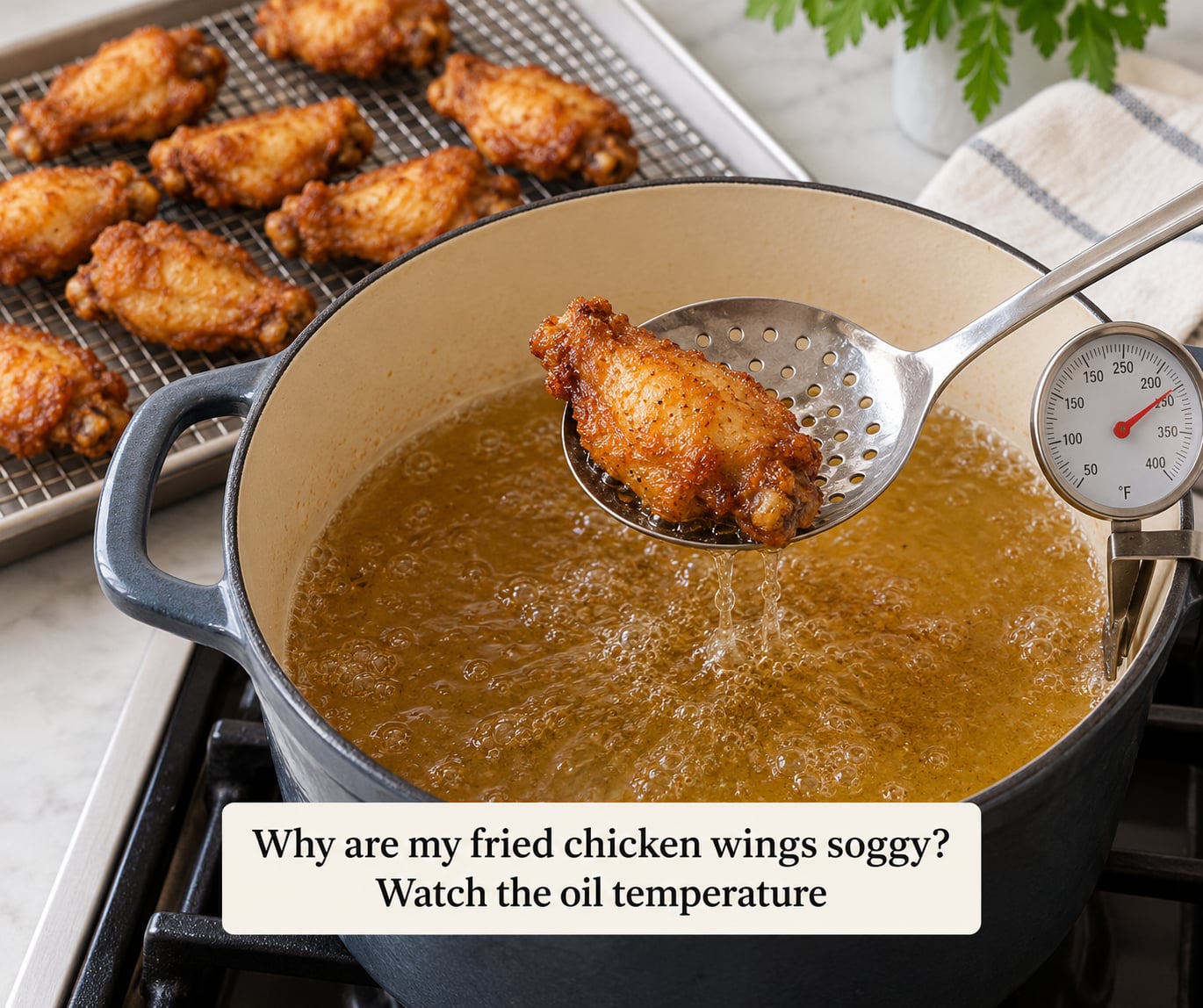
Crispy fried skin comes from a fast Maillard reaction, and a fast reaction needs oil that is already hot and stays hot. The classic method is a double fry: 325°F for roughly six minutes to cook the meat through and set the skin, then a rest, then 375°F for two or three minutes to brown and crisp.
The mistake almost everyone makes is adding too many wings at once. A crowded pot drops the oil temperature by 50°F or more, the wings soak instead of fry, and you get greasy, limp skin. Fry in batches with room between pieces.
For oven wings, the equivalent rule is to cook hot. Use 425°F to 450°F, and use the convection setting if your oven has one. A 350°F bake is fine for tender, sauced wings, but it will never produce a crisp shell.
How you know it worked: oil bubbles steadily around each wing the moment it goes in, and the temperature on the thermometer recovers within a minute or two. For oven wings, check the thickest piece and cook until it reaches at least 165°F, the safe minimum for poultry, though 175°F gives a better texture and more render.
3. Why are my chicken wings not crispy underneath? Give the skin room and airflow
Crispy on top and soggy on the bottom is a geometry problem, not a temperature problem. A flat baking sheet traps steam under each wing, and that steam works against you for the entire cook.
Set a wire rack inside a rimmed baking sheet and lay the wings on the rack in a single layer, spaced about an inch apart. If they touch, they steam. Heat circulates underneath, fat drips away instead of frying the underside, and the undersides crisp along with the tops.
In an air fryer the same principle applies in reverse. Air fryers brown fast from above and have limited airflow underneath, so an overfilled basket produces pale, damp wings in the middle of the pile. Cook in a single layer and split the batch if needed, even though that means two cycles.
How you know it worked: the wings release from the rack without sticking, and the bottom of each one is the same color as the top.
4. Season before cooking and sauce afterward
A dry rub goes on before cooking. Baking powder goes on before cooking. Sauce goes on after cooking. That order matters more than any seasoning choice.
Wet marinades and glazes are the enemy of crisp skin. They add water to the surface right when you need it dry, and they burn in the oven before the wings cook through. If you love the flavor of a marinade, pat the wings dry again after marinating and let them air-dry before they hit the heat.
For a coating that adds crunch, mix flour with cornstarch and season it, then dust the wings lightly. The starch absorbs surface moisture and gives the skin something extra to crisp. Keep the coating thin; a thick shell hides the chicken.
How you know it worked: dry rub on raw, glossy sauce on cooked, and nothing in between.
5. Rest briefly and serve immediately
Crisp skin starts losing its crunch the moment it cools, because moisture trapped inside the wing escapes as steam. That is why a platter of wings sitting on a counter for an hour feels soft even when it started out well.
Drain fried wings on a wire rack rather than a folded paper towel, rest them for two or three minutes, and serve them within 15 minutes of cooking. If you must hold them for a party, keep them on a rack in a single layer in an oven held at 175°F to 200°F, uncovered. Never cover them, and never let them sit on a plate.
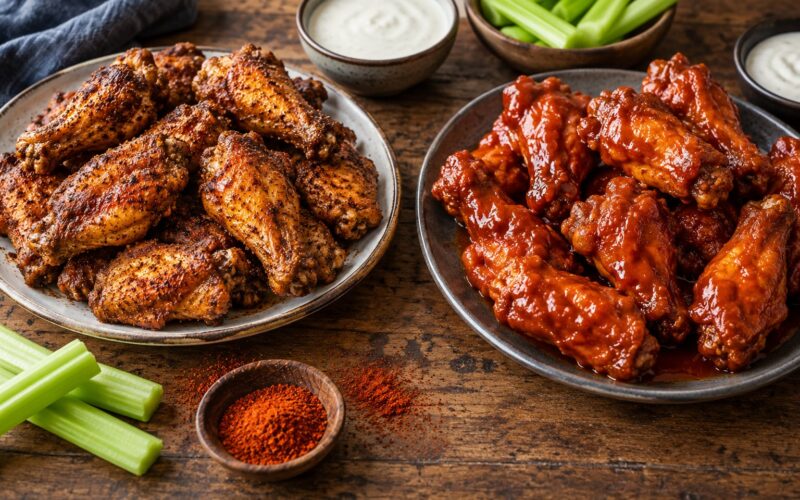
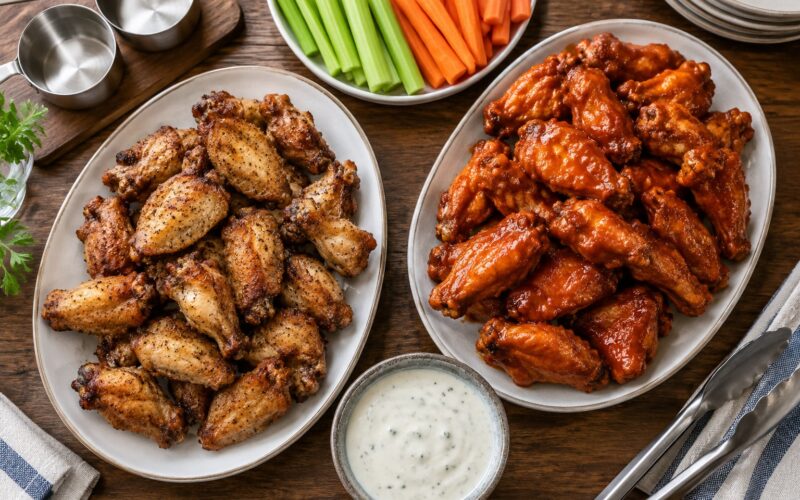
For Buffalo and other wet sauces, warm the sauce in a saucepan first and toss the wings in it at the very last second, right before they hit the table. Cold sauce plus hot wings cools the surface instantly and softens the crust in minutes. A cleaner option for a large group is to serve the wings dry and put the sauce in a bowl on the side.
Baking powder, baking soda, or cornstarch: which one actually works
Double-acting baking powder is the ingredient that does the work. It raises the pH of the skin surface, which breaks down proteins into tiny bubbles that dry into a crackly shell. One teaspoon per pound of wings is the standard quantity.
Baking soda raises pH too, but it also darkens the skin, and it leaves a soapy or metallic taste if you use more than a pinch. A quarter teaspoon per pound mixed into a dry rub is a reasonable compromise; anything more and you are chasing a different recipe.
Cornstarch does something different. It absorbs moisture and adds a light, brittle shell of its own. It works best in a flour dredge alongside a protein, and it is the one to reach for when you want that thin crackling layer over the whole wing rather than extra-crisp fried skin.
The three can be combined. Many home cooks use a teaspoon of baking powder per pound in the dry rub, then a cornstarch-flour dredge on top, and get the crispest results of any single-method approach.
Common Mistakes That Keep Wings Soft
These four are the fixes people miss most often, and each one is a variation of a problem already covered above.
6. Tossing raw wings in a wet marinade or sauce before cooking
Wet coatings add surface water and sugar, both of which brown or burn before the skin can render. Dry brine instead: salt the wings and refrigerate them uncovered for up to a few hours before cooking. You get seasoned meat and dry skin, which is the combination you actually want.
7. Cooking wings low and slow and expecting crisp skin
This one surprises people. Cooking wings at 250°F produces tender, flavorful meat and soft skin, because there is not enough heat to drive off moisture and brown the surface. That temperature is a smoker setting, not a crisp-skin setting. If you smoke, treat the smoke as the flavor step and add a separate high-heat finish.
On a grill, that finish means moving the wings over direct heat, or starting them on indirect heat and then searing them on the hot side with the lid closed for the last few minutes. On a pellet grill that struggles to reach high heat, the same idea works: smoke low and steady, then finish them on a very hot griddle or in a hot oven indoors.
8. Stacking wings on the platter
Piled wings steam each other. The ones at the bottom of the pile are never crisp, no matter how good the cook was. Serve in a single layer, use two platters rather than one deep bowl, and put extra napkins out because people will pick pieces up one at a time.
9. Saucing too early
Sauce is a moisture source, and moisture reverses crispness quickly. One wing tossed in cold Buffalo sauce and left for ten minutes is a soft wing. Warm the sauce, toss at the last second, and if you are cooking for more than about a dozen people, skip the toss entirely and serve sauce alongside.
Frequently Asked Questions
Why are my baked chicken wings not crispy?
Oven wings stay soft when the skin is wet, the pan is crowded, or the oven is too cool. Pat the wings dry, set them on a wire rack over a rimmed sheet with space between each piece, and bake at 425°F to 450°F rather than 350°F. Convection helps. Check the thickest wing and cook until it reaches at least 165°F, ideally 175°F for better texture.
Are frozen chicken wings less likely to become crispy?
They can be, mainly because of surface frost. Thaw them in the refrigerator overnight, then pat them thoroughly dry before seasoning. Wings frozen and cooked straight from the freezer spend the first minutes shedding ice into the oil or steaming in the oven, which costs you crispness. If you air fry from frozen, add a few extra minutes and leave the basket uncrowded.
Does cornstarch make chicken wings crispier?
Yes, in a specific way. Cornstarch absorbs surface moisture and forms a thin, brittle shell, so it works best as part of a flour dredge seasoned with salt and baking powder. It is not a substitute for drying the wings, and on its own it does less than baking powder does. Use a light coating; a thick one changes the dish into fried chicken.
Can I reheat chicken wings and keep them crispy?
Use a 400°F oven or air fryer for 8 to 10 minutes on a rack, and skip the microwave entirely because its moisture and uneven heating leave the skin soft and the meat rubbery. Reheat only what you need, spread in a single layer, and check a piece after 6 minutes so you do not dry the meat out. Reheated wings will never match a fresh batch, but they will beat room-temperature wings.
Should I add sauce before or after cooking wings?
After. Any wet coating adds moisture and sugar before cooking, which fights browning and burns before the meat is done. Dry rubs and baking powder go on raw; sauce goes on once the wings are cooked, drained and hot. For the best result, warm the sauce in a saucepan and toss at the last second, or serve dry wings with the sauce in a bowl on the side.
How long should I cook chicken wings at 350°F?
At 350°F you are cooking, not crisping, so expect tender meat with soft skin unless you finish aggressively. Expect roughly 25 to 35 minutes depending on size, and start checking the thickest piece at 25 minutes. A better route is 400°F for about 20 minutes, then five minutes under the broiler with the oven door cracked, which gives you a real crust.
Conclusion: What to Do First
If you only change one thing, dry your wings properly and give them space on a wire rack over a sheet. Moisture and crowding account for most soft batches, and both are free to fix.
Then raise the heat. 425°F to 450°F in the oven, 400°F in the air fryer, and a proper double fry at 325°F then 375°F will do more than any seasoning trick. Add one teaspoon of baking powder per pound while you are at it, and save the sauce for the last few minutes before serving.
Change one variable per batch and note what the wings looked like coming out of the heat. After three cooks you will know your oven well enough to skip this guide entirely.