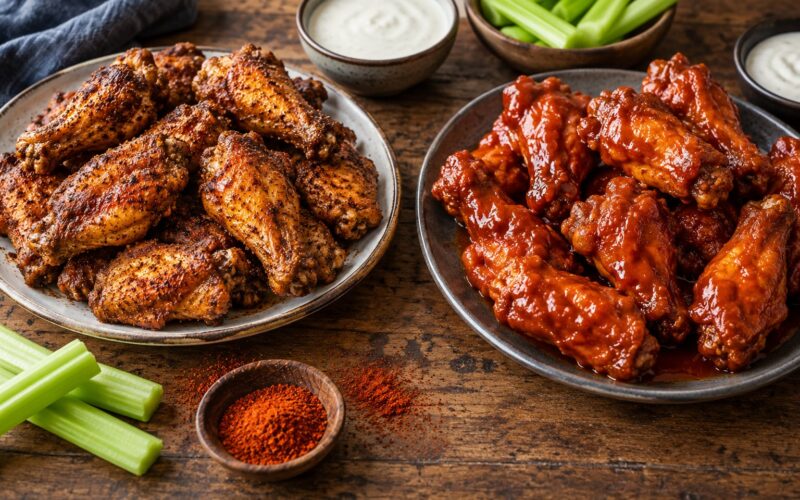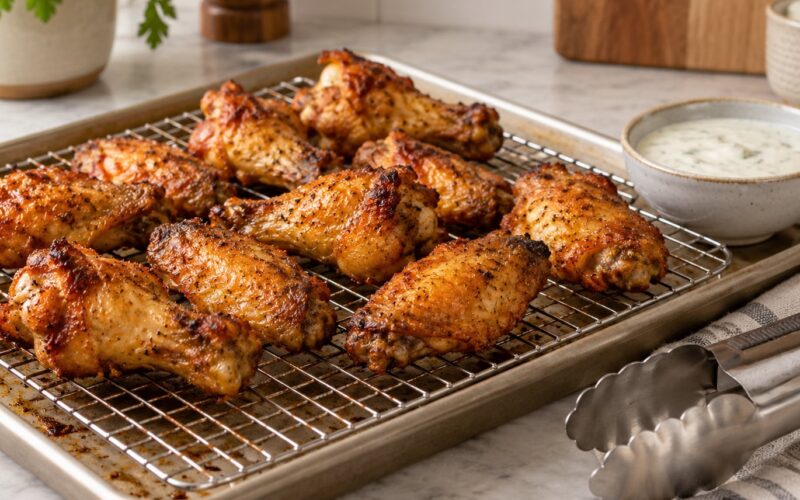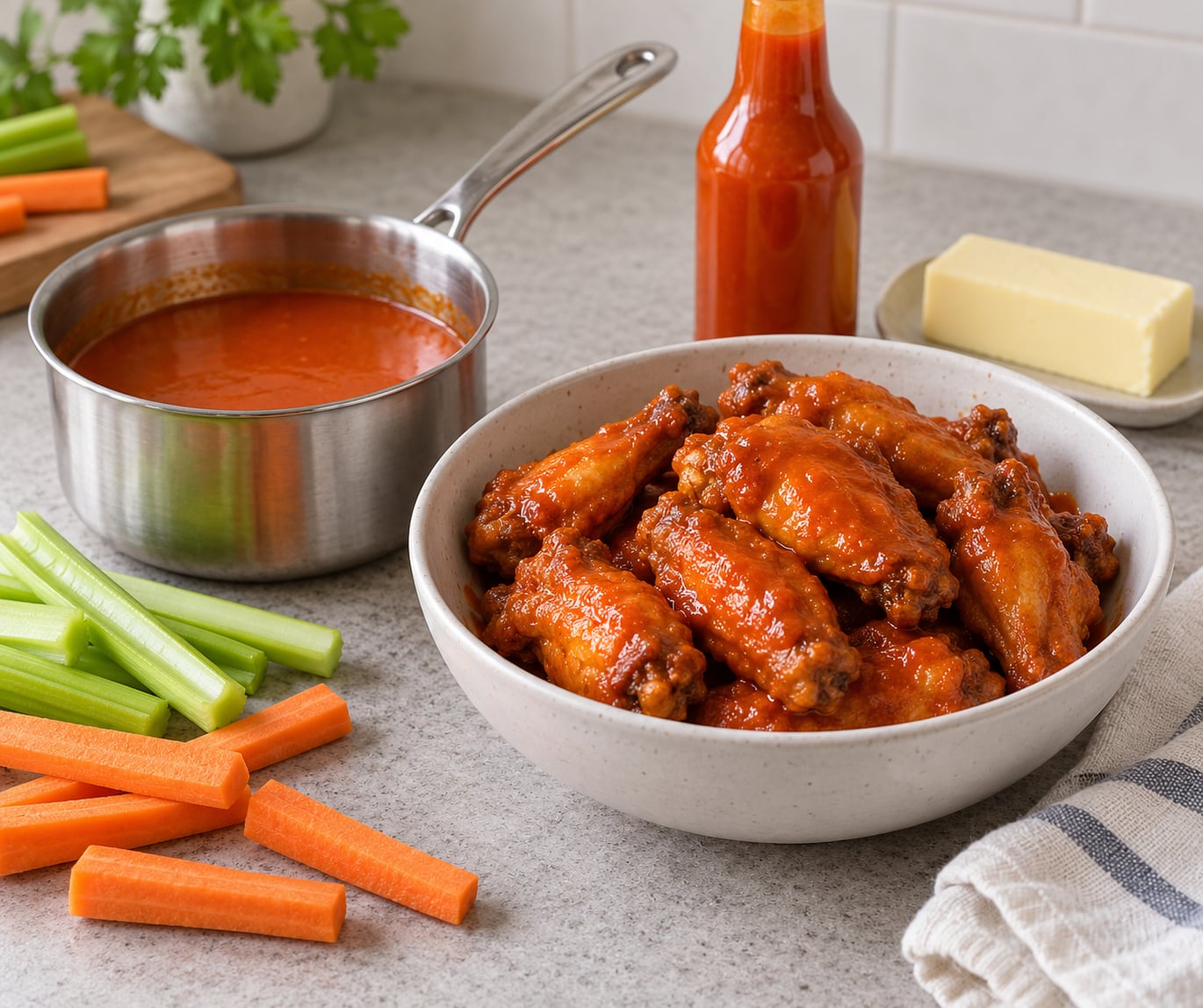
Buffalo wing sauce takes five minutes and five pantry ingredients: Frank’s RedHot cayenne pepper hot sauce, unsalted butter, distilled white vinegar, Worcestershire sauce, and garlic powder. Whisk the vinegar and seasonings into melted butter, add the hot sauce, simmer two to three minutes, and you have a glossy sauce that clings to wings like the restaurant version.
The whole thing hinges on one thing most home cooks get wrong. Heat is not the balance mechanism. Vinegar is. Get the vinegar right and a batch tastes tangy and bright even at full heat; get it wrong and no amount of butter rescues it.
I make this every game day, and I have ruined it more than once, so the corrections below come from real batches rather than theory.
Table of Contents
- What You Need
- What the three core ingredients actually do
- How to make buffalo wing sauce from scratch: mild, classic, and extra hot
- Step-by-Step: How to Make Buffalo Wing Sauce from Scratch
- Step 1: Melt the butter and combine the seasonings
- Step 2: Add the hot sauce
- Step 3: Balance the vinegar and sauce flavors
- Step 4: Simmer the sauce until it coats a spoon
- Step 5: Finish the texture off the heat
- Step 6: Taste, cool, and store the finished sauce
- Common Mistakes
- Frequently Asked Questions
- What is the best hot sauce for buffalo wings?
- Can I make buffalo wing sauce without Worcestershire sauce?
- How long should I simmer buffalo wing sauce?
- How can I make buffalo sauce thicker?
- Can I make buffalo wing sauce ahead of time?
- Can I freeze homemade buffalo sauce?
- Conclusion
What You Need
Every ingredient here does a job, and swapping one out changes the sauce in a specific way rather than just making it slightly different.
What the three core ingredients actually do
Unsalted butter (1/2 cup or 113 g) is the body of the sauce and the thing that makes it stick to a wing. Salted butter pushes most batches over the edge into too salty, which is why nearly every recipe calls for unsalted. It also carries the fat-soluble heat of the cayenne pepper, so you taste more heat in butter-based sauce than you would from the hot sauce alone.
Cayenne pepper hot sauce (1 cup or 240 ml, usually a 12-ounce bottle of Frank’s RedHot) supplies the vinegar and salt that Buffalo flavor is actually built on. Frank’s is the default because it is thin, moderately hot, and heavily vinegar-forward, which is exactly what emulsifies with butter.
Distilled white vinegar (1 teaspoon or 5 ml) sharpens the tang so the sauce tastes bright instead of flat and greasy.
Worcestershire sauce (1 teaspoon or 5 ml) adds a fermented, slightly sweet depth. It is optional in the sense that plenty of people skip it, but the ones who do usually notice the difference.
Garlic powder (1/2 teaspoon) and optional onion powder (1/4 teaspoon) round out the savory note. A pinch of salt at the end, plus more black pepper than feels sensible, is my own addition.
How to make buffalo wing sauce from scratch: mild, classic, and extra hot
The classic ratio is roughly two parts hot sauce to one part butter by volume. Everything else is a dial you turn from there. Scaling by weight works better than by volume because bottles and measuring cups lie about slightly different amounts.
| Heat level | Unsalted butter | Hot sauce | Vinegar and seasonings |
|---|---|---|---|
| Mild | 1/2 cup (113 g) | 3/4 cup (180 ml) | 1 tsp vinegar, 1/2 tsp garlic powder |
| Classic | 1/2 cup (113 g) | 1 cup (240 ml) | 1 tsp vinegar, 1 tsp Worcestershire, 1/2 tsp garlic powder |
| Extra hot | 1/2 cup (113 g) | 1 cup (240 ml) | 1/2 tsp vinegar, plus 1/4 tsp cayenne or red pepper flakes |
That classic batch yields about 1.5 cups of sauce, which dresses roughly 2 pounds of wings. Three quarters of a cup per pound is a reliable rule for a tossed batch, and a little more if the wings are going into a slow oven where the sauce has an hour to soak in.
For a kid-friendly version, go mild and drop the vinegar to 1 teaspoon with the hot sauce at 3/4 cup. The extra butter does more than cool the heat down, it dilutes it.
Step-by-Step: How to Make Buffalo Wing Sauce from Scratch
Step 1: Melt the butter and combine the seasonings
Put 1/2 cup of unsalted butter in a small saucepan over medium-low heat. Add the garlic powder, onion powder if using, and Worcestershire sauce, then swirl the pan until the butter is fully liquid and starts to foam.
Foaming is the cue. When the milk solids begin to bubble up in the melted butter, move on. If you keep going until the butter browns, the sauce turns nutty and heavy, which is a different recipe entirely.
Step 2: Add the hot sauce
Pour in the hot sauce a little at a time while whisking. The mixture will look alarming, like it has split into red streaks floating in yellow butter.
That is normal. Keep the heat at medium-low and whisk steadily until the color evens out and the sauce looks like loose cream. It takes about 30 seconds. Anything that stays streaky at this stage is what will still be streaky when you serve it.
Step 3: Balance the vinegar and sauce flavors
Add the vinegar now, not after reducing. Add half a teaspoon, whisk, dip a clean spoon in, and taste before committing to the rest.
You are looking for a sharp edge right after the garlic, not a sourness that outshouts the cayenne. If the hot sauce is a vinegar-based bottle that is thinner than Frank’s, start with half the recommended vinegar because the sauce brings some of its own.
Step 4: Simmer the sauce until it coats a spoon
Bring the heat to a bare simmer, where you see small bubbles at the edge of the pan but nothing breaking the surface, and hold it there for 2 to 3 minutes. Stir occasionally.
The sauce thickens just enough that a spoon drawn through the pan leaves a faint trail that closes slowly. That is the target. A hard boil scorches the milk solids, turns the butter brown, and strips the flavor, so if the sauce is bubbling like boiling water, turn the heat down.
Stop reducing well before it looks like the consistency you want. Butter fat sets as the sauce cools, so a sauce that looks thin in the pan often lands on a wing as a proper coat.
Step 5: Finish the texture off the heat
Take the pan off the heat and whisk in 1 to 2 tablespoons of cold butter, cut into small pieces. It melts fast and gives you the glossy, clingy finish that restaurant sauce has.
This is where batches turn greasy. Adding cold butter to a screaming hot sauce or adding too much at once will leave you with visible yellow streaks instead of a smooth emulsion. Add it in two or three small pieces with the heat off and whisk until every one disappears.
Step 6: Taste, cool, and store the finished sauce
Taste once more. Adjust with a splash of hot sauce for heat, a few drops of vinegar for tang, or more melted butter if it needs softening. Then cool it before storing.
Do not put hot sauce straight into a jar or container. Condensation forms under the lid and thins the sauce as it drips back in. Cool it on the counter for 20 to 30 minutes first, then refrigerate in an airtight container for 3 to 4 days.
Frozen, it keeps roughly 3 months. Pour it into a freezer-safe container or an ice cube tray so you can pull out a single serving. When a chilled batch turns solid, let the container sit on the counter for 20 minutes, then warm it gently in a saucepan over low heat, whisking, until it loosens back to a pourable sauce.
Never microwave it in a sealed container. The steam builds up and the sauce comes out with an oily, overheated flavor that does not go away.
One safety note for the wings themselves: if you are tossing raw chicken in this sauce, cook the wings until the thickest part reaches 165°F (74°C) internal temperature, measured at the bone, before the sauce goes anywhere near a plate.
Common Mistakes
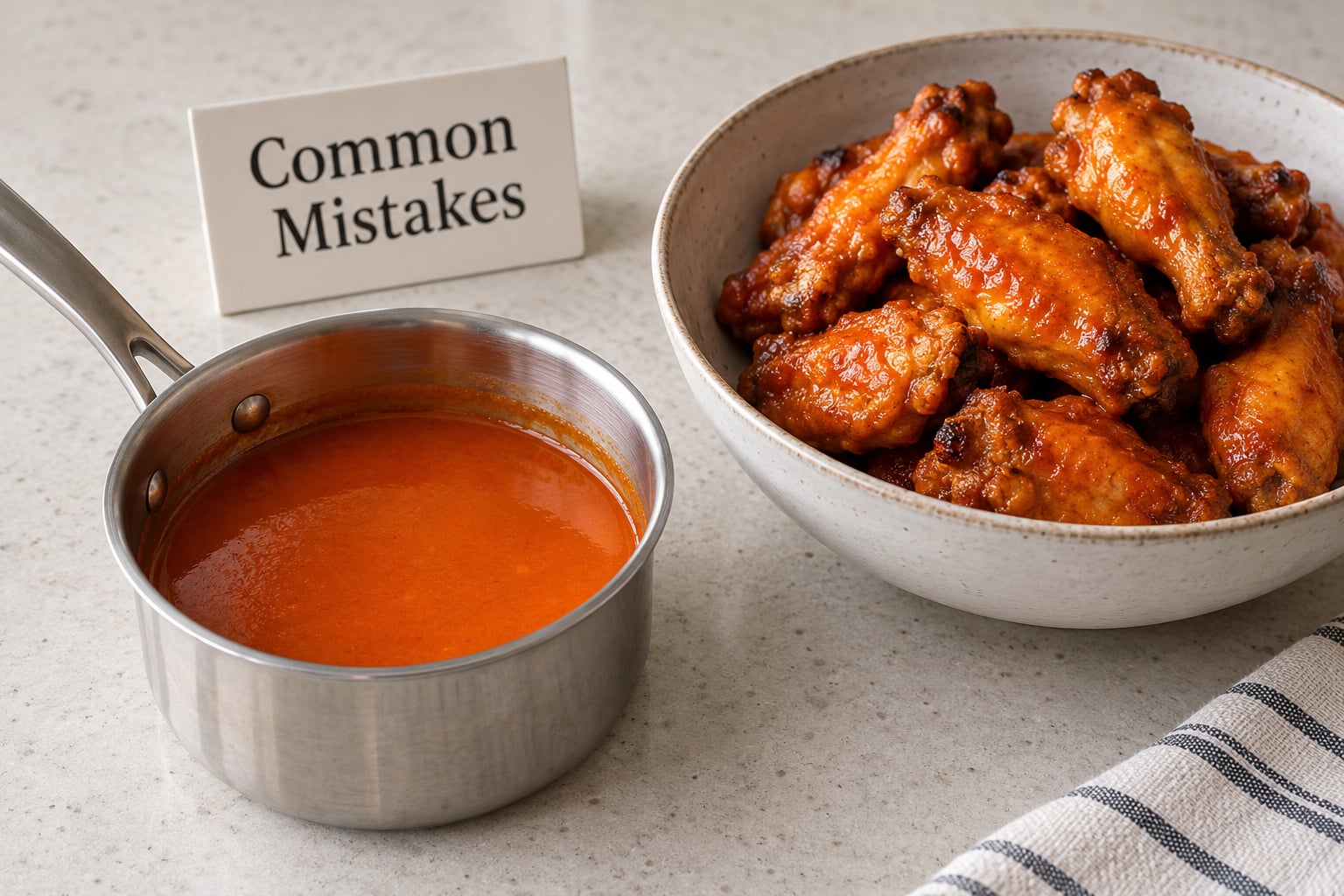
Almost every disappointing batch traces to one of six things, and all six are fixable after the fact.
Sauce that is too hot to eat. Do not add more hot sauce, which is the instinct and the wrong move. In order of effectiveness: whisk in 2 to 3 tablespoons of melted butter to dilute, add 1/2 teaspoon of vinegar at a time and taste, add 1 teaspoon of honey for sweetness, and as a last resort whisk in an extra 1/4 cup of hot sauce and 2 tablespoons of butter to rebalance the whole ratio. Cutting heat by removing hot sauce leaves you with flat sauce that tastes wrong, which is exactly the complaint you will read about most often in cooking forums.
Sauce that tastes flat. You cut the hot sauce instead of adding acid. Add vinegar, not butter, and it comes back.
Sauce that runs off the wings. Too thin, or too much vinegar. Reduce it another minute over medium-low heat, and next time measure the vinegar rather than eyeballing it.
Sauce that is greasy or split into streaks. Either the heat was too high when you added the cold butter, or you reduced it too far. Whisk hard off the heat; if it stays broken, add a tablespoon of hot sauce to loosen it and whisk again.
Sauce that is salty. You used salted butter. Add a tablespoon of melted unsalted butter and 1 teaspoon of hot sauce, which dilutes without changing the character much.
Sauce that is sharp enough to make your eyes water. That is vinegar, not heat. Add 2 tablespoons of melted butter and taste again in ten seconds.
A few habits that keep batches consistent: measure the vinegar with a proper teaspoon instead of a glug, use fresh utensils so no old sauce drags in extra salt, and keep every hot sauce bottle in the house at least vinegar-forward. People on r/hotsauce who swapped in a vinegar-based brand report thinner sauce that will not cling, and that tracks, because vinegar is part of what holds the emulsion together. A r/Cooking thread reached the same conclusion from the other direction and advised adjusting the hot sauce-to-butter ratio rather than adding more vinegar.
The sauce is not just for wings. Tossed over sheet-pan potatoes it behaves like a glaze, thinned with a teaspoon of water. It works as a dip base for a buffalo chicken dip, a drizzle for grilled cheese, a pour-over for nachos, a finishing sauce on leftover meatball sandwiches, and a marinade if you let wings sit in it 30 to 60 minutes before baking. Celery and carrot sticks and a bowl of blue cheese dressing are the traditional tablemates.
Frequently Asked Questions
What is the best hot sauce for buffalo wings?
Frank’s RedHot is the standard because it is thin, moderately hot and heavily vinegar-forward, which is what emulsifies with butter and gives the sauce its cling. Louisiana works well and runs hotter. Crystal, Tabasco and any vinegar-based brand will work, but expect a thinner, less sticky sauce. If you want more heat without changing the character, keep Frank’s and add cayenne or red pepper flakes instead of switching bottles.
Can I make buffalo wing sauce without Worcestershire sauce?
Yes, and plenty of people do. Leave it out and add an extra 1/2 teaspoon of distilled white vinegar plus a pinch of sugar to approximate the sweet fermented depth. The sauce is slightly less round without it, but nobody at a party will notice. Keep it if you have it, skip it if the bottle has been sitting open past its best.
How long should I simmer buffalo wing sauce?
Two to three minutes at a bare simmer is enough to meld the flavors and take the raw edge off the vinegar. You are looking for bubbles at the edge of the pan, not a rolling boil. The sauce thickens noticeably as it cools, so it looks thinner in the pan than it will on a wing. Simmering past three minutes at high heat risks scorching the milk solids and turning the flavor nutty.
How can I make buffalo sauce thicker?
Reduce it over medium-low heat for another minute or two, stirring, until a spoon drawn through the pan leaves a trail that closes slowly. Remember that butter fat sets as the sauce cools, so stop while it looks a little thin. If you want instant thickness, whisk in a tablespoon of cold butter off the heat. Cornstarch slurry works but dulls the flavor and gives the sauce a faint dull finish.
Can I make buffalo wing sauce ahead of time?
Yes, and it is the right move for a party. Cool it on the counter for 20 to 30 minutes, then refrigerate in an airtight container for 3 to 4 days. Bring the container out of the fridge about 20 minutes before serving and warm it over low heat while whisking until it pours again. For longer storage, freeze it in portioned containers for roughly 3 months.
Can I freeze homemade buffalo sauce?
Yes, it freezes well for about 3 months. Freeze it in a sealed freezer-safe container or in an ice cube tray for single portions. Thaw it in the refrigerator overnight rather than on the counter. Once thawed, it will be thicker than you remember because the butter fat firms up, so warm it slowly in a saucepan over low heat and whisk in a teaspoon of hot sauce or water if it will not loosen back to a coating consistency.
Conclusion
Start with the classic ratio, one stick of unsalted butter to a cup of Frank’s RedHot, and taste before you add anything else. Vinegar, not less heat, is what makes a batch taste balanced, so measure it and adjust from there.
Simmer only until the sauce coats the back of a spoon, whisk the last cold butter in off the heat, and cool it fully before it goes near a container. Get those three things right and you have buffalo wing sauce from scratch that behaves like the restaurant version every time.