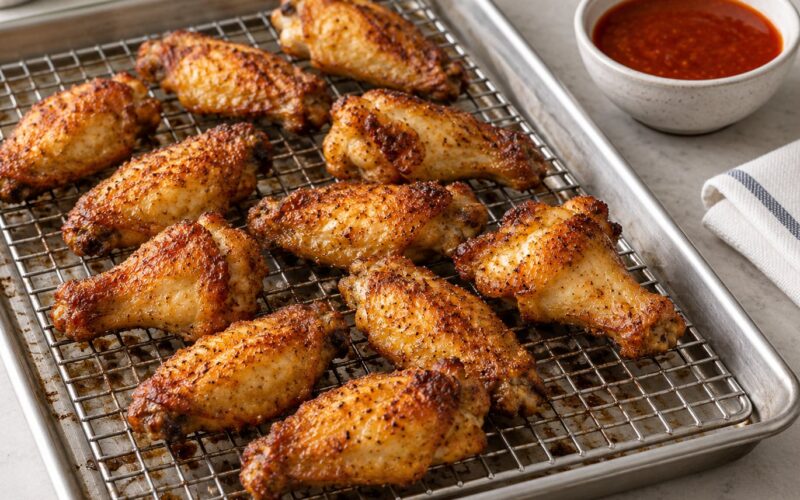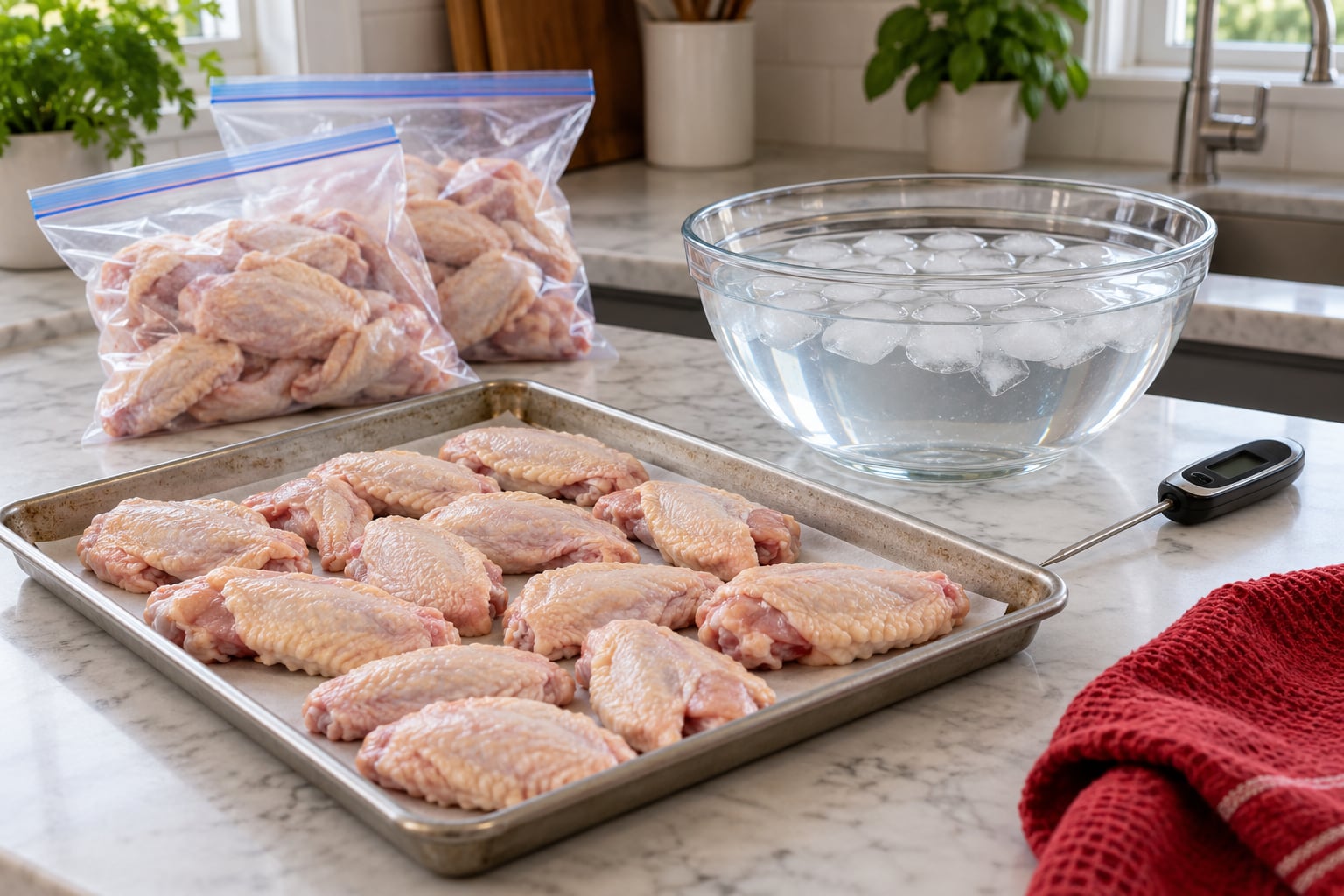
If you need to thaw chicken wings fast, the cold water method is your answer: wings sealed in a leak-proof bag, submerged in cold tap water, and the water changed every 30 minutes will go from solid to cook-ready in roughly 30 to 45 minutes for a standard 1 to 2 pound party pack. It takes about an hour of hands-on attention, so plan it right before you cook.
Two rules never change. Never thaw wings on the counter, where the outer meat warms into the 40°F to 140°F danger zone long before the center softens, and cook thawed wings immediately rather than letting them sit.
Below is the whole playbook: what you need, the three methods that actually work, how to tell when the wings are done, and the mistakes that turn a quick thaw into a soggy or unsafe one.
Table of Contents
- What You Need
- Step-by-Step: How to Thaw Chicken Wings Fast
- How to thaw chicken wings fast with cold water
- How to thaw chicken wings fast in the refrigerator
- How to thaw chicken wings fast without the microwave drying them out
- How to tell when chicken wings are fully thawed
- Common Mistakes
- Frequently Asked Questions
- How long does it take to thaw chicken wings in cold water?
- Is it safe to thaw chicken wings in cold water?
- Can I thaw chicken wings in the microwave without them getting tough?
- Can I cook chicken wings from frozen in an air fryer?
- How do I know if chicken wings are fully thawed?
- Can I refreeze chicken wings after thawing them?
- Conclusion
What You Need
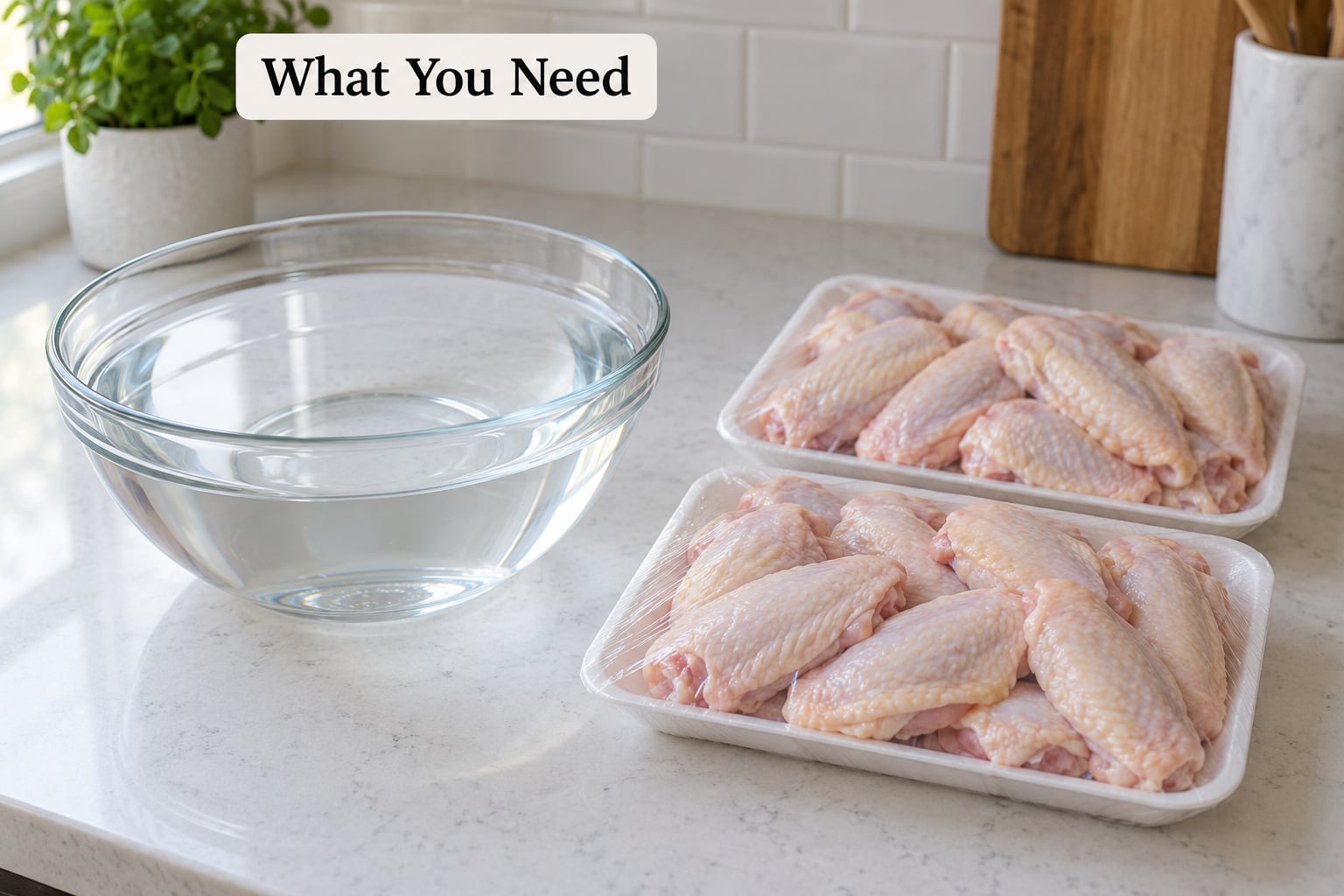
You do not need anything exotic. The list is short because thawing is mostly about control of temperature and water, not equipment.
- A leak-proof zip-top bag or freezer bag for the cold water and refrigerator methods. Loose packaging lets raw juices into your sink and lets water into the meat.
- Cold tap water and a bowl, container or sink deep enough to submerge the bag completely. This is drinking-quality cold water, not anything warm.
- An instant-read thermometer. A cheap one is fine. It is the only reliable way to check the center instead of guessing, both when thawing and when cooking.
- Tongs or a slotted spoon for lifting wings out of the water bath without carrying a pool of it across the counter.
- A rimmed baking sheet or shallow glass dish for the refrigerator method, so a wing sitting on ice for two days cannot drip onto the rest of the fridge.
- Paper towels for patting wings dry. Surface moisture is the enemy of crisp skin, and thawed wings hold more of it than fresh ones.
If you have all six, you can thaw wings in a sink, in the fridge or in the microwave without improvising anything mid-cook.
Step-by-Step: How to Thaw Chicken Wings Fast
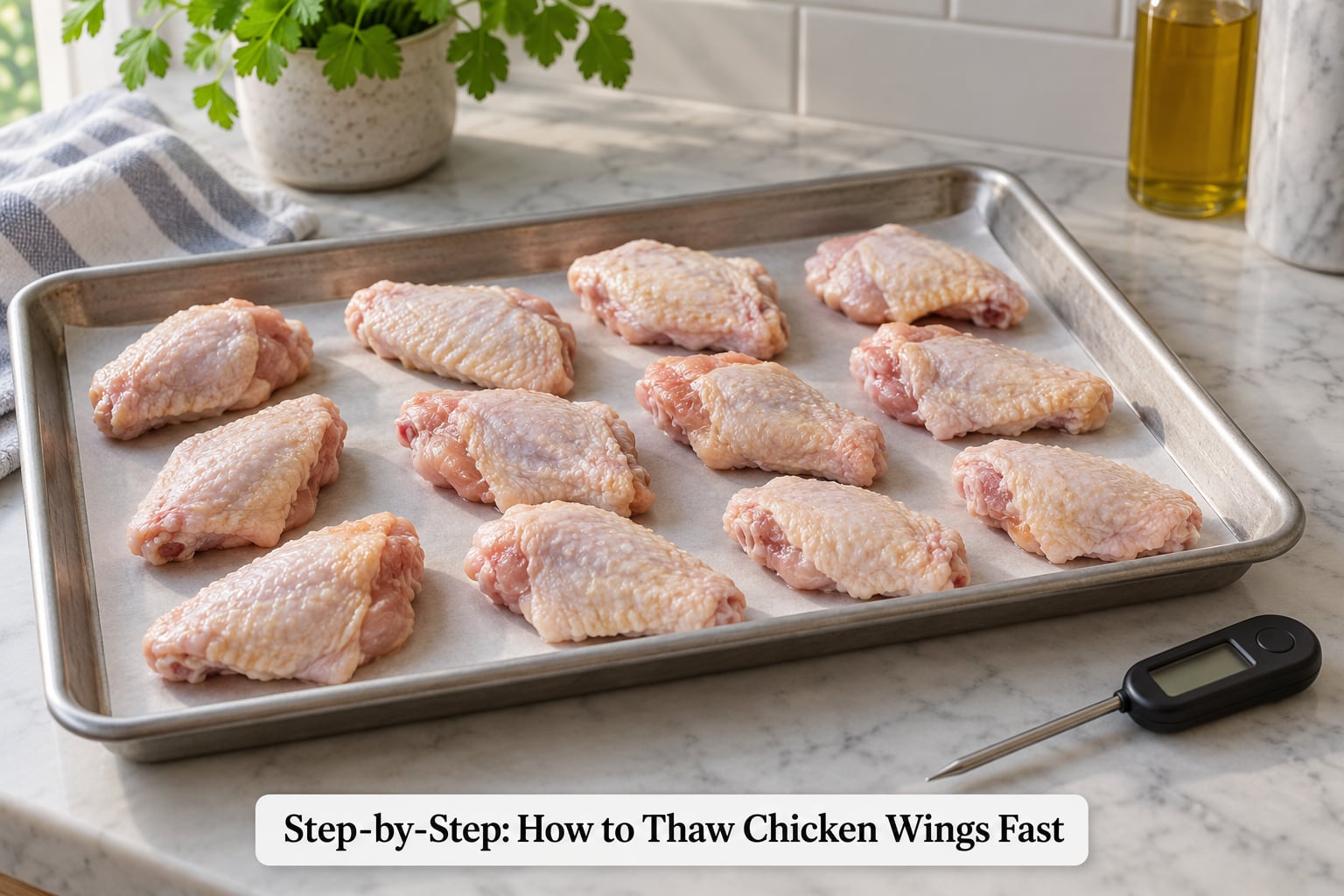
How to thaw chicken wings fast with cold water
This is the fastest method that keeps the meat safely cold the entire time, and it is the one most game-day cooks land on. Wings are small and bone-in, so they give up their ice quickly once water can reach every surface.
- Put the wings in a sealed leak-proof bag. If they are in a printed party pack, double-bag it or slide the tray into a bag and zip it shut. Squeeze out most of the air.
- Fill a bowl or the sink with cold water and submerge the bag. The wings have to sit under the surface the whole time. A bag floating on top is thawing from one side only.
- Set a timer for 30 minutes, then change the water. Dump it, refill with cold water, submerge again. Repeat every 30 minutes. This is the step people skip, and skipping it is what turns a safe method into a risky one.
- Check readiness between changes. A 1 to 2 pound pack is usually thawed in one or two water changes. Flats and drumettes in the same pack thaw at slightly different rates, so check the pieces individually rather than trusting the clock.
- Drain, pat dry and cook right away. Wings thawed in cold water should go into the cooker, the fryer or the oven immediately. They do not refrigerate well once thawed this way.
Running water beats standing water for a small batch, and the reason is simple: still water sitting against the skin warms up and stops pulling heat out, while a stream continually carries warmed water away from the surface. Hold the sealed bag under cool running tap water for 20 to 30 minutes for a small pack and you will beat the standing bath. Keep the water cool, not cold enough to shock, and never warm the tap.
How to thaw chicken wings fast in the refrigerator
The fridge is slower and it is still the right answer when you can plan a day ahead. It thaws evenly, it needs no attention, and the meat never spends time above 40°F.
- Move the wings to a tray or dish that contains drips and put the tray on the lowest shelf of the refrigerator, below anything you don’t want raw chicken juice touching.
- Loosen the packaging or open the carton so air can circulate. Wings vacuum-sealed solid do not thaw evenly through the center.
- Give it 12 to 24 hours for a 1 to 3 pound pack. A 5 pound case wants closer to 24 to 36 hours, and bulk cases for game day can take two full days. The rough planning rule is 24 hours per 4 to 5 pounds.
- Check at the end rather than trusting the timer. A thawed wing bends easily at the joint, feels pliable instead of rigid, and has no ice crystals in the thickest part of the meat.
Thawed wings from the fridge can be held a day or two in the refrigerator before cooking. That is the one advantage the cold water method cannot offer.
How to thaw chicken wings fast without the microwave drying them out
The microwave is technically the fastest option and genuinely the worst one for texture. Microwaves heat from the outside in, so the edges of a wing start cooking and tightening before the center gives up its ice. That is where rubbery wings come from. Use it for small portions and cook immediately, or use a controlled burst method.
- Move the wings from the freezer to the fridge for 20 to 30 minutes first. This lets the surface soften just enough that the microwave energy spreads more evenly. It is the single best fix for tough edges.
- Run the microwave on the defrost setting, or on 30% power, in 2-minute bursts. Do not run it for 10 minutes straight. Time the bursts.
- Flip and separate the pieces between bursts. Pull the flats apart from the drumettes, turn each piece over, and spread them on the plate rather than in a pile.
- Stop the moment the last ice crystals are gone. Wings will still feel slightly firm and will finish during cooking.
- Cook or marinate immediately. Never return microwaved wings to the refrigerator, and never microwave them again to reheat.
If you only get the wings halfway thawed in the microwave, finish the job in cold water for 15 to 20 minutes rather than pushing the microwave. Half a microwave cycle plus a short water bath beats two full microwave cycles every time.
How to tell when chicken wings are fully thawed
Softness alone is a poor test, because a wing can feel soft on the outside while the meat near the bone is still frozen solid. Use three checks together.
- The bend test. Grasp the wing at the drumette end and bend the joint. Fully thawed meat bends without resistance or cracking. A frozen joint snaps or fights you.
- The look. Cut into the thickest part of one wing. Raw thawed meat is uniformly pink with no translucent, glassy, or icy patches.
- The thermometer. Push the probe into the thickest part, away from the bone, and read it. Thawed wings sit at 40°F or below. Anything in the danger zone means more thawing time, not cooking time.
Once they are thawed, cook to an internal temperature of 165°F. That is the poultry safe minimum, and it is where crisp skin and food safety meet.
Common Mistakes
Using warm or hot water. Water above 40°F speeds the thaw but pushes the surface of the meat into the bacterial danger zone while the center is still frozen. People see the same result as a cold water bath, so there is no real gain. Use cold tap water and change it every 30 minutes.
Thawing on the counter. This is the single most common mistake, and it is the one that makes people sick. The USDA is unambiguous: leave frozen food out of the counter. A 2 pound pack sitting on a warm counter can spend hours in the danger zone before the center is flexible.
Sealing wet wings and leaving them. Waterlogged skin will not crisp. Wings thawed in cold water should be patted dry with paper towels before seasoning, and any thawed wings going back into the fridge belong in a drained container, not a sealed bag of liquid.
Overcrowding the container. Wings packed shoulder to shoulder touch each other instead of the water, and the contact points thaw last. Either thaw in smaller batches or use a container with enough room for the bag to sit loose.
Defrosting in an air fryer. It is tempting because the machine is right there, and it is a bad idea. The basket sits in a small volume of moving hot air, so the wings dry out, cook unevenly and pick up bacteria-friendly warmth. Use the air fryer for cooking wings, never for thawing them.
Cooking partly frozen wings and skipping the center check. Partly frozen wings cook unevenly: the outside burns and the inside near the bone stays raw. If the wings are still icy when you start, either finish thawing or extend the cook and probe the thickest part until it reads 165°F.
Refreezing wings that went into the microwave. Wings thawed in the refrigerator can go back in the freezer. Wings thawed in cold water or the microwave should be cooked, not refrozen, because bacteria can be present and a second freeze does not remove them.
Once the wings are thawed and dry, the crisp-skin work starts: salt them, leave them uncovered in the fridge for a few hours if you have time, and skip wet marinades right up until cooking, since sugar and liquid are what turn skin leathery.
Frequently Asked Questions
How long does it take to thaw chicken wings in cold water?
A standard 1 to 2 pound party pack of chicken wings thaws in about 30 to 45 minutes in cold water, changing the water every 30 minutes. A 5 pound case needs closer to 60 to 90 minutes, and bulk packs can run past two hours. The wings are ready when the joints bend easily and no ice crystals remain. Cook them immediately after thawing.
Is it safe to thaw chicken wings in cold water?
Yes, thawing chicken wings in cold water is safe as long as three rules are followed. The wings stay sealed in a leak-proof bag, the water is cold and potable, and you change the water every 30 minutes so it never enters the 40°F to 140°F danger zone. Cook the wings straight after thawing, and do not reuse the water.
Can I thaw chicken wings in the microwave without them getting tough?
You can, but texture is the tradeoff. Let the wings sit in the fridge for 20 to 30 minutes first, then run the microwave on the defrost setting or 30% power in 2-minute bursts. Flip and separate the pieces between bursts and stop as soon as the last ice crystals disappear. Cook or marinate immediately, because microwaved wings dry out fast.
Can I cook chicken wings from frozen in an air fryer?
Yes, and many cooks skip thawing entirely. Air fry frozen wings at 400°F for 20 to 25 minutes, spraying or brushing with oil at the start and flipping halfway through, until they reach 165°F internally. Thawed wings usually crisp better and cook more evenly, but frozen wings save time and the texture difference is modest with a good oil spray.
How do I know if chicken wings are fully thawed?
Use three checks together. Bend the joint at the thickest part; fully thawed meat bends without resistance instead of snapping. Cut into one piece and look for uniformly pink meat with no glassy or icy patches. Finally, push an instant-read thermometer into the thickest part, away from the bone, and confirm it reads 40°F or below.
Can I refreeze chicken wings after thawing them?
Only if they were thawed in the refrigerator. Wings thawed in cold water or the microwave should be cooked, not refrozen. Refreezing thawed meat is safe only while the food has stayed at or below 40°F the whole time, and even then the texture suffers. If you freeze your own wings, portion them into single-use bags so you never thaw twice.
Conclusion
Start by deciding how much time you actually have. Have 30 to 45 minutes and a sink? Use cold water, change it every 30 minutes, and cook immediately. Have a day? Put the wings on a rimmed tray in the fridge and let them come down slowly. Have ten minutes? Skip thawing and air fry them from frozen at 400°F, flipping once.
Whichever route you take, the two non-negotiables are cold or refrigerated the whole time, and 165°F before they hit the plate. That combination is what gets you game-day wings that are crisp, even, and safe to serve.